July 1968: Overview

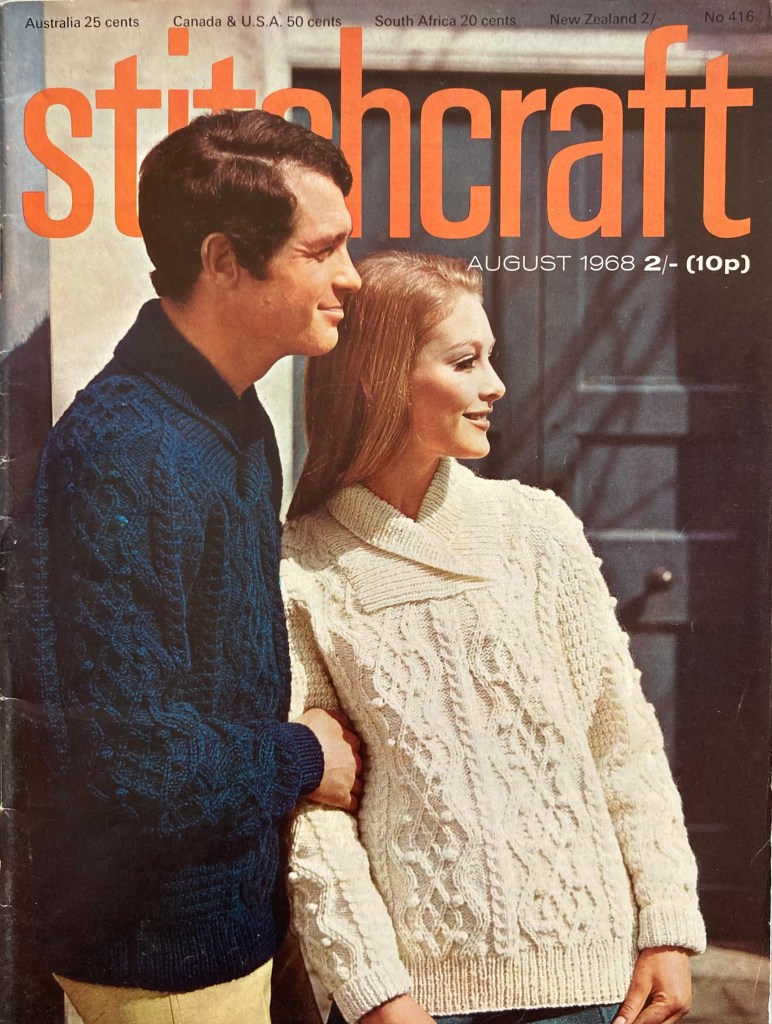
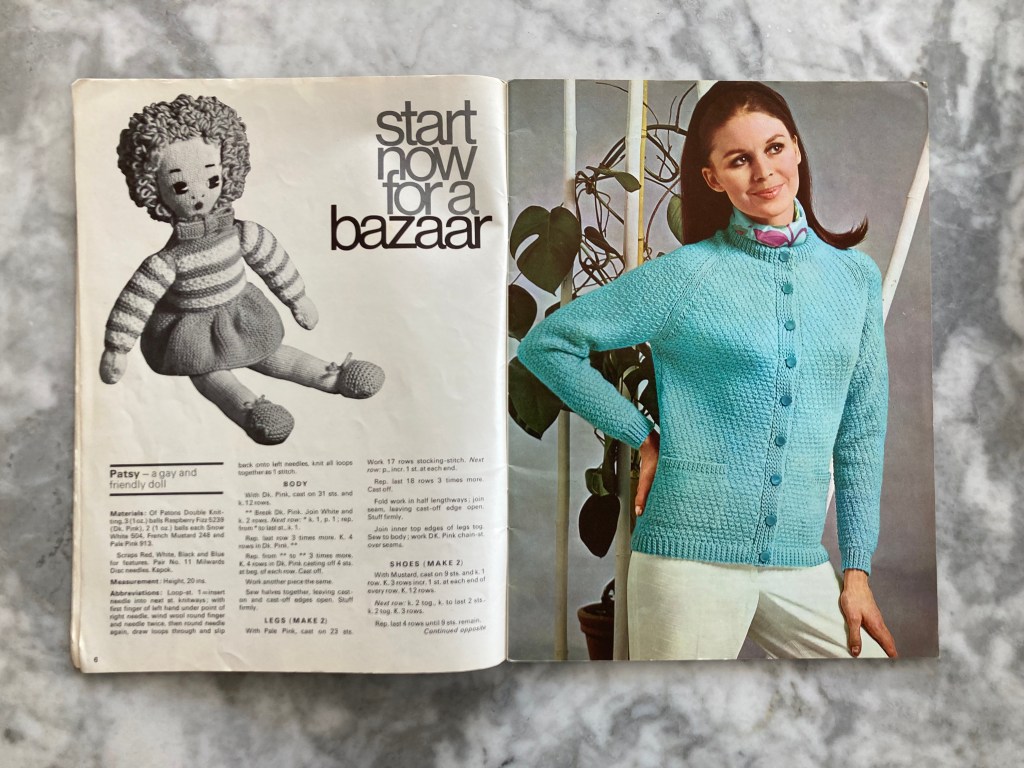
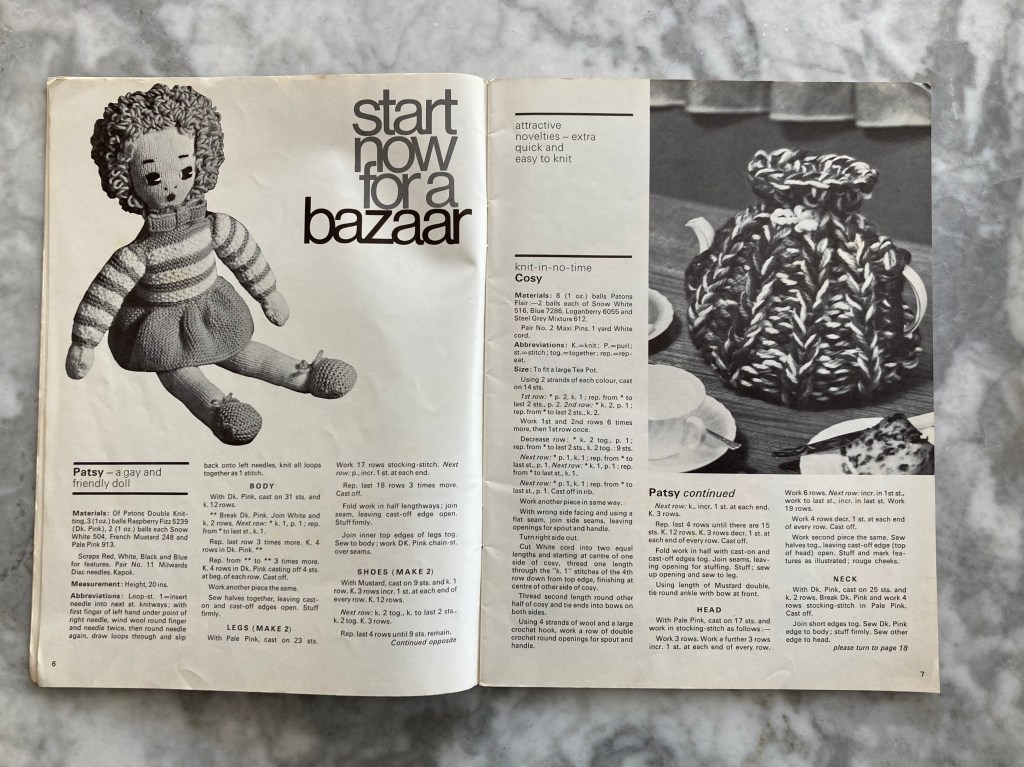
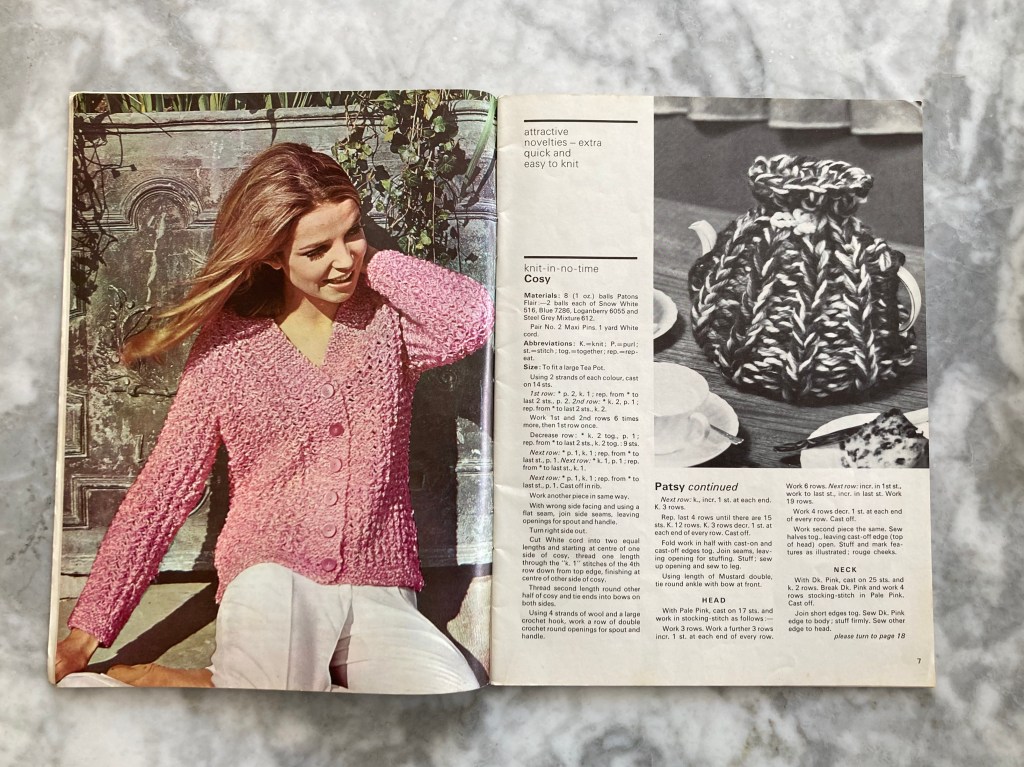
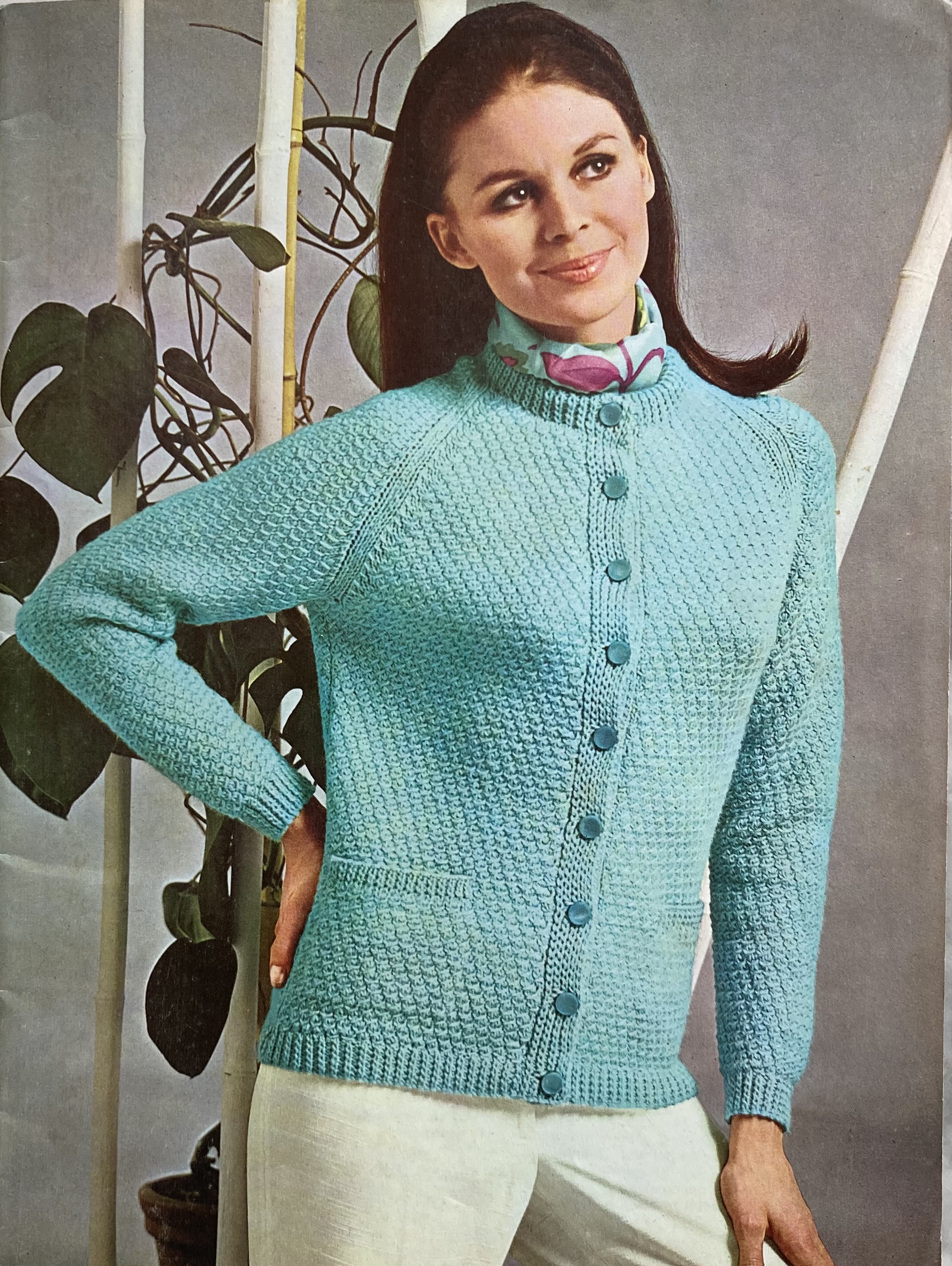
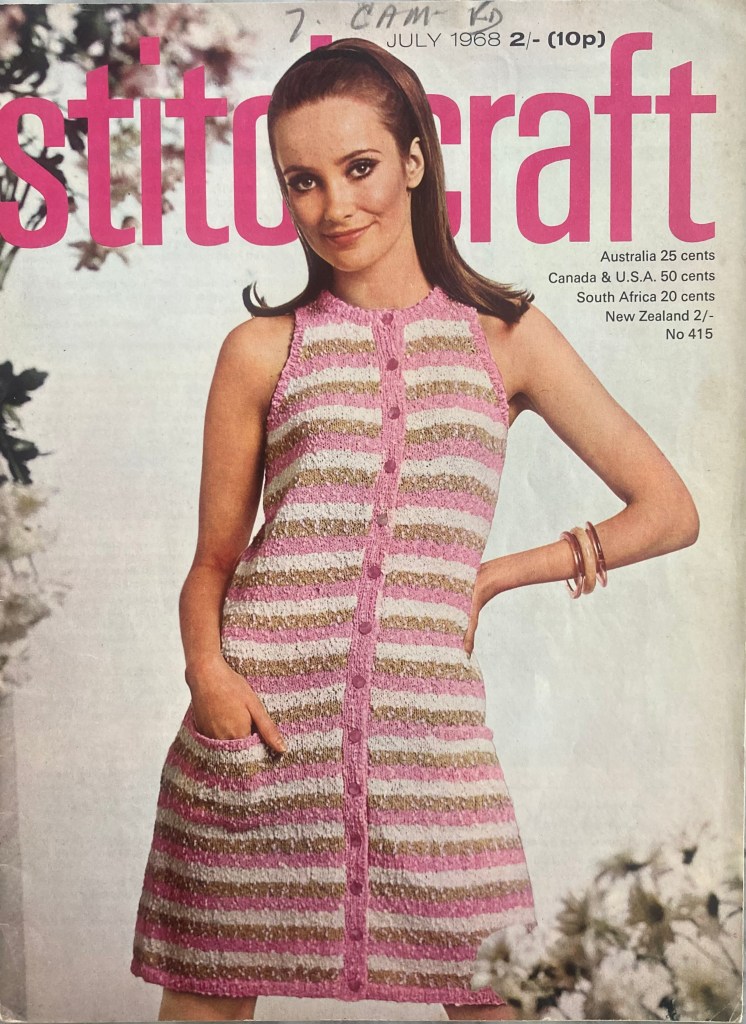
“Summer and the Country Life” is the caption of the introduction to the July 1968 issue of Stitchcraft. After eight years of blogging about this magazine, I have to admit that I still can’t necessarily say what makes a garment “country” or not in the world of 1960s British knitting fashion. Tweedy and casual, yes, and cardigans that can be worn as outdoor jackets. As for the rest, either there are some historical or regional codes at play (please enlighten me if you know what they are), or Stitchcraft just got tired of writing “for your holidays” in every summer issue.

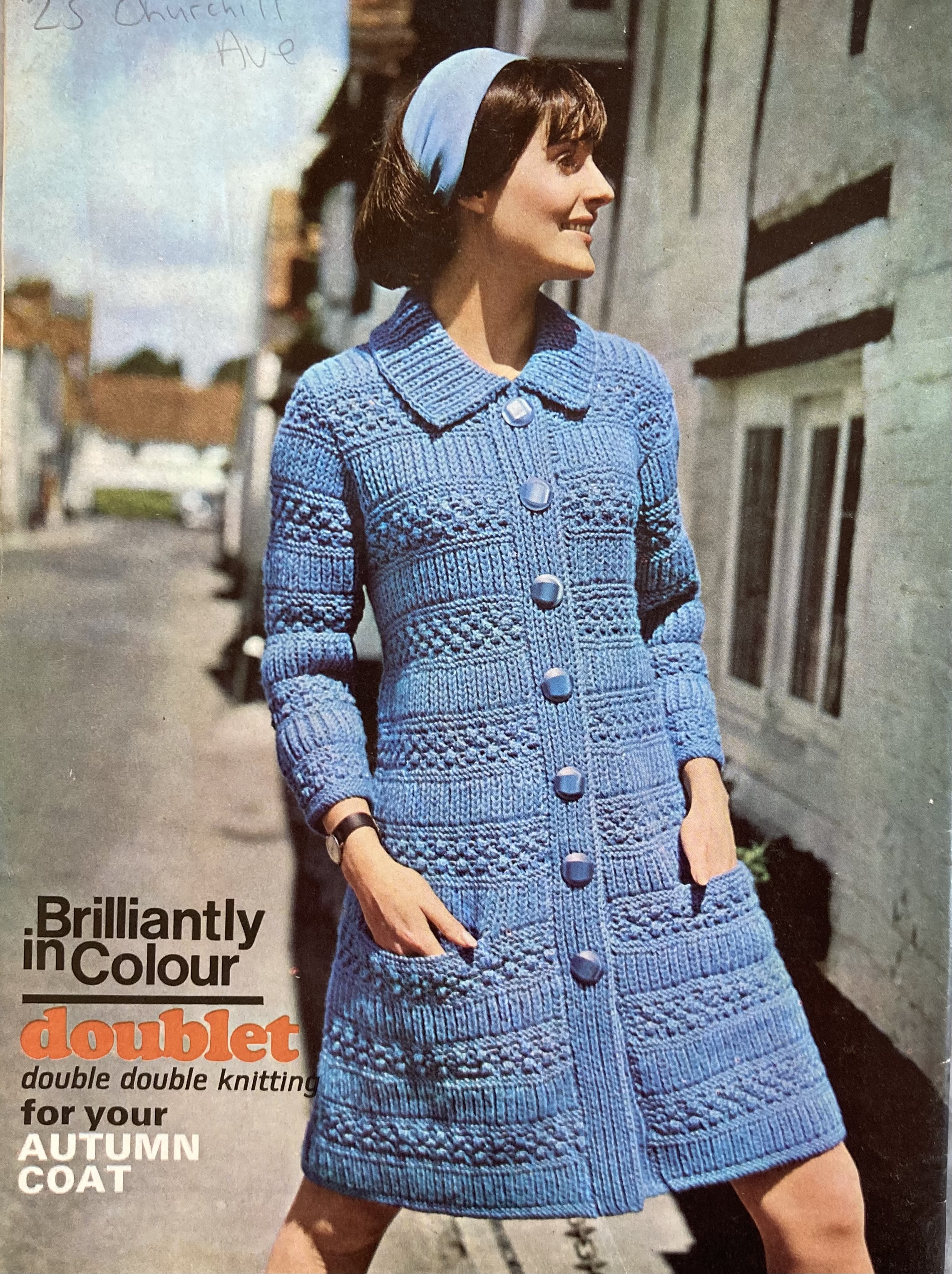
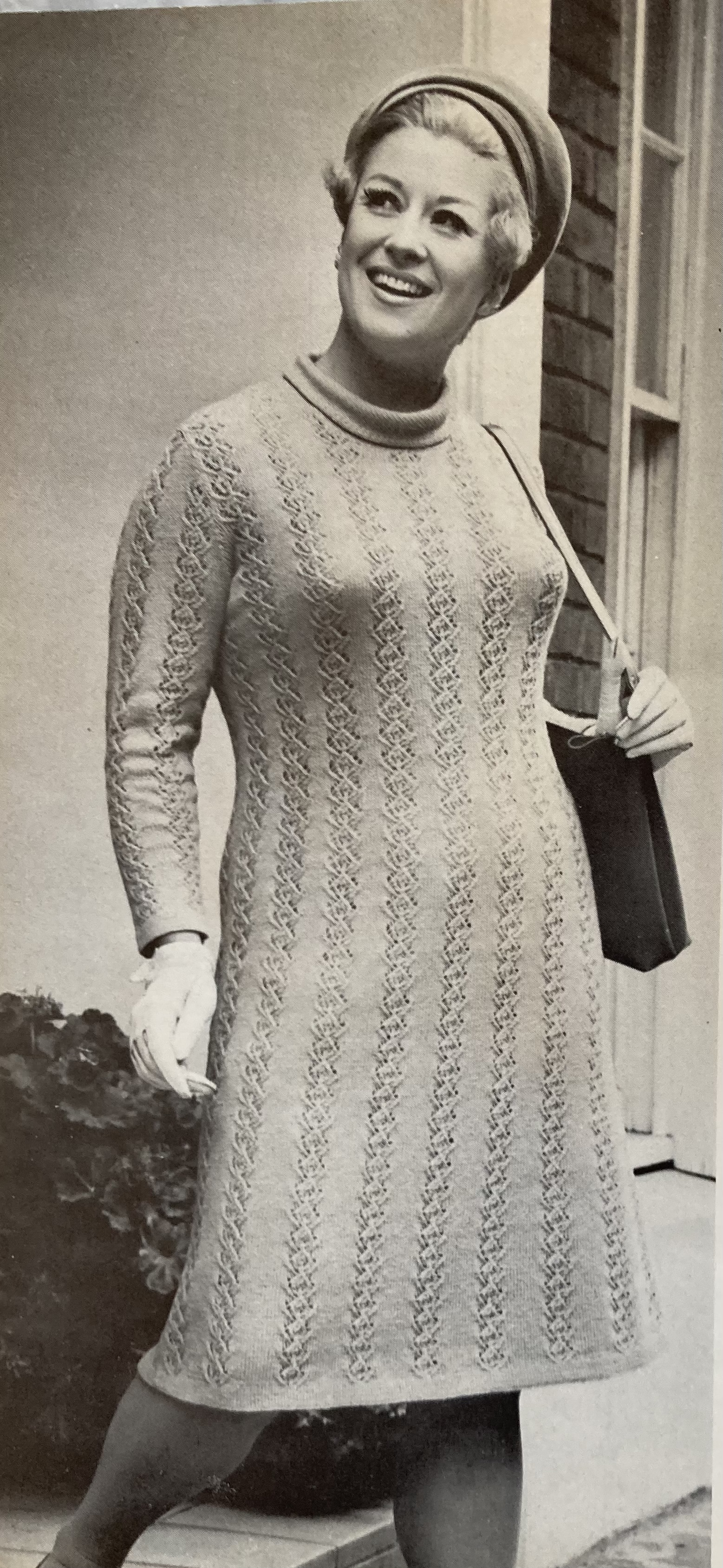
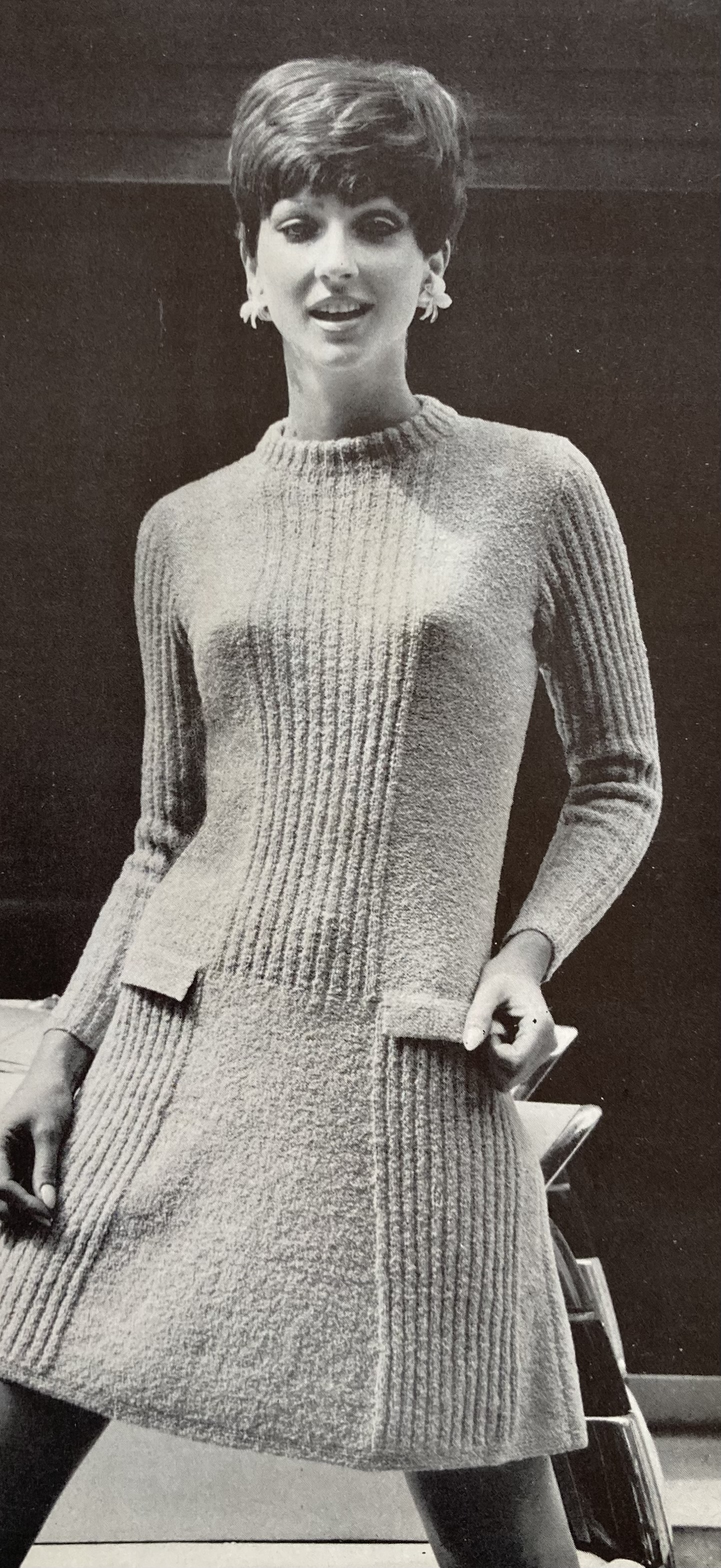
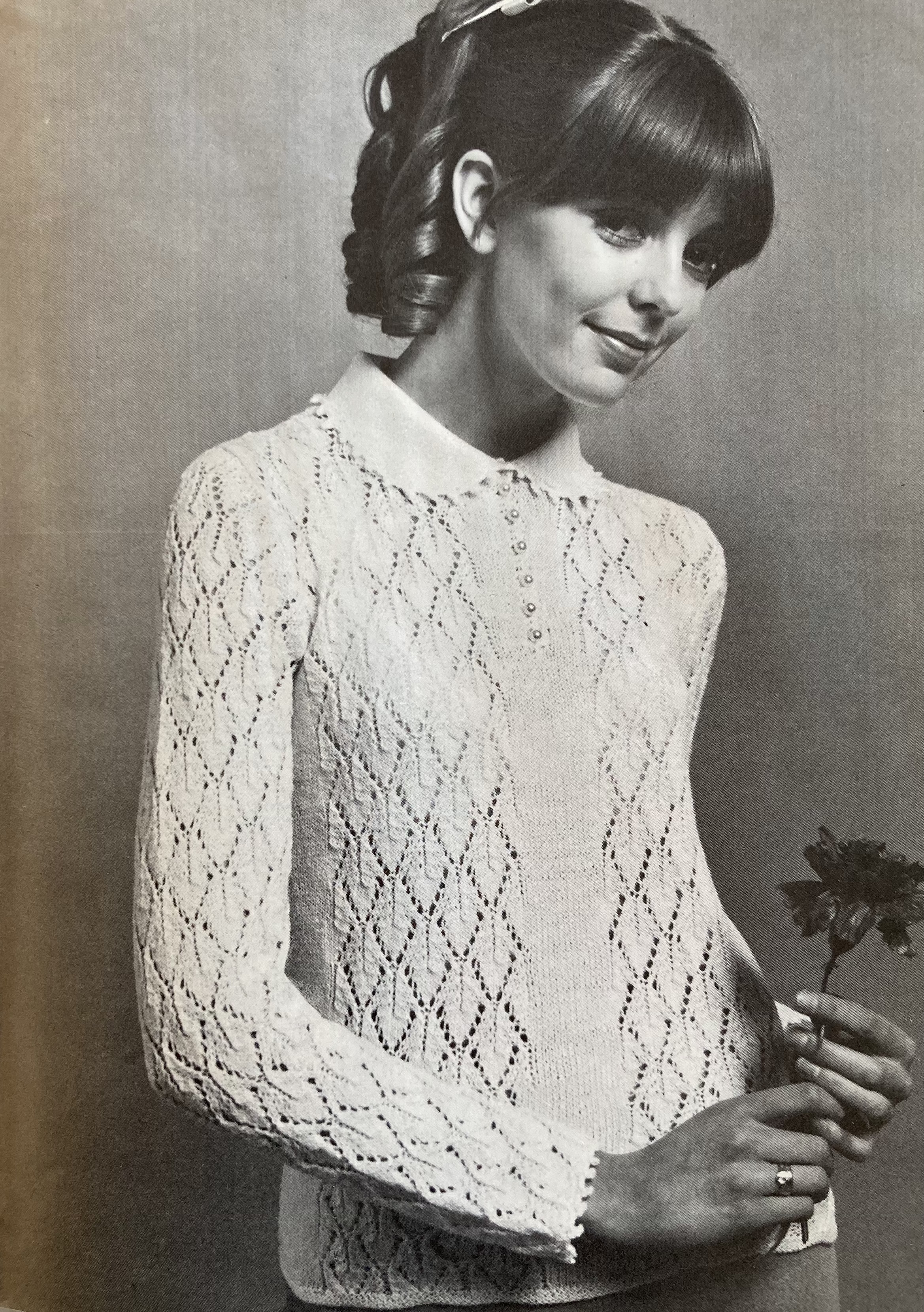
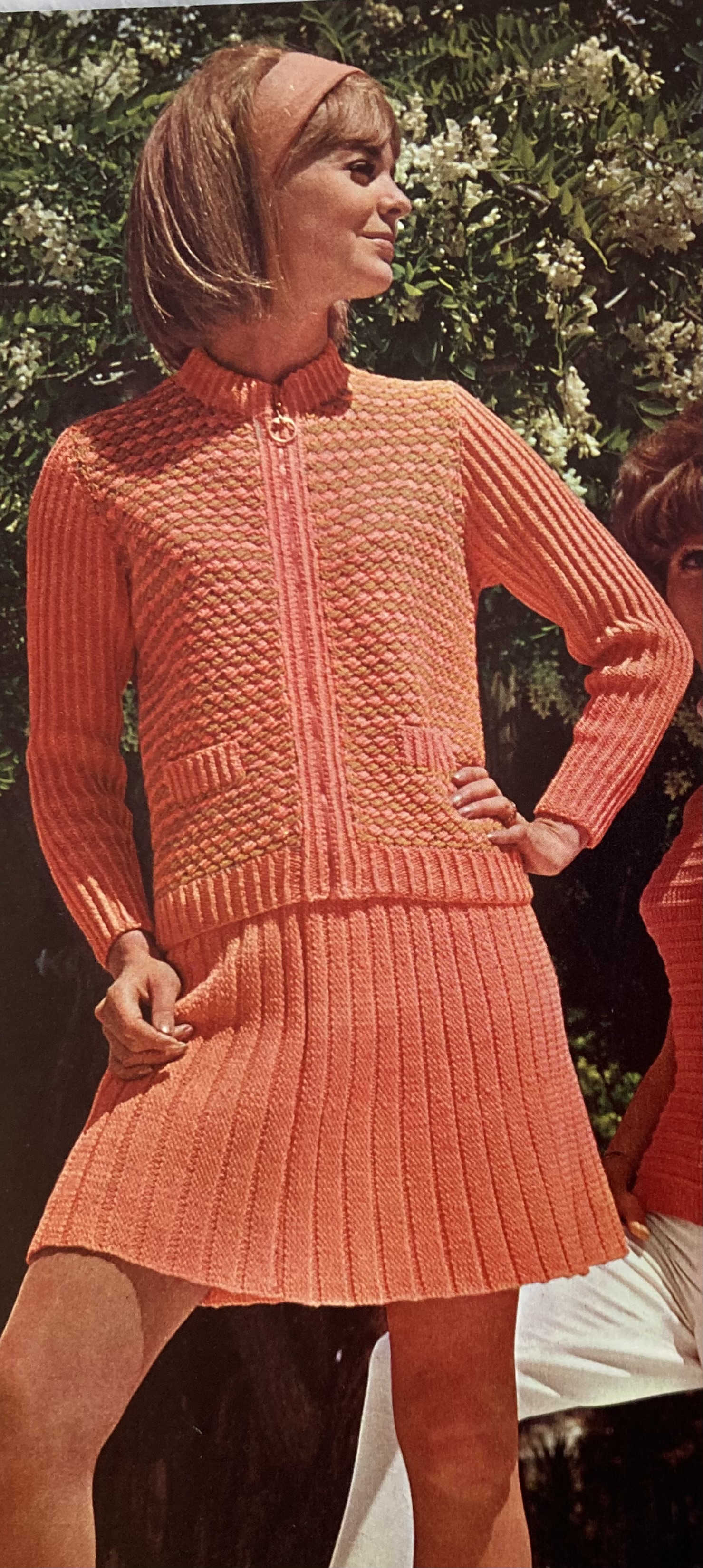
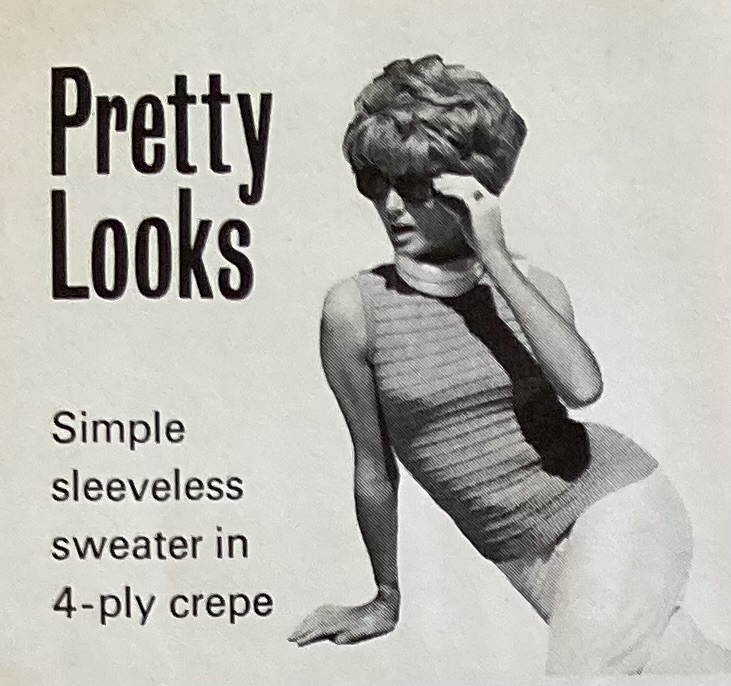
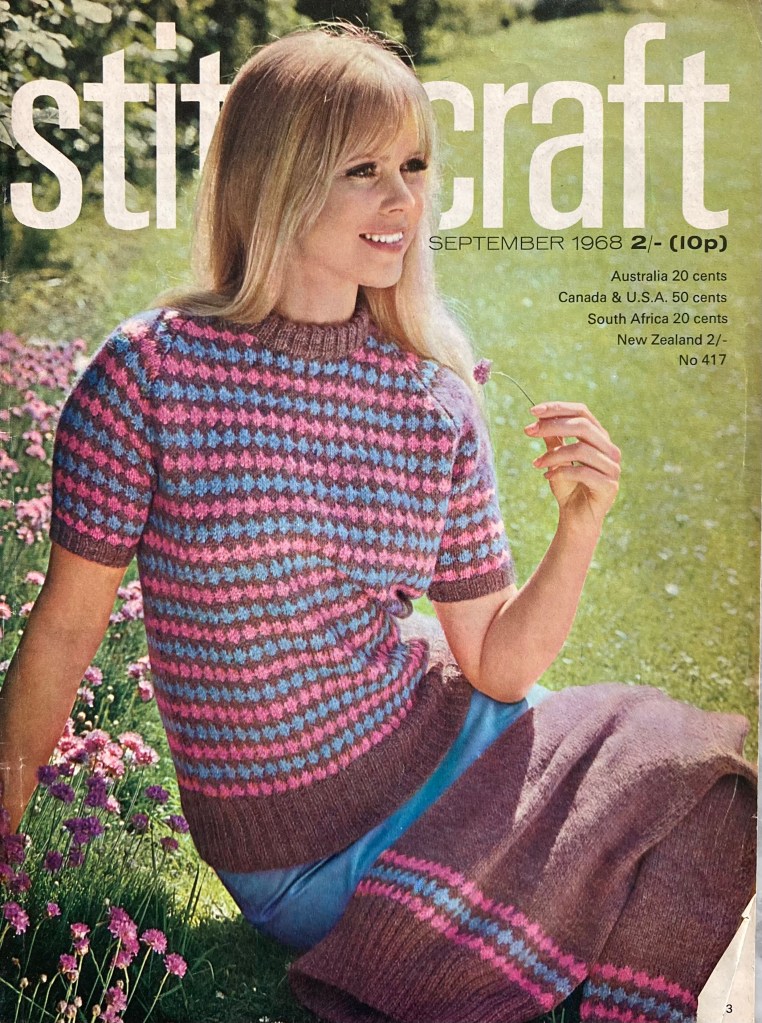
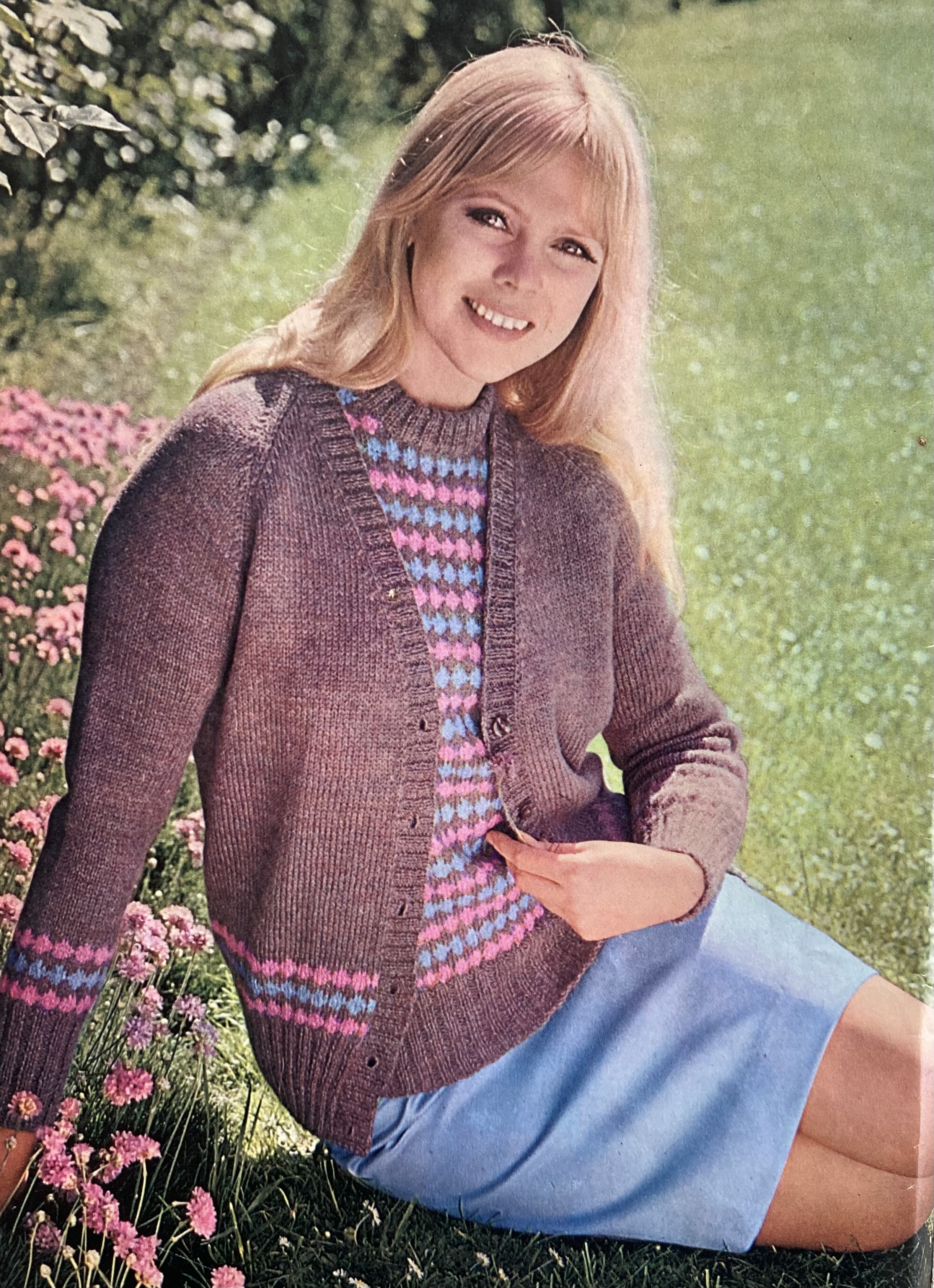
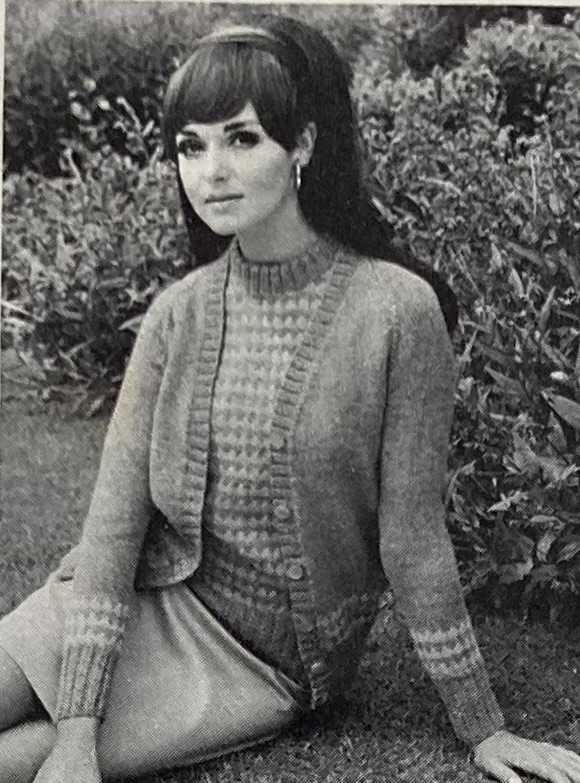
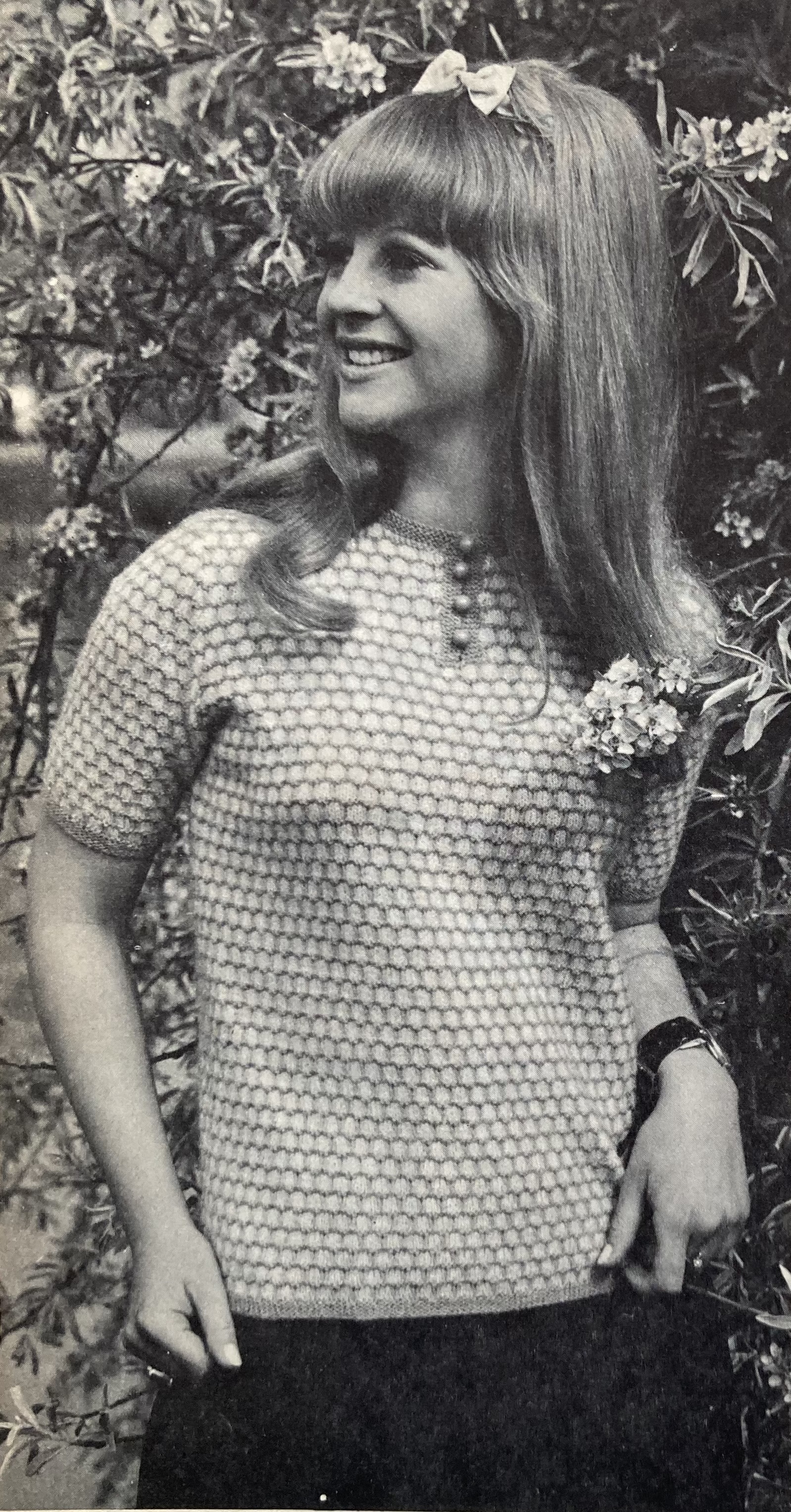
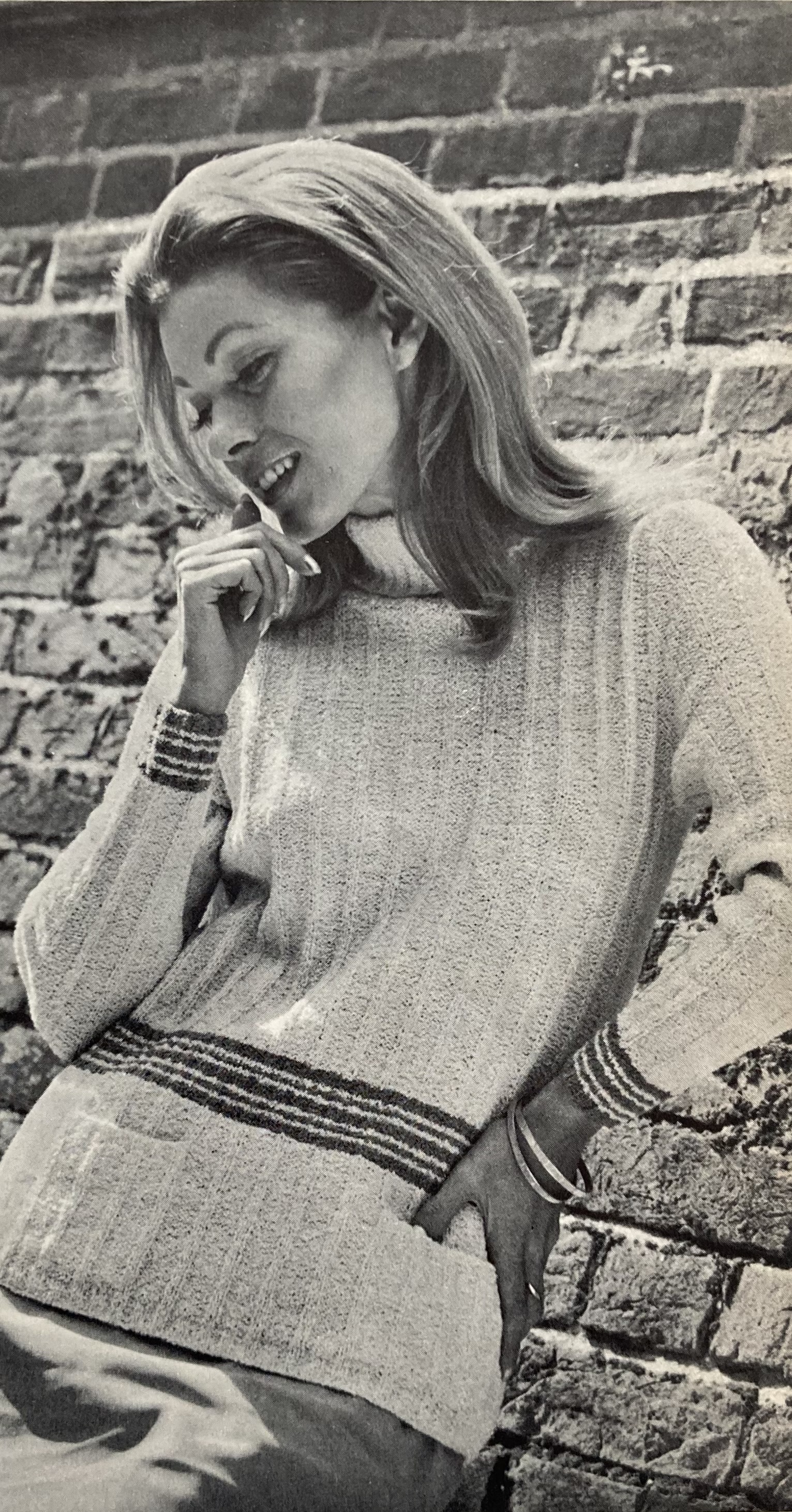
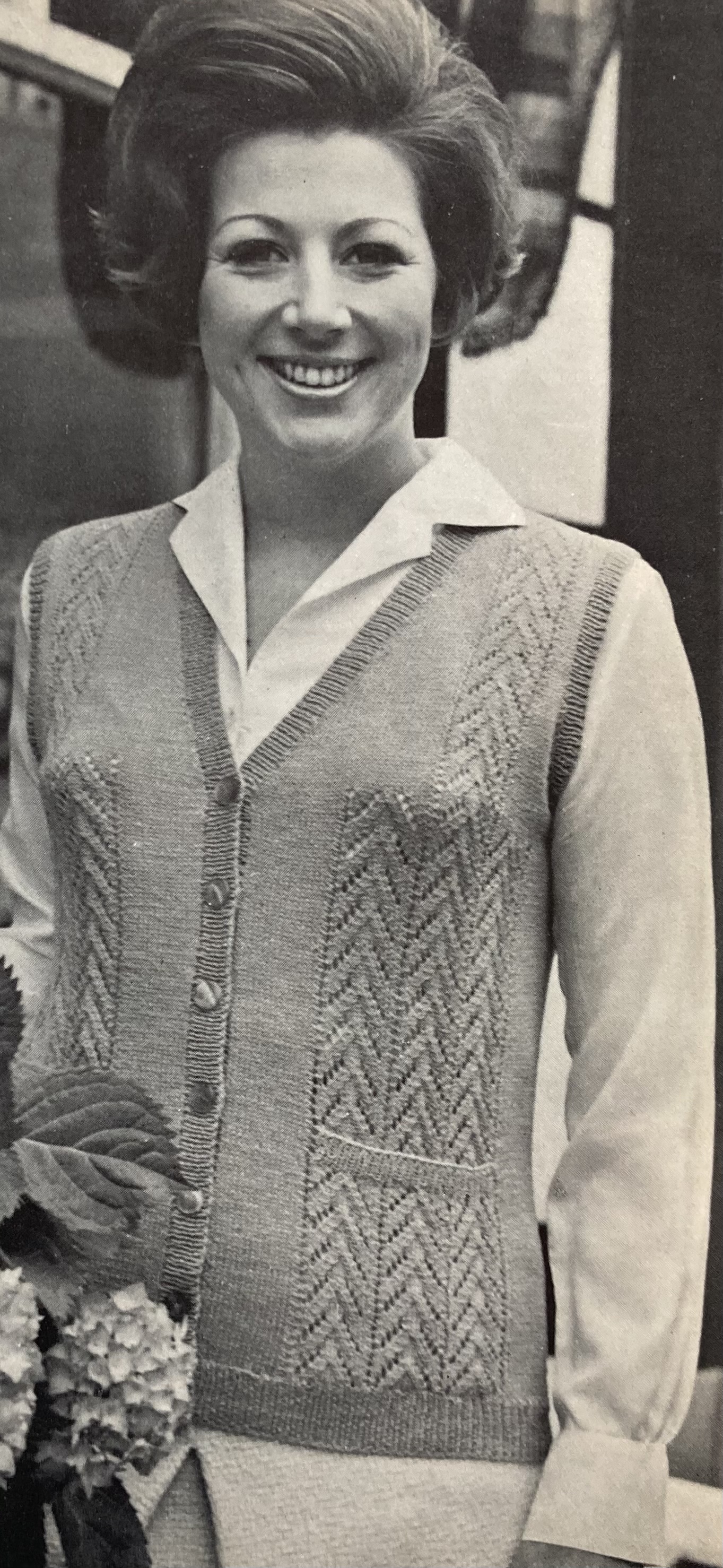
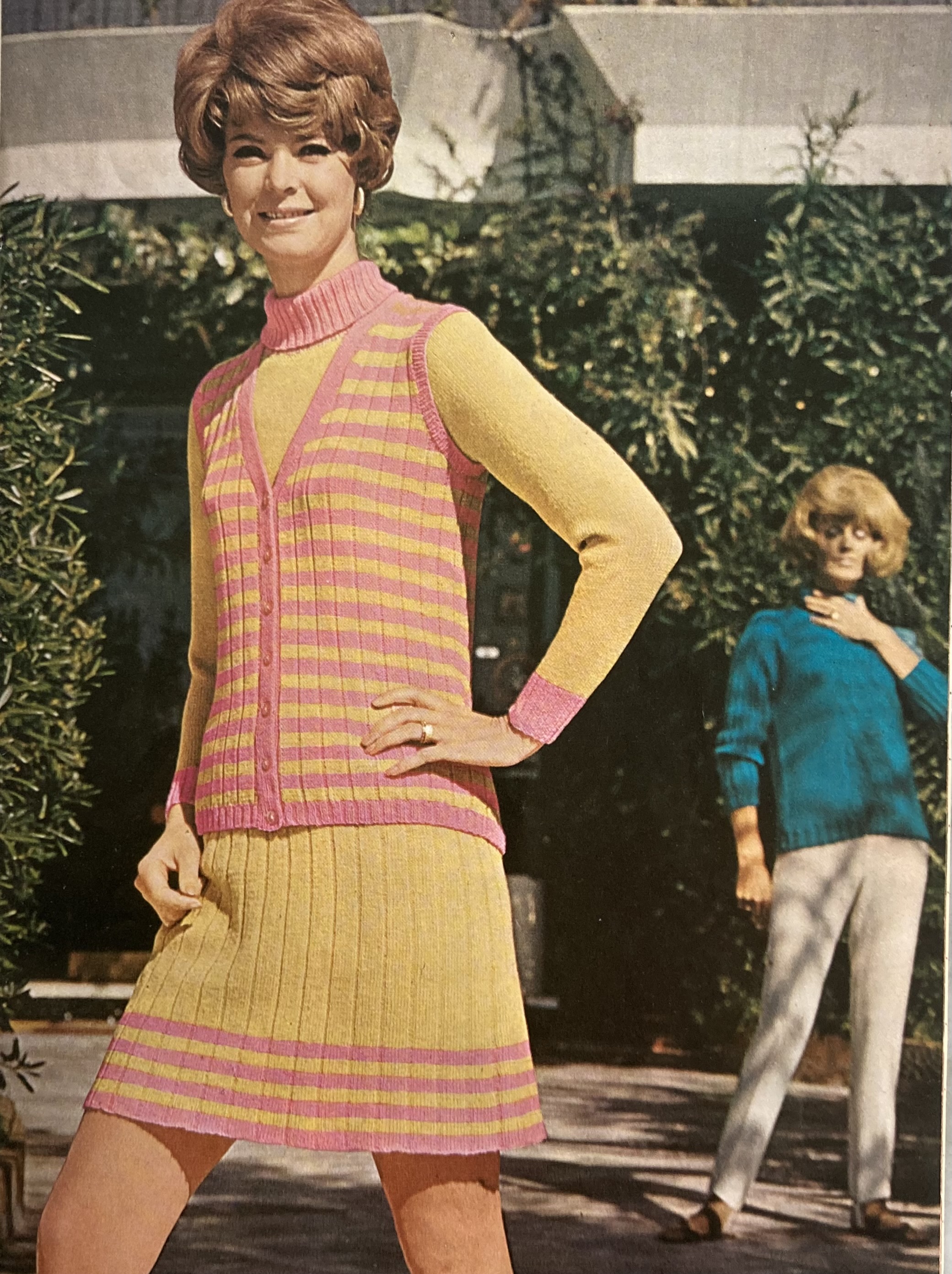
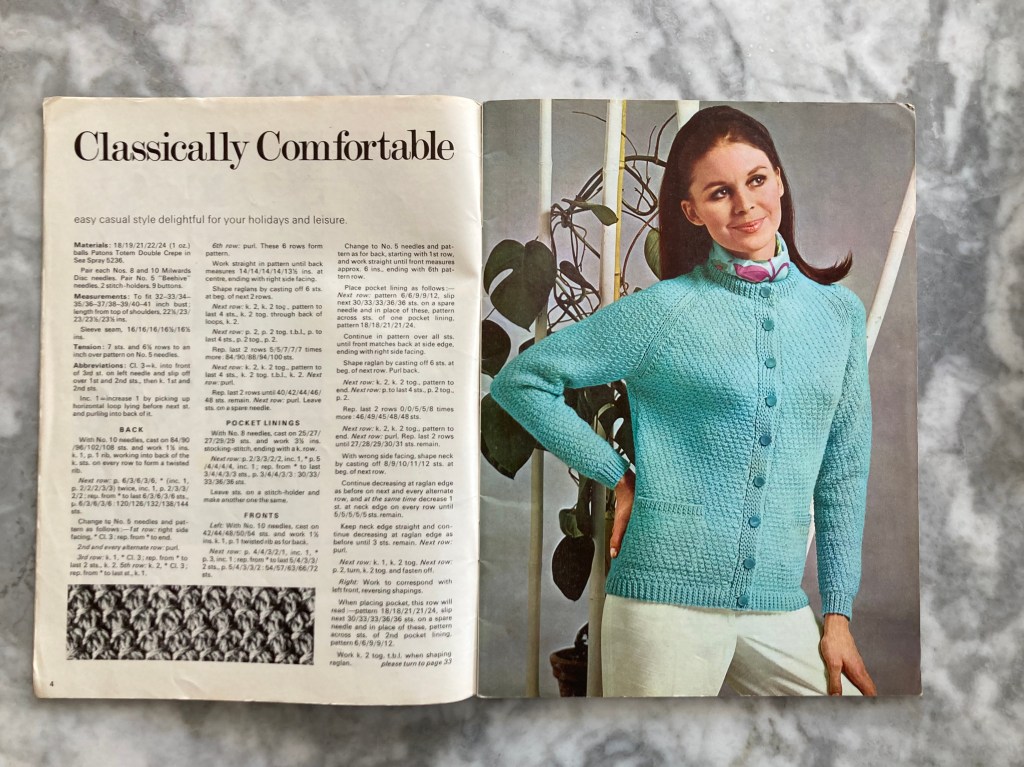
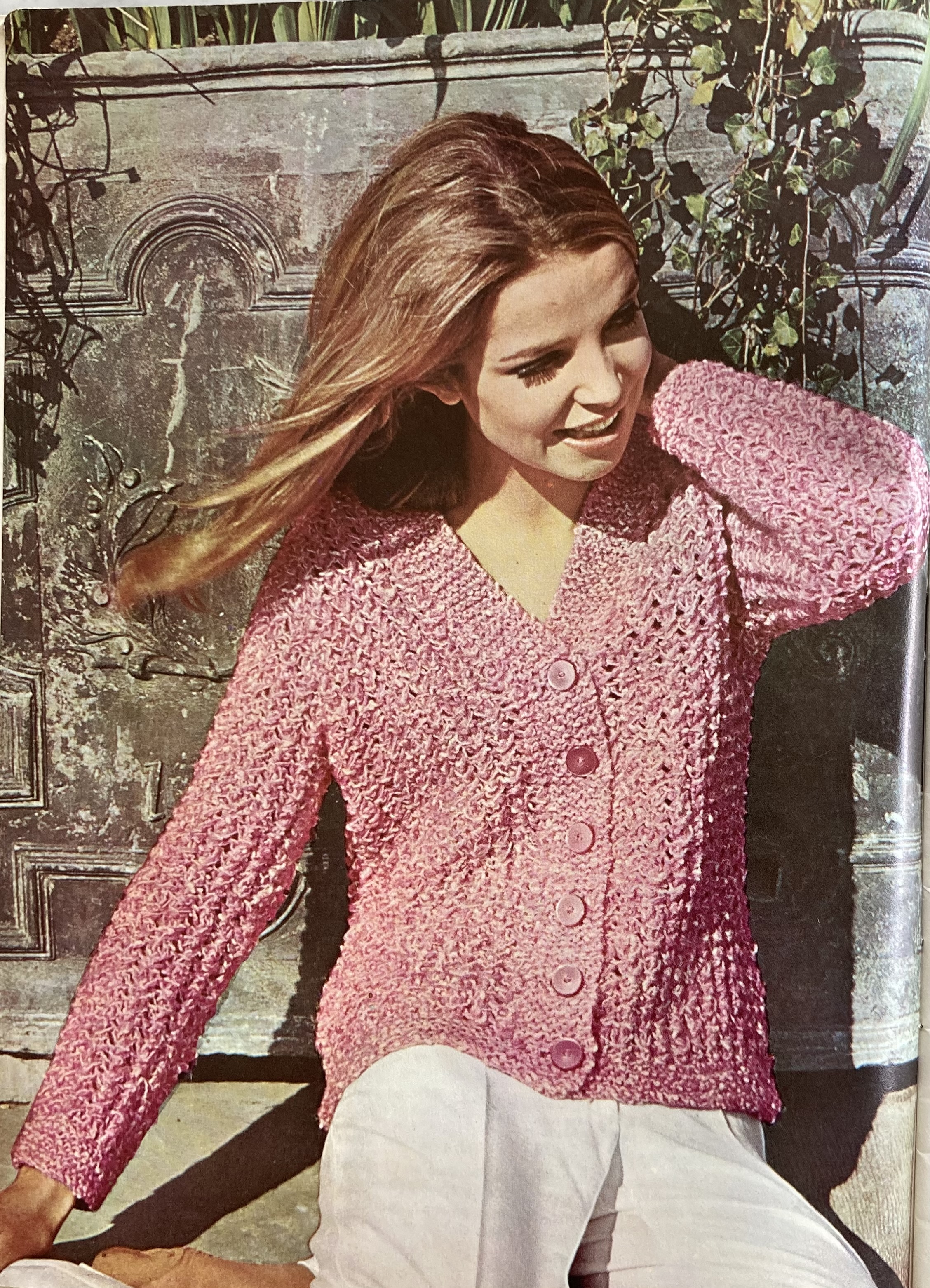
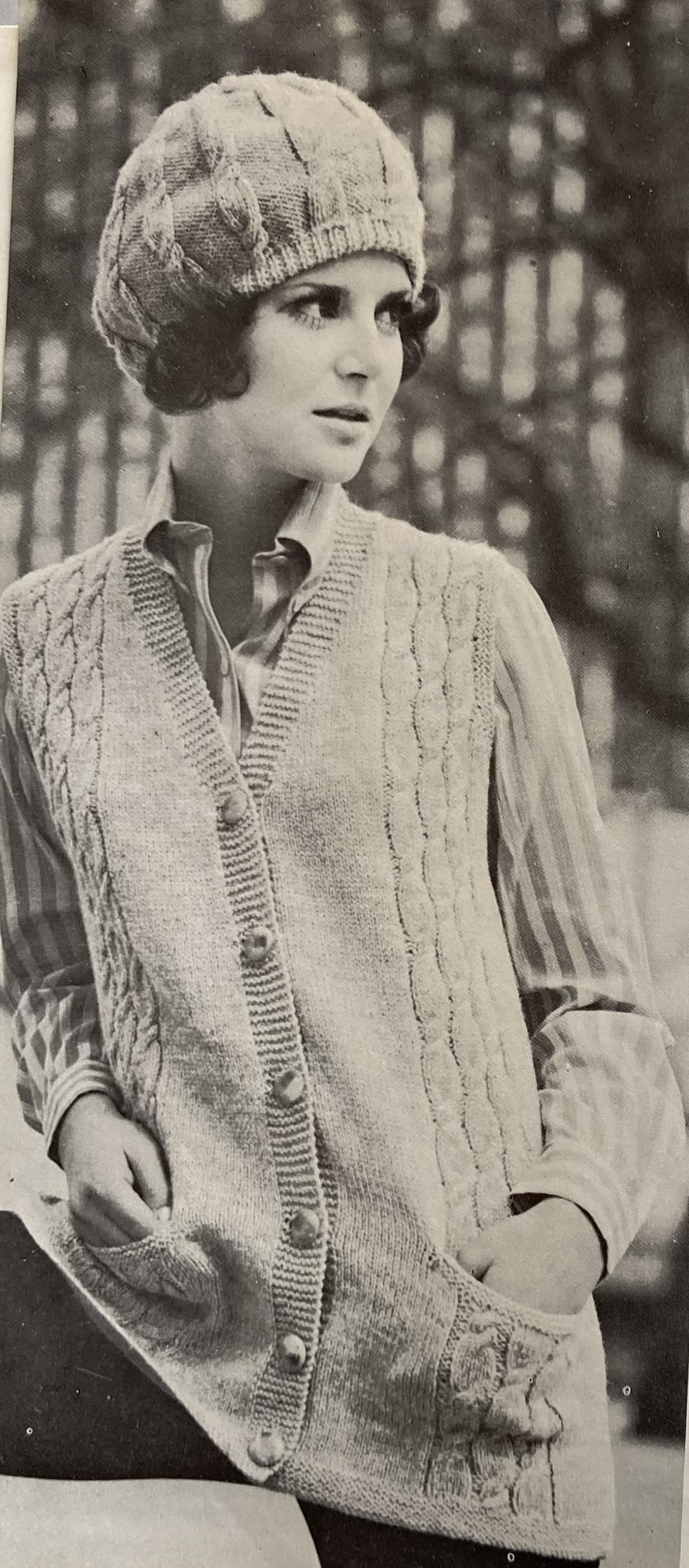
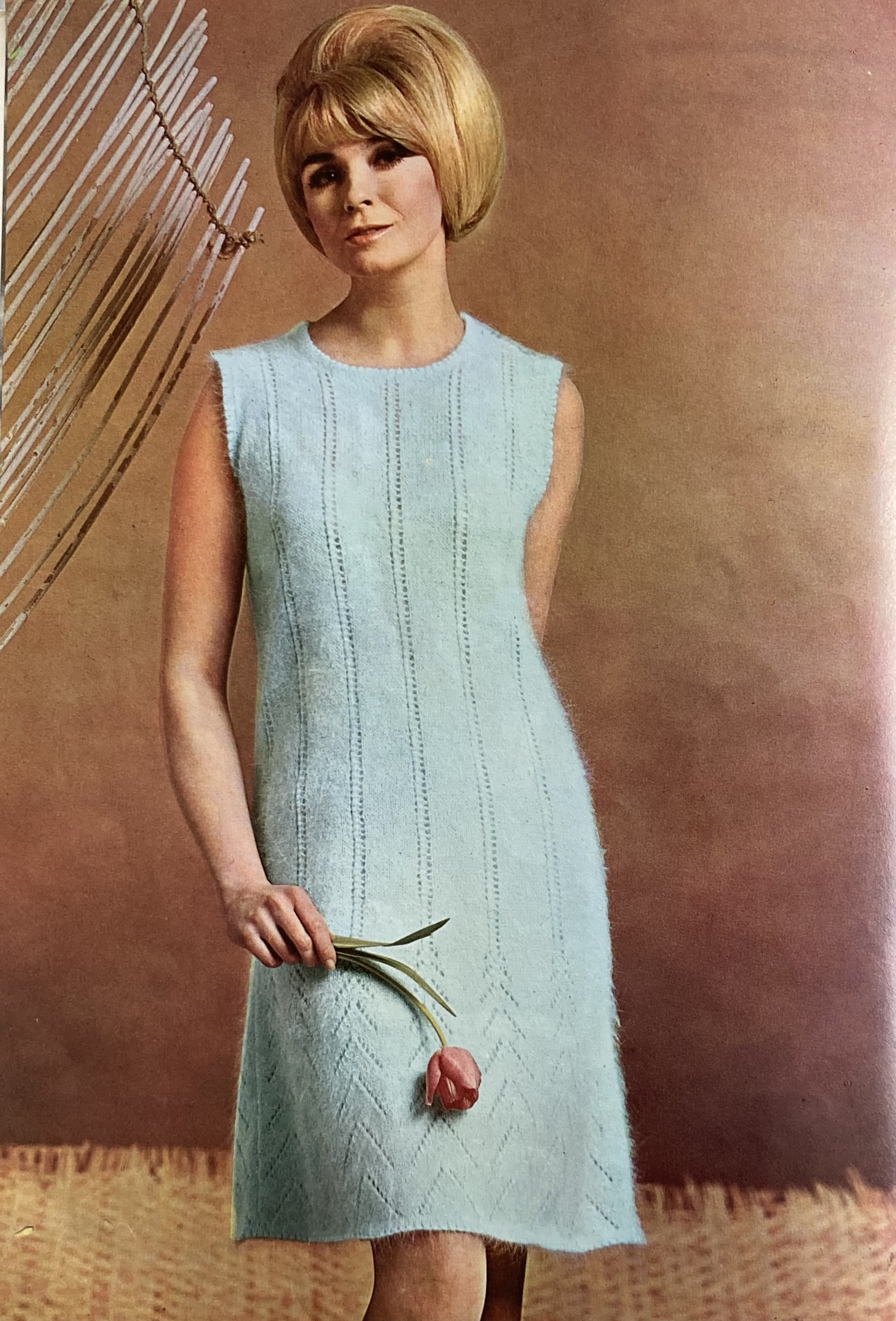
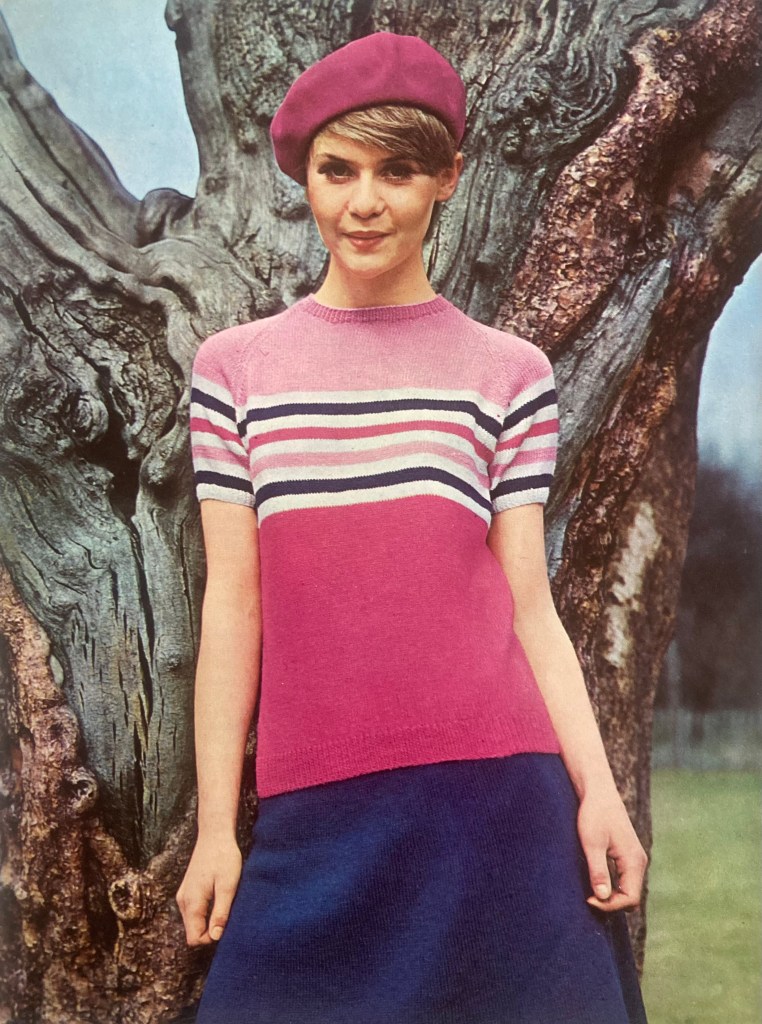
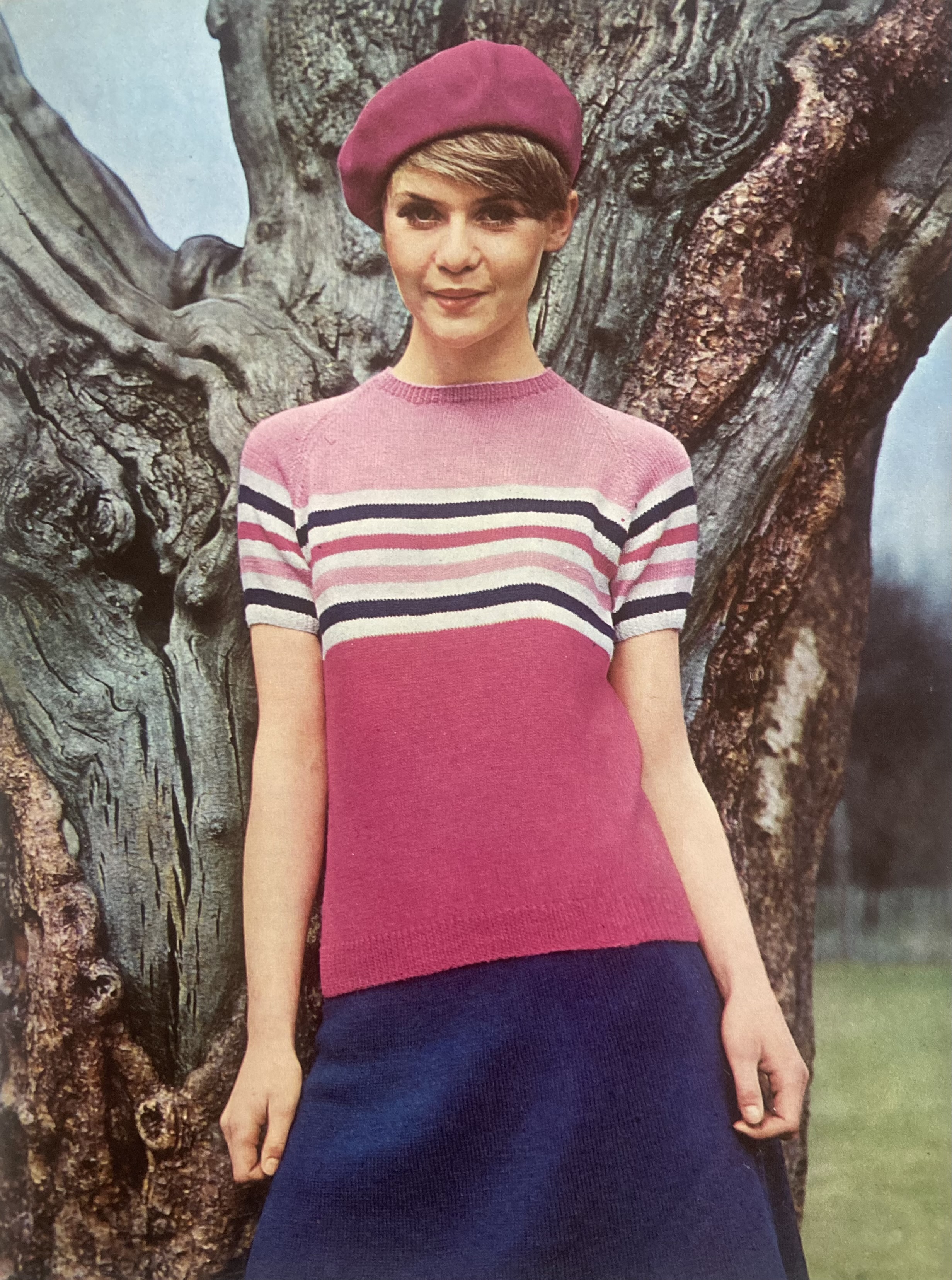
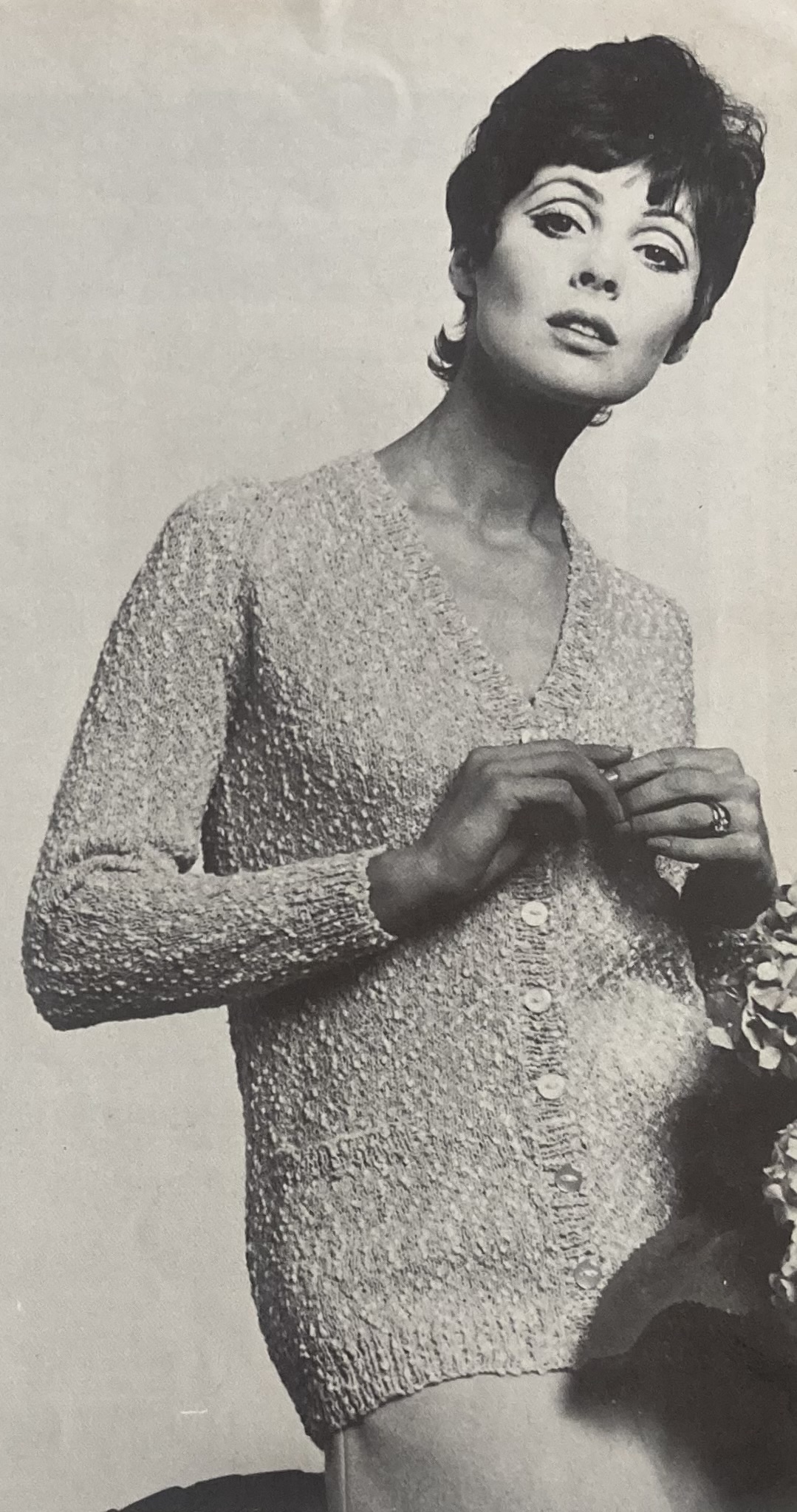
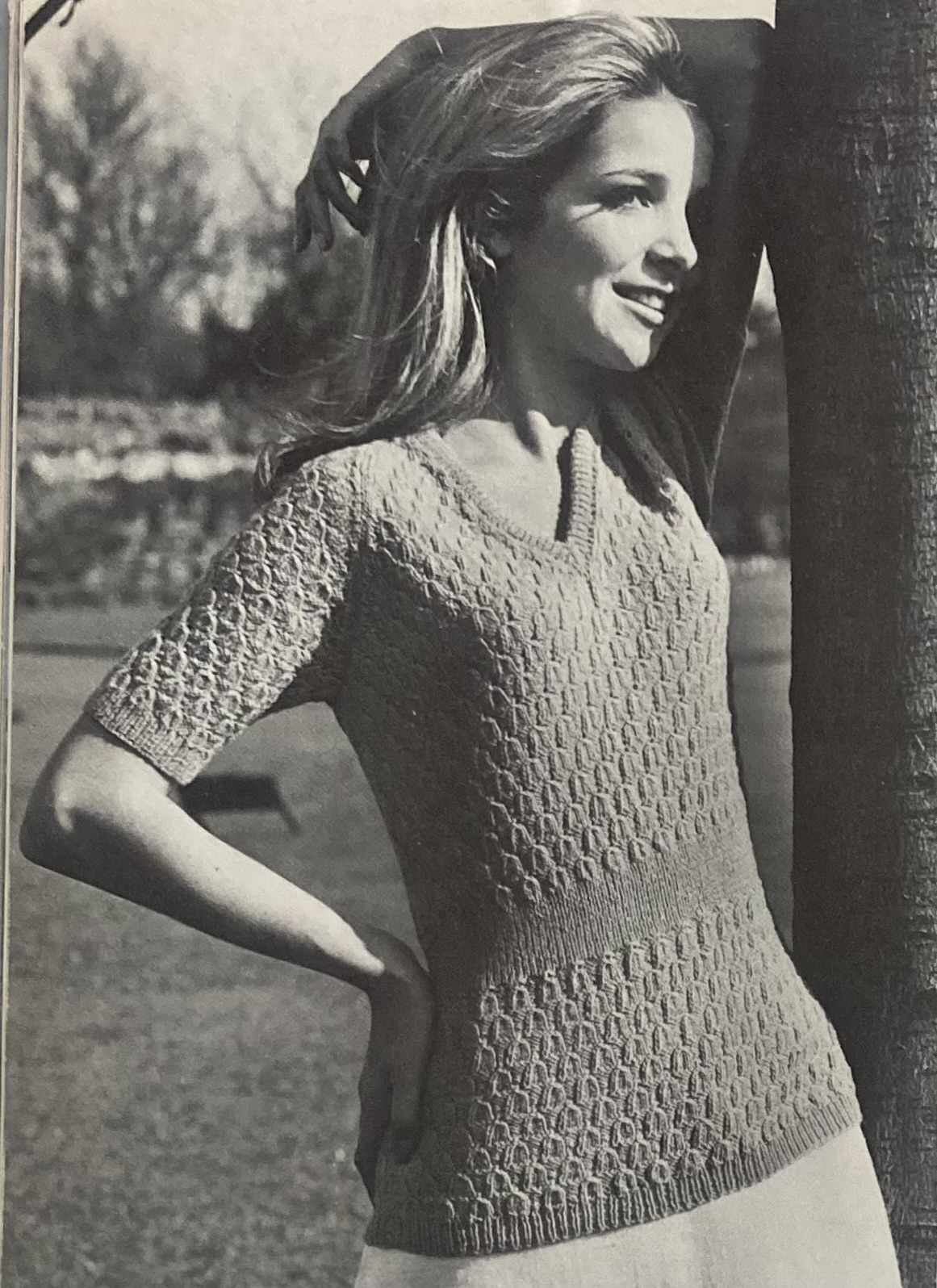
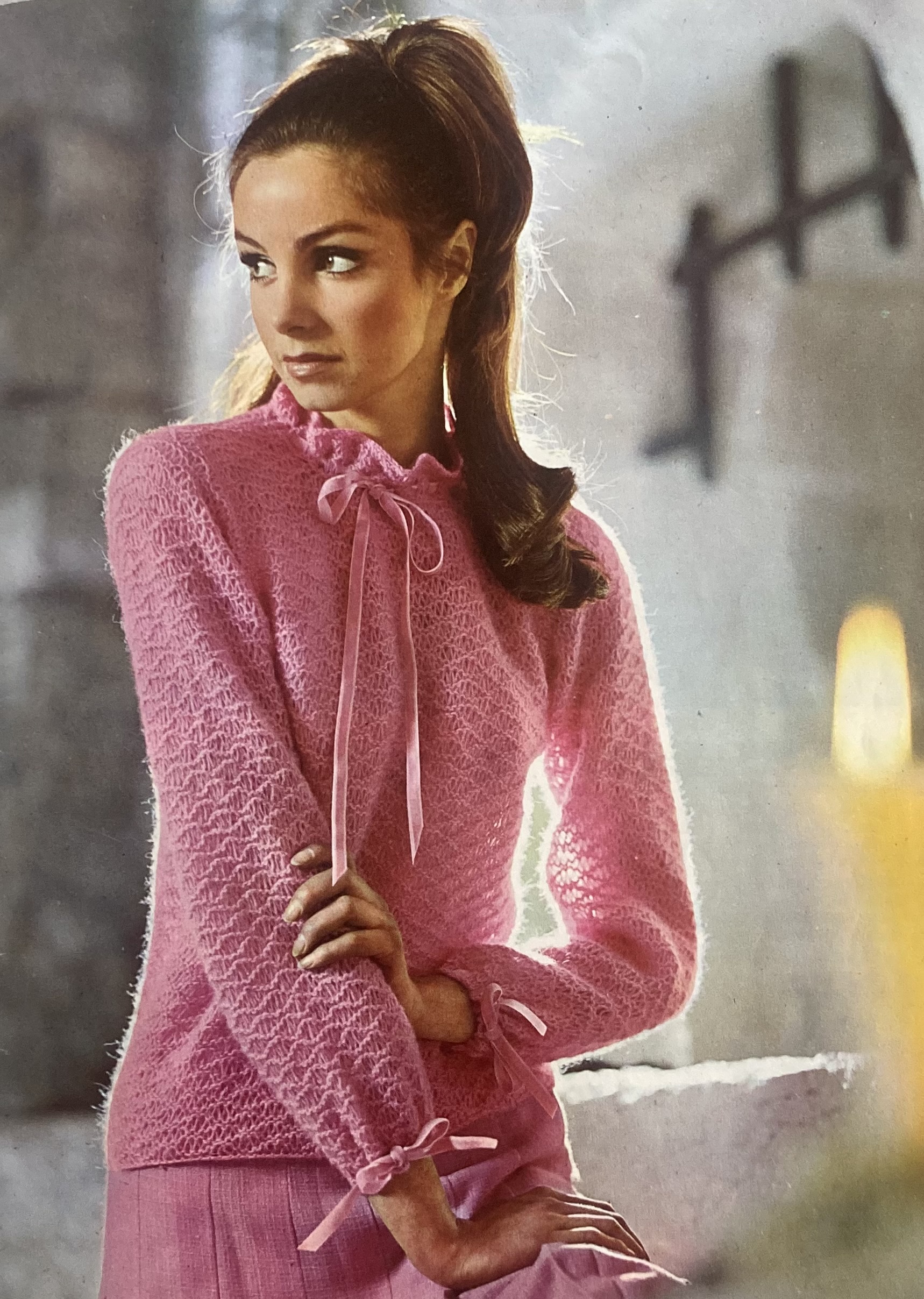
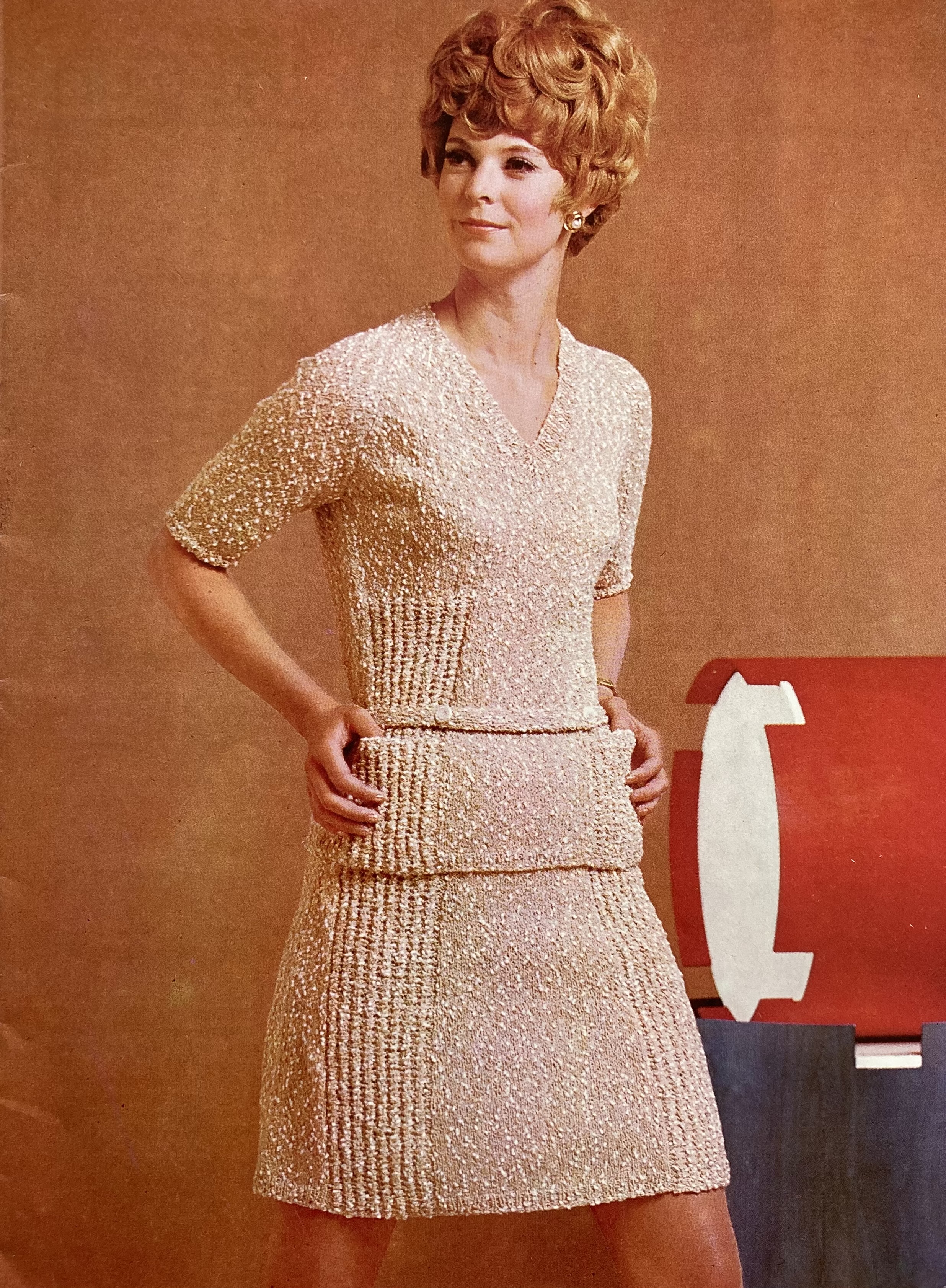
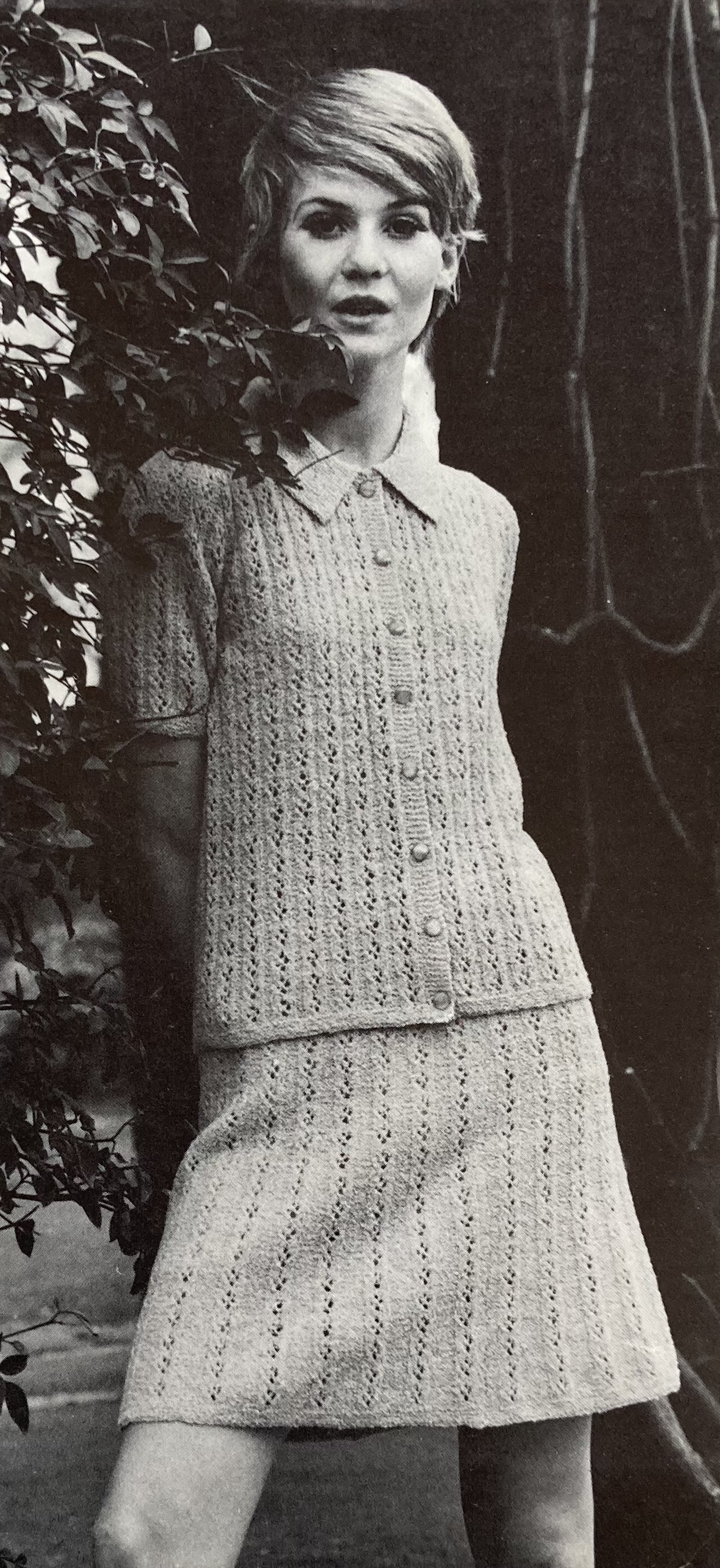
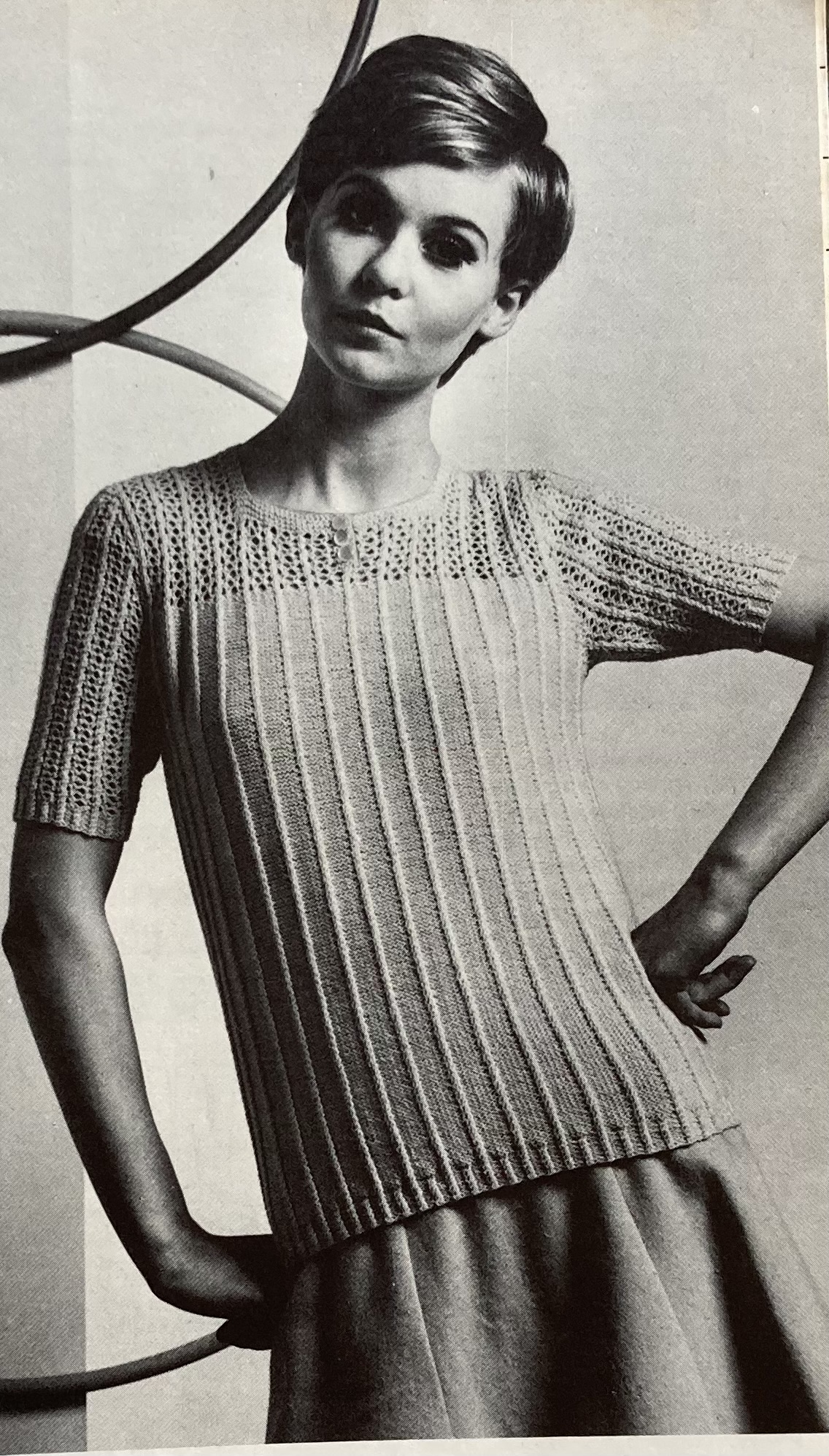
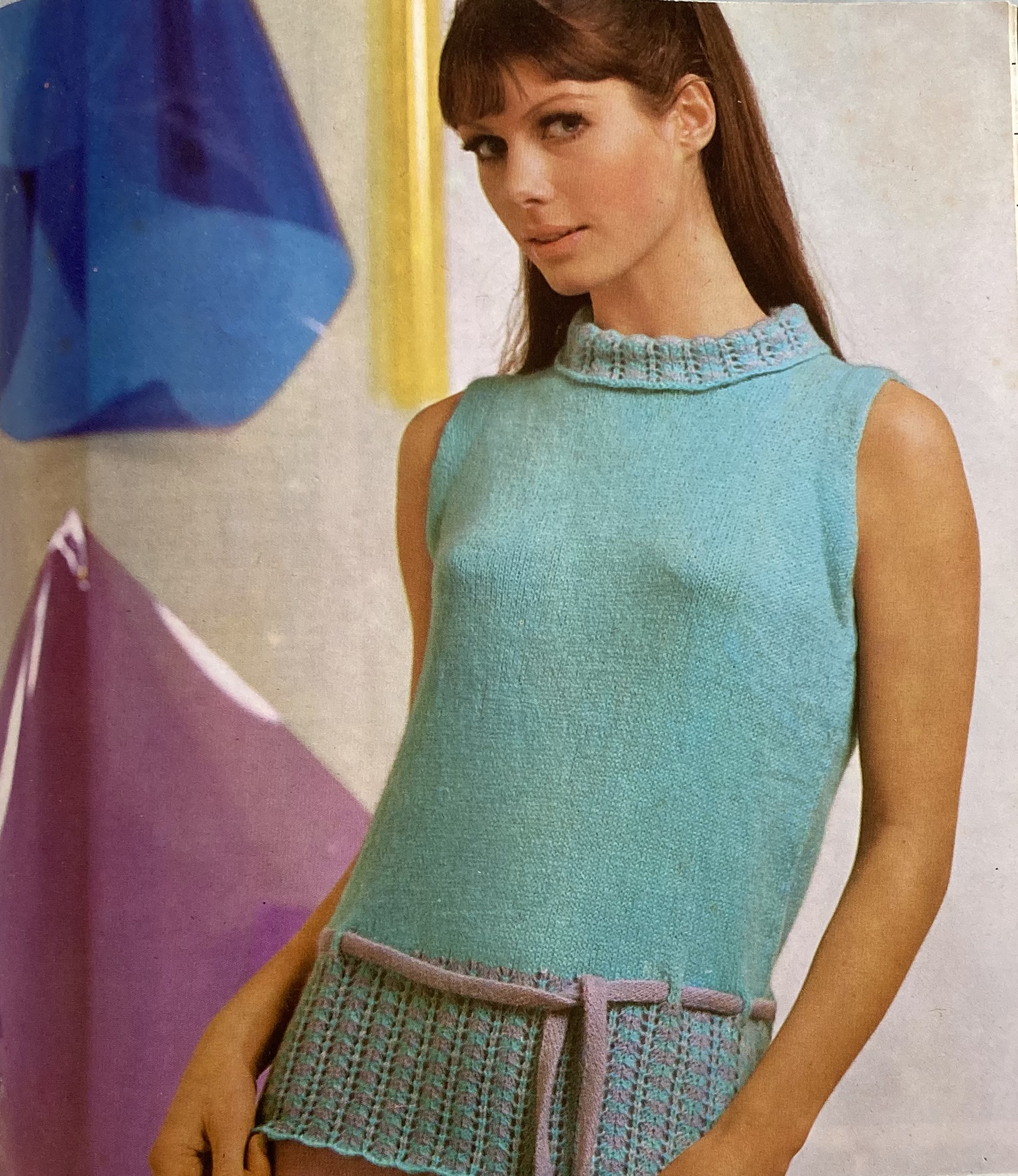
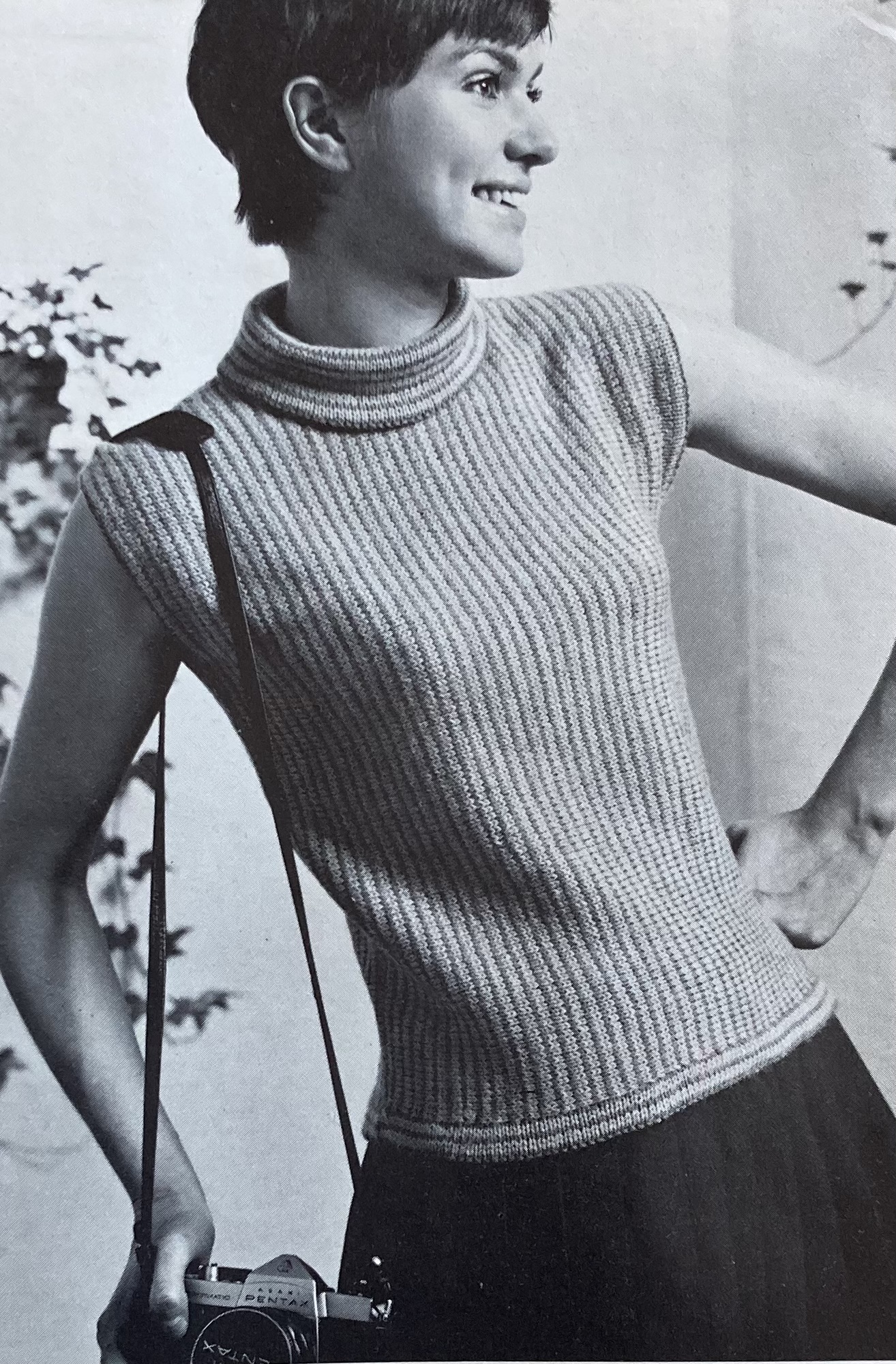
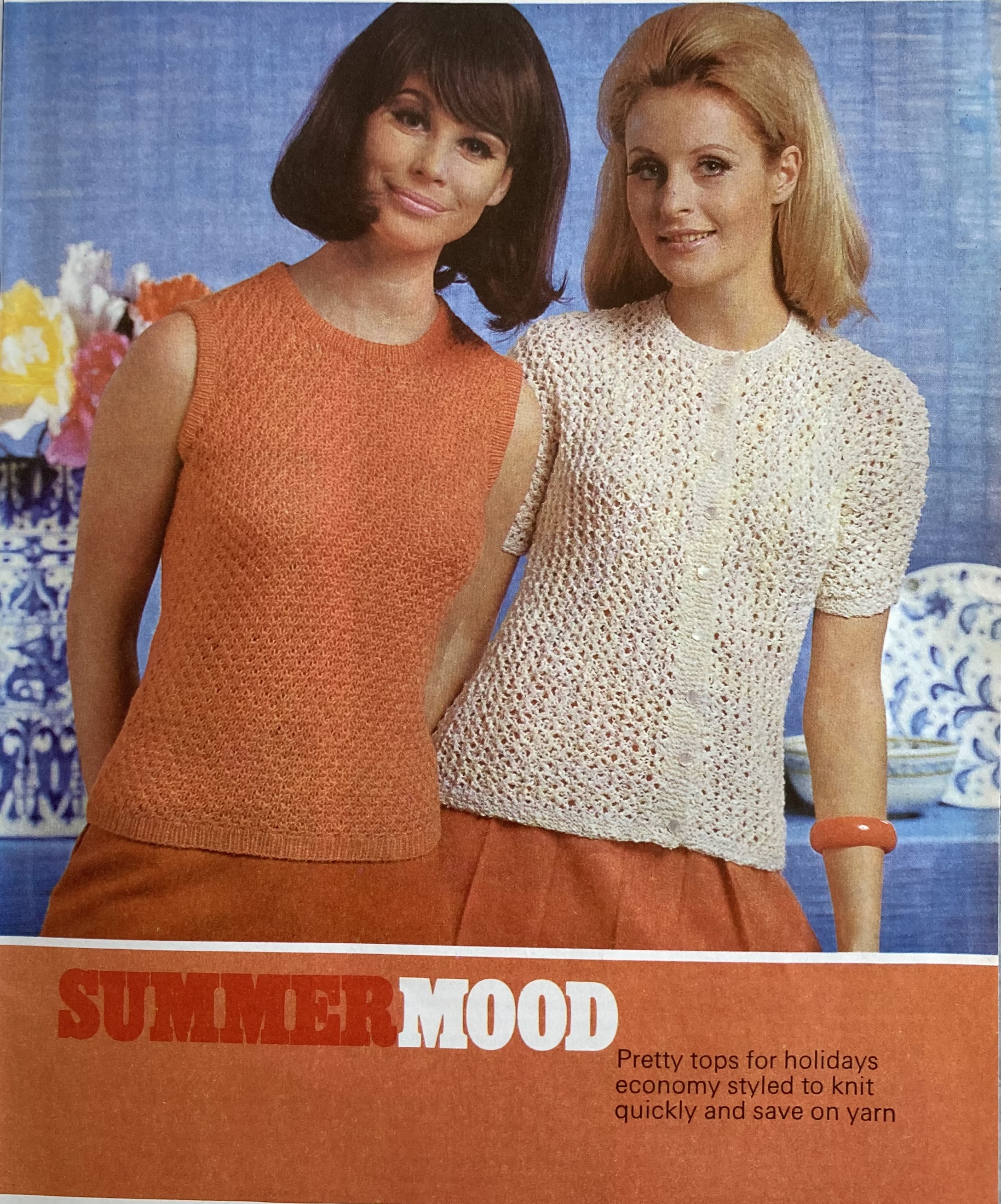
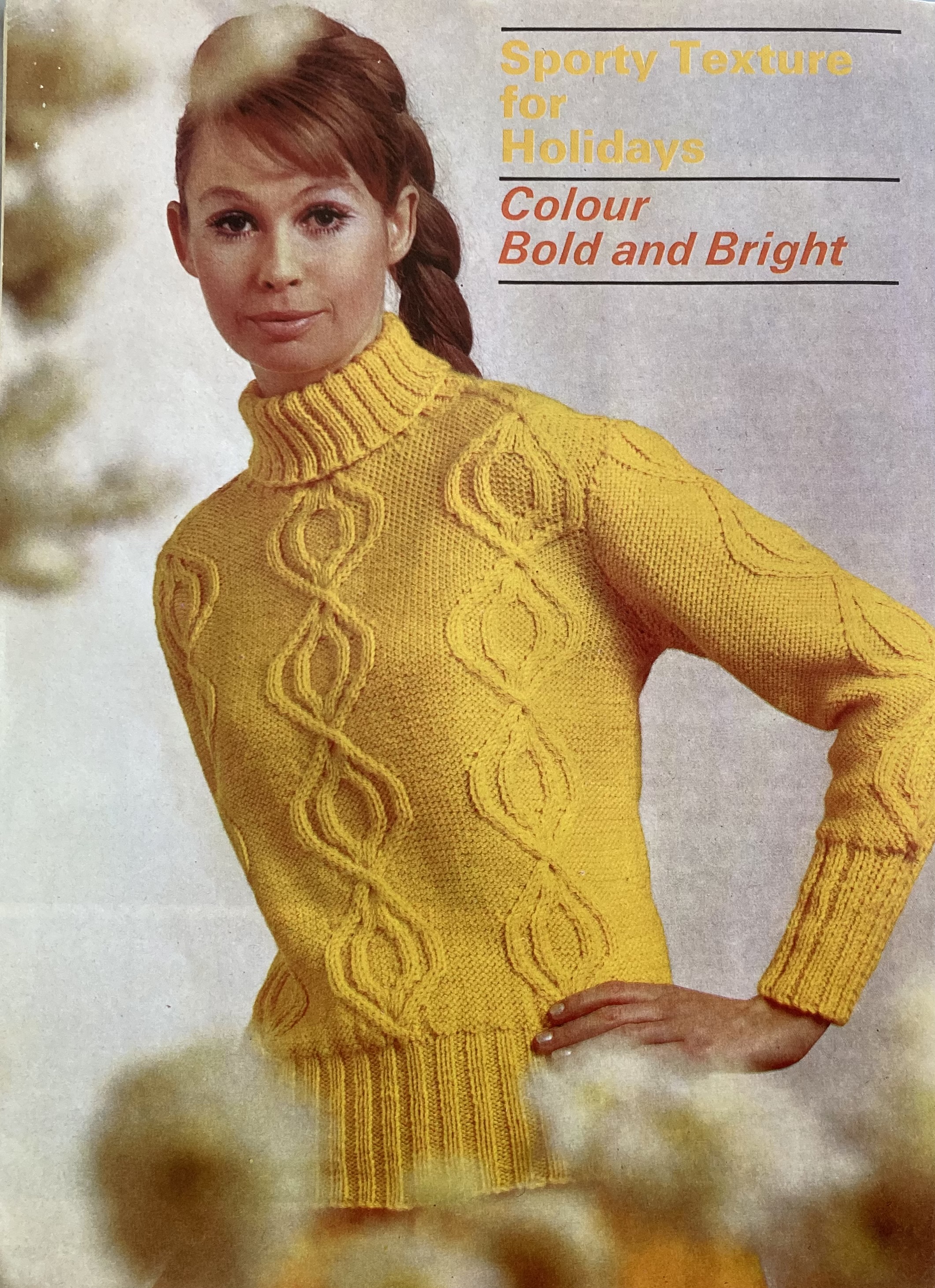
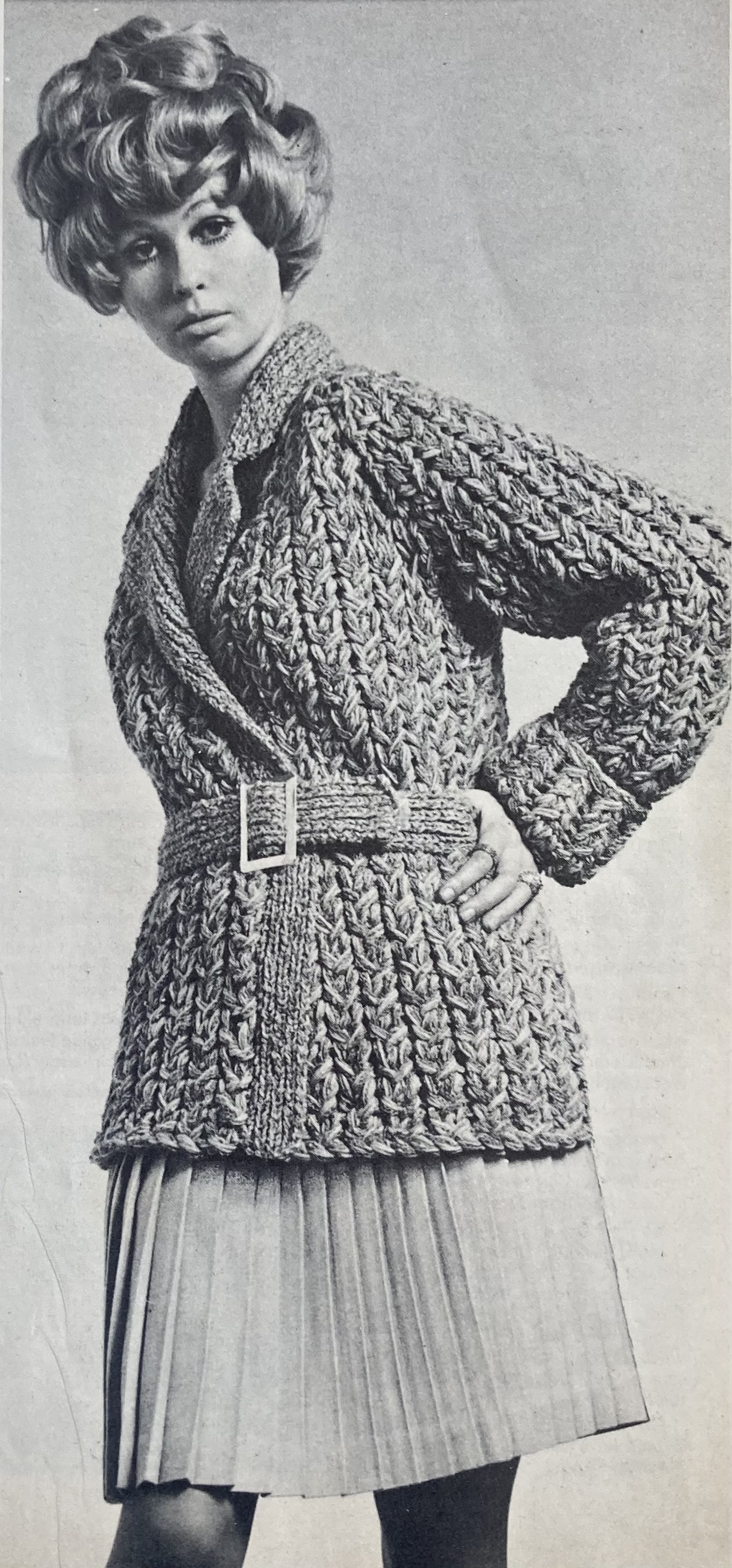
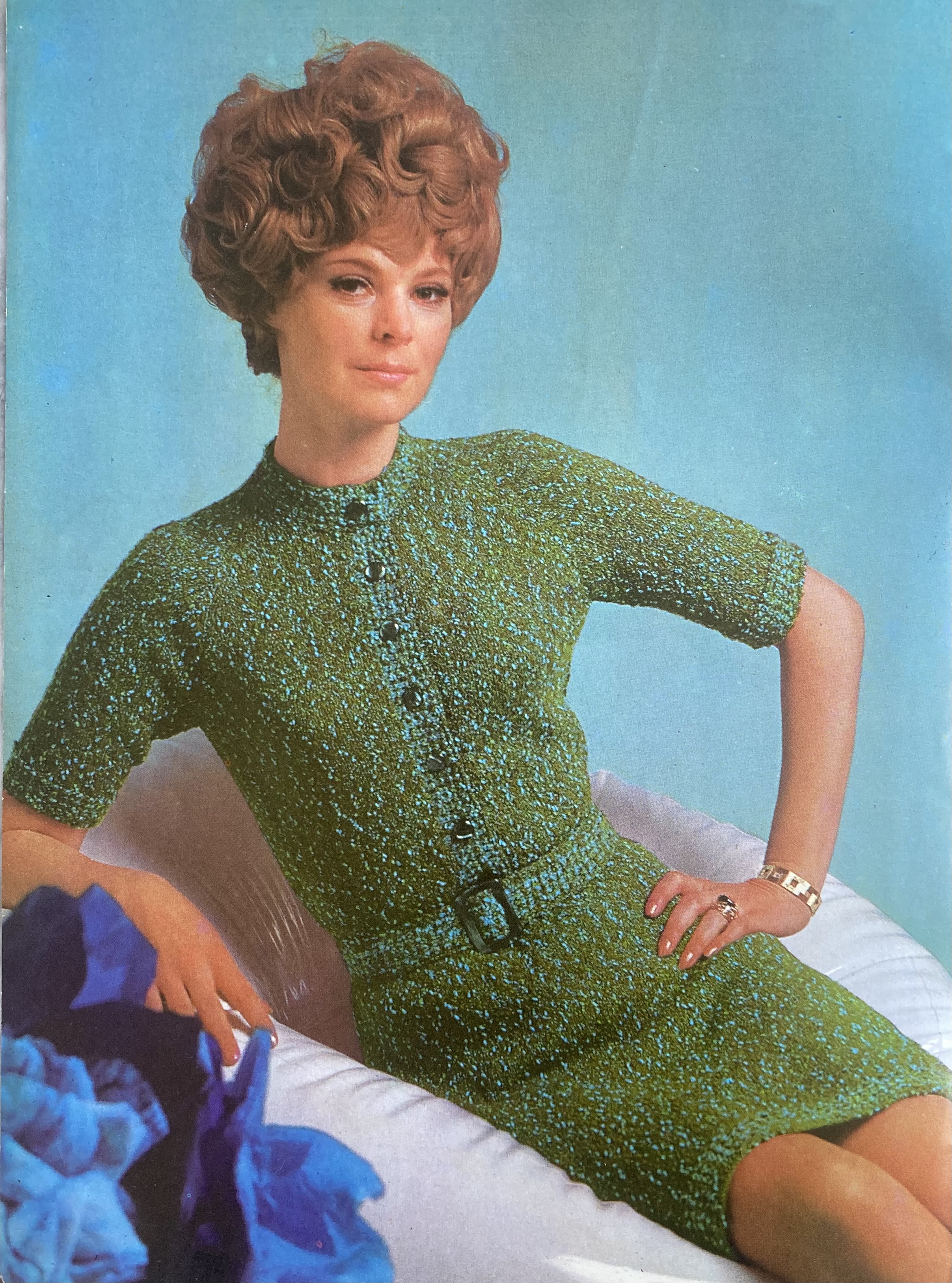
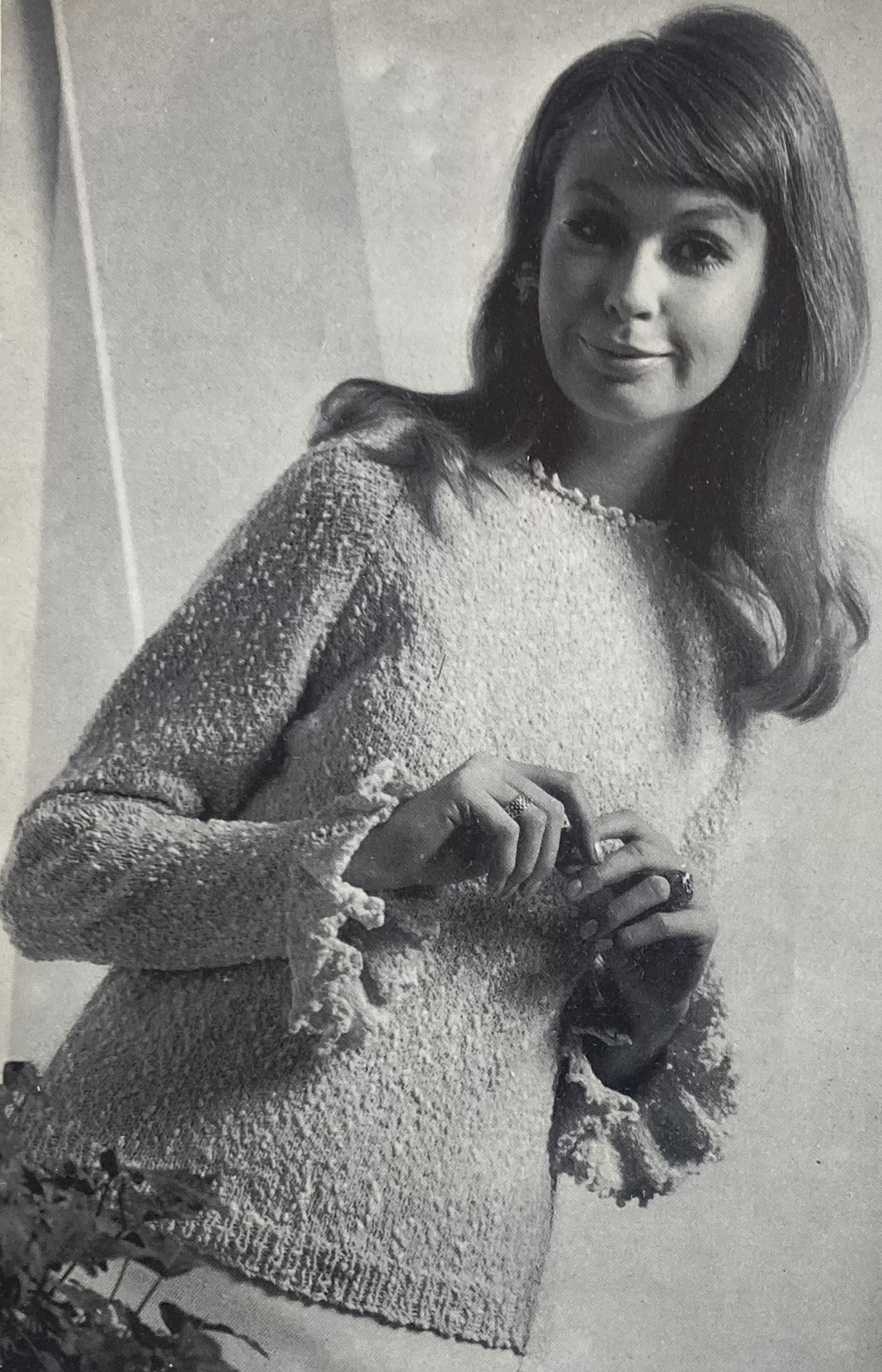
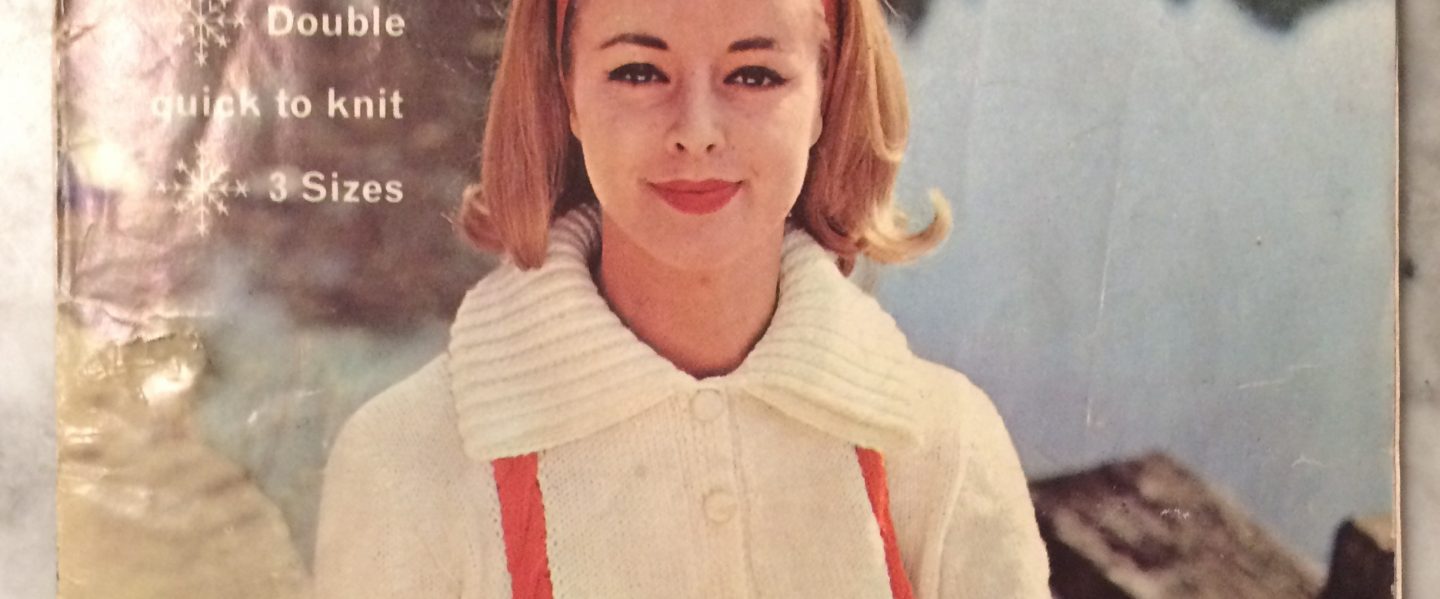
The front cover design, for example, looks more like a fun night on the town to me. Knit in this year’s new bobbly-textured “Four Seasons” wool-synthetic blend, it’s a good example of the growing trend for cardigan-coats, here interpreted as a sleeveless buttoned dress. Other women’s fashions include a striped T-shirt and matching knitted skirt in smooth crepe wool, a long-line cardigan in the same Four Seasons wool, a textured blouse with a ribbed waistline, and a Victorian-era-inspired blouse in dropped-stitch lace in a “Romantic Mood”. Pastels (the long cardigan is “Surf Blue” and the ribbed-waist blouse “Beryl”) and especially pink are this season’s colours, or if uni-colour, in textured yarn and patterns.

(Apropos colours: there are so many more colour photos in the latest issues!)

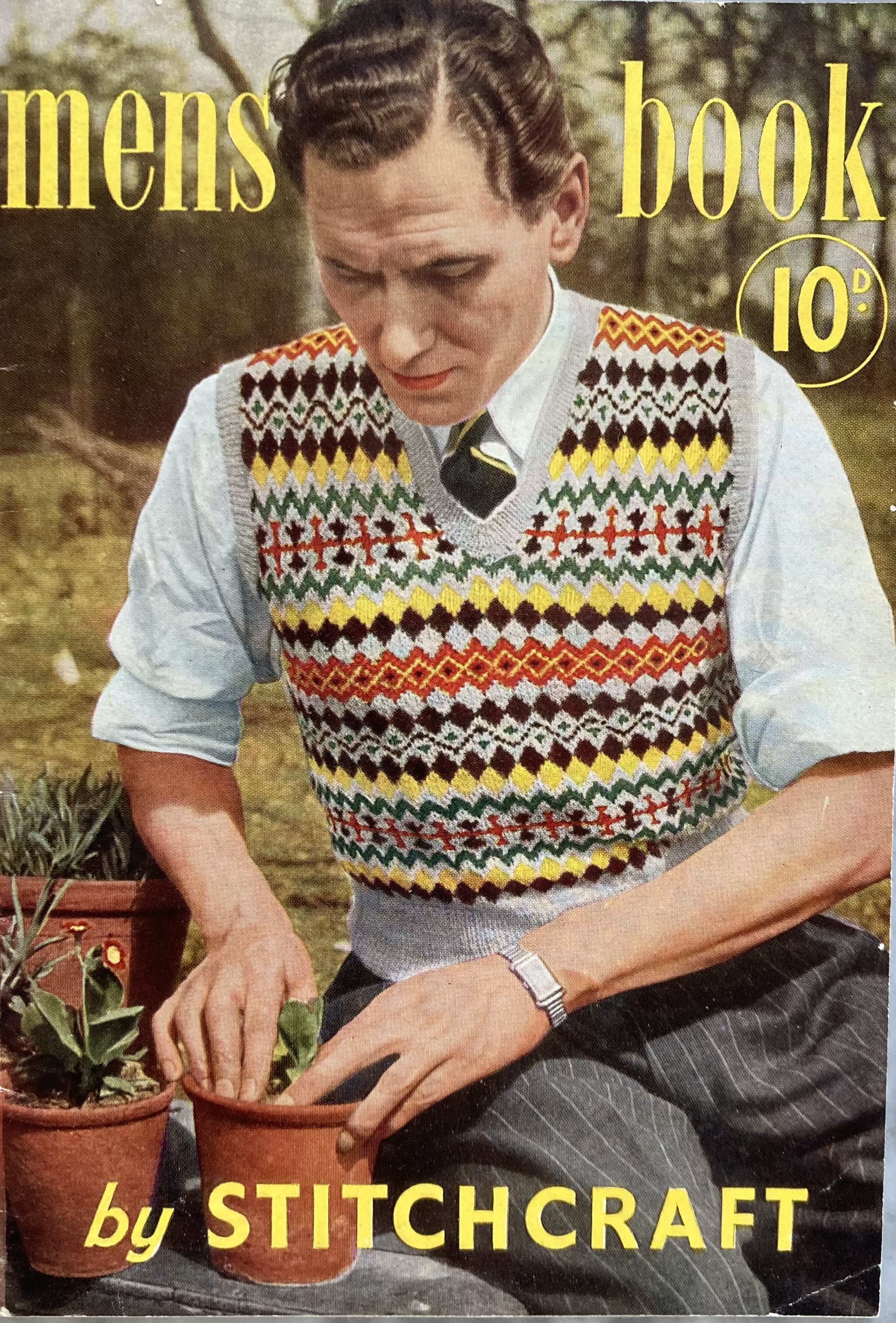
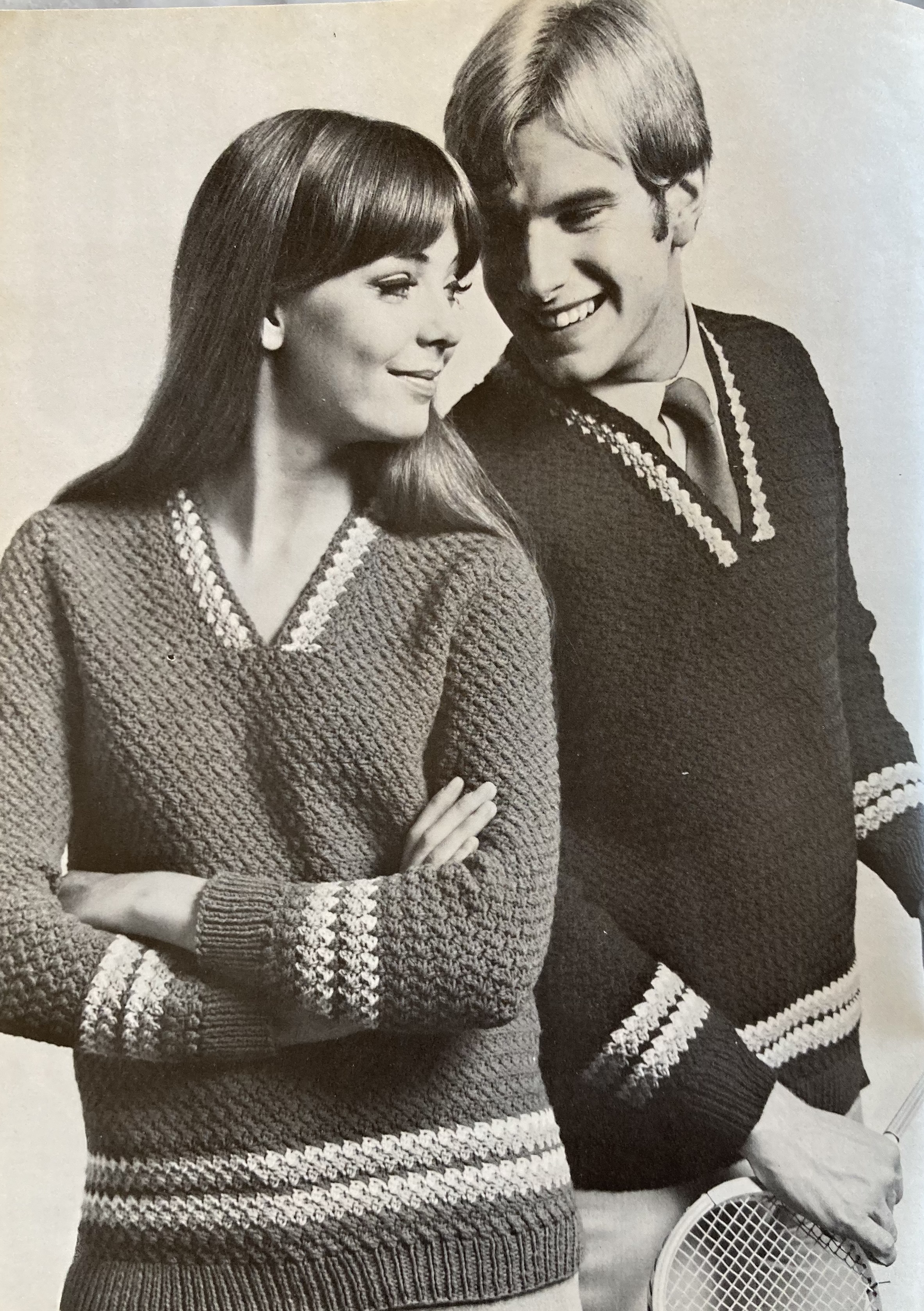
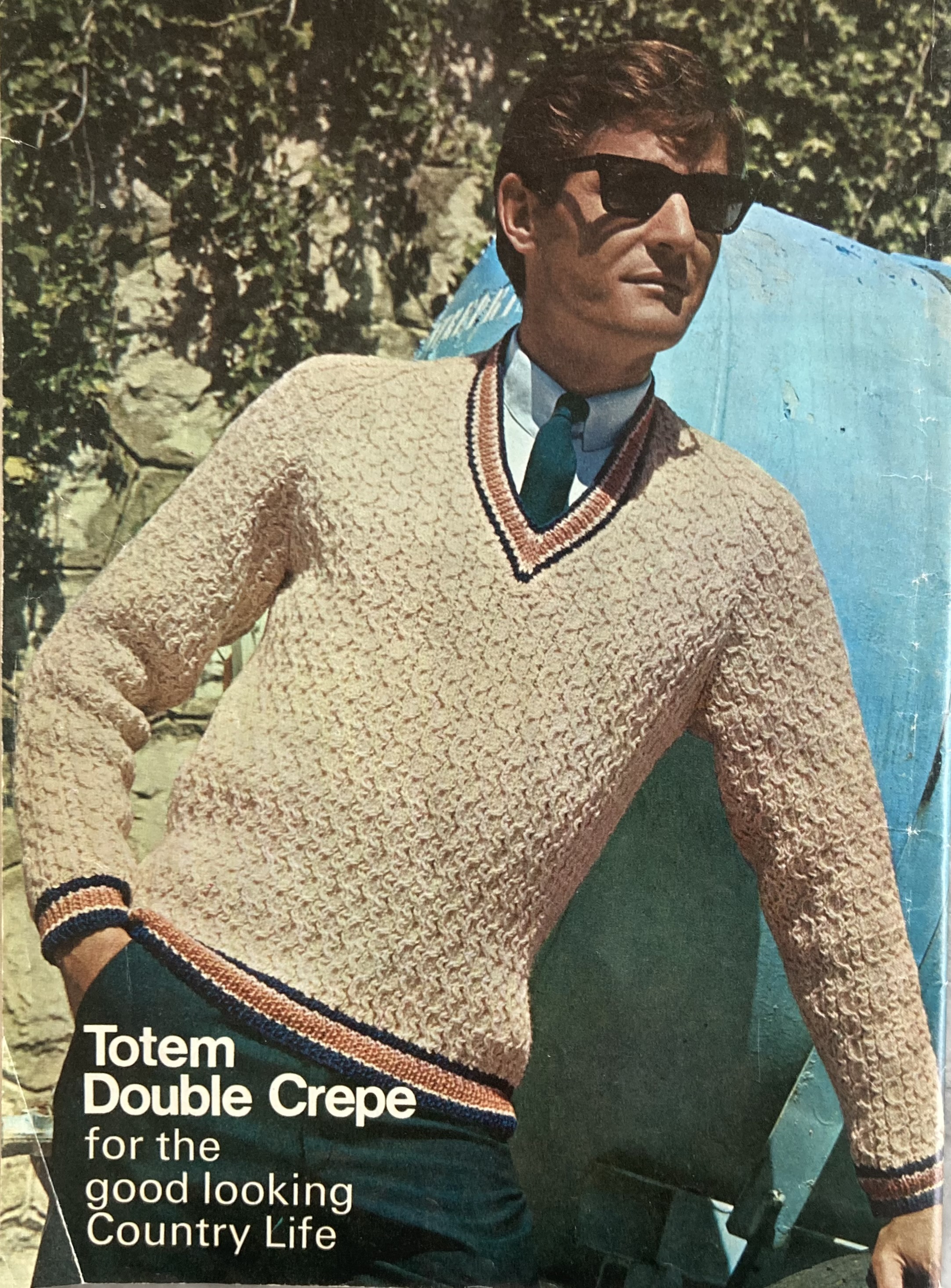
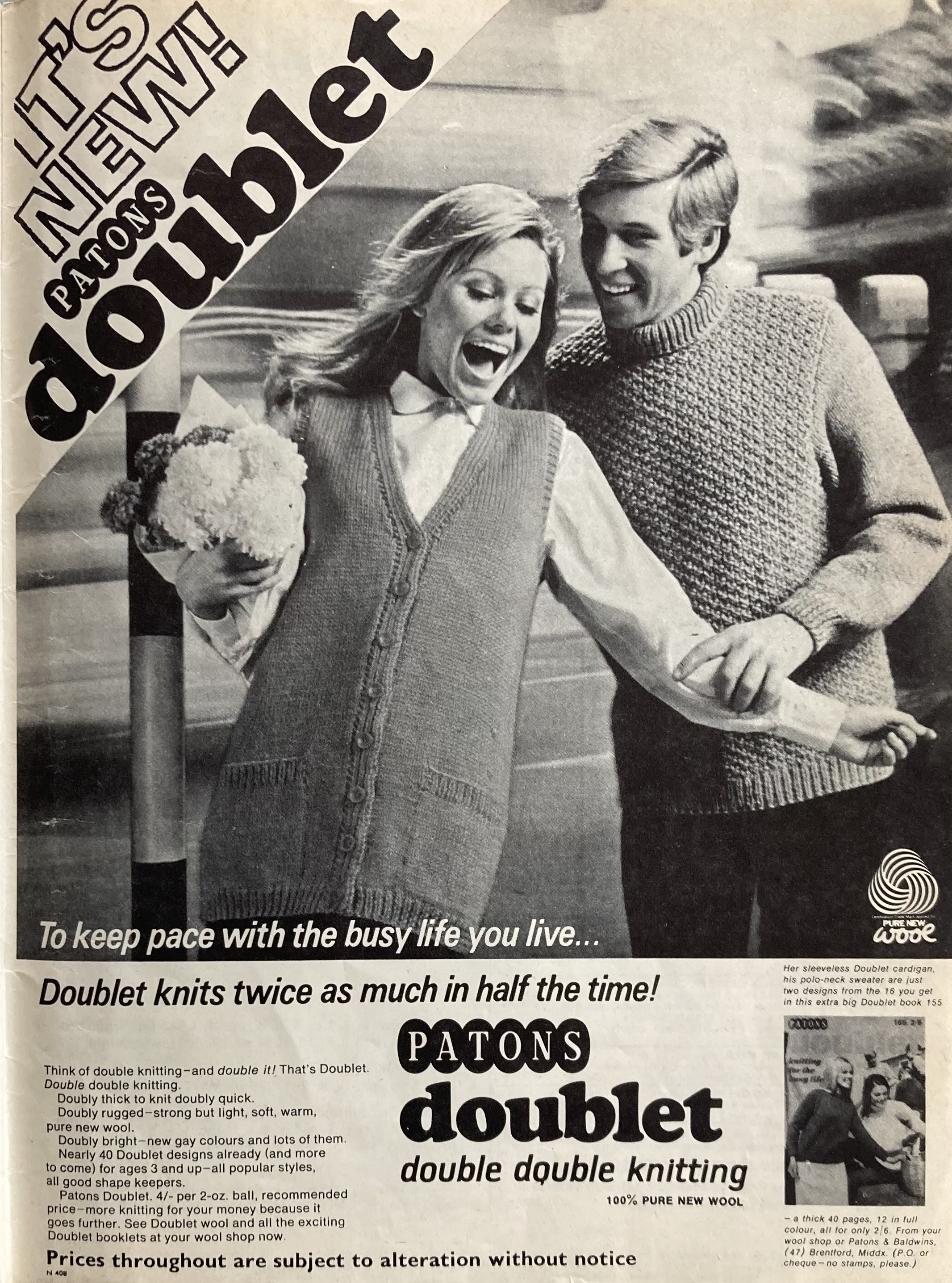
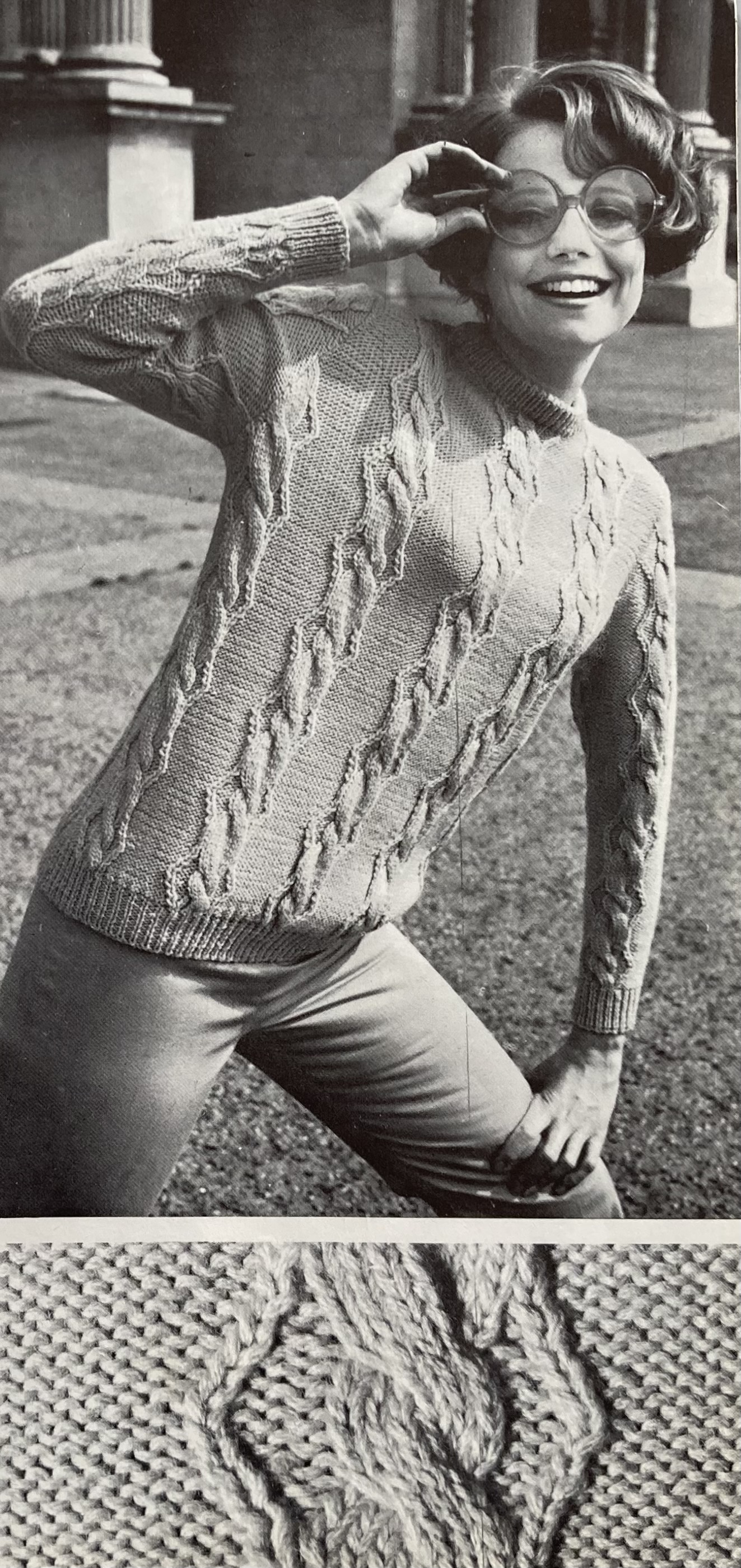
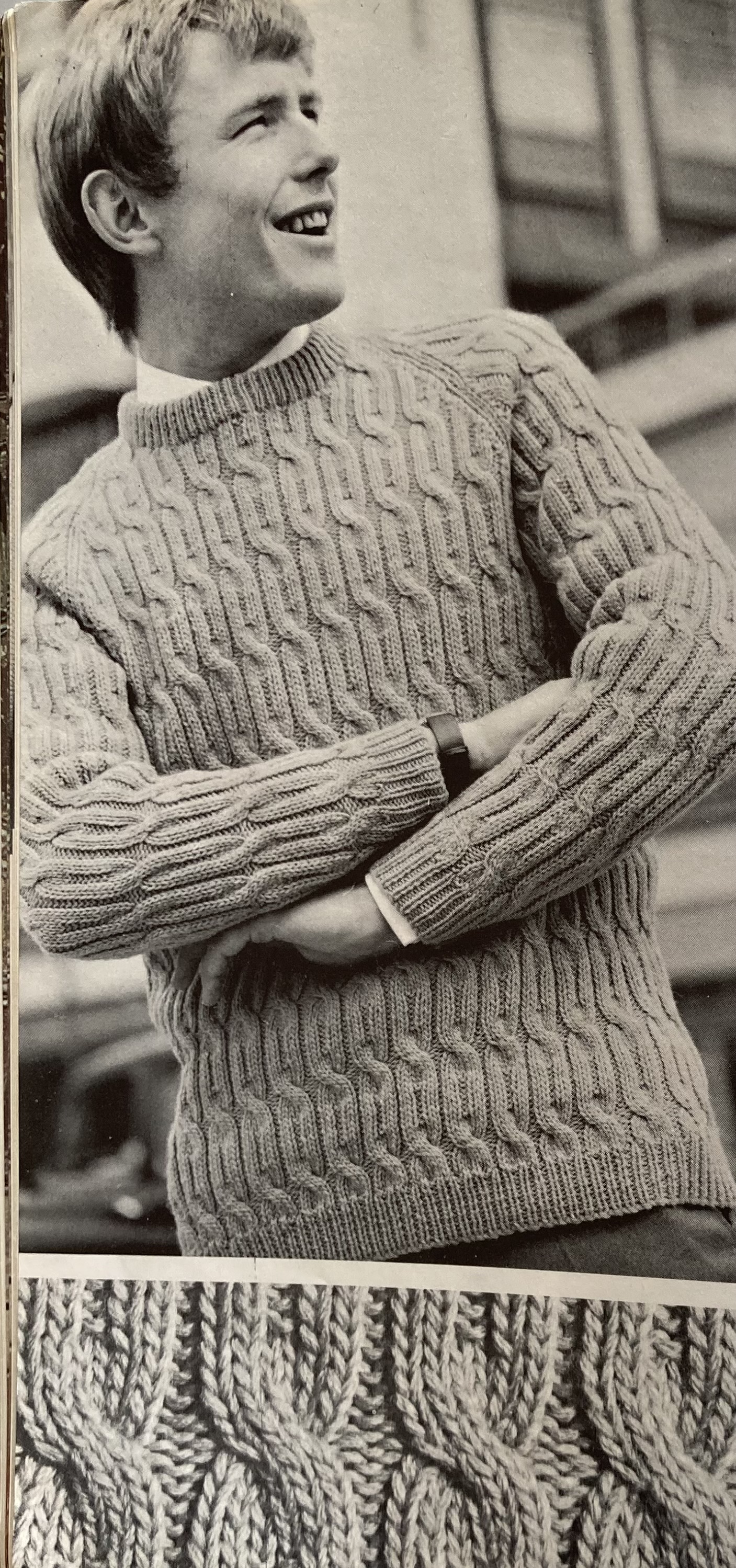
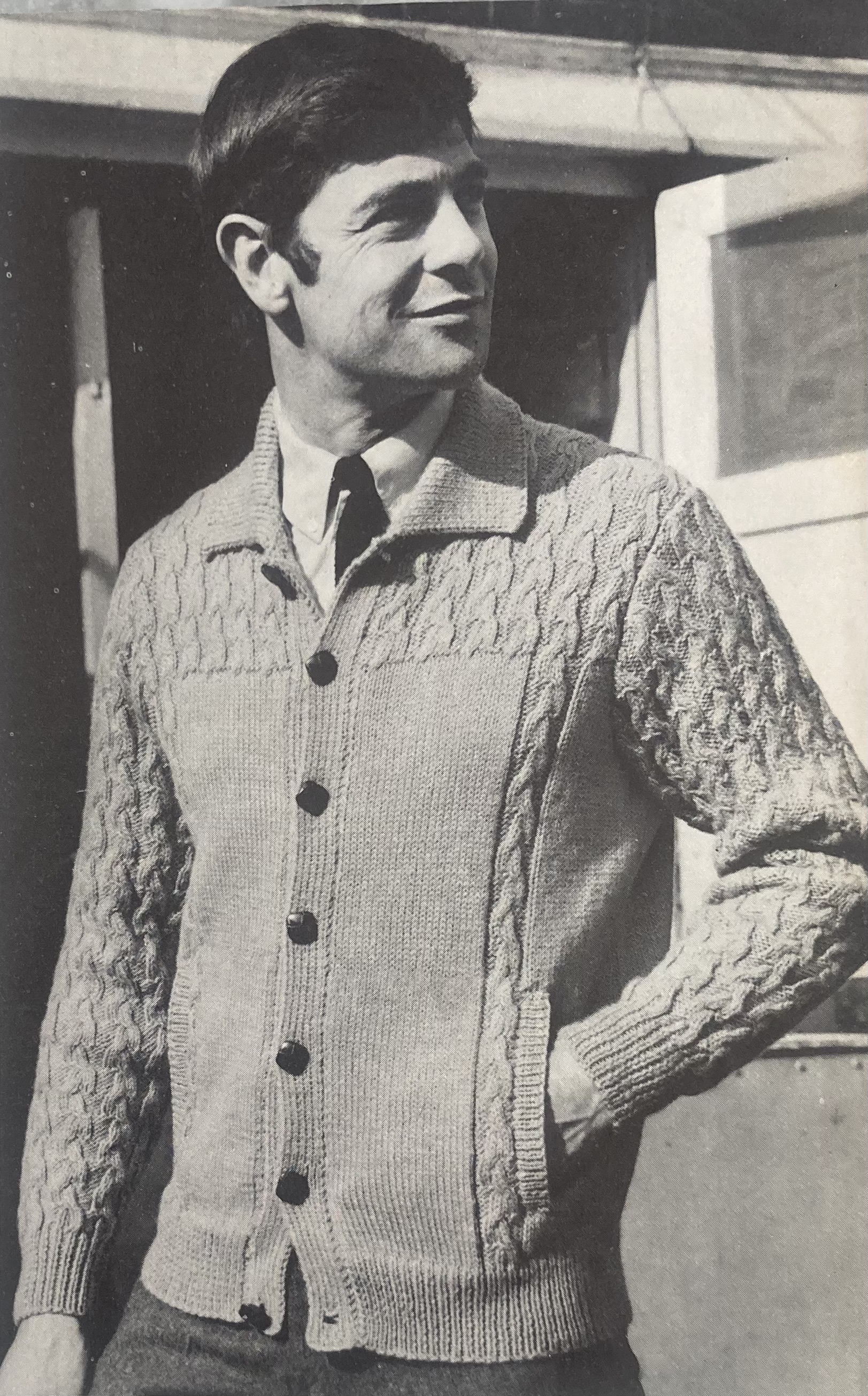
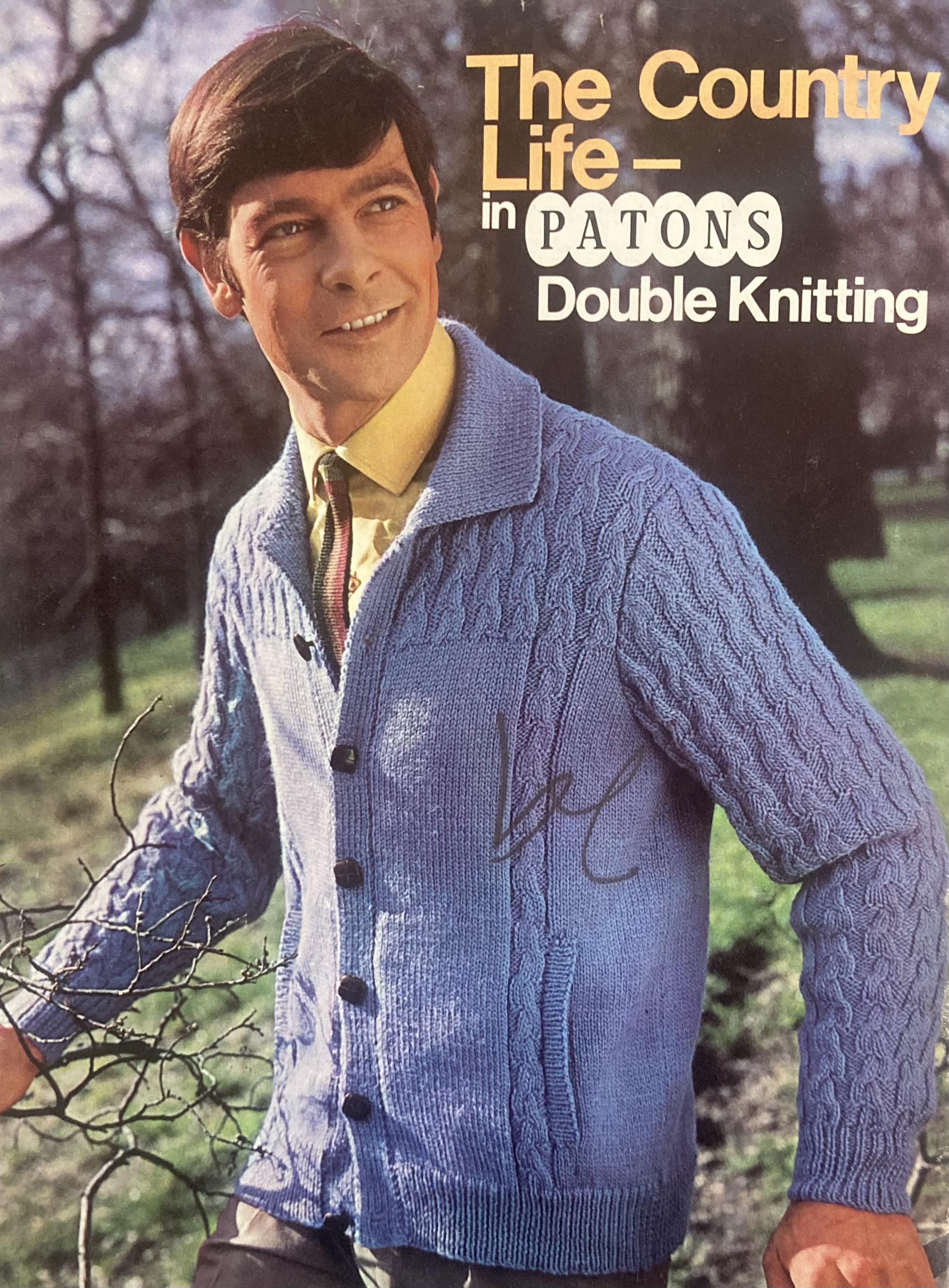
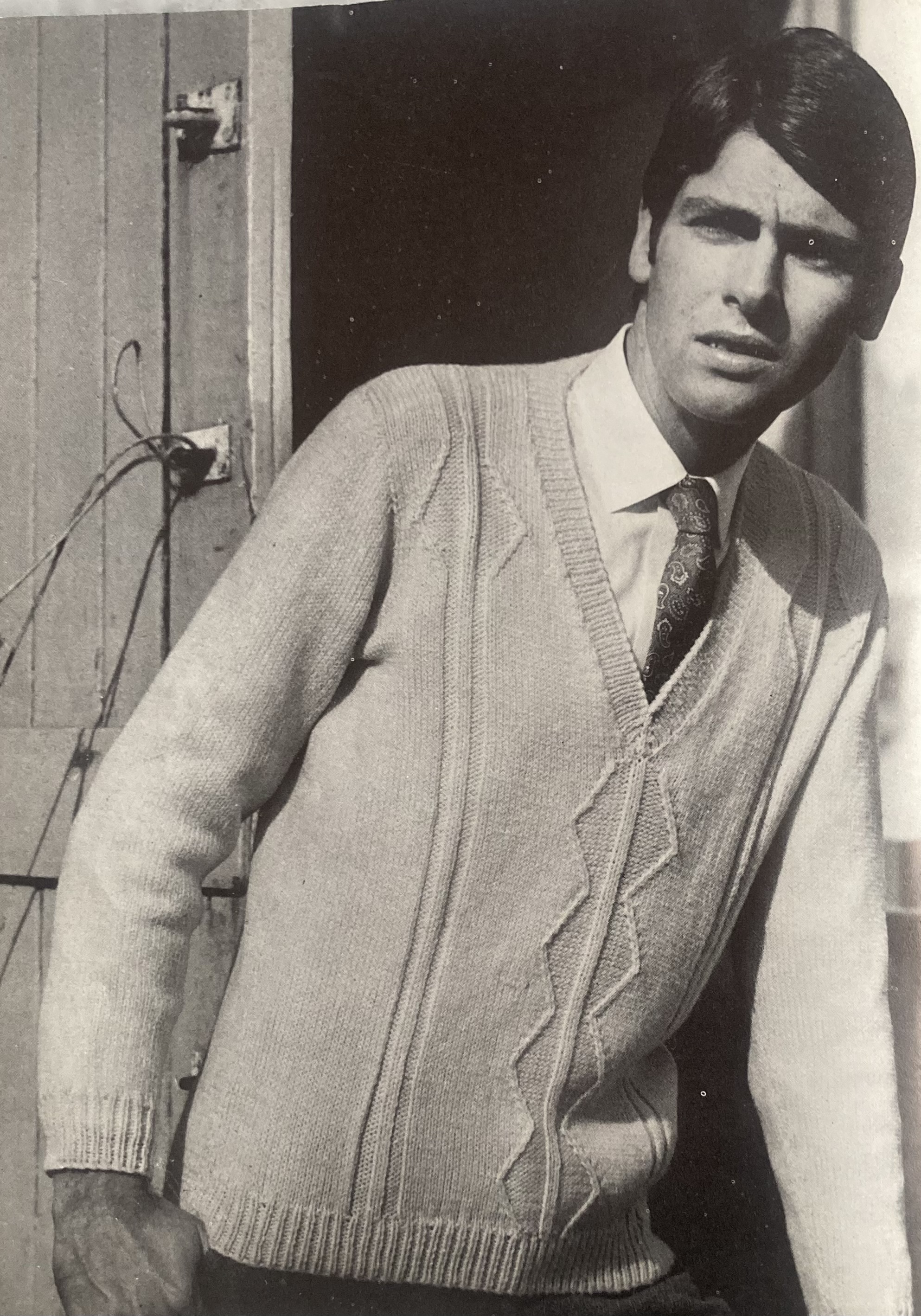
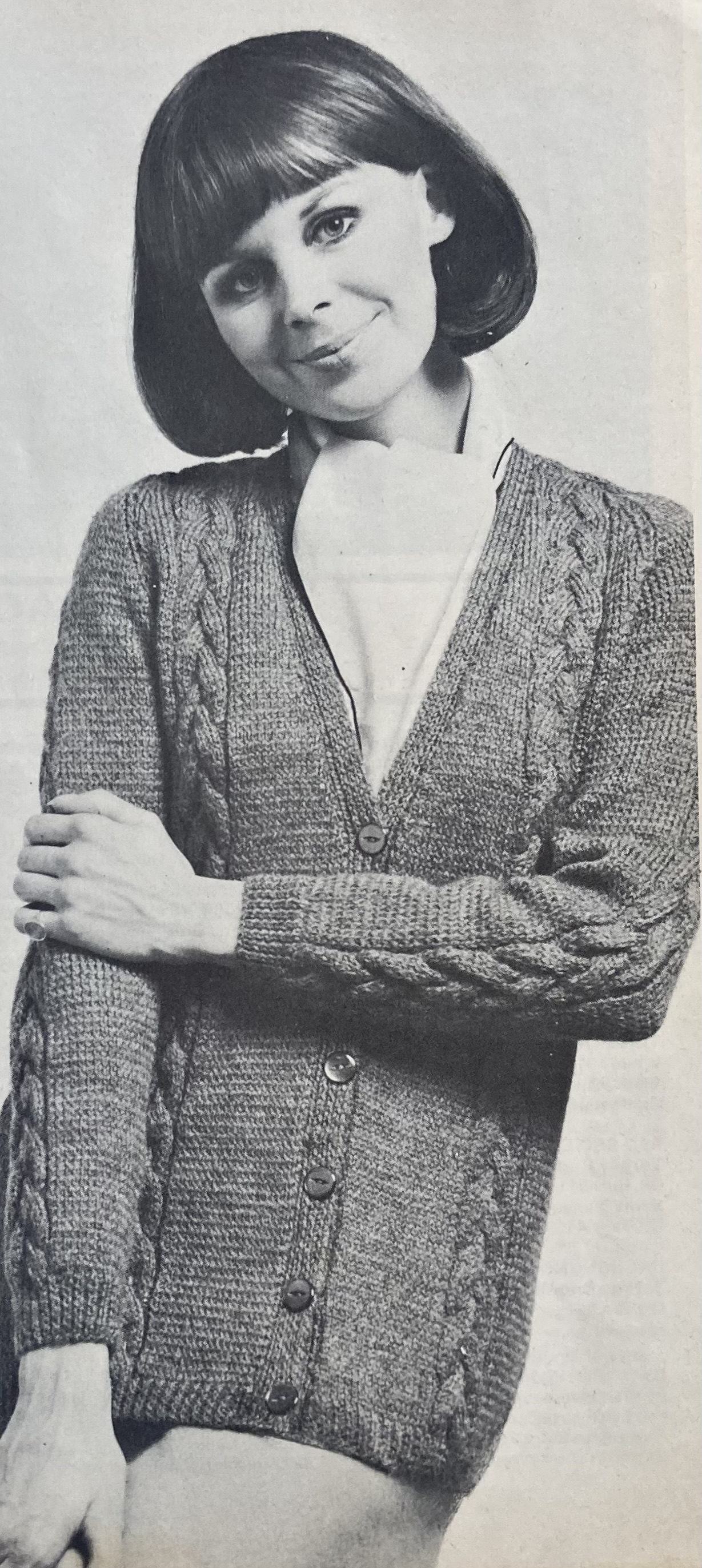
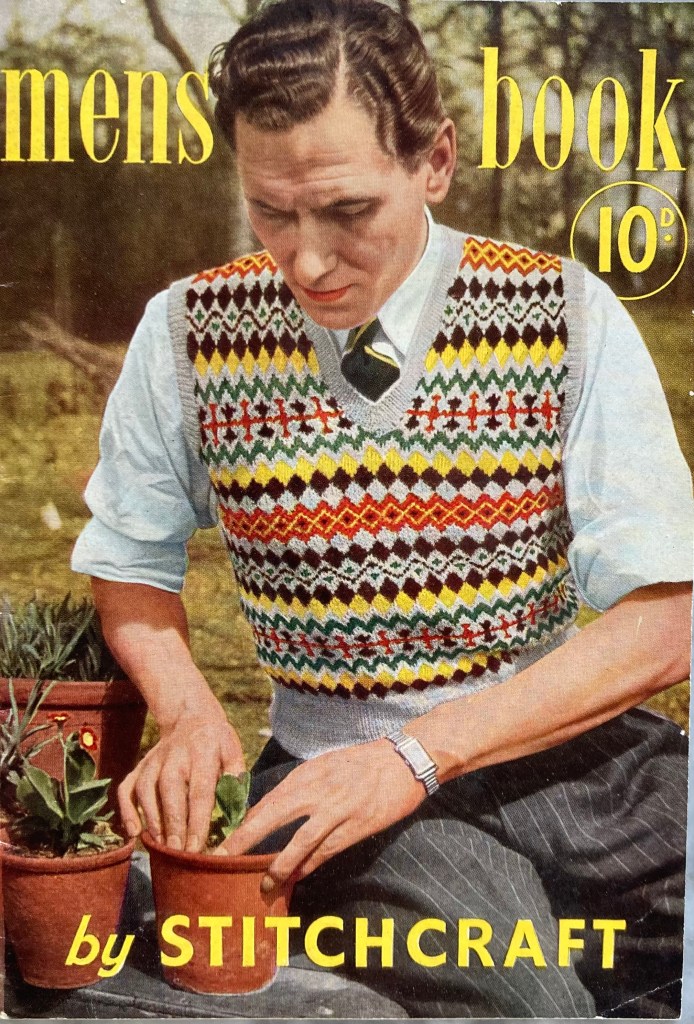
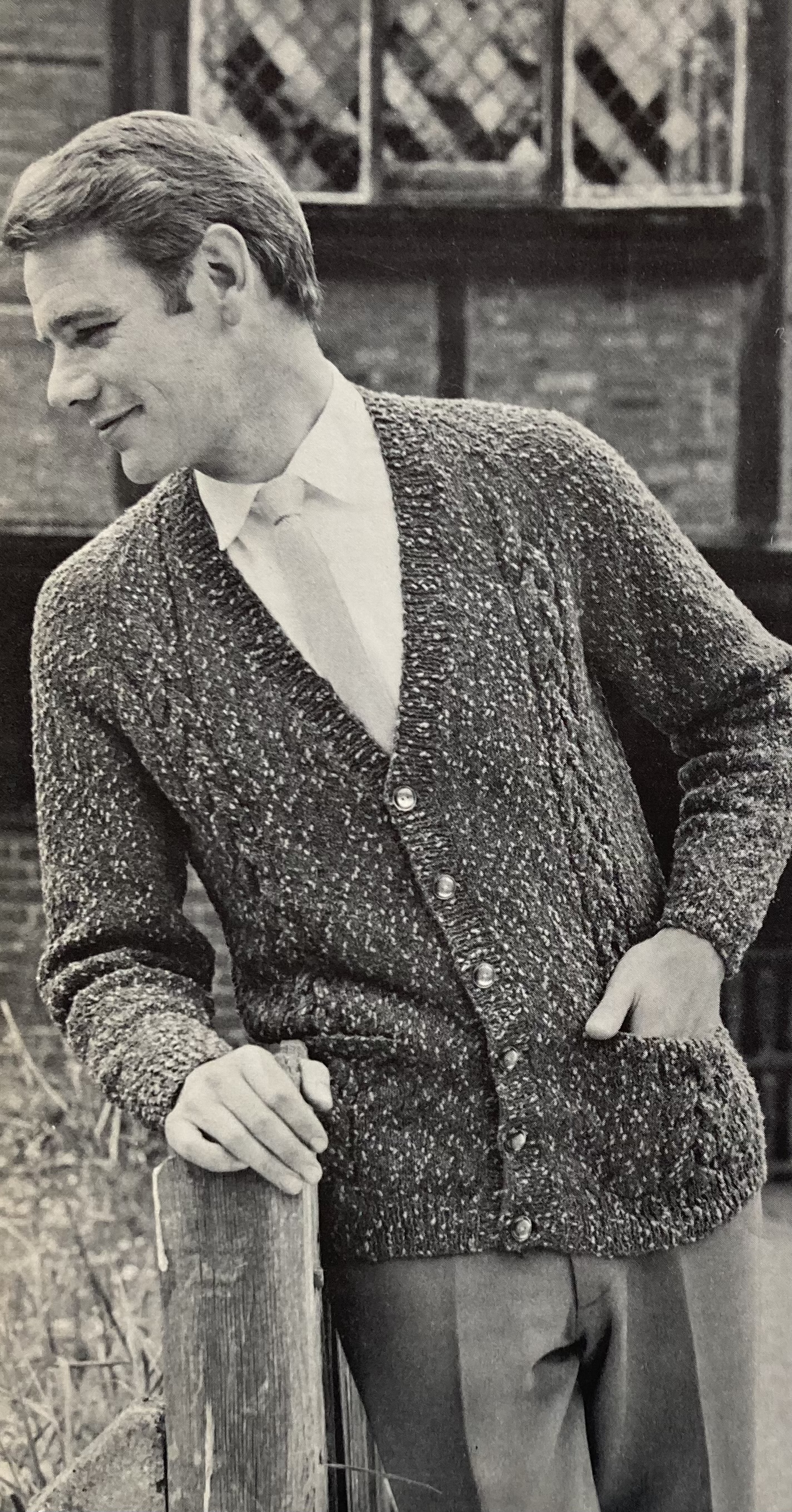
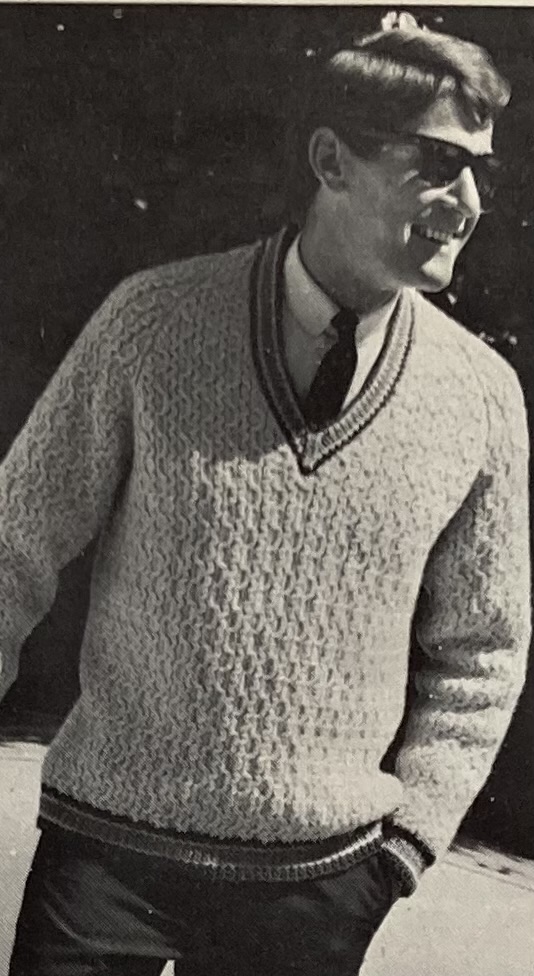
For men, there’s a truly “country” cardigan in Patons Double Knitting wool, with vertical pockets and cable patterning on the sleeves and yoke. I cannot imagine a more 1960s male fashion photo than the one on the back cover. The other men’s design is a similarly loose-fitting and casual (i.e. worn with the casual dress shirt and tie; we are on holiday in the country, after all) pullover with a zig-zag texture accent. Suggested colours are “Musk” or “Earlybird Yellow”, matching the pastel theme from the women’s garments.

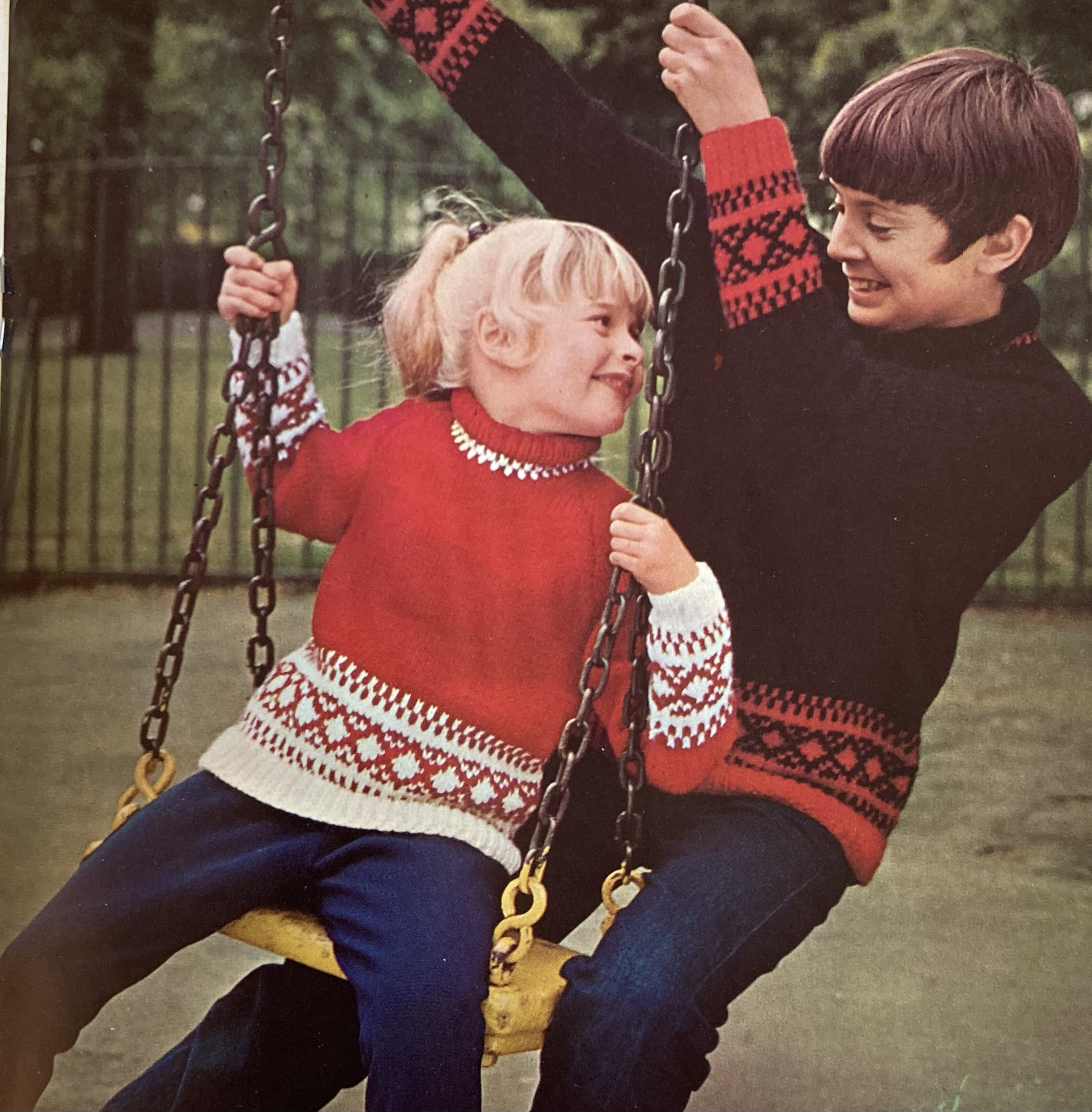
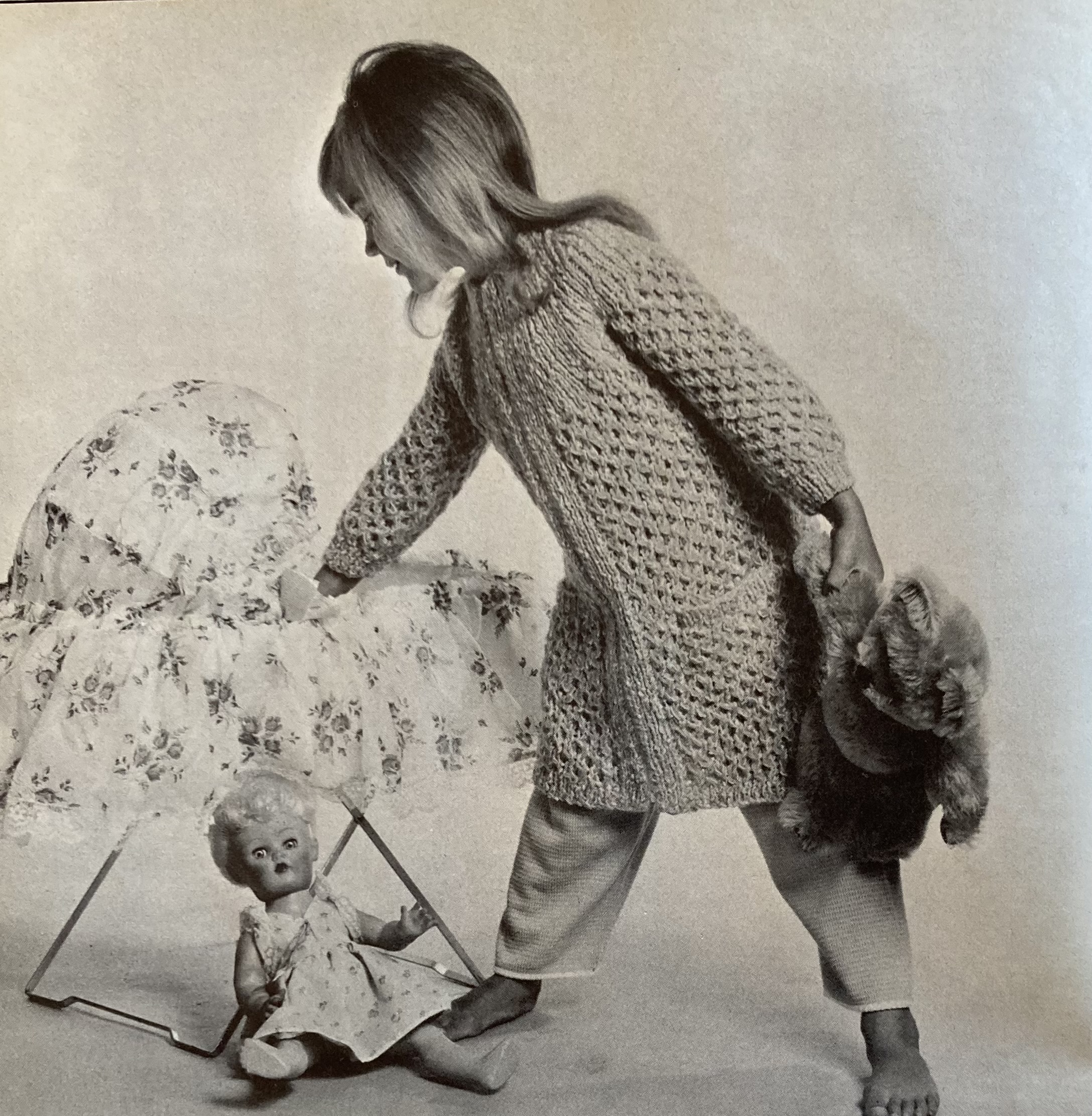
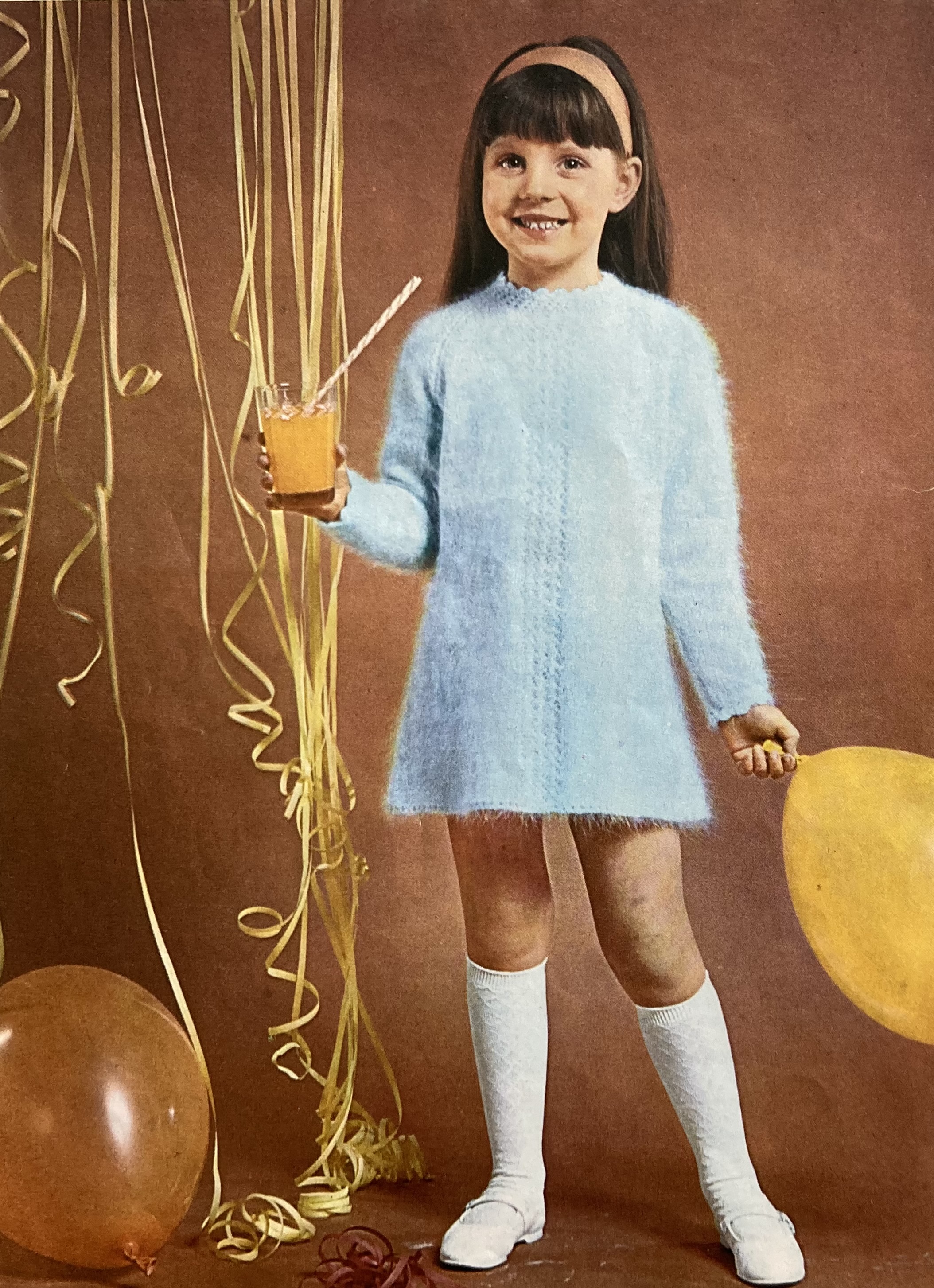
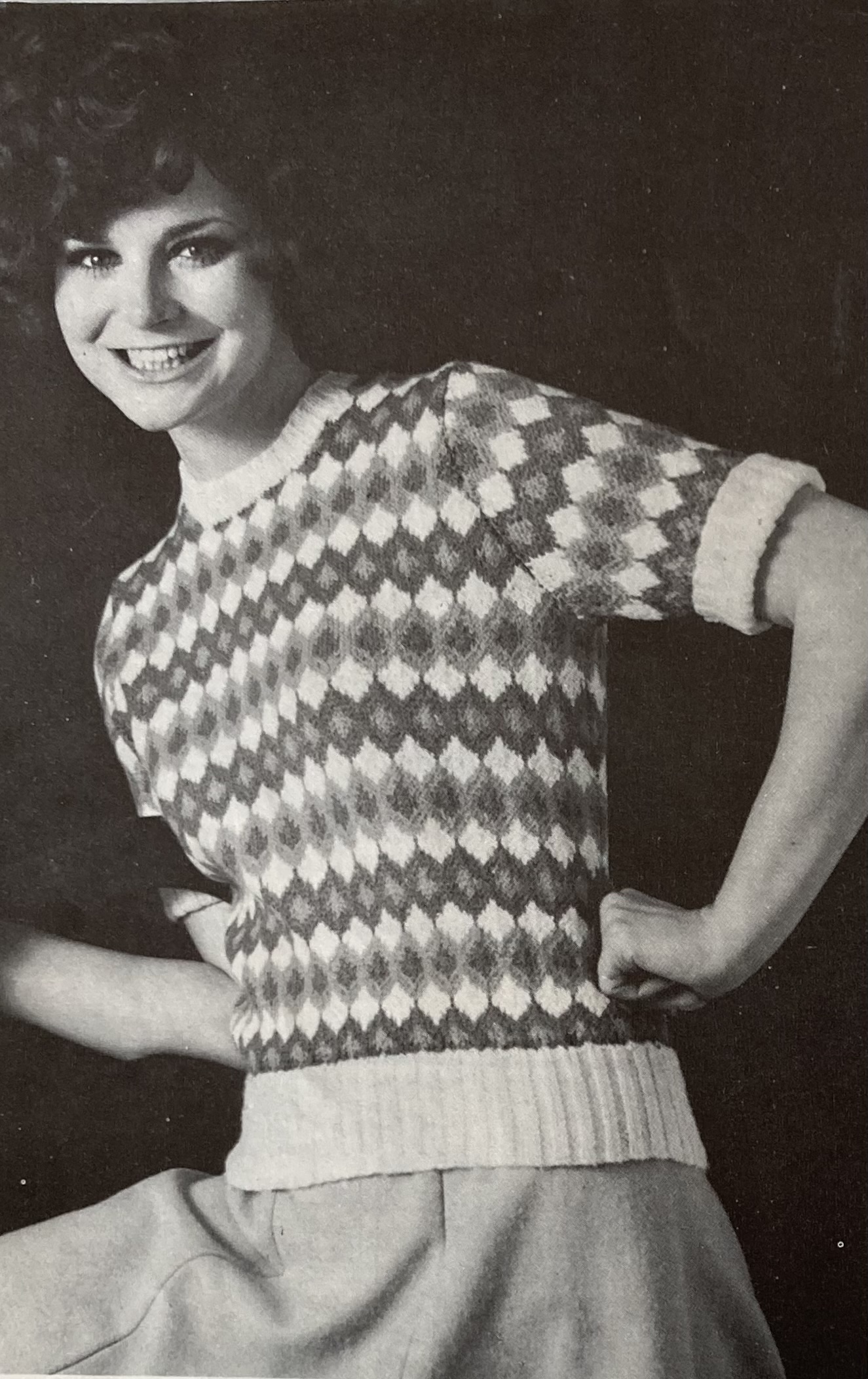
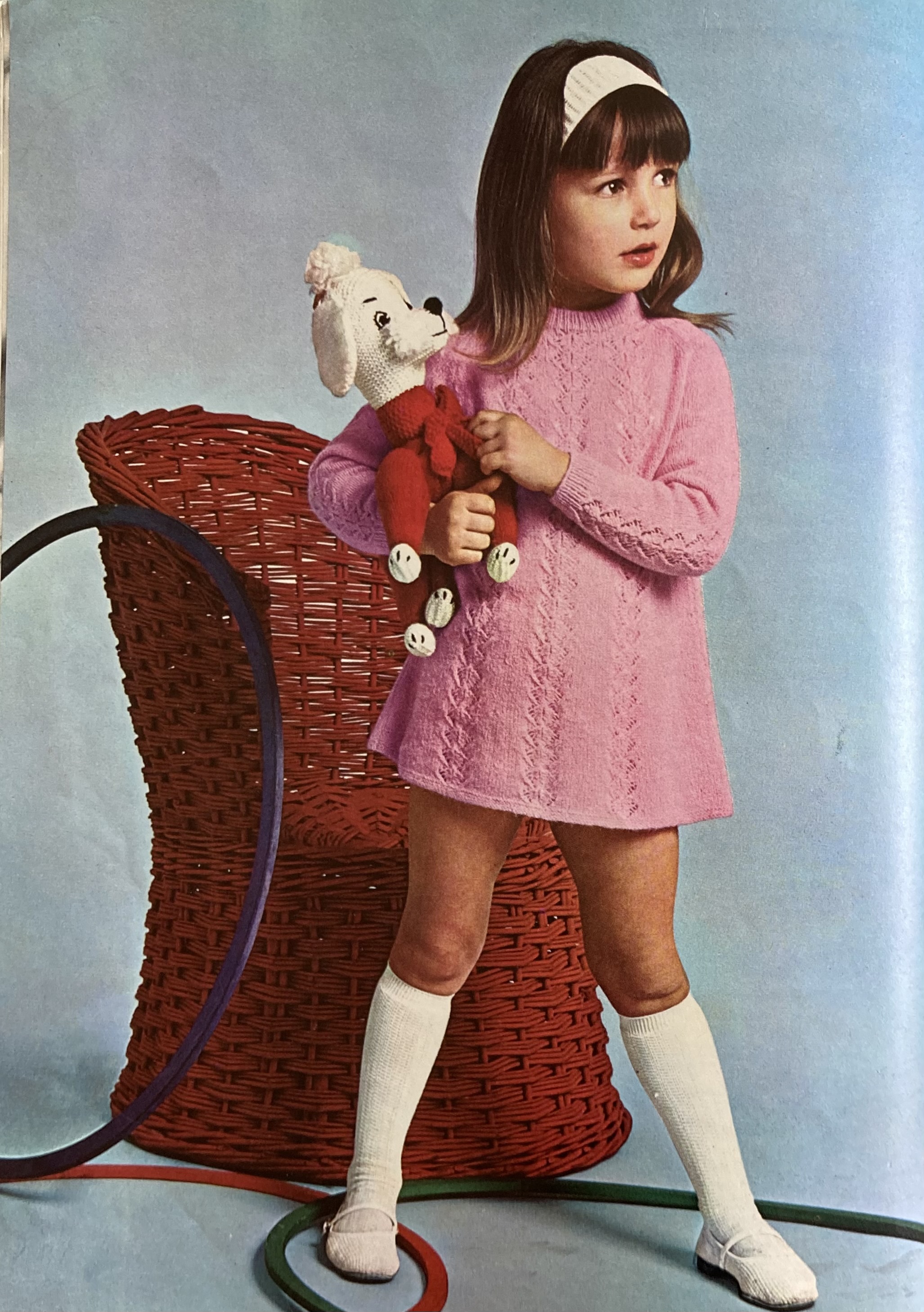
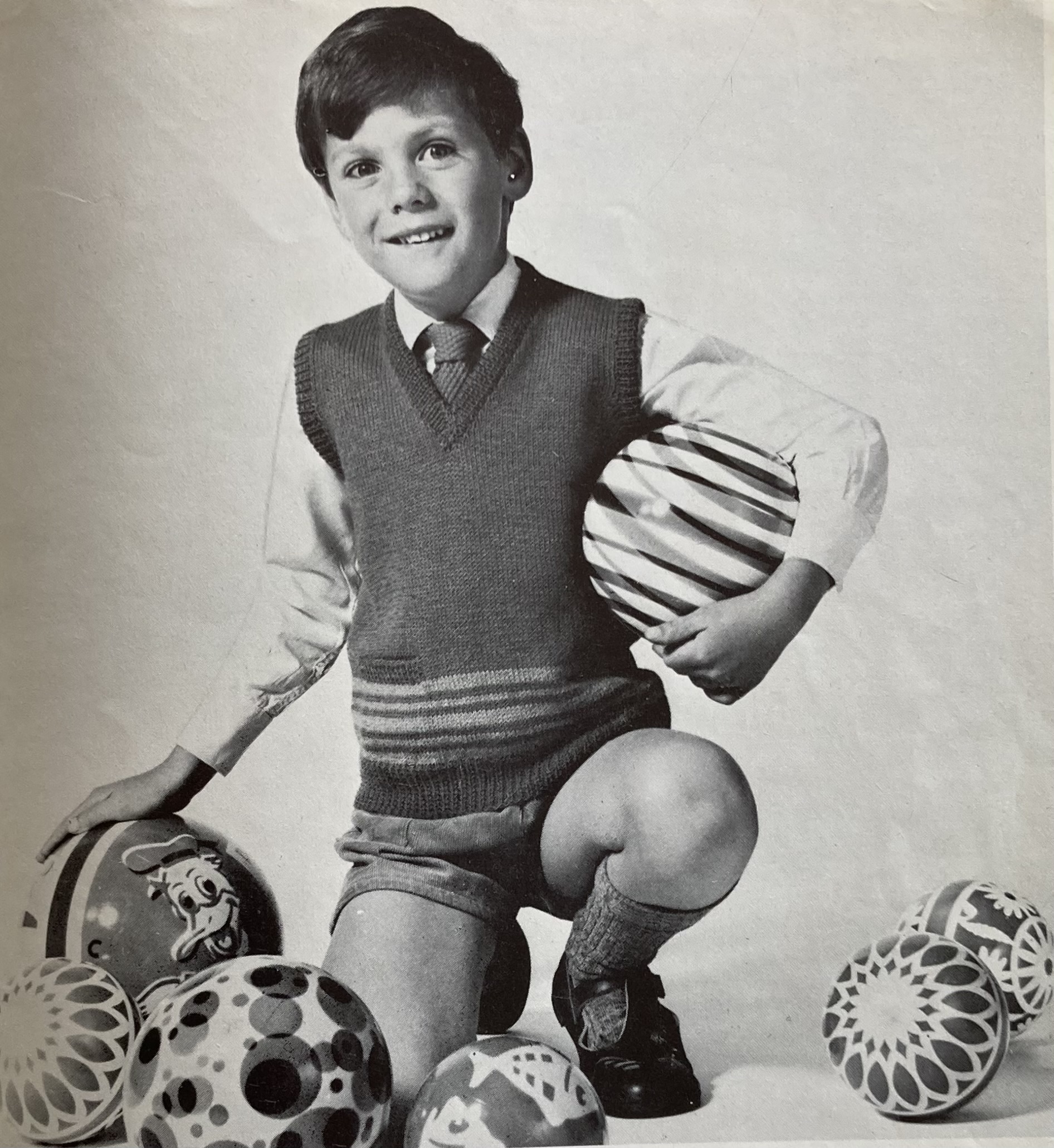
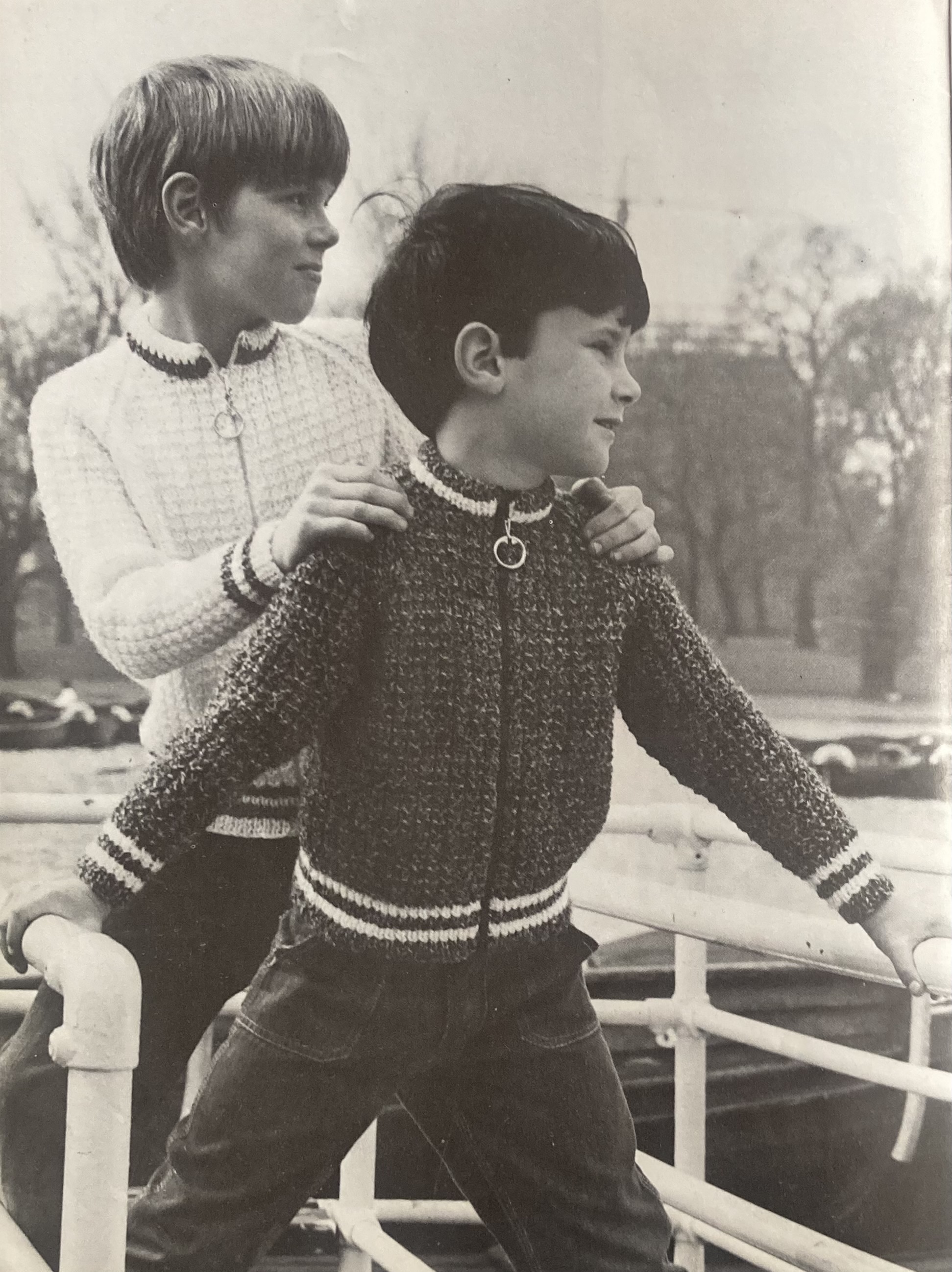
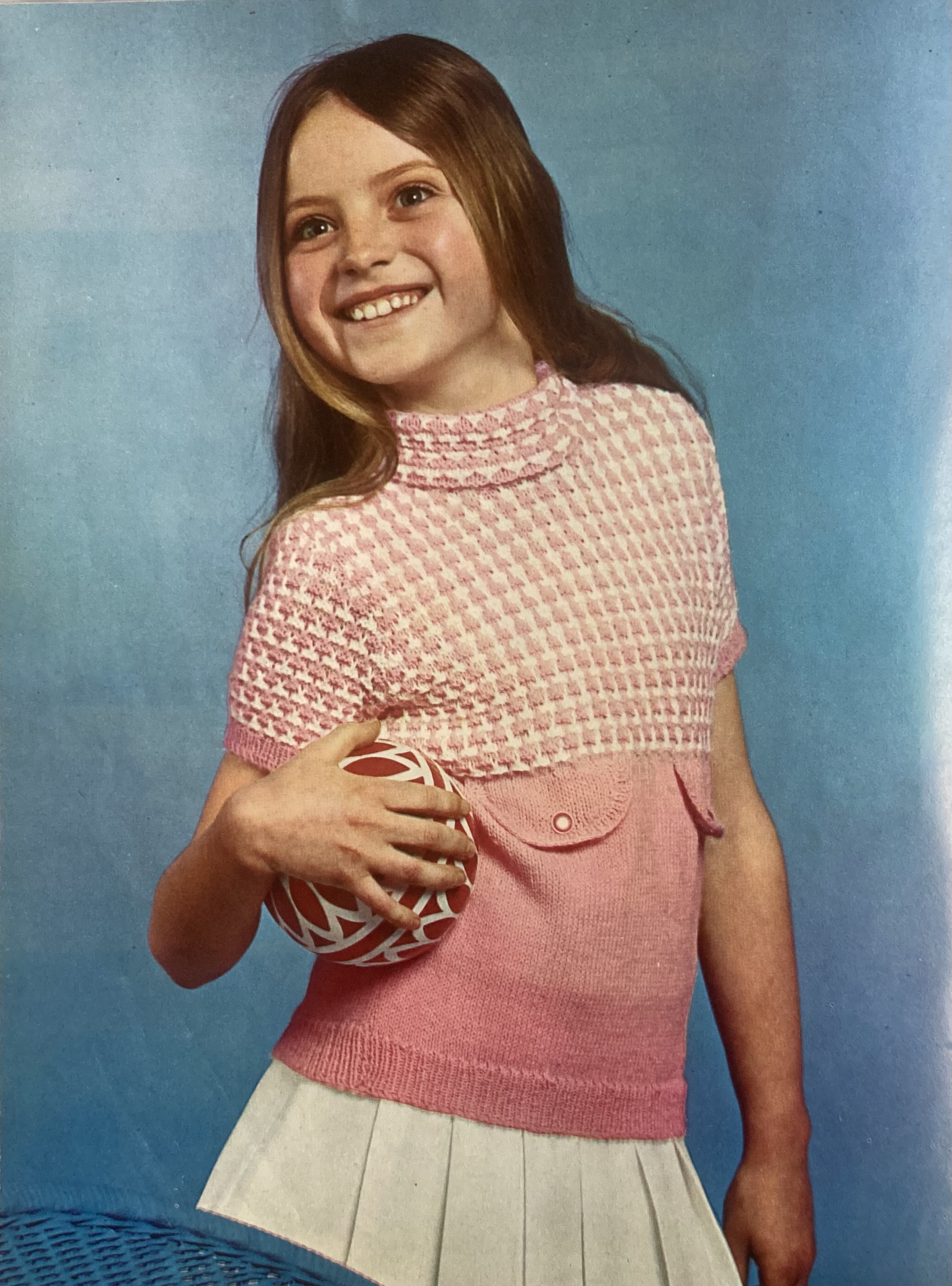
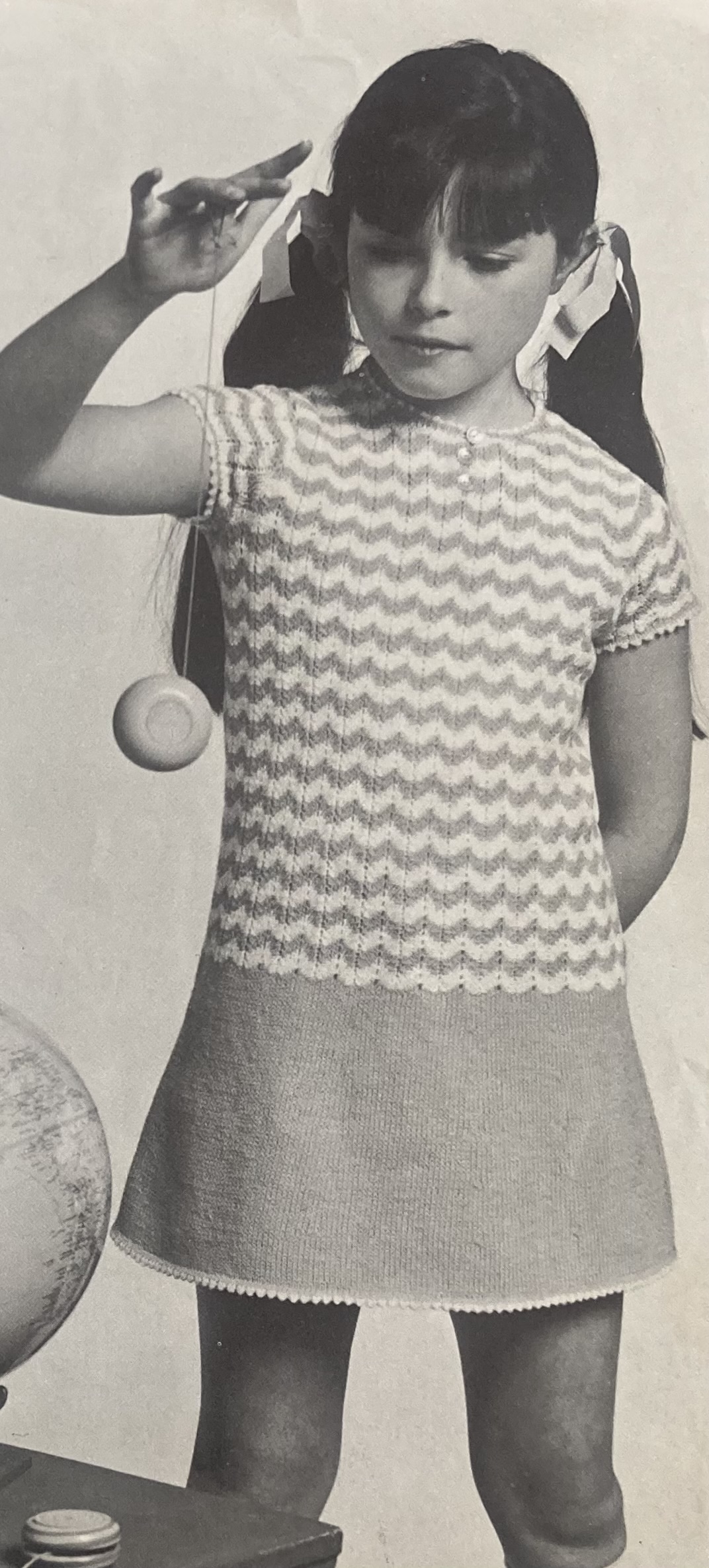
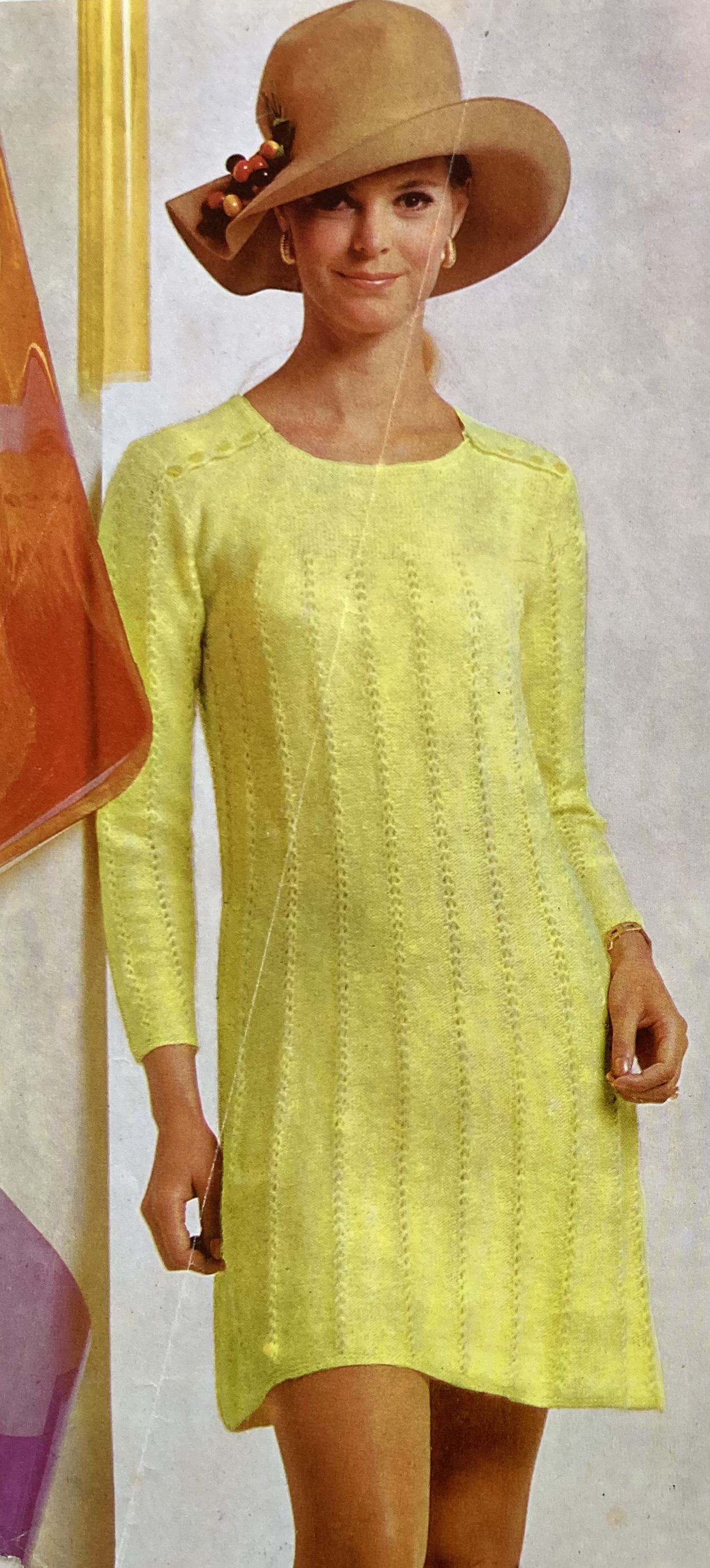
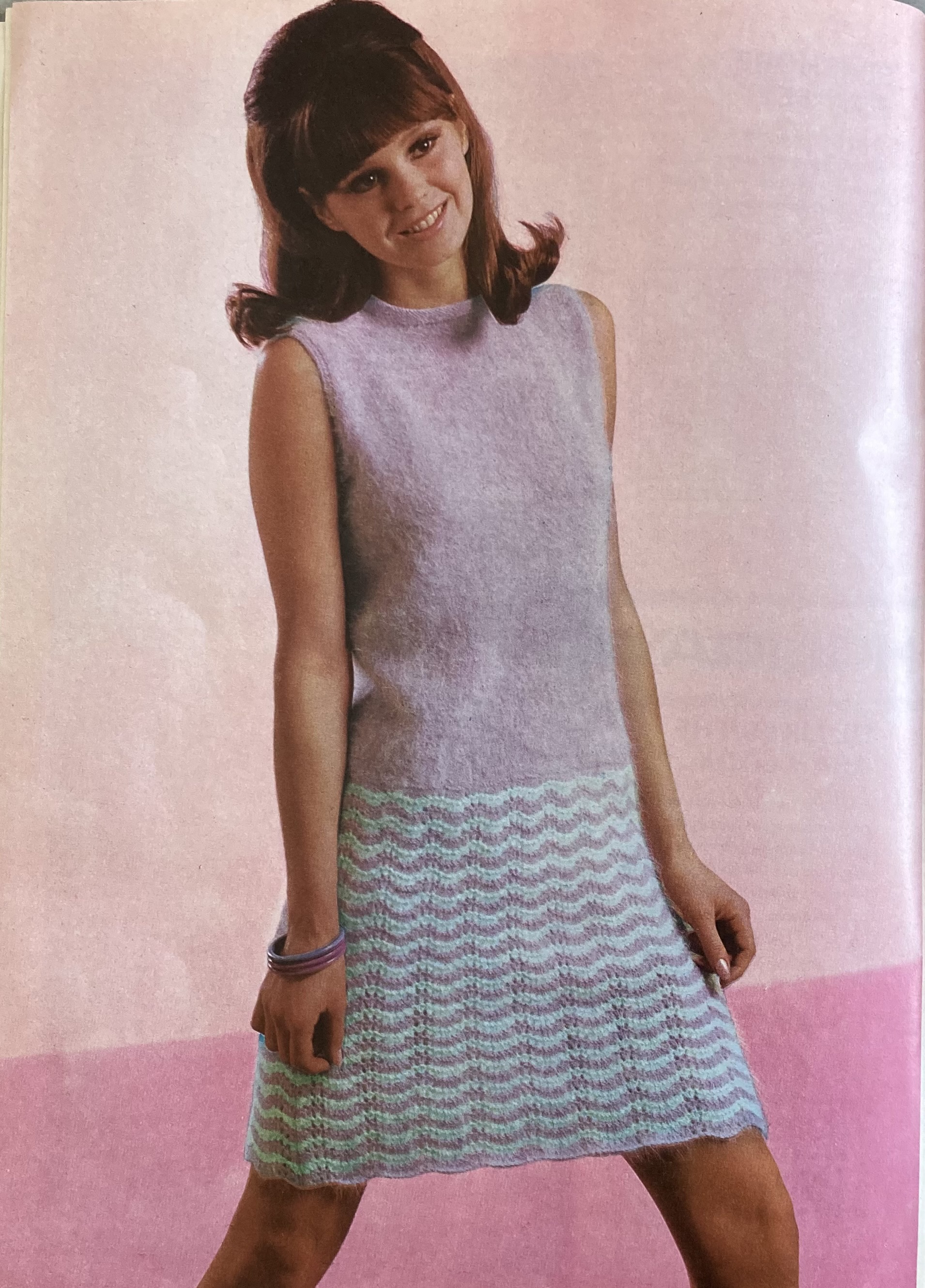
There is more of a balance between women’s, men’s and children’s clothes in this issue, i.e. fewer for adult women and more for the other two categories. “Boys play it rough” is the caption for the thick, tough moss-rib cardigans with ring zippers and little stripe accents for school-age boys. They will certainly have more fun playing in them than their sister, who has to try to play ball in a micro-miniskirt and a weirdly fitting short-sleeved knitted blouse. The choice of patterning ending just below the bust, plus pocket flaps (without even pockets) just below the patterning, must have been excruciatingly awkward for a preteen or teen girl. Maybe they got her to smile for the photo by promising her a pair of jeans and a T-shirt to change into. The girl on the inside back cover doesn’t fare much better in terms of casual, country comfort. Her (admittedly very cute) yellow-and-white-striped mini-dress has similar patterned / non-patterned proportions and picot edgings.

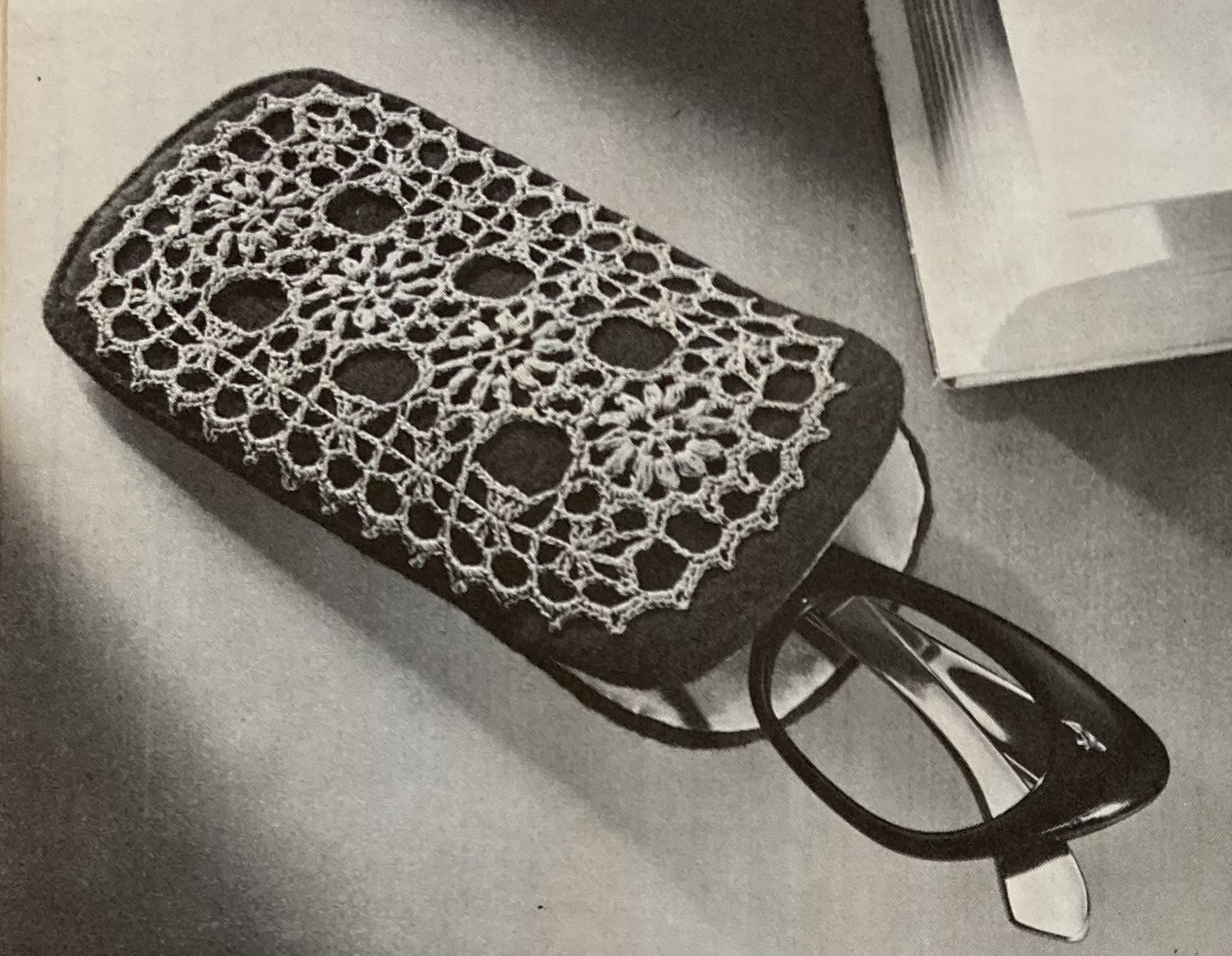
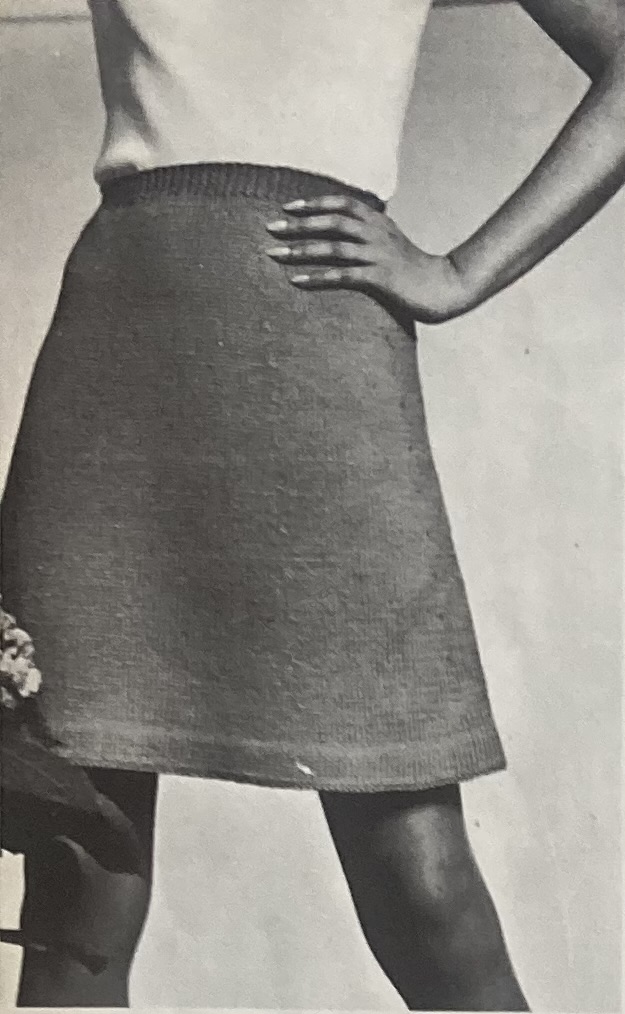
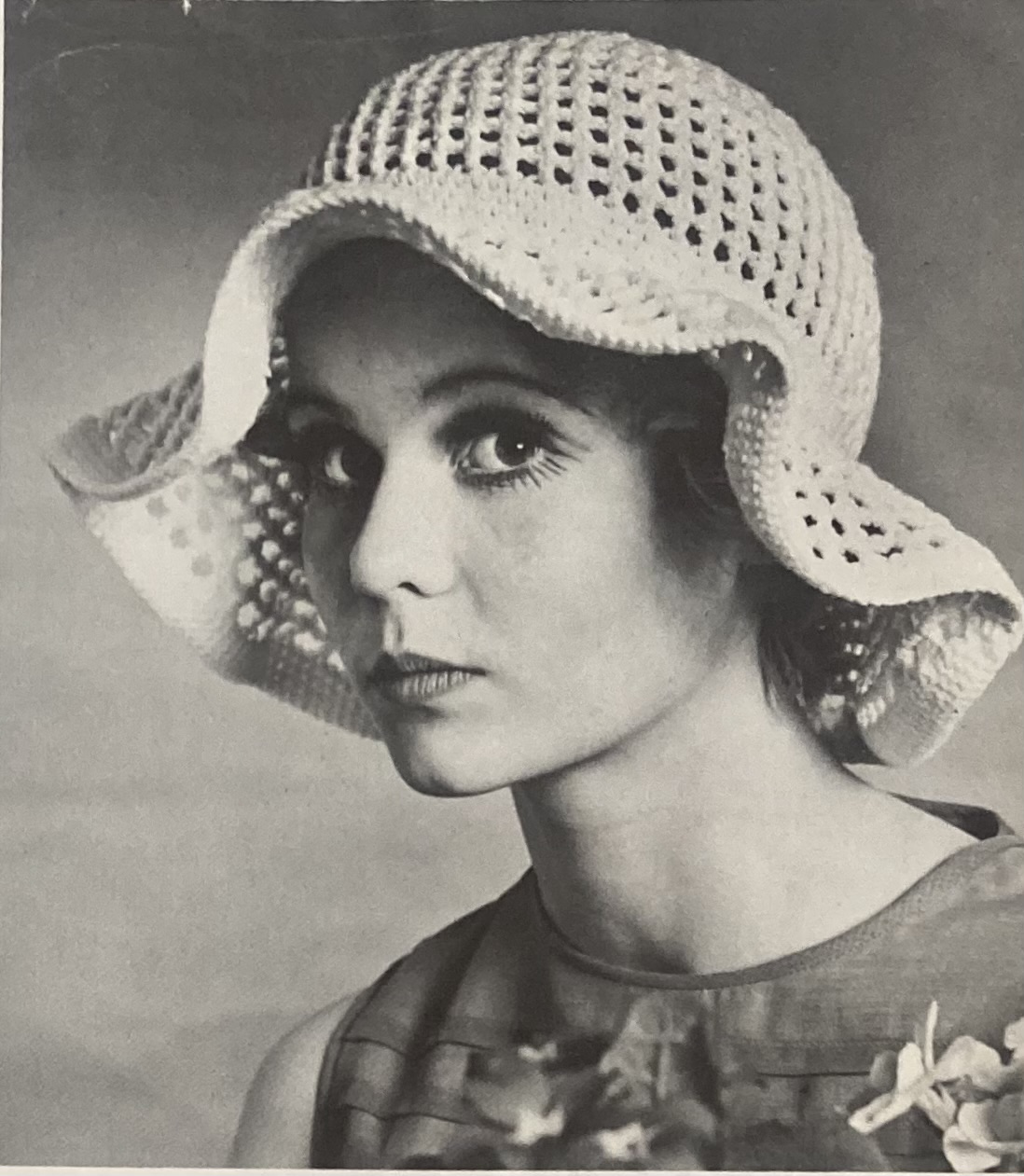
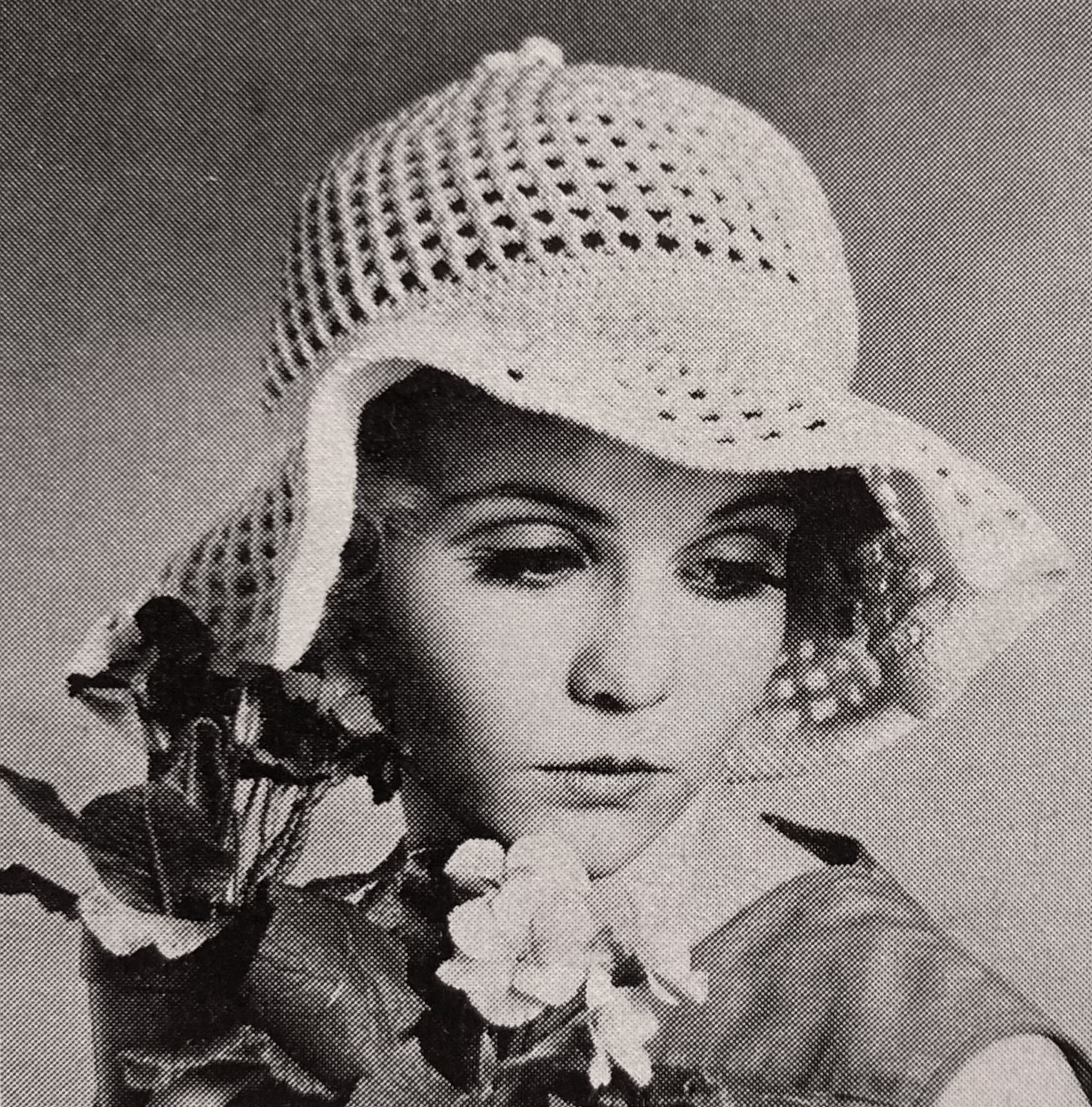
Rounding out the wearable fashions are a pattern for a plain knit skirt, tucked back in by the Readers’ Pages, which is quite similar in shape and style to the skirt worn with the striped T-shirt blouse, and a “Crochet Bonnet for the Sun” worn by the “sad” model. I like this model and think she is very pretty, but her facial expressions don’t do much to sell the designs, as she looks anxious and miserable in them. Maybe she just has terrible teeth?

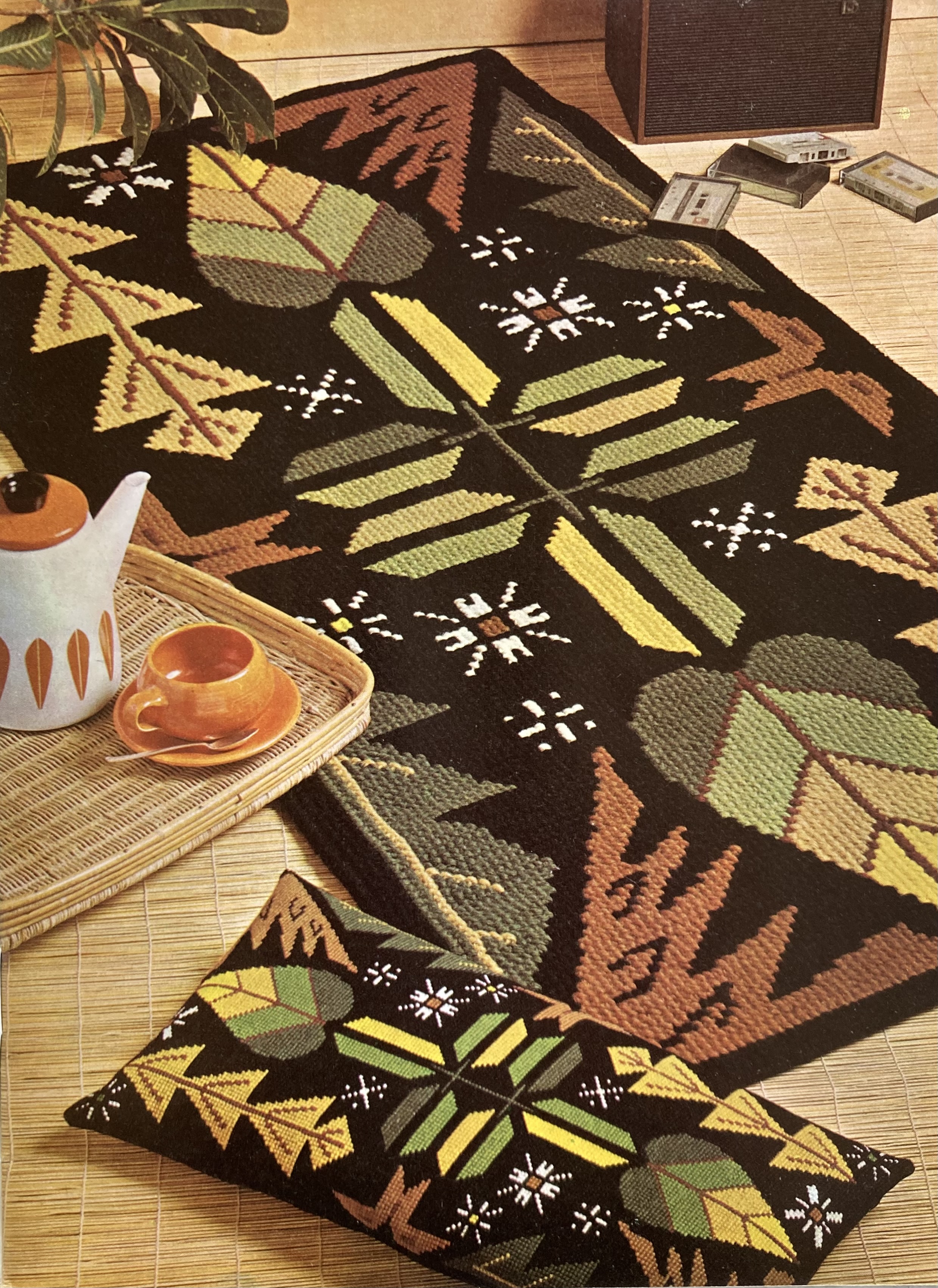
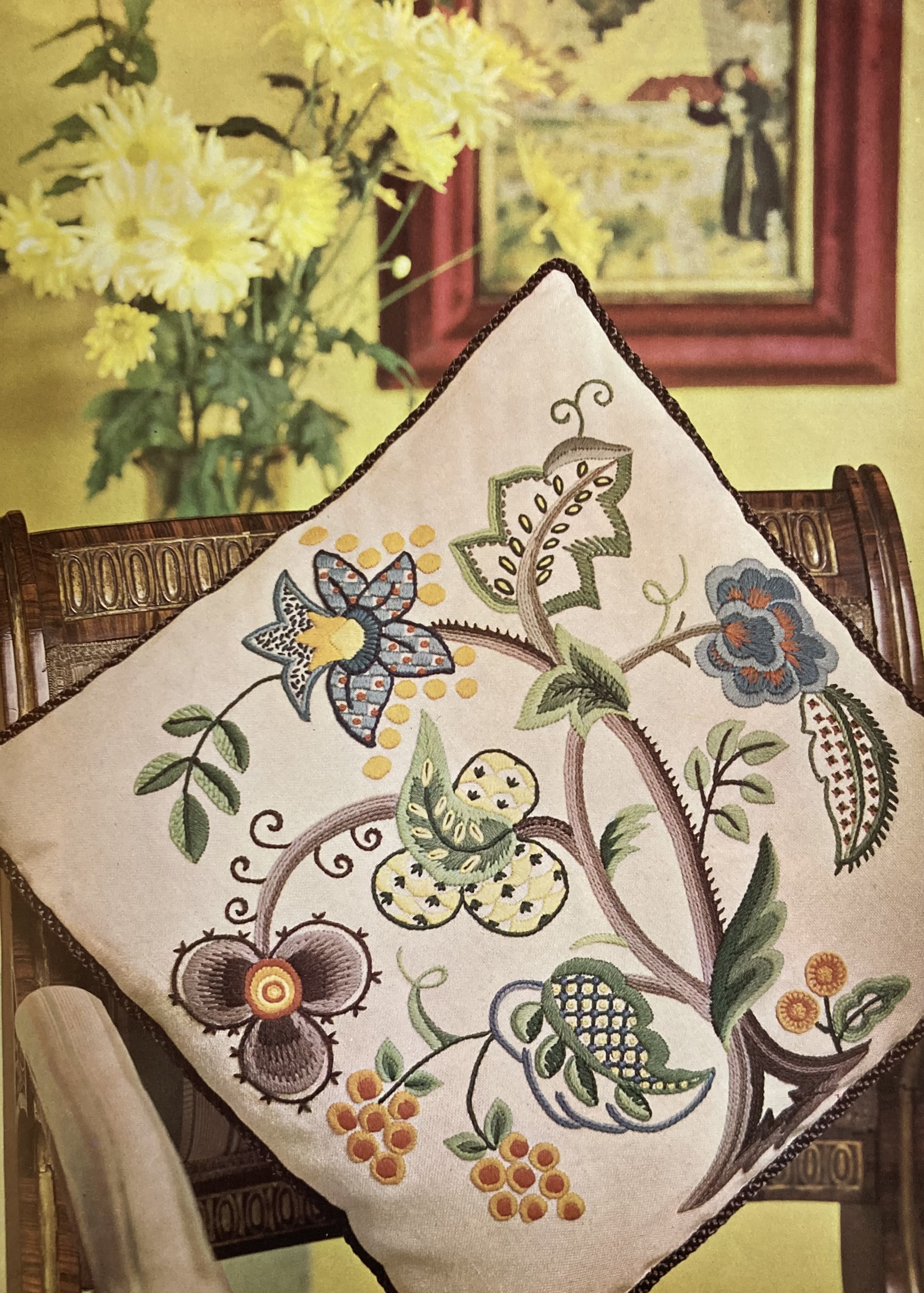
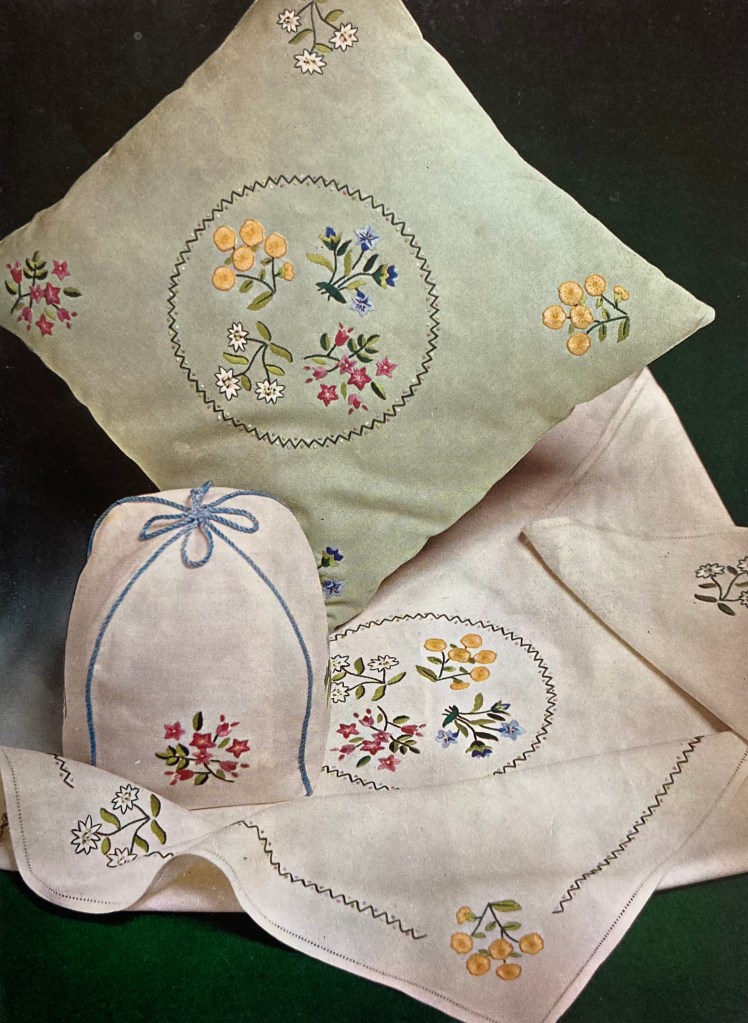
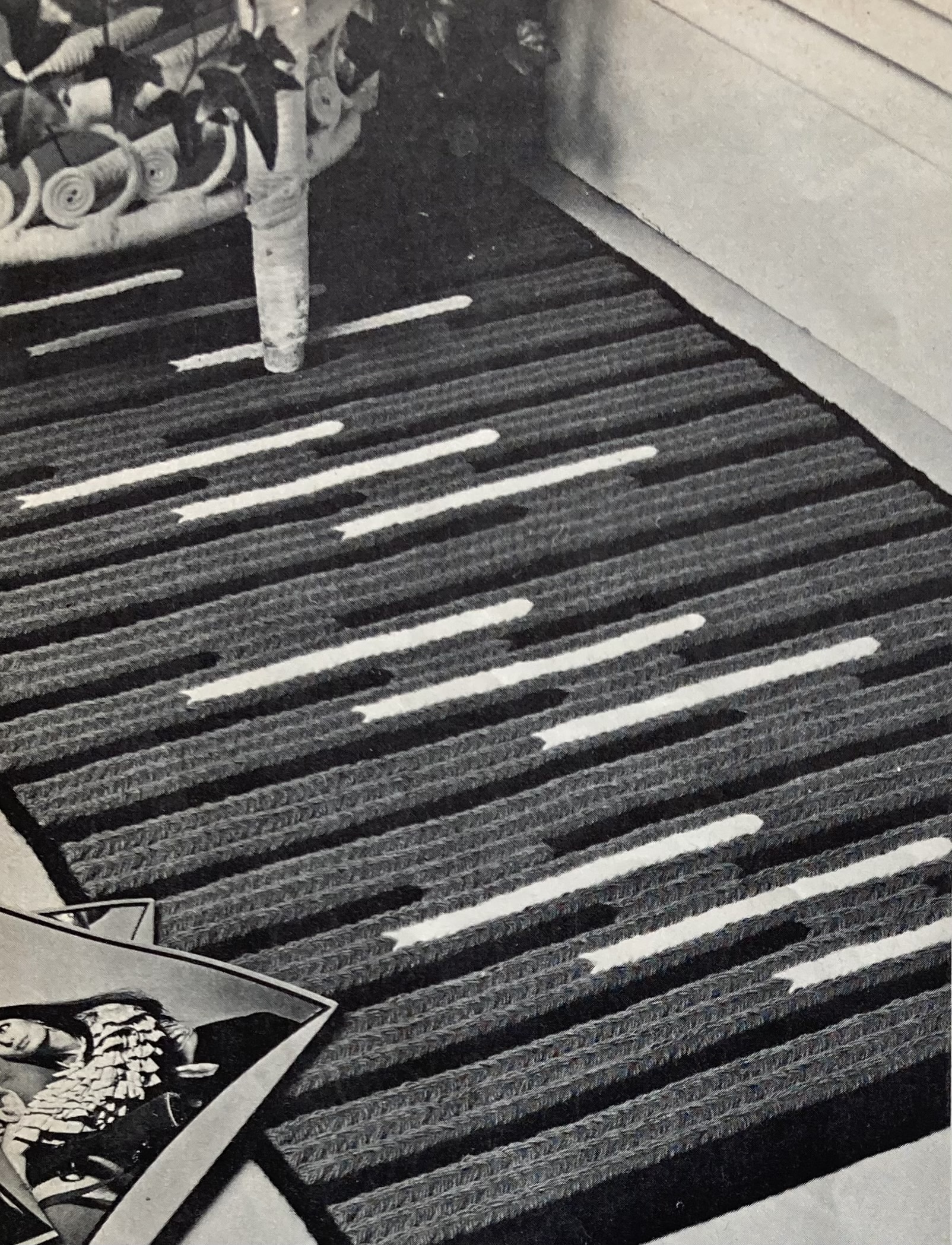
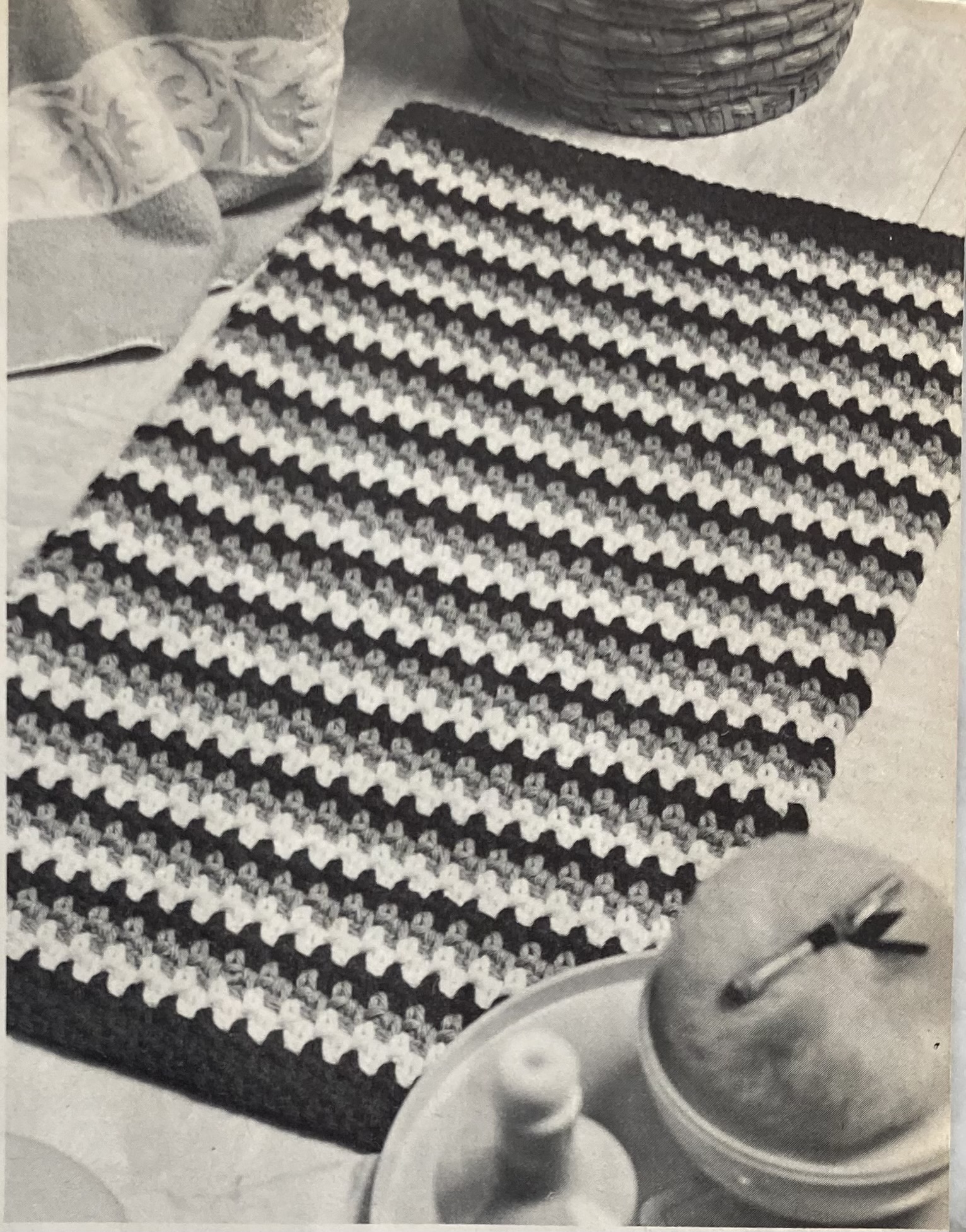
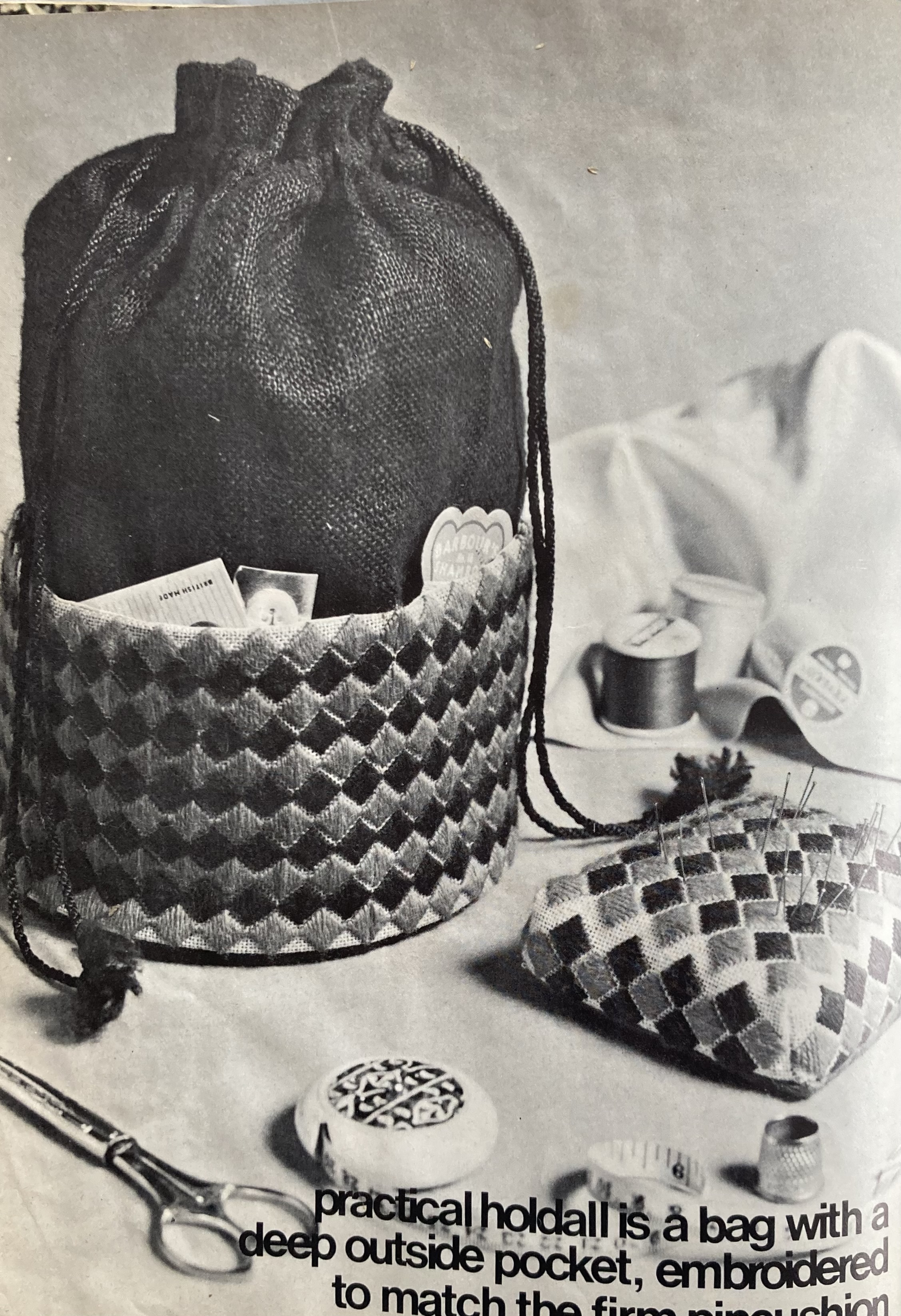
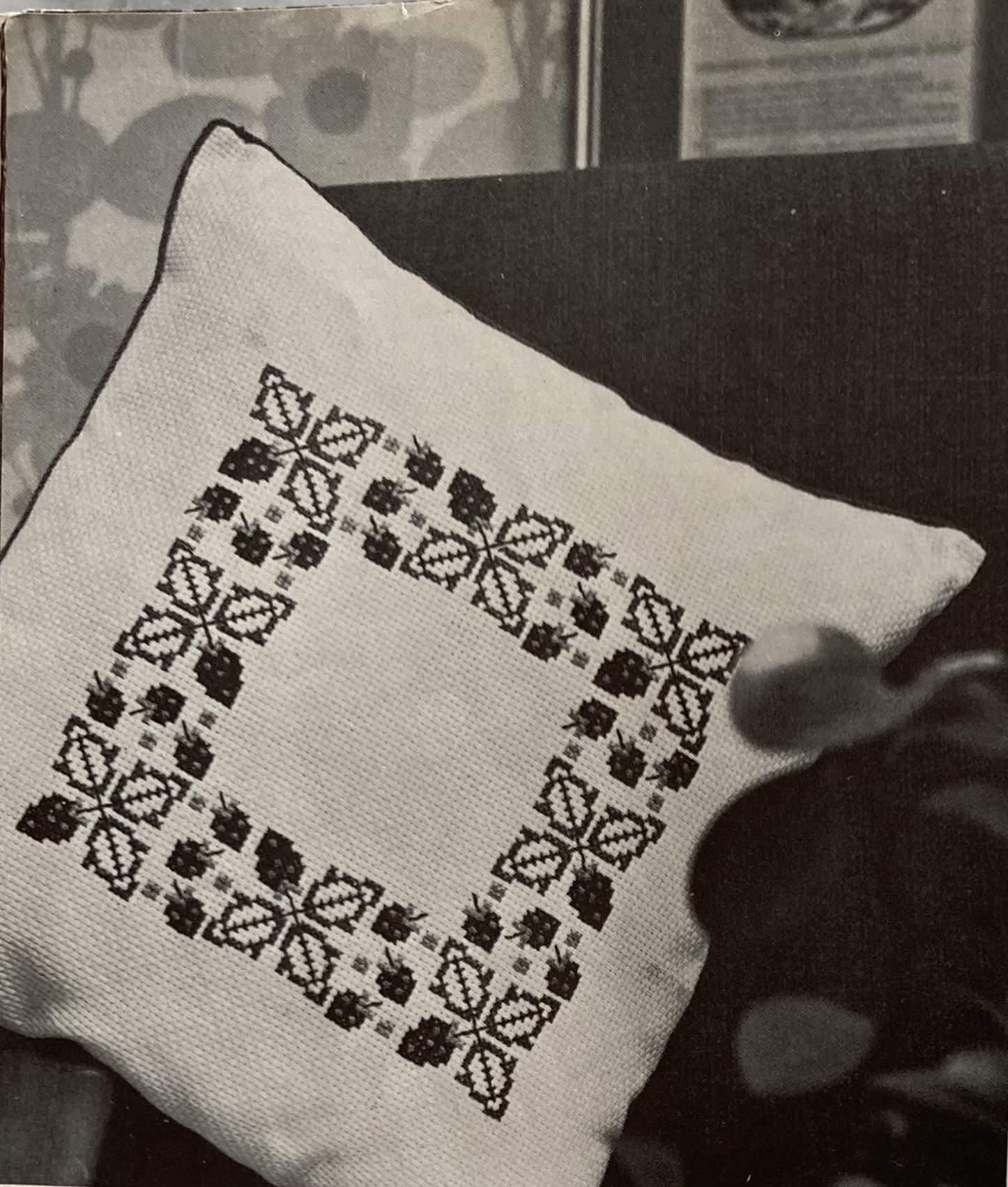
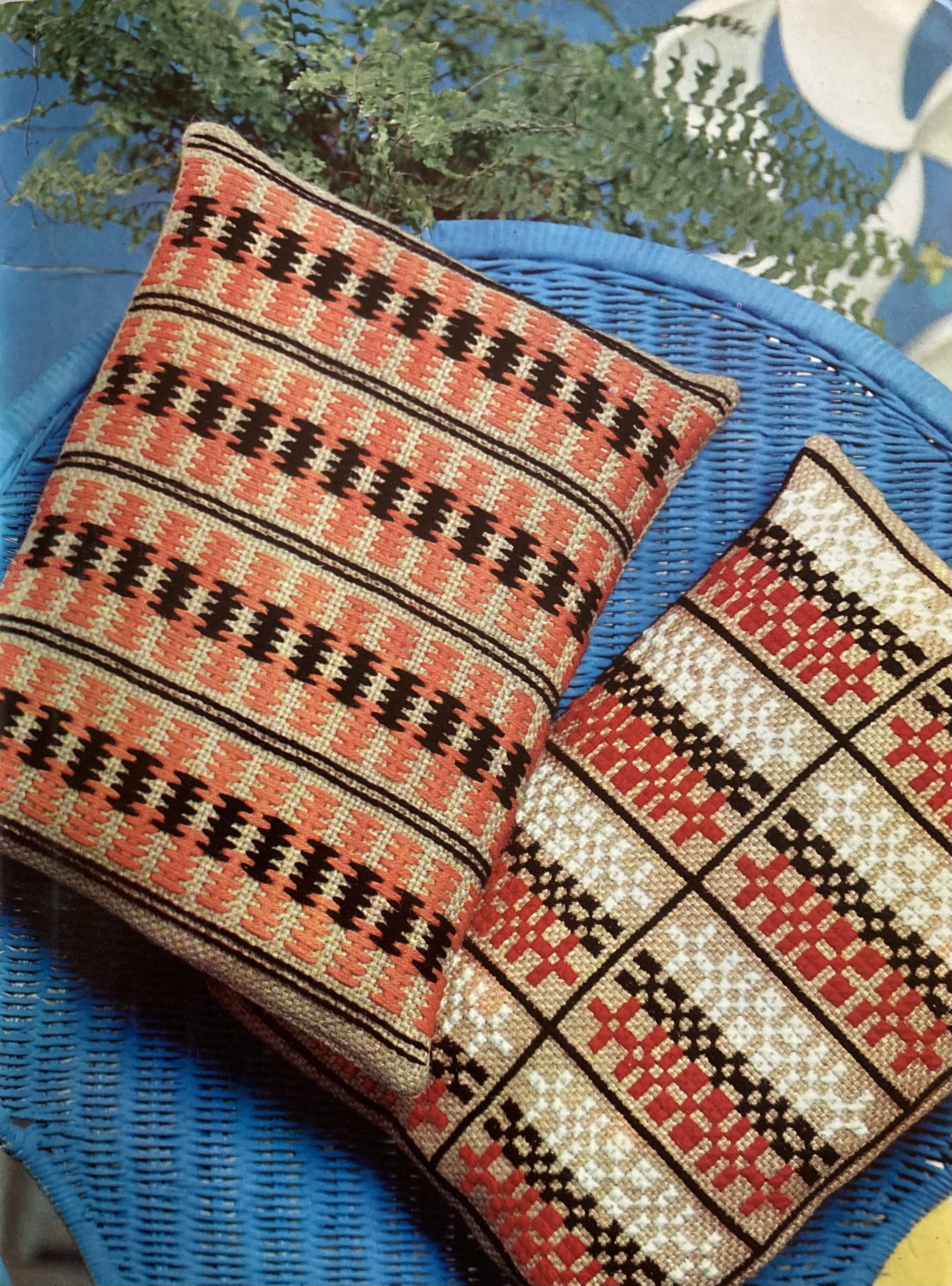
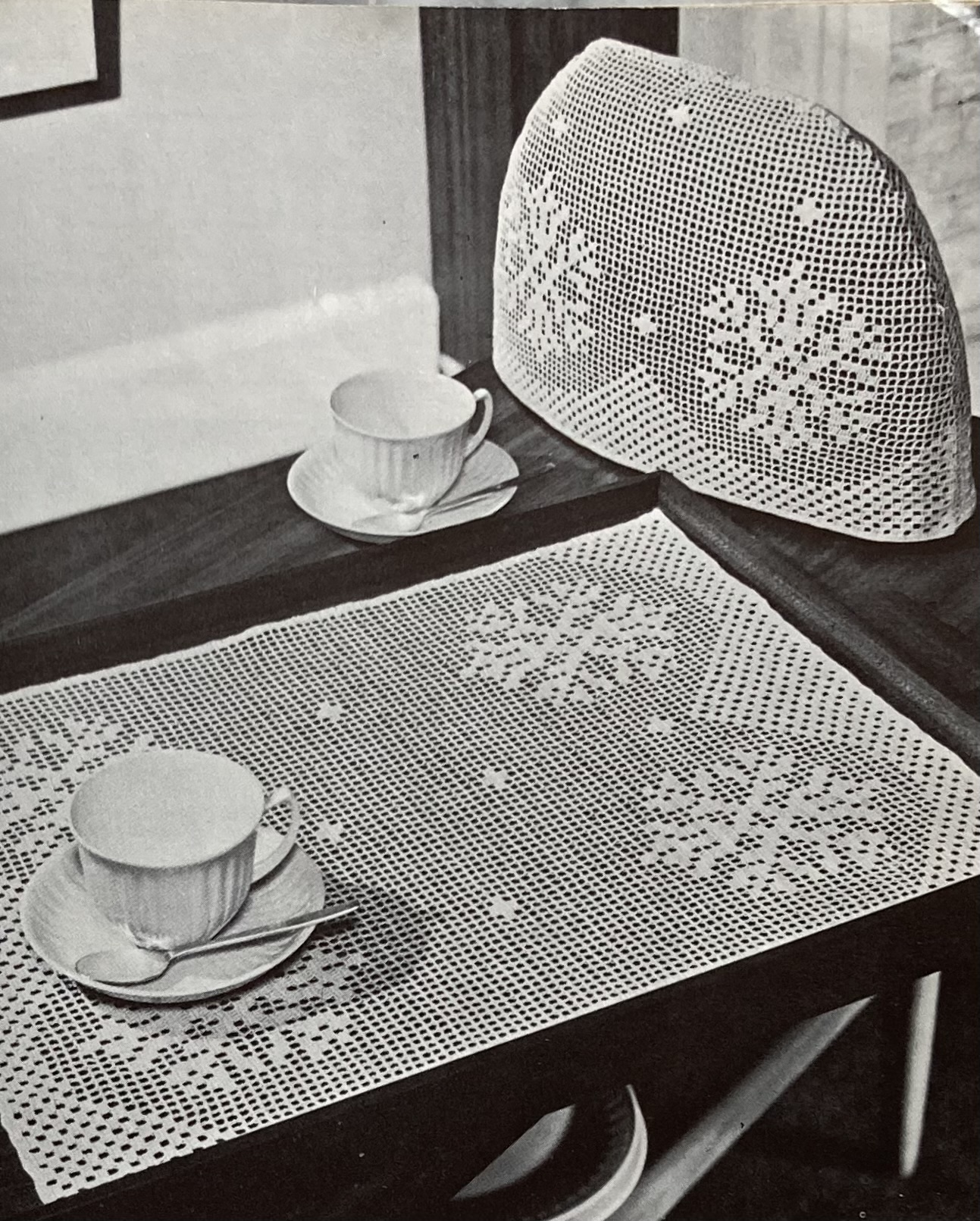
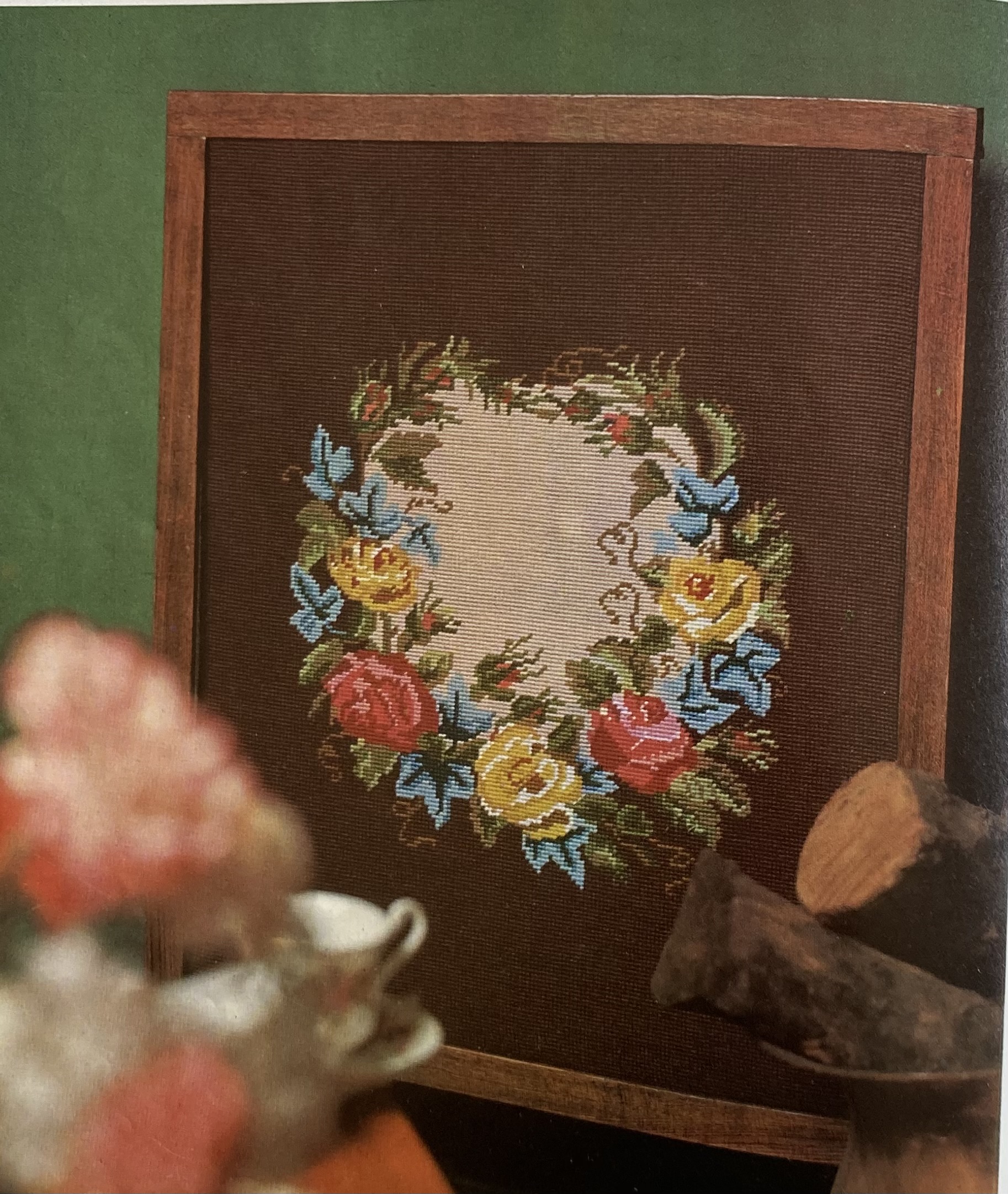
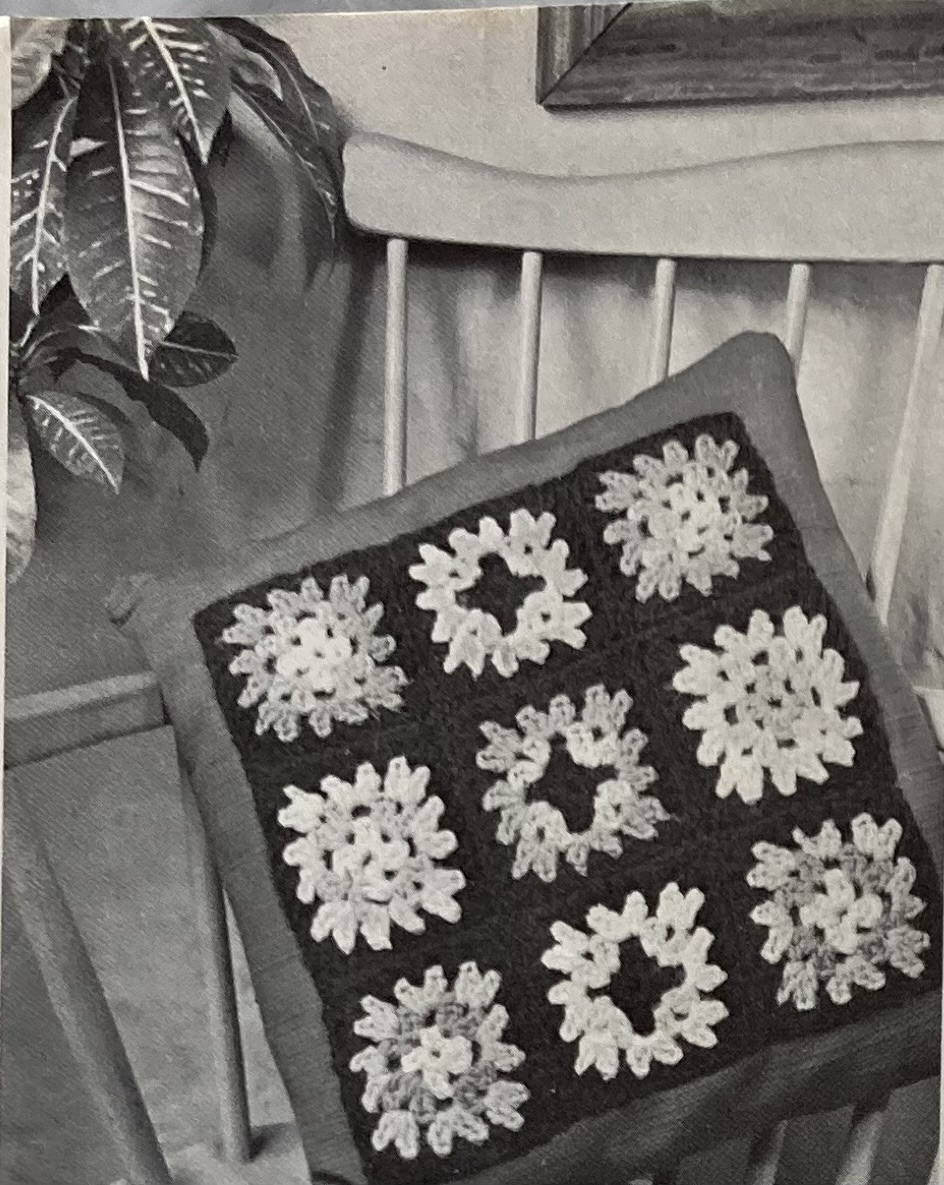
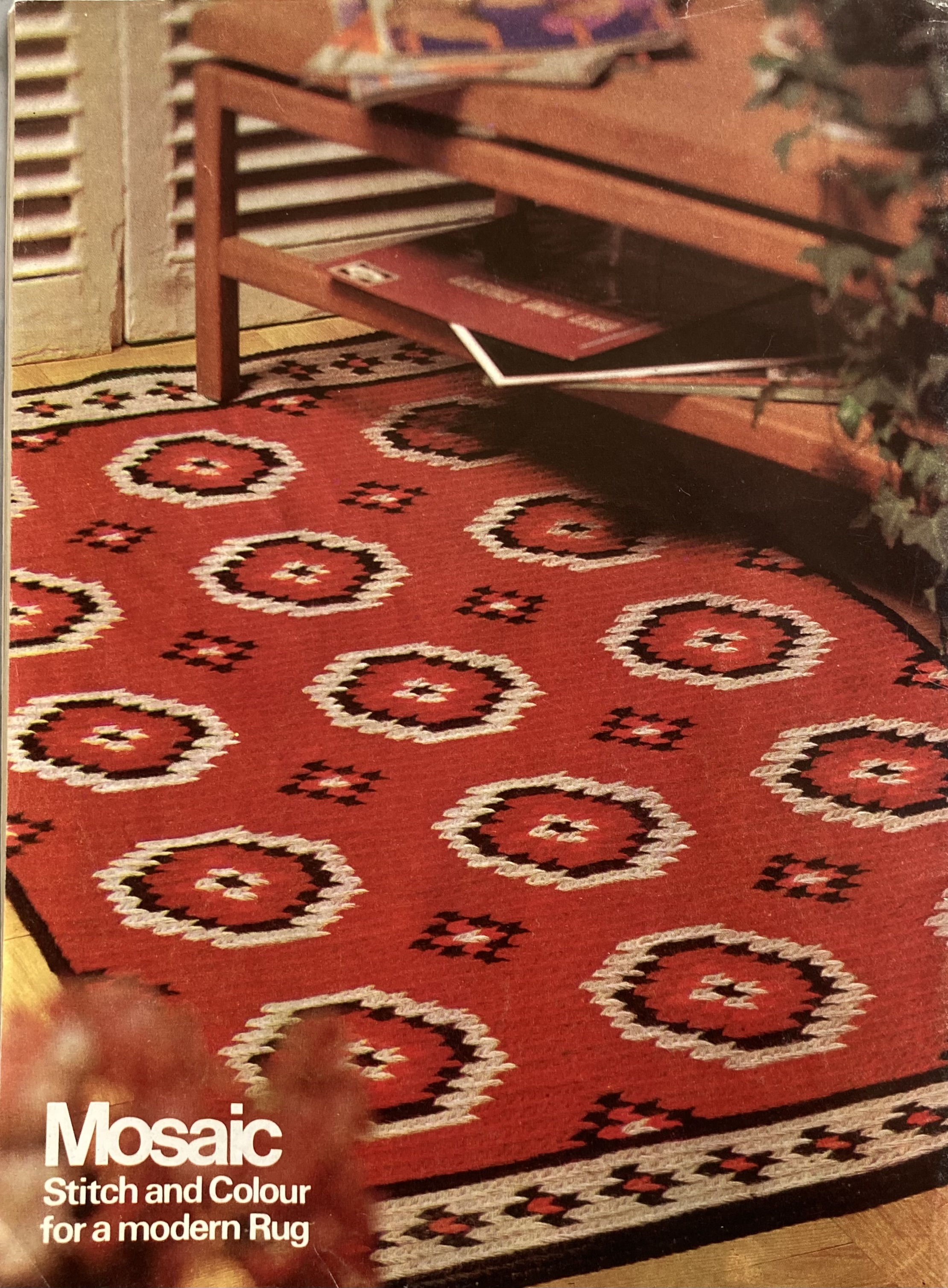
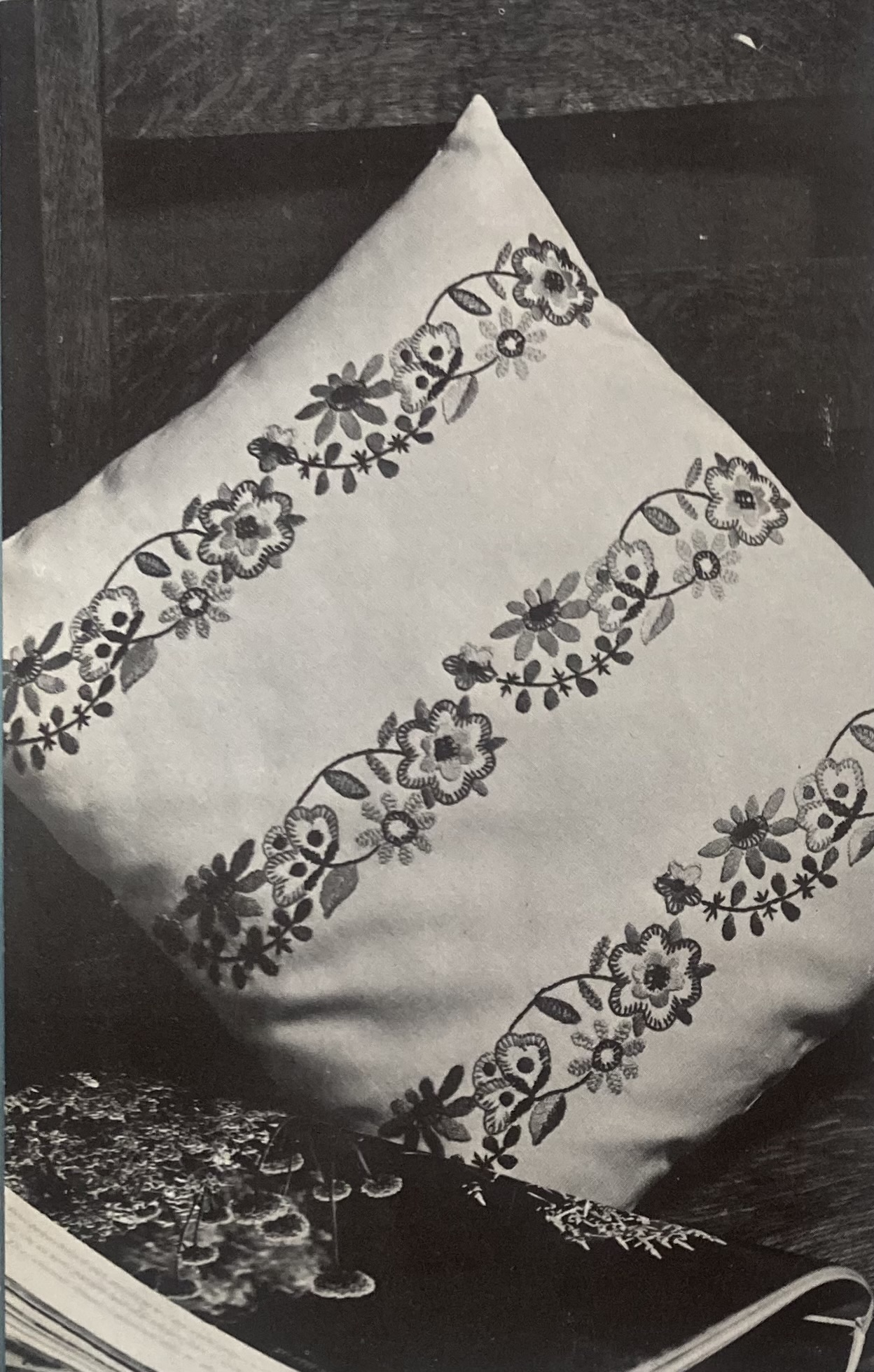
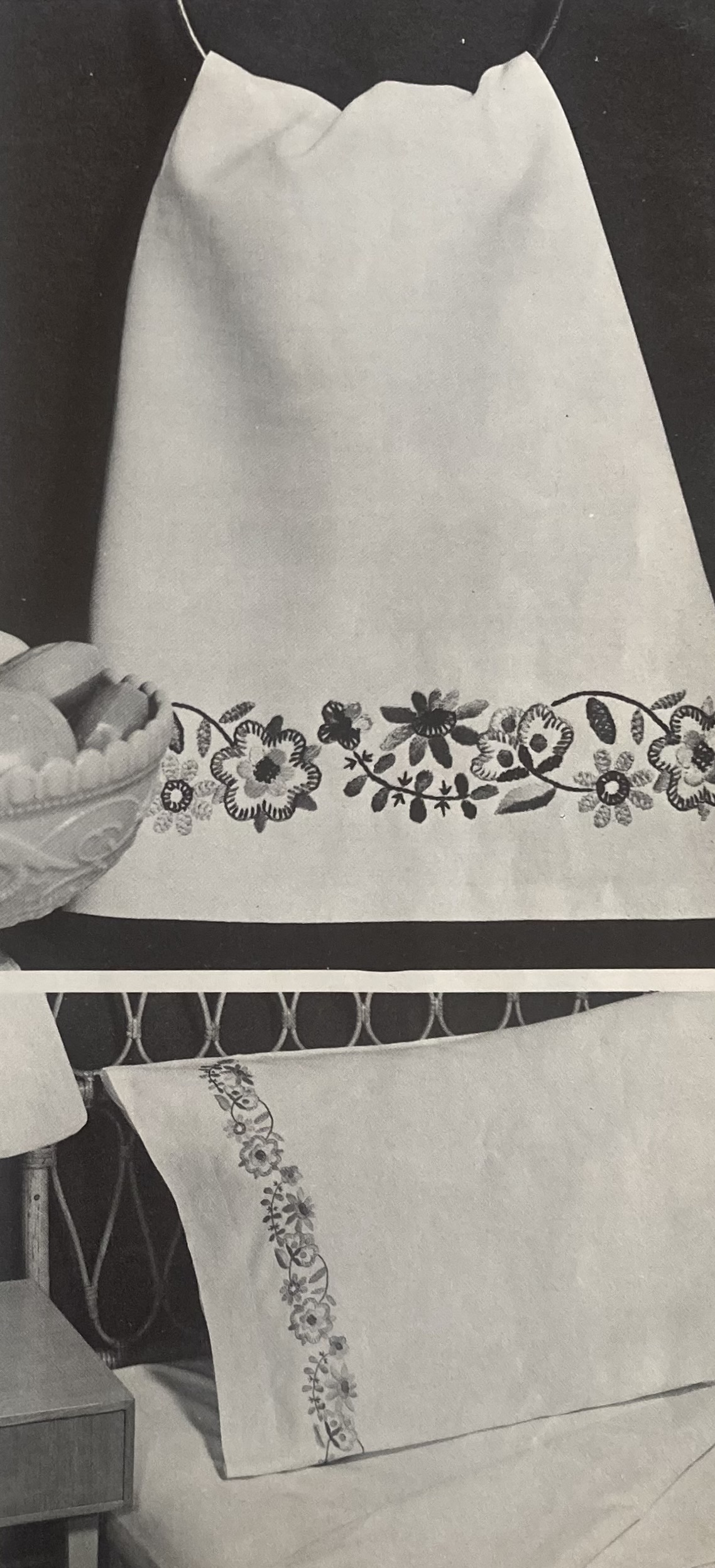
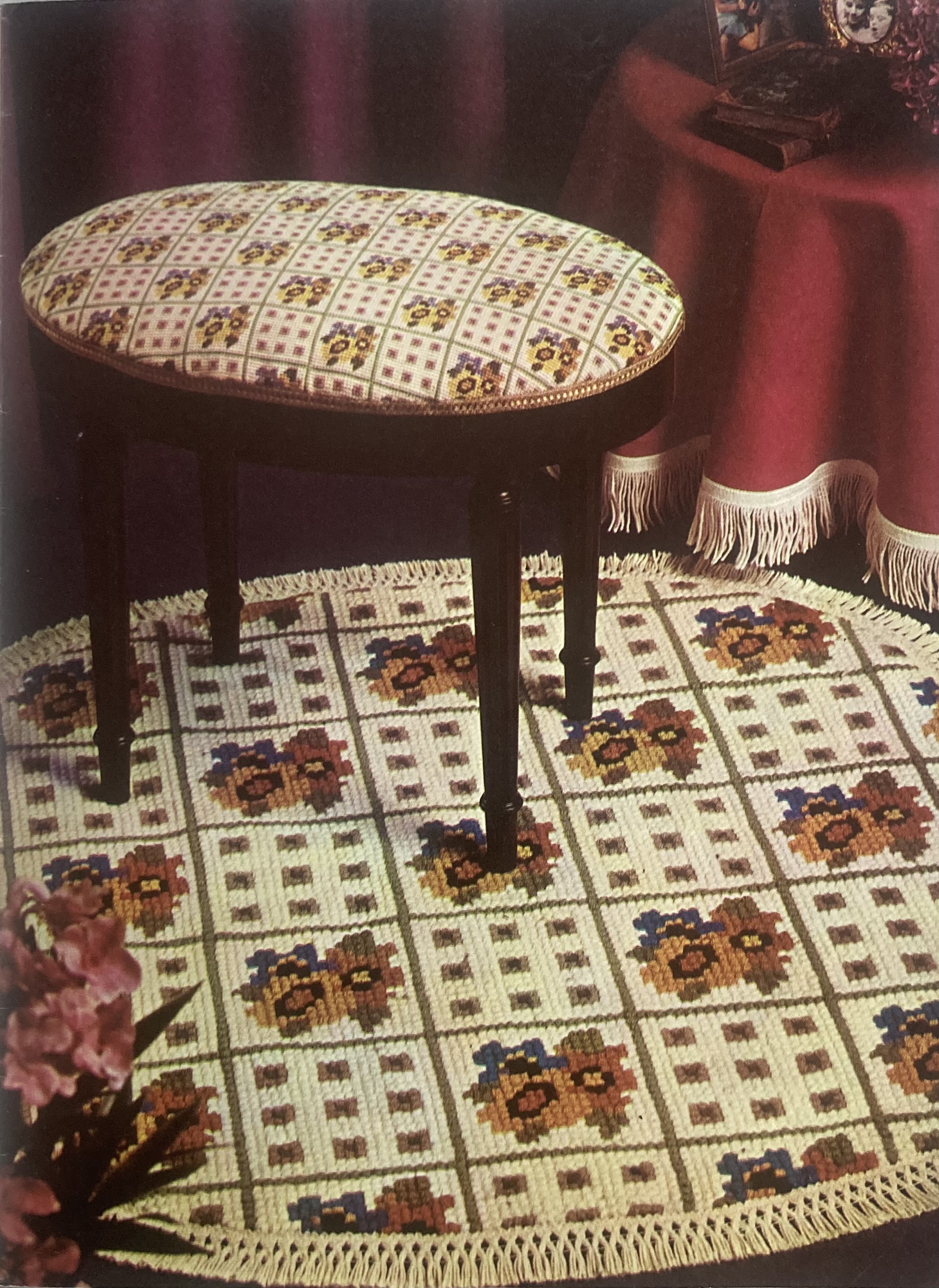
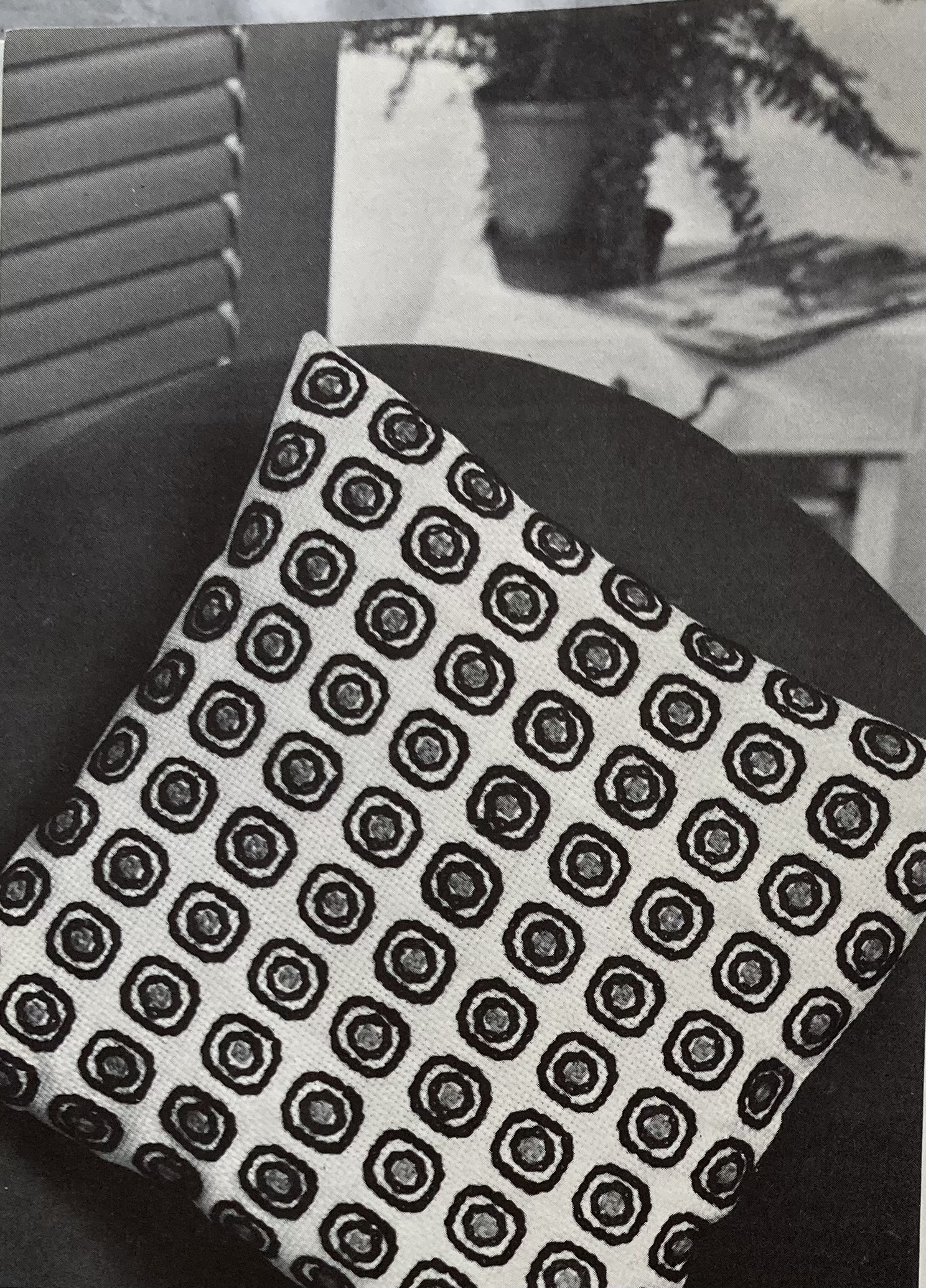
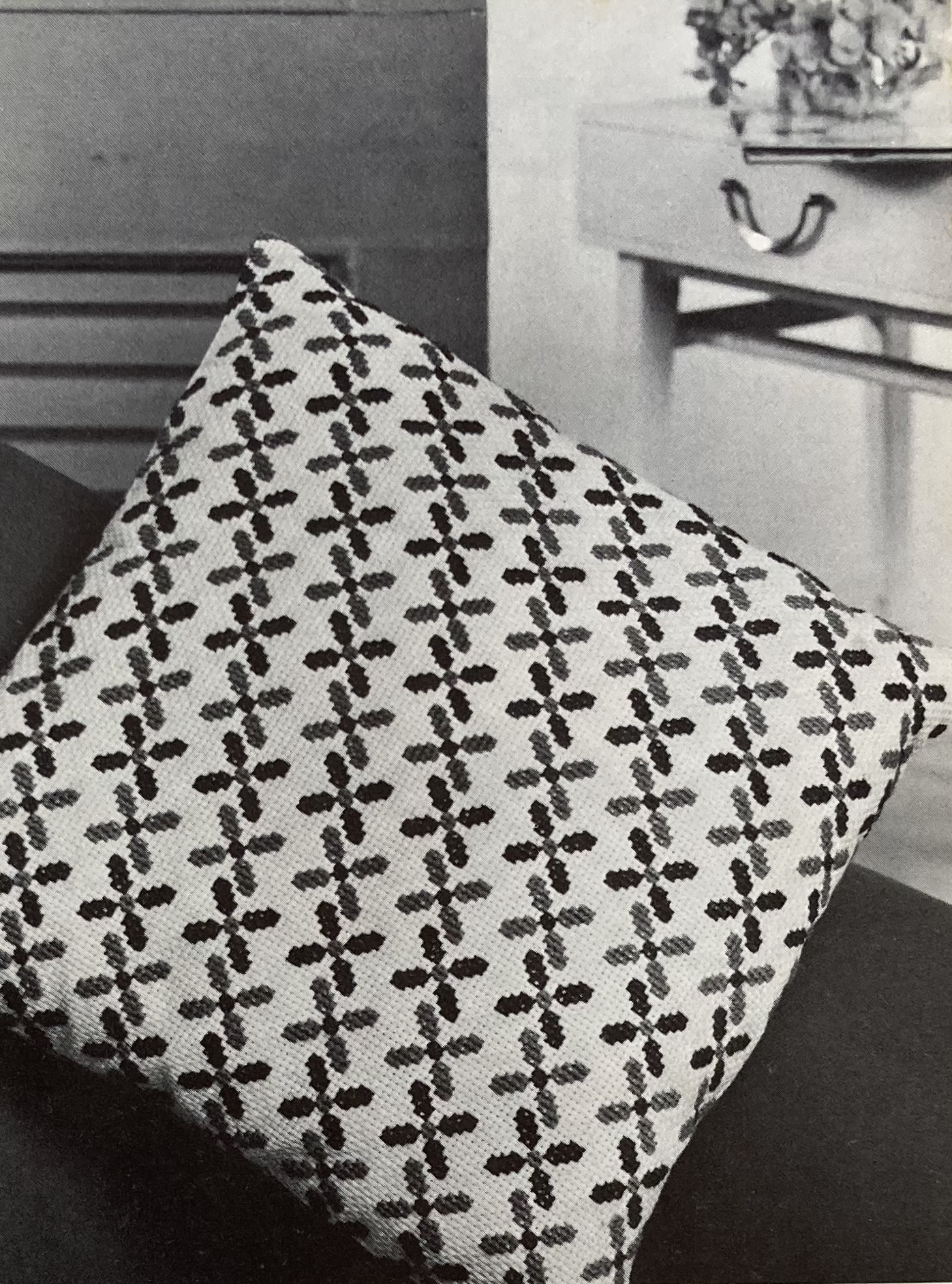
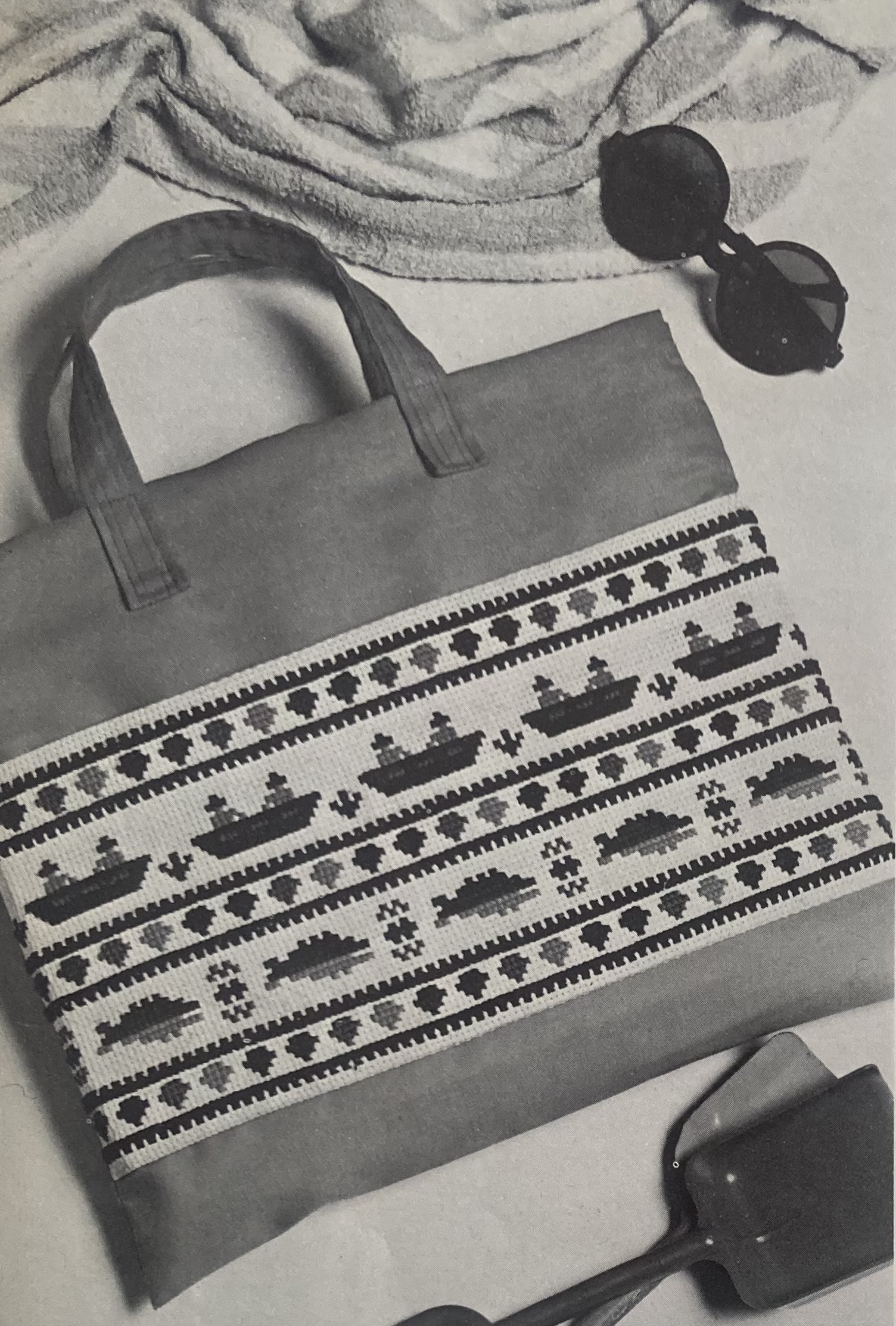
The homewares mostly echo the summer holiday theme, with easy designs that can be adapted to different items. There’s a cross-stitch design of boats and fish to use on a beach bag or cleverly constructed pillow with a hidden pocket “for a day by the pool”, an easy flower embroidery pattern to trim a cushion, chairback, guest towel or pillow slip, and a Victorian-inspired tapestry design for a stool top and matching rug.

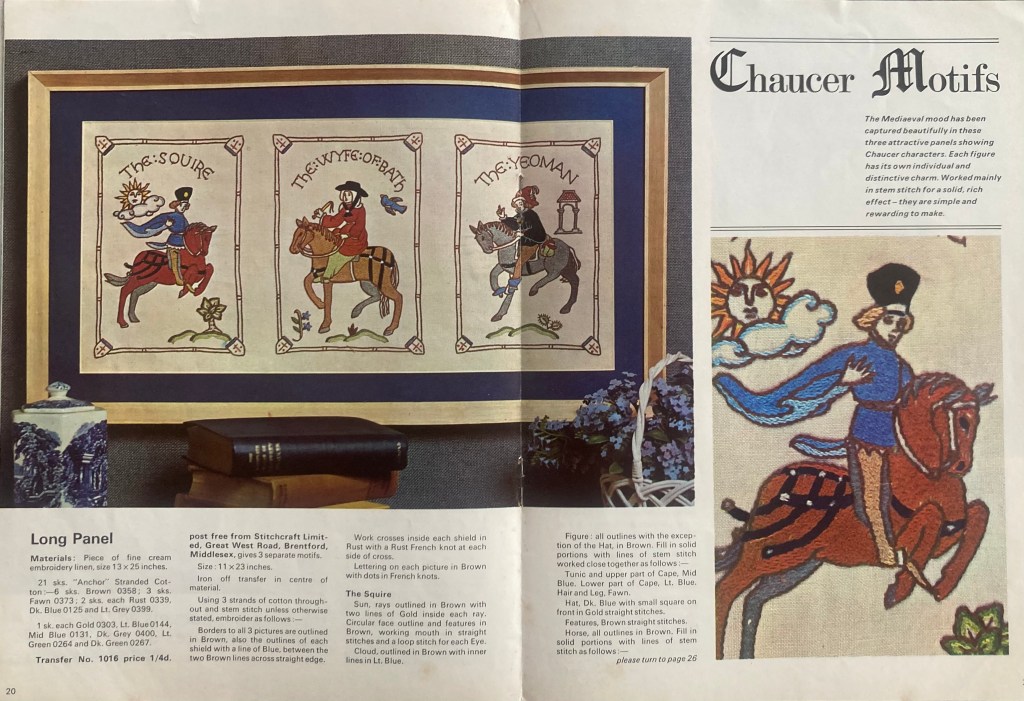
The crowning glory of home decorations in this issue is the large, paneled wall hanging with embroidered illustrations of some of the characters from Chaucer’s Canterbury Tales: the Squire, the Wife of Bath, and the Canon’s Yeoman. The figures are mostly worked in stem-stitch, including the fillings, which gives them a rich and solid texture. The panel is perhaps not all that difficult to embroider, but the finished effect is extremely impressive. In the introduction to the issue, “editress” Patience Horne promises another panel of 3 motifs in the coming months, so that readers can make a set of six pictures or two long panels of three.

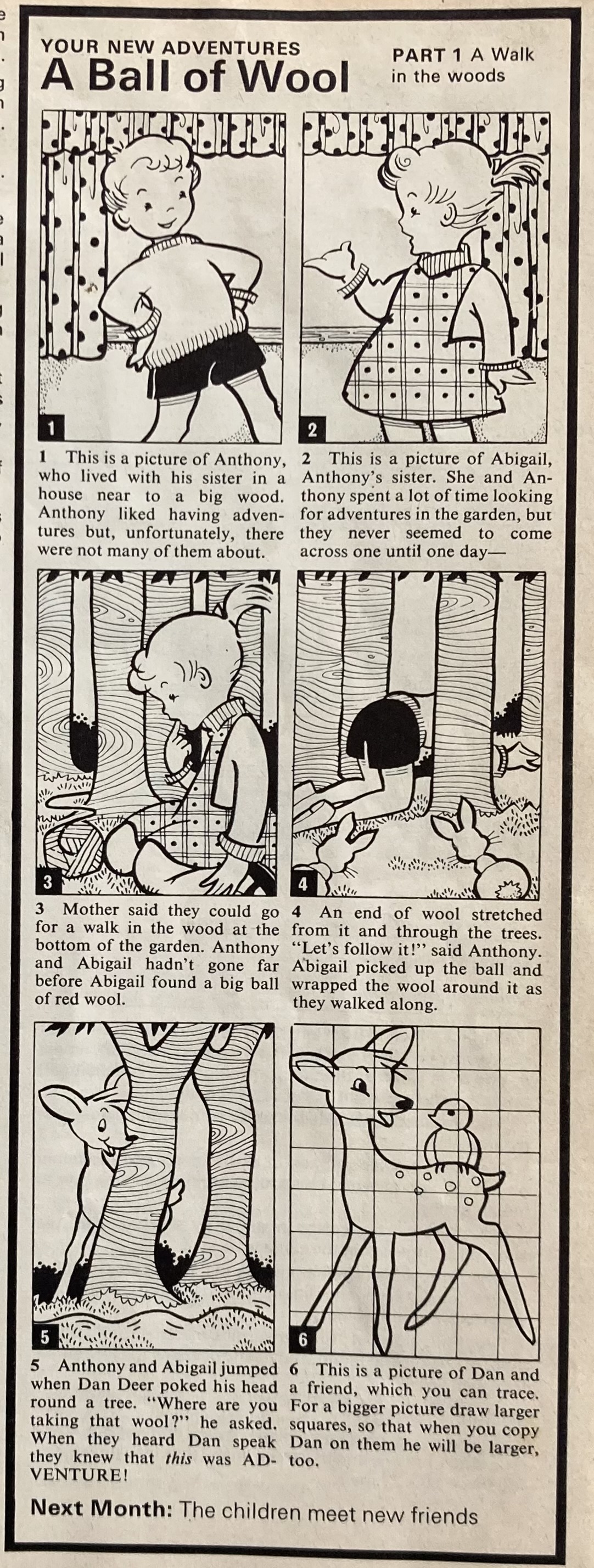
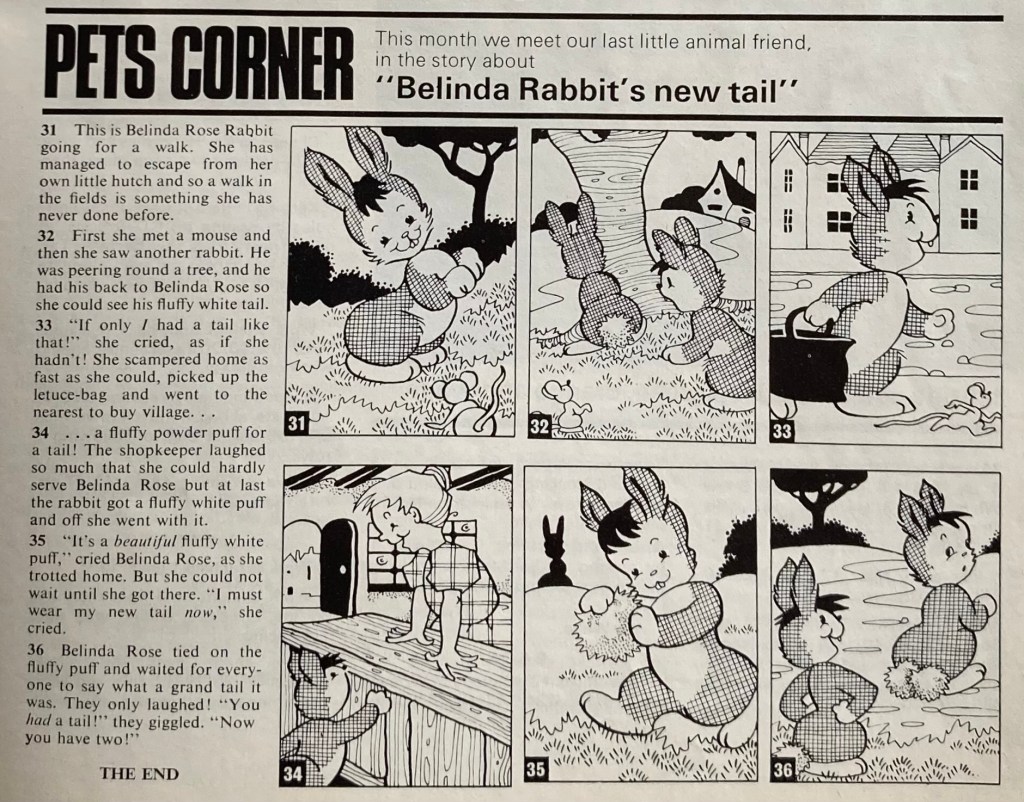
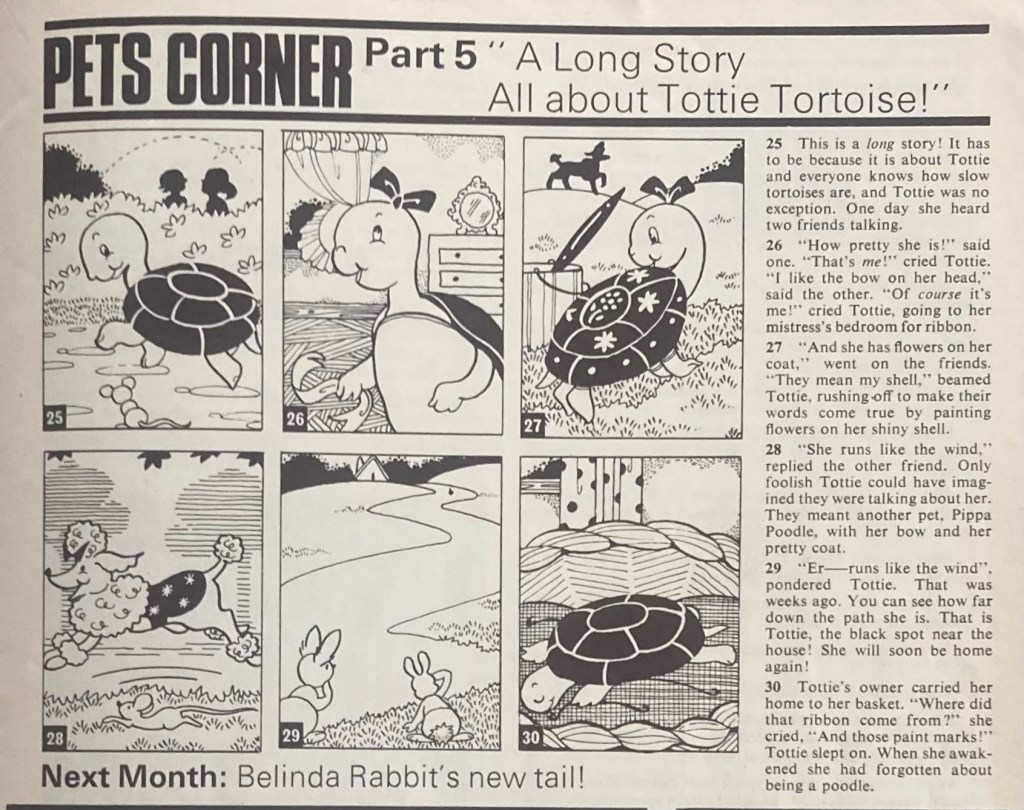
in our current children’s comic, “Pets Corner”, Tottie Tortoise misunderstands a compliment meant for Pippa Poodle, paints her shell, ties a bow on her head and goes out for a walk feeling pretty. Then her mistress carries her home and she takes a nap. Sounds like a good day to me!

That’s all for this issue. My project will be the striped T-shirt, if I ever finish up any of my other other works-in-progress. Like Tottie Tortoise, I am currently slow. Have a great July, everyone, and I hope to be able to update some of the projects soon.

June 1968: Go Sunning And… Lazing

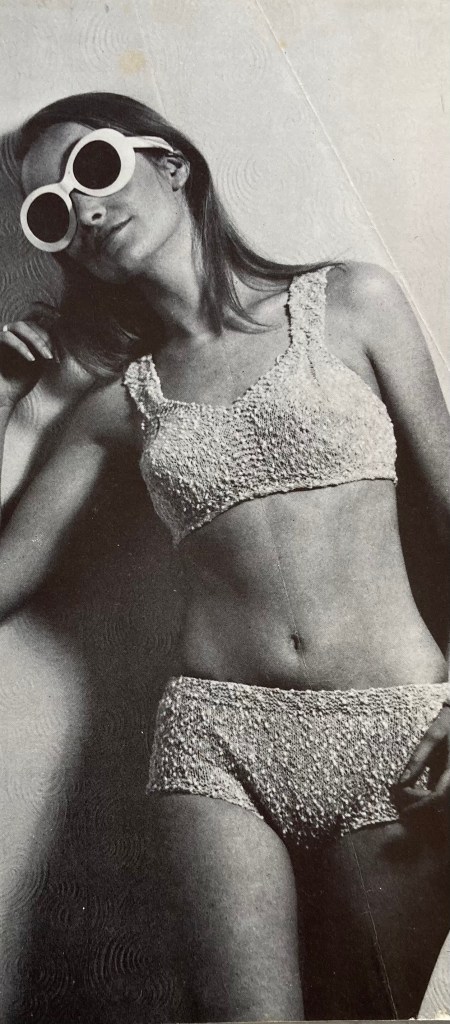
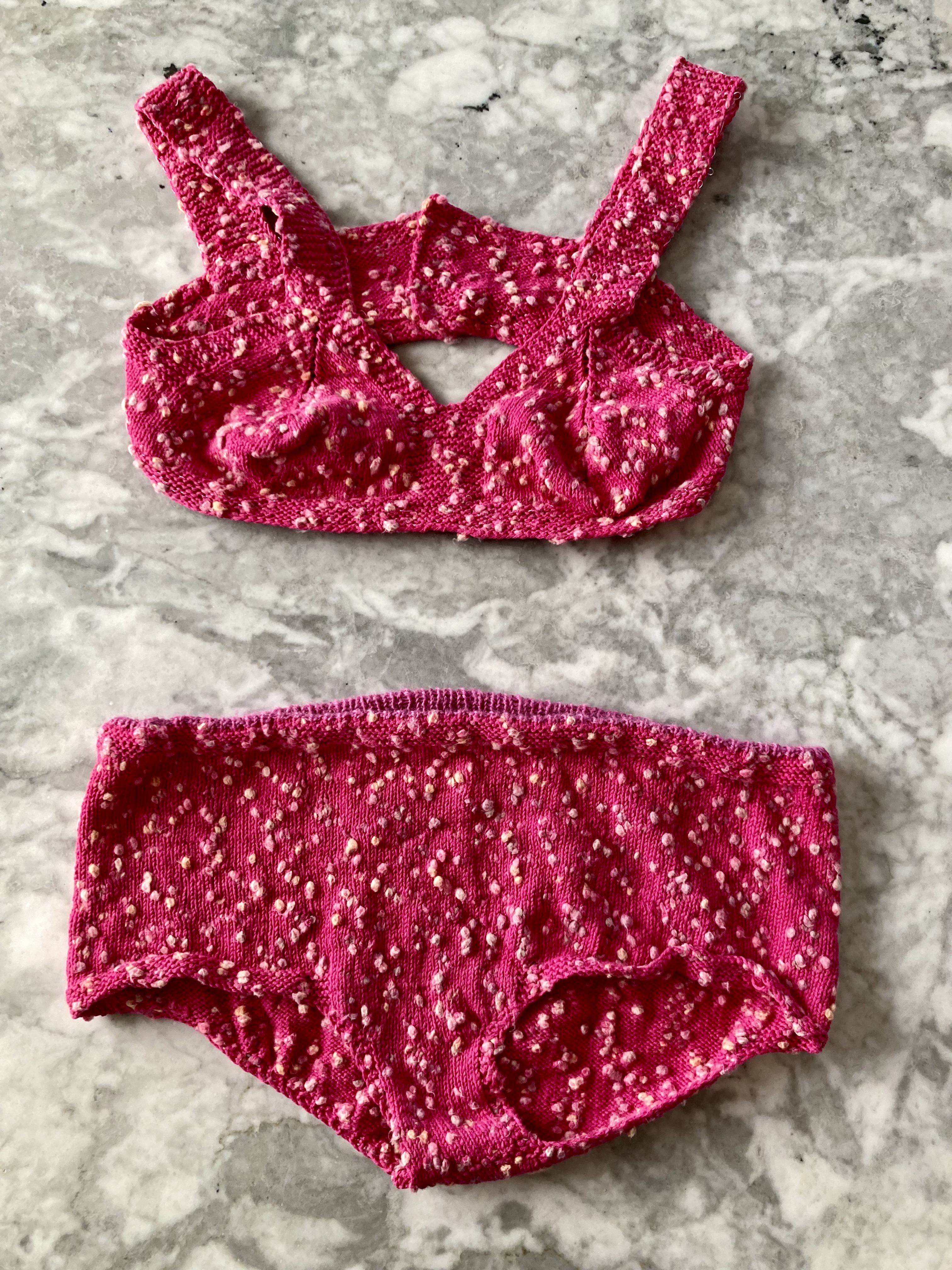
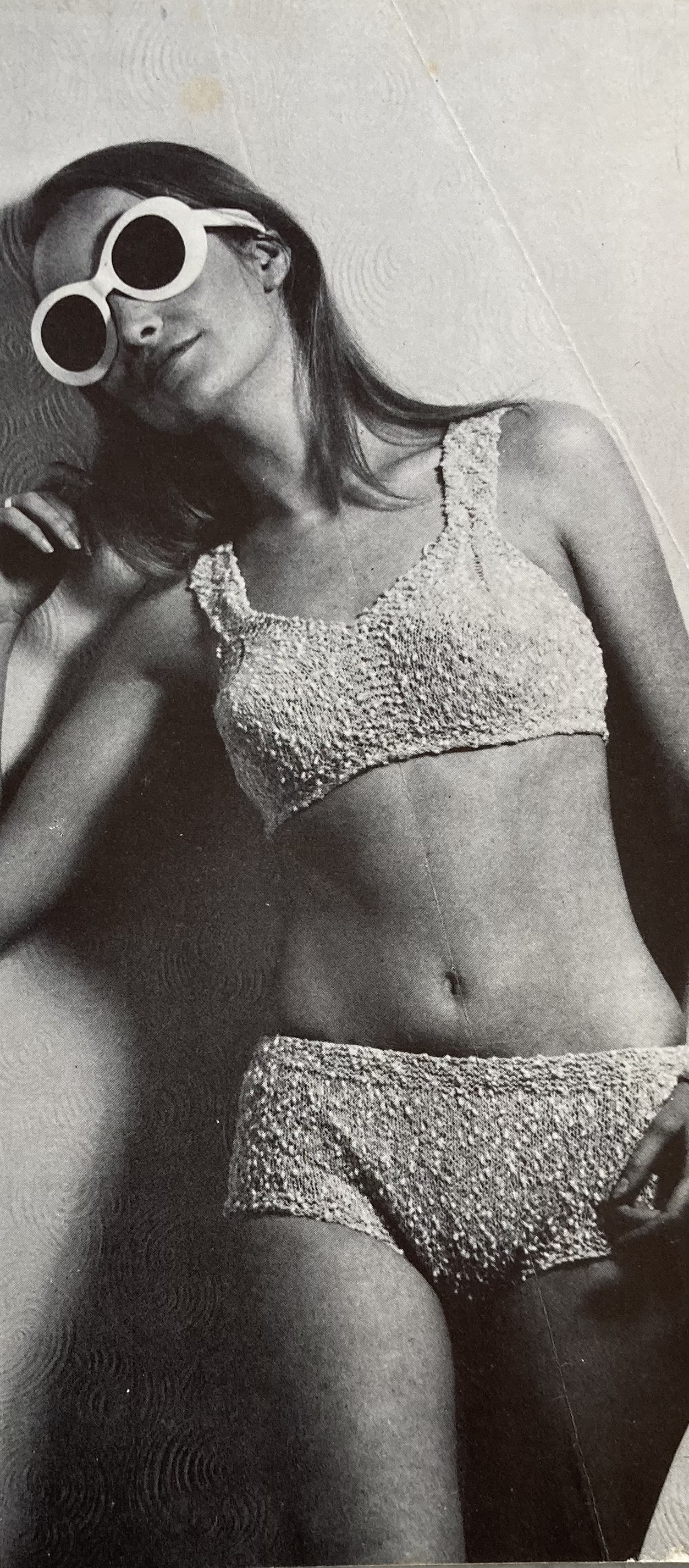
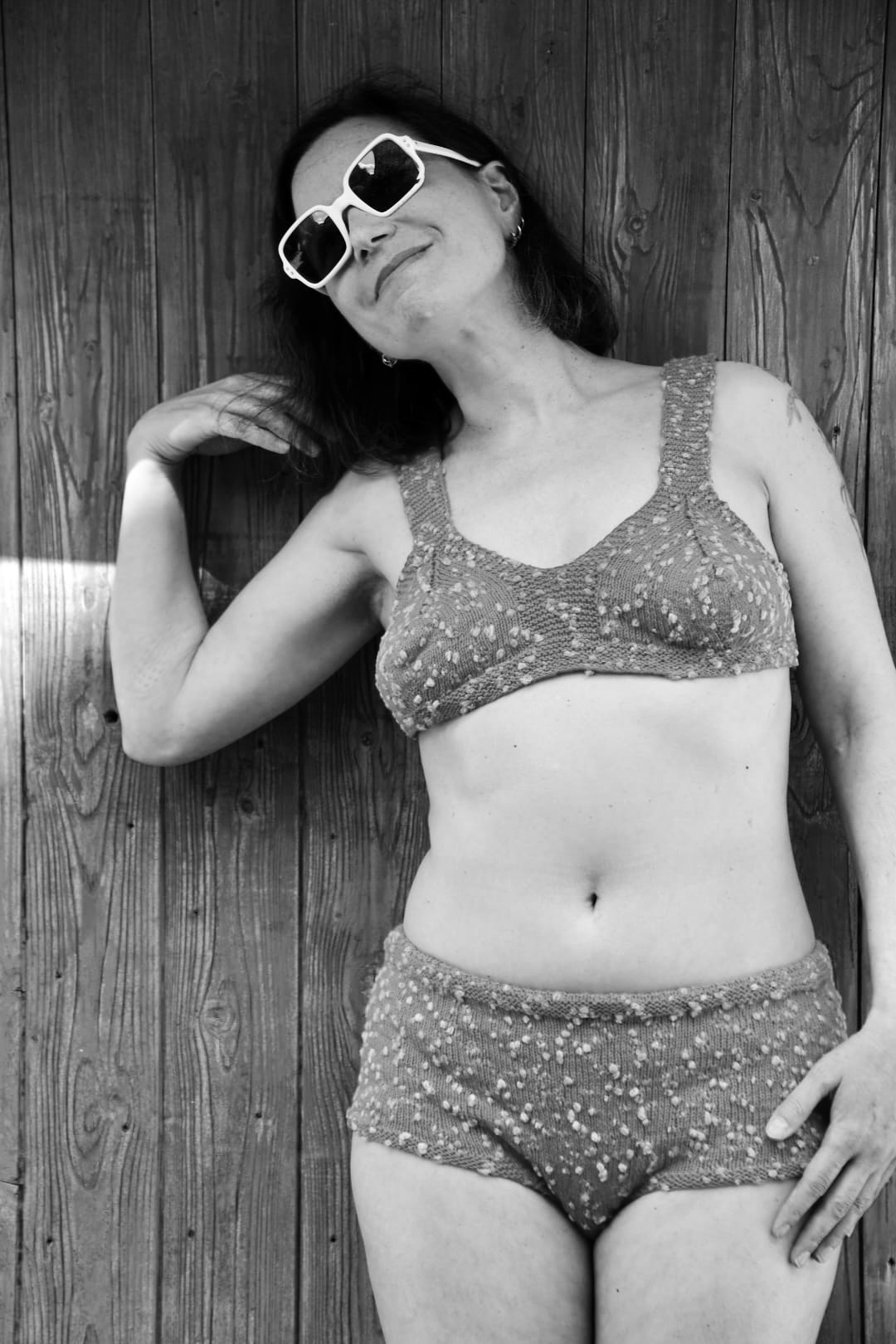
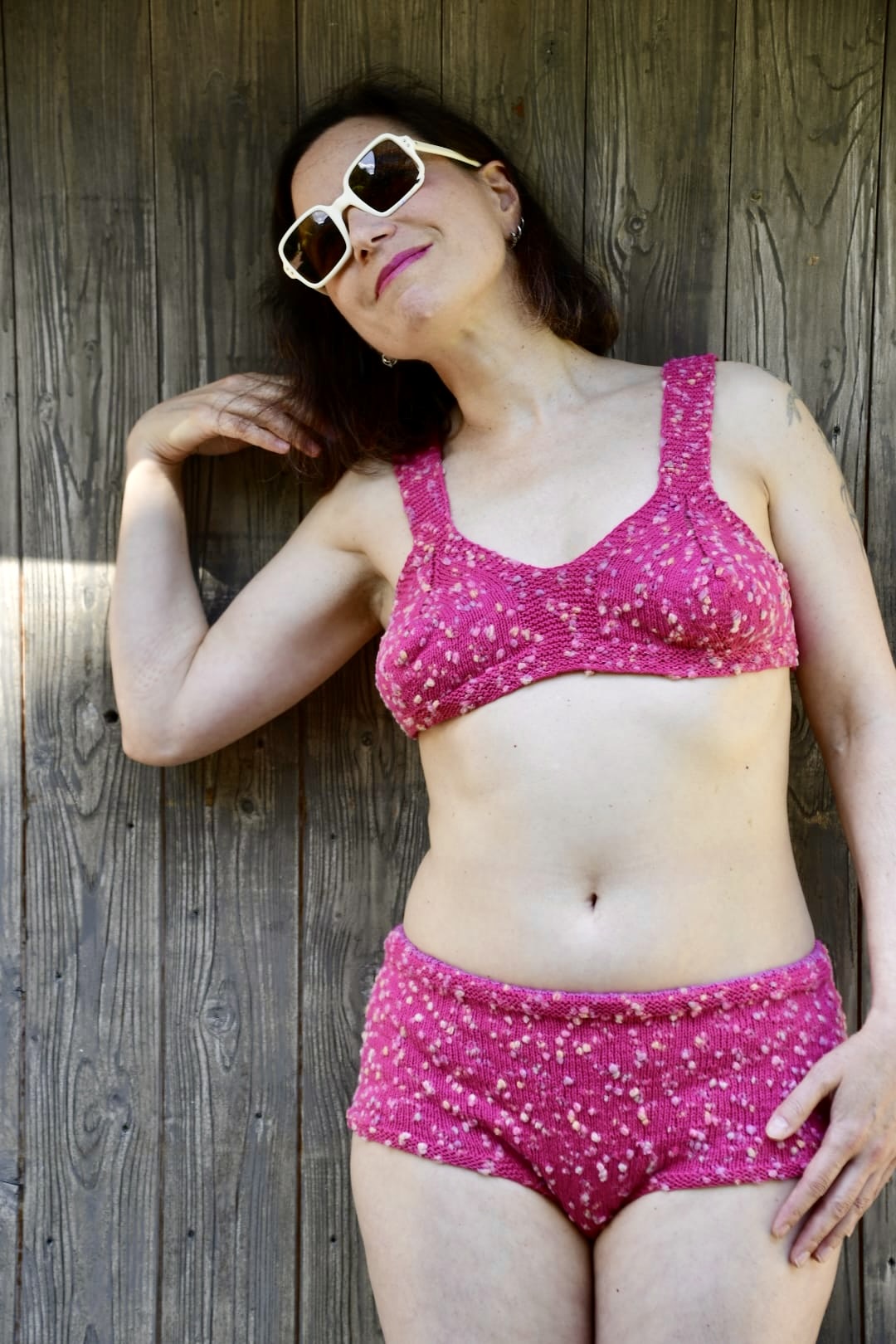
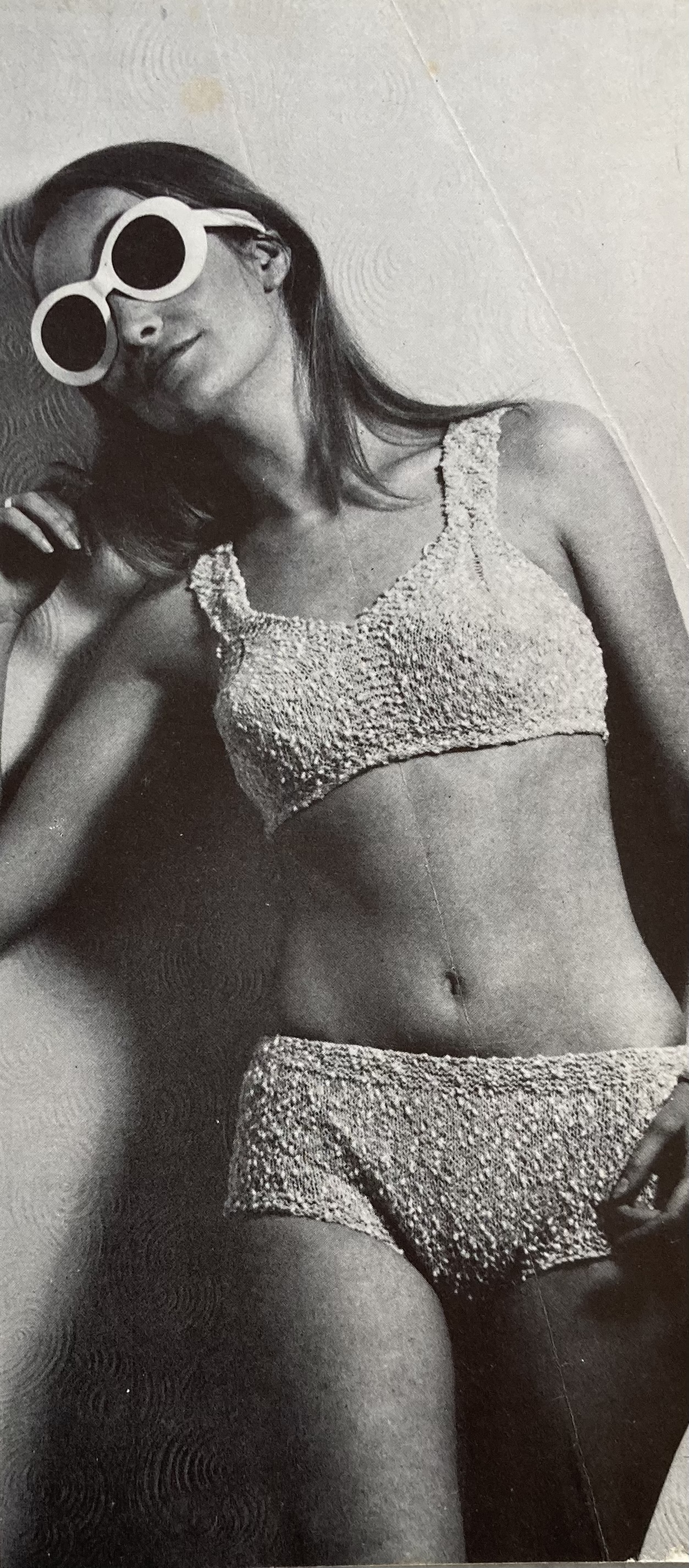
Summer is here! And the June 1968 issue of Stitchcraft has a glorious design to “sun yourself by the pool or on the sand”, “this season’s smartest beach look — the hand knit bikini set.”

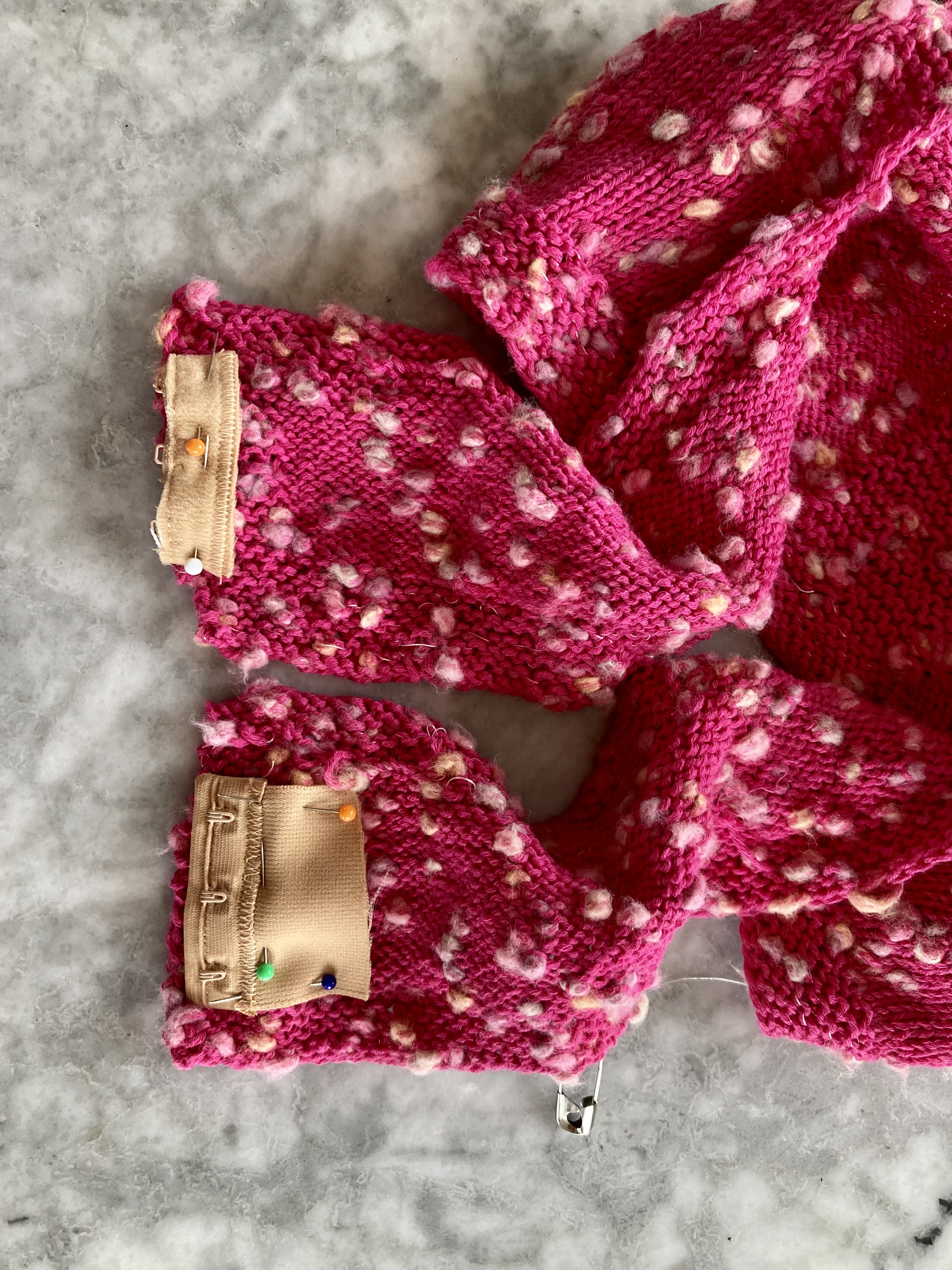
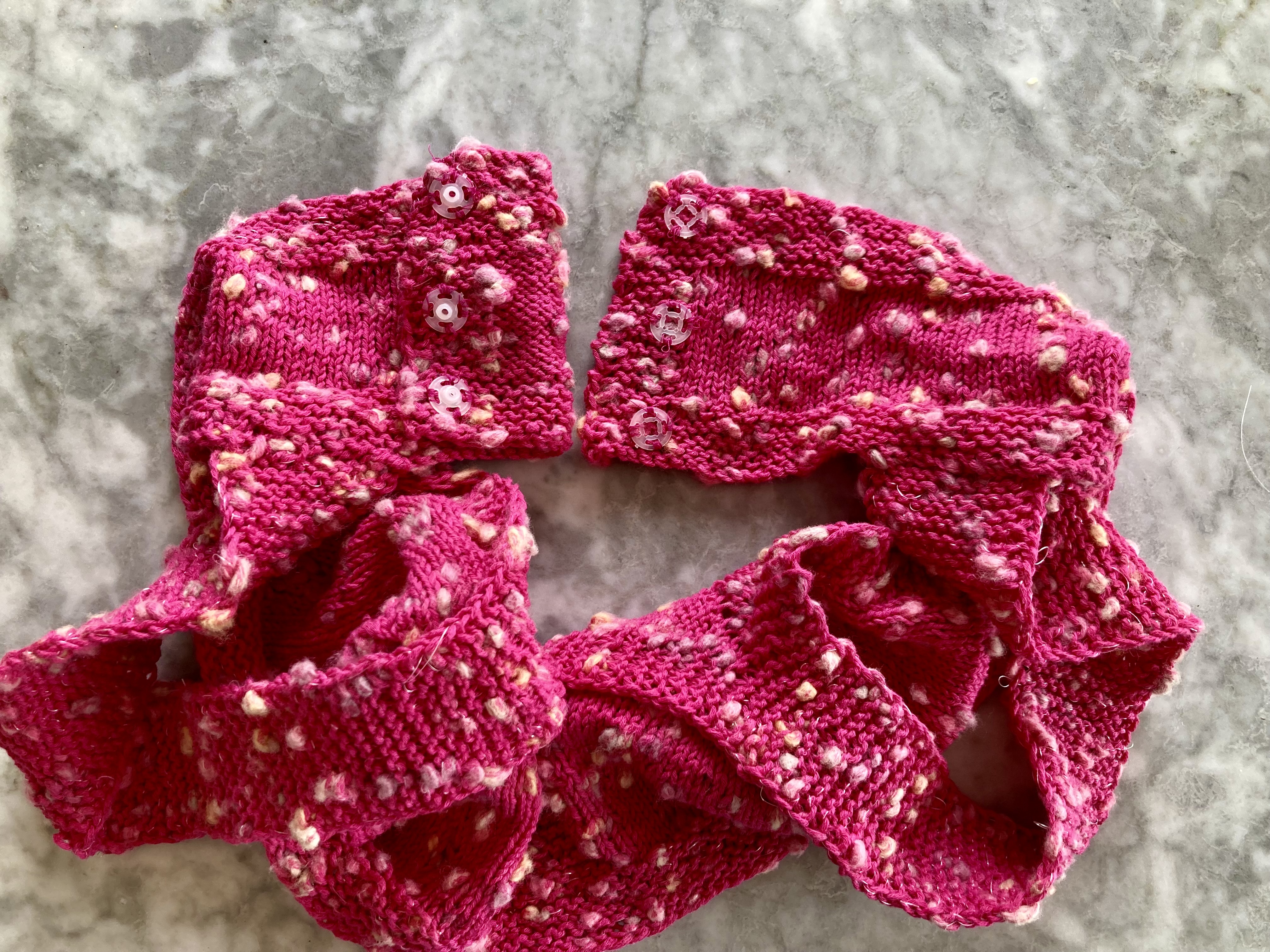
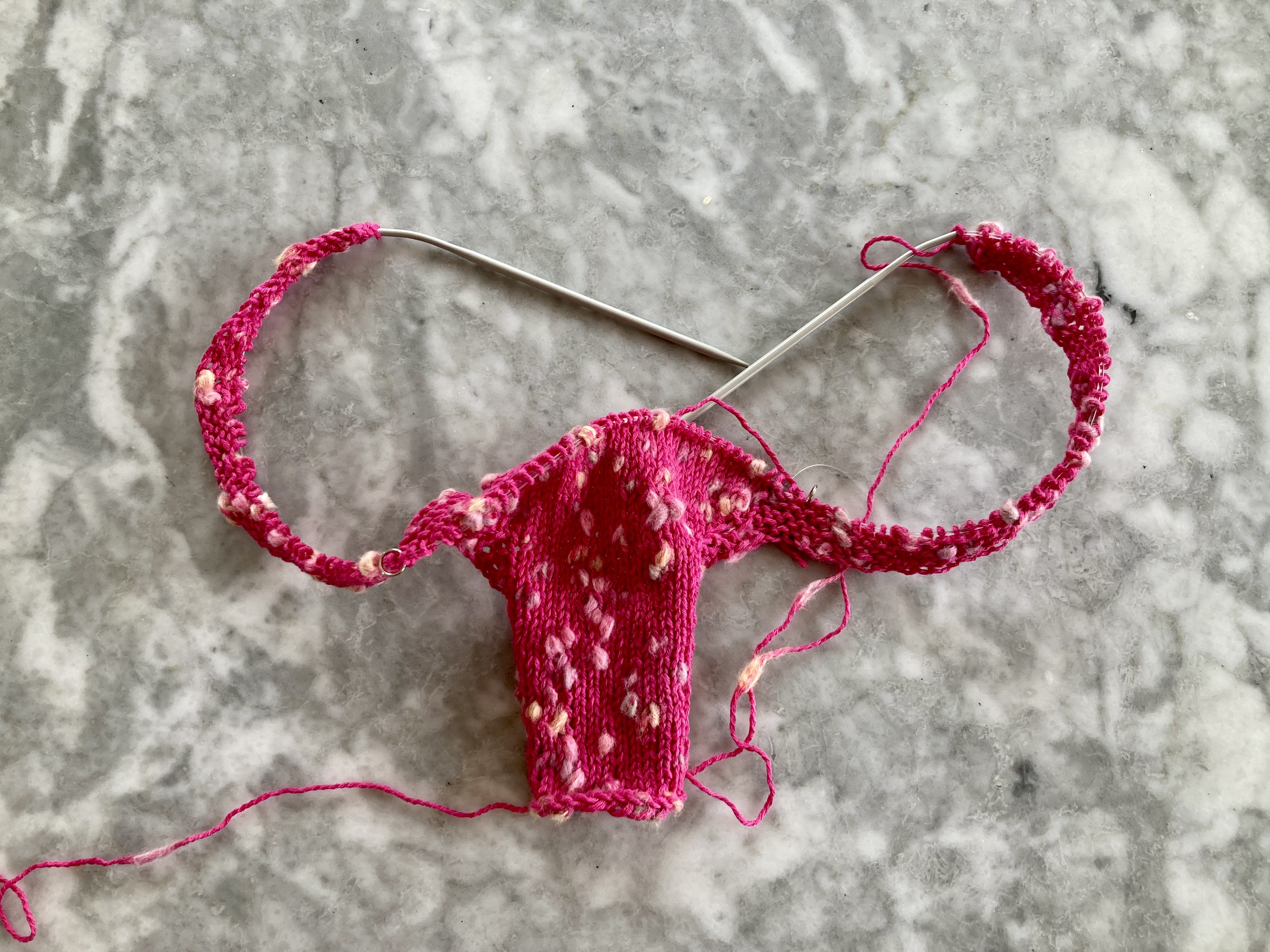
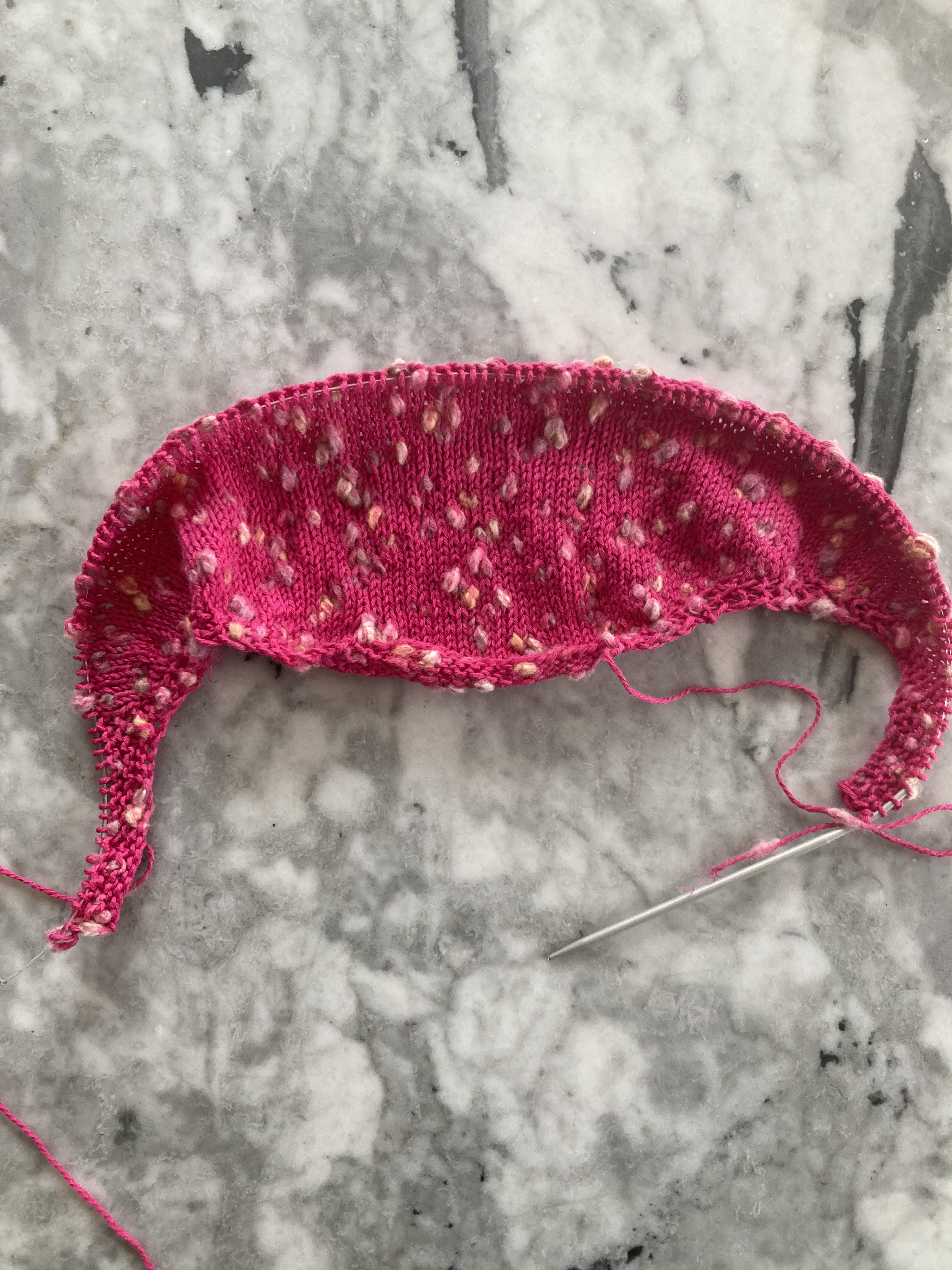
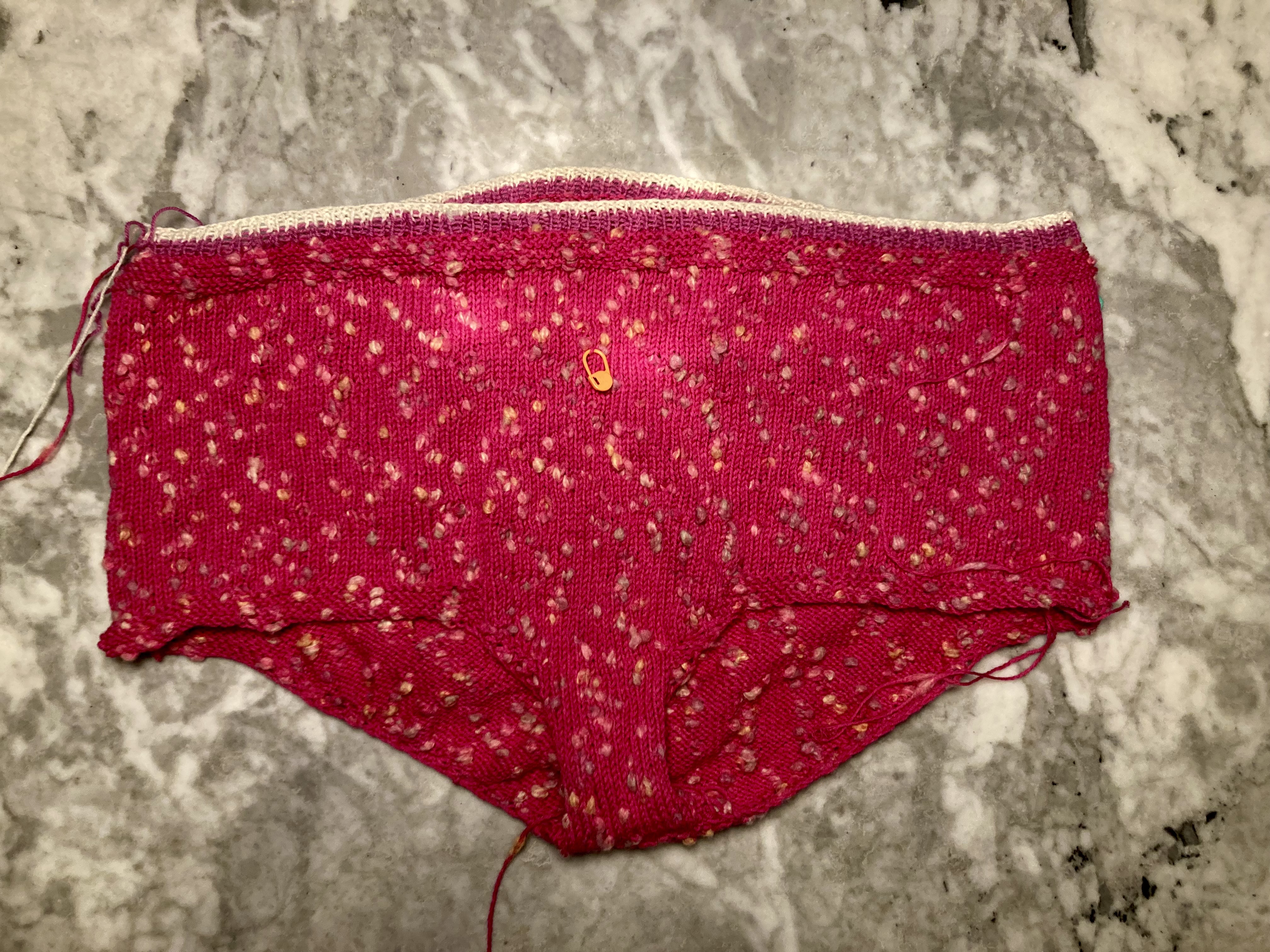
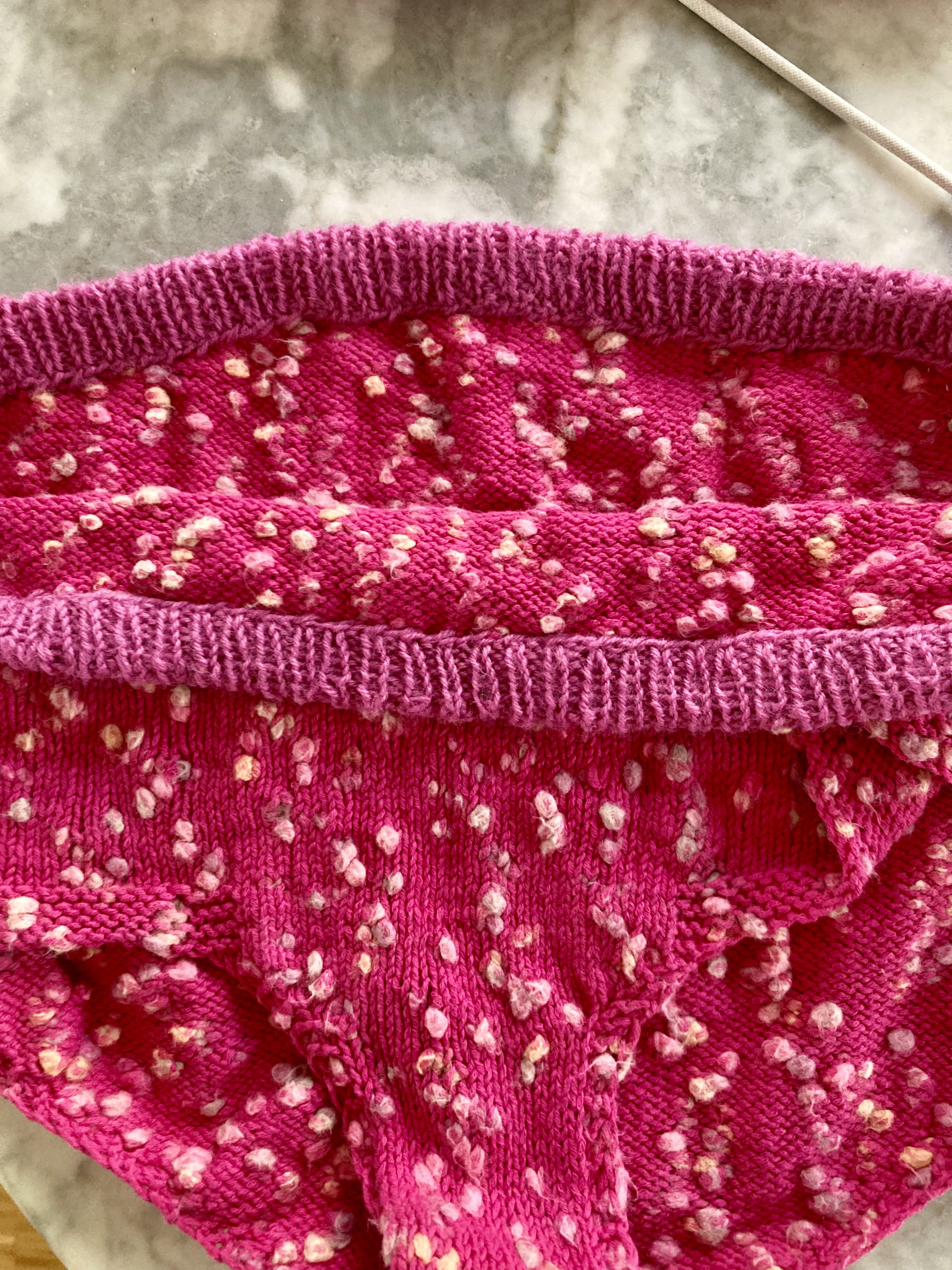
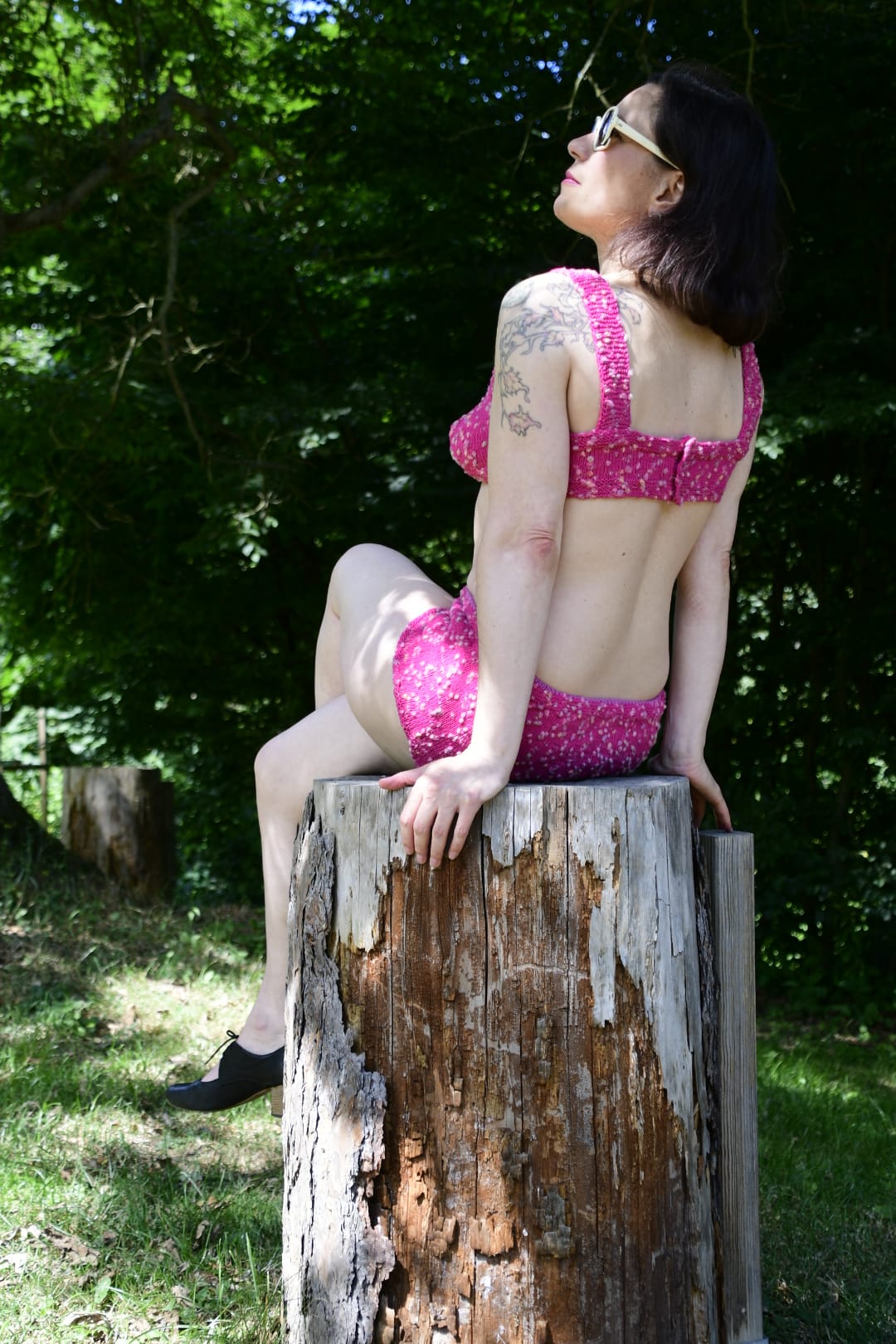
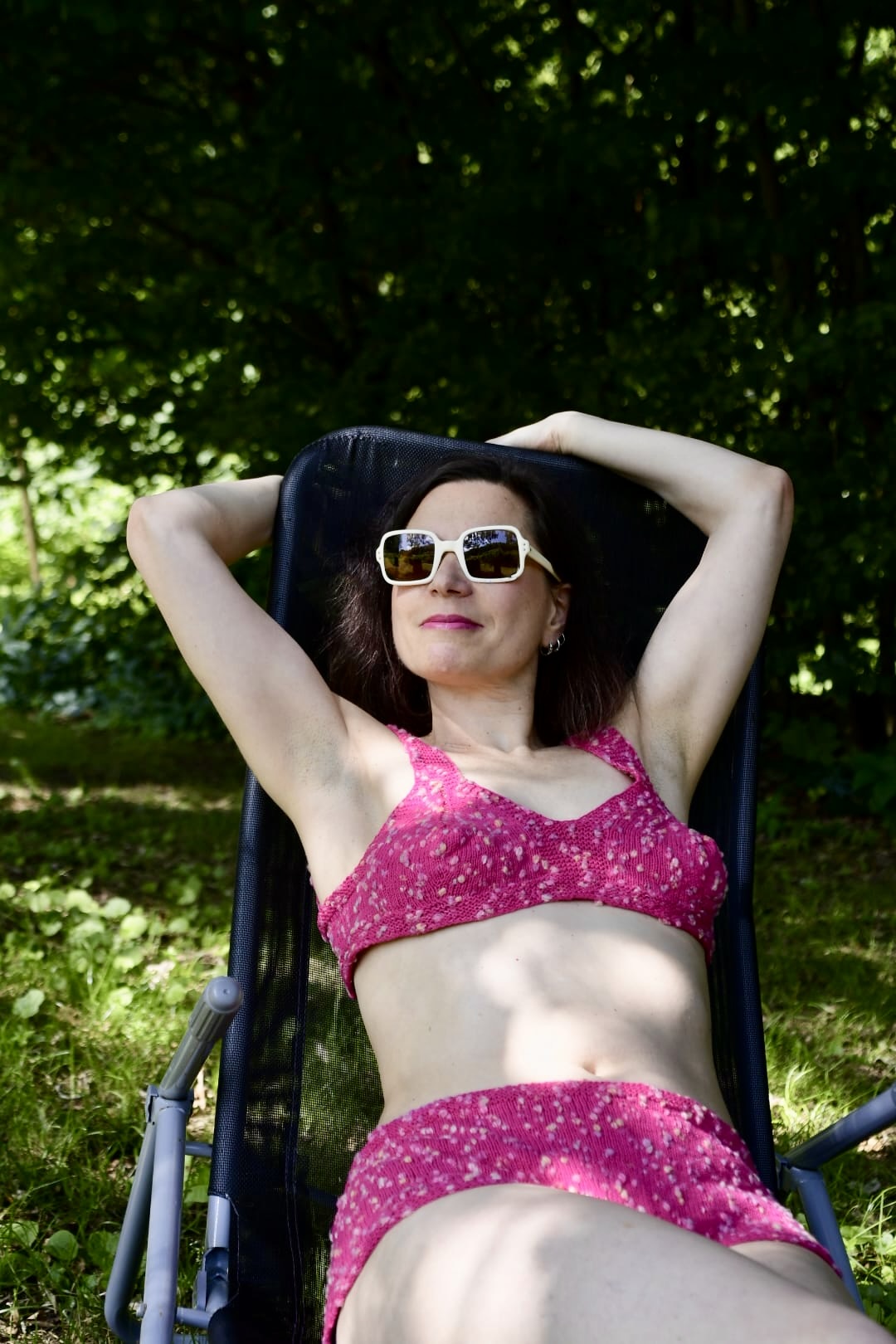
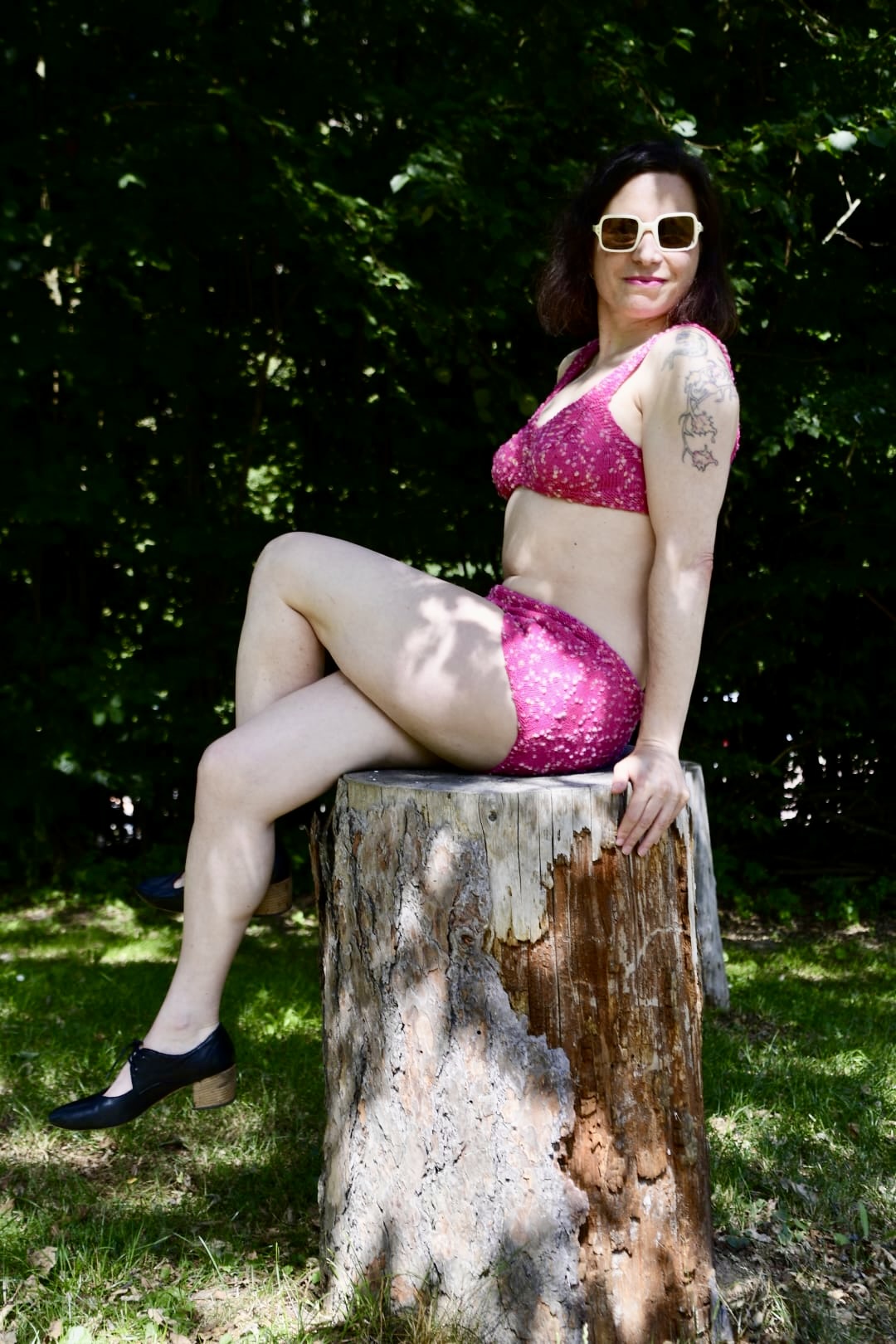
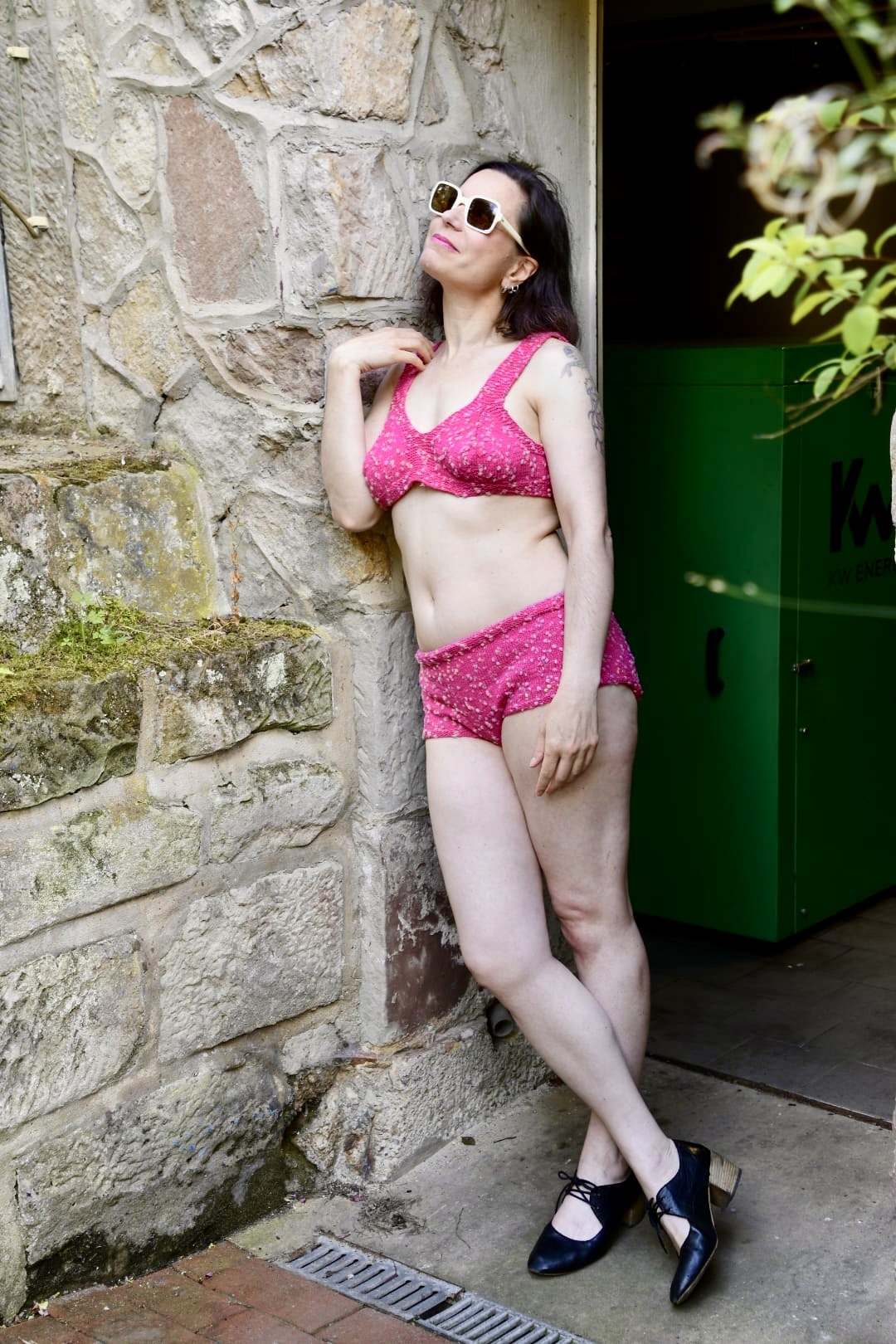
The caption at the top of the page promises you can “Go Sunning and… Lazing”, but does not say anything about “swimming”. I can imagine why! Though have heard that the one-piece knitted swimsuits of the 1930s and 1940s didn’t stretch all too much when wet, I cannot imagine that this 1960s bikini with garter-stitch bands would cling to the body effectively in water. Nothing like having your bathing suit float off of your body on a wave to make that day at the beach truly memorable! I have a modern bathing suit for actual swimming (which I don’t do much of for fun anyway), and I try to avoid direct sunlight when possible, but I can definitely see myself “lazing” in the shade on a pool chair in a hand-knit bikini, so this was my project for June.

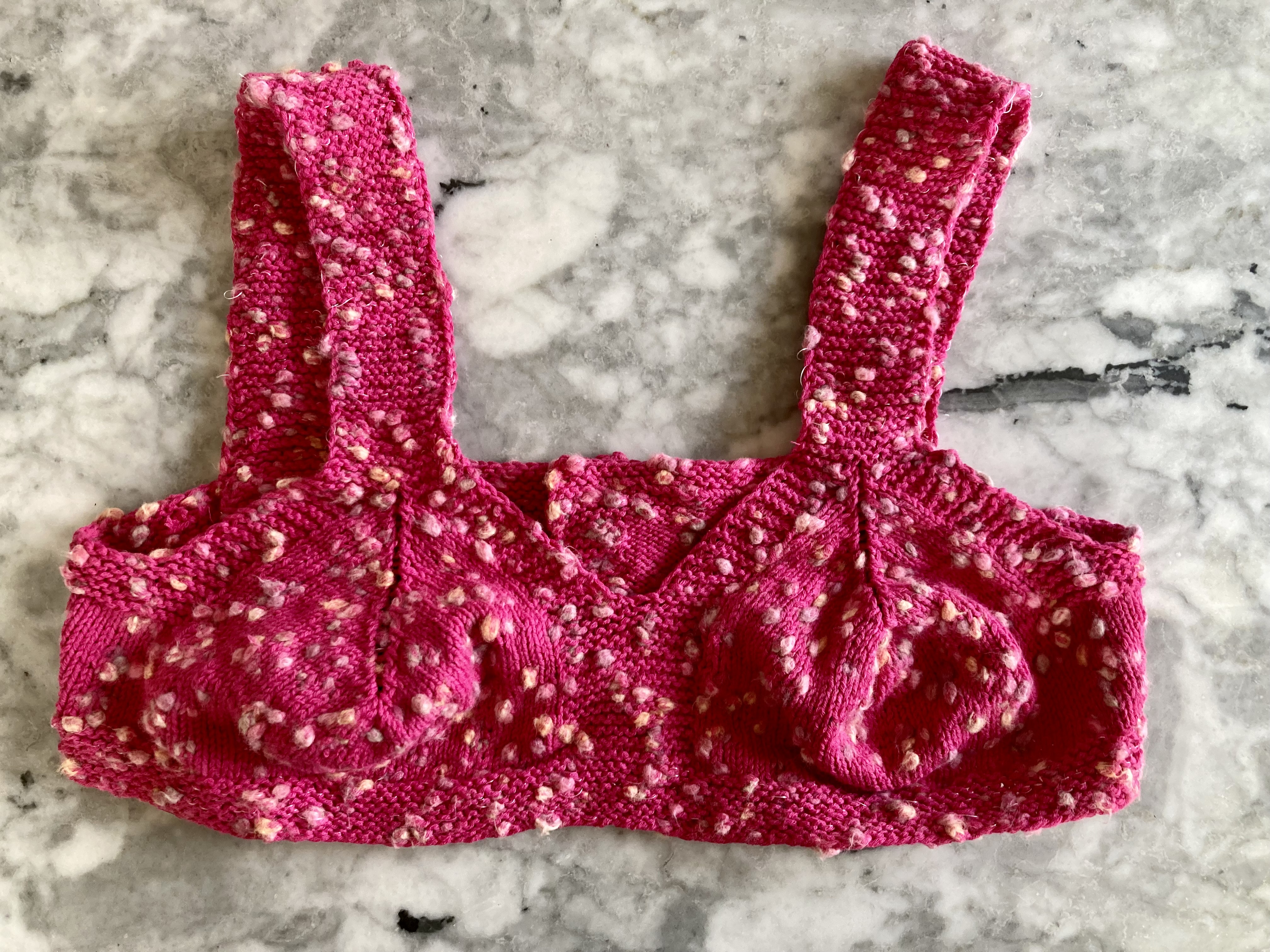
The three sizes for the top are for 32-33, 34-35, or 36-37 inch bust. I made the third size. Like me, the model seems to have at most a B cup. I imagine this style of hand-knit swimwear wouldn’t work very well for anyone built much bigger than that, since it doesn’t give much support and and more weight would make the bands stretch too much.

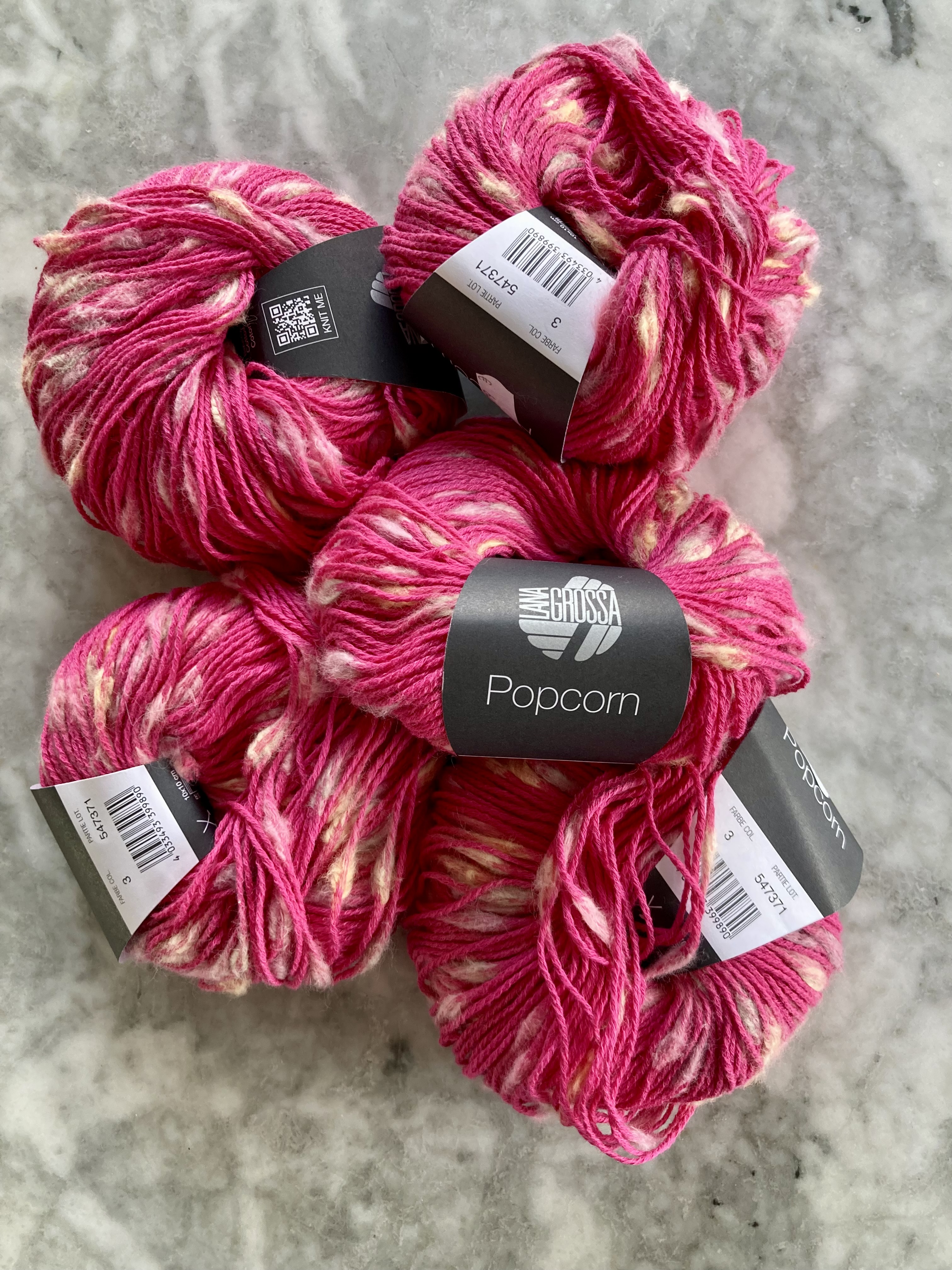
Finding the right yarn was a challenge. The original wool is Patons “Four Seasons”, a sport-weight mix of wool and synthetic fibres with a bobbly, “popcorn” texture, in “Surf Blue” colour. I found exactly one brand of yarn with the right weight and look and it is perfect — Popcorn by Lana Grossa — but it is also 100% cotton, so possibly even less appropriate for swimming than the original. It’s also probably a bit heavier, which was OK with me if it gives a thicker and less see-through fabric. It was also available in bright pink! If I am going to knit myself a bikini from 1968, I want it to be as bright and fun as possible, so that was perfect.

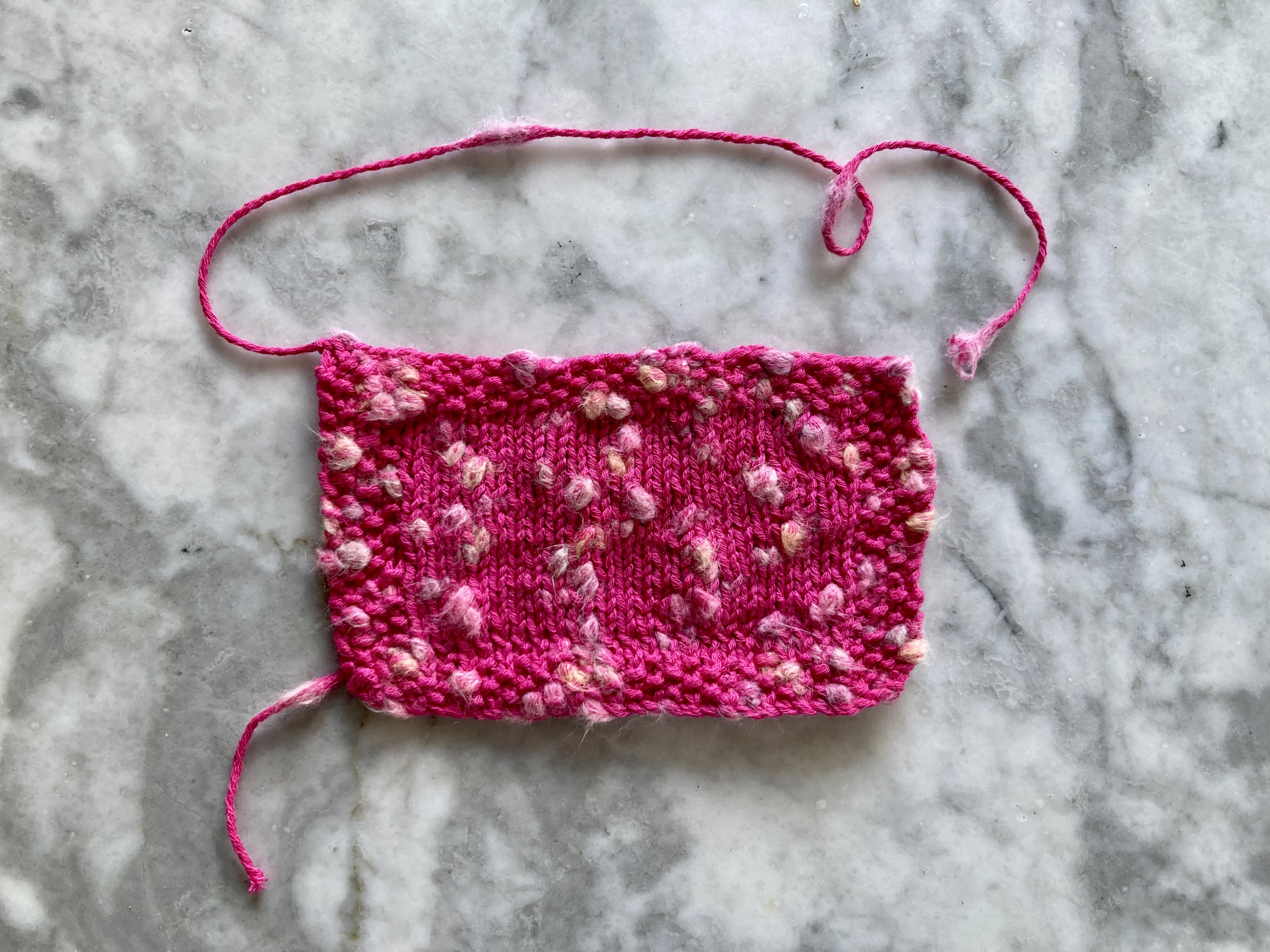
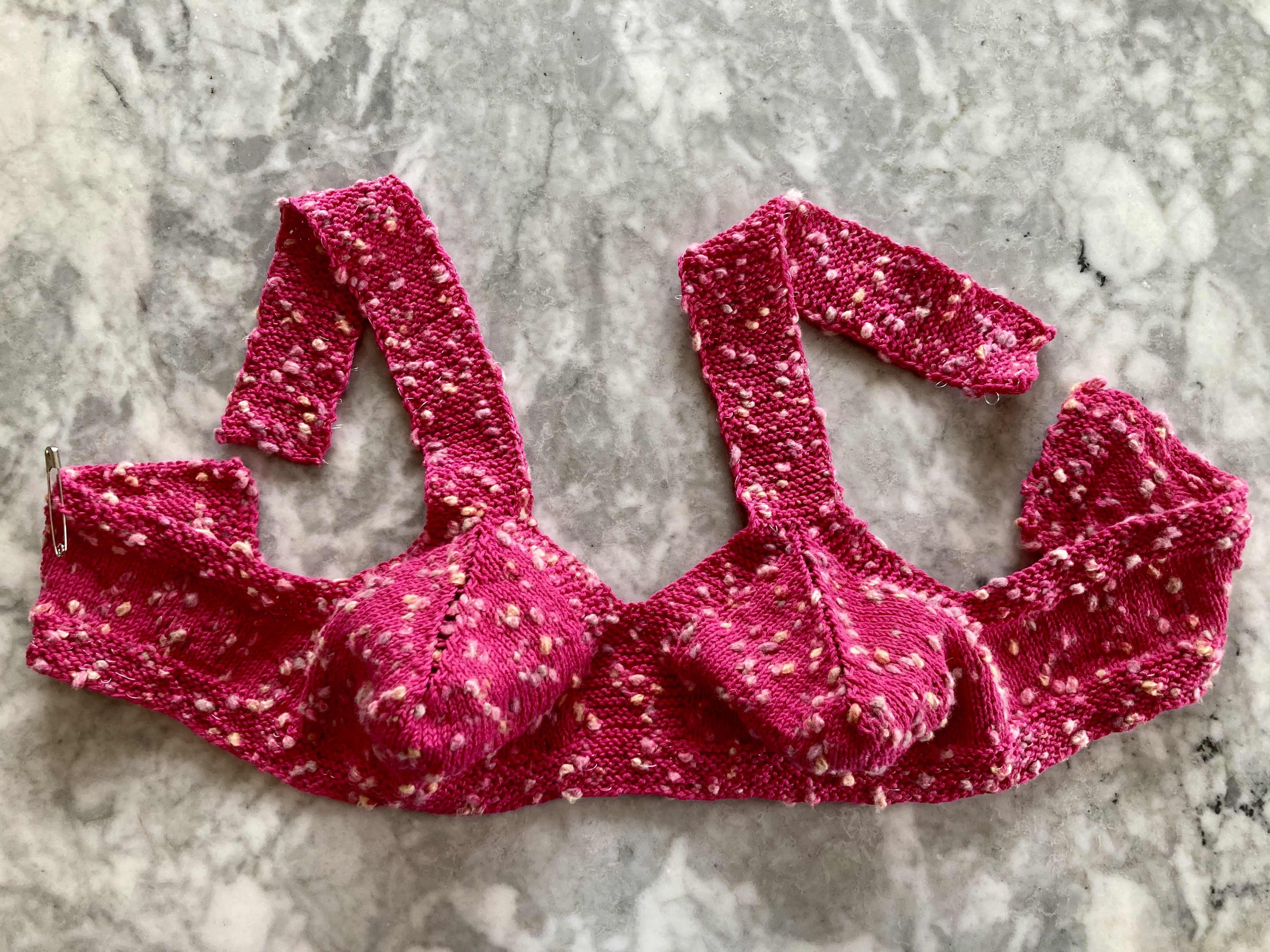
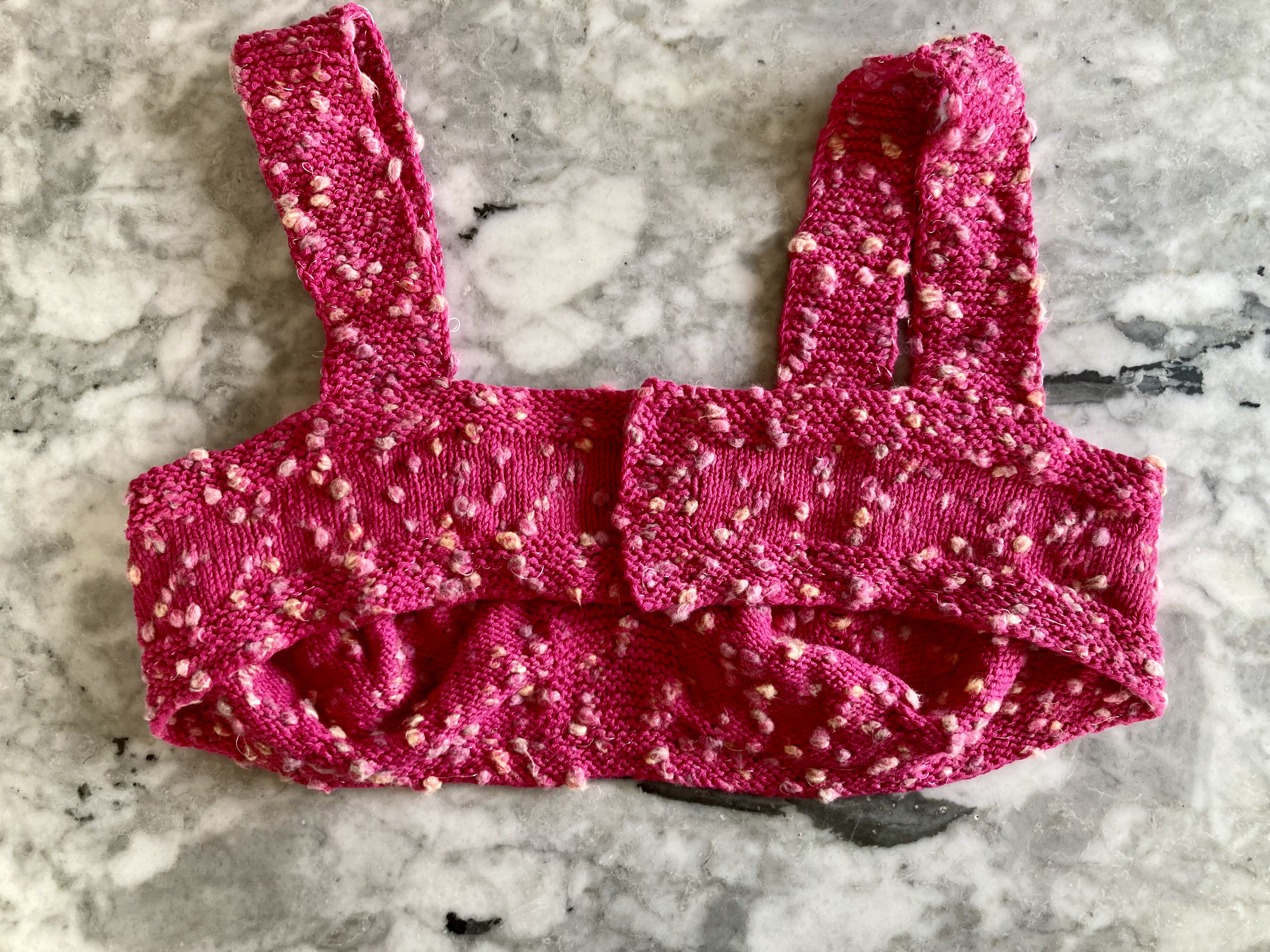
The top is knitted in stocking-stitch, from the band up to the straps, with garter-stitch borders. I was unsure of the suitability of garter stitch for a bra band, as it is just going to stretch horizontally, but ribbing was impractical for the rest of the borders (which need to lie neatly flat) and combining the two didn’t appeal to me. I knit an elastic thread along with the yarn on 3,5 mm needles, which made the band surprisingly firm and gave it some elasticity. If necessary, the band could be reinforced with a narrow strip of elastic. There’s a vertical band of 12 stitches garter stitch in the middle of the front.

The cups are formed by increasing at the middle of each one, then decreasing rapidly at the same stitch. This makes them kind of pointy, in the old “bullet bra” style. But after finishing the cup shaping, I tried it on and it fit! I think it’s actually going to work!

Unfortunately, that was as far as I got as of June 28th, but it does knit fairly quickly and I think the briefs won’t be too difficult (front piece, back piece, sew together, add elastic at the waist, can’t be that hard.) I will update as soon as it is finished!

June 1968: Overview

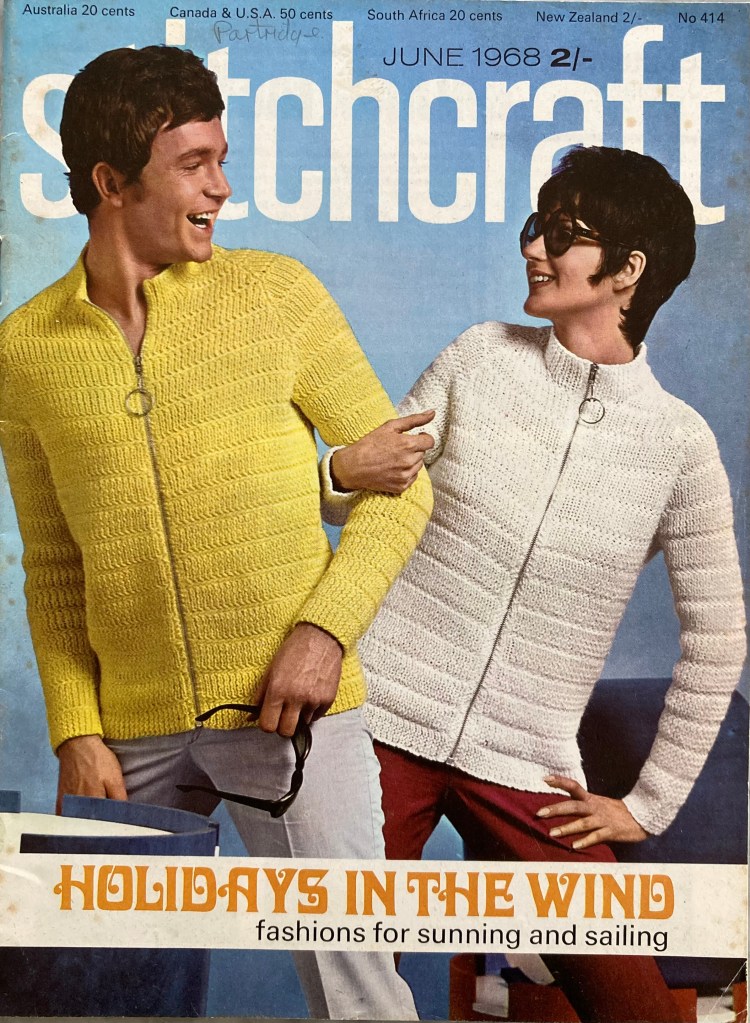
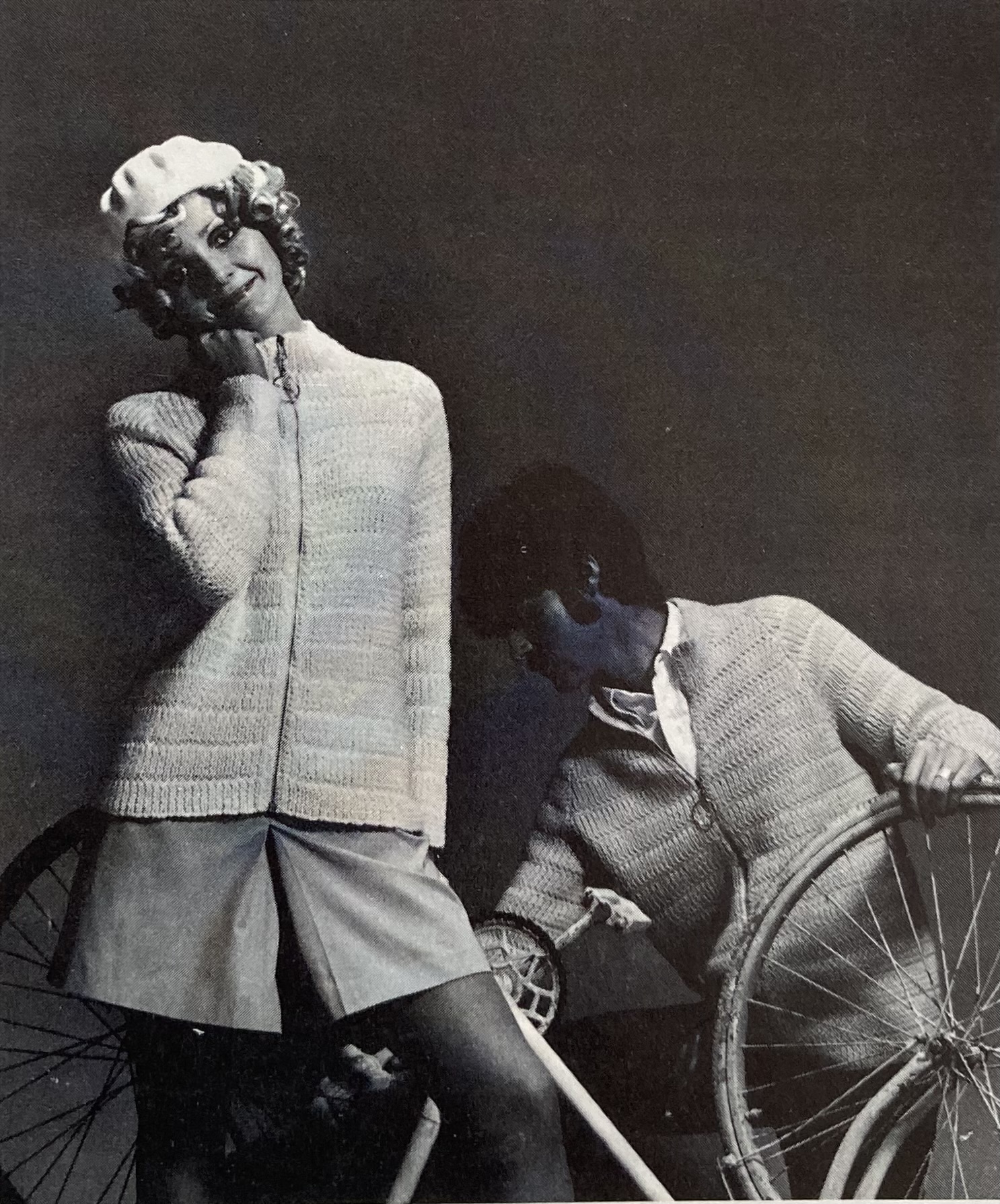
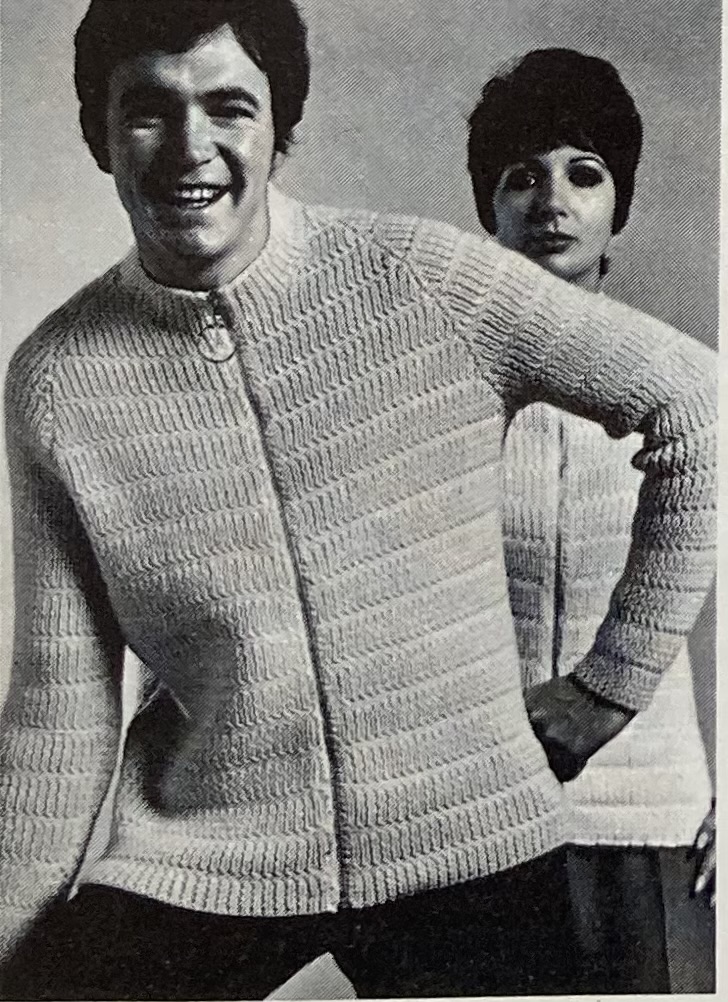
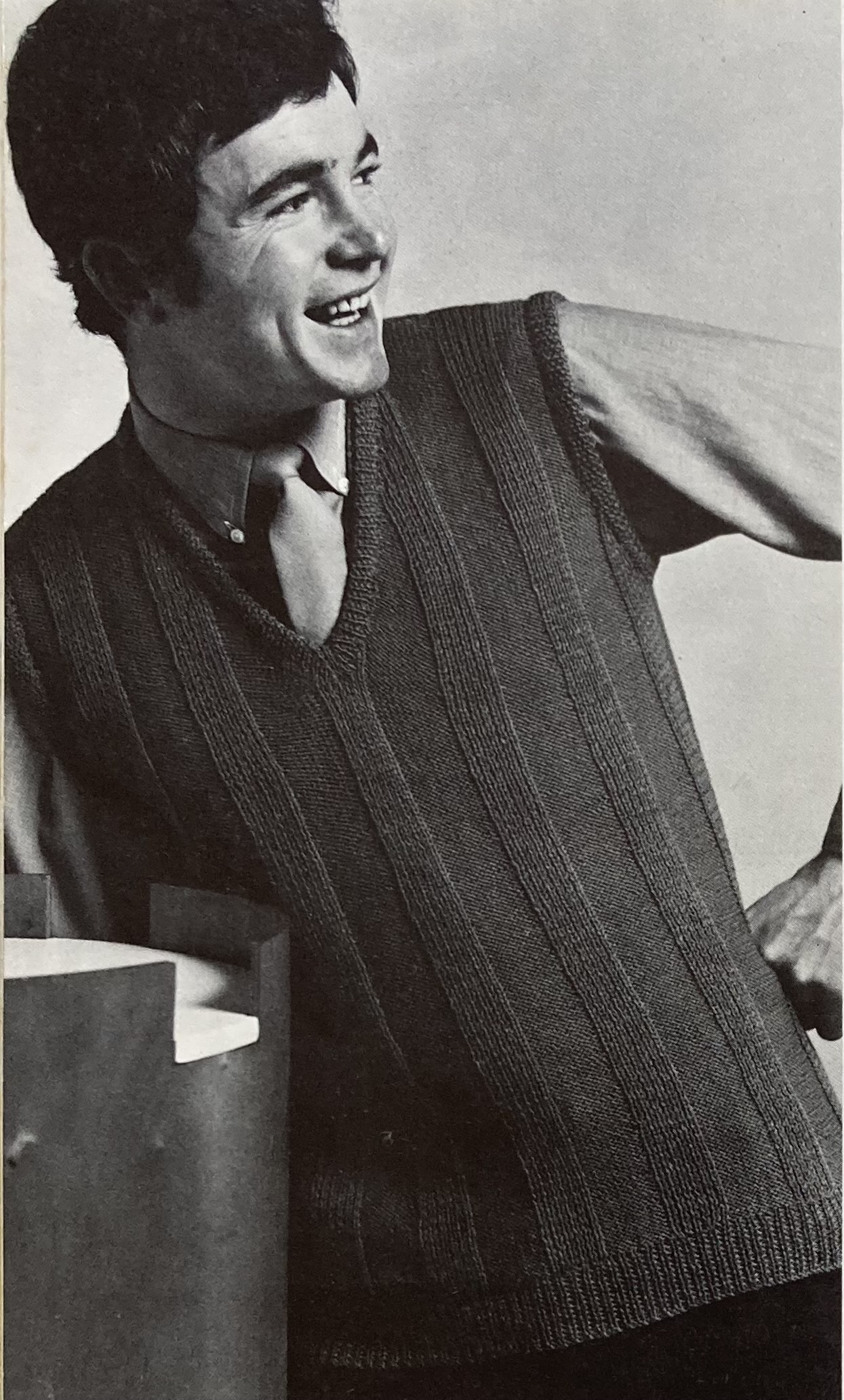
“Holidays In the Wind” is the title of the June 1968 issue of Stitchcraft, promising “fashions for sunning and sailing”. The couple on the cover are dressed appropriately for sailing and/or a typical summer in the UK in their warm woolen cardigan-jackets. “Easy-fitting to slip on quickly — and smart for her to wear with culottes and slacks for rambling and biking” is the caption to the additional photo, showing the female model looking cute while the male model fixes her bicycle. When he’s finished with that, he can slip into a slipover in fine 4-ply flattened ribbing.

For the most part, the other women’s fashions in this issue eschew the casual, “country” holiday style in favour of slightly more dressy outfits in fuzzy or textured yarns and “dreamy” pastel and neutral colours. There’s a belted skirt suit in Patons’ new “Four Seasons” nubbly wool-mix, a dress and a sleeveless top in fine, fluffy “Princess” wool, a jumper with a lace yoke and sleeves in 4-ply “Cameo Crepe”, and another skirt suit, this time in bouclet wool and a flowery lace-rib pattern.

“Sophisticated”, “elegant”, “graceful”, and “softly fashioned” are the key words in the accompanying desciptions.

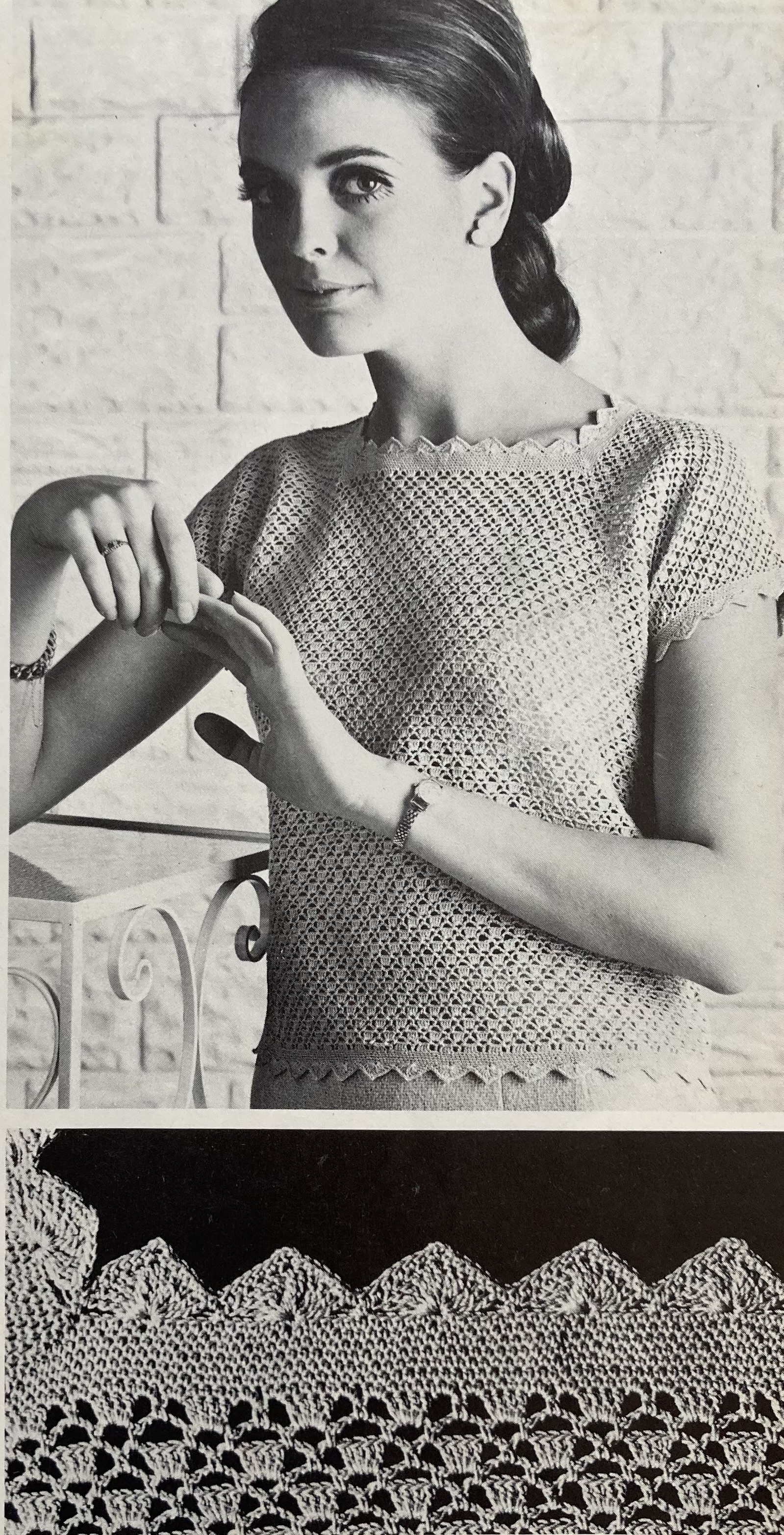
Crocheters get an opportunity to make something fine and elegant too: a cotton lace blouse, “so feminine for summer.” Crochet garments, especially somewhat more difficult ones like this, are rare in Stitchcraft, so we are assured in the description that it is “not a really difficult design to work.” The highlight of the issue though, if you ask me, is the knitted bikini! It is made in plain stocking-stitch, to show off the texture of the nubbly “Four Seasons” wool (the same as the skirt suit) and notably described as being for “sunning and… lazing.” Nota bene, not “swimming”! I assume it would sag horribly when wet, or fall off and float away. Still, it’s glorious.

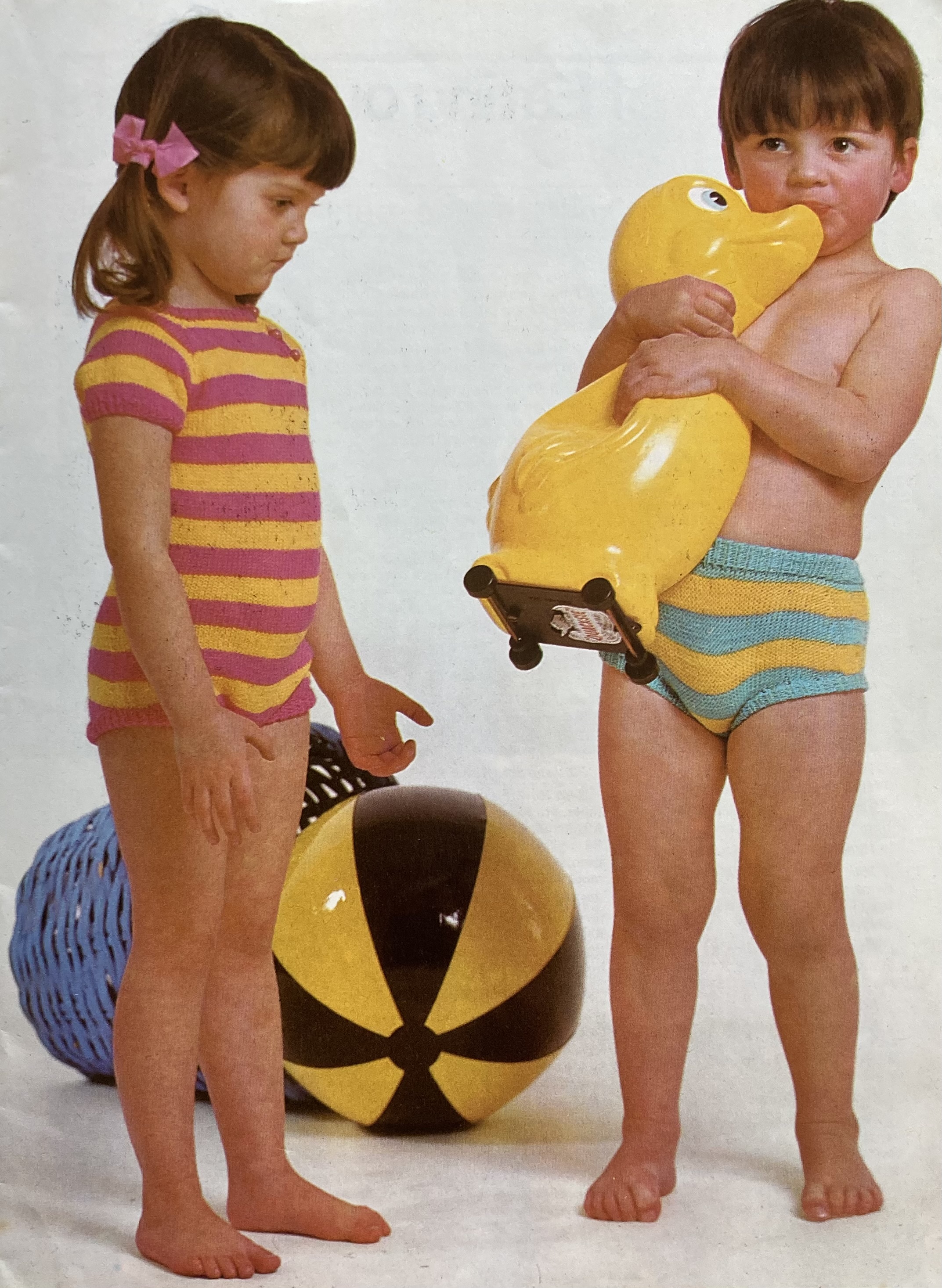
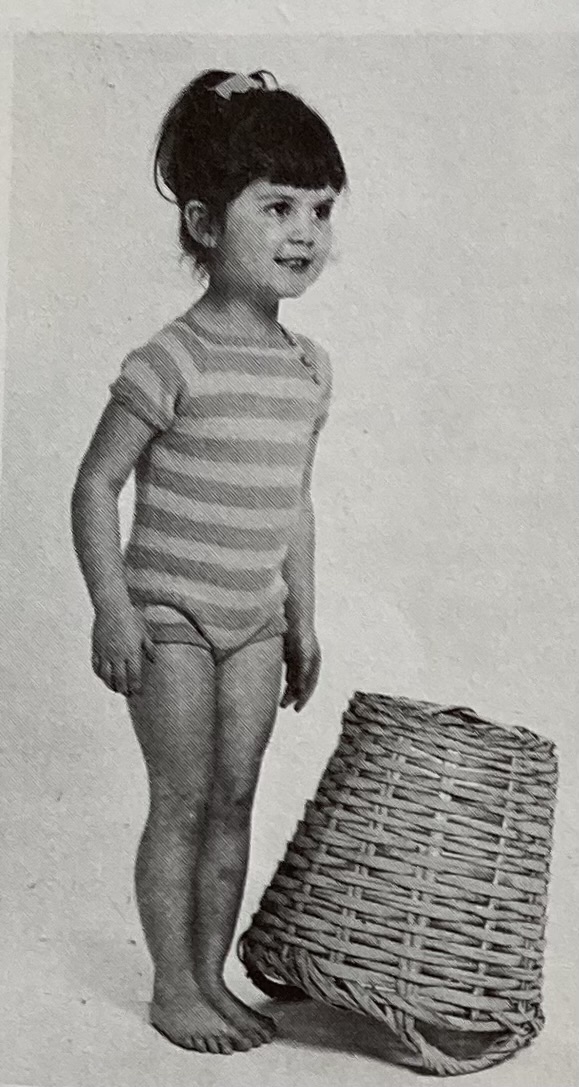
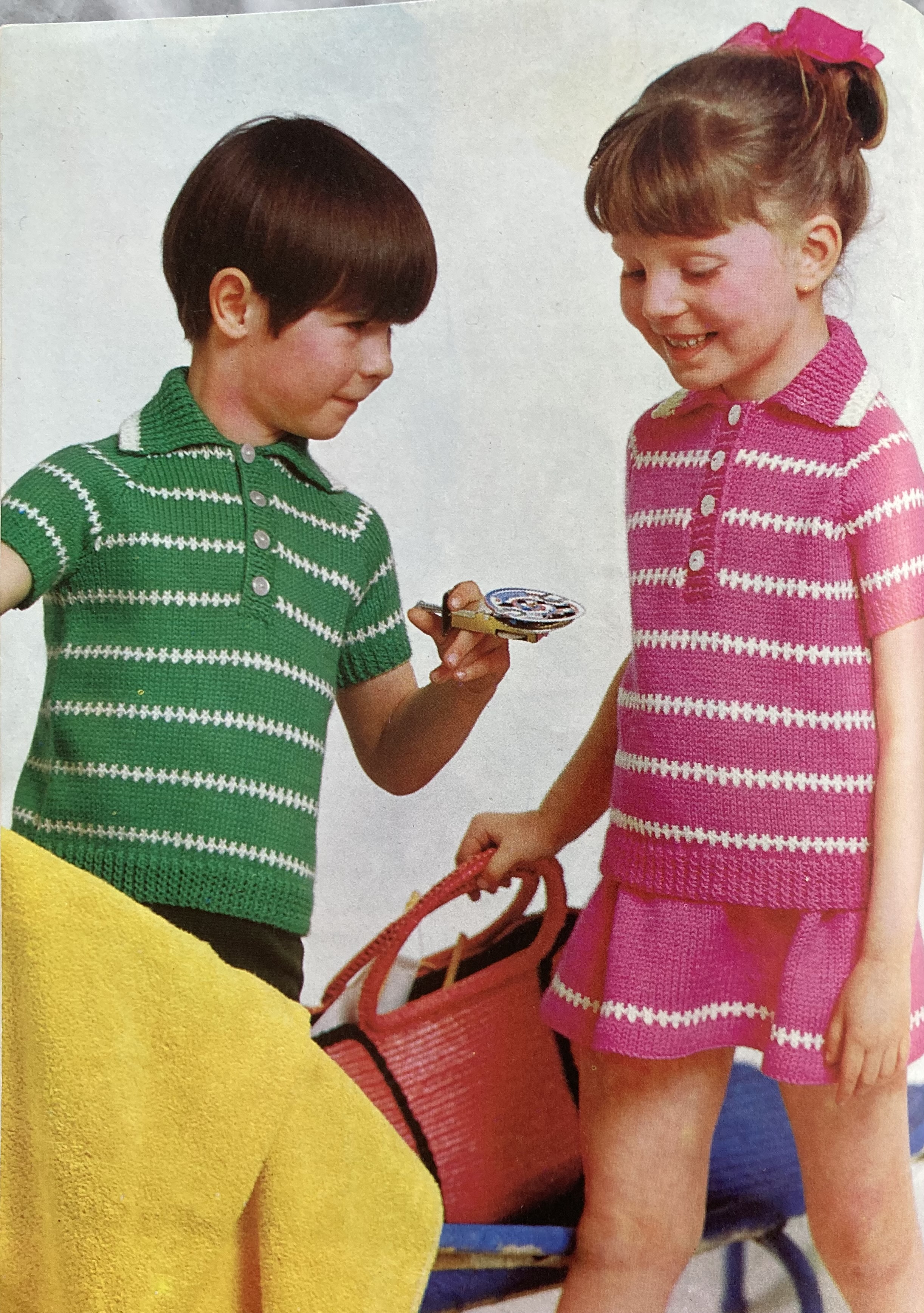
There are some fun fashions for kids in this issue, too, conveniently in a “his and hers” version for both toddlers and school-age children. The former can “paddle and splash” in striped trunks (boy) or one-piece romper (girl), knitted in 4-ply Purple Heather wool. The bigger kids have matching short-sleeved knitted shirts with a jagged stripe pattern, paired with a skirt for the girl. I feel sorry for her trying to play on a beach in a tiny mini-skirt! The boy seems to be wearing more practical non-knitted shorts.

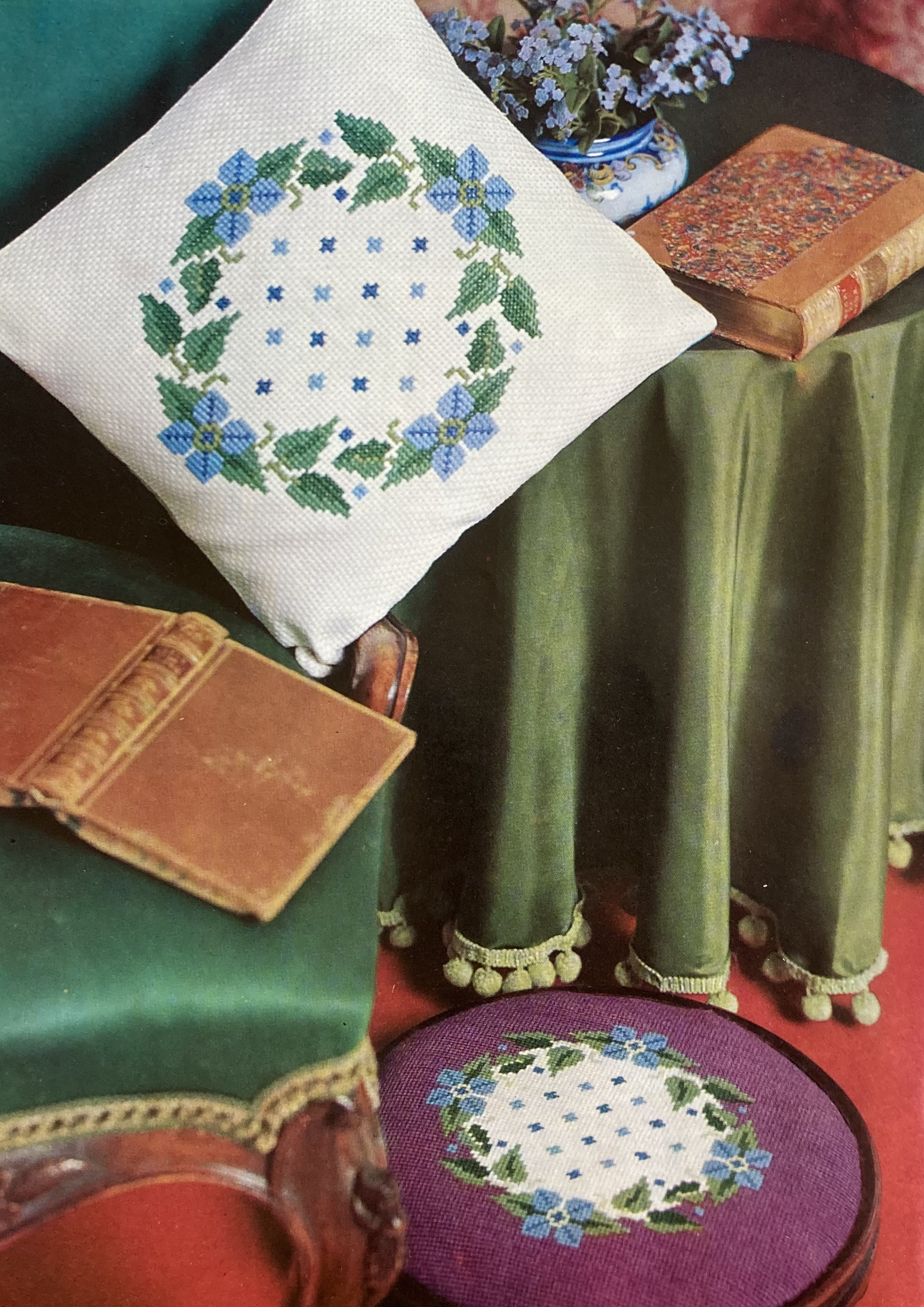
The homewares in this issue are pretty standard: counted embroidery for garden cushions or to work in tapestry on a stool-top.

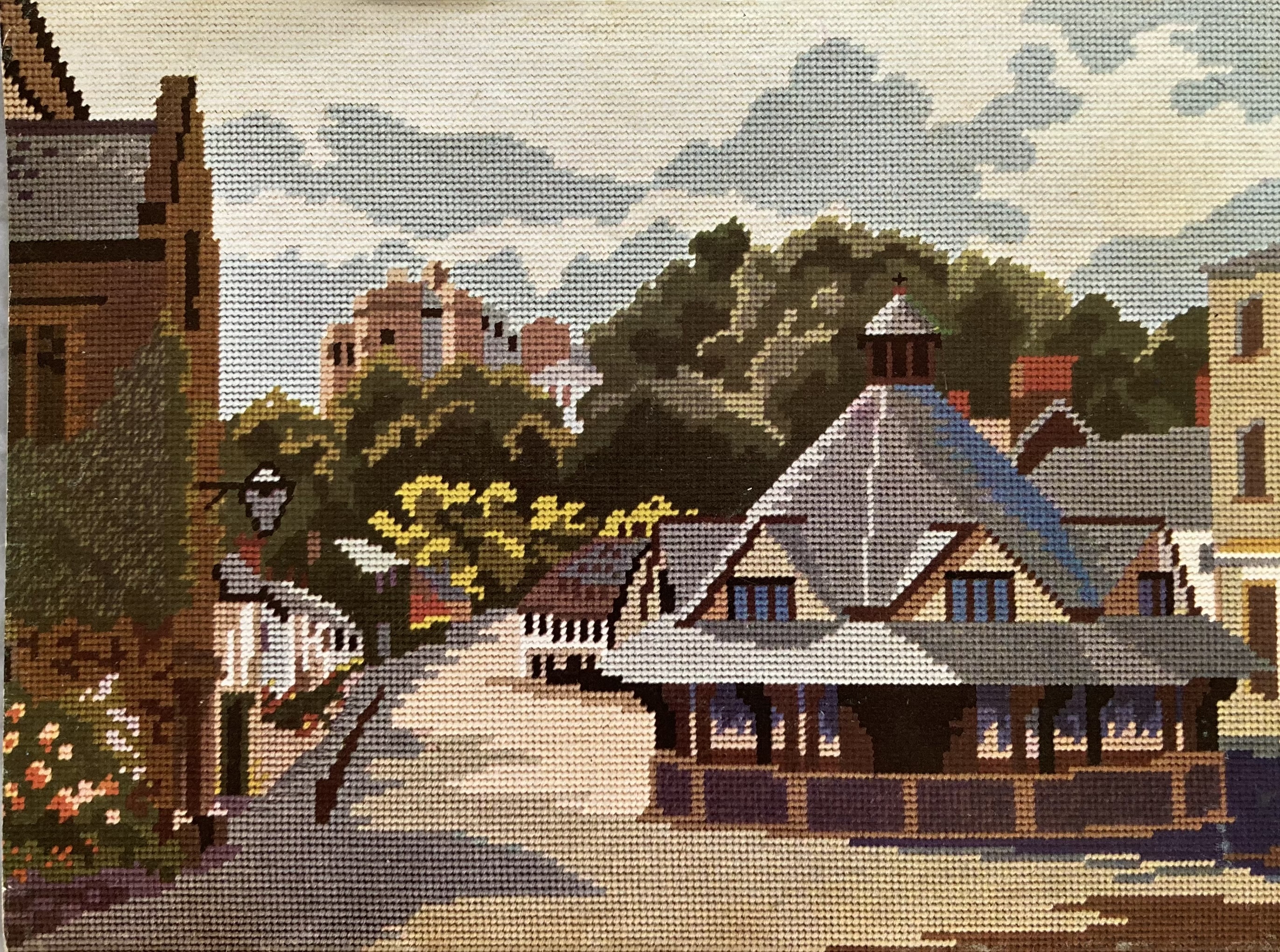
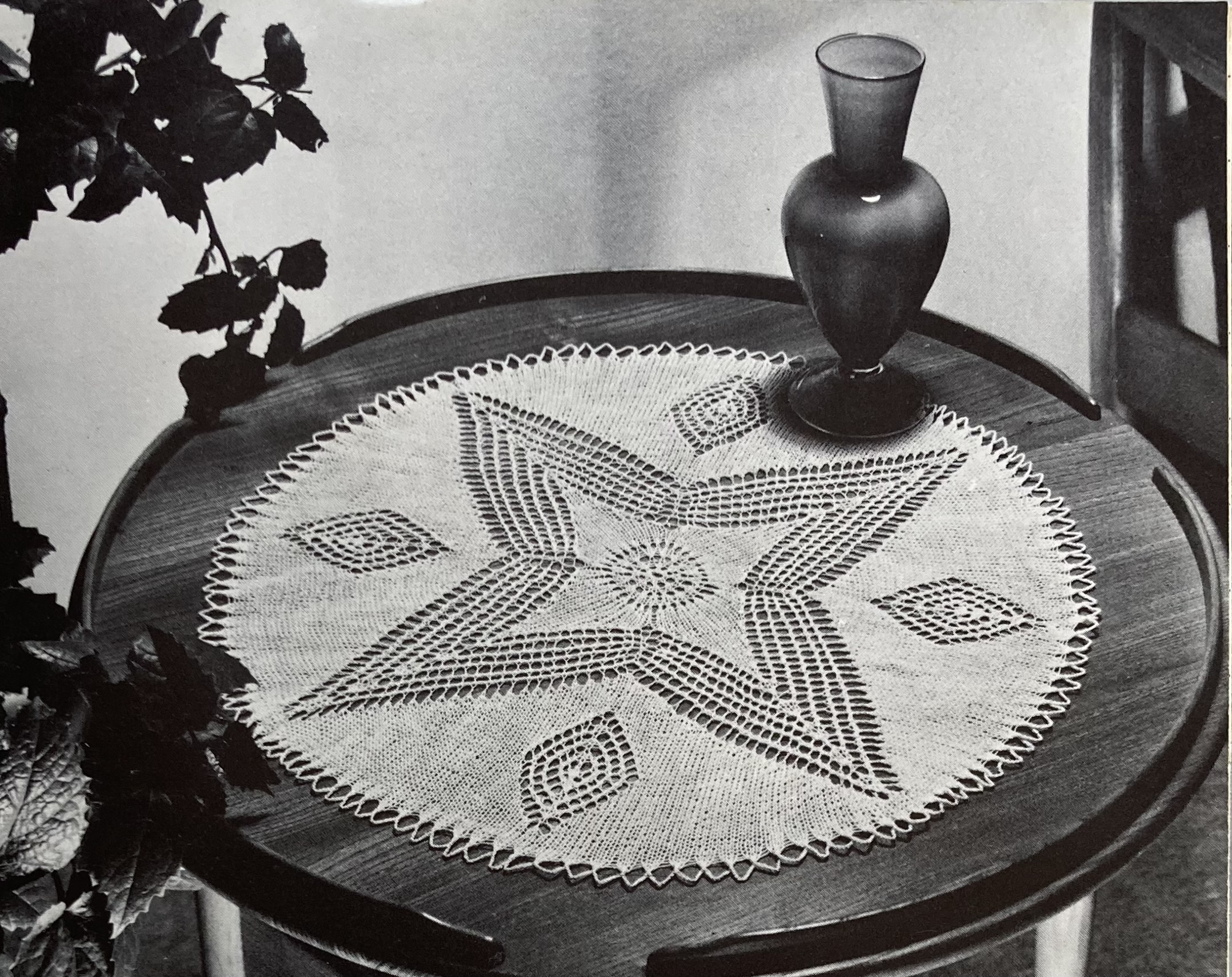
More ambitious needlecrafters can make a tapestry scene of Dunster to hang on the wall, or a knitted lace table-cloth in washable crochet cotton.

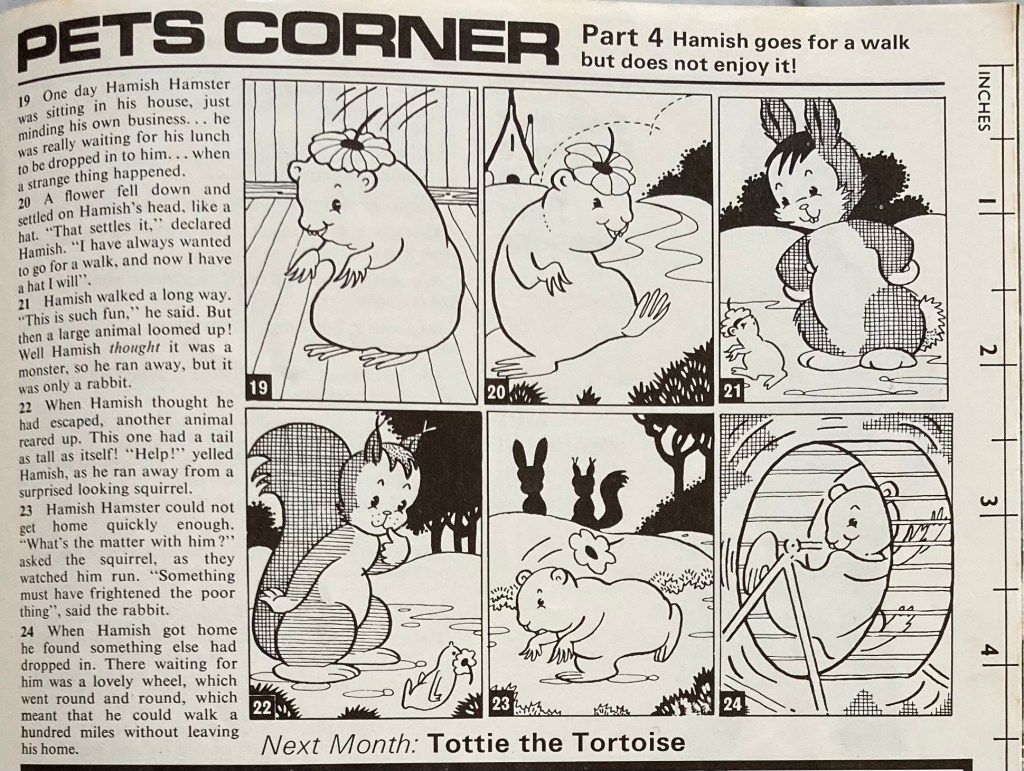
In the children’s comic, “Pets Corner”, Hamish the Hamster decides he wants to go on a walk, then goes, then decides he doesn’t like it after all. Luckily, he comes home to find a spinning hamster wheel, “which meant that he could walk a hundred miles without leaving home.” And so the stay-cation was born!

Wherever or whatever your “holidays” are, I hope you get some and wish you well. My project will be the knitted bikini. Let’s hope it gets finished soon enough to get some “sunning and lazing” time.

May 1968: “Sunny Cushions” Adaptation

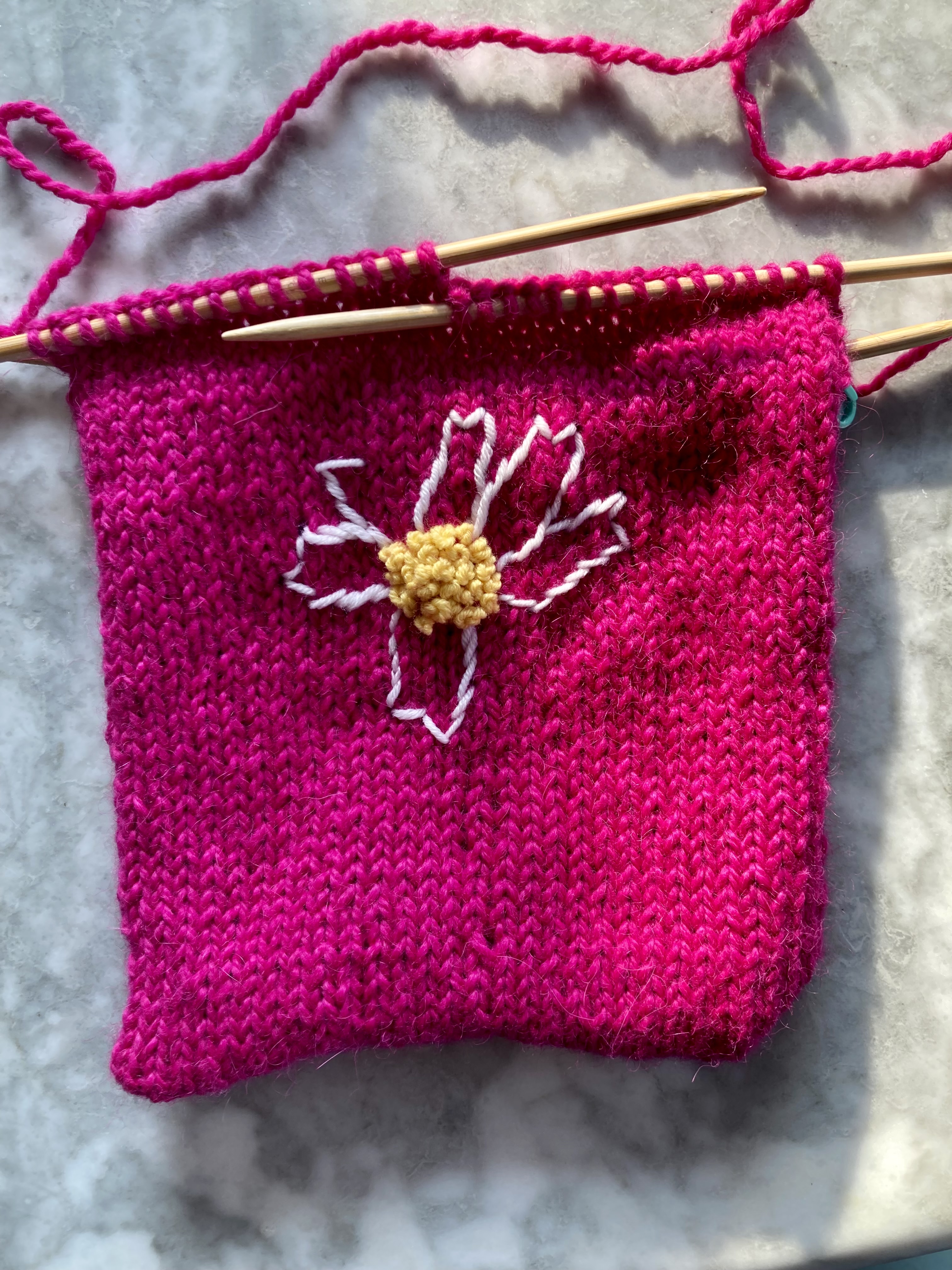
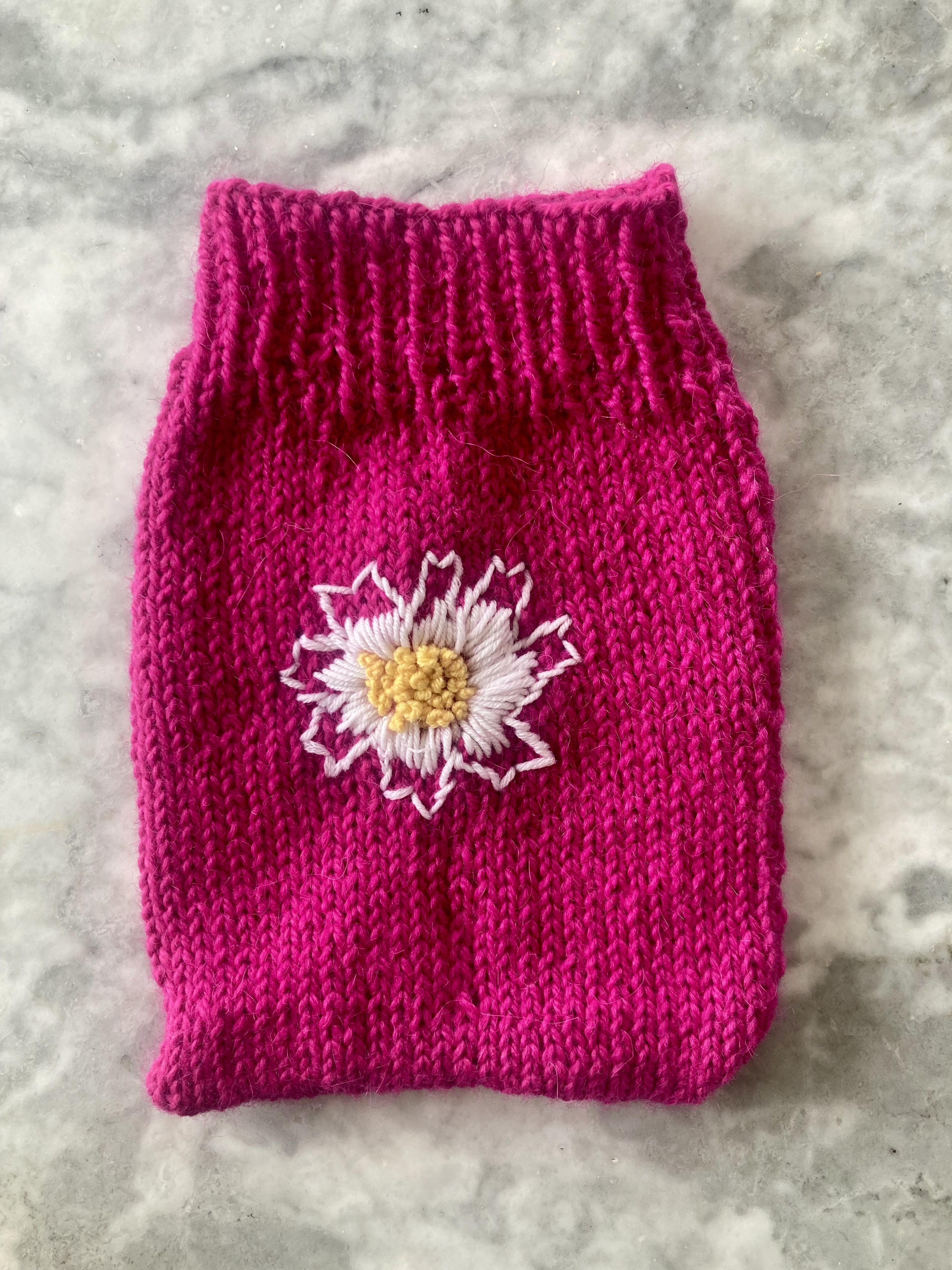
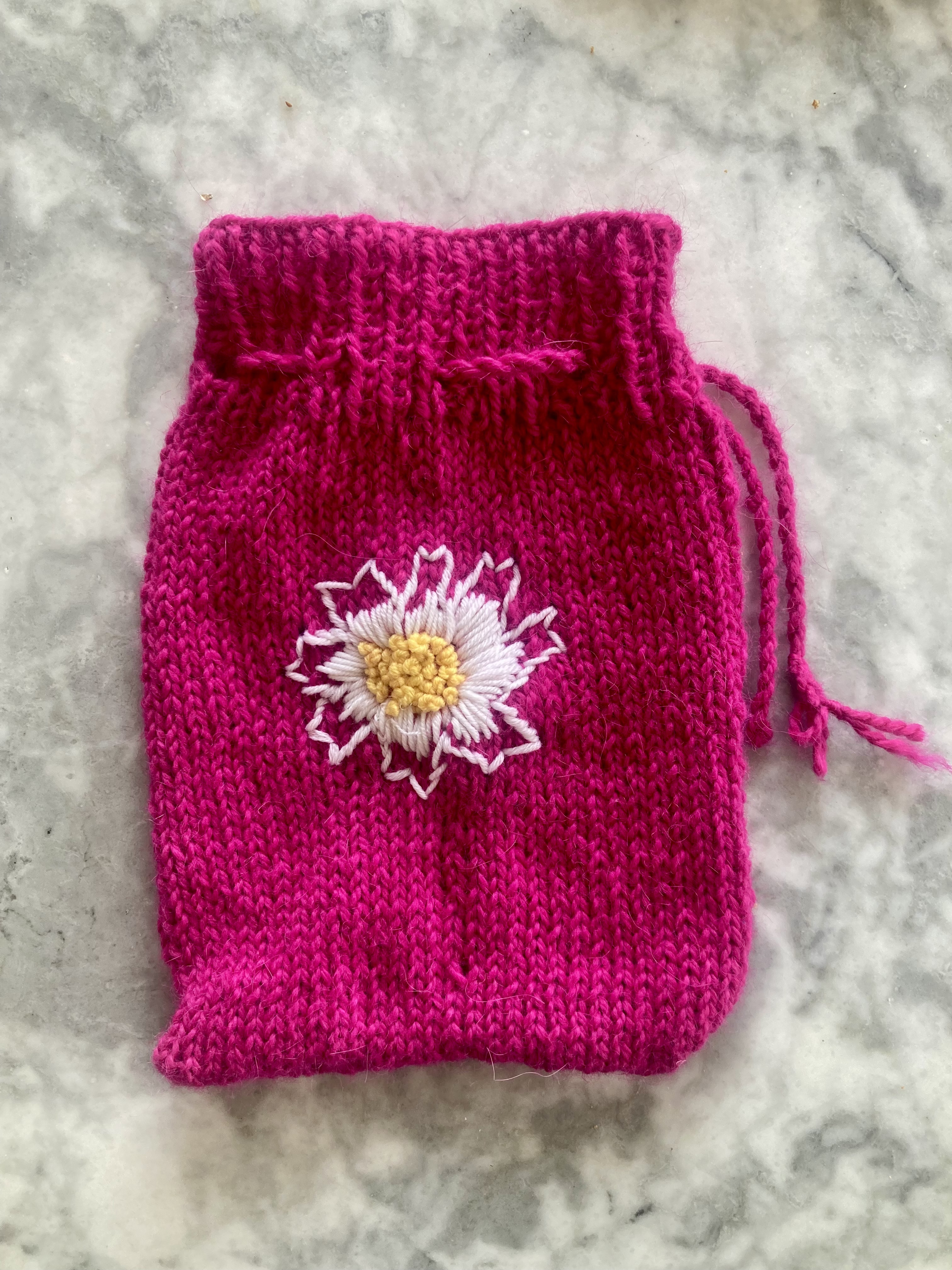
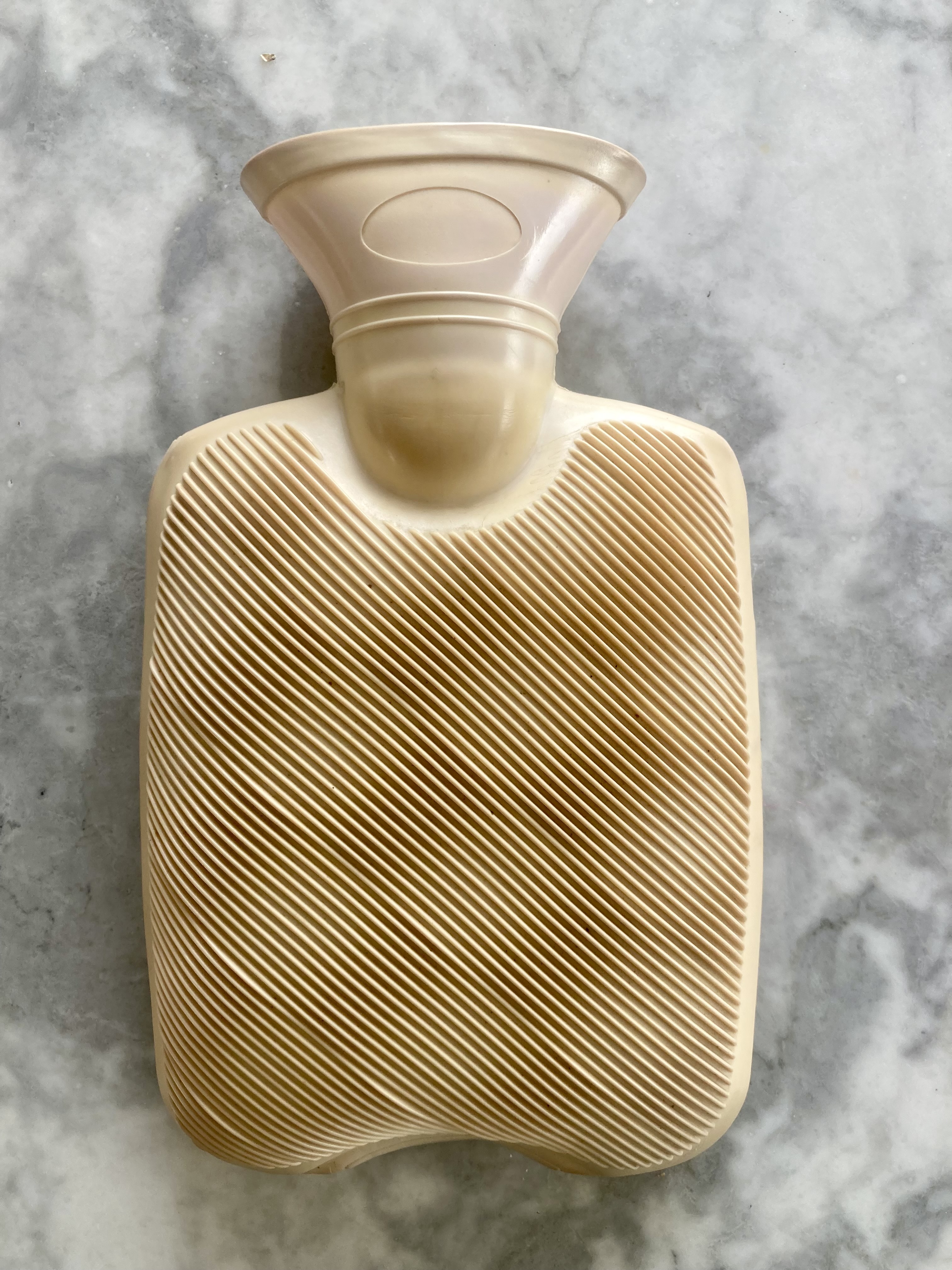
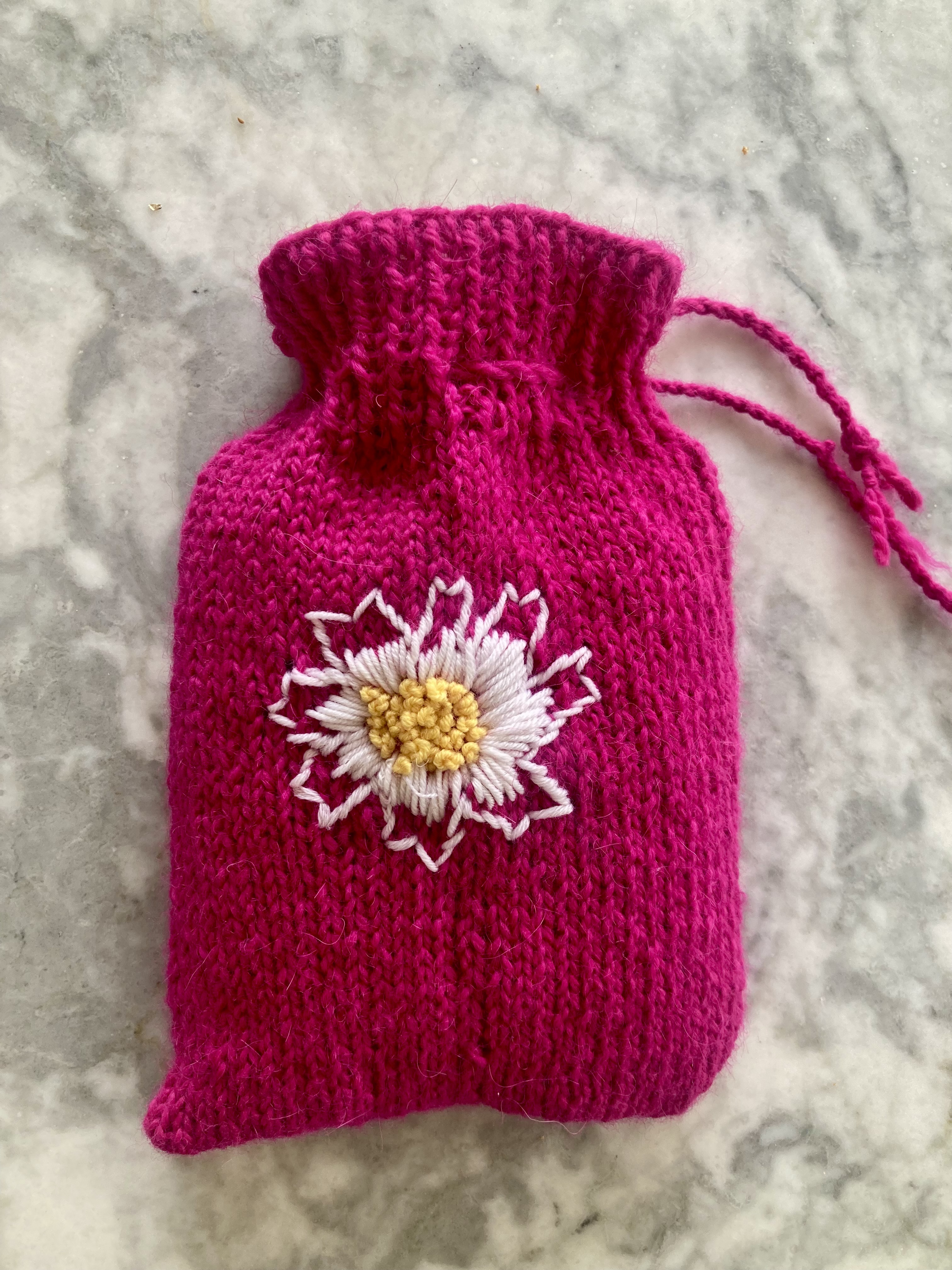
The May 1968 issue of Stitchcraft had a lot of cute projects: the striped sweater set on the cover, a couple of nice little “shell” sleeveless tops, a baby cardigan, a jumper with an interesting lattice yoke… but alas, I was so busy with real life in 2026 this month, and had so many unfinished projects lying around anyway, that it would have been foolish to try and start (much less finish) an entire normal knitting project. Luckily, there were some cute and easy embroidery projects, and I had a friend visiting whose hot-water bottle was crying out for a knitted cover, so I adapted one of the embroidered cushion designs into a simple motif for a knitted cosy.

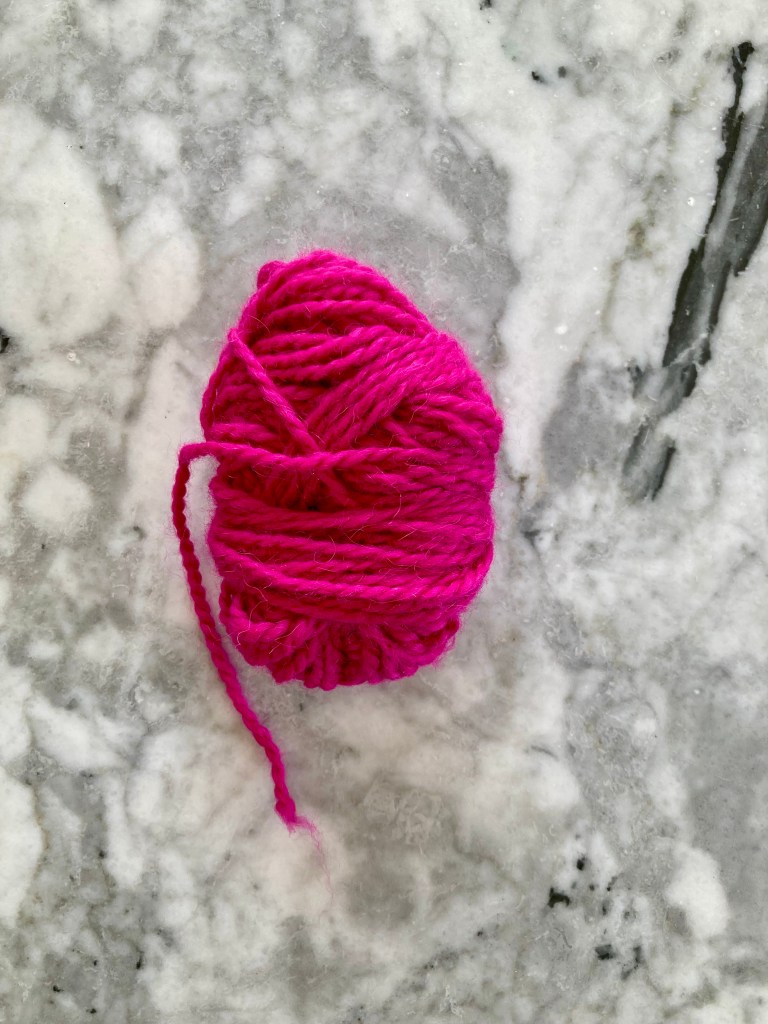
I had bought two skeins of bright and fluffy Natural Lama Chunky by Lana Grossa in hot pink some time ago, probably because they were on sale and displayed on that little rolling shelf which my local wool shop so cleverly rolls outside onto the sidewalk in good weather. It is delightfully soft and squishy and can be knit into pretty much whatever tension you want, as the fibres compress or fluff up to fit the space allotted to them.

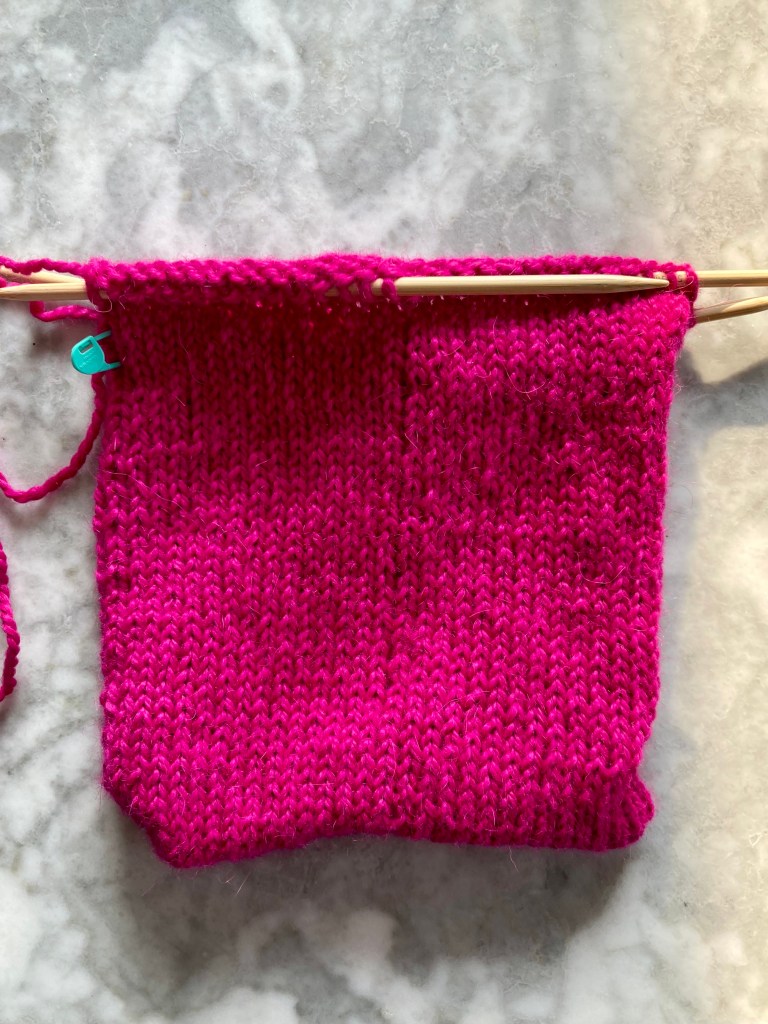
I used 5 mm needles and just cast on a number of stitches that seemed good, and worked in the round up to the neck part of the bottle. At that point, I realised that it would be much better to do the embroidery before the knitted bag part was completed, since I was going to use ribbing to pull the fabric in at the neck and it would be easier to access the embroidered part while the knitting was shorter and wider.

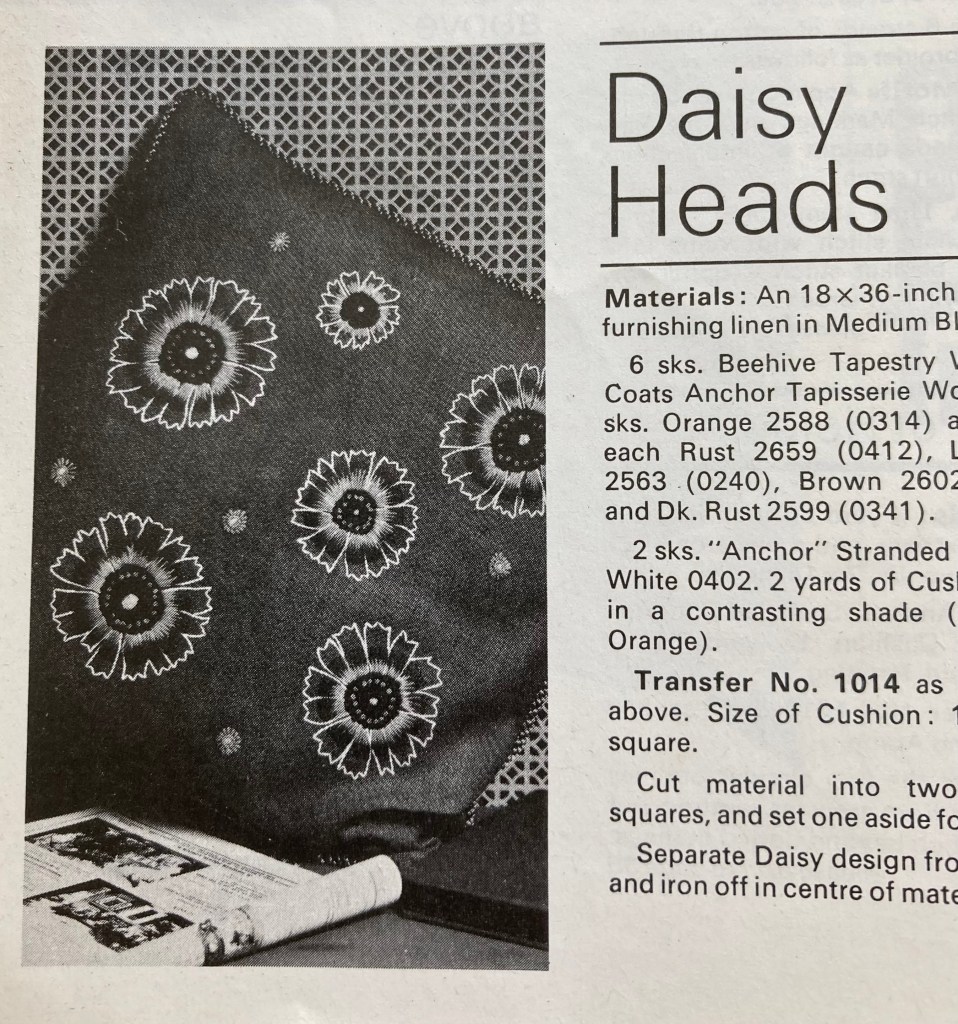
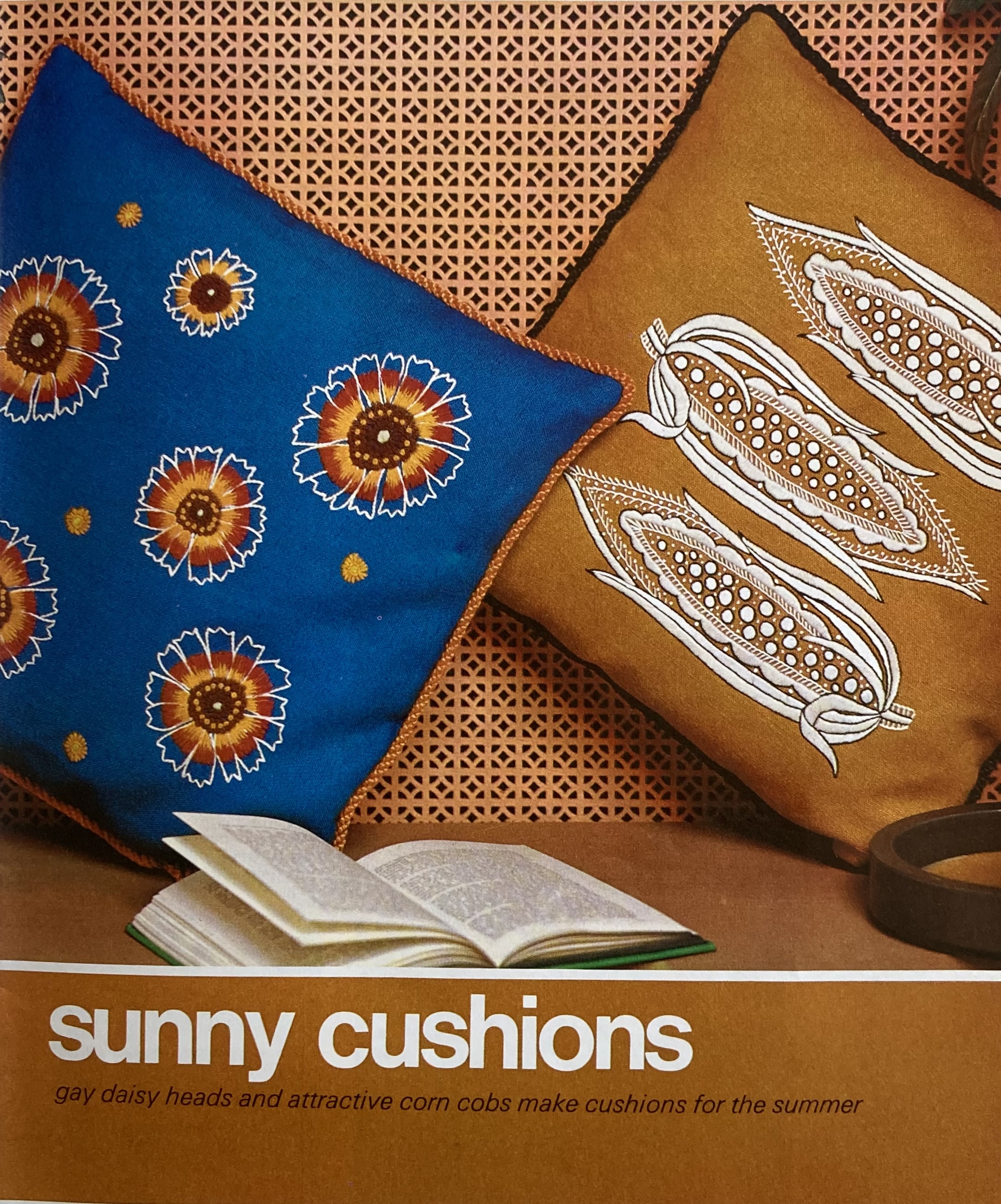
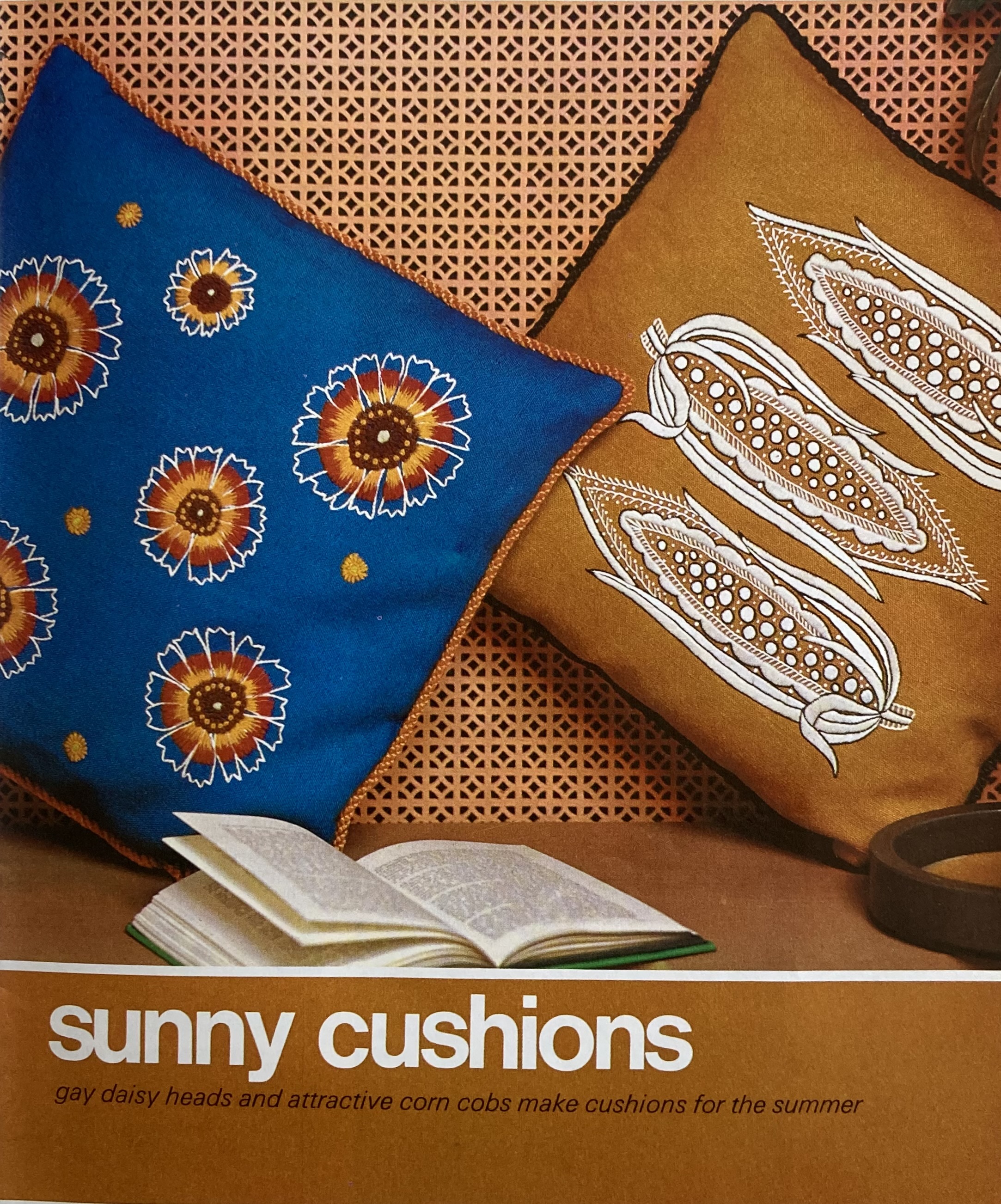
The embroidery pattern was the oddly-titled “Daisy Heads”, featured together with “Corn Cobs”, the other cushion embroidery project from May 1968. (I really loved the corn-cob pattern, which looked like a fine-line cartoon drawing, but it would have been very difficult to do without the original transfer and certainly not on a knitted bag). Besides looking nothing at all like actual daisies (orange petals with brown centres?), the petals were designed for fine long-and-short stitch on a cushion, with stem-stitch white outlines and French-knot centres, which is all perfectly fine with embroidery wool on a cushion, but equally impractical on a bulky knitted bag. I substituted normal DK knitting wool in white and yellow (somewhat more daisy-accurate) and made the petals in satin stitch, or as close as I could get to long-and-short stitch. The stem-stitch outlines were on a little larger scale, but nice enough, and the French knot centres were fine in in yellow instead of brown. I did have some brown wool that I thought I would use for the very center, but the plain yellow and white on bright pink looked better.

For the top part of the bottle where the cap screws in, I kept the same amount of stitches and just worked them in 1×1 ribbing, with a row of eyelets to thread a cord through to pull it in more if desired. The cord was monk’s cord, made the simple way by tying the strands to a door handle and twisting.

That was all! It was more “inspired by Stitchcraft” than a real re-creation of the pattern, but that’s OK. I destashed some yarn, made a useful object and made my friend happy. What more could a person want? I hope to get some WIPs finished in June and have an extra project or two to write about then.

May 1968: Overview

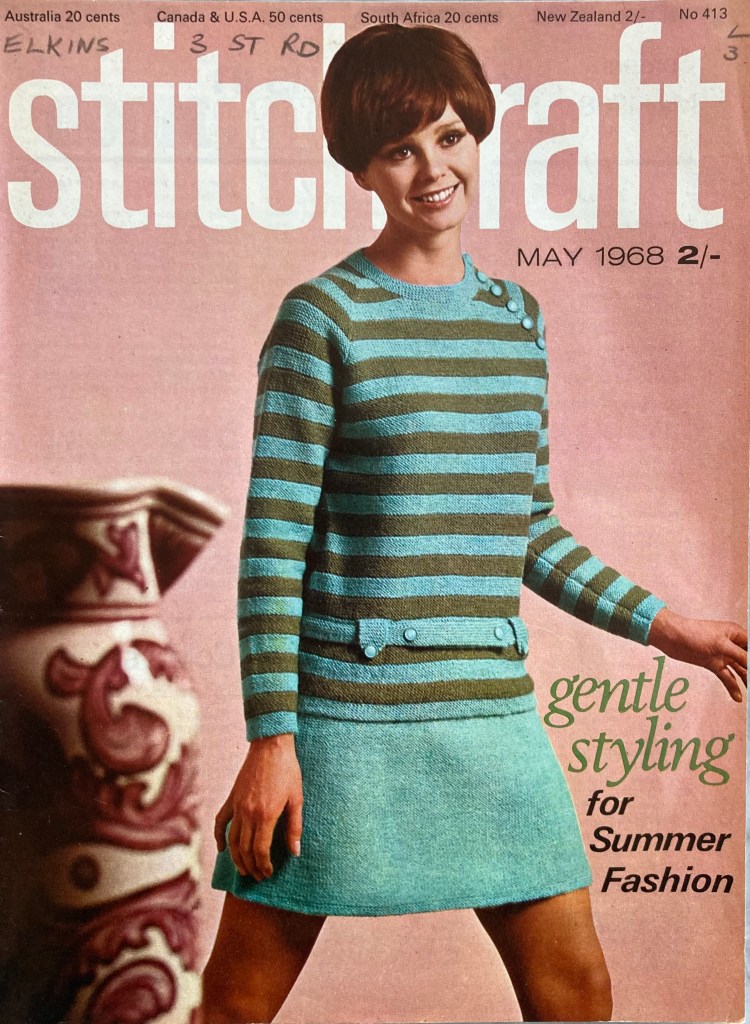
Happy May Day, everyone! Stitchcraft‘s “summer mood” is enhanced by a new layout format with more colour photos, distributed on single pages throughout the magazine. There are “soft colours” for the “gentle fashion look” as promised on the front cover, “Colour Bold and Bright” featured on the back cover, and some earthy rust-orange tones as well as natural or white garments. Diagonal lines, zigzags, chevrons, and stripes show up in the pattern stitches.

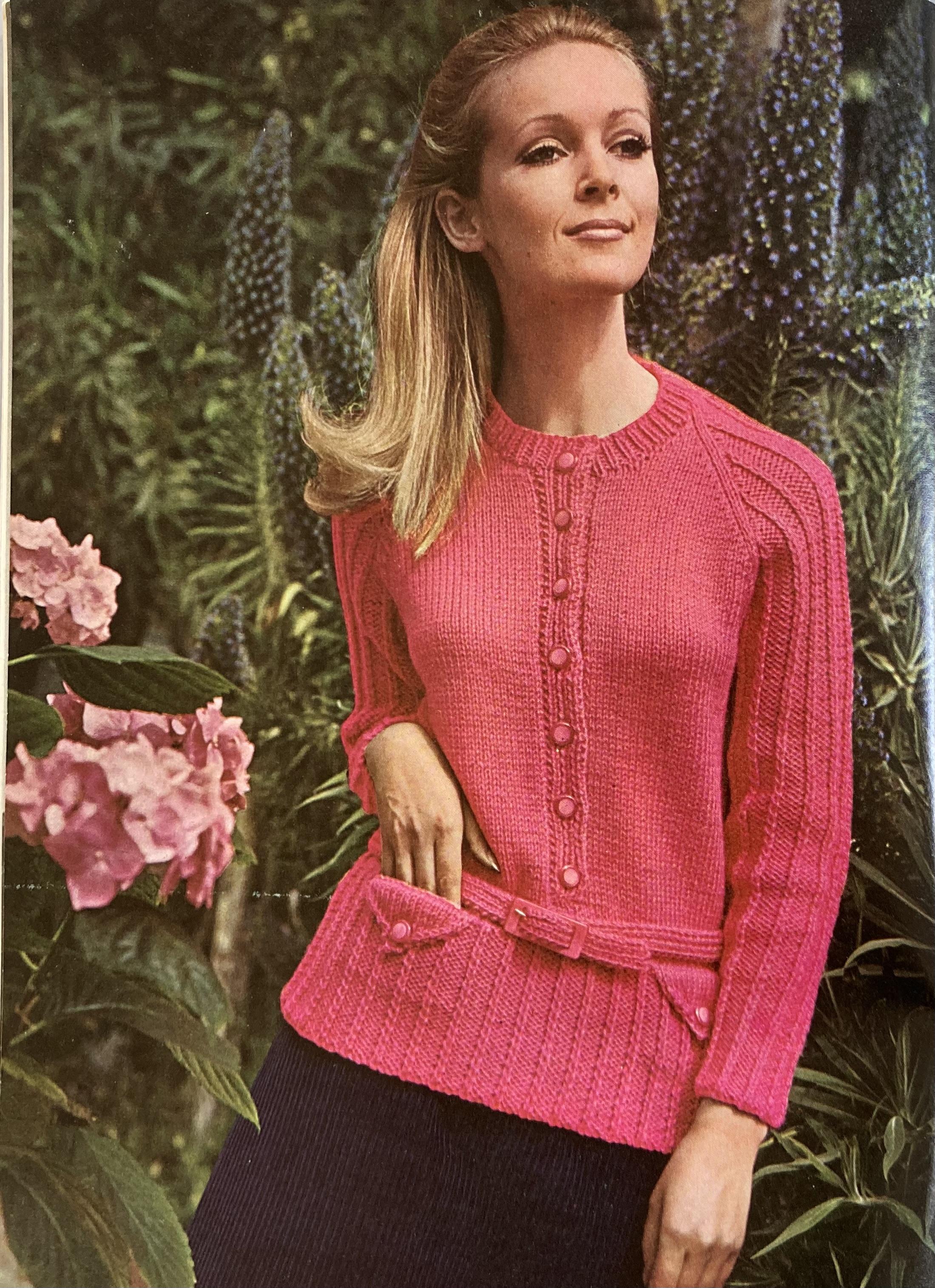
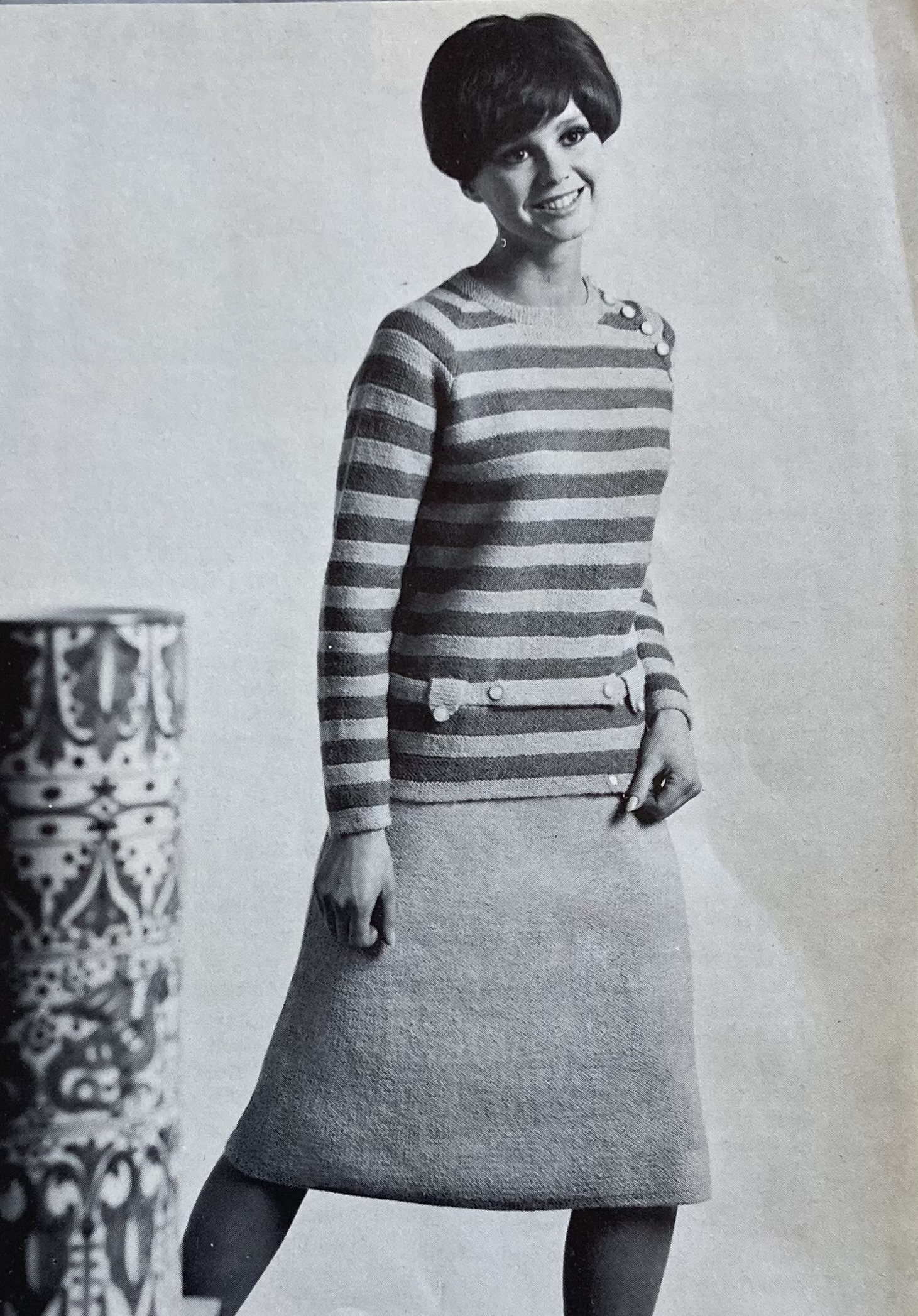
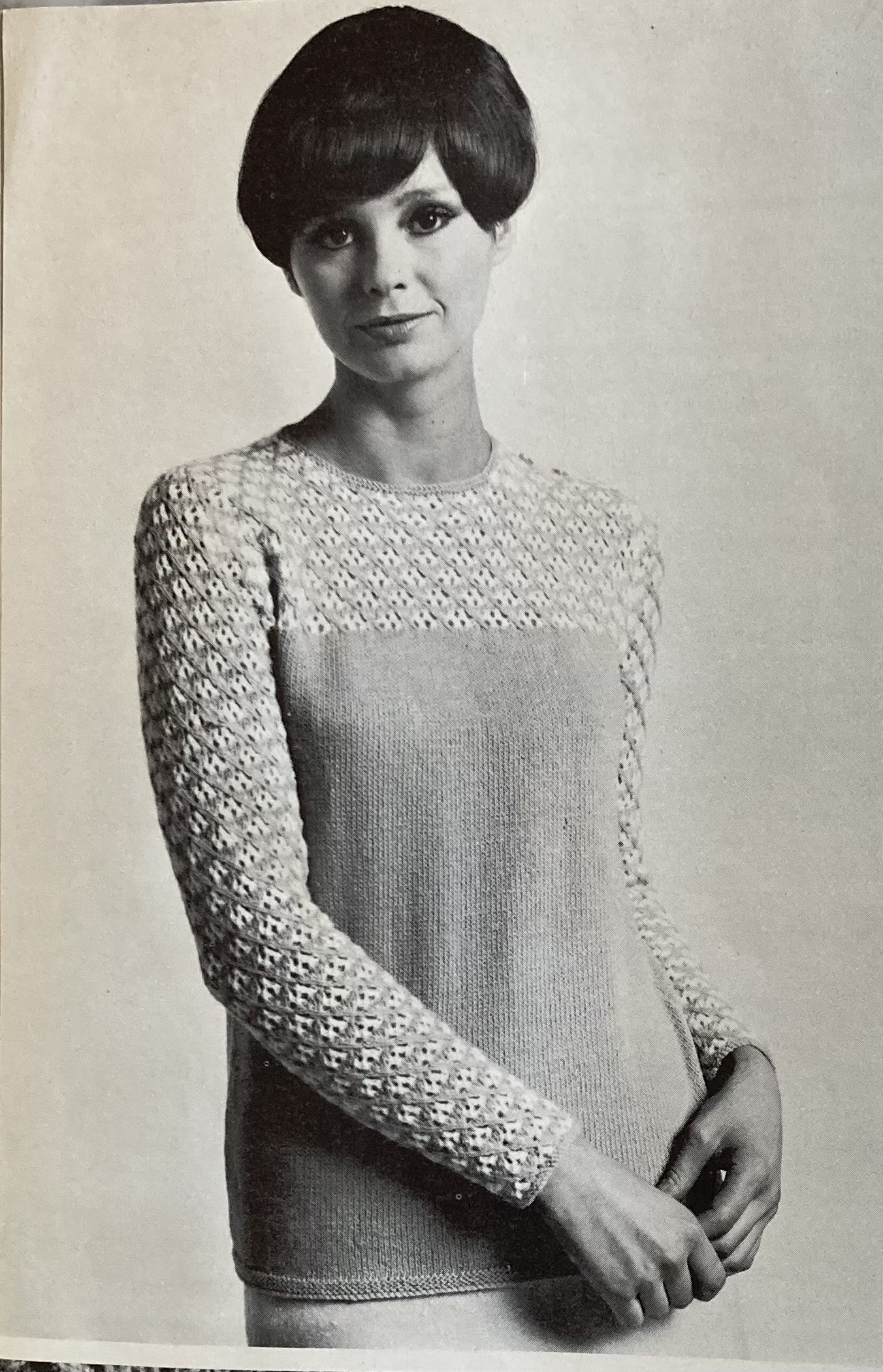
The “gently styled” skirt set on the cover is worked in twisted garter stitch (every row knit through the back loops) and has a choice of mini- or just-above-the-knee-length skirt. The purely decorative belt is held in place by little buttoned tabs, and the jumper is buttoned at the shoulder. More gentle styles and colours show up a pink and white jumper with a different lattice lace on the sleeves and yoke, a pastel top knit sideways in stripes, and a “romantic little dress” in fluffy “Fuzzy-Wuzzy” angora-mix yarn.

For those who prefer neutrals and earth tones to soft pastels, there are two summery tops to knit in lacy lattice or cluster stitch, And if “bold and bright” is more your style, the pullover on the back cover is warm both in wool and colour.

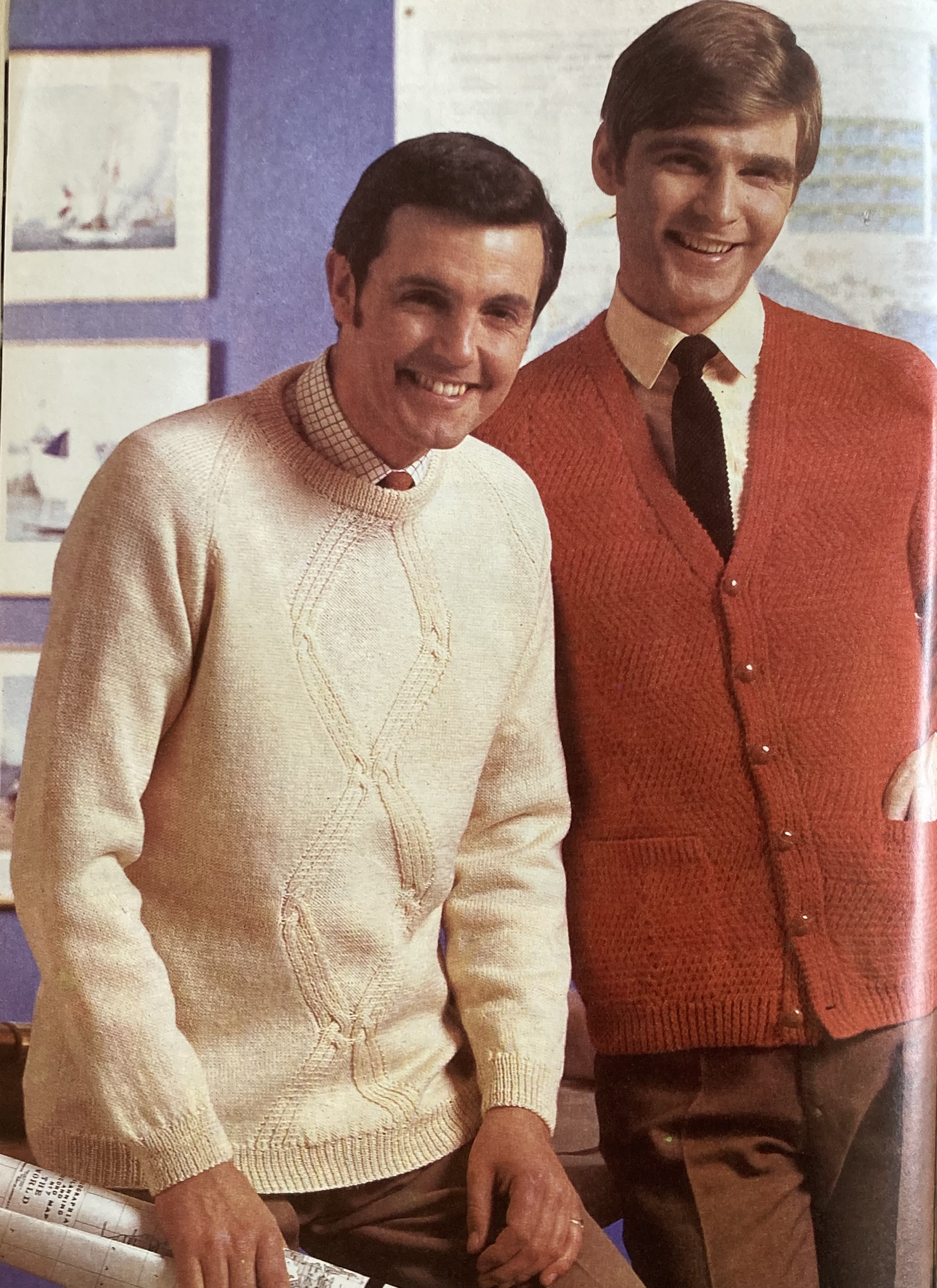
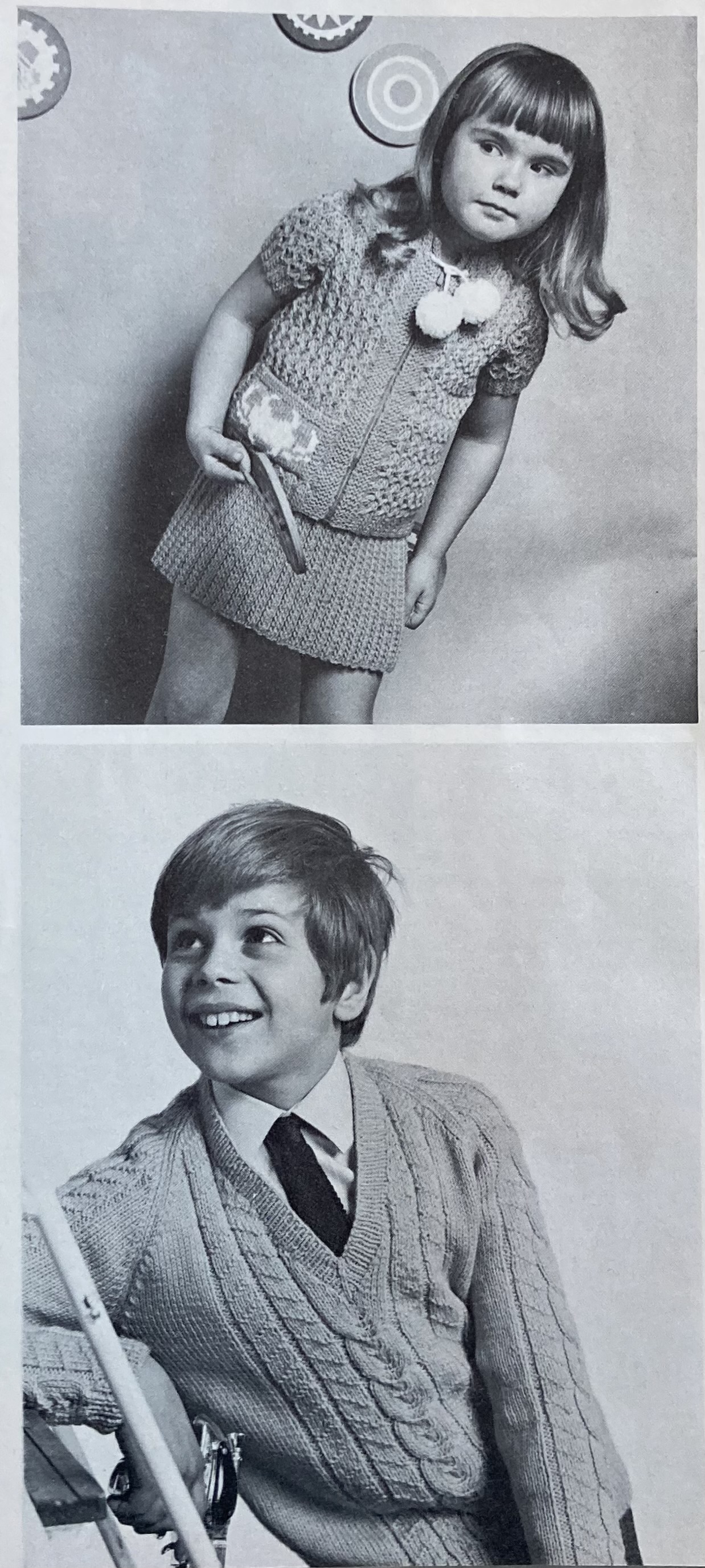
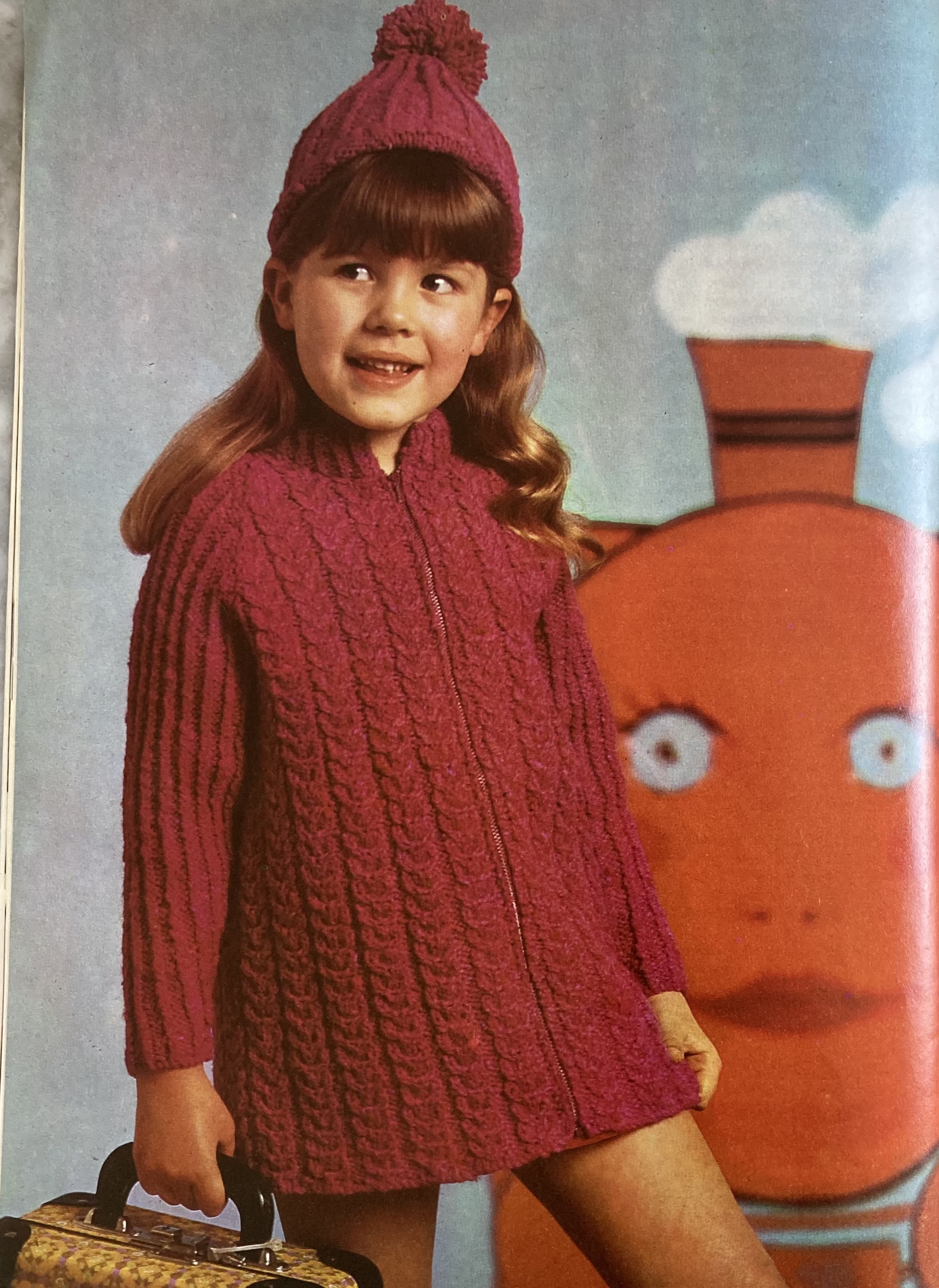
Men can get into the “summer mood” with a comfortable, loose-fitting pullover in natural white or a rust-orange cardigan with practical pockets. They are touted as the “casual, leisurely look” and the two men in the photos are apparently getting set to go hiking or fishing. Nevertheless, a buttoned-up shirt and tie are required! The little boy’s “out-door look” of “comfortable raglan sweater” would also not be complete without a shirt and tie, but he still has it better than his sisters, who are expected to play on the beach in a micro-miniskirt or travel on a cartoon train with no apparent clothing on her lower body at all. The caption says she will be “smart and comfortable on her journey”, which I doubt very much.

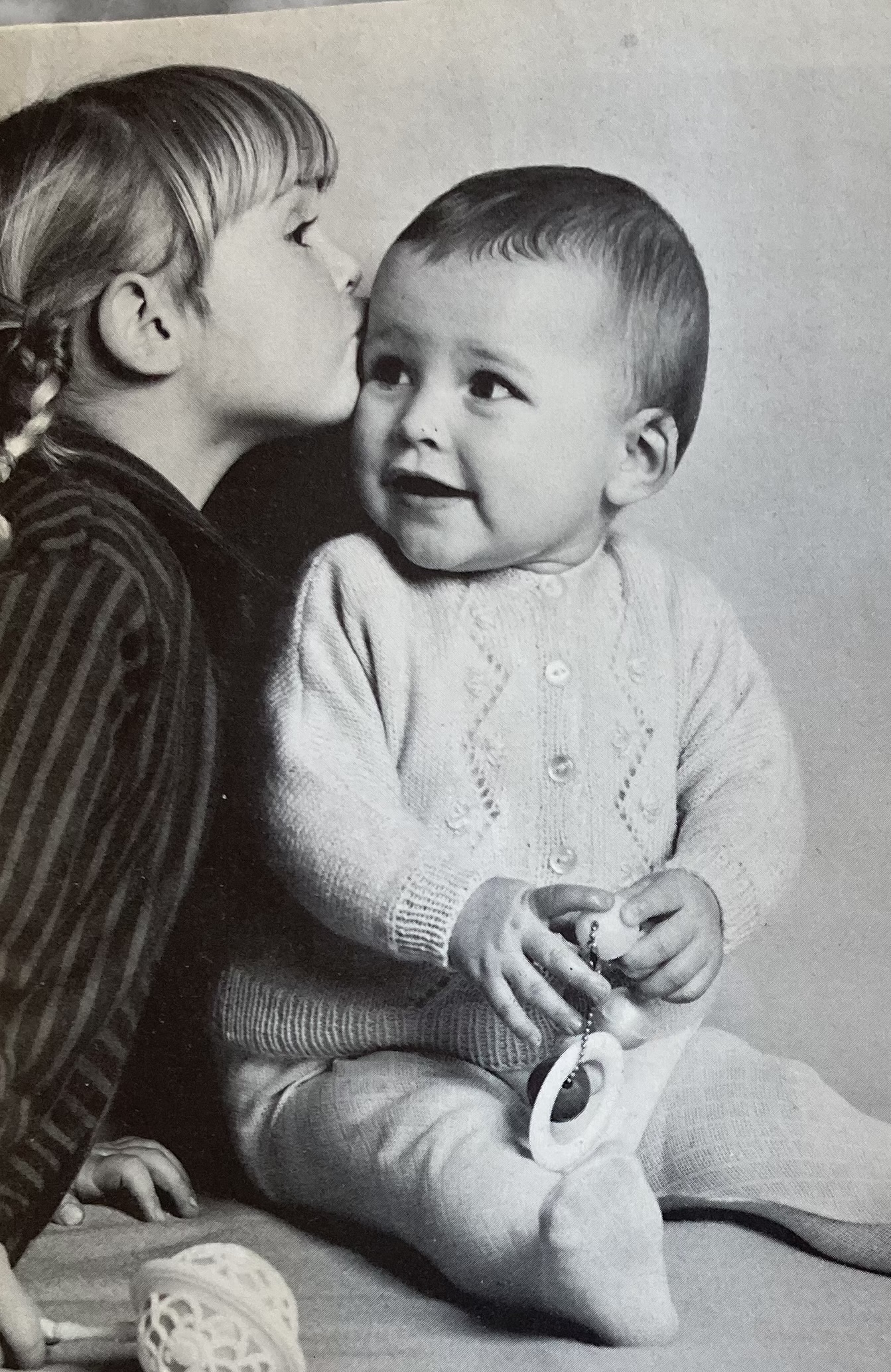
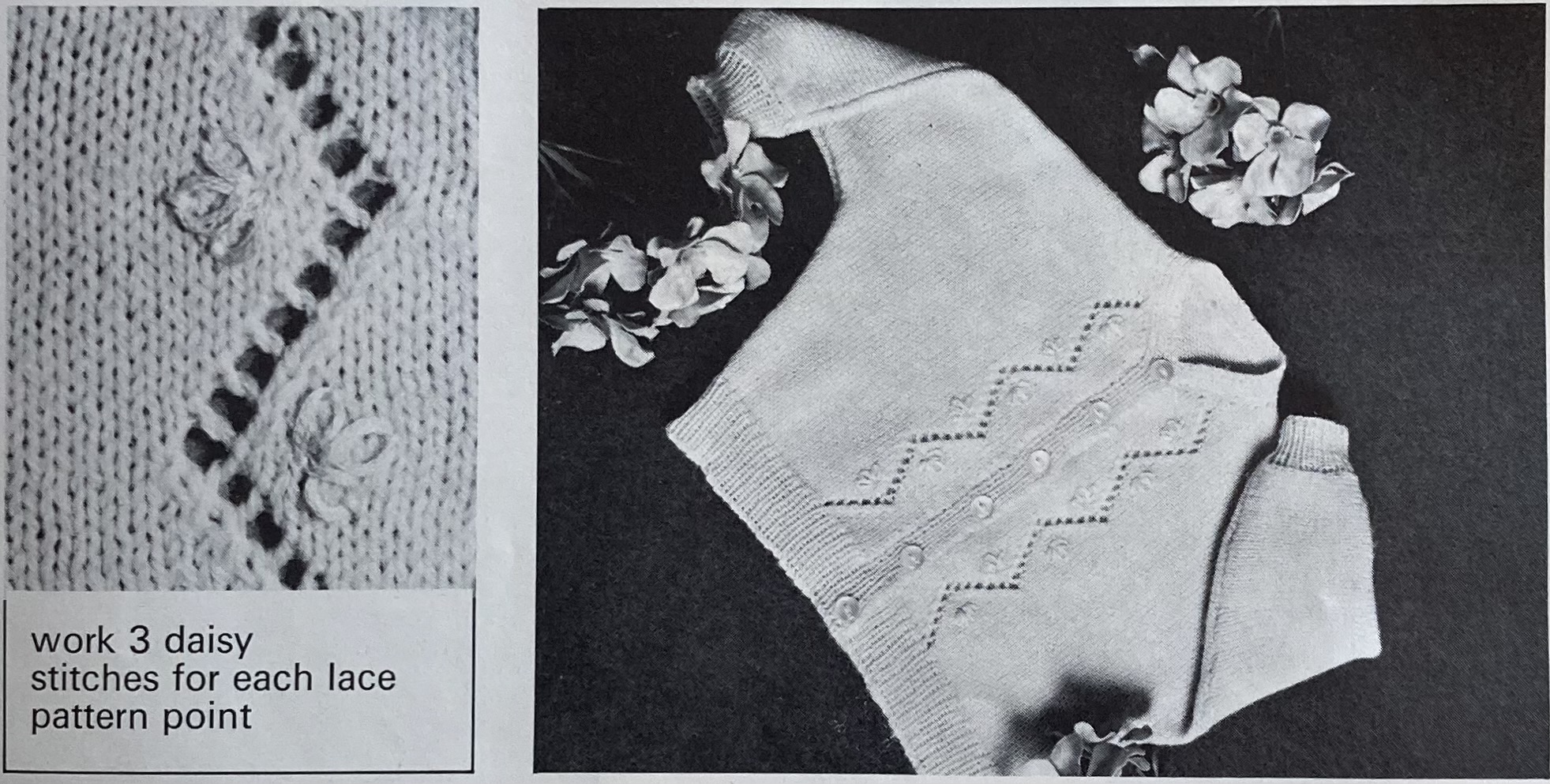
The baby of the family fares much better with not only an embroidered dolman-sleeve cardigan, but actual leggings on its legs. With feet, even! The leggings aren’t hand-knit though, or if they are, there’s no pattern for them in the issue. The diagonal lace pattern on the cardigan is knit in and the little loop flowers are embroidered on later.

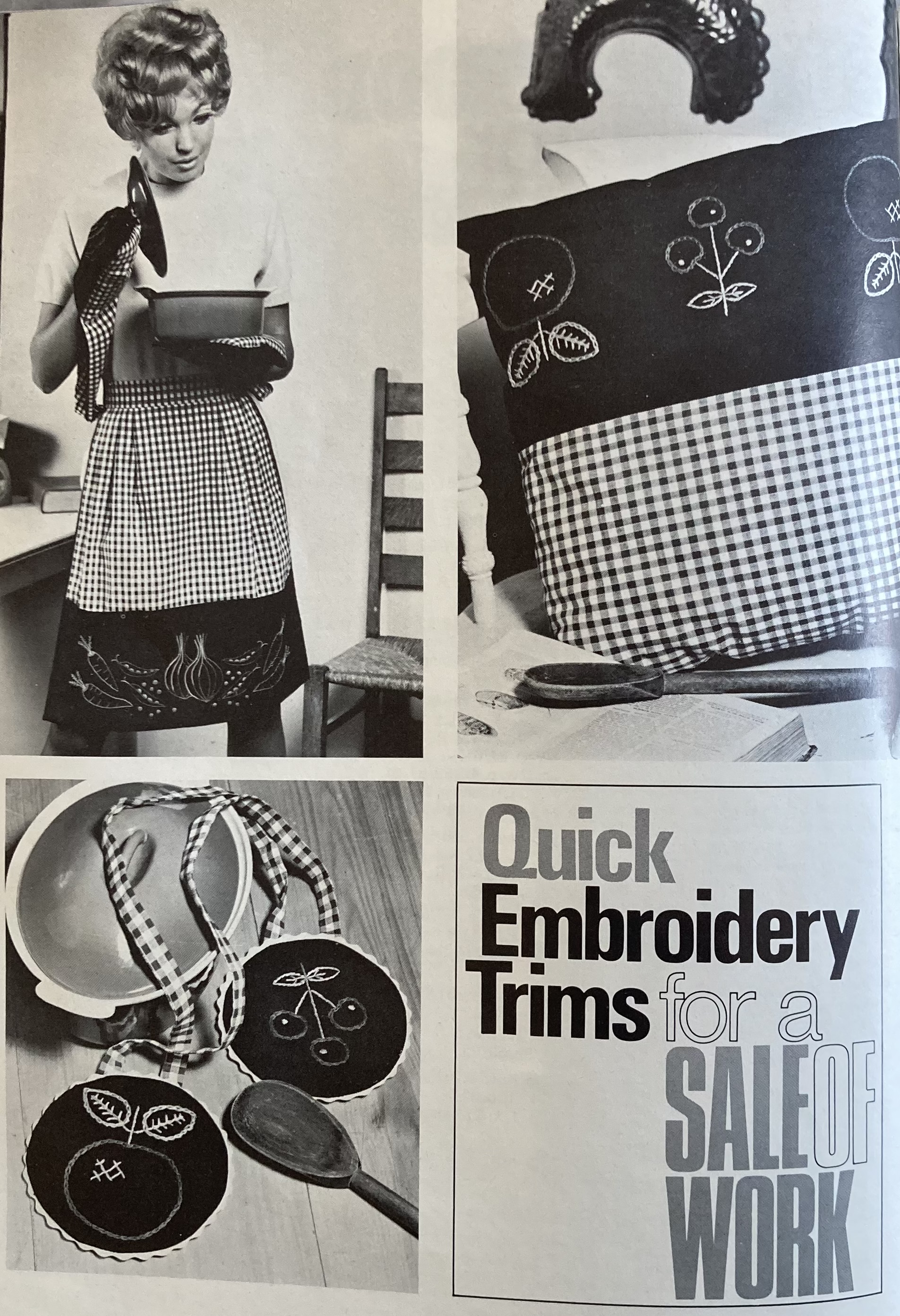
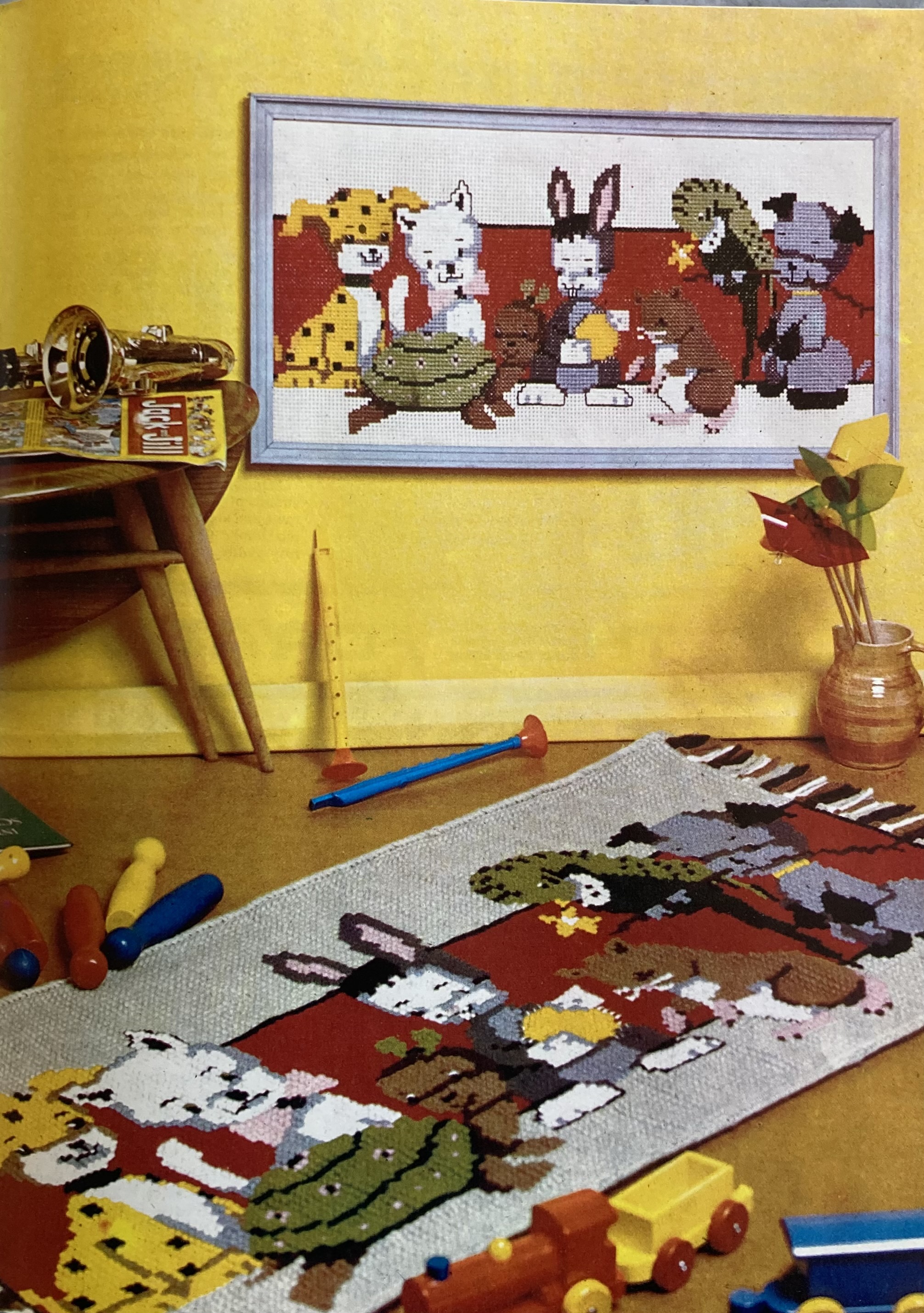
The homewares and needlework designs are quick and easy, in keeping with both the casual summer mood and the general trend of needlework designs becoming simpler and more practical as the 1960s progress. The last few issues of Stitchcraft have featured a single, simple embroidery design that can be adapted to decorate all kinds of different homewares. This time, it’s quick trims of fruit and vegetables to put on a gingham apron, cushion, or pot holders. The agricultural theme continues with daisy (? I have never seen an orange daisy, but whatever) and corn-cob cushion motifs. For the nursery, you can make a cross-stitch wall hanging or rug with the little pet animals featured in the children’s comics from the last and next few issues of Stitchcraft.

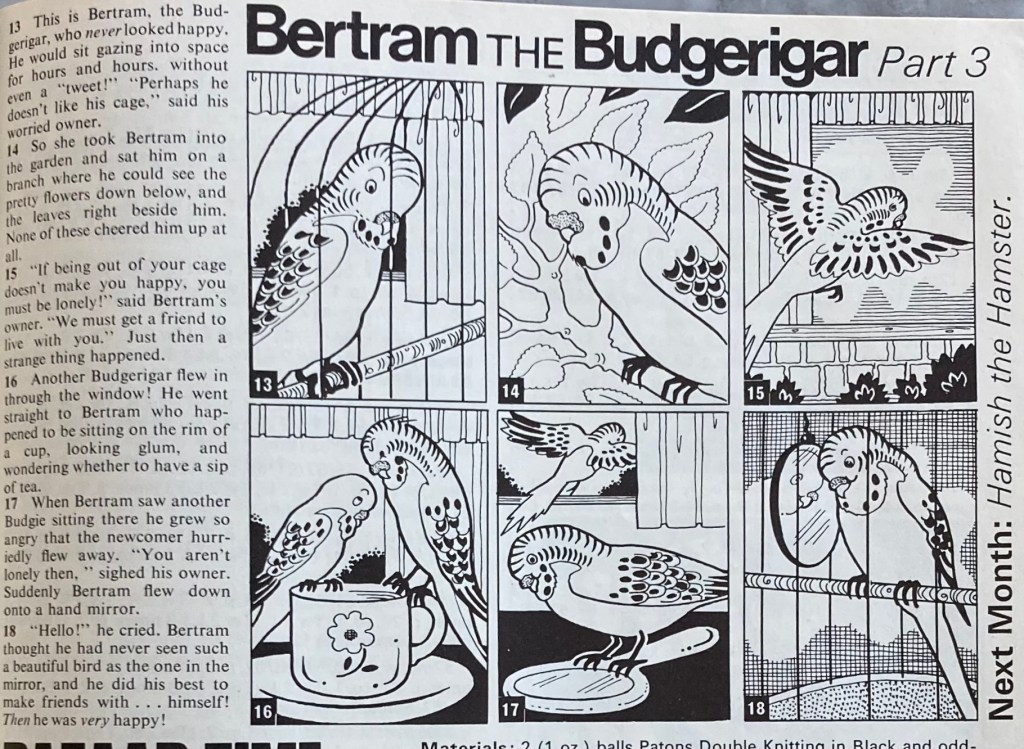
Speaking of, this month’s comic (number three in the series) features Bertram the budgie, who has no other birds around him and is consequently lonely and depressed (realistic.) Luckily, another budgie just happens to fly in the window and join him! (less realistic, but hey, problem solved!) Or not, as it happens: Bertram is territorial and jealous and does not appreciate a stranger just showing up for tea and inviting themself in. His owner solves the problem by giving Bertram a mirror, and Bertram discovers he is his own best friend (realistic.) Realism points, 2 out of 3, and Bertram is very happy.

I don’t know what to make from this issue. The lattice lace pattern on the sleeves and yoke of the plain pullover is very cool and I toyed with the idea of making modern “rave sleeves” by leaving out the rest of the pullover and just adding some ribbing to the bottom of the sleeves and yoke. But I don’t really have anything to wear it with or appropriate yarn in stash. I don’t have the time or energy for a big project, have too many unfinished projects going on (including from last month), and have already knit something for my colleague who is having a baby in July. I guess I could embroider an orange daisy or a corn cob on something? Or a fruit and vegetable motif on a fruit and vegetable bag? Stay tuned!

April 1968: Cables and Twists

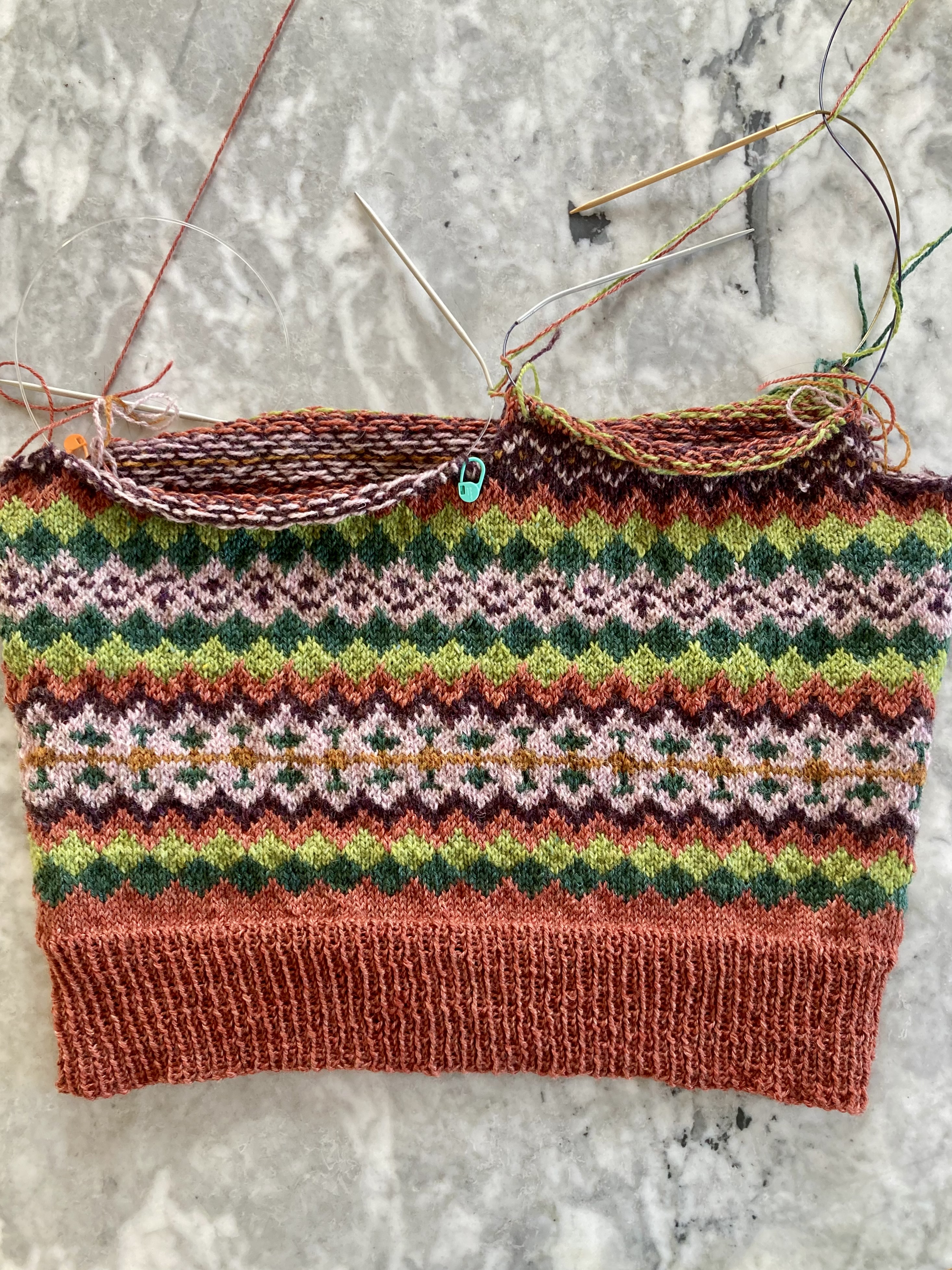
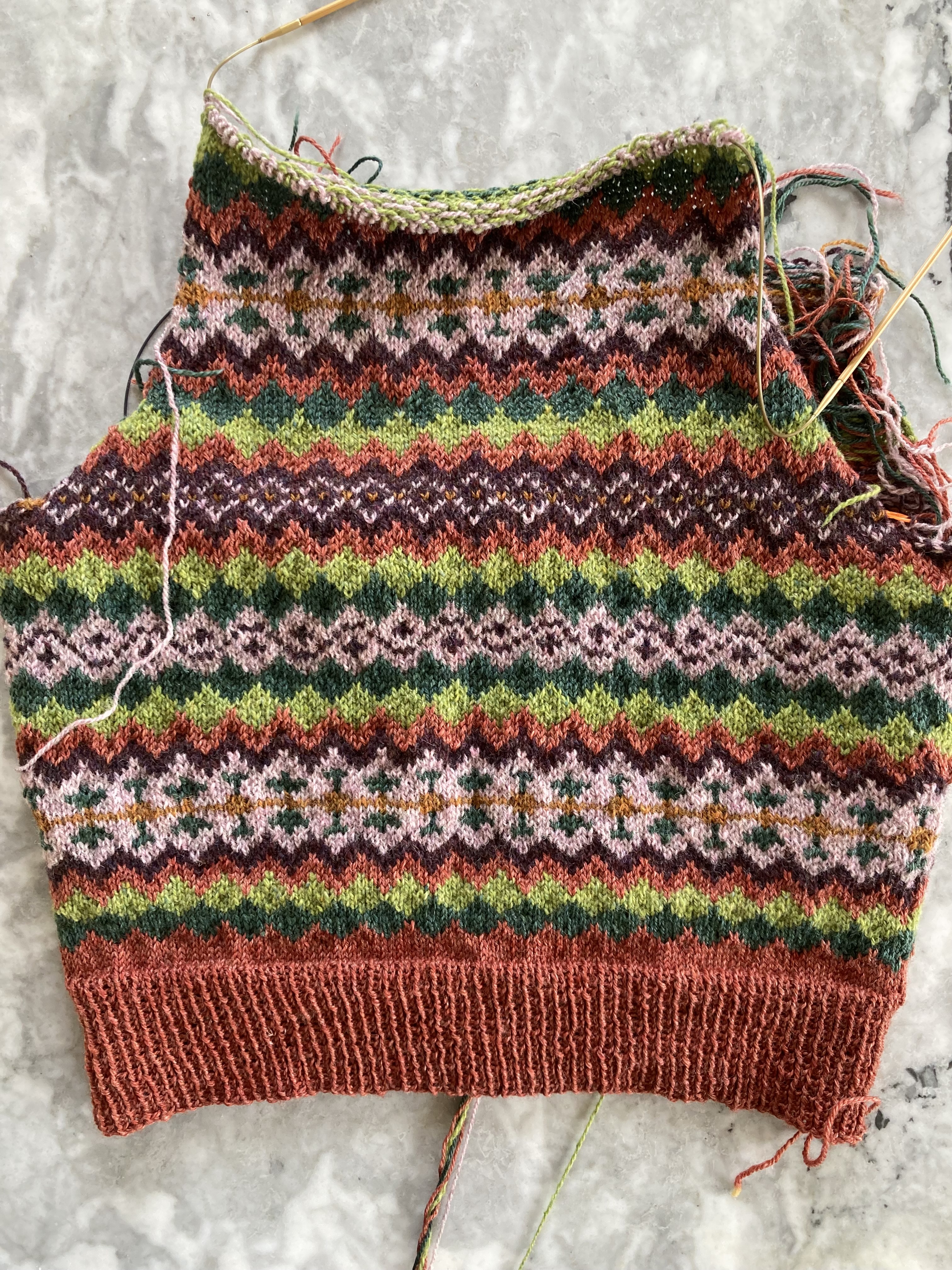
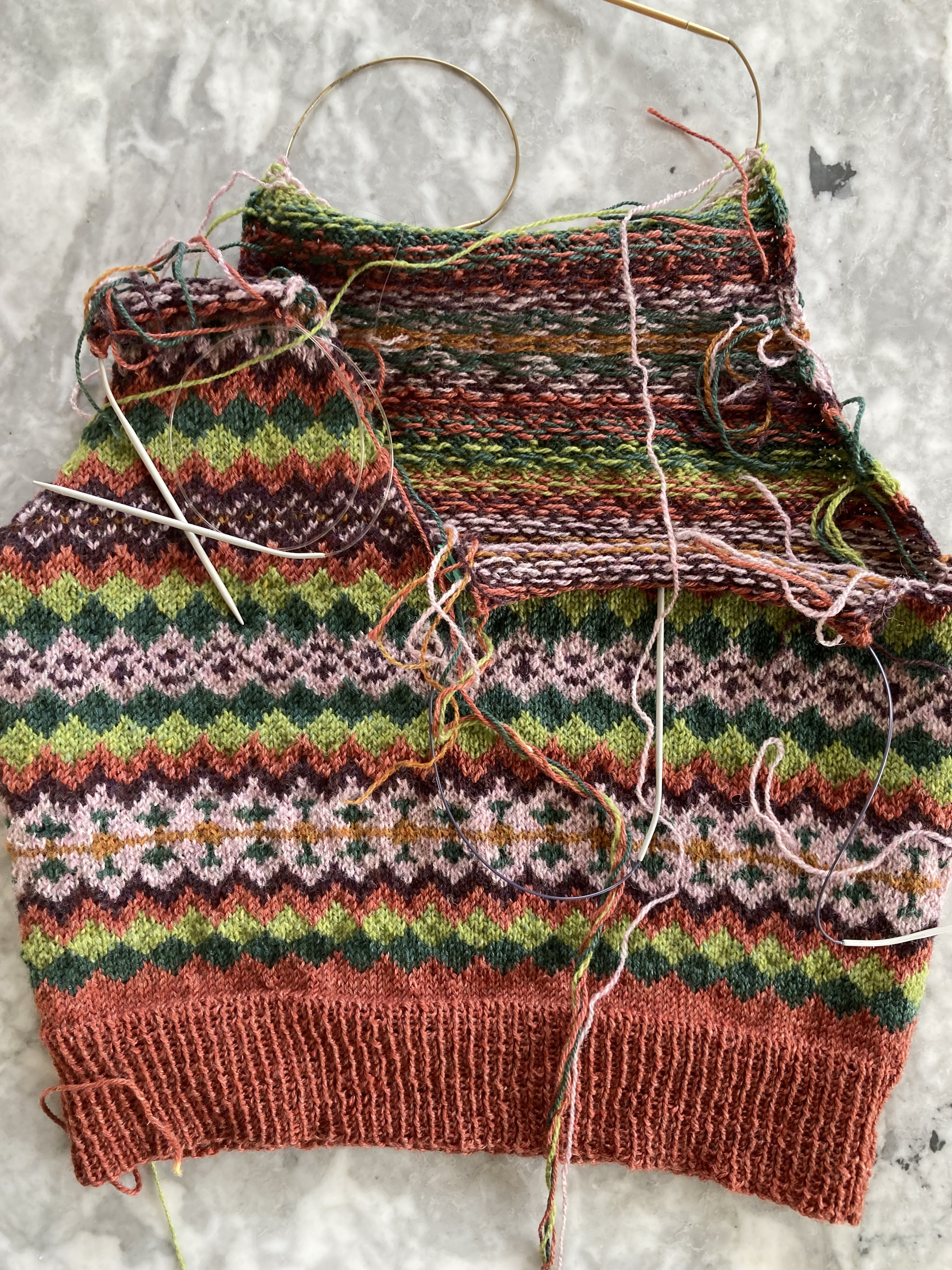
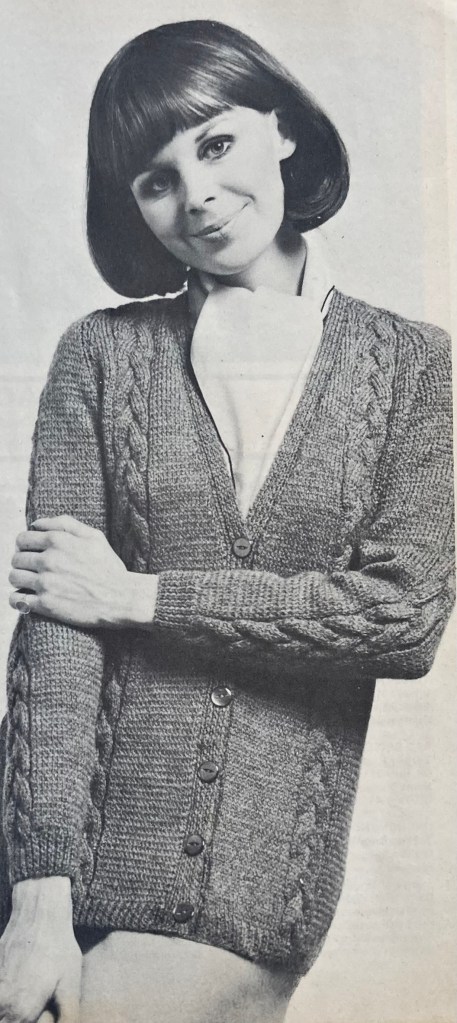
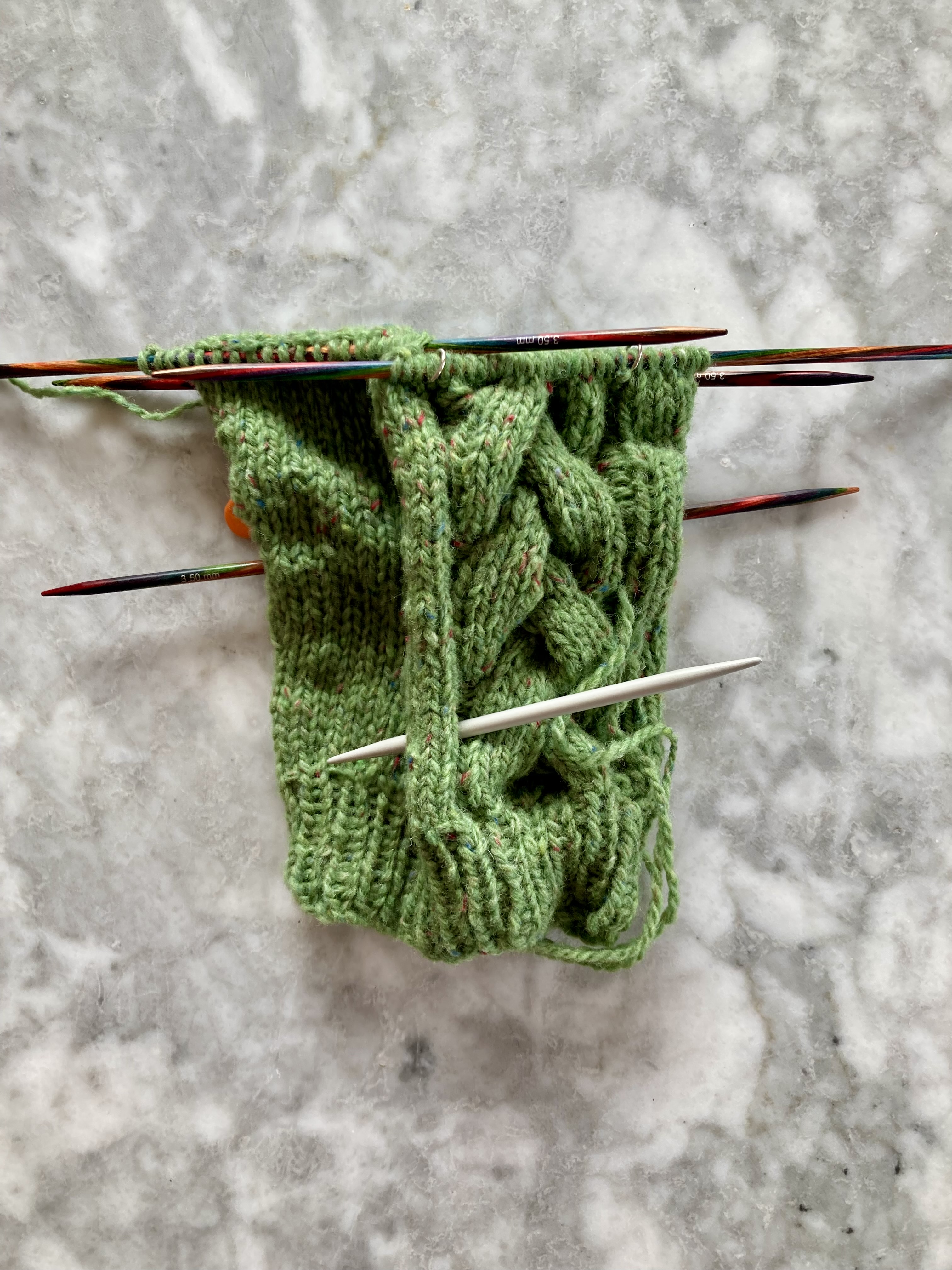
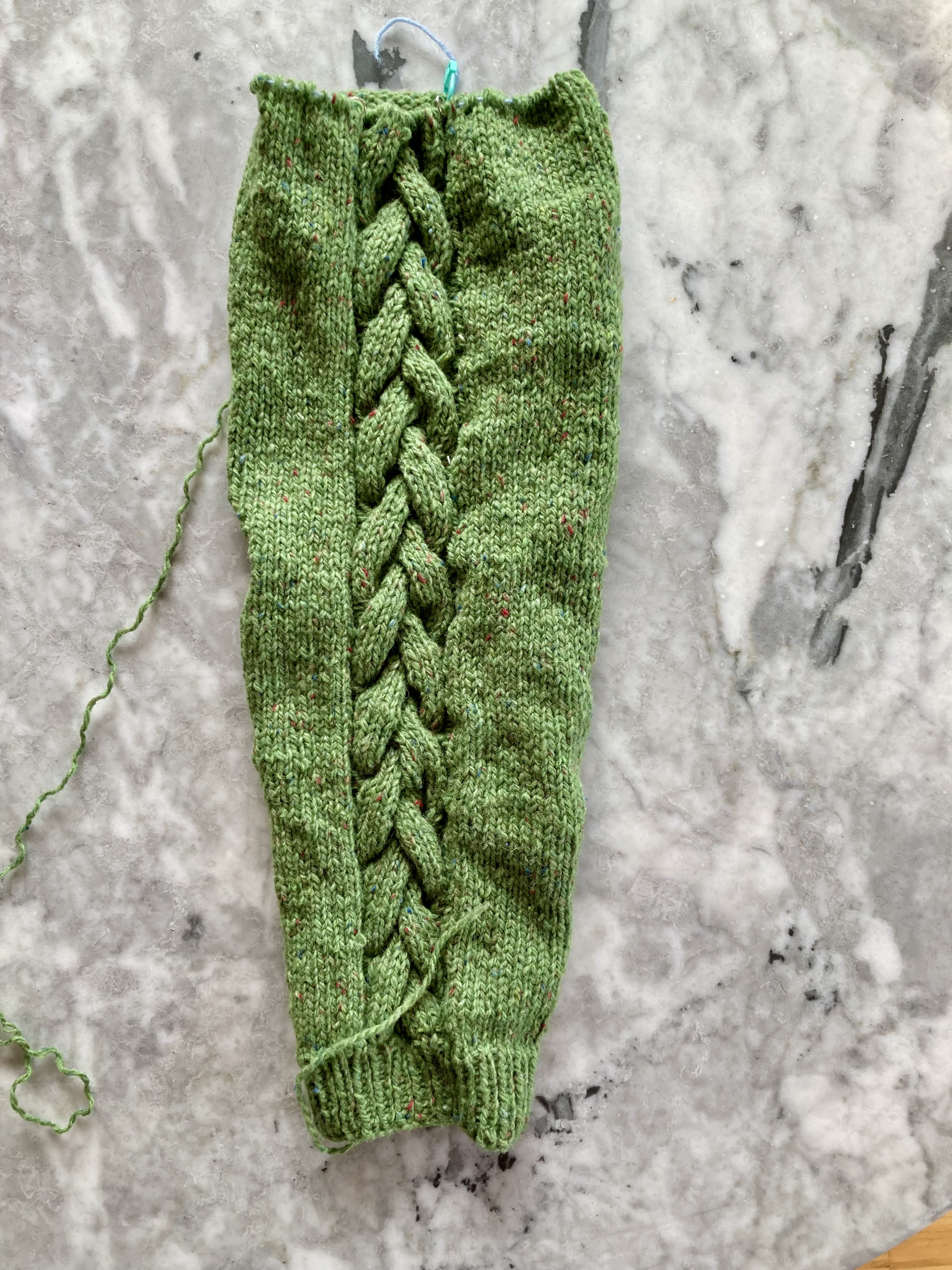
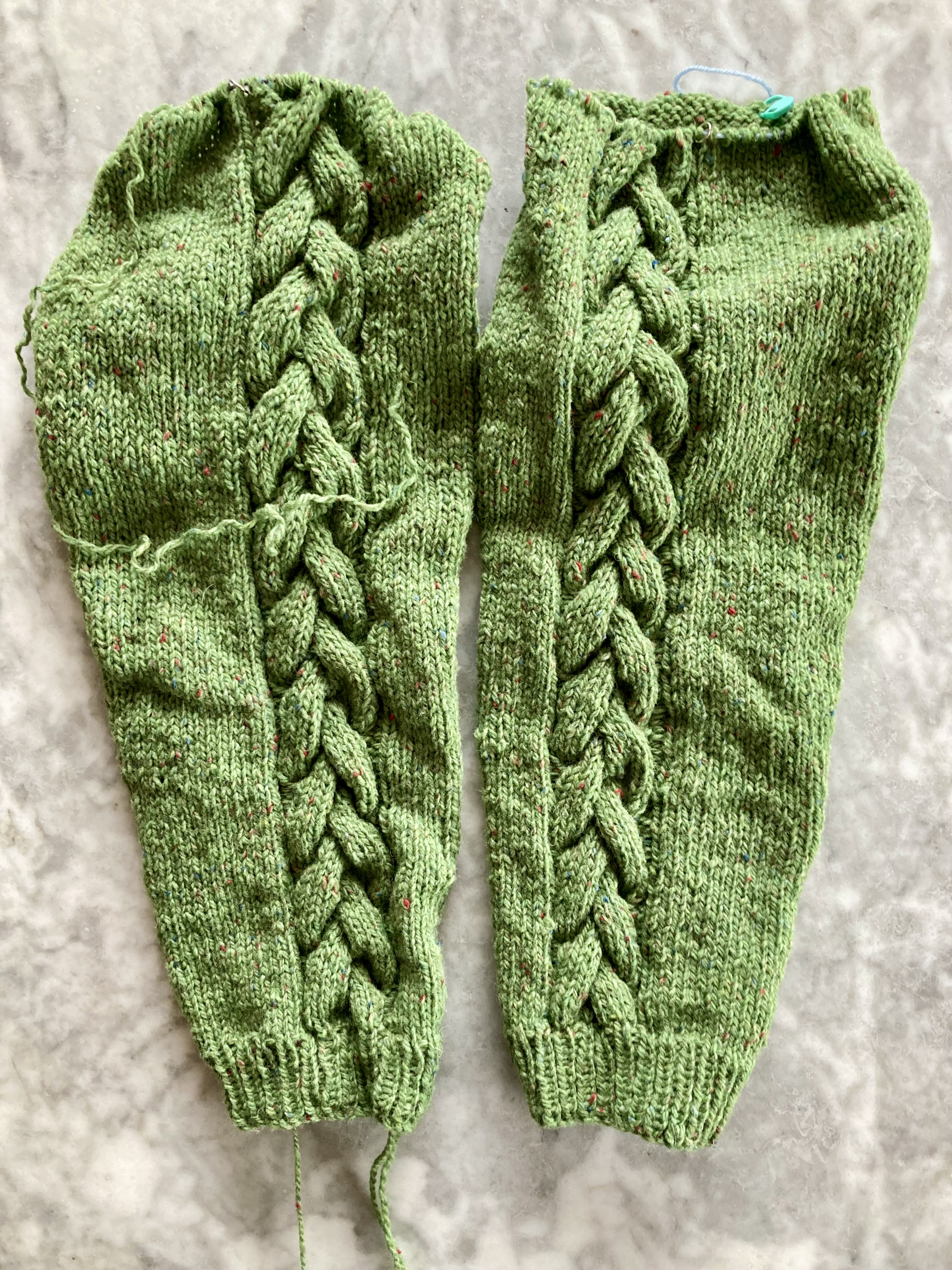
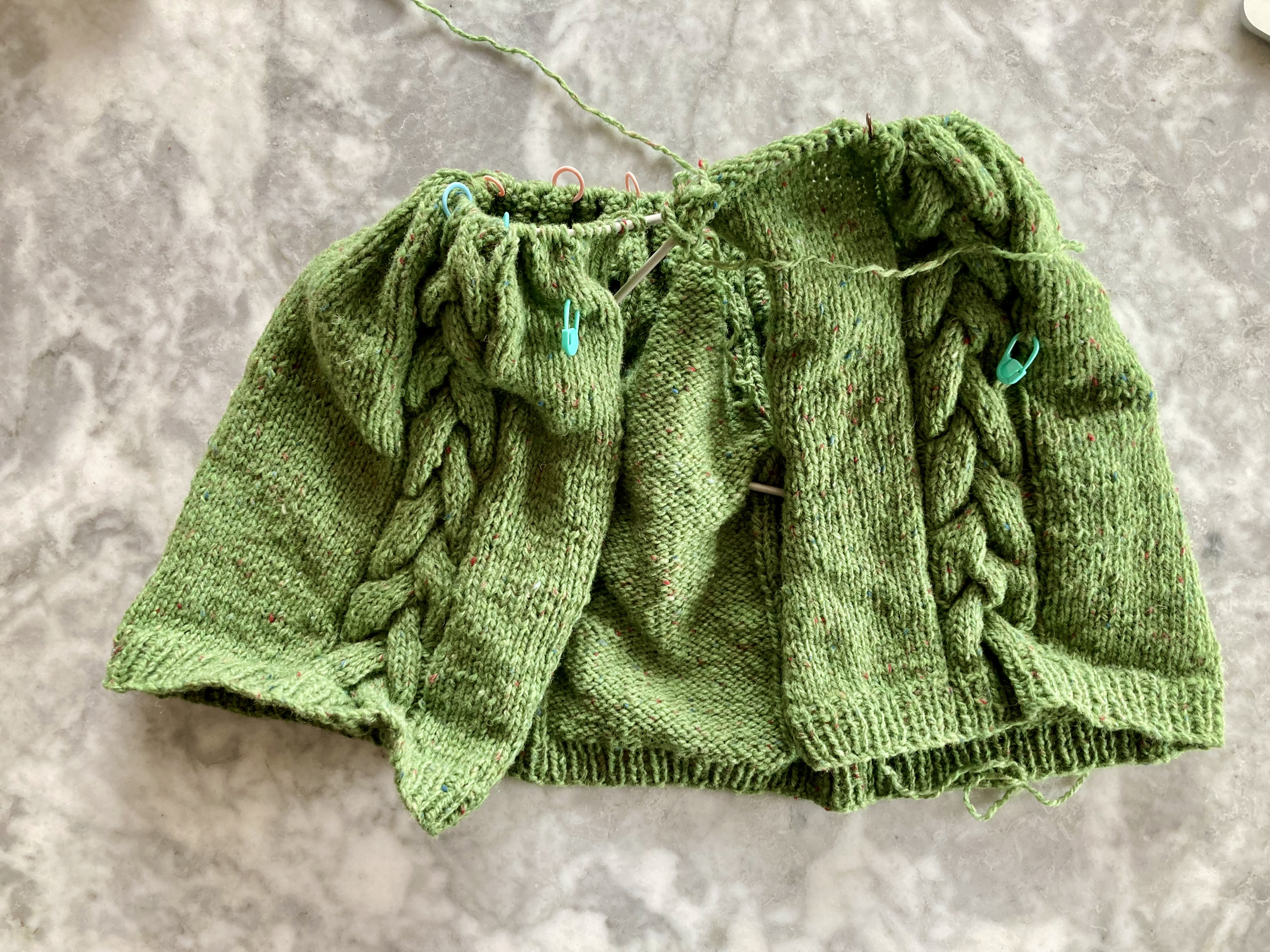
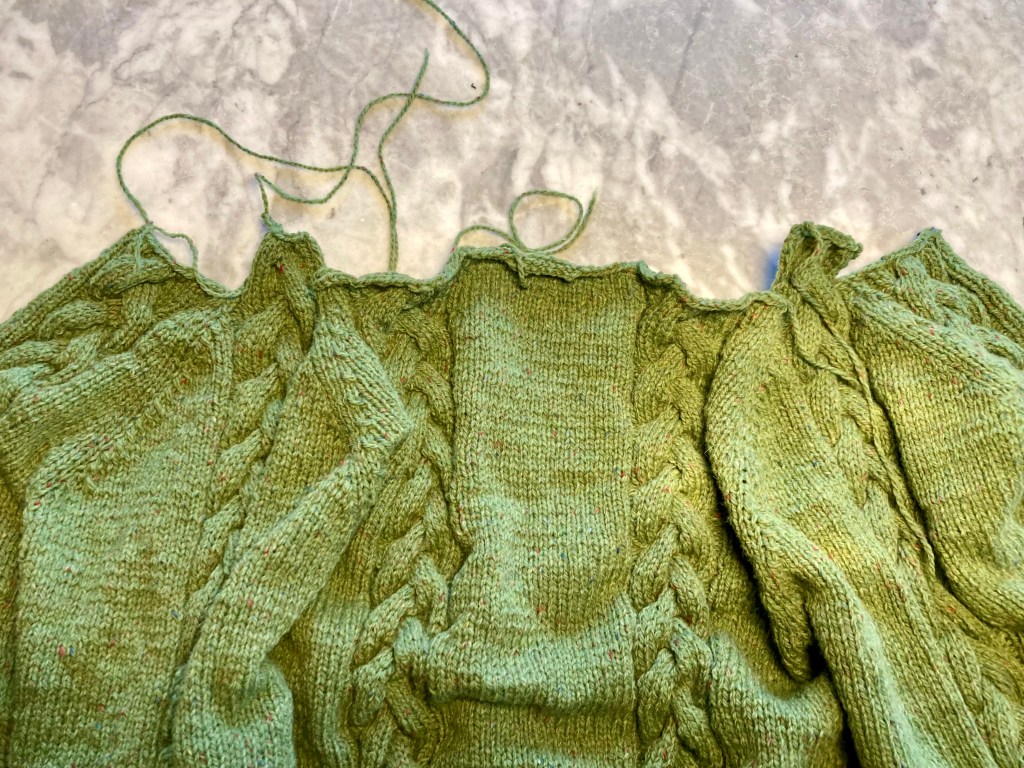
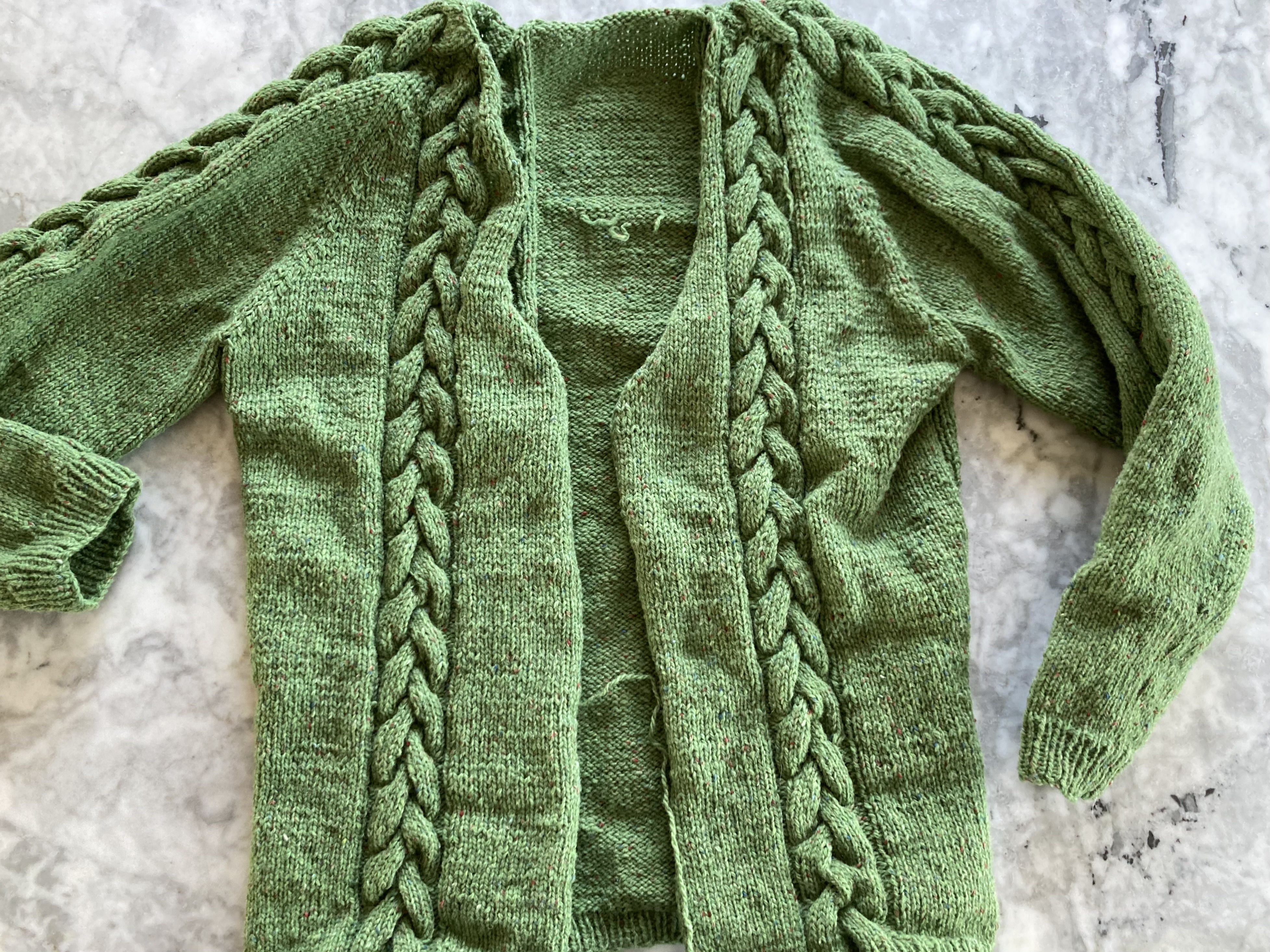
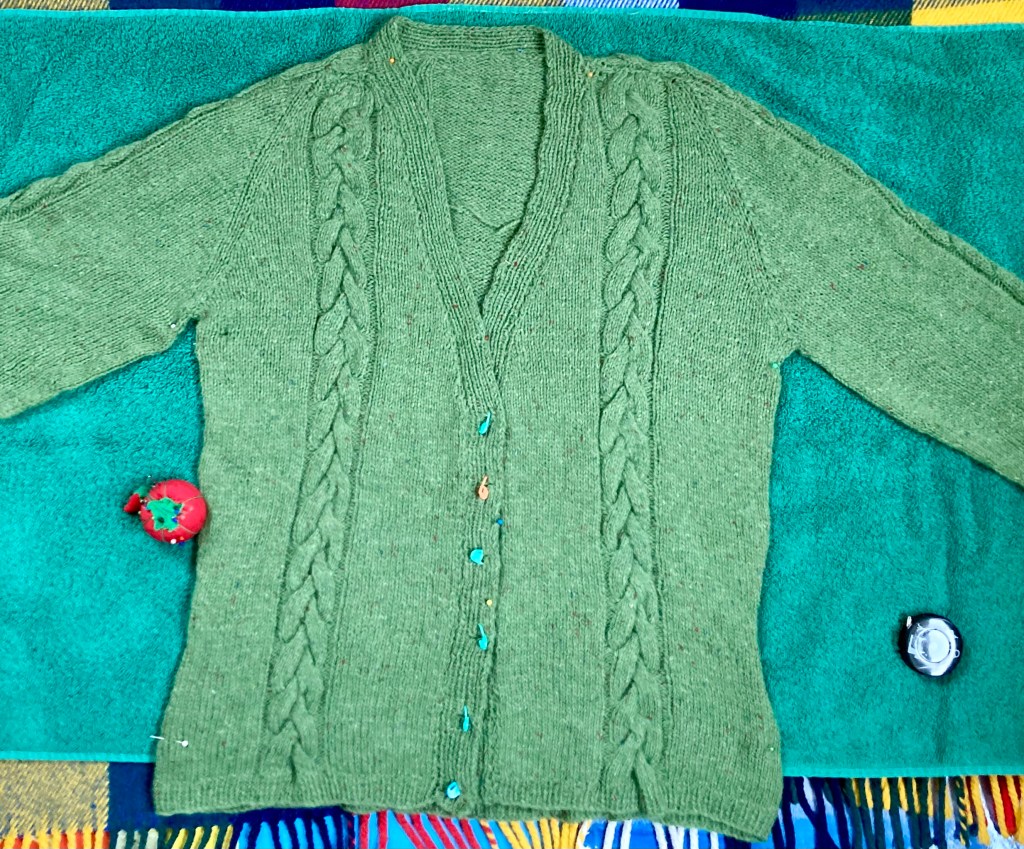
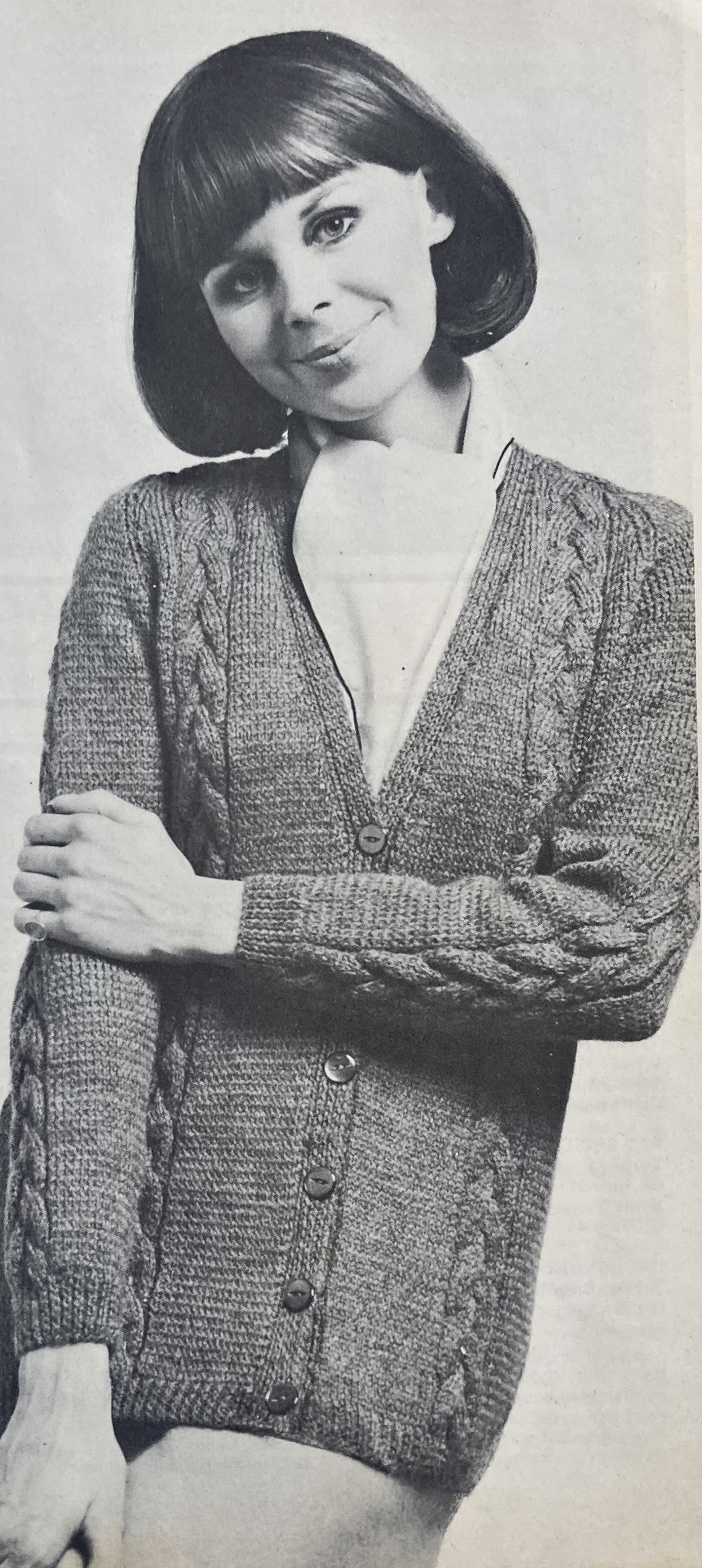
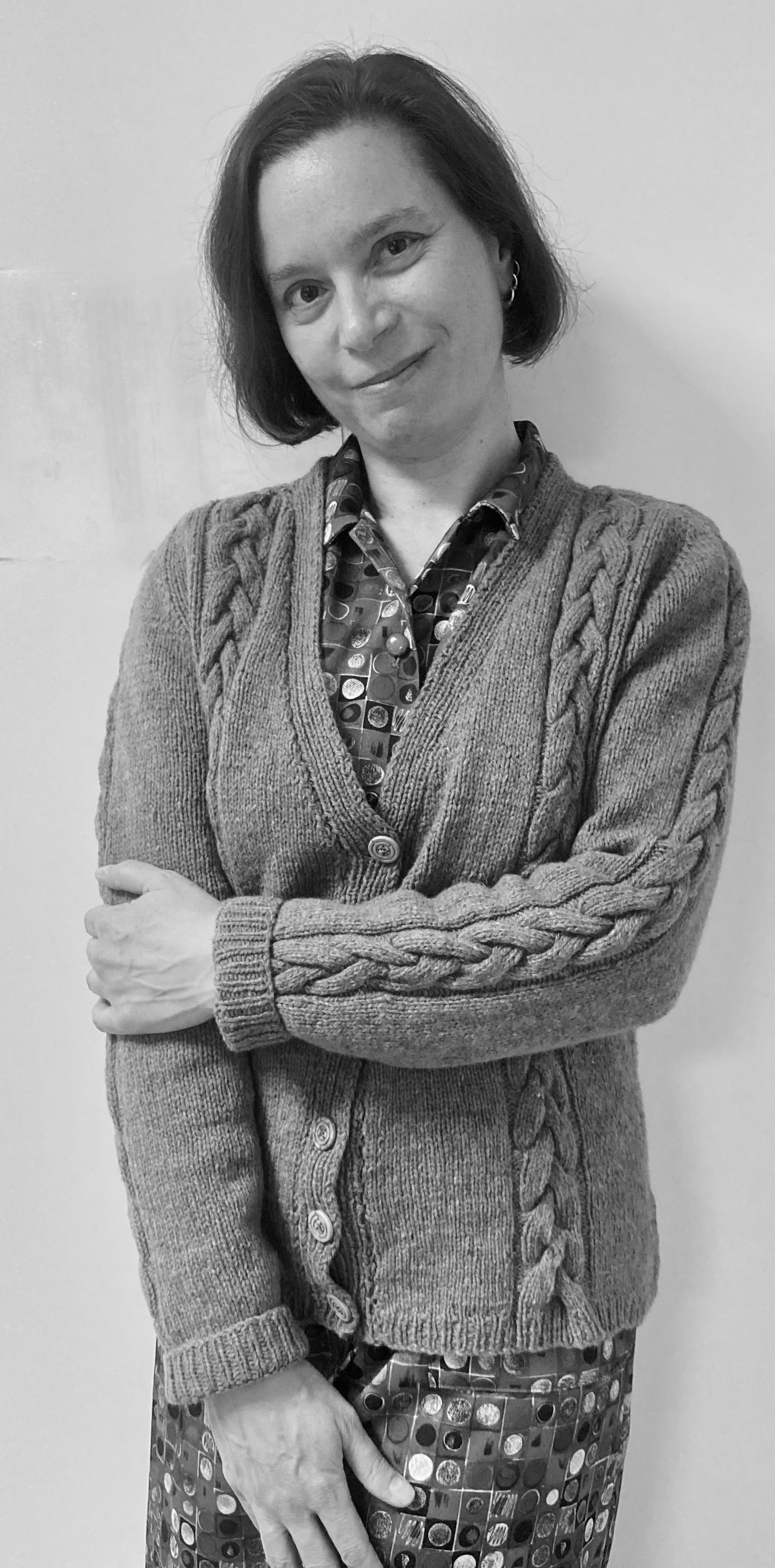
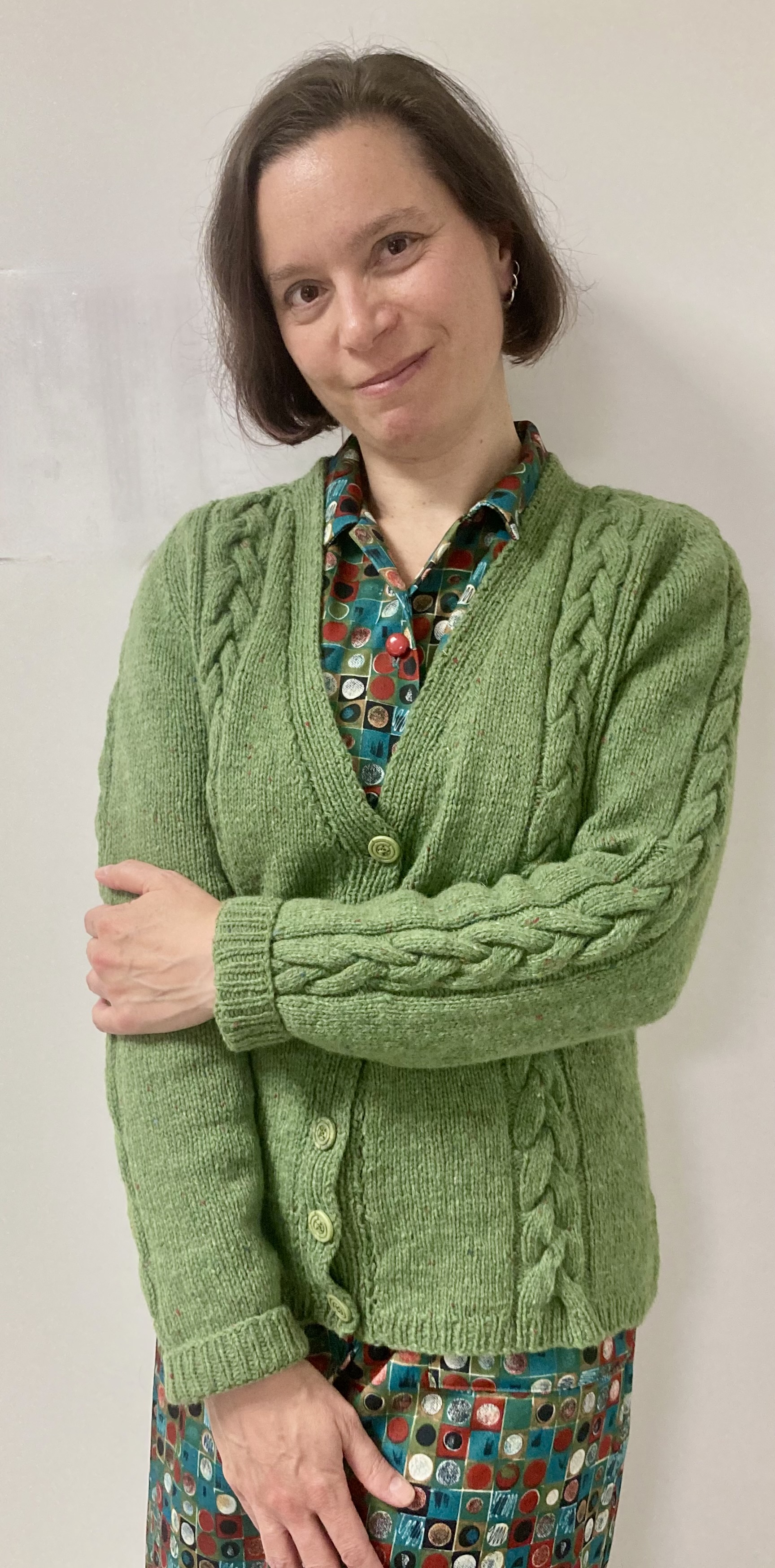
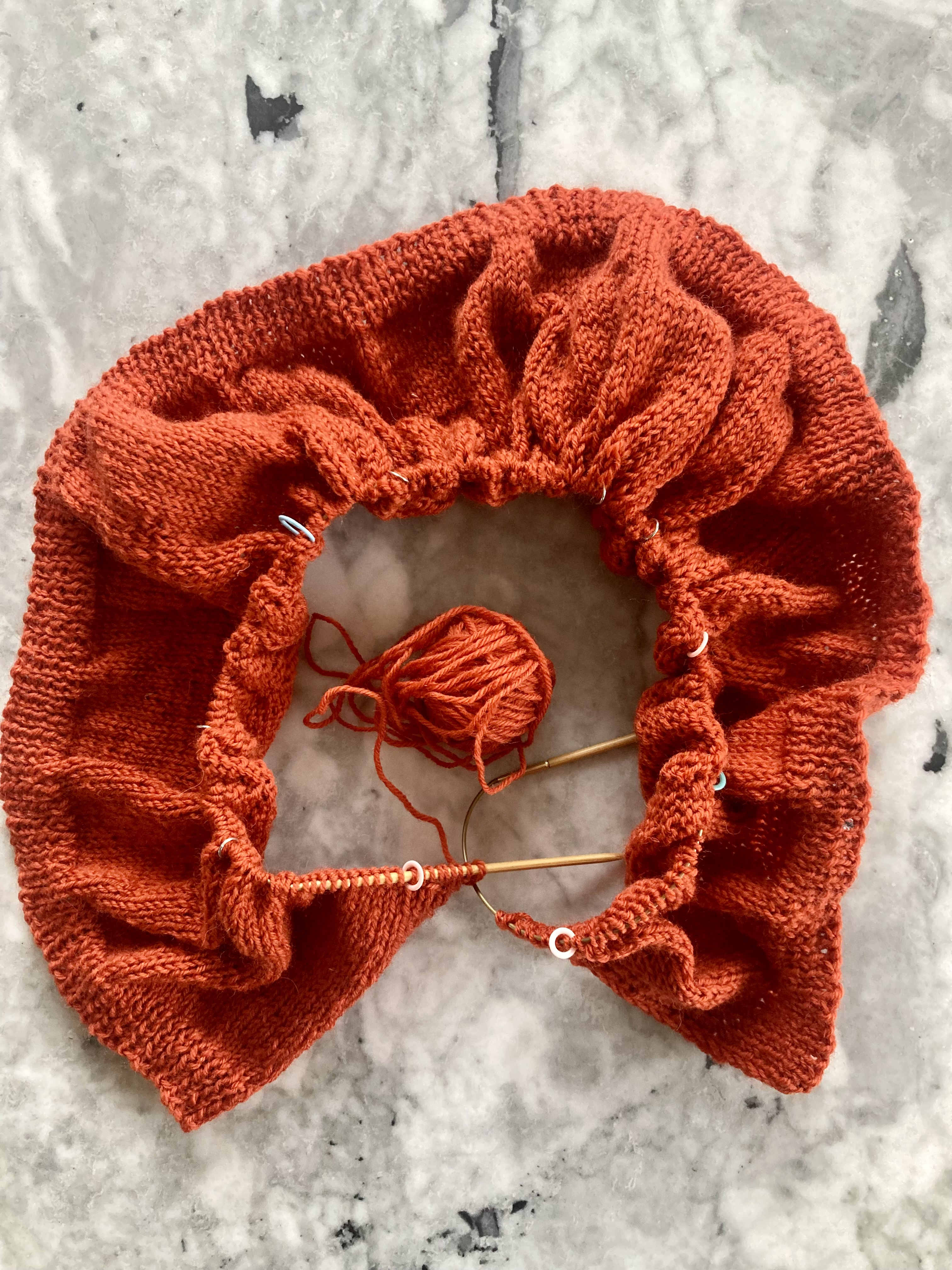
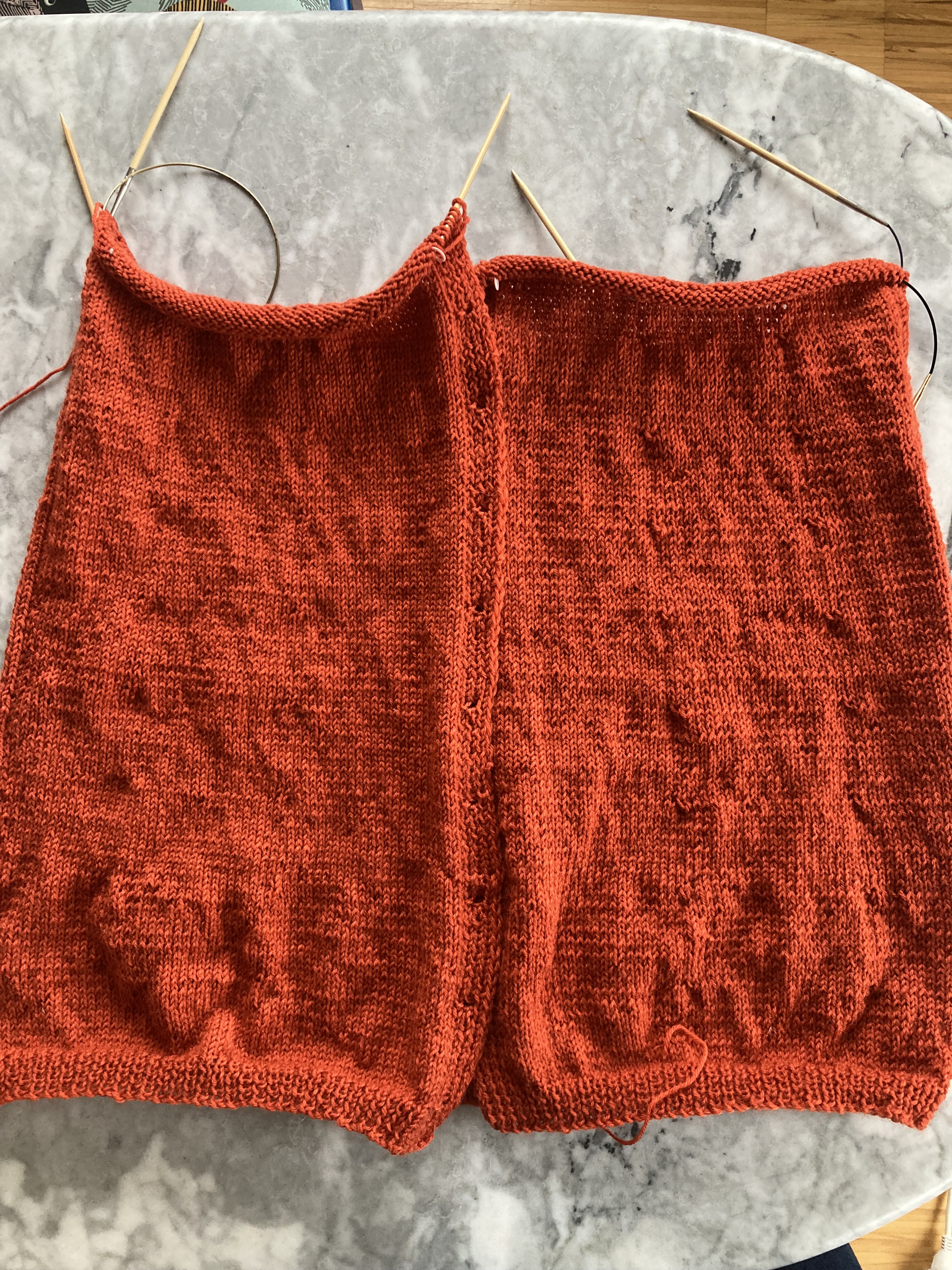
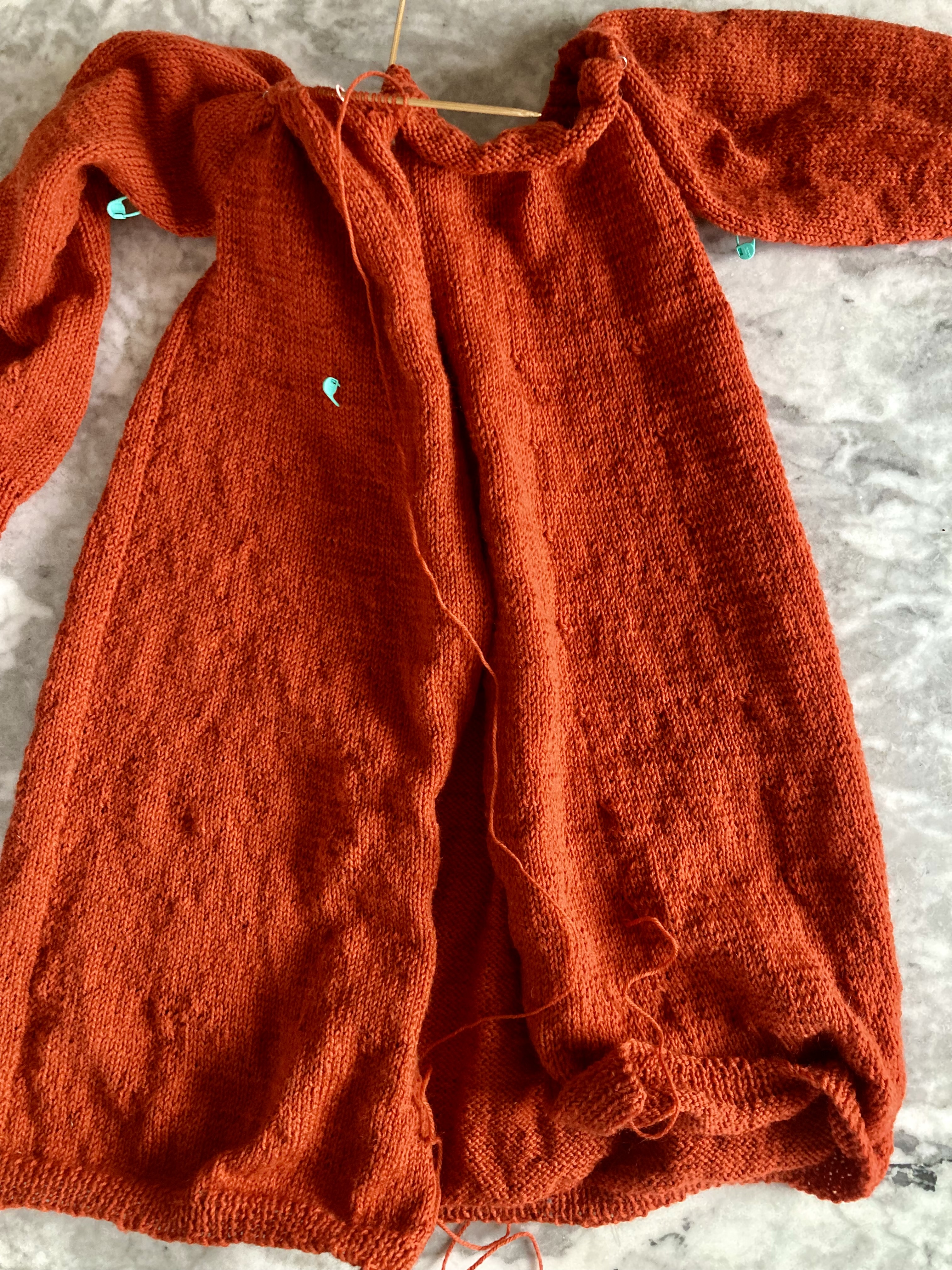
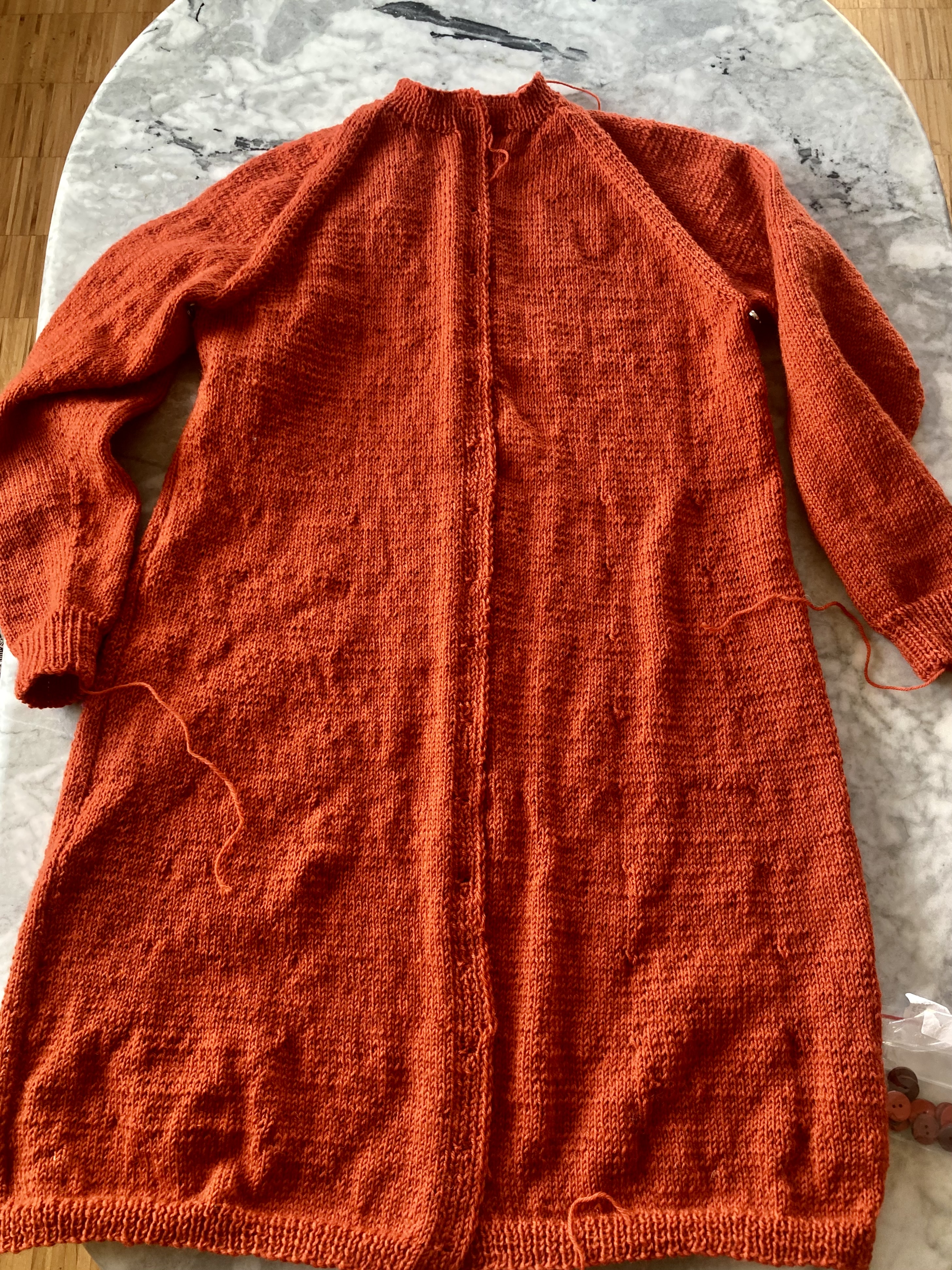
My April project (not anywhere near done! This month went by so fast) was the “long-line Shetland cardigan” from the April 1968 issue of Stitchcraft, “Country Knits”. Longer, slightly narrower garments and cabled, twisted or nubbly stitch patterns were all trending.

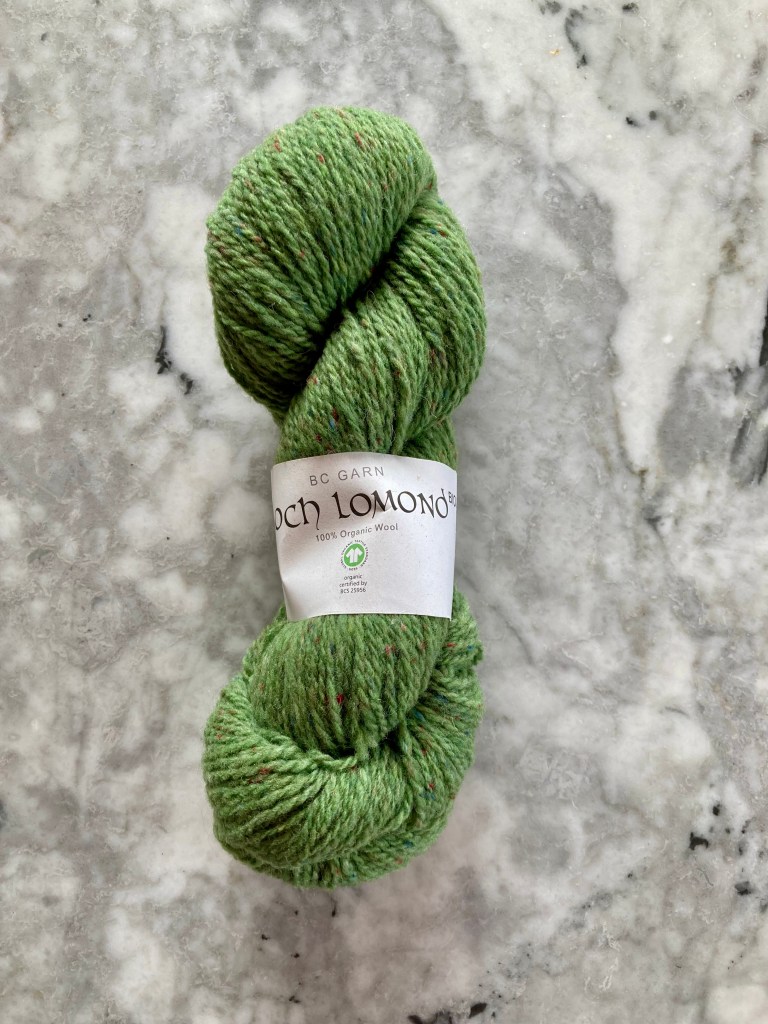
The cardigan in question is written for Patons “Fiona”, a DK/worsted blend of Shetland wool and synthetic fibre. I used “Loch Lomond” by BC Garn, which is a tweedy, loosely plied DK/worsted wool, softer than Shetland wool and a little bit less hairy, but similarly fluffy. I had bought it to make a cardigan from a modern pattern and had made most of the cardigan before realising that I didn’t like either the fit or the lace pattern on the fronts. It sat around for a while while I worked on other projects, until I decided to cannibalise it in order to make this Stitchcraft cardigan.

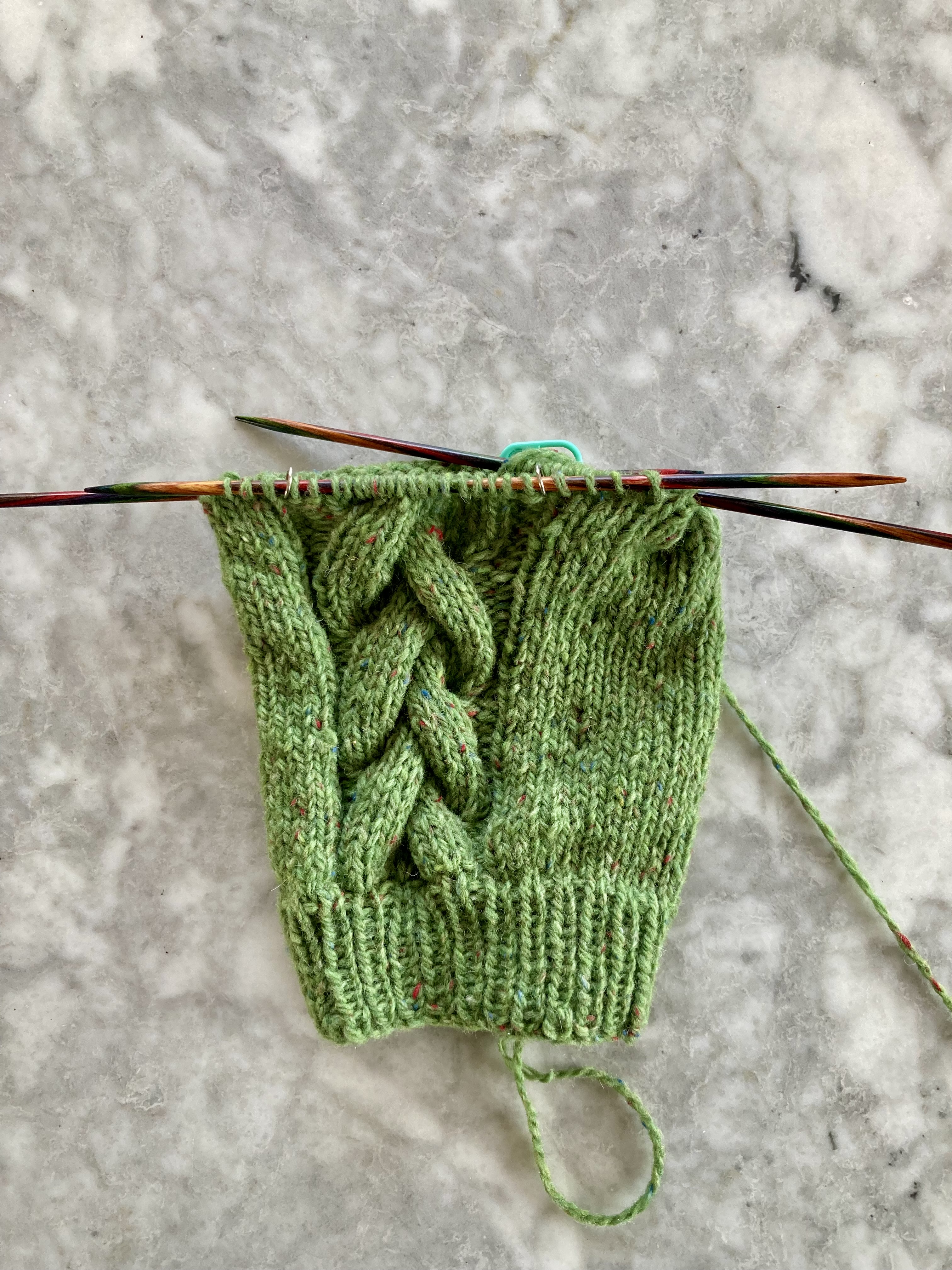
The pattern is written from the bottom up, in pieces and seamed, with raglan sleeves. The cables are a 5/5/5 stitch braid with the crosses on rows 5 and 11 of the 12-stitch pattern repeat, and only featured on the fronts — the back is knit plain. I chose to make it with the front and back knit flat in one piece and a seamless raglan yoke, and will probably add wast shaping and/or cables on the center back (without adjusting the total stitch count) to keep it from looking too sack-like or ballooning in the back.

I started with the sleeves to check for fit and tension, and as of April 27th have completed 1 1/2 sleeves up to the armholes — not very much! I’m sorry, it’s been a really busy month. The fabric is a little stiff on 3.5 needles, so I may switch to 4 mm for the body (and adjust for gauge?). The cables have great definition, though. The pattern is easy, the colour is fantastic, and the yarn is pleasantly squishy and tweedy. I just need to find the time to get it done.

I will update this post when I have completed more!

April 1968: Overview

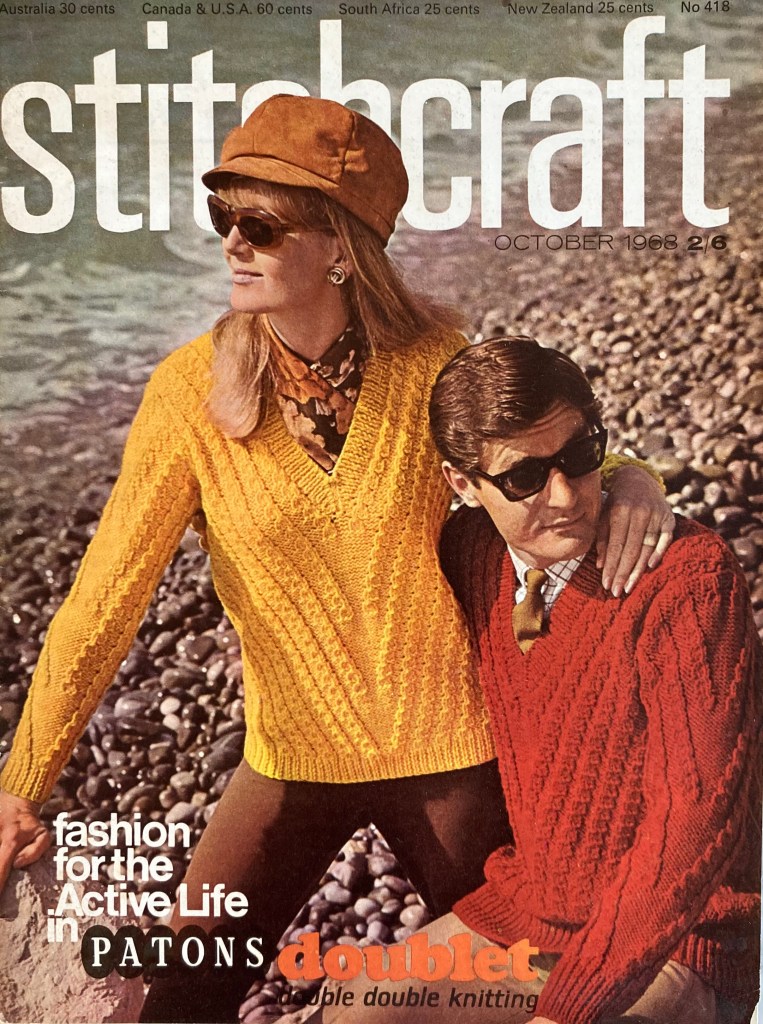
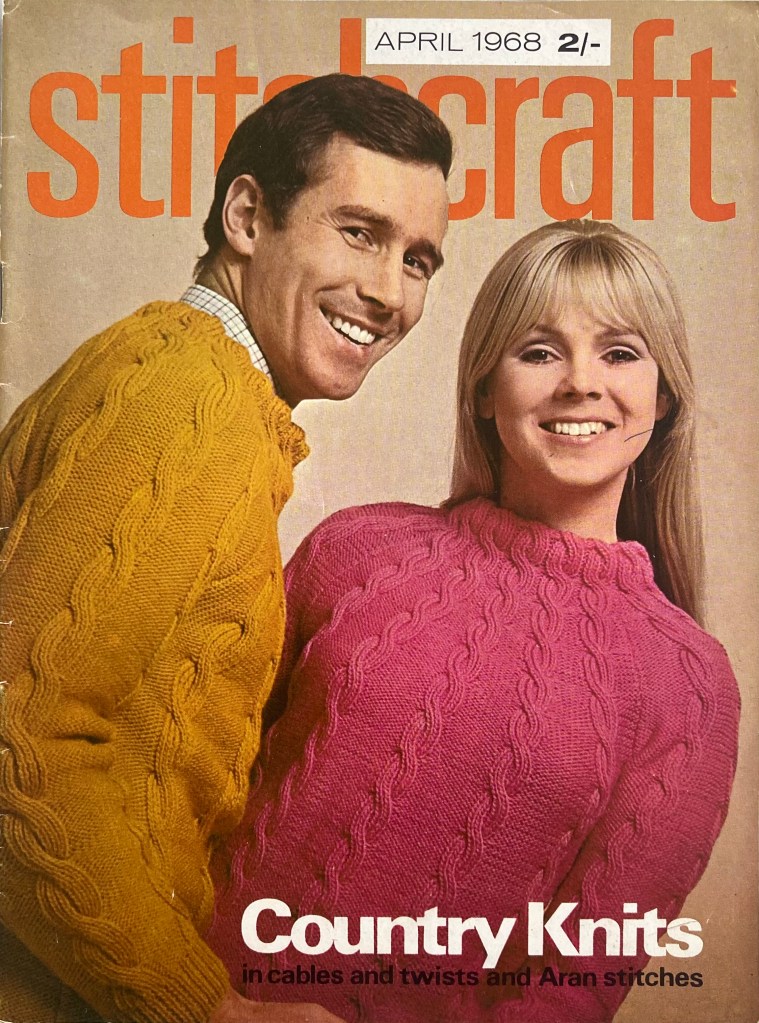
Cables, zigzags, and dogs, oh my! April 1968 is going to be a fun month at Stitchcraft.

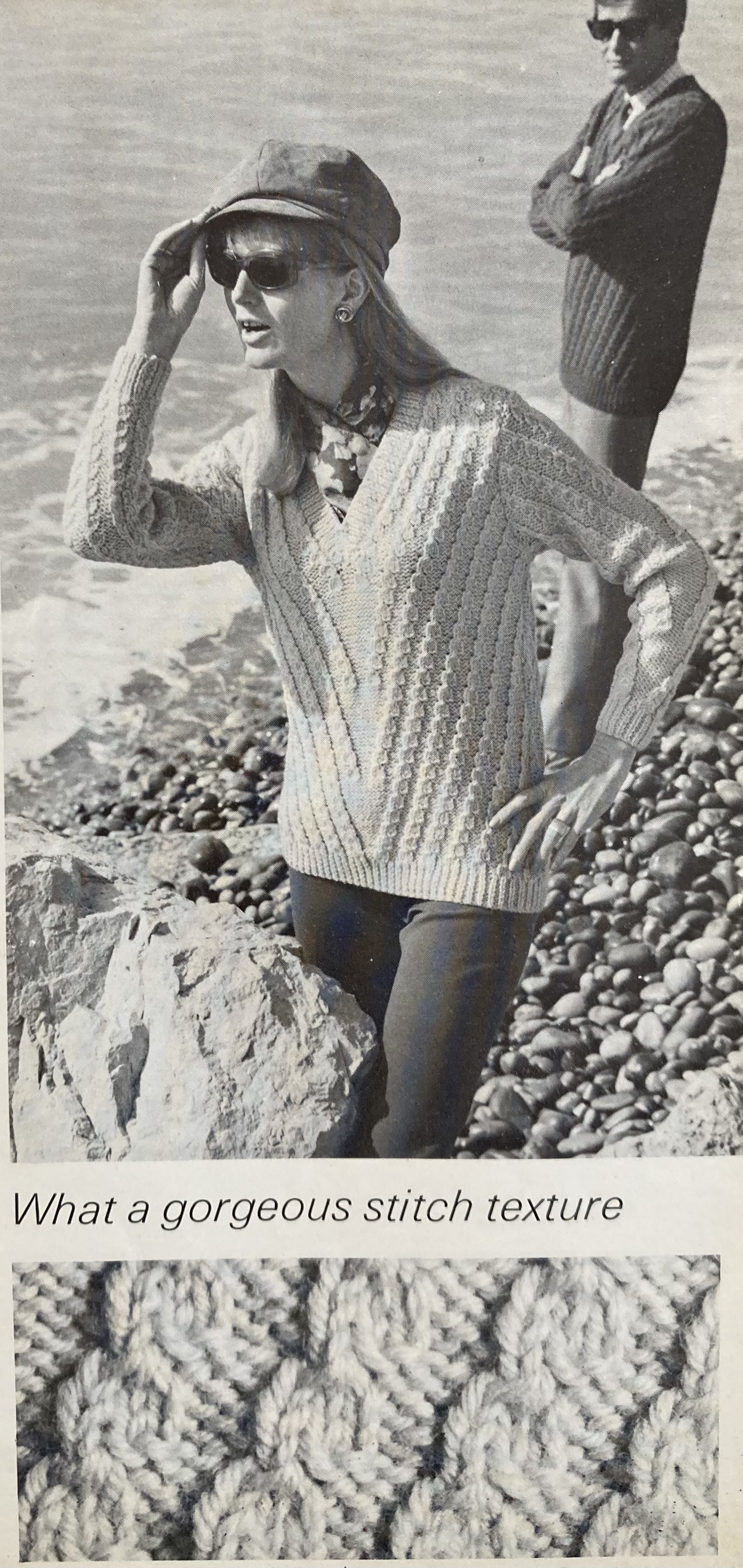
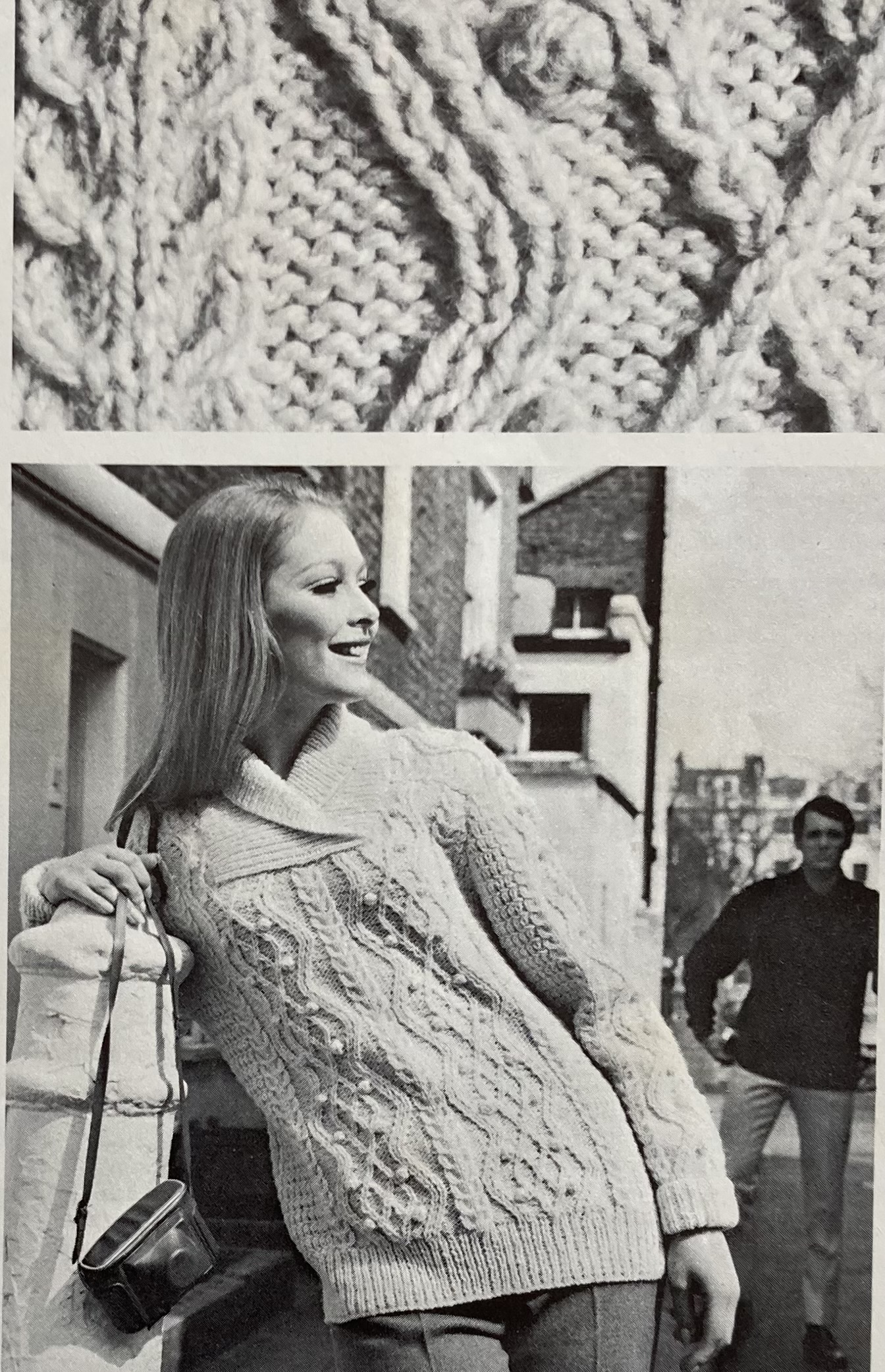
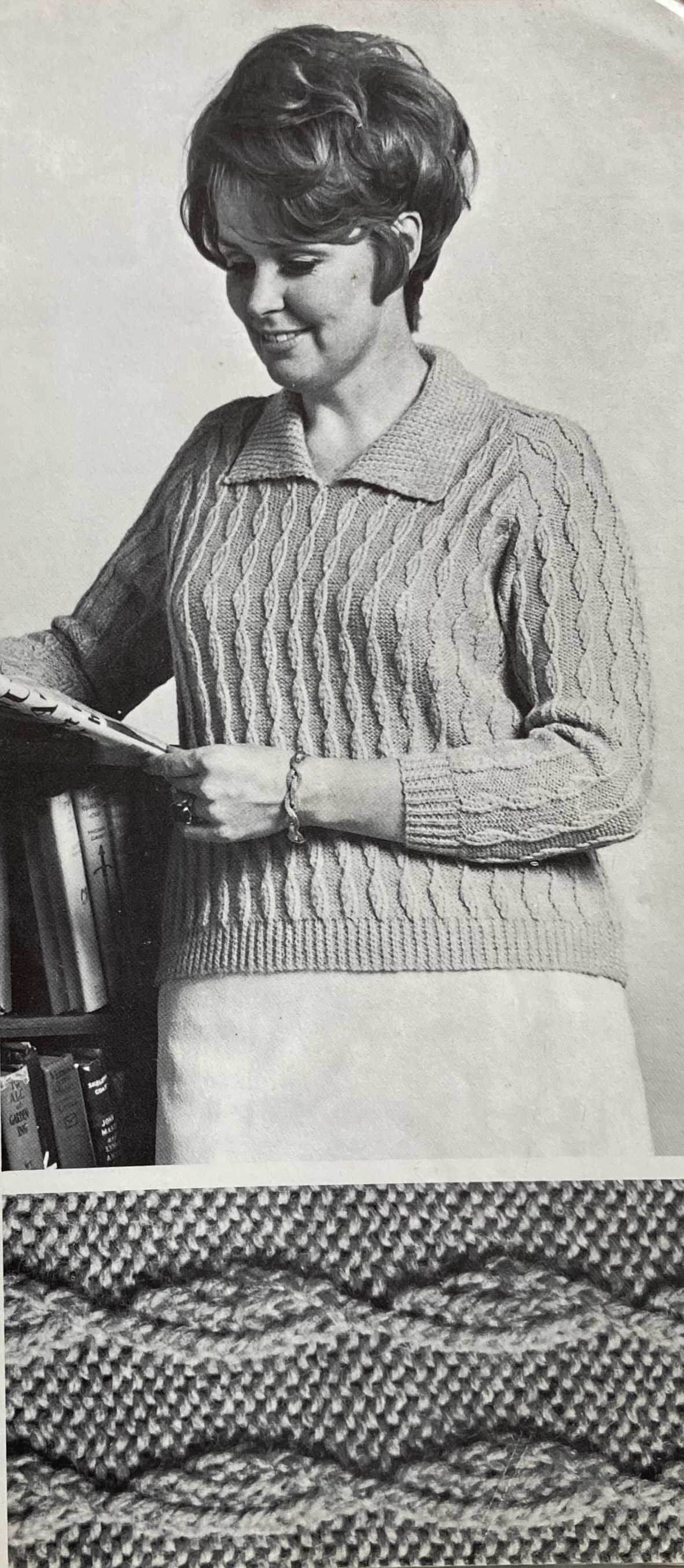
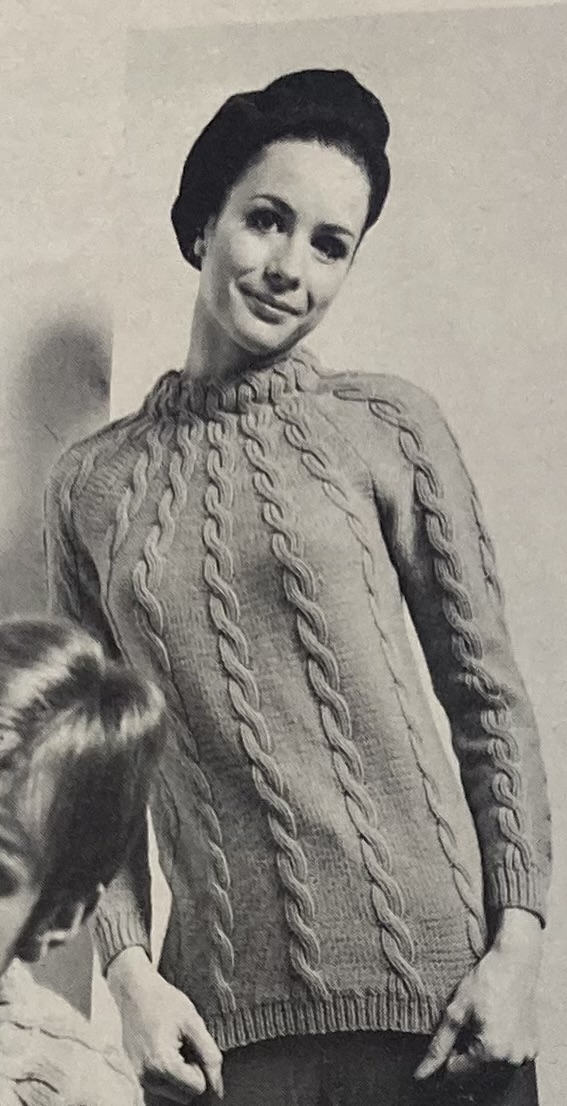
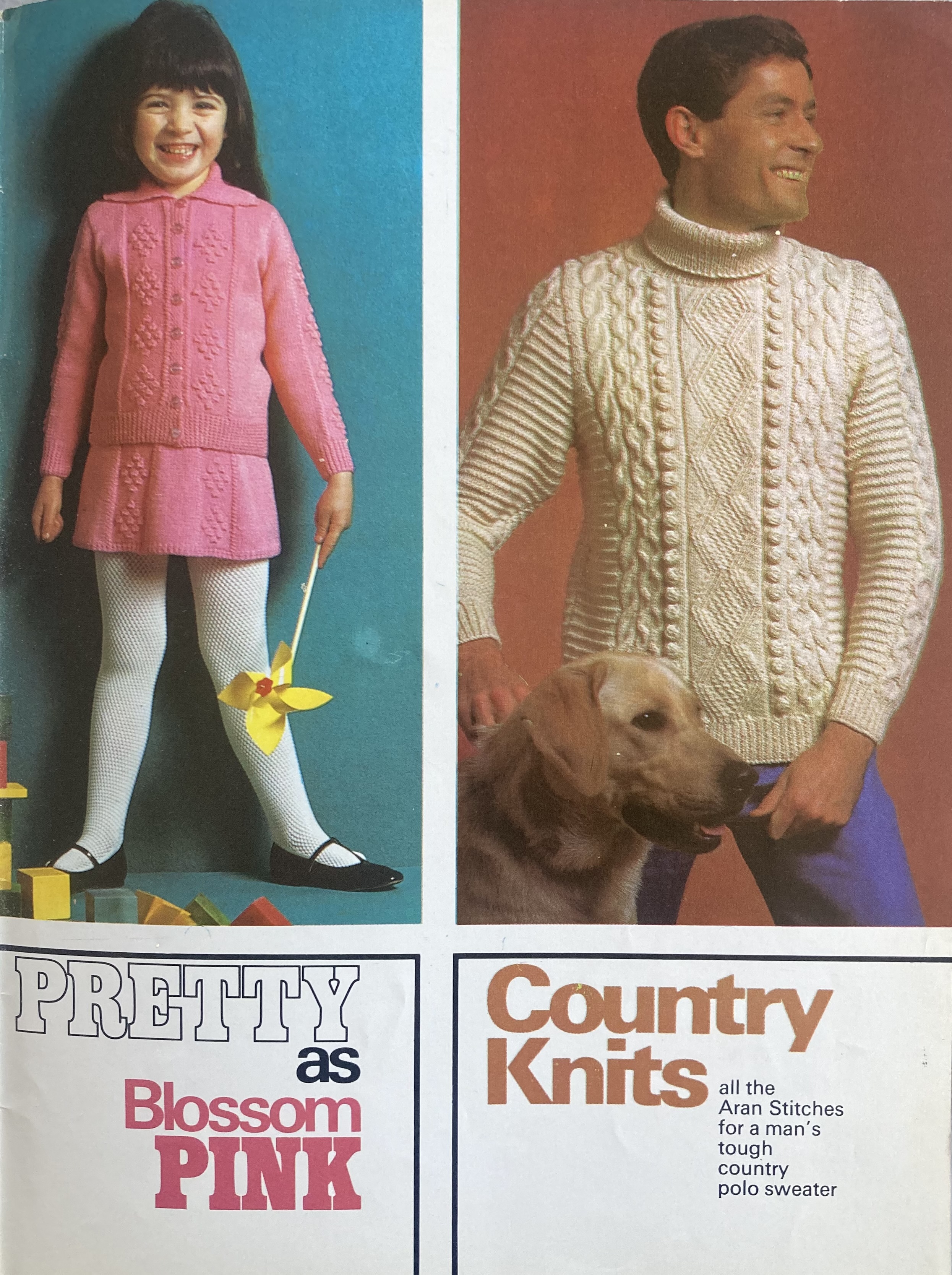
The “country knits” on the cover are in just two sizes, “for her” (34-36 inch bust) and “for him” (38-40 inch bust.) I imagine the style would look good on a larger woman as well. The raglan seams are sewn together after front, back and sleeves are knit separately. The cables continue onto the collar, which folds inward.There’s also a “travel coat” with mock-cable twists in “Super-Sonic” style (multiple strands of bulky wool knit together on maxi-size 3/4-inch needles) and a smooth and elegant cardigan with just a few cables on front and sleeves.

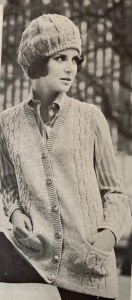
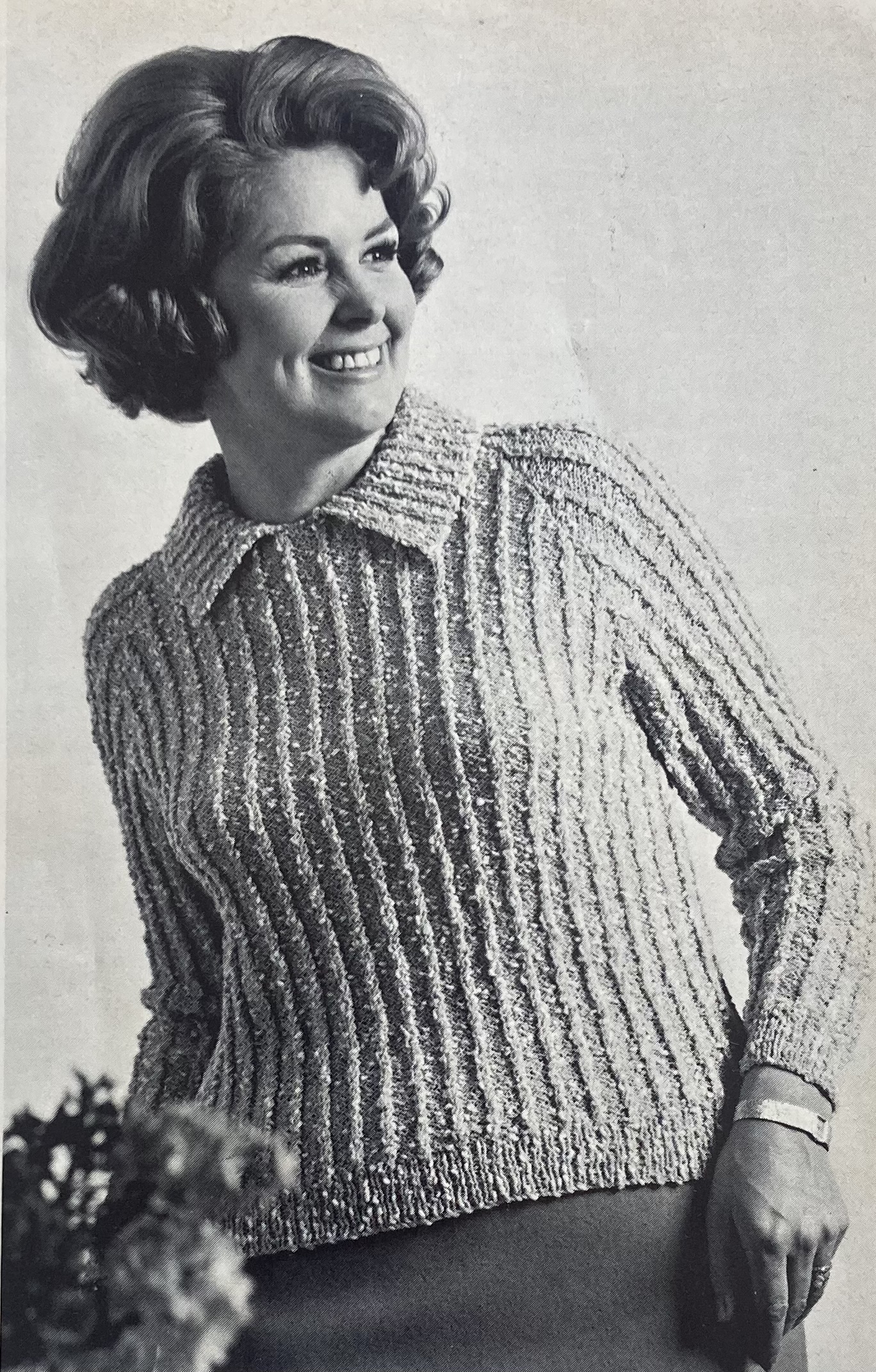
Texture without cables can be achieved using Patons nubbly “Four Seasons” yarn for a tweedy dress (love that wig again), a plain jumper with frilly edgings, or a ribbed “classic blouse in larger sizes”.

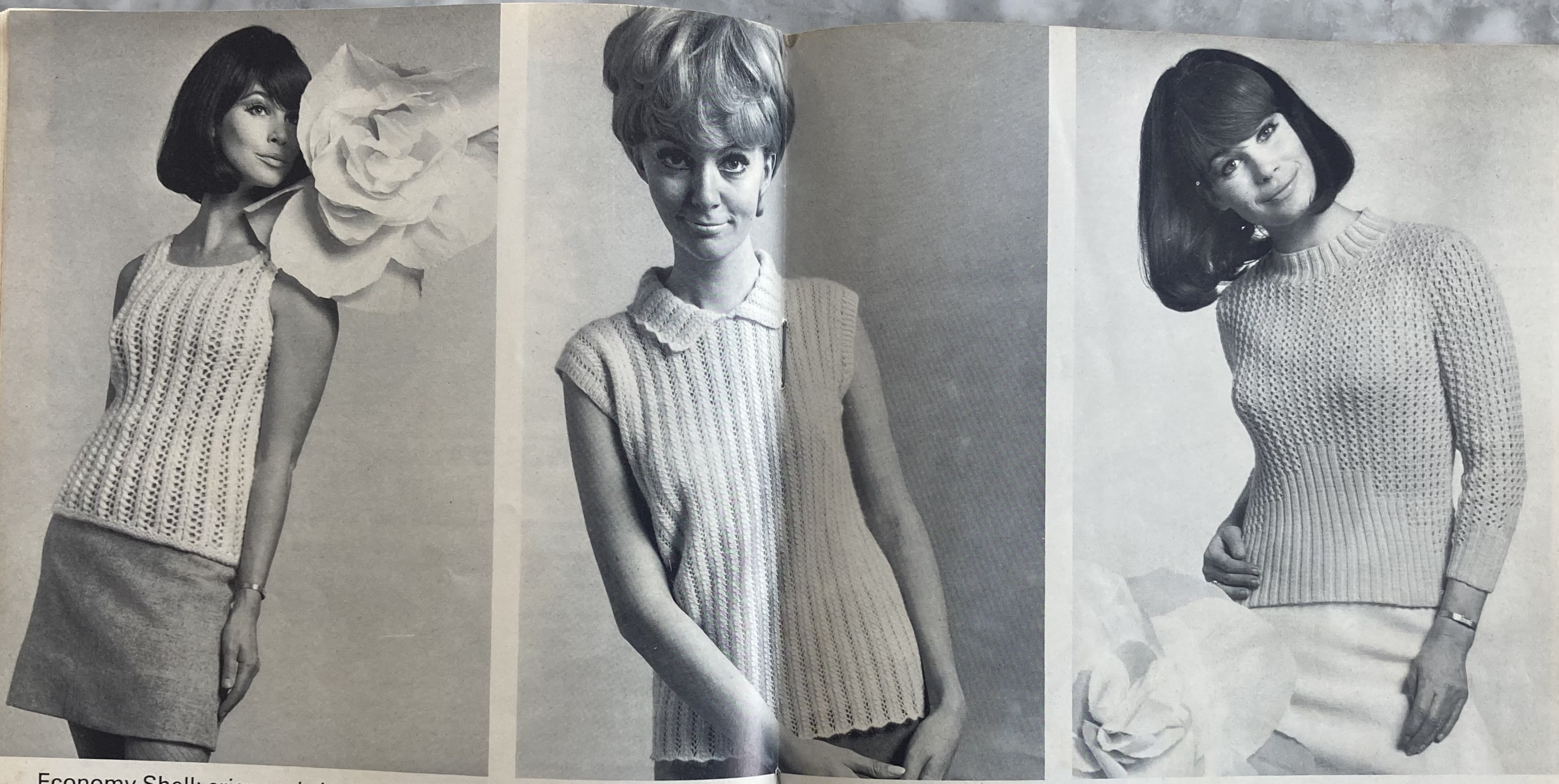
The three summer tops in the centrefold photo also use textured rib patterns for a cable-like effect. All three are in different weights: the sleeveless top on the left looks lightweight but is make in bulky “Big Ben” wool; the fluffy blouse in the middle is made in soft, fine angora-wool “Princess”, and the “practical wash-tub summer sweater” on the right is made in Bri-Nylon “Brilliante”.

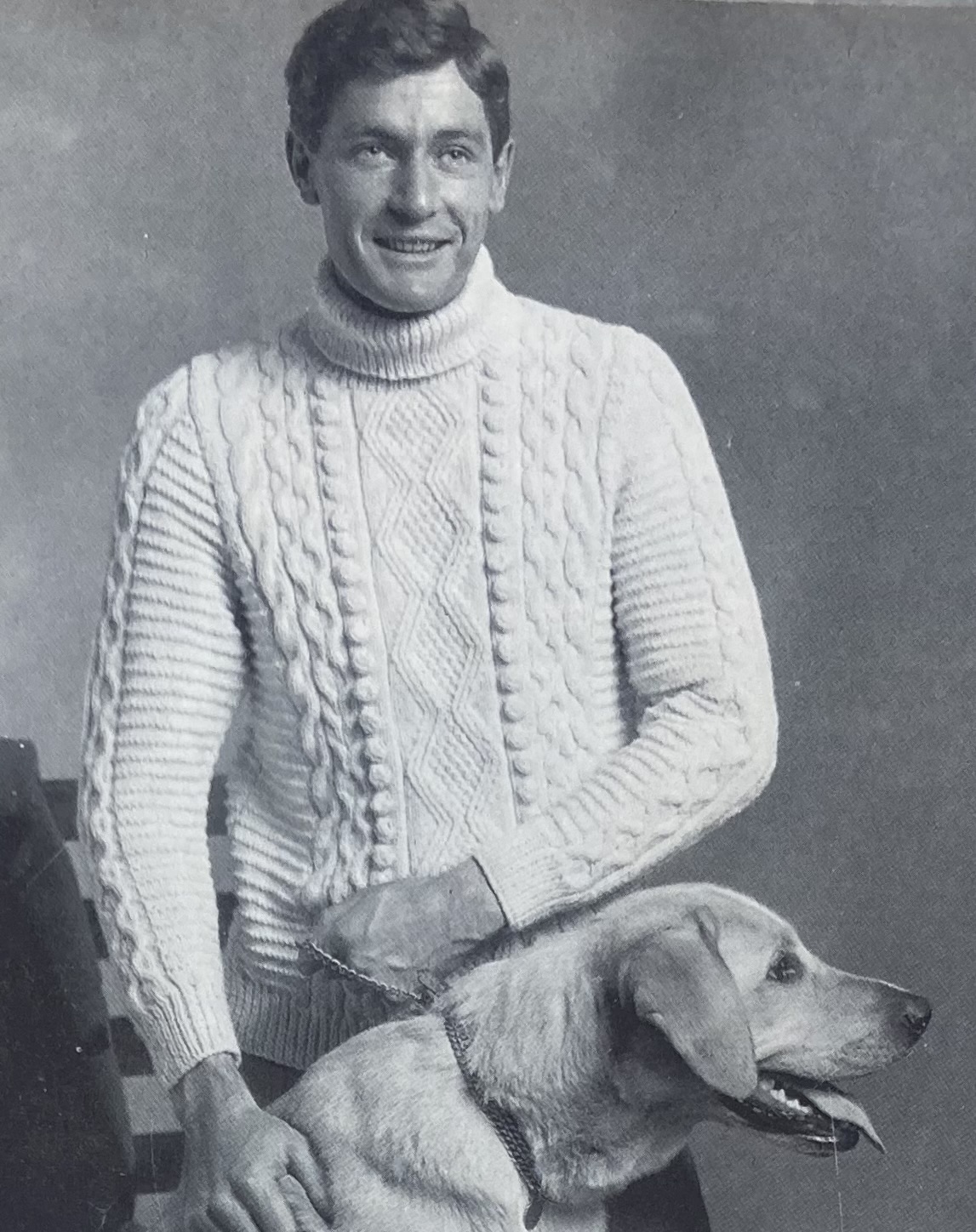
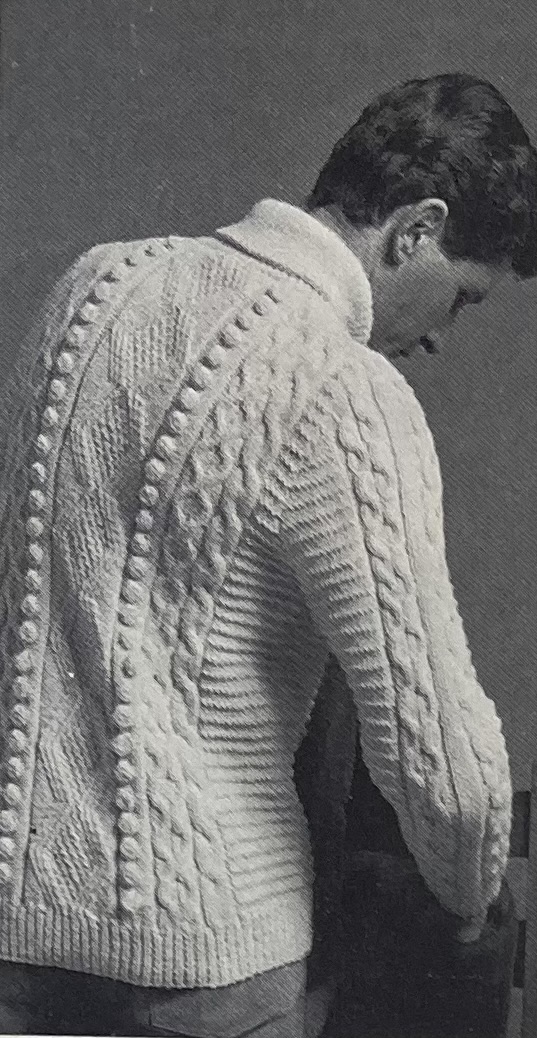
There are some nice cable and zigzag designs for men and children as well: Besides the cover pullover, there’s a traditional Aran-patterned sweater with cables and zigzags, a textured cardigan-and-skirt set for a little girl, and a boys’ jumper with a similar zigzag pattern to the men’s Aran sweater.

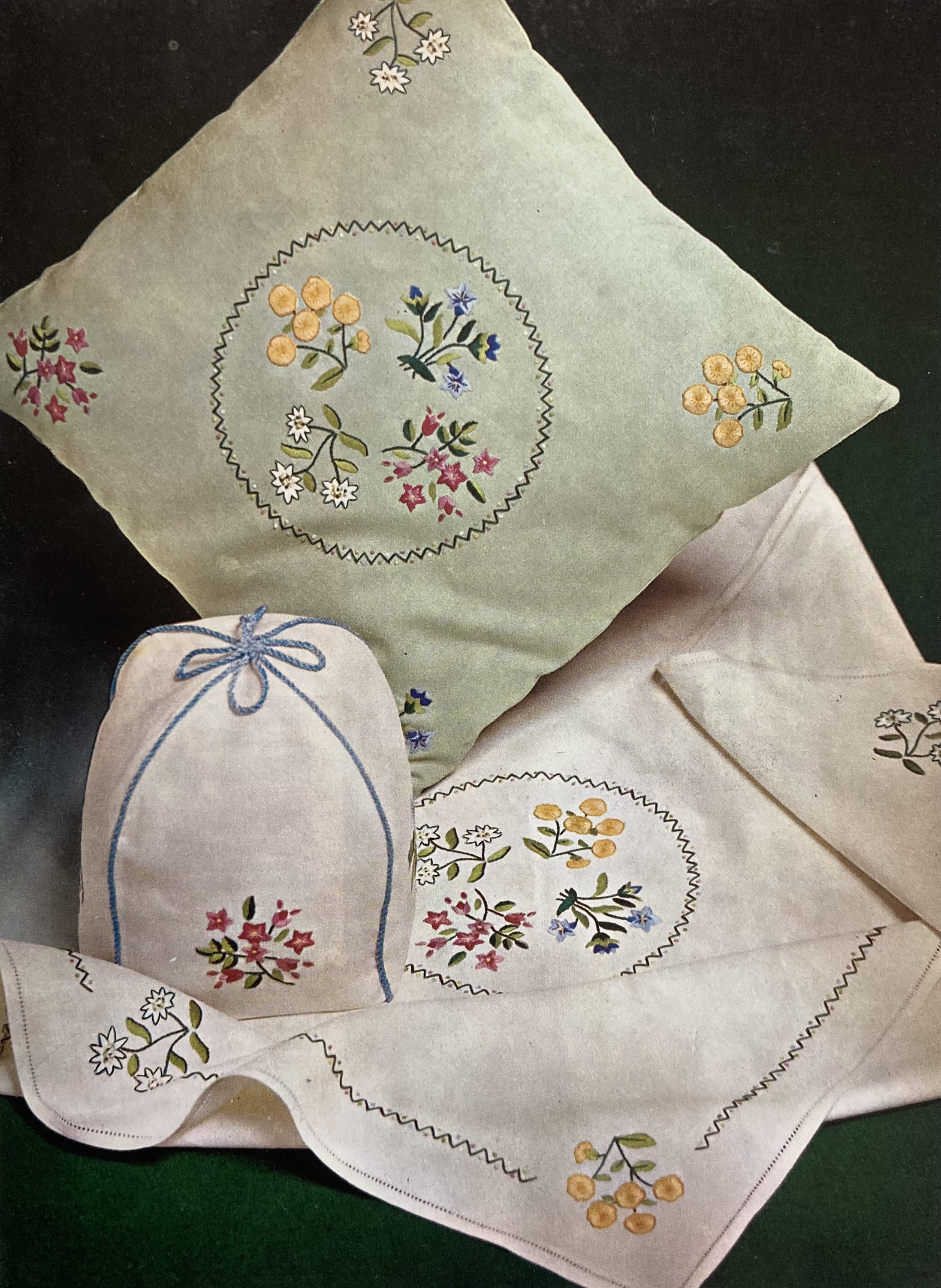
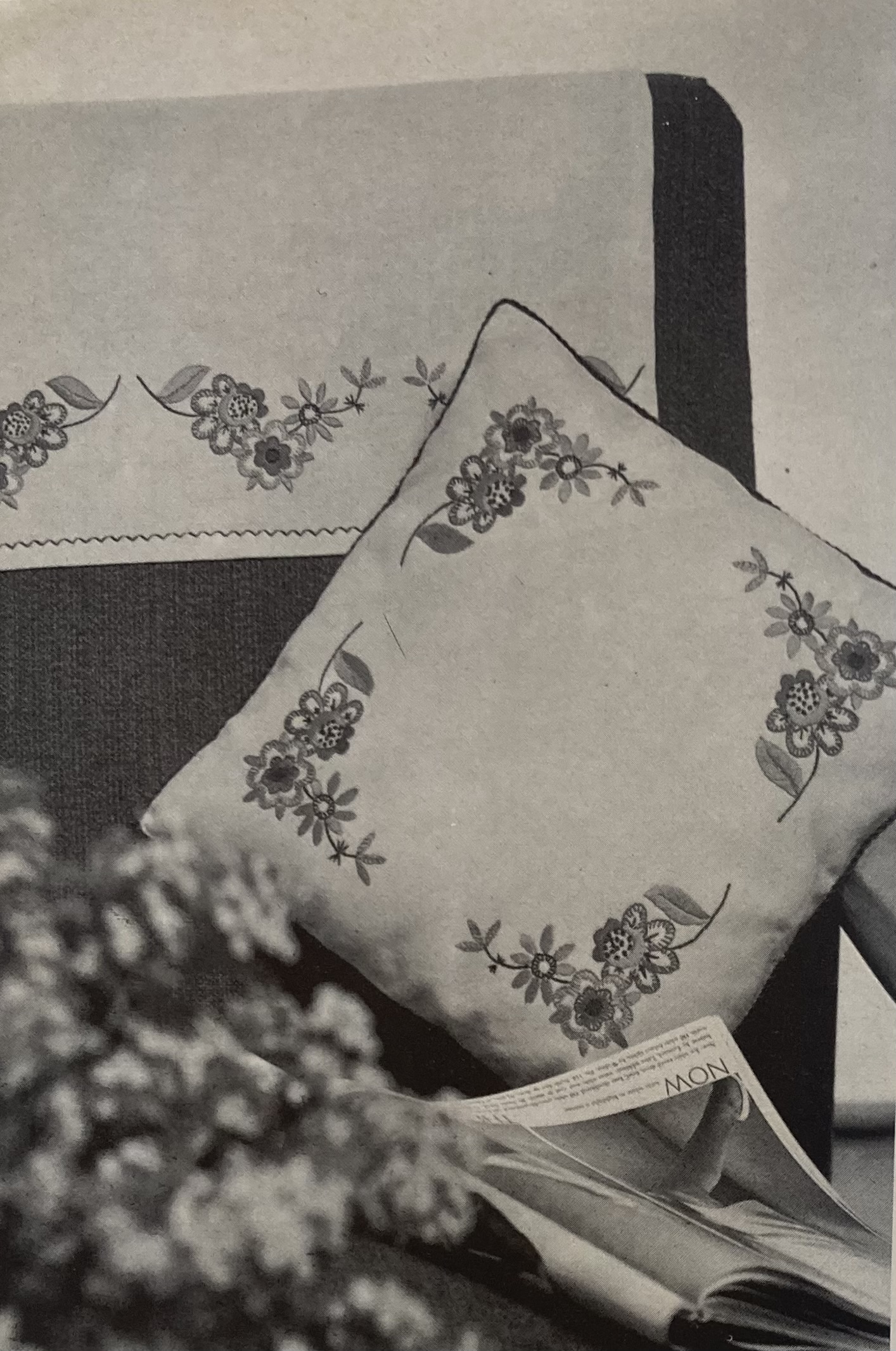
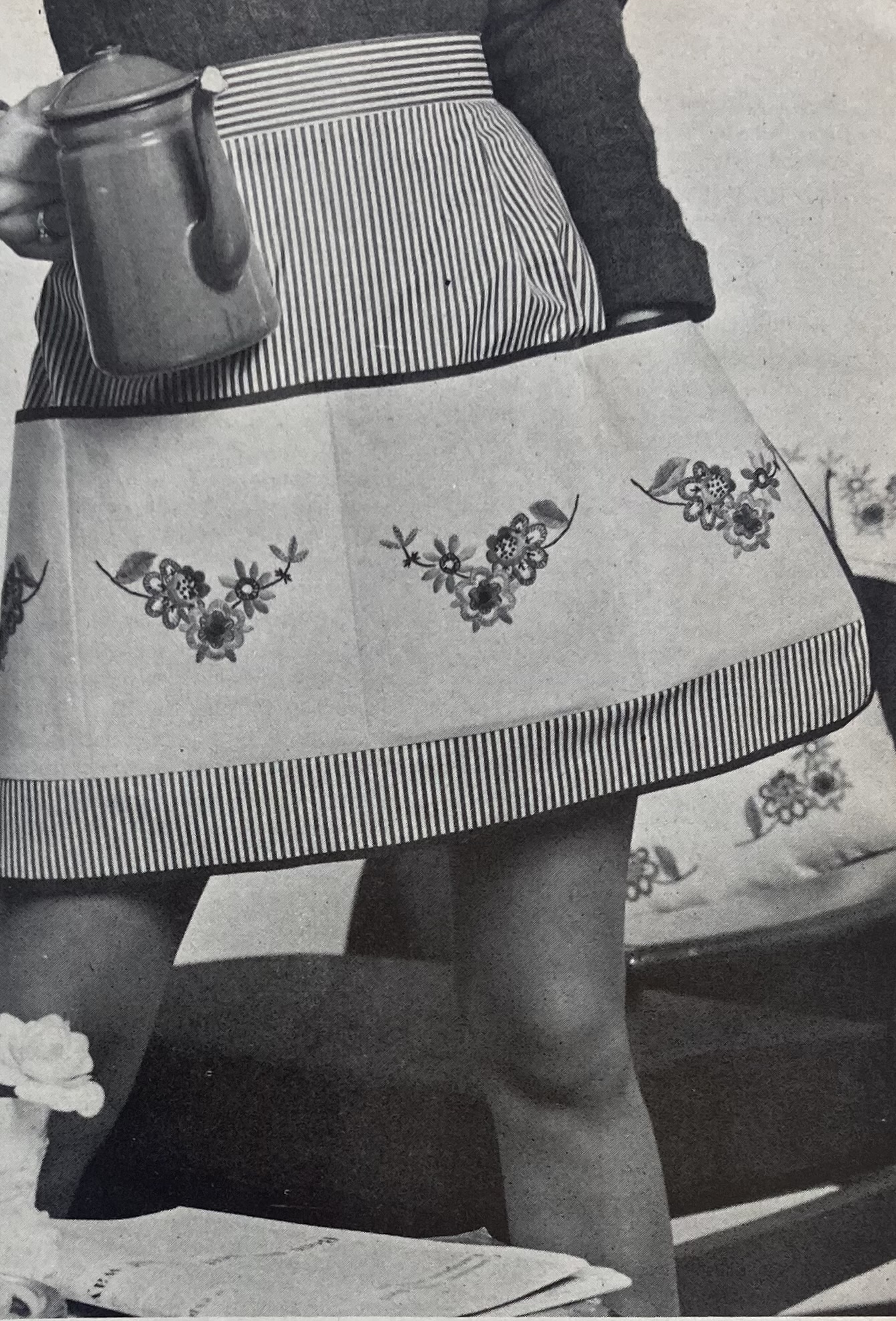
With so many great knitting projects, it’s no surprise that the homewares are mostly basic. There’s a pretty hedgerow-flower embroidery motif that can dress up a cosy, a tablecloth, a cushion, and/or an apron. The apron has a wide horizontal strip of embroidered fabric that’s divided by seams to make multiple pockets — very practical.

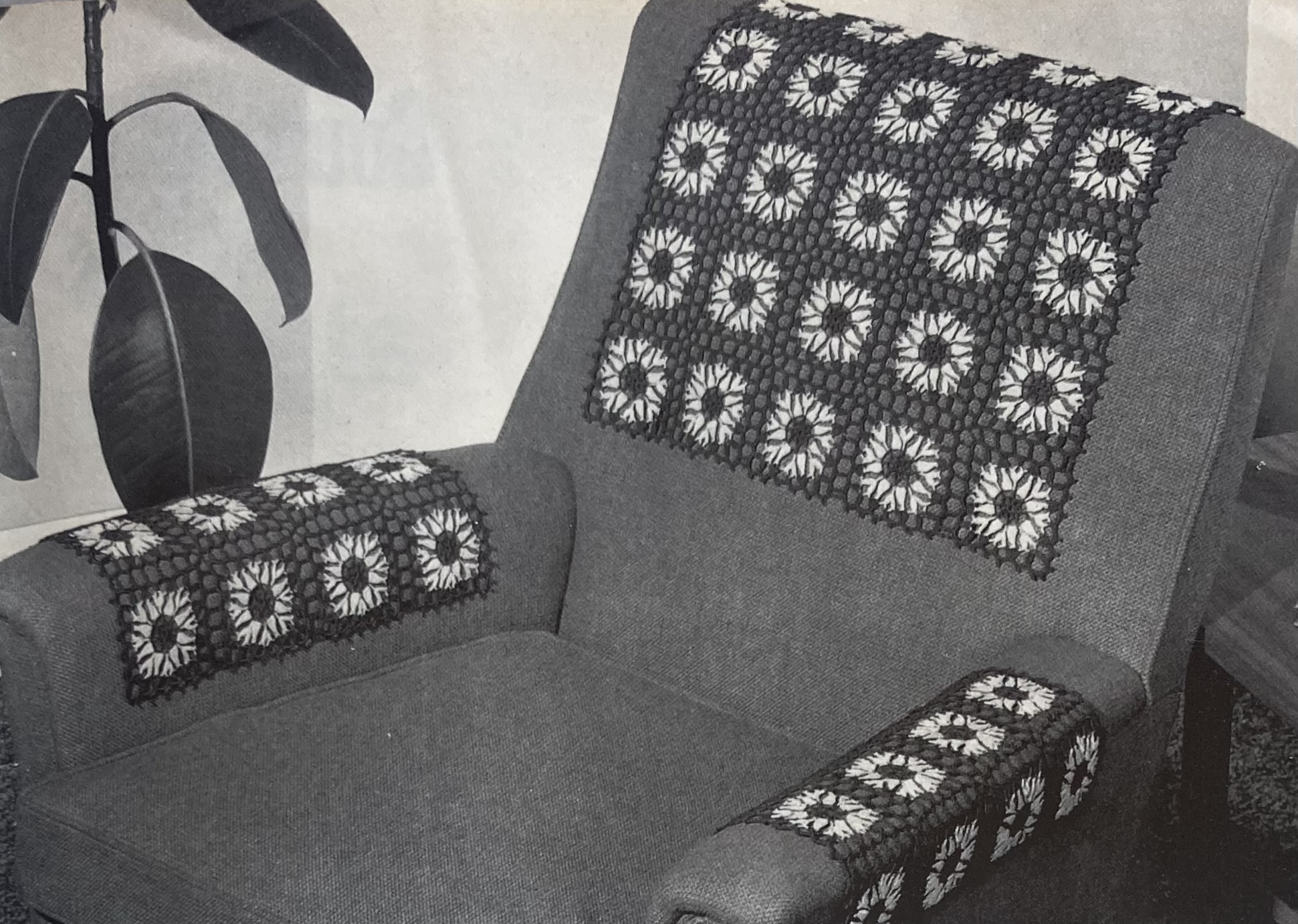
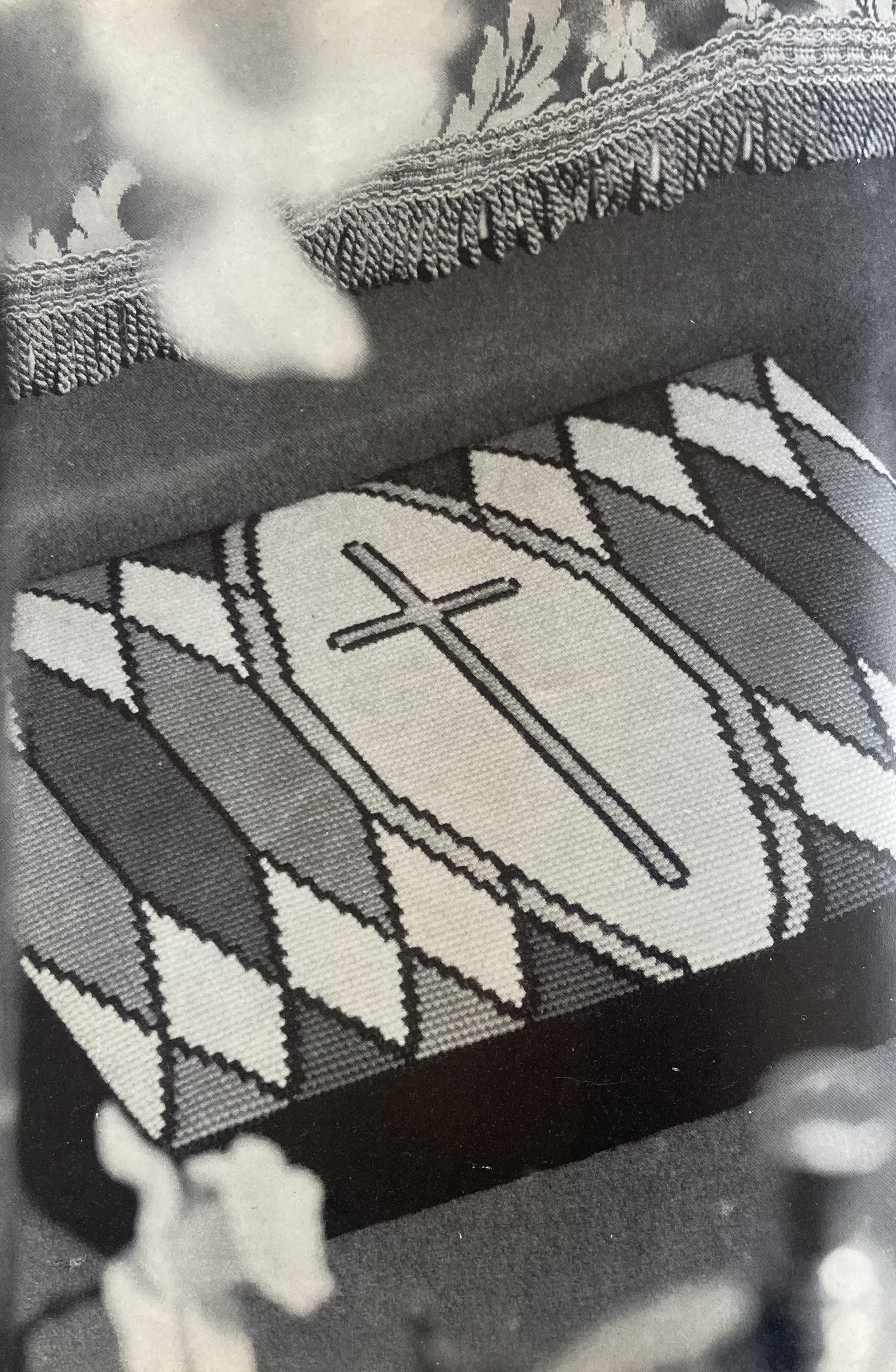
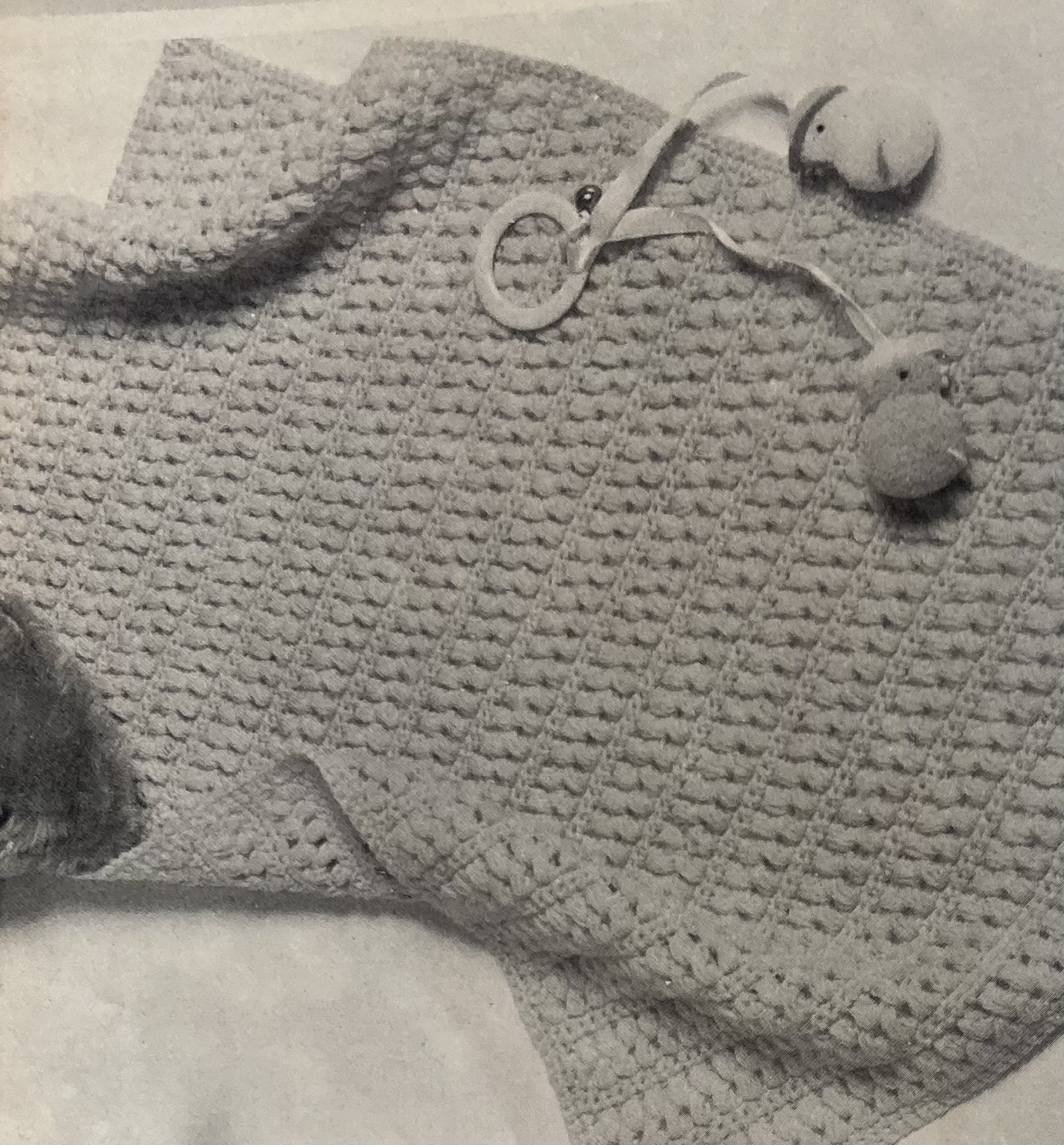
You can also crochet a quick baby blanket to use as a cover in the cot or pram, or a set of chair protectors with a flowery lace motif. Churchgoers can make a tapestry kneeler in “stained glass” effect for Easter, provided they work fast — Easter Sunday 1968 was on April 14th. The colours — two shades of blue, lemon yellow, red and gold — were probably quite pretty.

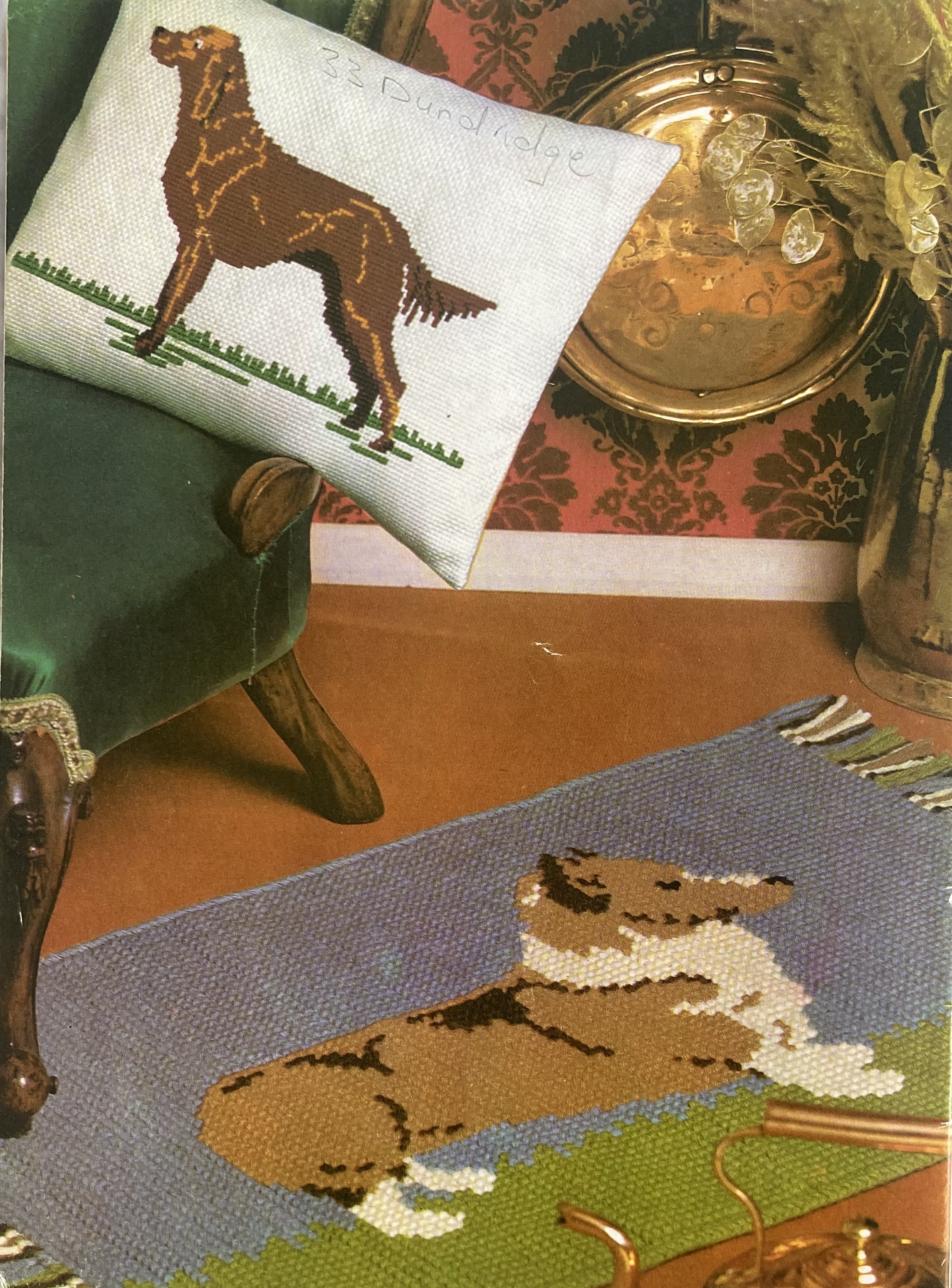
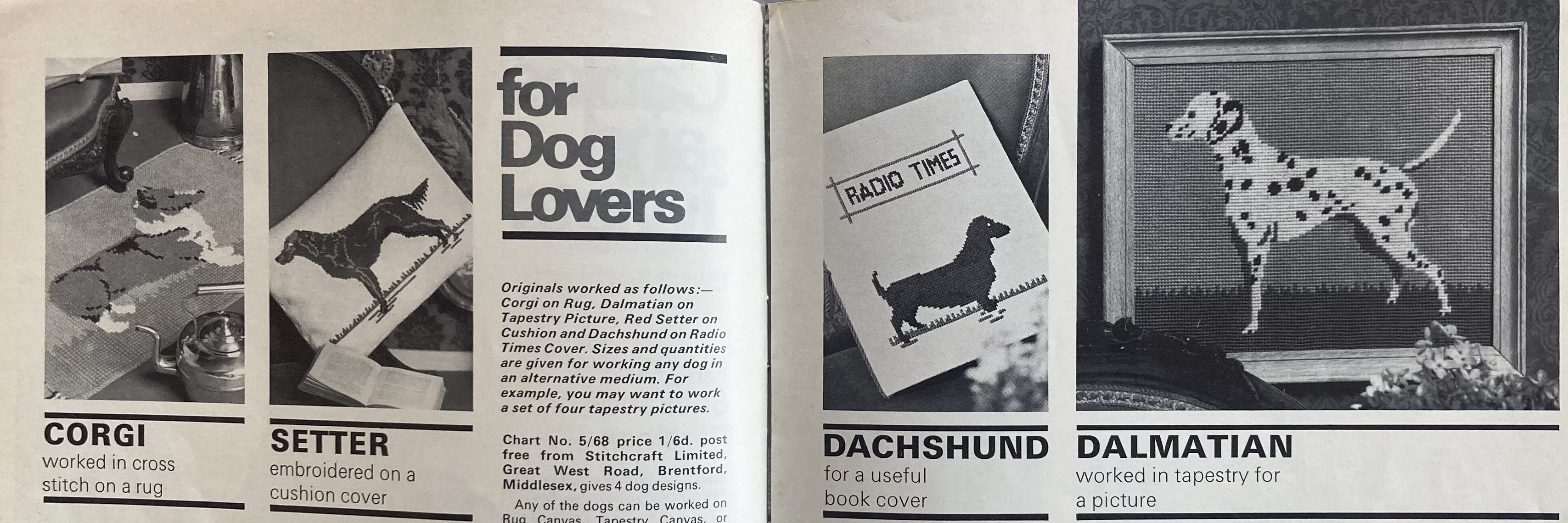
Plus, dogs! Besides the real live dog posing in the photos with the male model for that “country” effect, there are four projects for dog lovers: a cross-stitch rug with a corgi on it, a setter embroidered on a cushion cover, a cross-stitch dachshund for a book or “Radio Times” cover, or a tapestry dalmatian to hang on your wall. All of the pattern were included on one transfer, and all could be adapted to any medium (rug, tapestry or cross-stitch on Bincarette), so dog fans could go wild decorating their country homes.

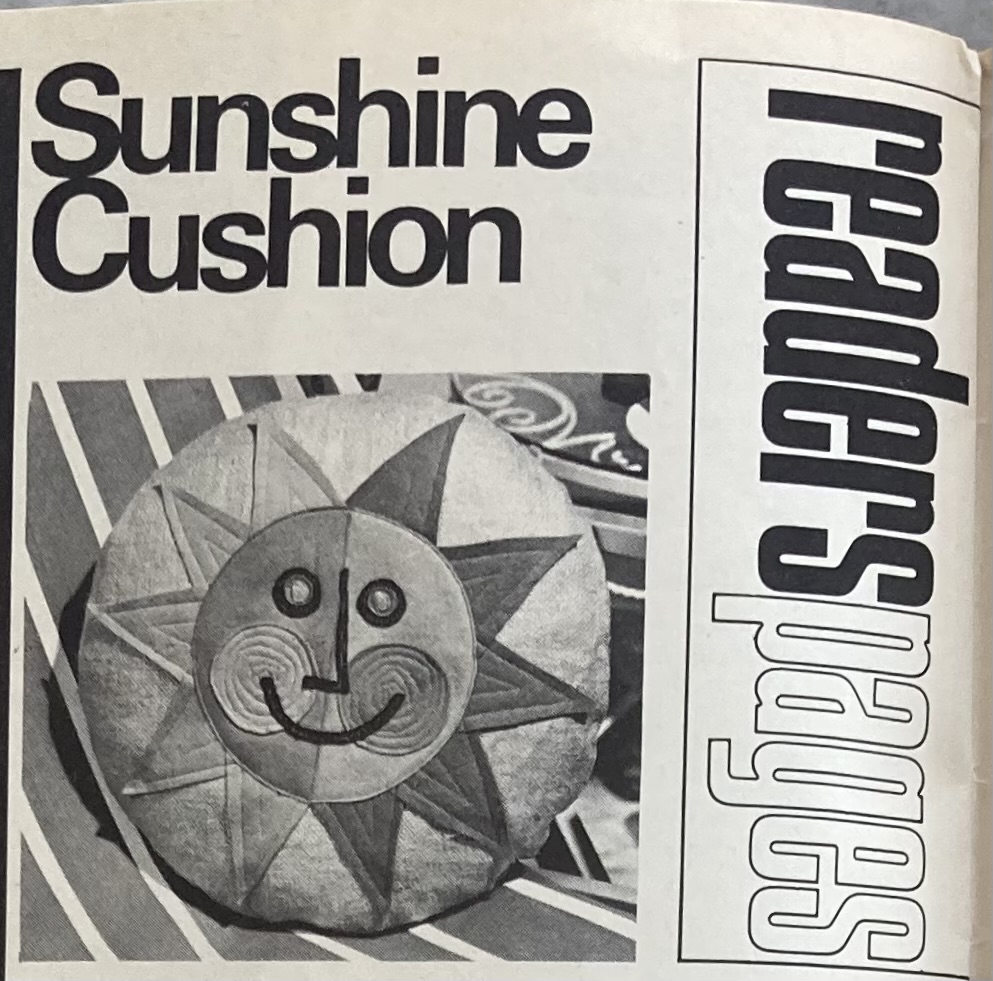
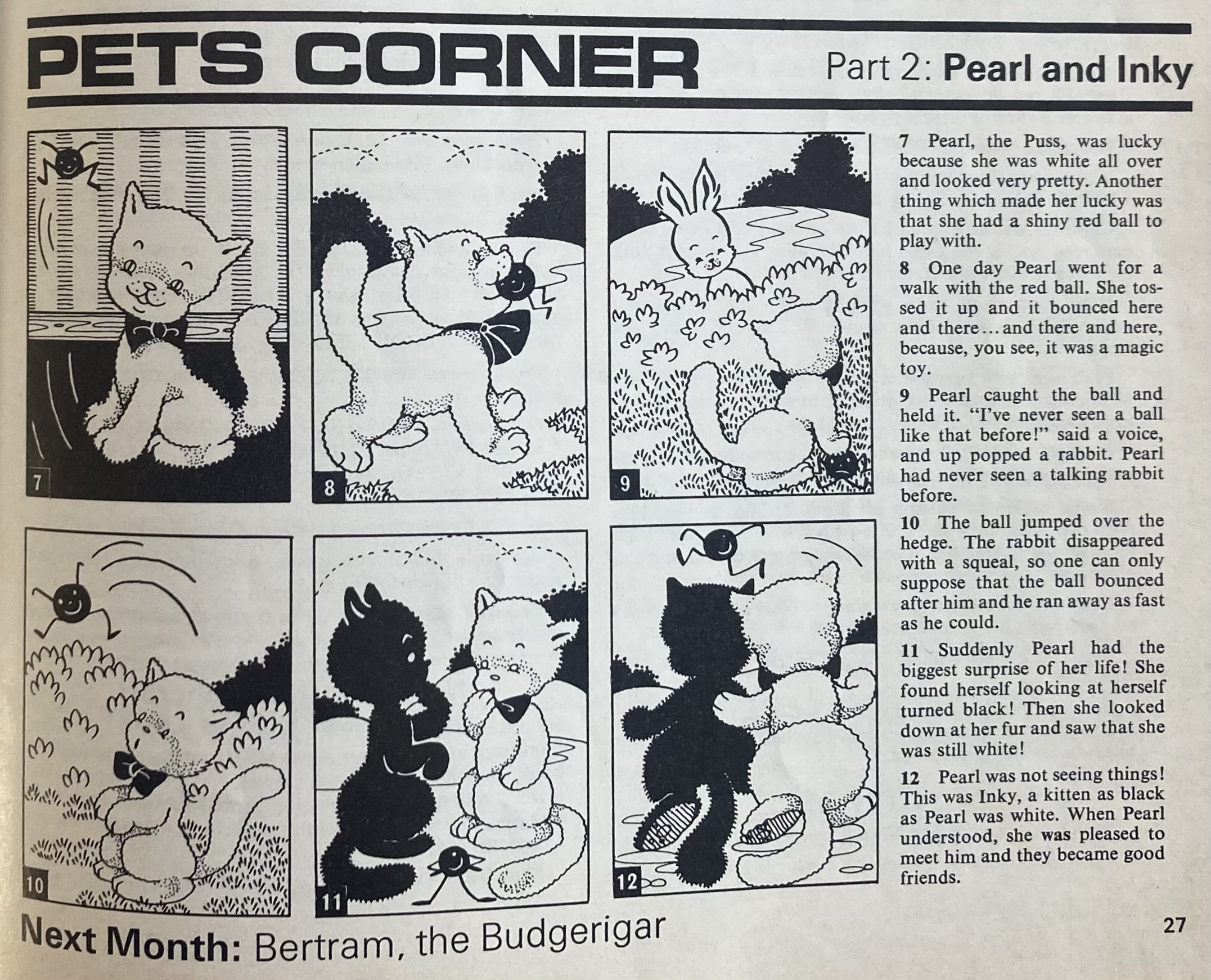
The Readers Pages feature a reprint of the “Sunshine Cushion” from June 1966, which I made in July 2024. It’s a great pattern and deserved to be reprinted! In the children’s comic, white cat Pearl and black cat Inky meet and become friends.

That’s all for this issue! I like the cover cables and the Princess top, but I’m working on other projects that I would like to finish, so I’ll probably embroider the hedgerow flowers onto a vegetable bag. Or maybe unravel a half-finished cardigan that I’m unhappy with and turn it into the long-line cable cardigan.

March 1968: Bold and Bright

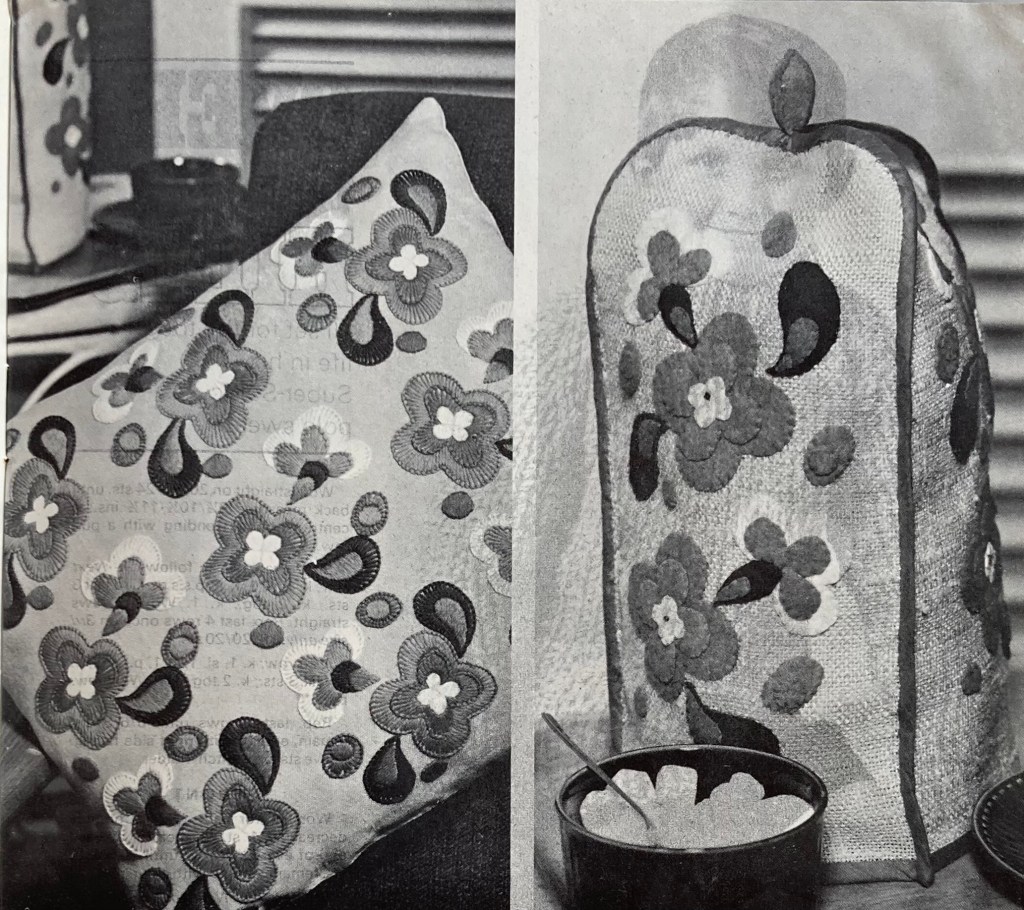
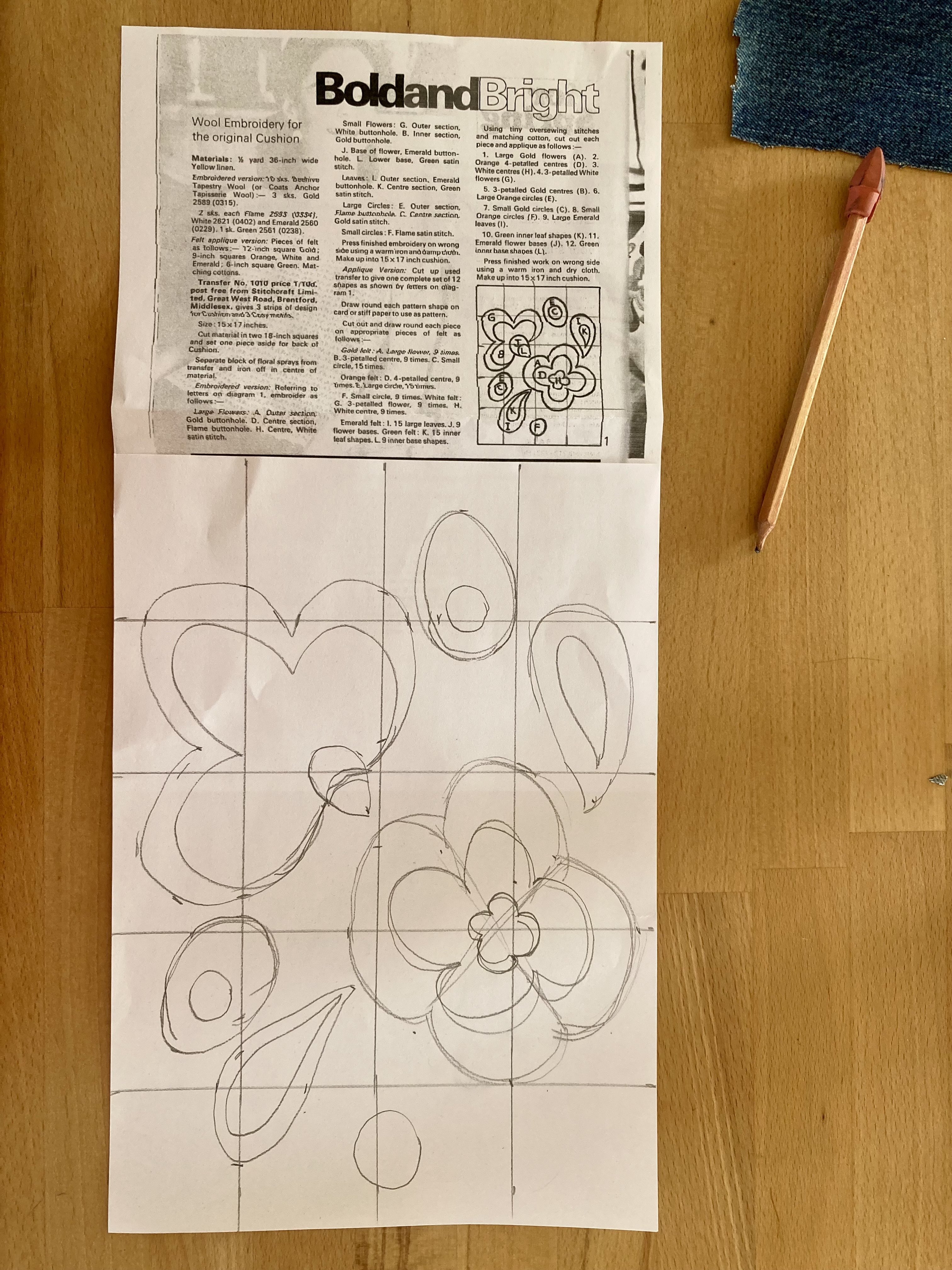
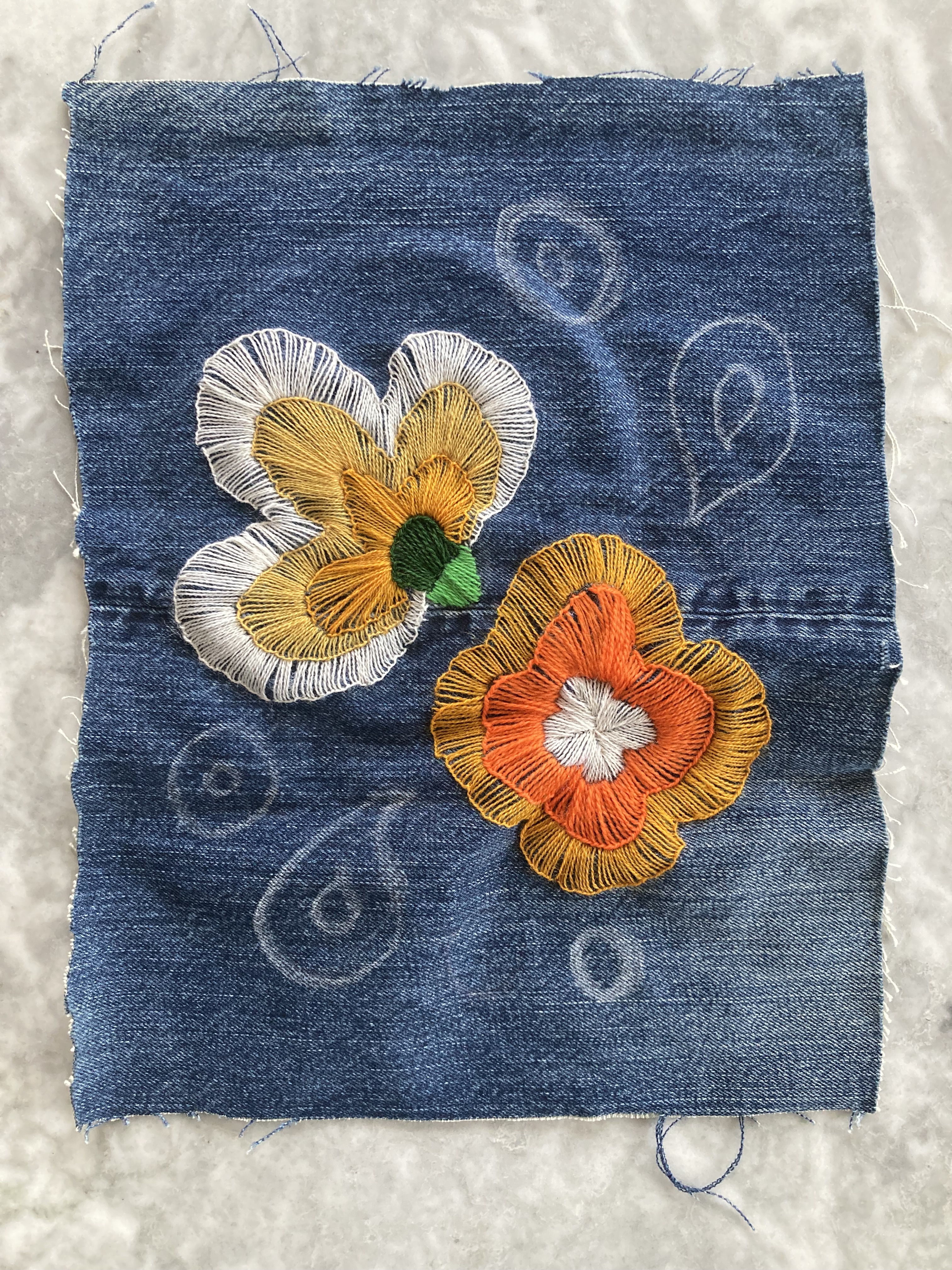
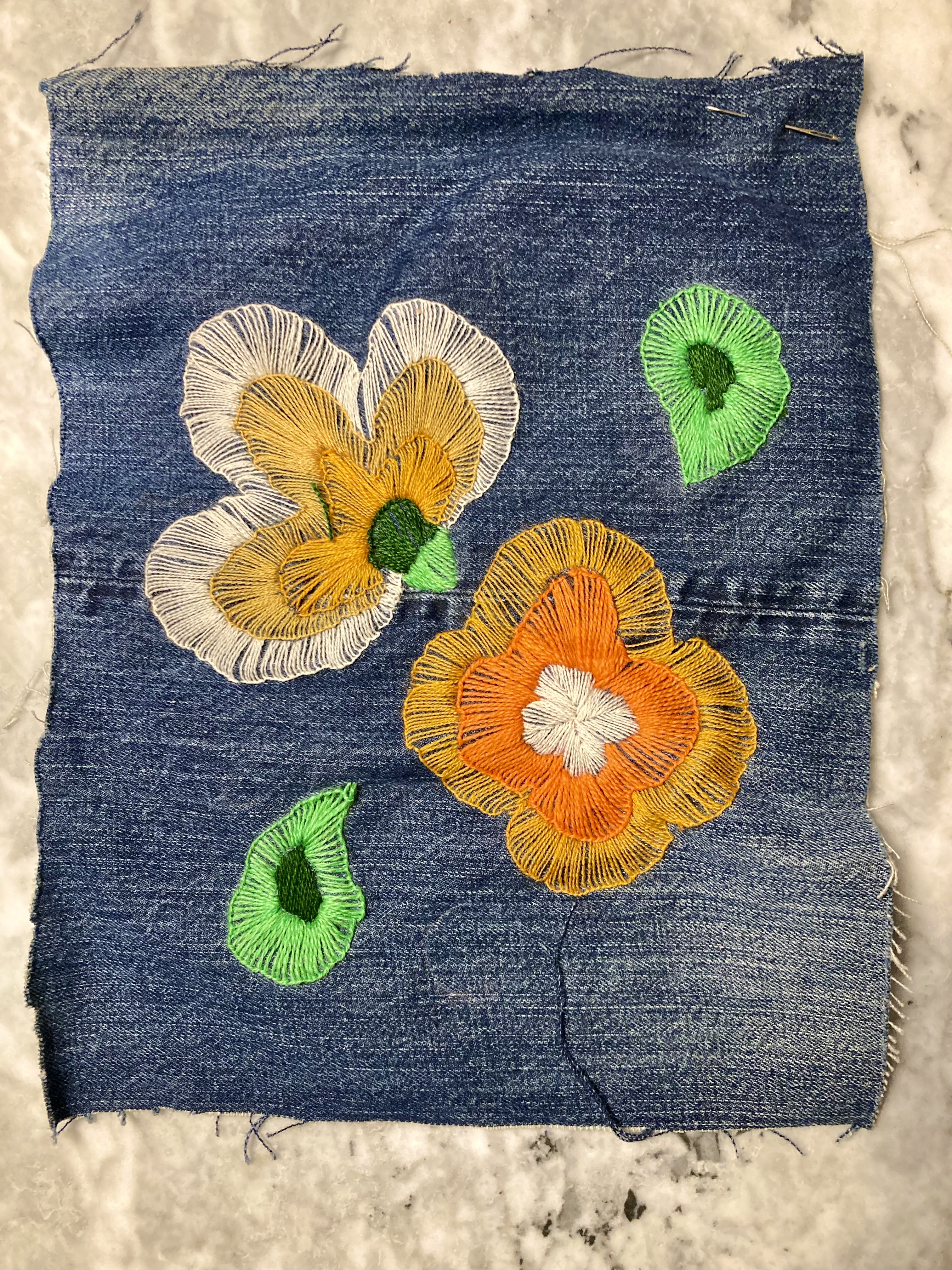
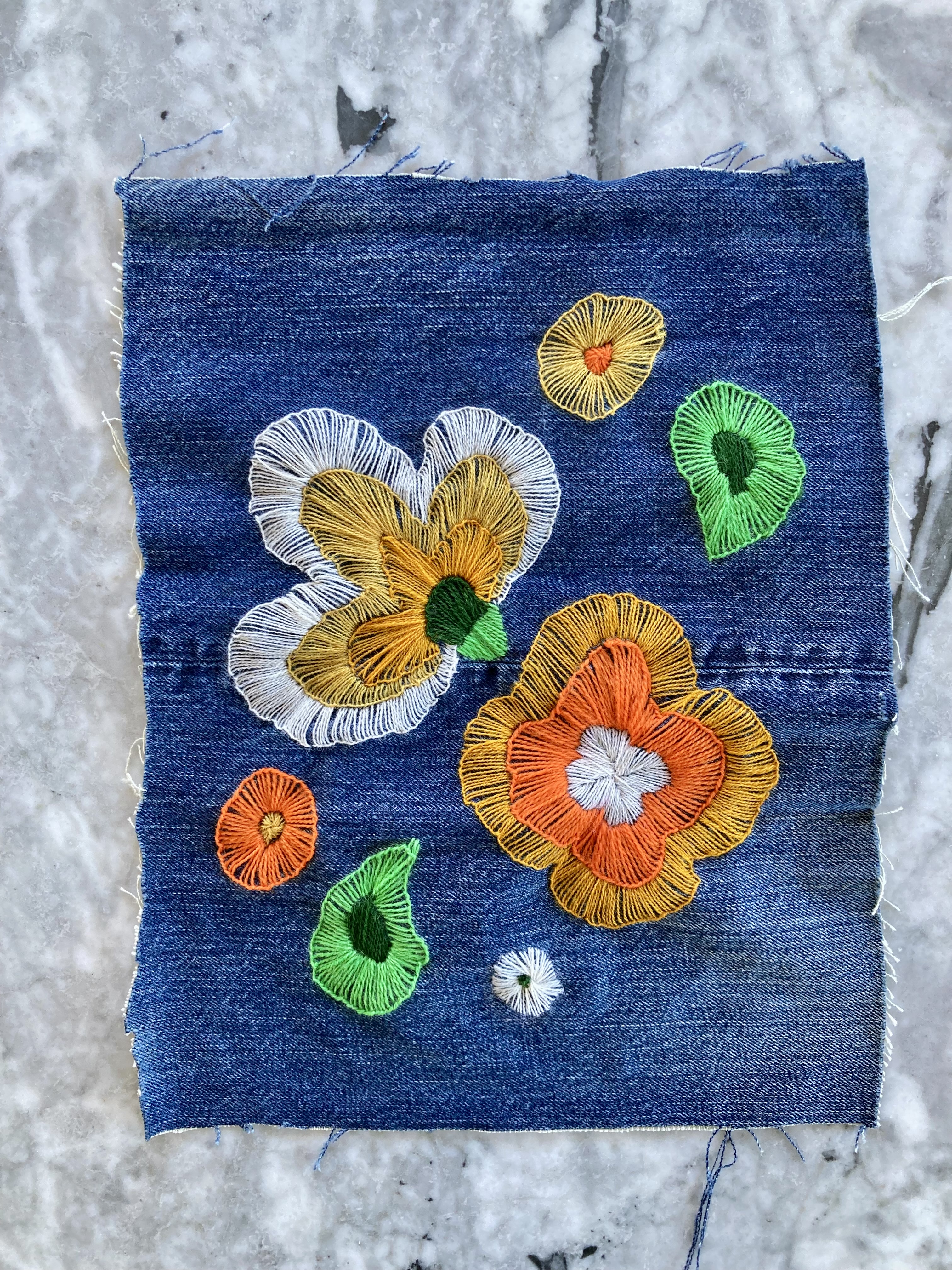
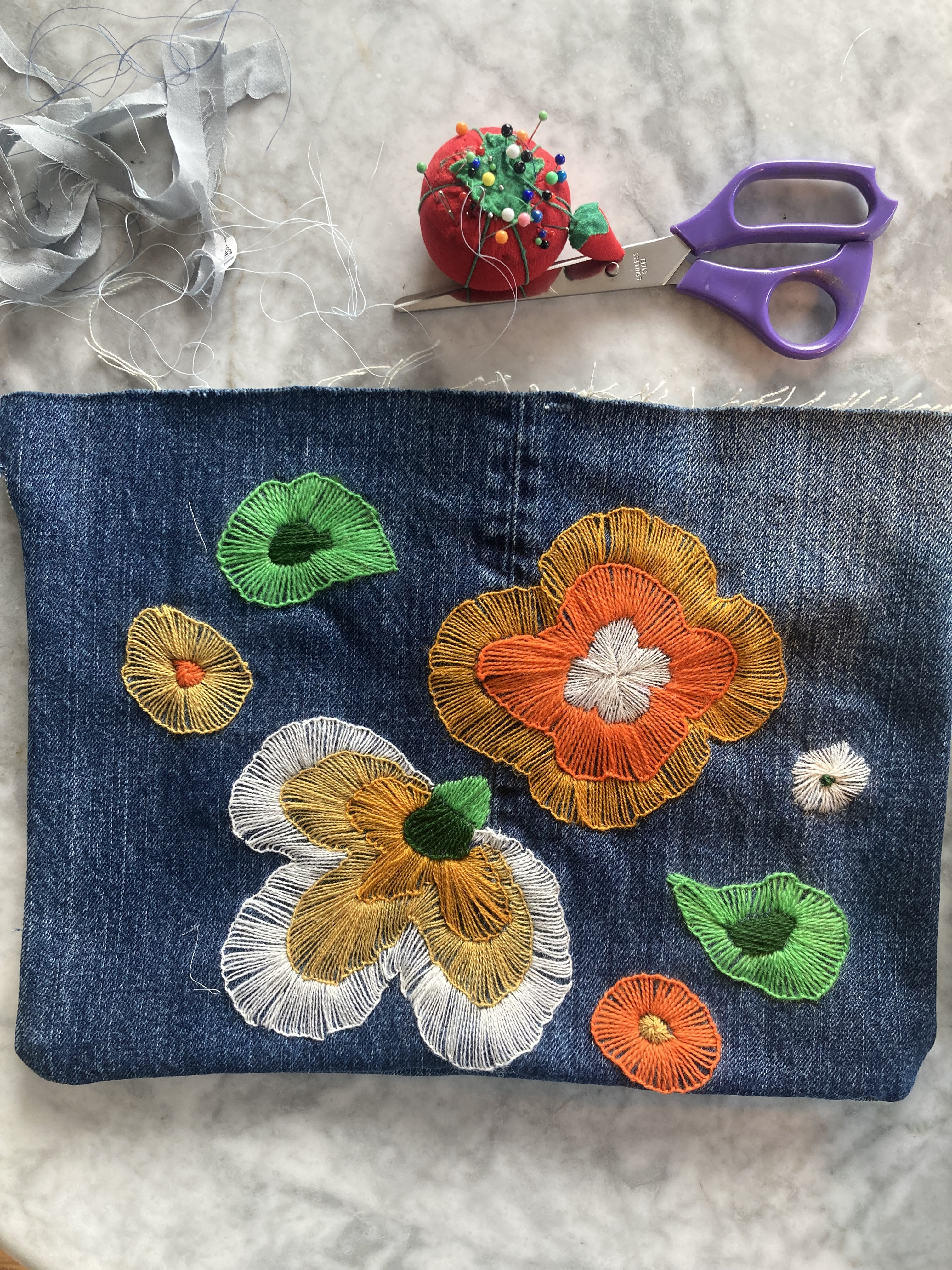
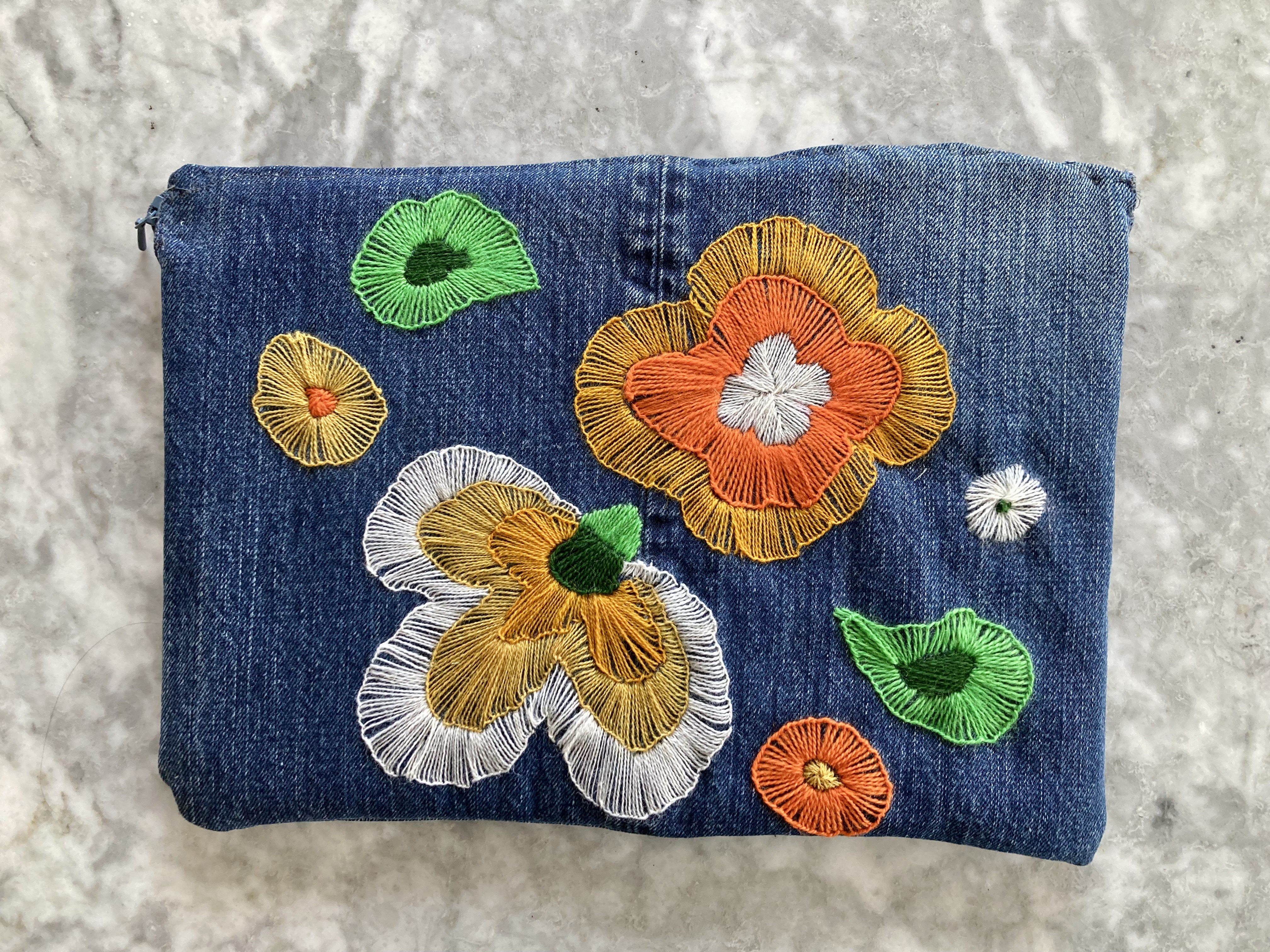
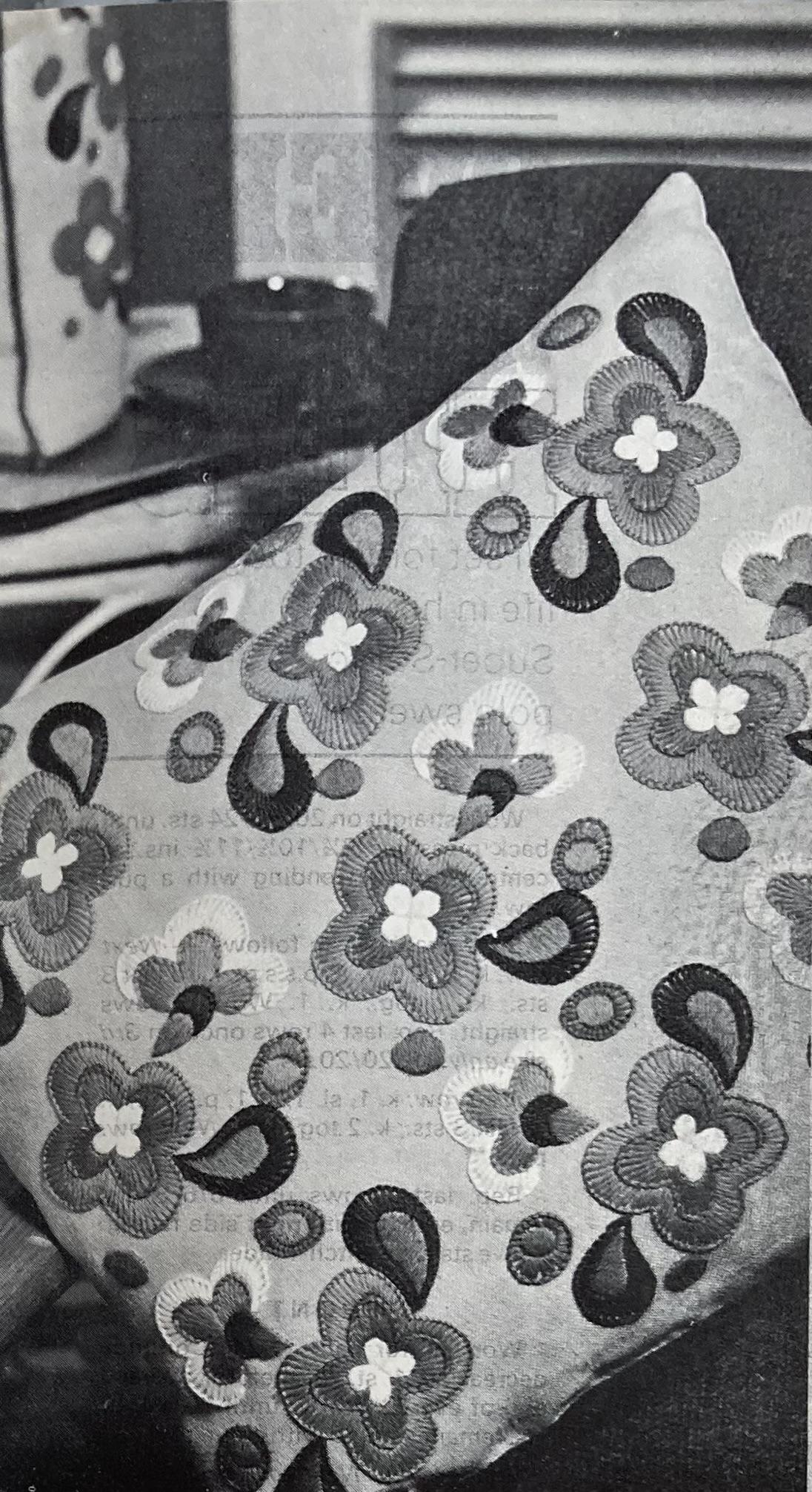
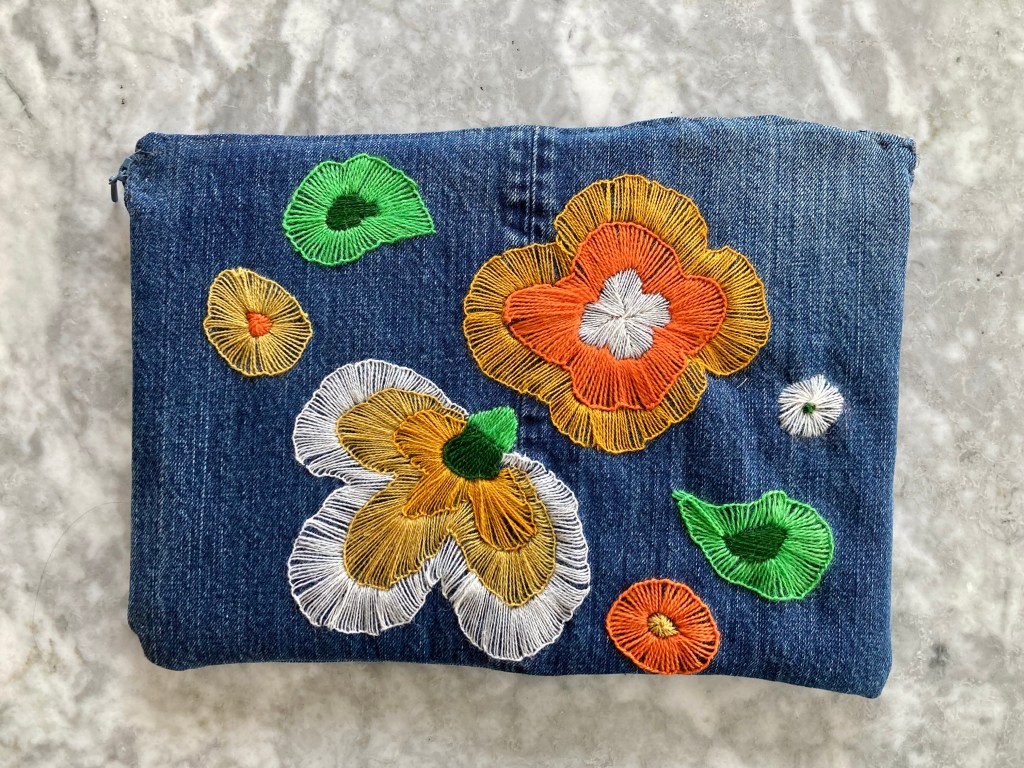
There were some nice knitting designs in the March 1968 issue of Stitchcraft as well as a very 1960s “bold and bright” embroidery/appliqué design. Captioned “The Modern Look for Embroidery”, it featured flower motifs in a sort of, I don’t know the word — cartoon style? The opposite of delicate and ornate. You could embroider them onto a cushion or appliqué them onto a coffee cosy. I have more cushions than sofas and do not need a coffee cosy, but a new laptop case would be useful and pretty.

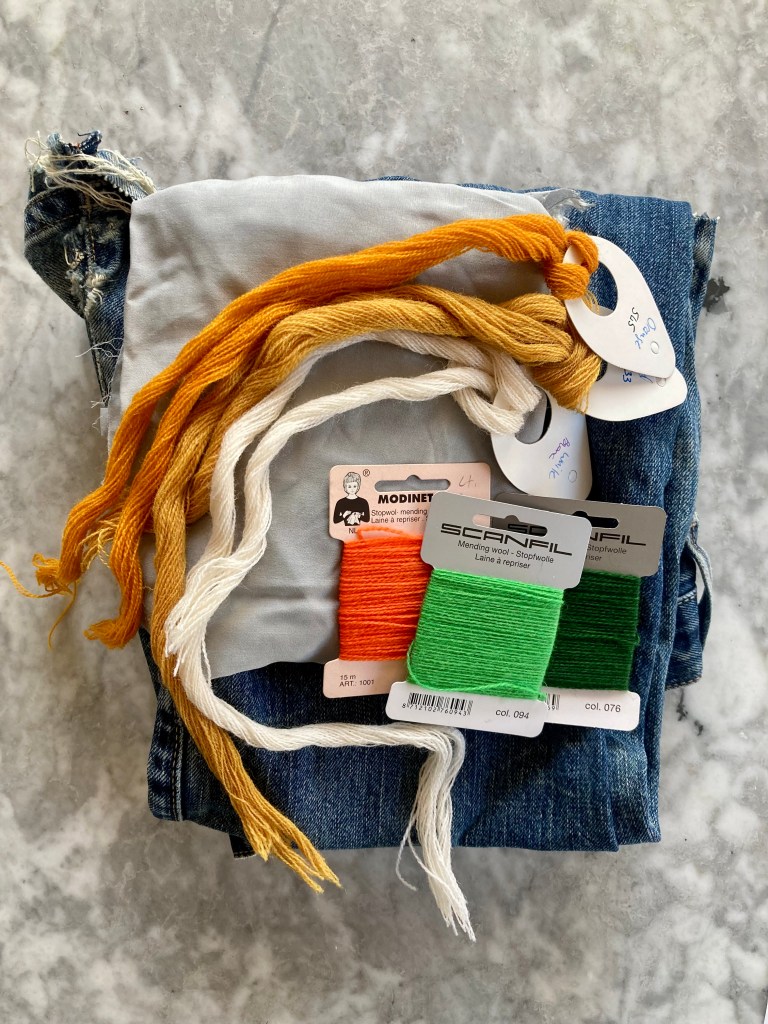
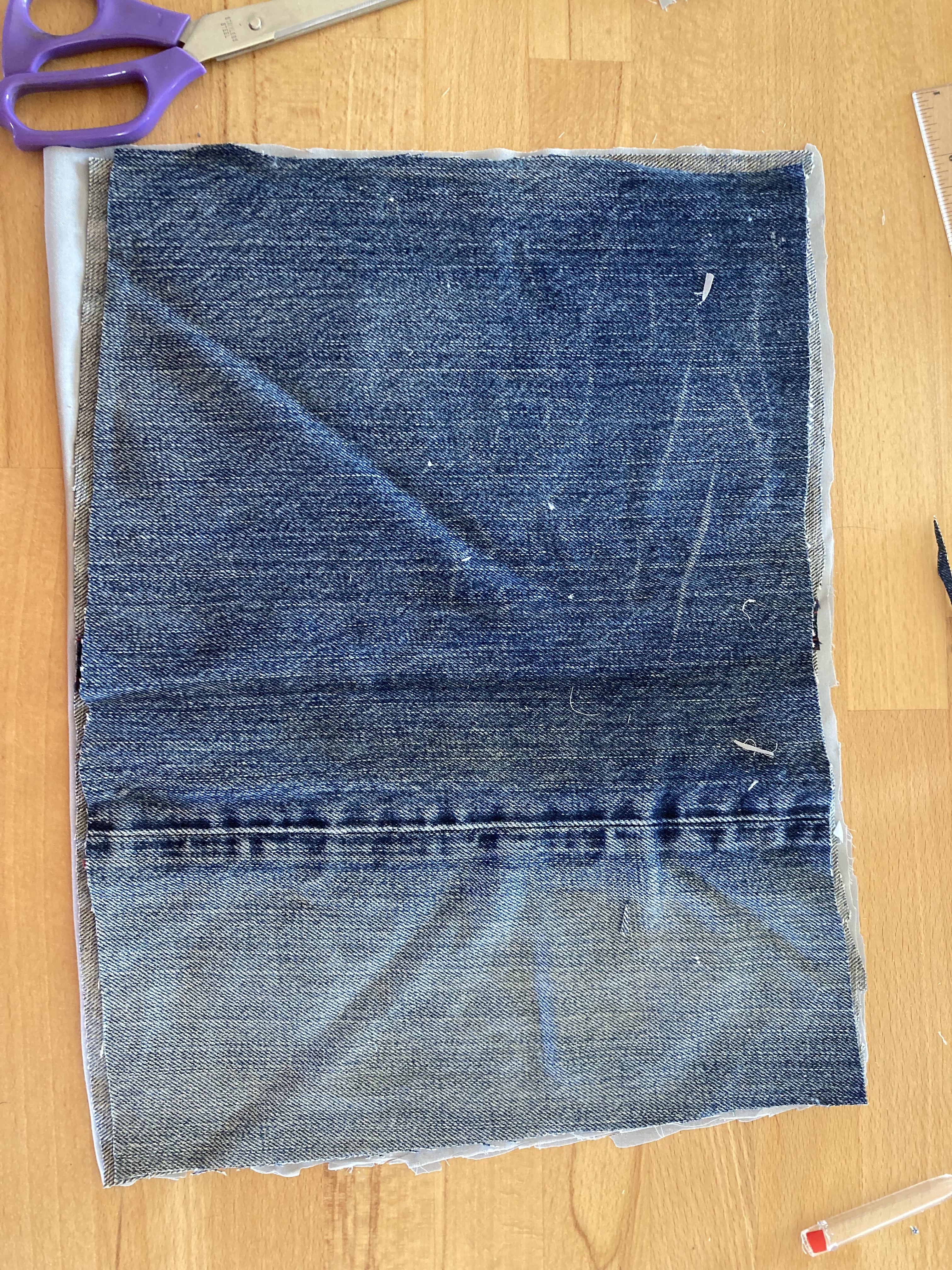
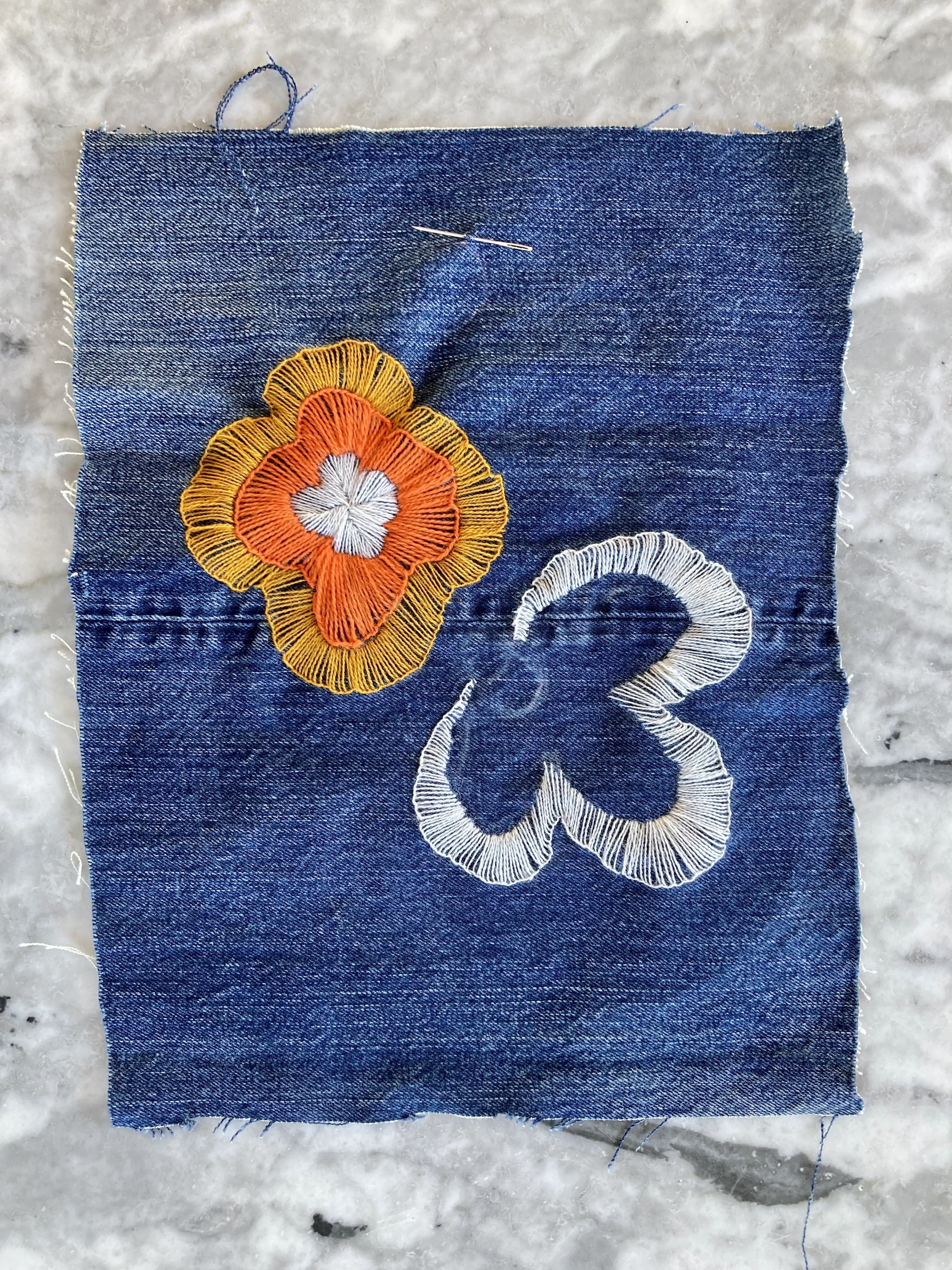
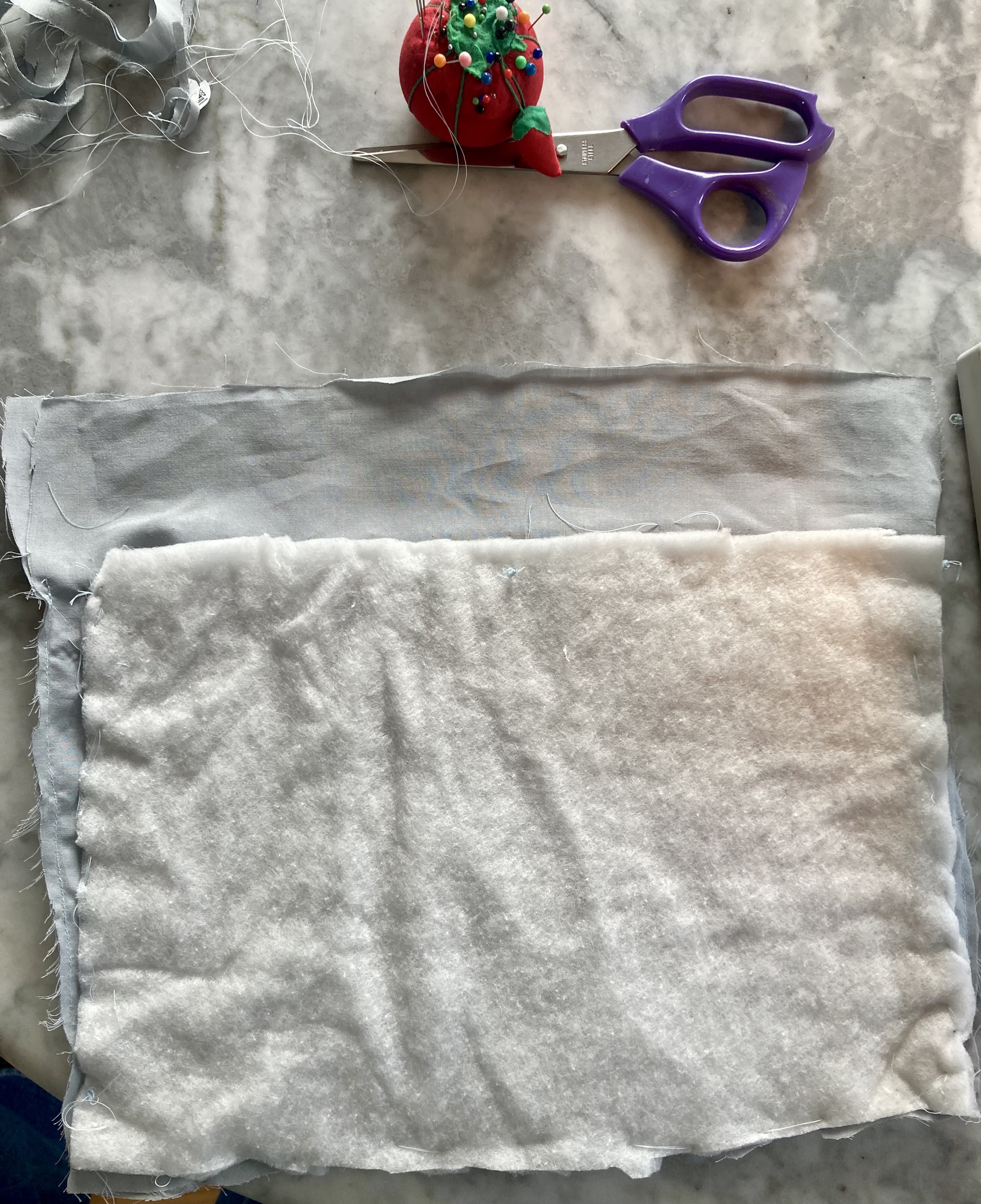
In keeping with the spirit of upcycling / using up scraps before buying new products, I decided to make the embroidered version, since I had some wool embroidery thread in the appropriate colours (gold, orange, white and two shades of green) left over from other projects. I had lots of appliqué felt too, but not the right colour scheme. Still had plenty of denim from an upcycled pair of jeans (original would have been yellow furnishing linen), lining fabric from the fabric drawer and quilt interlining for padding. All I needed to buy was a spool of thread and a zipper.

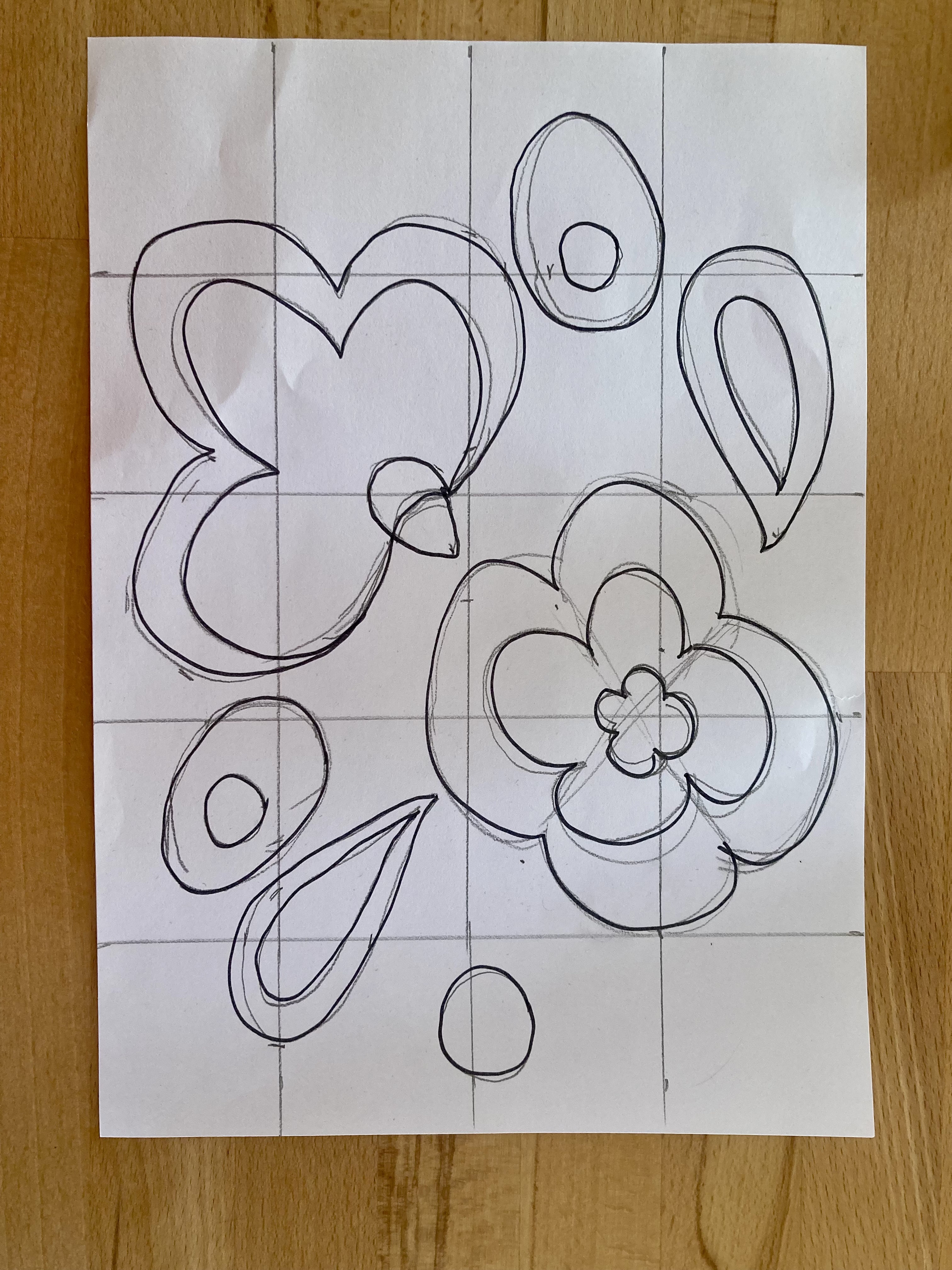
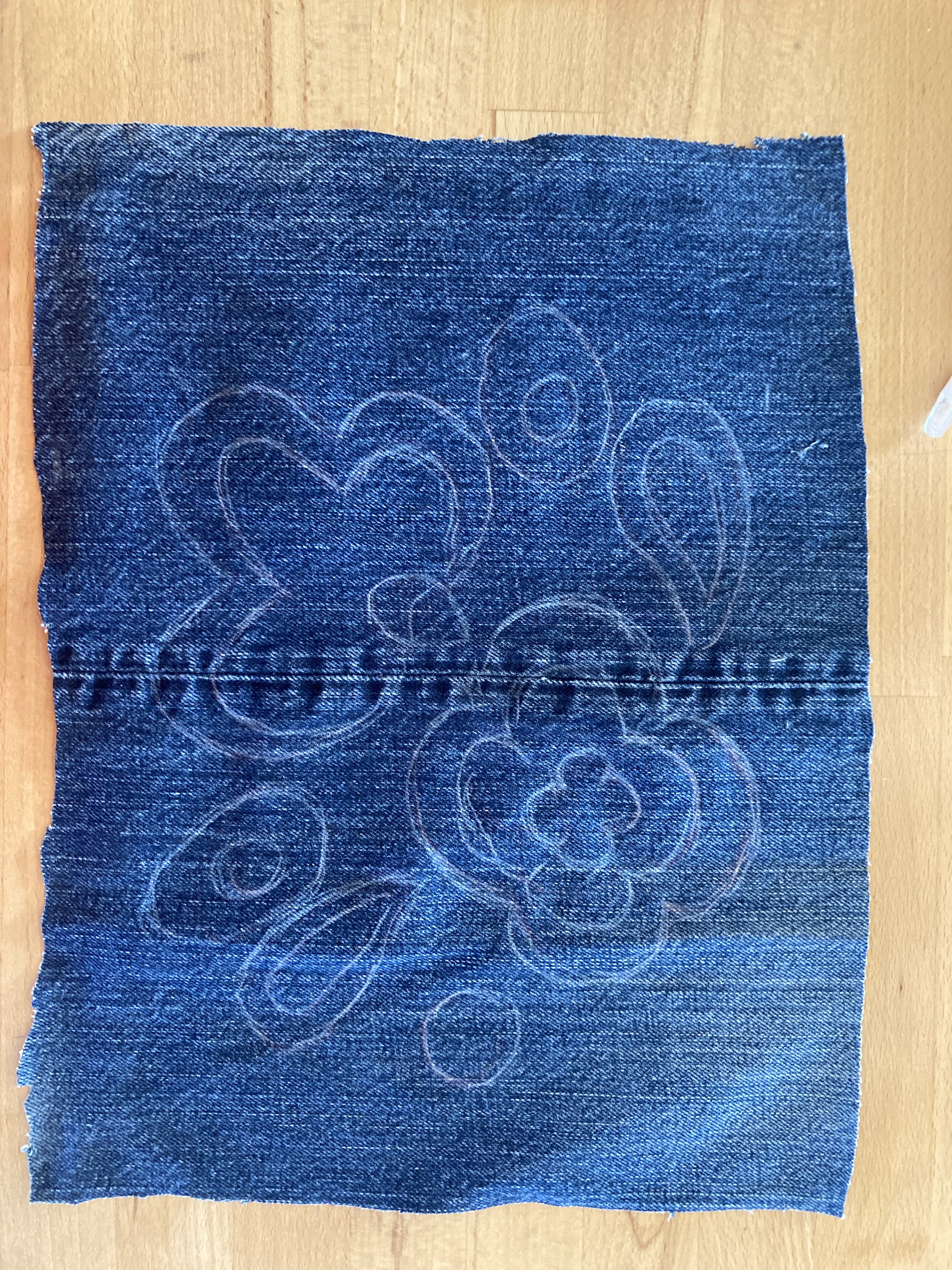
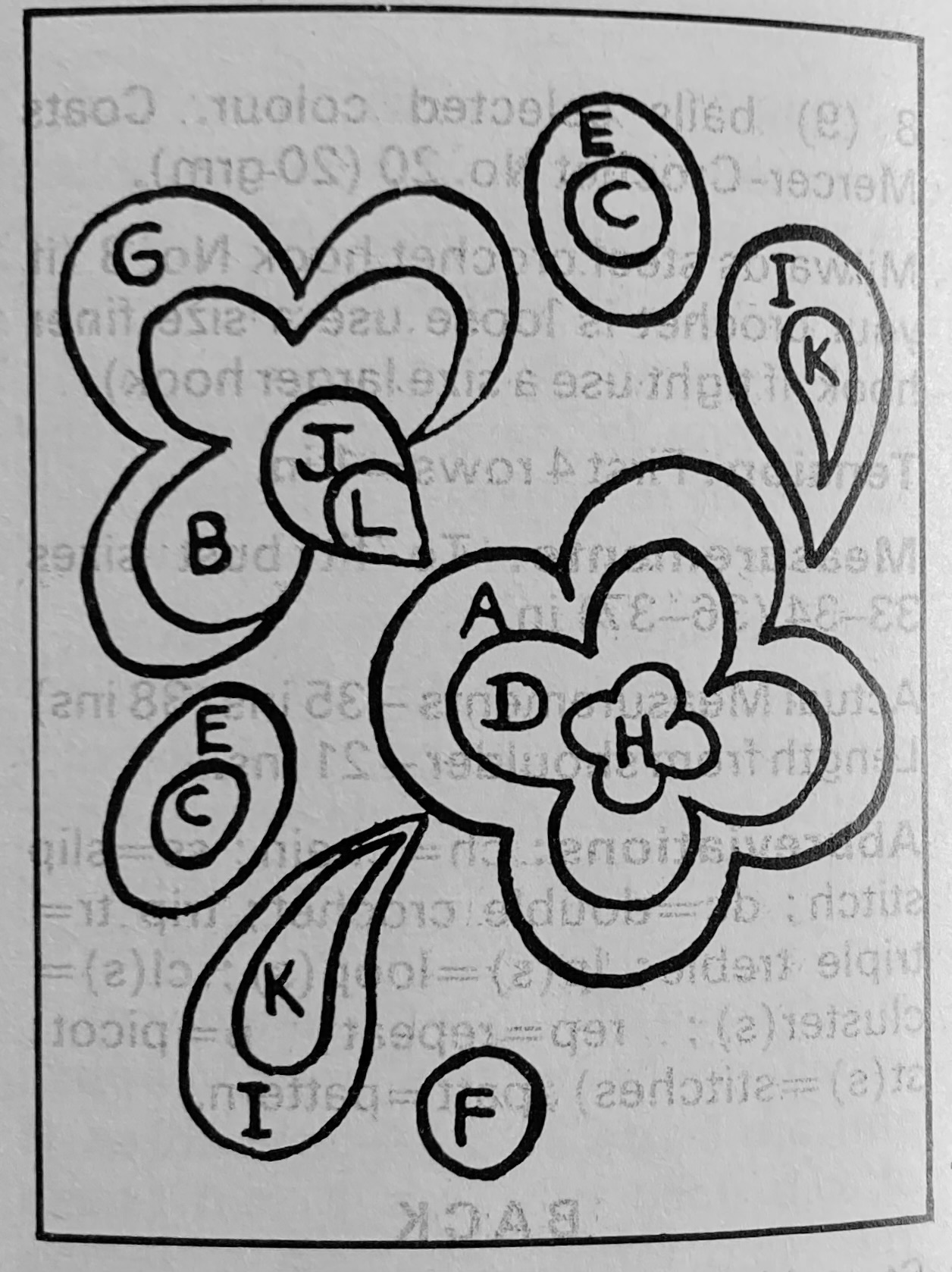
Als always, I would have had to send away for the transfer in 1968, but there was a helpful schematic in the magazine which I transfered over to paper and then onto the denim, sizing it up to fit. Transfering the design to the denim was hard, even with a white tracing pencil. I had to go over it with chalk and then of course keep going over it again and again because the chalk wiped off during the embroidery. One of these days I will try using solvent paper.

The embroidery itself was not hard, but lots and lots of buttonhole stitch over a large area. I had two kinds of embroidery wool and one kind (the two shades of gold and the white) was very fine and thin. There would have been no way to make a proper buttonhole stitch where the threads like right next to each other. So it came out somewhere between buttonhole and blanket stitch.

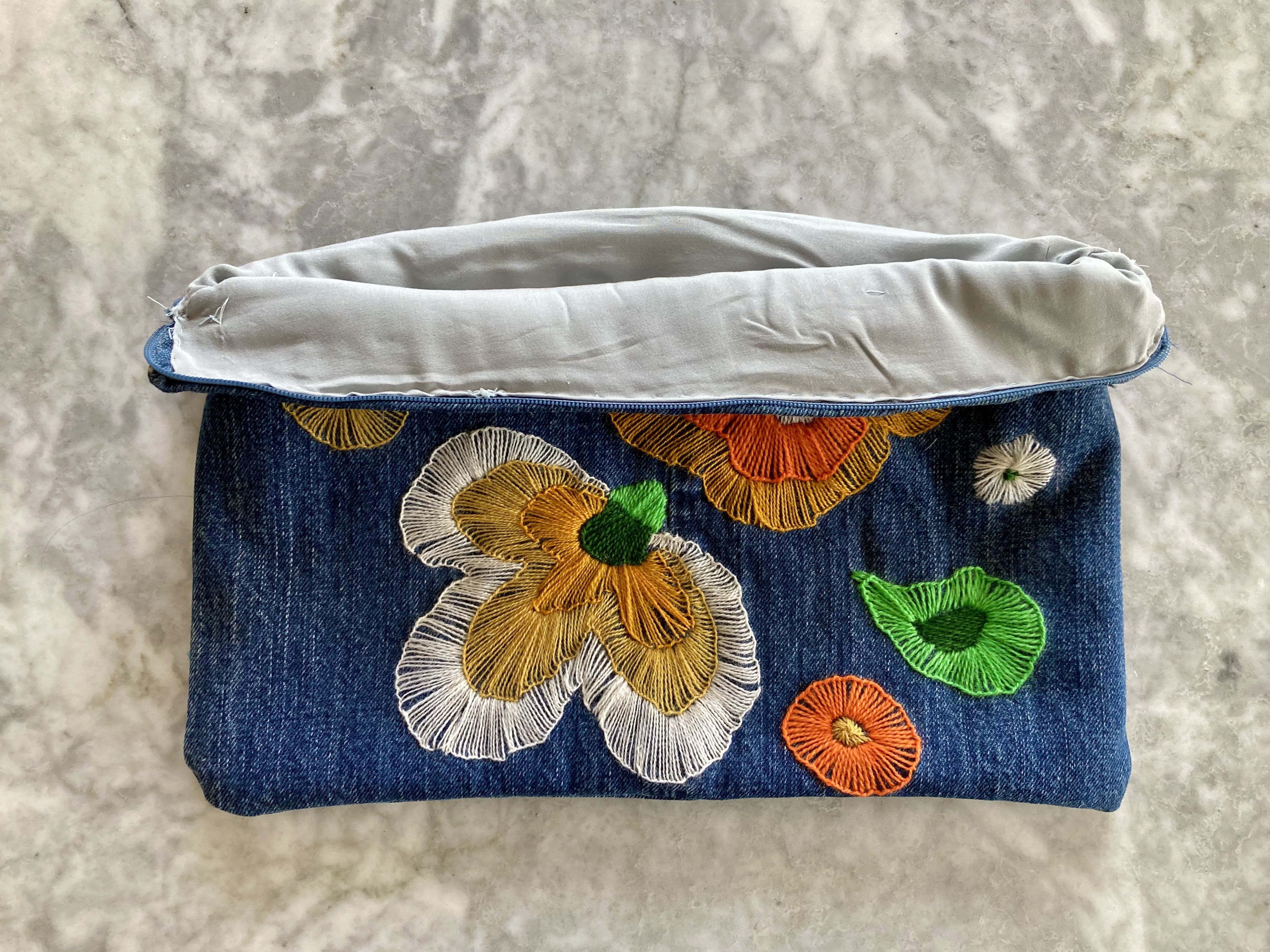
The hardest part, as always, was setting in the zipper. I try not to use profanity on this blog, so I will just say that I was greatly frustrated. Also, why am I utterly incapable of cutting or sewing a straight line? It is a rectangle…. it is not difficult… I measured constantly in all directions … I have one of those quilting mats with measuring lines on it… I don’t know what my problem is. In the end, I just sewed the zipper in by hand, which was far neater and easier than doing it on the machine. I tacked the lining on by hand as well.

When it was finally finished and I had successfully managed to not throw either the project or my sewing machine out of the window, I realised two things: 1) in spite of the deep frustration and the hours (yes, plural) spent trying to get the zipper in, the upper edge (zipper edge, of course) was totally crooked and 2) the motif was actually meant to be repeated smaller and multiple times across the fabric, not just once and big. No wonder the buttonhole stitch was so hard to do correctly… Yes, there is a photo of both cushion and cosy in the magazine. No, it somehow didn’t dawn on me in spite of consulting the pattern frequently. No, I don’t know what my problem is.

In spite of that, it’s…. not bad? I mean, functionally it’s fine. My laptop fits in it perfectly, the zipper works (hallelujah), the padding is a good thickness, and denim is a good, tough, washable fabric for laptop cases. The design is indeed bold and bright, and quite cheerful. The crooked edge annoys me, but I could re-do it. Still, somehow I feel this project is not quite right. Maybe I will fix the crooked edge and try to sell it? Give it as a gift to someone with the same size laptop? Keep it and let it grow on me? We’ll see.

Out of Order: Fashion Switch, September 1967

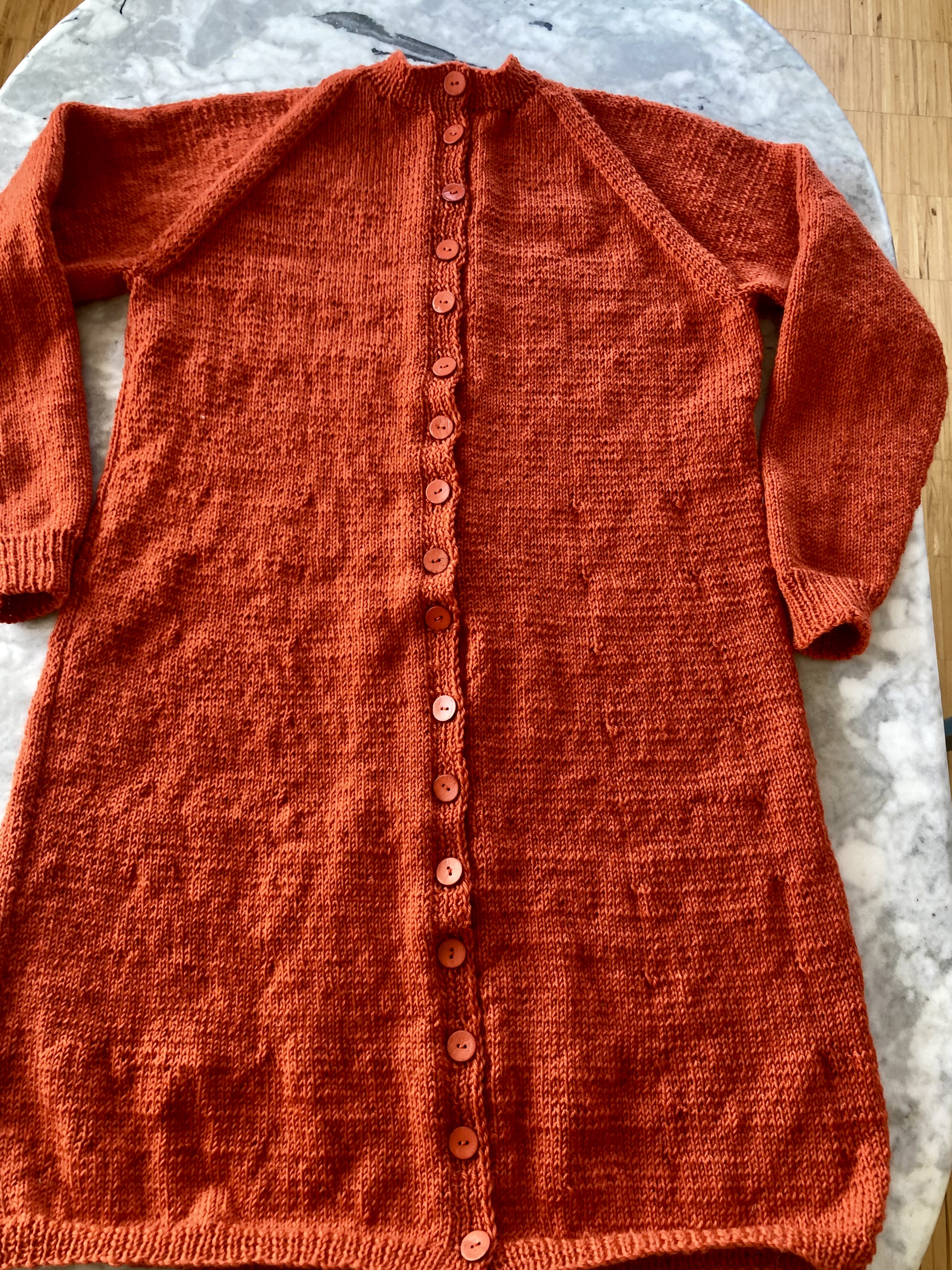
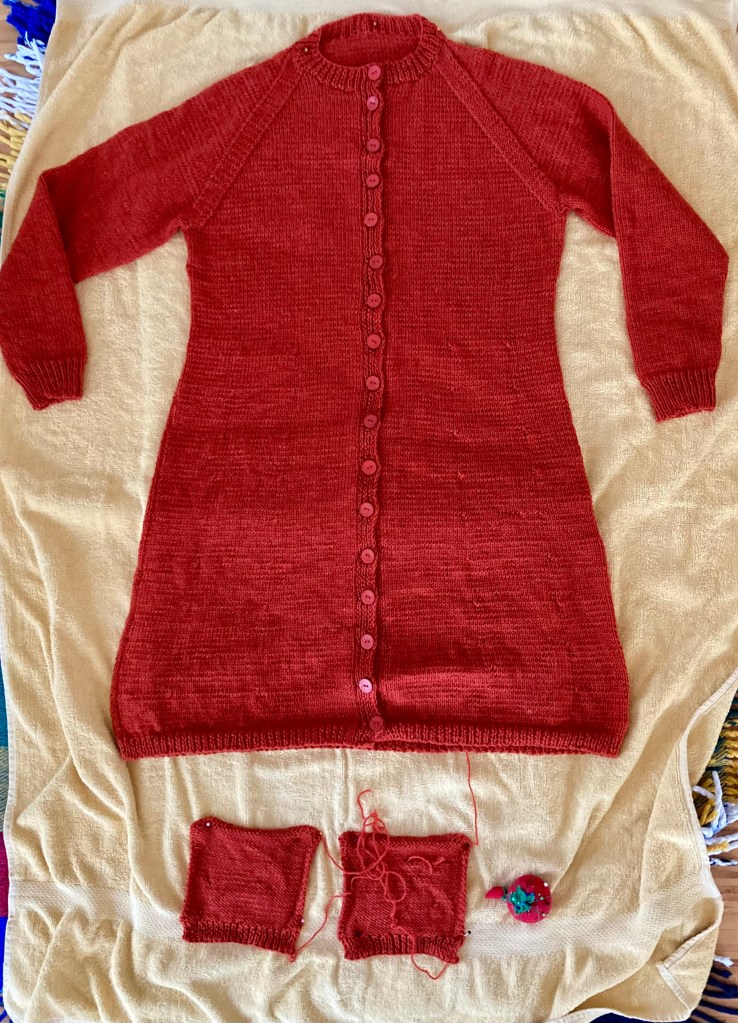
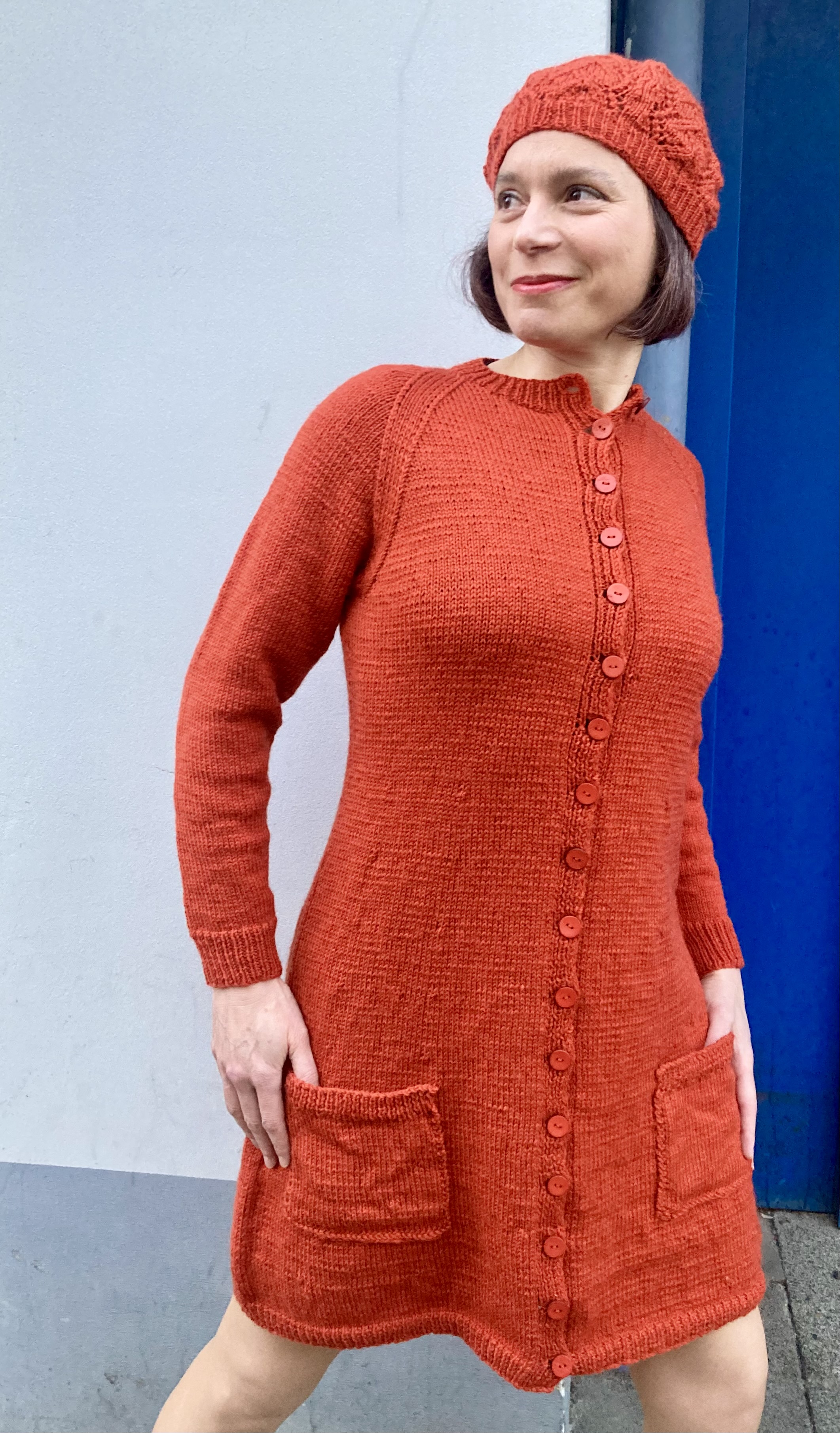
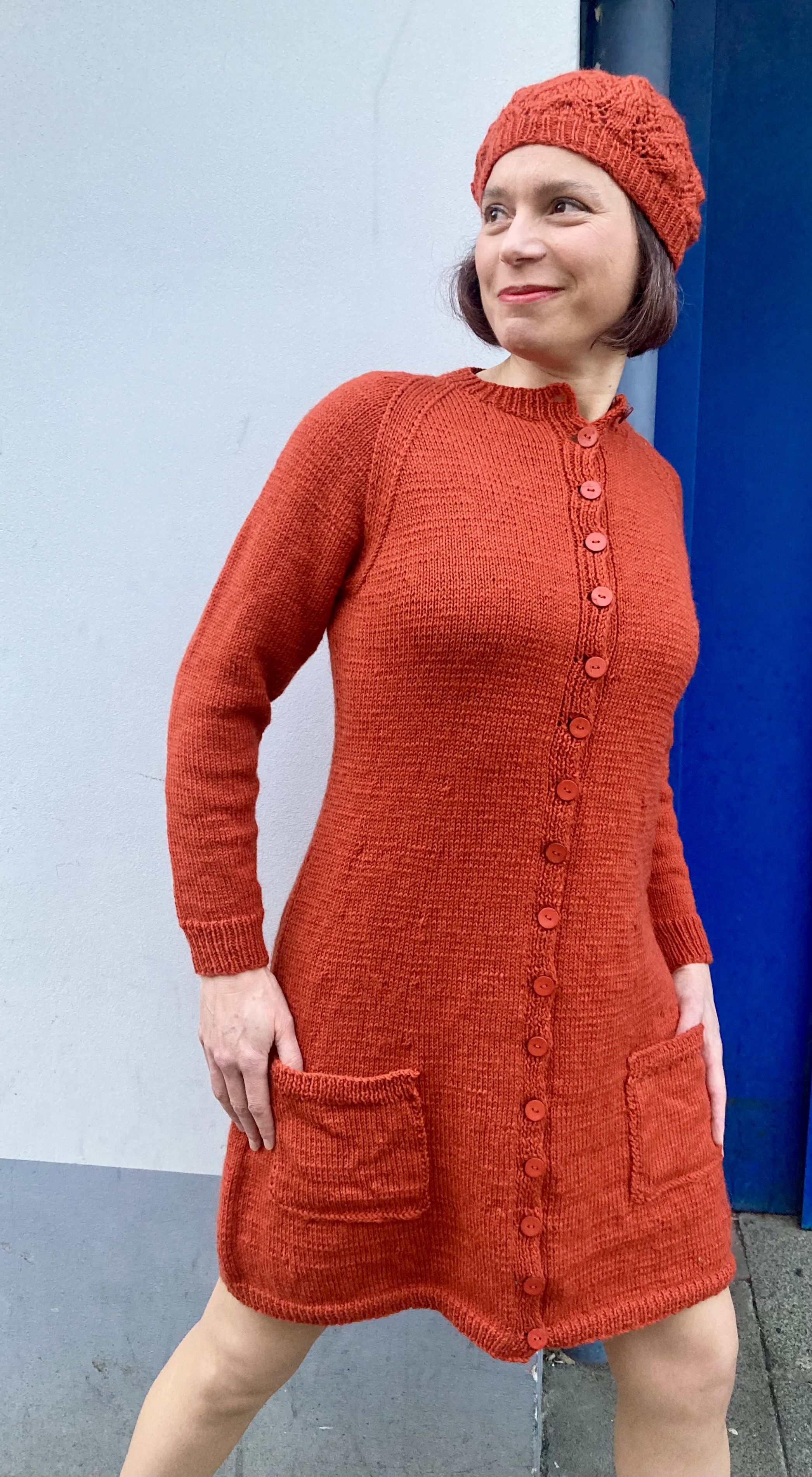
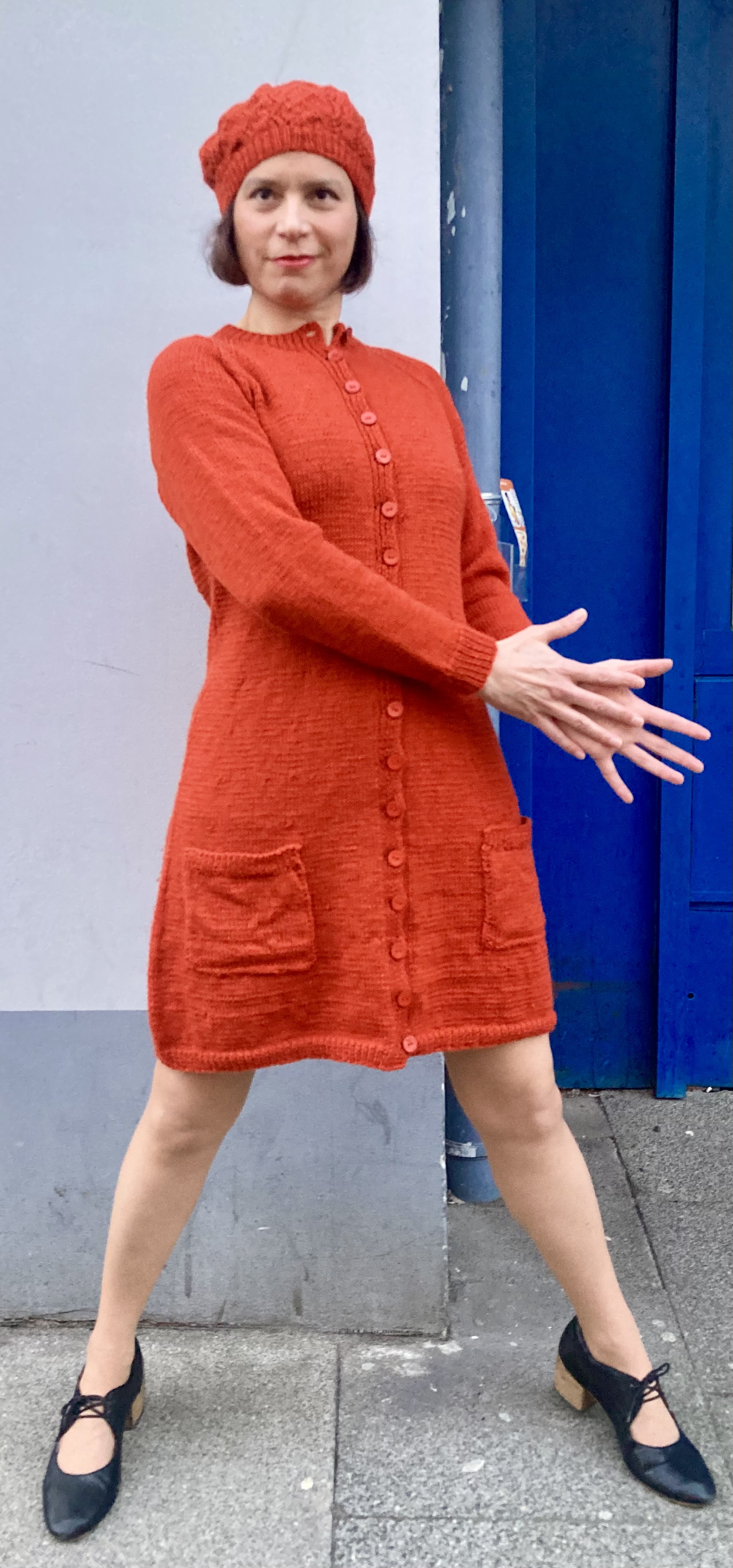
I have finally finished the magnificent cardigan dress from September 1967!

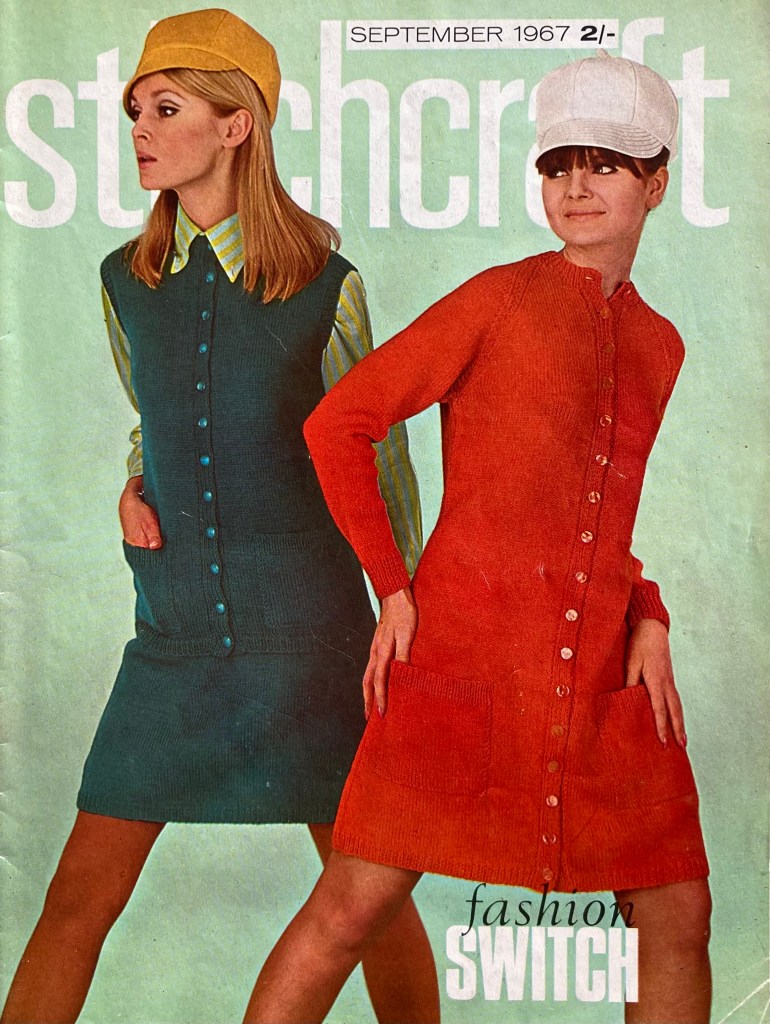
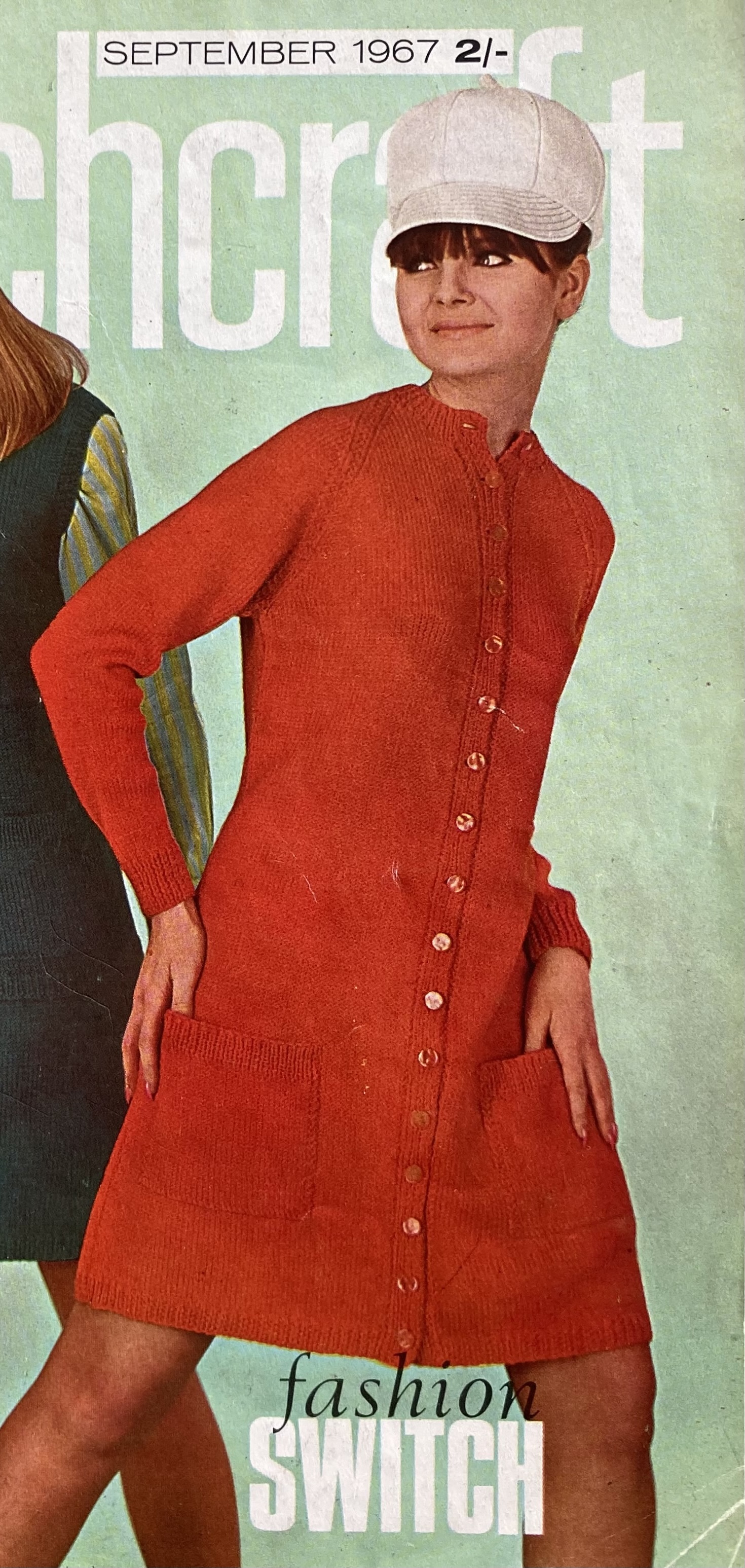
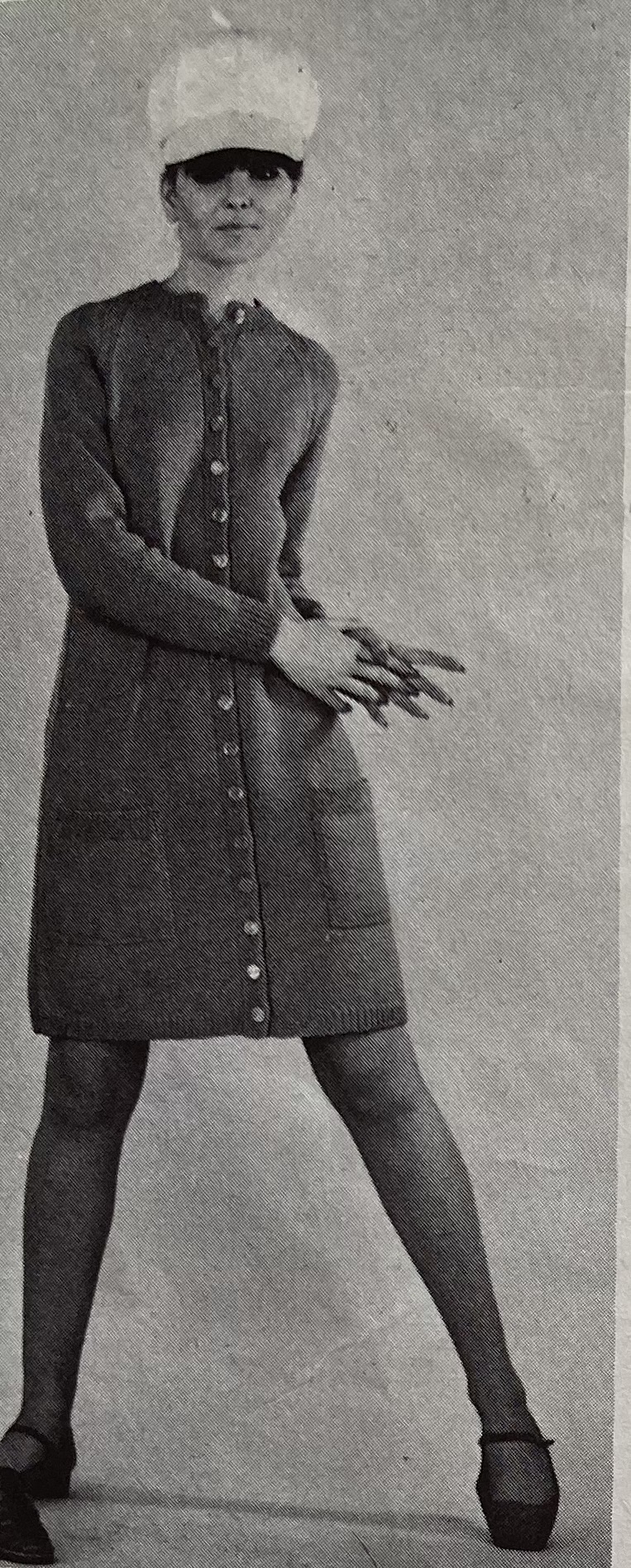
Captioned “Fashion Switch” along with the waistcoat-and-miniskirt set in the cover photo, the dress was written to be knit in Patons Double Knitting in the colour “Burnt Orange” 5020. I had already had great results (“Front Panel Classic Sweater” from 1964 and the inspired-by-Stitchcraft fingerless gloves from December 1966) with G-B Jil wool in the perfect shade of orange, so the choice of yarn was easy.

I am a bit sceptical when it comes to A-line dresses, since the often look too sack-like on me — I need dresses to be shaped or belted or nipped in at the waist in some way. The pattern has four sizes, to fit 33-34 up to 39-40 inch bust. I got perfect tension with 3.5 mm needles on the other projects with this wool, so I made the third size, for 37-38 inch bust and figured I could always adjust by continuing the A-line skirt decreases and/or adding extra stitches before the underarm shaping.

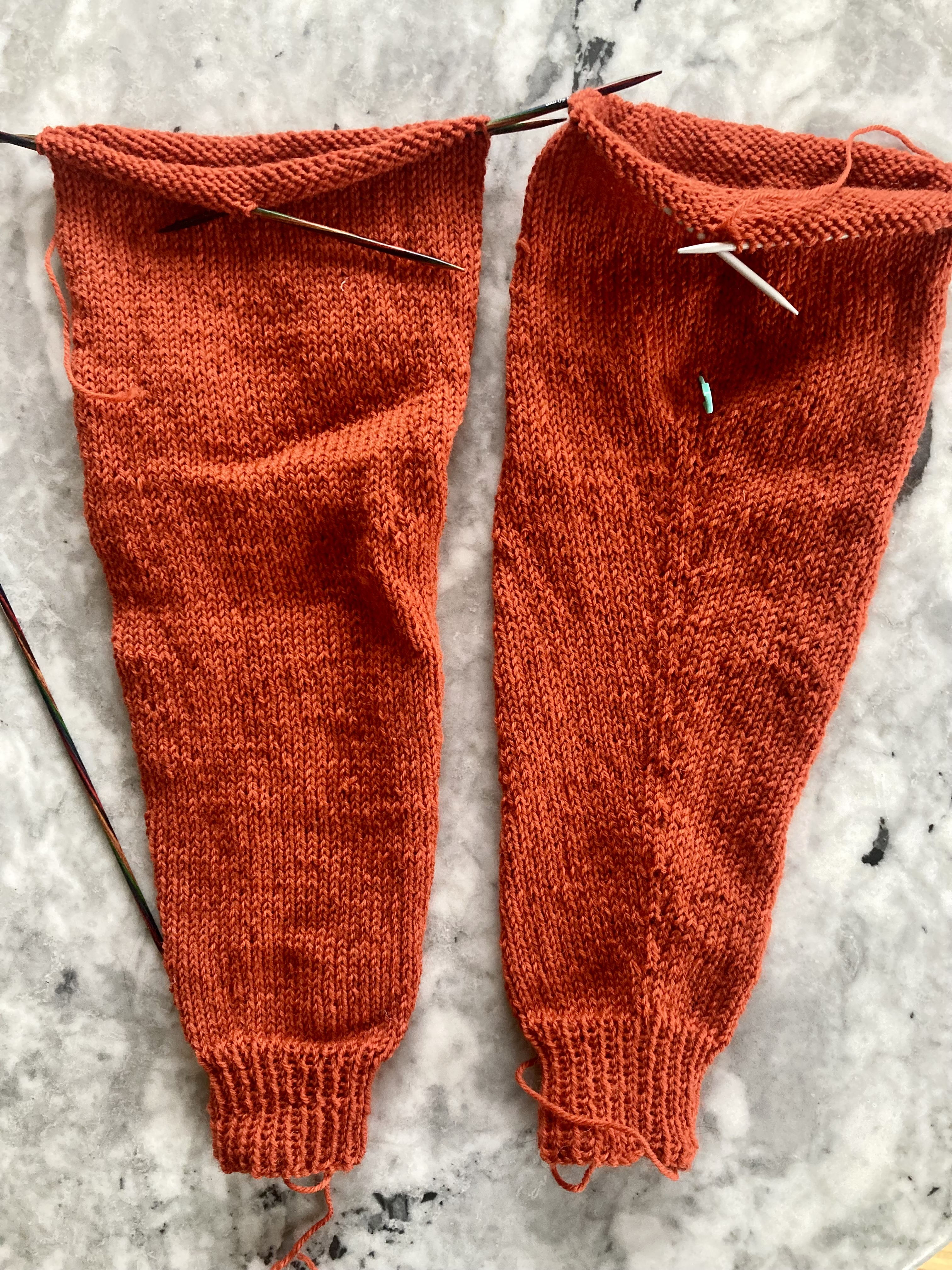
I made the sleeves first to check for size and tension. That had the extra advantage of not having to make the sleeves after finishing the entire body of the dress and procrastinating. I made them in the round and other than the wrists being a little tight, they were fine. I also made the body in one piece with fake side “seams” (1 extra p stitch) including the button bands. Of course, the bands should have been knit a little shorter than the garment and on a smaller-size needle. I was happy to ignore that rule this time, because if there was one thing I did not want to do, it was to knit and sew on extra vertical-rib button bands on a 34 inch long dress. Also, the skirt decreases were placed every 16 rows, which was conveniently about 2 inches apart — the exact spacing of the buttonholes. For once in my knitting career, all the buttonholes were evenly spaced!

It started off very slowly, because the skirt is wide at the hem, and I was worried that I might not have enough yarn, since the first 100 or 150 grams got knitted away very quickly. It slowed down with the decreases, though (8 stitches decreased every 16 rows in “princess seam” style, 2 rows of decreases the the right and left of the center line on both front and back.) For a slightly more nipped-in waist, I continued the decreases 1 more time and then, after a couple of inches straight, increased on the side “seams” until the stitch count was back up to the 3rd size.

It was hard to try on while knitting, since the front edges curled a lot before blocking and buttoning. I found some incredible and very 1960s looking buttons, but there were not enough of them at the shop and they couldn’t be re-ordered. Bummer! The cover model seems to have those plain, clear plastic buttons that one otherwise uses to close a duvet clover. I found similar plain buttons in a surprsingly good matching burnt orange shade, and there were exactly 18 of them in stock (17 for the dress and one extra.)

The G-B Jil wool washes really well in the machine and can be dried in the dryer. It’s superwash, so I knew it would stretch bit when washed and could either be dried flat to keep it slightly larger, or dried in the machine to shrink it down a bit. I knit and blocked the pockets separately and sewed them on after everything was dry and flat, to get a good placement. The pattern said to place them 4.5 inches up from the bottom hem, which seemed too low to me… and also seems lower than in the pattern photo. If it annoys me, I can always remove them and sew them on a little higher — the advantage of patch pockets.

The dress fit quite well after being dried flat. The only problem was that the neckline was a bit too high and the last button pressed against the front of my throat annoyingly. Looking back at the magazine photo, I see the Stitchcraft model had the same problem! I adopted the same solution: leave the top button unbuttoned.

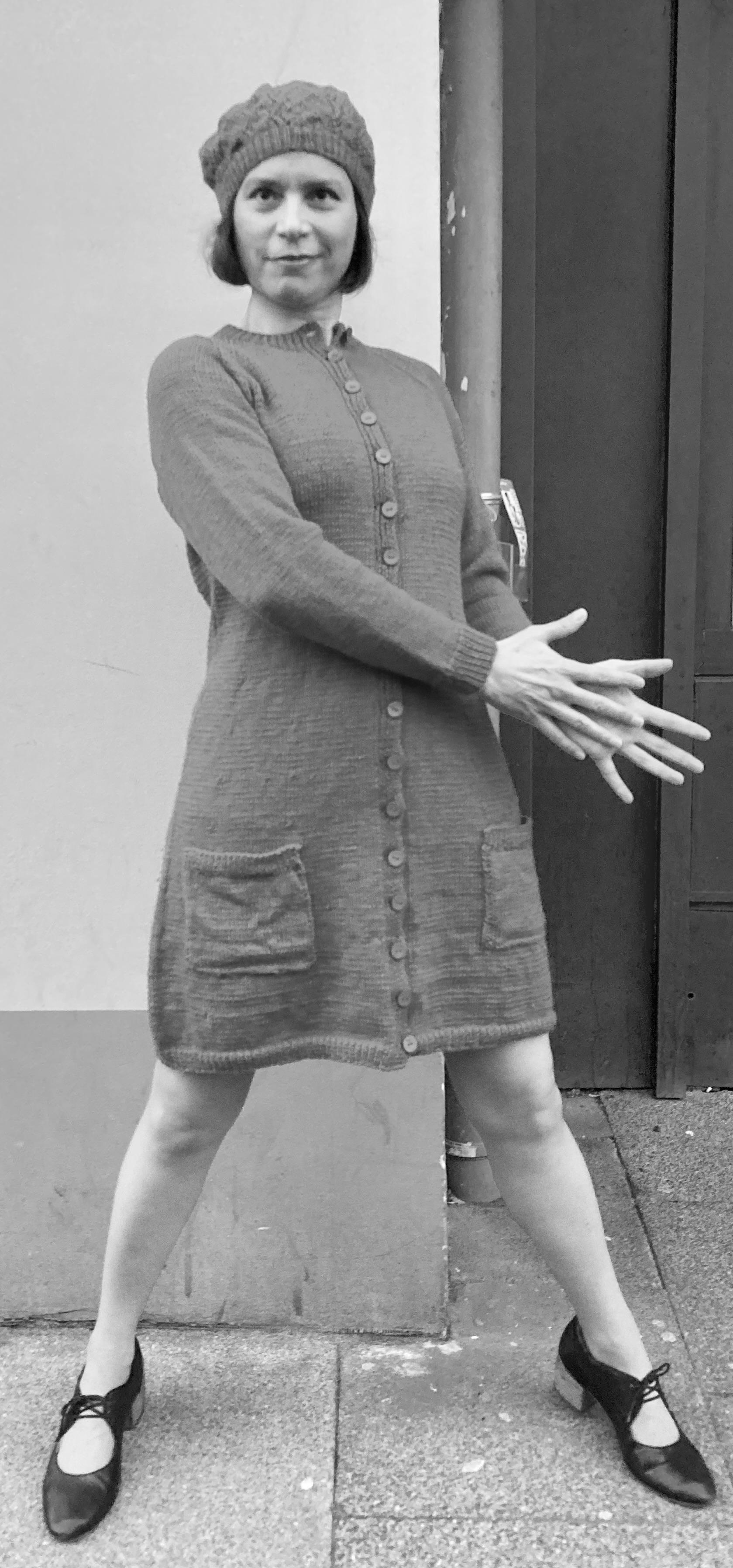
We had a great photo session at our Monday knit night and even got a perfect 60s-esque colour-block background.

I love this dress and am very happy that I took the time to make it!

March 1968: Overview

Spring is here and the March 1968 issue of Stitchcraft celebrated by introducing a new yarn: Patons “Four Seasons“. Four Seasons was a crinkly, nubbly mix of synthetic fibres (59%) and wool (41%) that produced a textured, tweedy effect by virtue of the “nubs” being a different colour than the rest of the yarn. It was double-knitting thickness when knit up and produced an interesting colour and texture even in plain stocking-stitch, so was perfect for making simply styled garments quickly.

The simply designed, next-to-no shaping “Chanel Style” suit on the cover (Stitchcraft’s name for it, not mine, and shows how iconic the Chanel suit was) is made in plain stocking-stitch with Four Seasons and trimmed with an interesting crochet braid in plain wool “Cameo Crepe” yarn. You can see how Patons coordinated the Four Seasons colour palette to make it match with the plain wool yarns already in production. The matching sleeveless blouse is also made in the same shade of Cameo Crepe. The equally simply-knit travel coat in Four Seasons goes well over a plain jumper and mini-skirt.

Other women’s fashions include a twin-set in Patons’ almost-new yarn, “Princess“, a soft, fluffy wool-angora mix. The colour photos on the inside front cover contrast the “Soft Look” (Princess) with the “Shetland Look” (Patons “Fiona“, a mix of 51% Shetland wool and 49% acrylic) while also making great use of blue-orange-mustard contrasts. Also, amazing wig on that model in the mustard-coloured dress! The “soft misty mood of the traditional Shetland look” gets exploited for all its worth in a pretty, but very much not traditional Shetland-style graded-colour pullover.

There’s more! The “overpull” in bramble stitch has a great three-dimensional texture, as does the high-buttoned cardigan in a trellis lace pattern. Knitters who preferred the smooth and simple look could make a classic, loose-fitting polo-neck jumer. All three are in tried-and-true Patons 100% wool yarns: the classic jumper in Cameo Crepe, the overpull in Totem Double Crepe, and the cardigan in Patons Double Knitting. That 1960s diagonal-line photography becomes amusingly apparent when you place photos next to each other.

Men, boys and babies get their due as well. The men’s Aran-patterned cardigan in thick “Capstan” wool features the same model from the September 1967 issue, who looks like a friend of mine. The cardigan, available in four sizes from 39-40 to 45-46 inch chest, seems way too big for him, though. The photo of the boy’s “Super-Sonic” polo sweater has the same too-bulky, too big mismatch, though anything knit the “Super-Sonic” way (6 ! strands of DK wool held together on huge “Maxi Pin” needles to get 3 stitches to the inch) will look huge and bulky anyway. Babies, at least, still wear fine-knits, like the lacy set of dress and matinee coat for Spring.

Crochet fans can make something for baby, too: a soft and pretty blanket made of 48 lacy motif squares in Patons “Fiona”, bordered with plain dark bands and lined with blue fabric. You can make a lacy blouse for yourself in the usual Mercer-Crochet thread, and use the leftovers to make a tie for a little boy for Easter! Can’t tell if the kid is happy about having to wear a tie or not, or if someone is holding a candy bar just behind the camera.

With all those great Spring fashions, it’s no wonder that the homewares are a little boring this time. There’s a little flower motif to embroider on an apron, or place mats, or a tablecloth, and a wonderful and very 60s floral design for a cushion in wool embroidery, or adapted to appliqué for a coffee cosy. Beginning embroideresses can practice stem stitch, loop stitch and chain stitch with lots of simple motifs on a tablecloth. There’s also an easy Florentine tapestry design for a large tea cosy or stool-top.

There’s a new serial comic, “Pets Corner”, whose first episode features puppie Blink and Boo, who do rascally puppy stuff and end up tearing a rug apart. But then they each have their own rug, so it’s all good.

The ads are the usual: Carters Liver pills for constipation, mail-order services for fabric remnants and marked tablecloths to embroider, pen pals, a poodle barometer…

Wait, what?!?

Yes, a poodle barometer. A decorative stone poodle that has been chemically treated with something that presumably responds to changes in humidity and/or temperature. Okay? I too have a vintage poodle, so I shouldn’t say anything. Mine is made of porcelain and doesn’t predict the weather, but does a great job guarding my grandmother’s 1950s Rosenthal coffee service.

Enjoy the Spring! My project will be some variation on the embroidered or appliquéd flower pattern. And I will soon be finished with the amazing orange dress from the September 1967 issue, so stay tuned.

February 1968: Fine and Lacy Adaptation

The February 1968 issue of Stitchcraft didn’t have any projects in it that immediately called to me, but a good friend had requested a pink headband for keeping her ears warm without wearing an entire hat, so decided to make an adaptation.

I first tried the two-colour pattern from the amazing cardigan set on the inside back cover. It’s made using a combination of stranded two-colour knitting and twisted stitches and makes a great trellis-like effect. It needs to be made in two colours to actually have an effect, though, so I switched to the fern-y lace pattern on the panel of the jumper on the front cover.

I had a decent amount of pink Drops Fabel sock wool left over from the April 1967 chevron-pattern dress, which was coincidentally almost the same shade as the Stitchcraft jumper. The pattern is made using standard knit and purl, k2tog / k3 tog, and yarn overs. The pattern repeat is 16 stitches + 1, worked on a stocking-stitch background i.e. the even-numbered rows are mostly purl. I added 6 stitches of garter stitch and a selvedge stitch on each side of the panel to get a good width and avoid curl. The pattern was surprisingly boring to knit! I didn’t even bother to make a chart, just used the written instructions straight out of the magazine.

I started and ended with a bit of plain garter stitch, increasing up to the total number of stitches to make the headband a bit narrower at the nape-of neck and create an elastic band effect to keep it snug. I wasn’t sure how big to make it — I have a big head and very flat hair, my friend has a presumably average-site head and very fluffy curly hair. After blocking, it ended up a little loose on me. If it’s too loose, I can always undo some of the garter stitch connecting bit on the underside.

It looks pretty and I like the pattern a lot, but I’m not sure if fingering-weight sock yarn was the best choice for a headband that should keep the ears warm. I’m afraid it won’t be warm enough. in which case, I could line it with fleece?

Not 100% happy with this project, but hopefully my friend will be.

February 1968: Overview

After the “cold snap” predicted in the January 1968 issue of Stitchcraft (and which actually happened throughout the icy, snowy month of January 2026), the February 1968 issue looks toward Spring. There are still plenty of warm things to knit, but the focus is on layering and knitwear as outerwear.

The cover design is a lightweight, but presumably warm pullover in a leafy lace-panel pattern and Patons “Princess” yarn (85% wool, 15% angora.) It’s slimmer, longer, high-necked, and belted — trends that will continue throughout the year. The back-cover design is a twin set in late 60s style, loose-fitting and worn with a kilt-like plaid skirt. It, too, is touted as a “long-liner” and the caption says it can be “belted if you like.” There’s a similar long-and-slim feeling to the “Country Mood” set on the inside back cover, which features a zipped cardigan over a mini-skirt, both in really interesting two-colour trellis pattern. The pattern looks like it would be made with slip-stitches, but is in fact stranded, with twisted stitches to give the trellis effect. Longest of all is the amazing bobble-stitch coat on the inside front cover, weighing in at a whopping 50-54 ounces and similarly zipped up the front.

For men, there’s a his-and-hers “Two for the Country” bramble-stitch sweater to be worn indoors or out, and a softly-coloured stranded jumper in an interesting “key”-type pattern. It only uses three colours (“Banana Cream”, “French Mustard” and “Light Steel Grey”), but the pattern gives additional depth and richness.

There are three patterns for children of different ages in this issue, starting with a coat-and-cap set for a little boy. I suspect he’s only looking so happy because he’s in a warm photo studio; if he ever actually went outside in that outfit, both his legs and his ears would freeze right off. I know if was customary to dress little boys in shorts at the time, but this poor kid doesn’t even seem to have those! How on earth is he supposed to play in the snow with a practically bare bum? At least the little girl gets to wear tights with her mini-dress/tunic this time, and since it is “for visiting”, I assume she will be wearing it inside. The circular yoke of the tunic is knitted horizontally and sewn on, and the white stripes are made by dropping stitches and picking them up later. The third design is a great indoor-outdoor sweater for a slightly older child, in thick “Capstan” wool and a twisted-stitch pattern that presumably acts as s sort of thermal blanket to keep warm.

One nice thing about this issue is that there are extra close-up photos of the more interesting stitch patterns:

Most of the housewares in this issue are advertised as “Easter Gifts”, though I see no connection to the the patchwork rug and cushion, or the embroidered cushion and chairback.

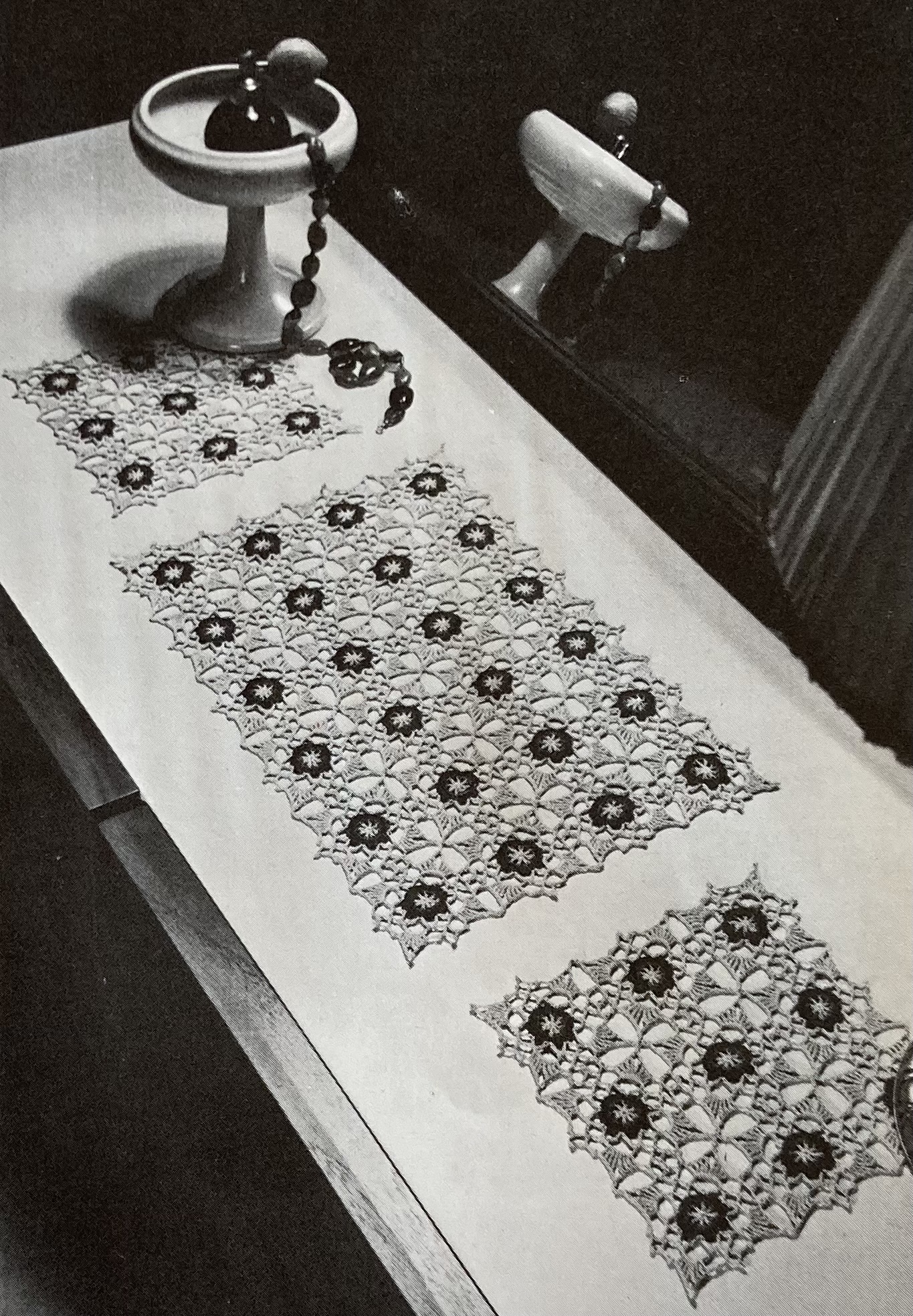
The elaborate crocheted or knitted doilies as well as the knitted tea cosy have floral patterns, but still no real connection to the holiday. I guess the “Humpty Dumpty” coffee-pot and egg cosies could accompany your Easter breakfast, if they don’t put you off it entirely! Stitchcraft is obsessed with Humpty Dumpty. Over the years, there have been egg cosies, stuffed toys, Christmas tree ornaments… I admire the creativity and the artistic commitment to a theme, but I do wonder. If you know why the egg cosy is happy and the coffee pot is angry, please tell me in the comments!

They apparently gave up on the Easter theme by the middle of the issue and just promise “4 pages of Rug-making, Tapestry and Embroidery for the Home”, which appear exactly as promised. There’s an elegant tea-table set of cosy and cloth in rose-pattern embroidery, a rug and cushion in best 1960s shades of brown, orange and gold, two floral tapestry wall panels, and a “Toilet Set” of toilet cosy and two mats. In previous issues, such items were called a “Pedestal Set”. I guess by 1968, there’s less need to be euphemistic. (But still a need to put a cosy on the toilet cover.)

There are some great “novelty” and “bazaar” (…”bizarre” if you ask me) items in the Readers Pages: crocheted rabbit and chicken egg cosies and an “amusing” string holder. Like the Humpty Dumpty obsession, I don’t get the point of string holders. They always seem to involve pulling the end opf a ball of string through the mouth of some creature, in this case a koala. It’s better than the last one, which was a terrifying clown, but again, if you know why this was ever a thing, please enlighten me! The felt pincusion to wear on your wrist, on the other hand (heh), is practical and useful.

We have come to the end of our latest comic, “The Woodland Workshop”, in which various woodland animals learn that you cannot find a dropped stitch by looking for it on the floor! Words of wisdom, truly. I liked this comic.

I don’t know what to make from this issue. I love the little girl’s tunic-dress and the boy’s sweater, but don’t know any children of that age who might want one. I love the trellis stitch pattern from the “Country Mood” set, but don’t want to make a whole skirt or cardigan from it. Maybe I could adapt the pattern for mitts or something? Or I could work on the fabulous dress from the cover of the September 1967 issue, for which I bought the yarn and everything, but haven’t had time to start. We’ll see! I did finally finish the jaquard pullover from the November 1967 issue and will update that post on Tuesday, so stay tuned.

January 1968: Knit for a Cold Snap

It is currently minus 13 degrees Celsius outside, so this caption from the January 1968 issue of Stitchcraft couldn’t have been timlier for this month’s project: cabled mittens (“mitts”) that promised me “Cosy fingers and thumbs”.

The pattern is written for Patons Ariel wool, which was marketed as being very airy (hence the name) and fluffy, so it would knit up quickly and be bulky, but not too heavy. It was made of 80% wool and 20% synthetic fibres. I used lovely Lana Grossa Slow Wool Canapa, bought a while ago from the “sale” bin, as it was sadly being discontinued. It is made of 90% wool and 10% hemp, which gives it tweedy white flecks.

The pattern is written to fit an “average hand” (women’s). I assumed my size 8 hands were larger than that, but also having never worked with Patons Ariel and being too lazy to make a swatch for such a small project, I went ahead and started with the suggested needle sizes and figured I could make any necessary adjustments while knitting.

The pattern is intended to be knitted flat from the wrist ribbing to the fingertips and then seamed up on one side. There is a thumb gusset and you are supposed to knit the thumb (flat) at the point where the thumb starts, then go back and finish the hand, picking up stitches that were cast on on the left or right side of the gusset to shape for the right or left hand. I made everything in the round and finished the hand before knitting the thumb (also in the round.) That made the gloves basically identical, but I found a way to finesse the thumb pick-up stitches to make the thumbs lie slightly differently for the right and left mitten. The pattern itself is four regular 6-stitch cables on a background of reversed stocking-stitch.

They came out very nicely and the fit is perfect for me. The only problem is that I prefer to wear gloves with fingers, or “convertible” gloves with half-fingers and then a mitten top to fold over them. I also don’t have many if any clothes that match the colour (though they do match my hair!) So I don’t know if I will keep them for myself or give them to someone as a gift.

In any case, a success, and finished very quickly. I’m considering making the baby romper from this issue as well, or just using the “extra” time for finally finish my November project… and/or any of the many other winter WIPs. Stay warm!

January 1968: Overview

Happy New Year, everyone! It’s 2026 in the real world and 1968 at the Stitchcraft Sixties.

Looking ahead, 1968 is the year that Stitchcraft finally starts to get into the “Swinging Sixties” vibe, with miniskirts, oversized hats, bright patterns and lots of dresses. The January issue doesn’t quite get there yet, though. The cover cardigan has a similar construction and fit to similar garments from 1966 or 1967: long and loose-fitting, with deep raglan sleeves and a collar. The stitch pattern looks like small horseshoe cables, but is made entirely with knit, purl and slip stitches!

Other women’s garments include a bright pink-and-purple crocheted pullover with a similar bulky, V-necked shape. The model has a bizarre January tan that can only come from a bottle. There’s also a colourwork design to use on either a sleeveless top or a dress, and a short, zippered cabled jacket.

Cable, mock-cable, and bobble patterns are trending, and warm reds and golds pair with bold pink and winterly white. Warm accessories include a a chic little bed-jacket with ill-placed (or strategically designed to draw the attention of one’s bed partner?) bows. You can make a pair of warm cabled gloves, or bed socks with ribbon bows to match the bed-jacket.

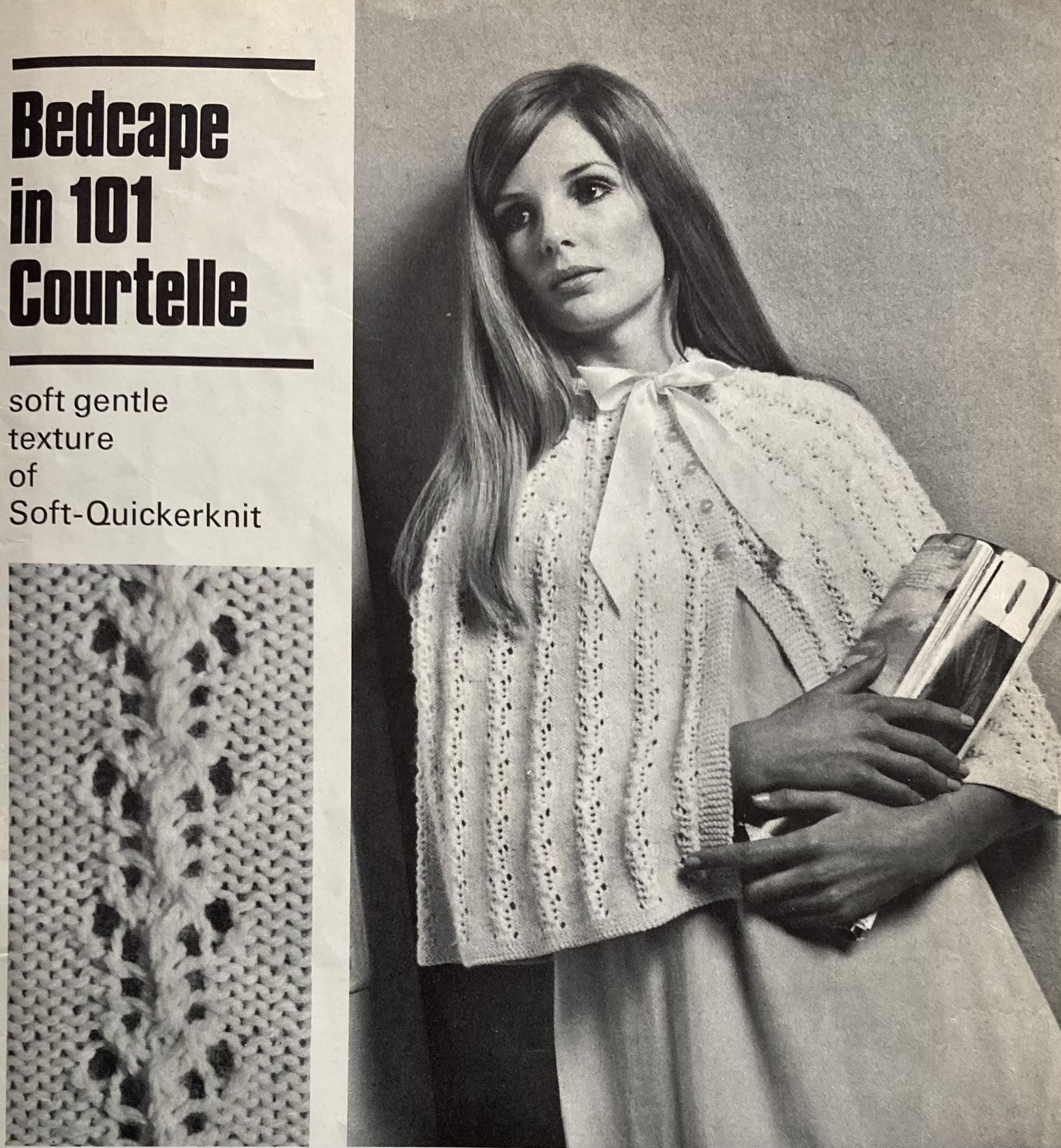
Two of the women’s garments stand out. The cape made a brief fashion appearance in the later 1960s, and Stitchcraft‘s version pairs it with a skirt in an ensemble for larger sizes (to fit 38/40/42 inch bust). There is even an adorable version for a little girl, with one of the cutest photos ever. She looks like Little Red Riding Hood going out to see her grandmother on New Year’s Day, but with cold legs. At least she’s wearing tights, for once! The adult version is made in an intriguing “Purple Dusk” shade of Bracken Double Knitting tweed, the children’s version in the same wool, but in two shades of pink: Gentian and Raspberry. Little Pink Riding Hood, as it were (and without the hood.) The caption to the cape photos is “The Cape makes sense”. I disagree — capes are bulky and hard to layer. It does have a certain flair, though.

Speaking of bulky and hard to layer, another late 60’s flash-in-the-pan trend was extremely bulky garments made by holding 4 or more strands of bulky wool together. Patons called this “Super-Sonic” and included a pattern for a cabled and moss-stitch dress that can be made in 8 hours at a tension of almost 1 stitch/inch using 4 strands of bulky “Big Ben” wool on 00 needles — that’s 9mm or a US 13. The accompanying text says, “The thick fabric is firm and elastic and 2 inches at least, are deducted from the length of a dress, to allow for settlement.” That’s a nice way of putting it! I imagine it sags immediately. The colours are a wild mix of Light Navy, Sunglint (yellow), French Mustard, and Jade.

There are two designs for men, both featuring thick wool, warm gold colours, and textured, geometric patterns similar to the ones used in the women’s garments. The zig-zag pattern is made with knit and purl stitches, with twisted stitches on the front side panels, and the textured looks-like-a-mini-cable pattern on the polo-neck pullover is made entirely with knit and purl stitches on a reversed stocking-stitch background. Note the very 1960s dynamic diagonal-line photo poses.

For babies, there’s a thoroughly cute, but also quite practical, zippered romper. Congratulations to the photo team for getting a baby to smile in two different photos! That’s what having warm legs will do for you.

The last garment in the issue is a wonderful set intended for a young teen, made up of a jumper, skirt and matching knee socks. Here we see Stitchcraft finally getting into the swing of things, with a fun, geometric colour motif in primary colours that looks like it was inspired by a Roy Lichtenstein comic-art speech bubble.
With all these great garments, it’s no wonder that the homewares are a little boring, but that’s also the direction Stitchcraft‘s homeware designs will take in the later 1960s. The most interesting design is an “attractive scene for your first attempt at a picture in tapestry.” Then there’s a tapestry design for a cushion or church kneeler, a “key pattern” embroidery design for a cushion or place mats, a cross-stitch design for a cushion or chair-back, and a design in woven embroidery for a cushion or workbag.

Versatility is key (but when in doubt, make a cushion.) Even the Readers Pages offers a design for a cushion, knit in squares from leftover wool.

In the children’s comic, “The Woodland Woolshop”, Samuel Squirrel finds out what happens if you don’t use cushions — he paints a stool and then Eddy Bear, who has come in to replace a hole in his knee, unknowingly sits on it and gets a flower design on the seat of his trousers. May all your mistakes turn out so fortunate.

December 1967: Appliqué Cats are Lucky

My project for December 1967 a.k.a. December 2025 was an adaptation of a cross-stitch design for a three-piece children’s room set.

“Cross-stitch Cats are lucky” says the caption in the magazine, and I could definitely use some good luck right now. Cross stitch, however, is not lucky for me. I really, really dislike counting tiny boxes on a pattern or tiny holes in a fabric, all of which are impossible to see even with glasses, and the cross-stitch aesthetic is generally not my favourite. I like crewel embroidery and appliqué. Stitchcraft gives three variations on the design, for a cushion, small rug or night-case. I made a slightly smaller bag that can be used for pencils or chargers or knitting/crafting accessories or any kind of little “stuff.”

My backing fabric was from the leg of an old pair of jeans from the upcycling drawer. I used the leg seam as the bottom of the bag and found some lining material to match. Cristanne Miller’s book on Emily Dickinson’s grammar made an excellent straightening guide.

What colour cat? The cats in the pattern are white (rug, on royal blue background), white (nightcase, on light blue background), or blue (cushion, on cream background). I could have gone more realistic, with light grey or charcoal grey or brown. It didn’t seem whimsical enough, though. The design is so cute and cartoony that I found it better to use an entirely unrealistic colour, like the blue cat on the cushion. I had a big piece of pink felt that looked great on the blue jeans, so there it was. I made a cut-out template by photocopying the magazine page enlarged.

I appliquéd the eyes with pieces of white felt and embroidered the pupils, face and whiskers: satin-stitch and stem-stitch for the eyes, stem-stitch for the mouth, a French knot for the nose and individual long straight stitches for the whiskers. I was nervous, because anything with eyes is tricky, but I was so happy with the result! I think I really nailed the happy, lucky cartoon cat vibe.

I tried out a few different ideas for the flowers before committing to sewing anything down. My design didn’t leave a lot of room for seam allowances, so I left off the decorative lines on the sides. A single flower at the bottom right looked good, but unbalanced, so I added two more flowers at the upper left and upper middle. I adapted the bow around the cat’s neck into a more simple collar and left off the bow on the cat’s tail.
I sewed it up with minimal stress, except for the zipper, of course. Ugh, I hate zippers. This one was finicky and ended up a bit wavy, but nothing on earth will persuade me to re-do a zipper, as long as it works at all. It wasn’t until I starting writing this post, two days after the bag was finished, that I saw that I had forgotten to sew down one side of one flower and one side of the collar! Whoops. That’s what happens when you try to sew in northern Europe in December — there is no light anywhere. Can you see it in the photo? I fixed the flower and collar and then the project was really and truly finished.
I am so, so happy with this project. It is so cute! The facial expression is perfect. I dare anyone, even cat haters, to look at this bright pink cat and not smile and feel happy. I would love to keep it for myself but I am going to give it to a cat-loving friend who could use some smiles and happiness right now. That way, it will bring both of us good luck.

Happy December Holidays to all of you, and all the best for 2026.

December 1967: Overview

It’s here! The December 1967 Stitchcraft Christmas issue is a “bumper number to help with last-minute ideas for your Christmas giving, and suggestions for your winter handicrafts.”

The cover photo went with a wintery blue, white and silver colour scheme to set off the featured 3-piece skirt suit. It’s knitted in Patons “Princess”, a light, fluffy yarn made of 80% wool and 20% angora. At 8 stitches to the inch on No 11 (3.0 mm) needles, I imagine it won’t get finished by Christmas. The striped top is sleeveless, and the skirt shorter than knee-length without being “mini”: this is an outfit intended for the respectable suburban mother of the family. A more fun-loving adult woman can make a party dress with or without sleeves, that combines knitting and crochet. Looking at the second picture, you can see why all the models pose with their spines in that corkscrew S-curve — it’s to hide the fact that the unshaped, unbelted dress will look like a sack on them otherwise. Must be hard to hold the pose for the whole party…

As for the “young team”, they “love to match”, according to Stitchcraft, and can knit themselves (who am I kidding, the girl will knit for both of them) some warm pullovers in a fun two-colour basketweave pattern with ribbed sleeves. The colour pattern is made with slip stitches. Other adult garments include a “lumber style” mens’ zipped cardigan, two practical jumper-blouses to “go with suits and skirts” and a classic cardigan for larger sizes.

Cables and basketweave textures are on trend, and the colours are not particularly Christmas-oriented — strong, cool colours and neutrals. The mens’ basketweave cardigan is made in cream-coloured, undyed “Capstan” wool and the two suit-skirt jumpers in “Planet Jade” and “Bracken Gold” with “Brandy Snap” contrast. Only the knit-crochet party dress is in holiday “Hawthorn Red”.

There are some great fashions for children in this issue that could theoretically be finished by Christmas morning: a warm set of jumper, leggings and hat for a little one, a dress-and-cardigan set for a school-age girl and another jumper, leggings and hat set for a pre-teen. On second thought, you would have to be an extremely fast knitter to get any of those sets finished in time… Here too, cool, bright colours prevail, and stripes, slip-stitch lines, and diamond patterns are trending.

(On another note, the slogan that Stitchcraft chose to describe all of these children’s patterns is “Gay as a Cracker”. I do understand that they mean the outfits are as bright, fun and festive as a Christmas cracker that you pull across the table and get a little prize and a paper hat out of, but that did not age well.)

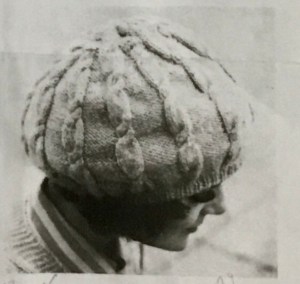
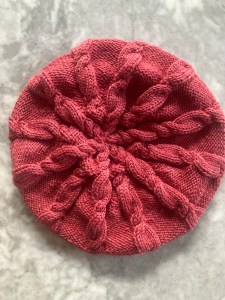
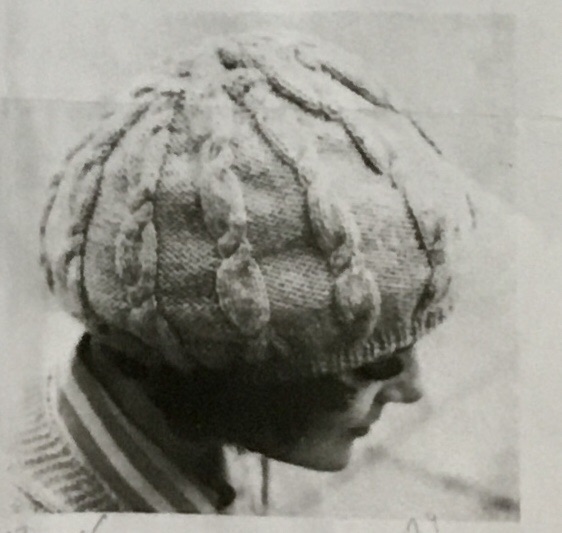
For quick gifts that have to be finished on time, you can make a “tweedy” (actually moss-stitch, but OK) beret or cleverly designed gloves for the whole family. The gloves are all made from the same pattern, using double knitting-weight wool for the large/men’s size, 4-ply for the medium/women’s size, or 3-ply for the small/child’s size. You can also make a very easy crochet cushion, and it even matches the hat!

There are plenty of embroidery and tapestry projects for those long winter evenings. My favourite is the cross-stitch cat that can be made into a cushion, rug, and/or nightcase. (I have not yet understood the point of putting your pajamas or nightgown in a zippered case during the day. Were any of you readers children of the time and can tell me about it?) According to Stitchcraft, cross-stitch cats are lucky! I could use it. There’s also an appliqué picture of a boy and girl rowing, an embroidered dragon cushion or wall panel (that dragon is definitely high on something, cheers), an opportunity to turn leftover tapestry wool scraps into a tea-cosy or cushion, and a cross-stitch rug to use as a hall runner. The only specifically Christmas-themed project (in the entire issue, really) is an embroidered serving set of table cloth and/or trolley mats with somewhat abstract renditions of shepherds, sheep and a star.

In the children’s comic, “The Woodland Wool Shop”, Mrs Olive Owl starts knitting a long strip of fabric with no plan about what to do with it (been there) and realises that it would make a great coat for Daniel Dachshund. Isn’t that nice? I hope all your projects turn out to be equally useful and make someone (including you) equally happy.

My project will be something small, probably the gloves. I do love the lucky cross-stitch cat, though. Merry Christmas to those of you who celebrate it, and happy December holidays to all.