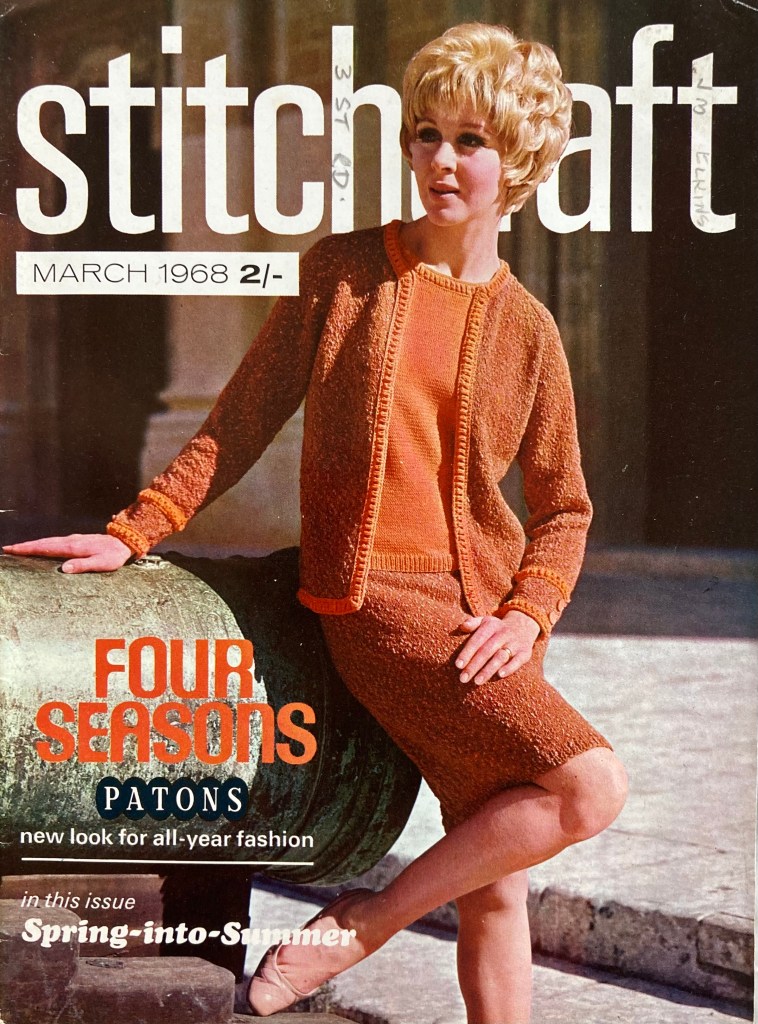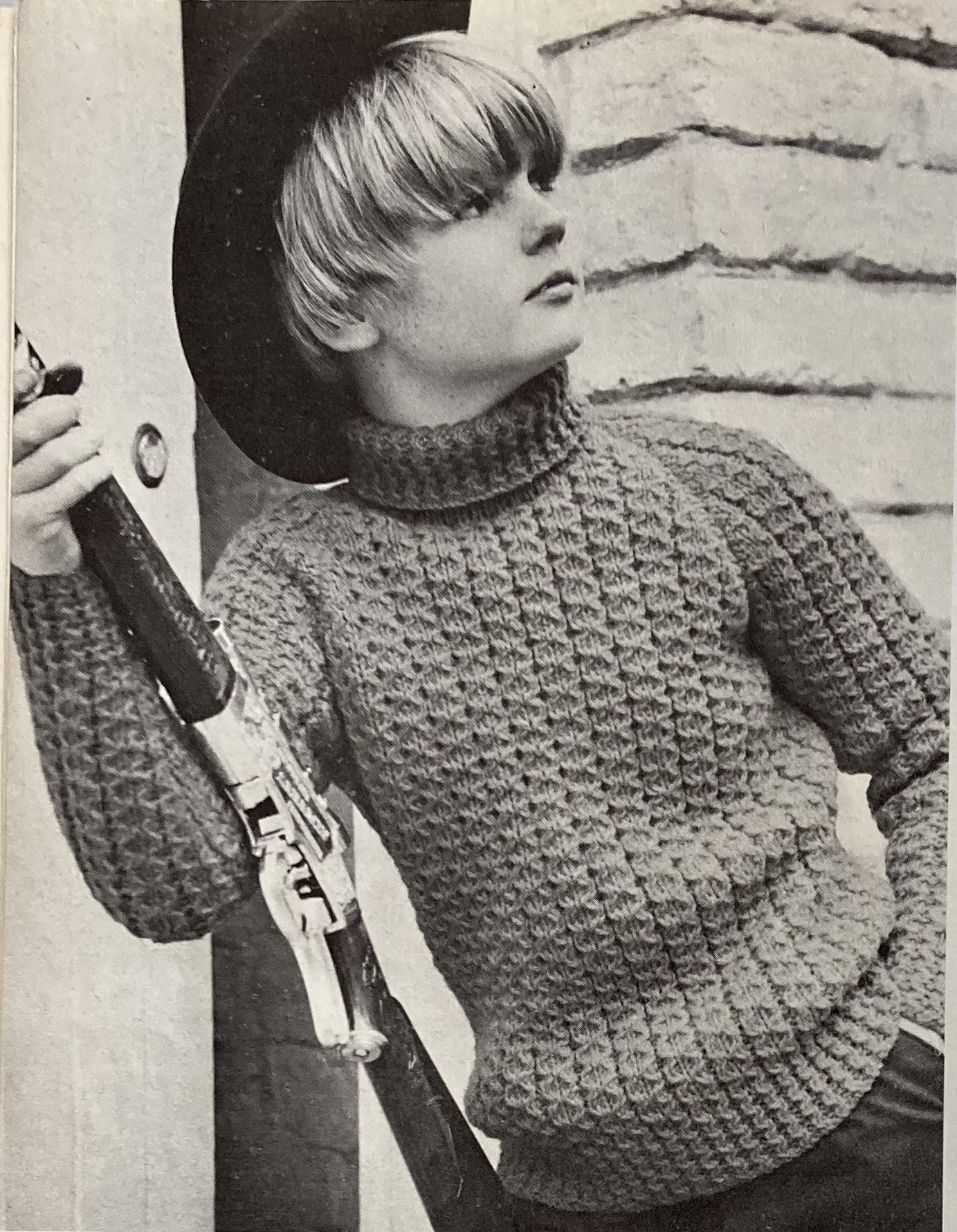
December 1967: Appliqué Cats are Lucky

My project for December 1967 a.k.a. December 2025 was an adaptation of a cross-stitch design for a three-piece children’s room set.

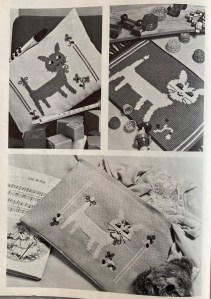
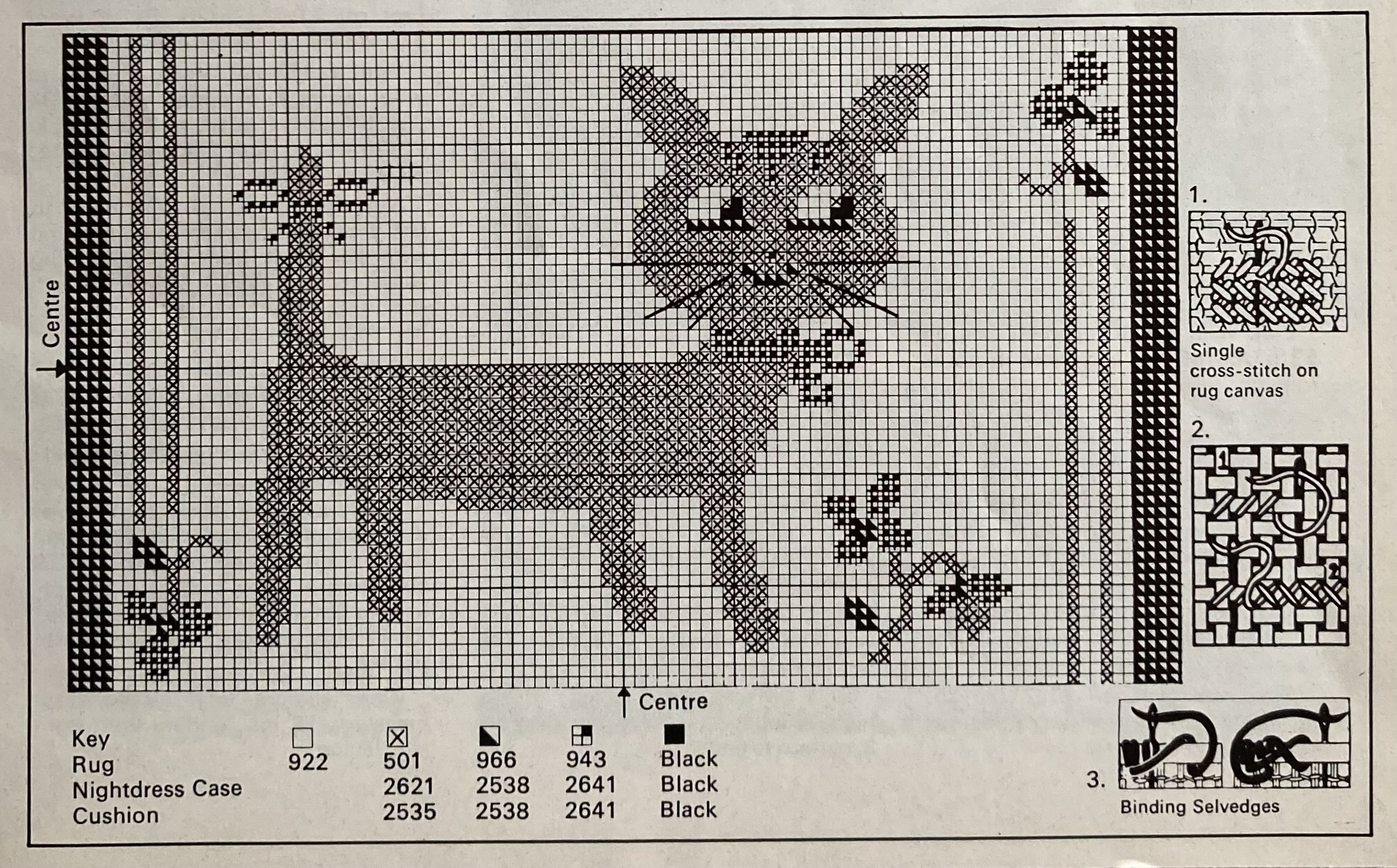
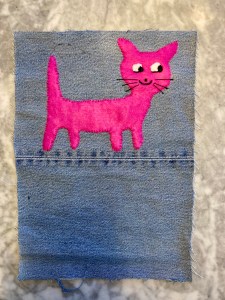
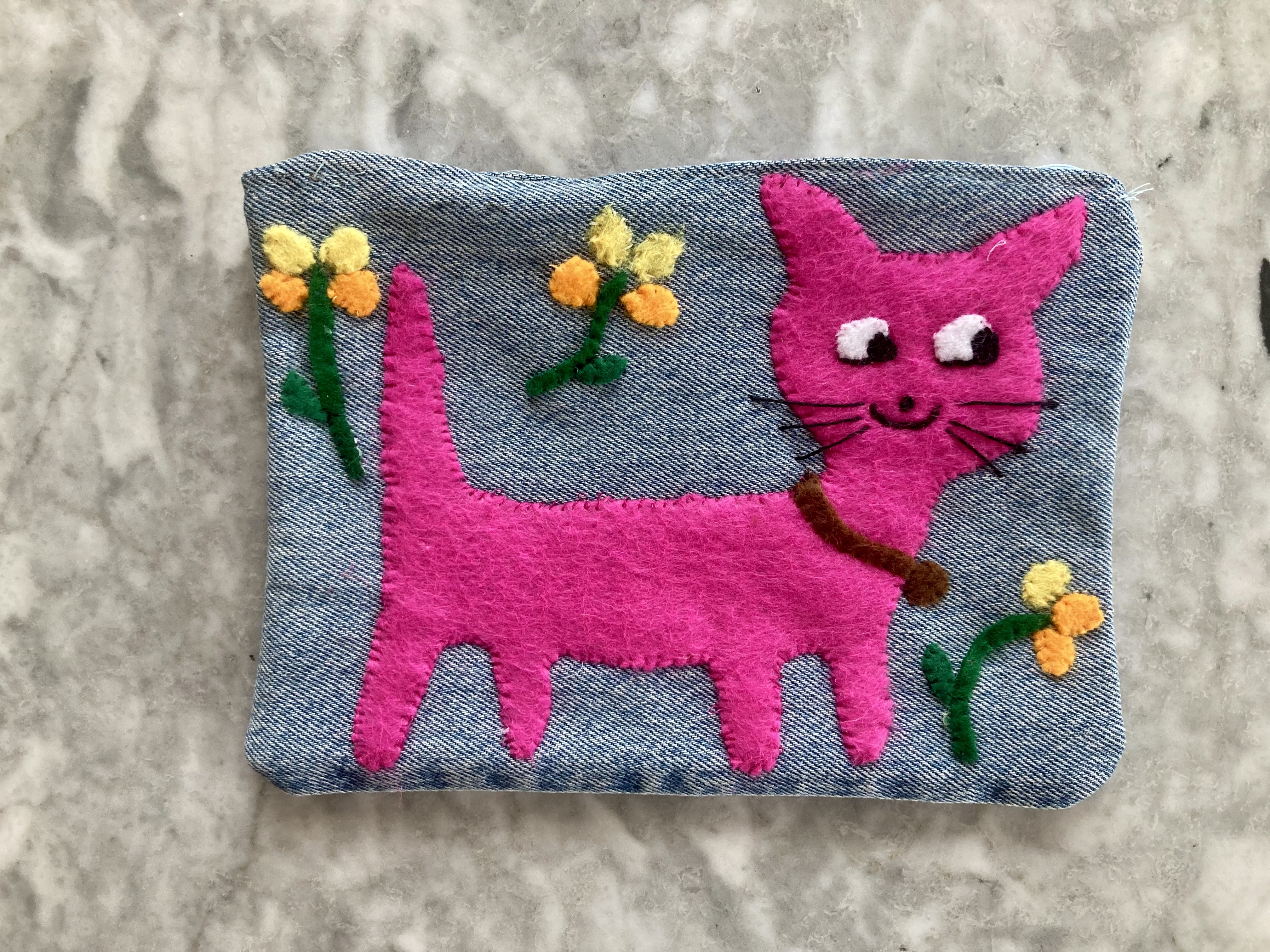
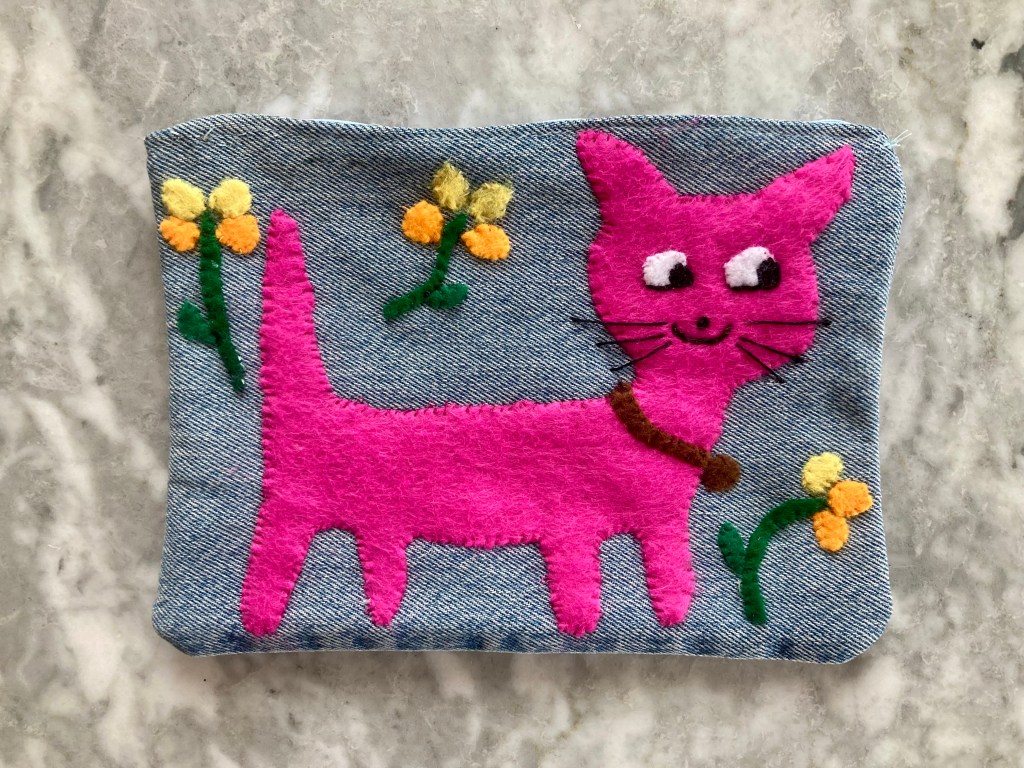
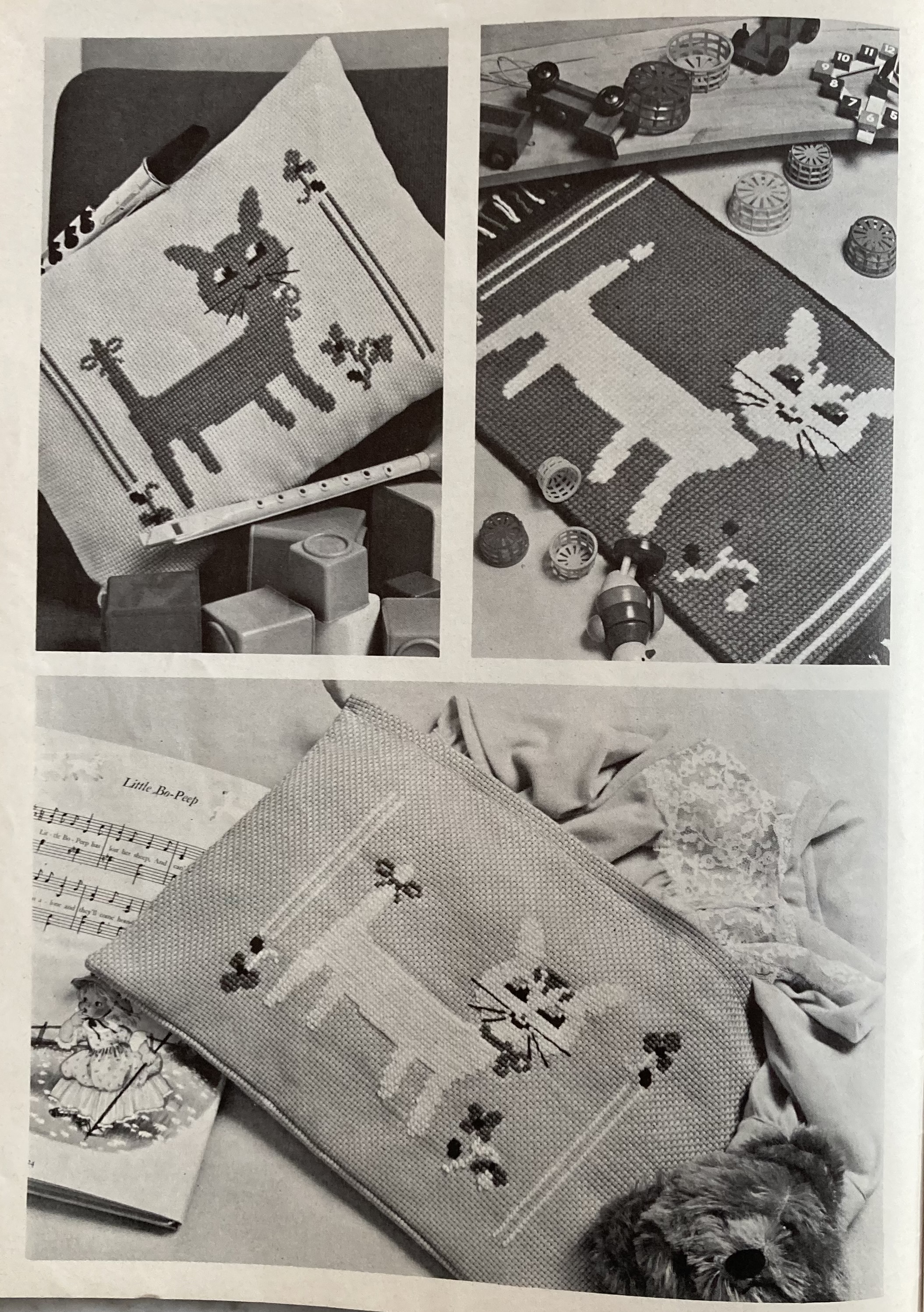
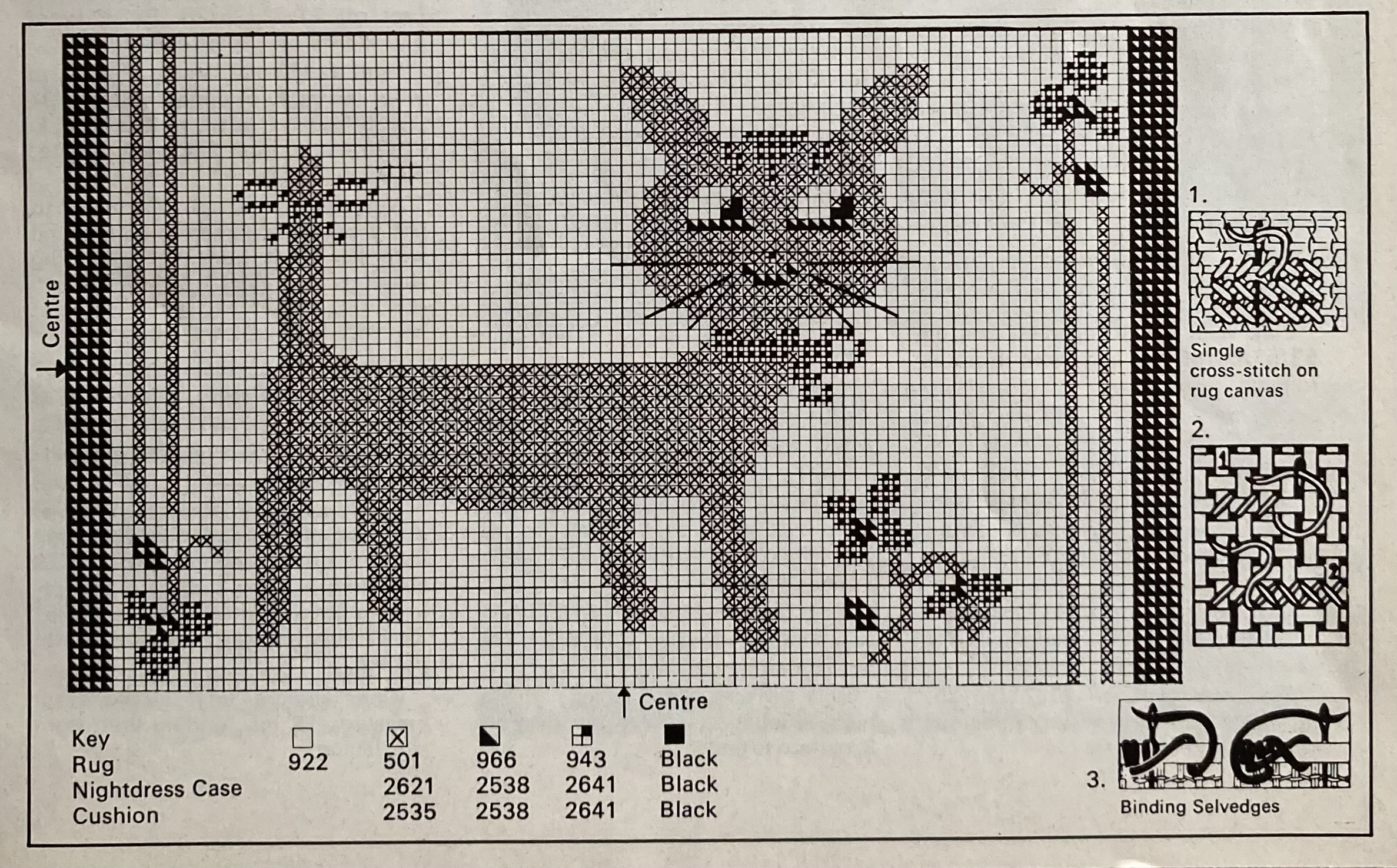
“Cross-stitch Cats are lucky” says the caption in the magazine, and I could definitely use some good luck right now. Cross stitch, however, is not lucky for me. I really, really dislike counting tiny boxes on a pattern or tiny holes in a fabric, all of which are impossible to see even with glasses, and the cross-stitch aesthetic is generally not my favourite. I like crewel embroidery and appliqué. Stitchcraft gives three variations on the design, for a cushion, small rug or night-case. I made a slightly smaller bag that can be used for pencils or chargers or knitting/crafting accessories or any kind of little “stuff.”

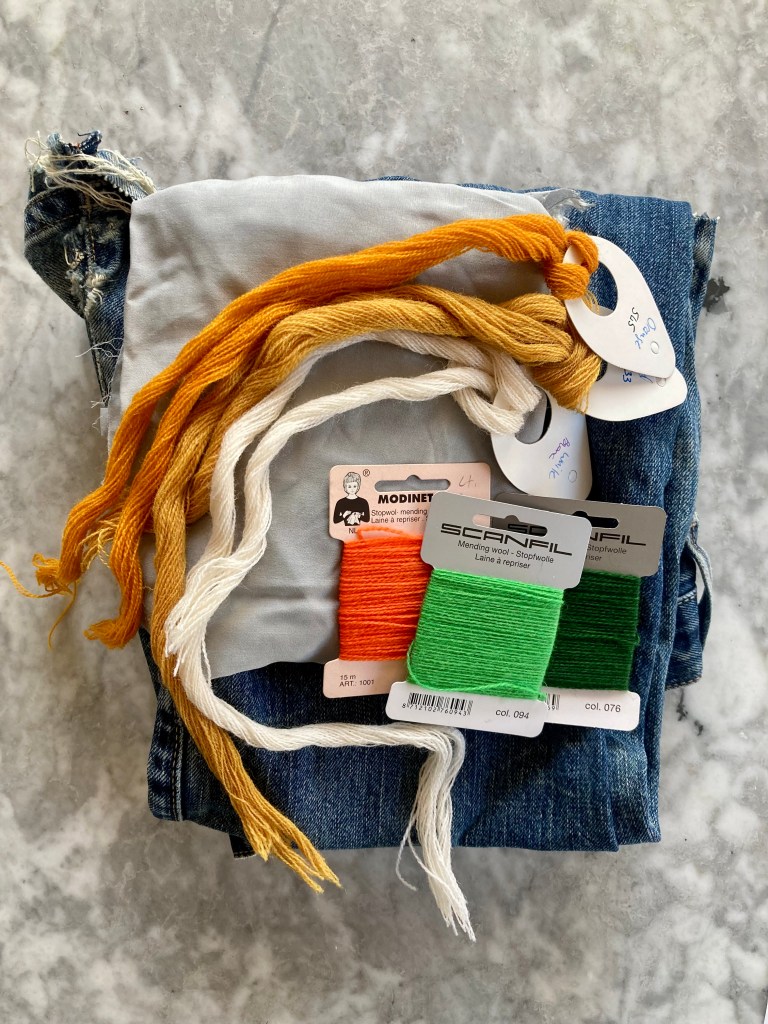
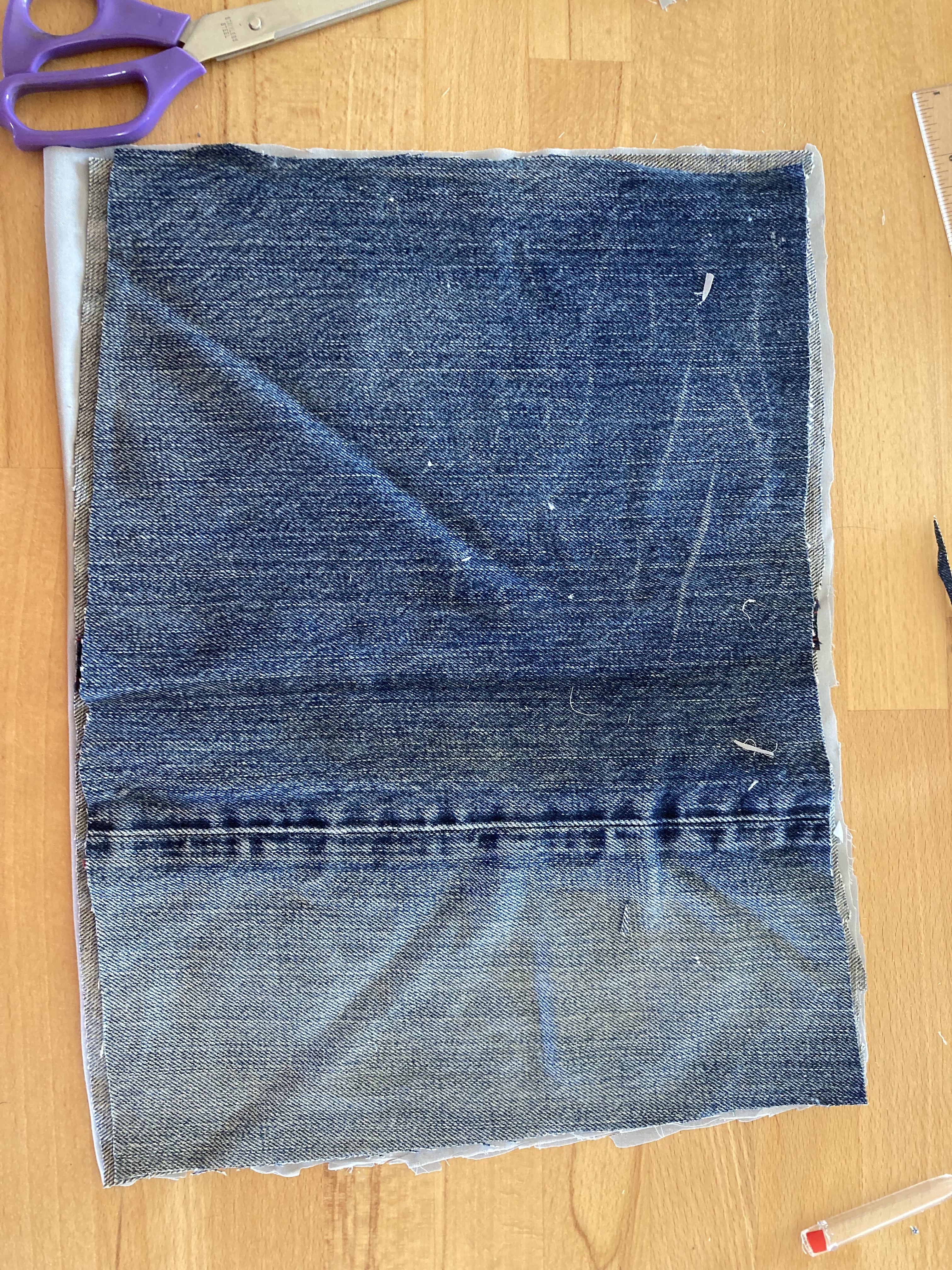
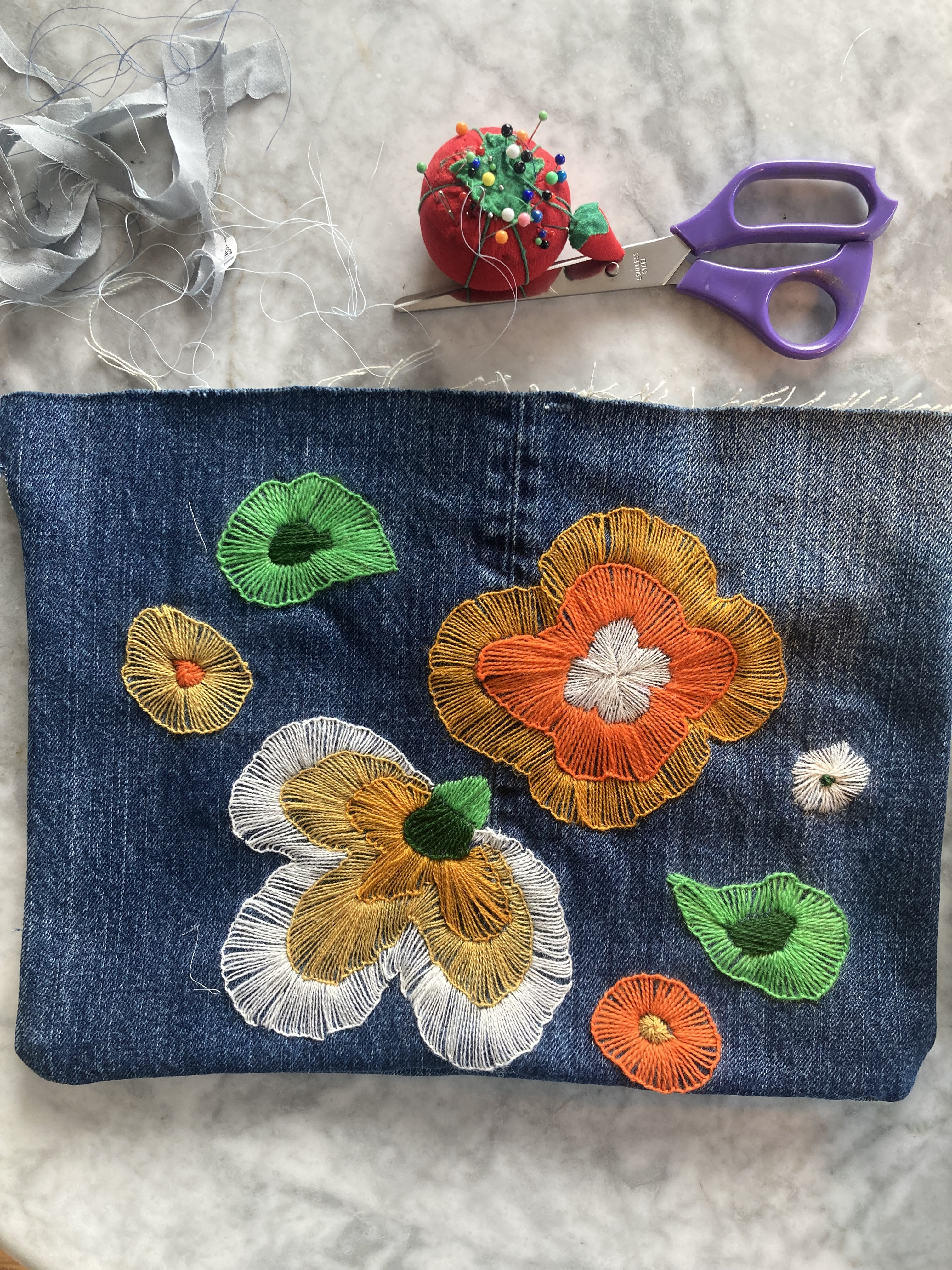
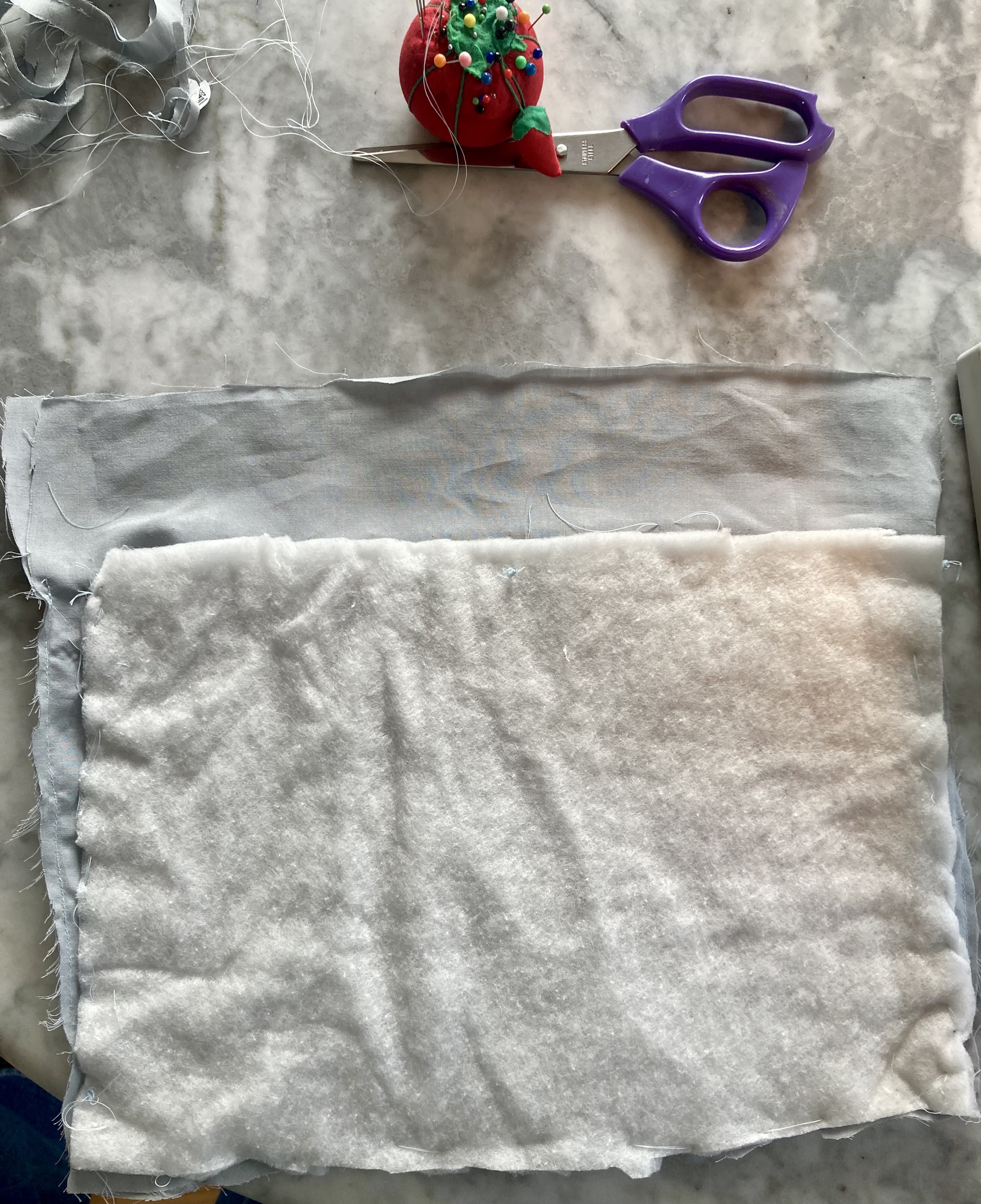
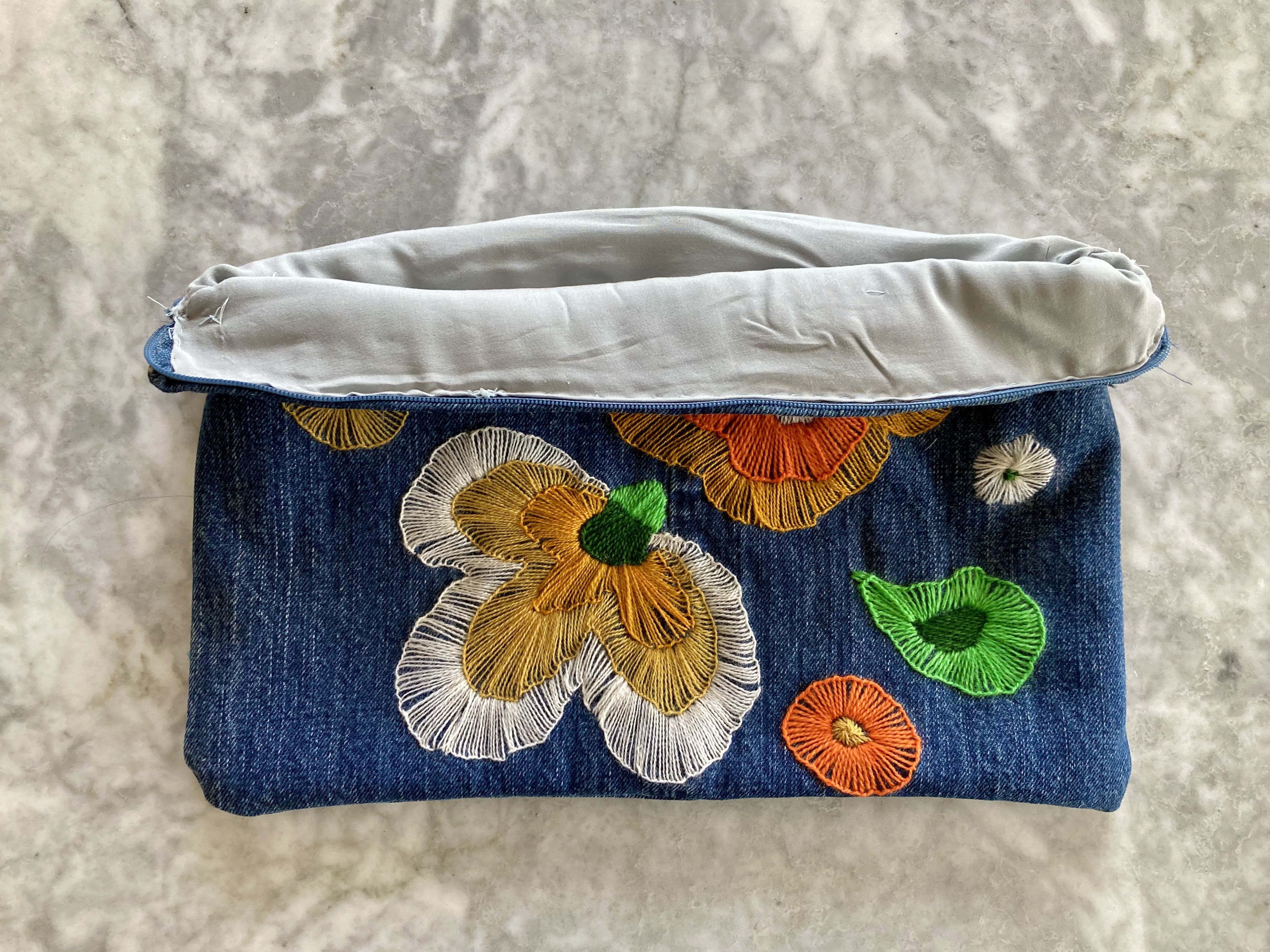
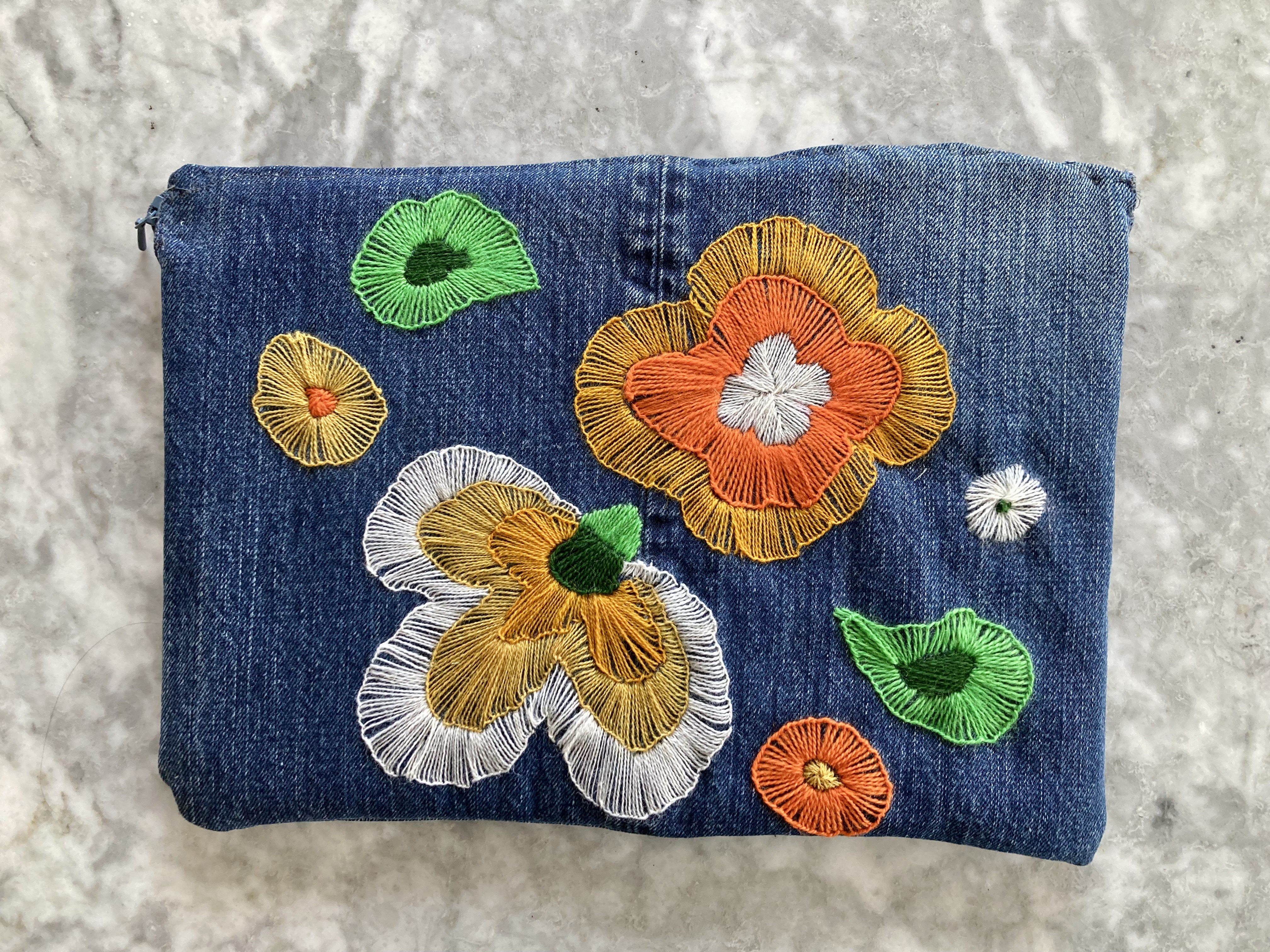
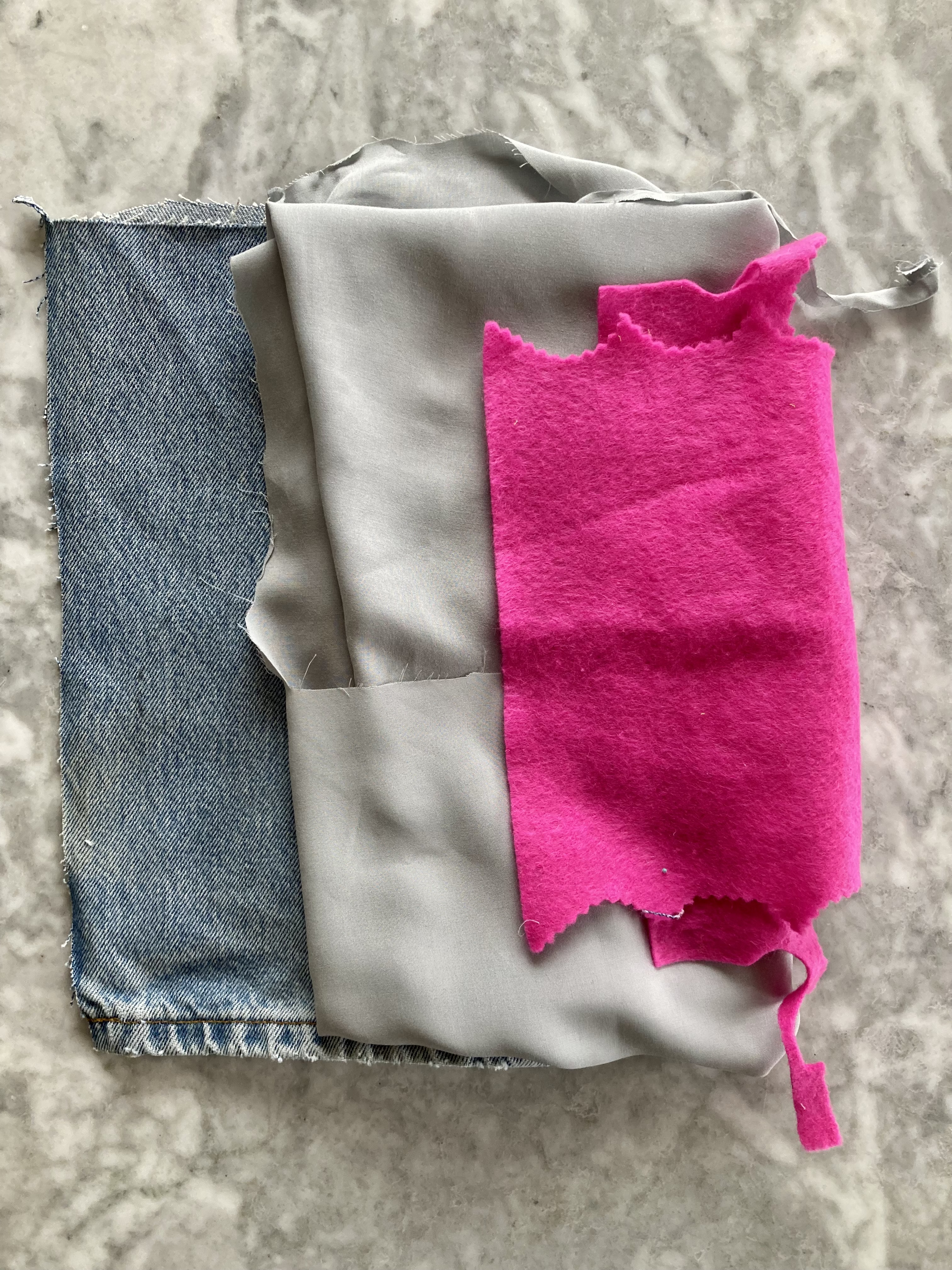
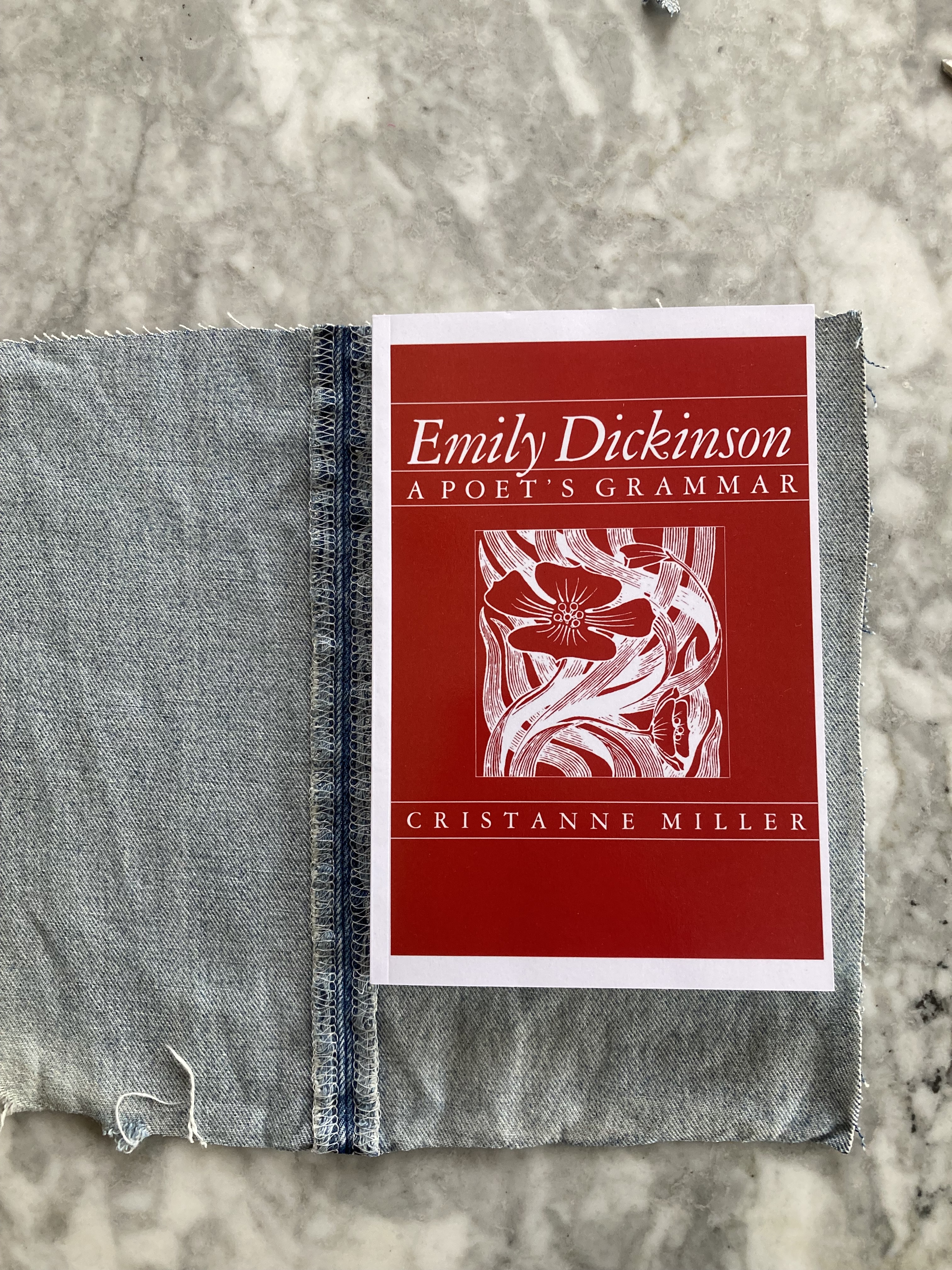
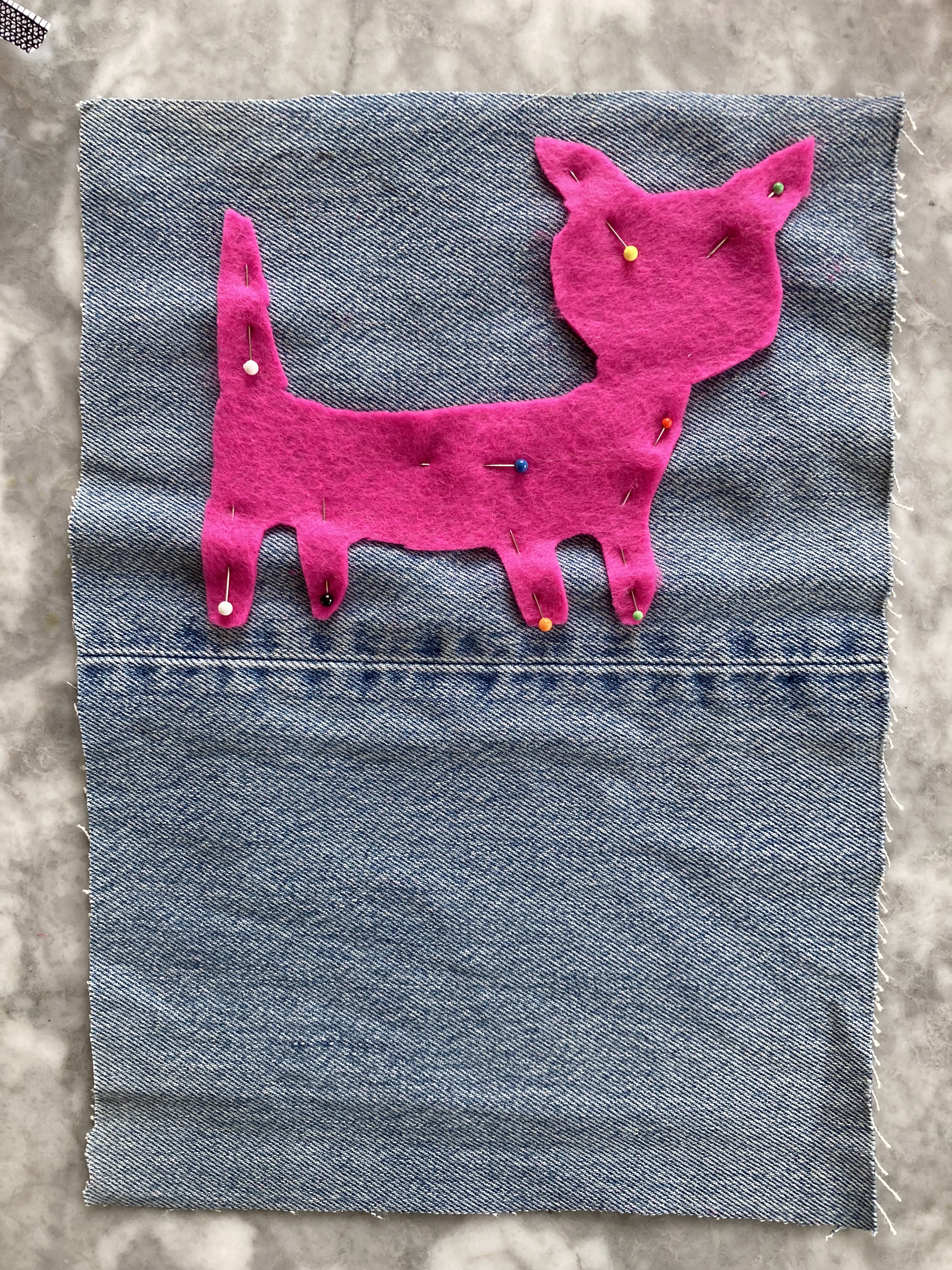
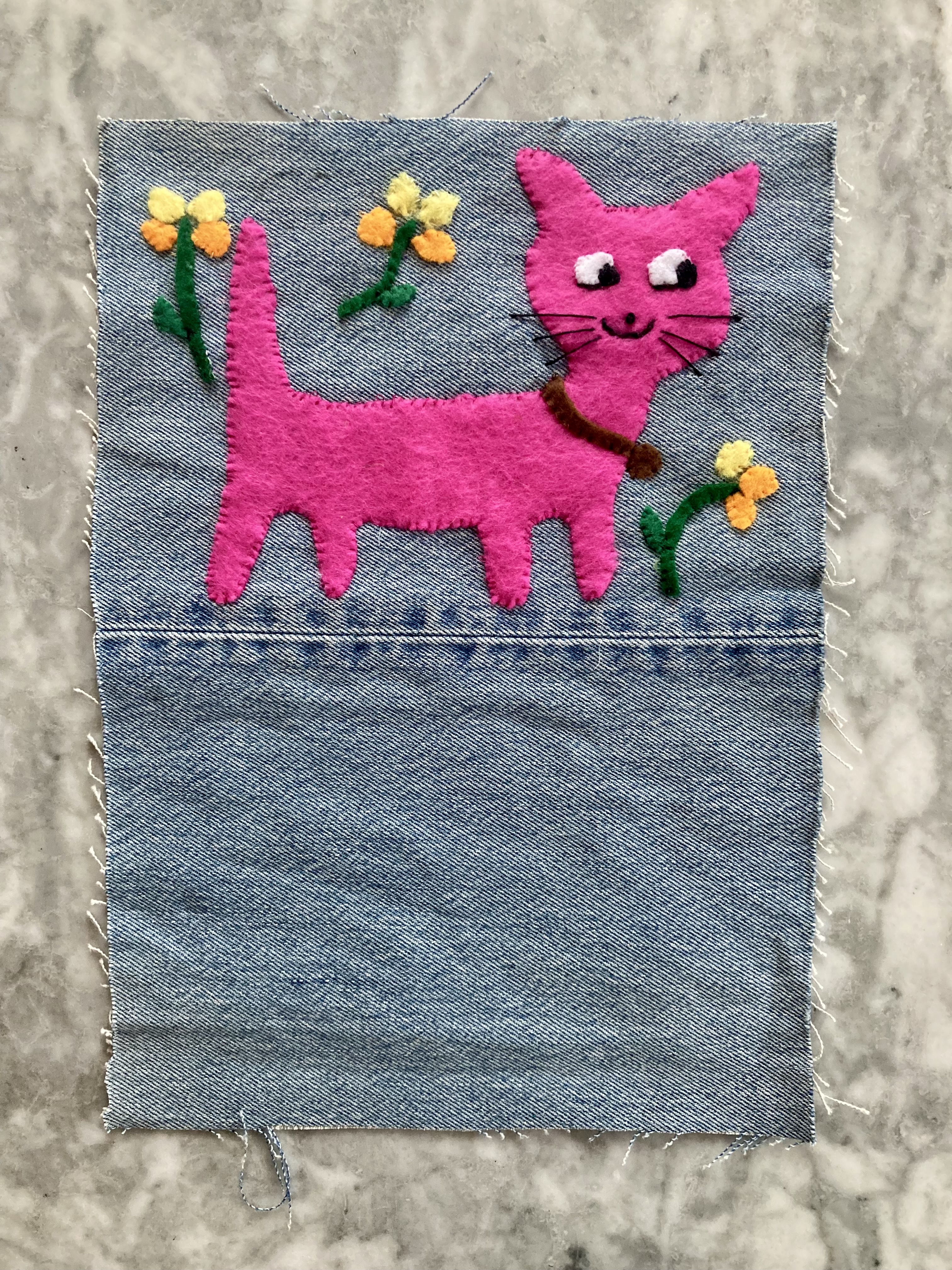
My backing fabric was from the leg of an old pair of jeans from the upcycling drawer. I used the leg seam as the bottom of the bag and found some lining material to match. Cristanne Miller’s book on Emily Dickinson’s grammar made an excellent straightening guide.

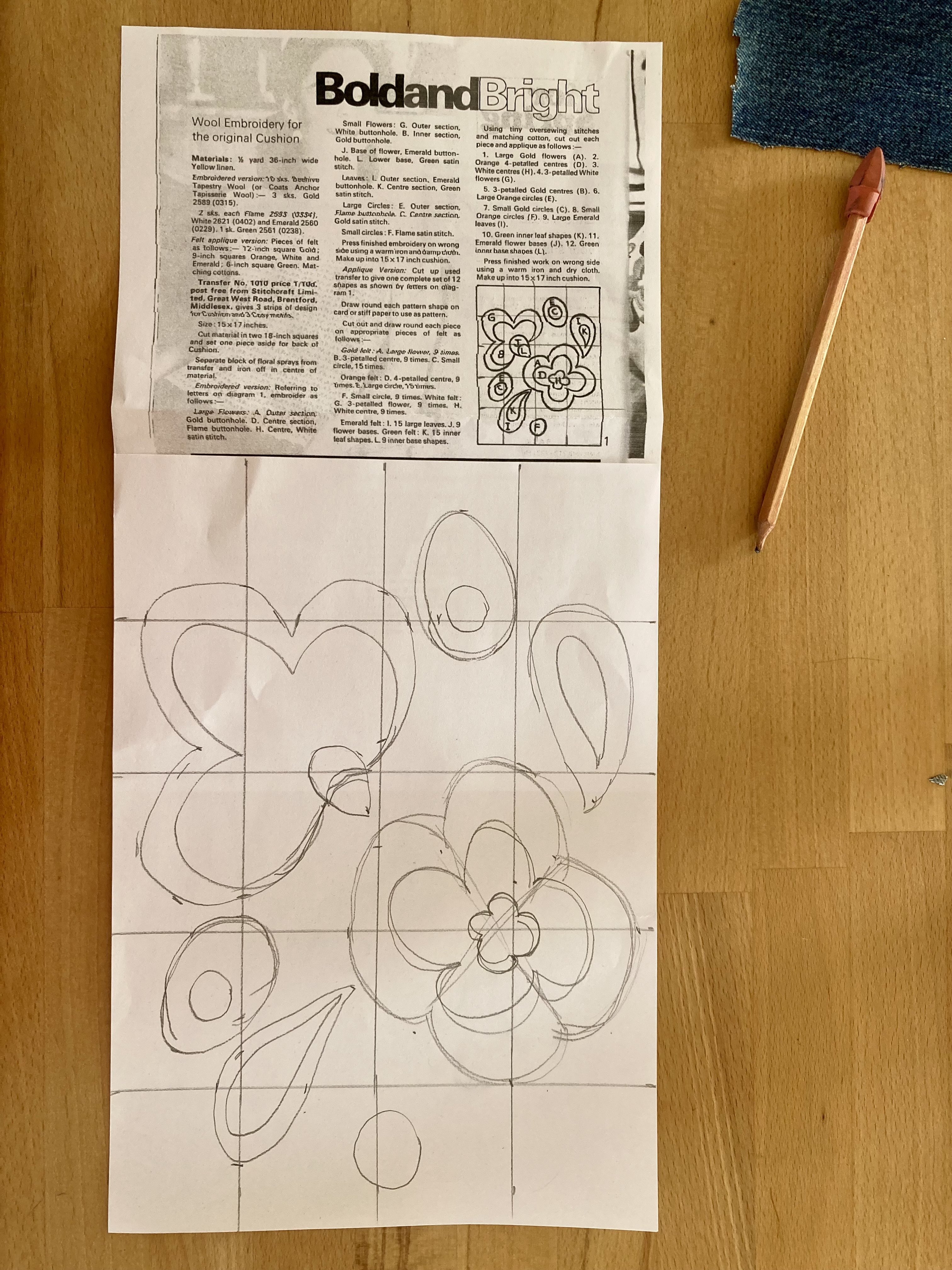
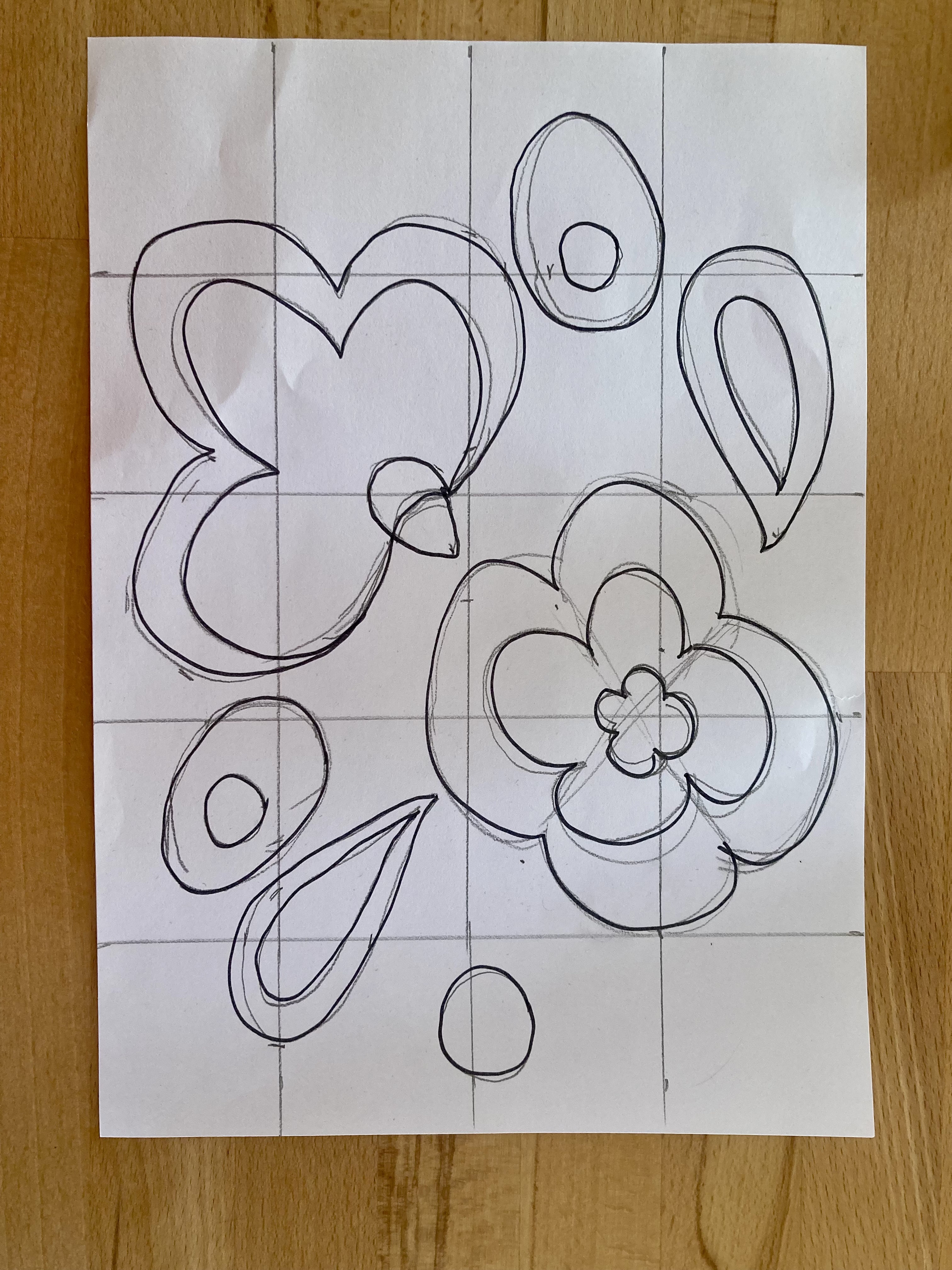
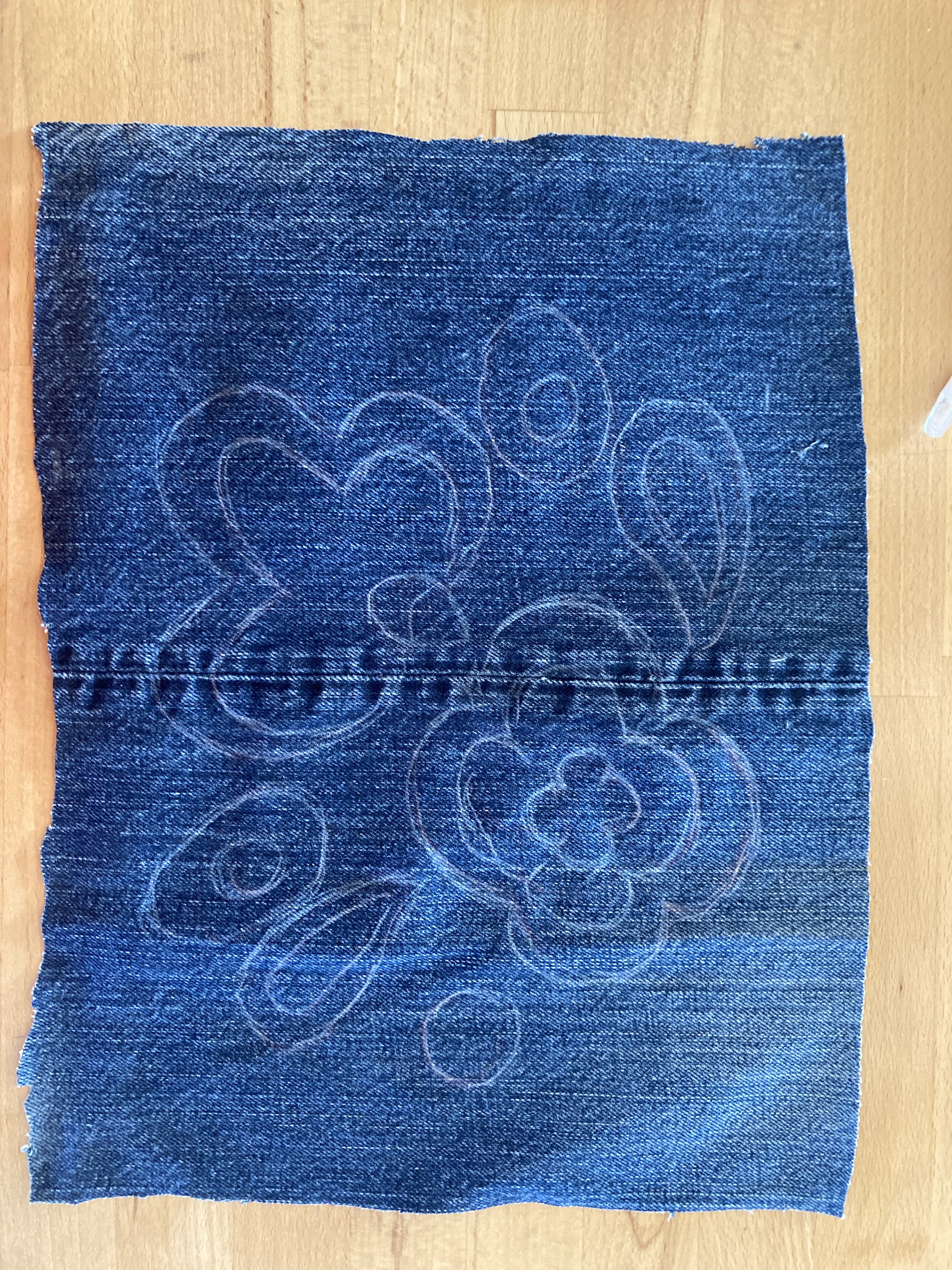
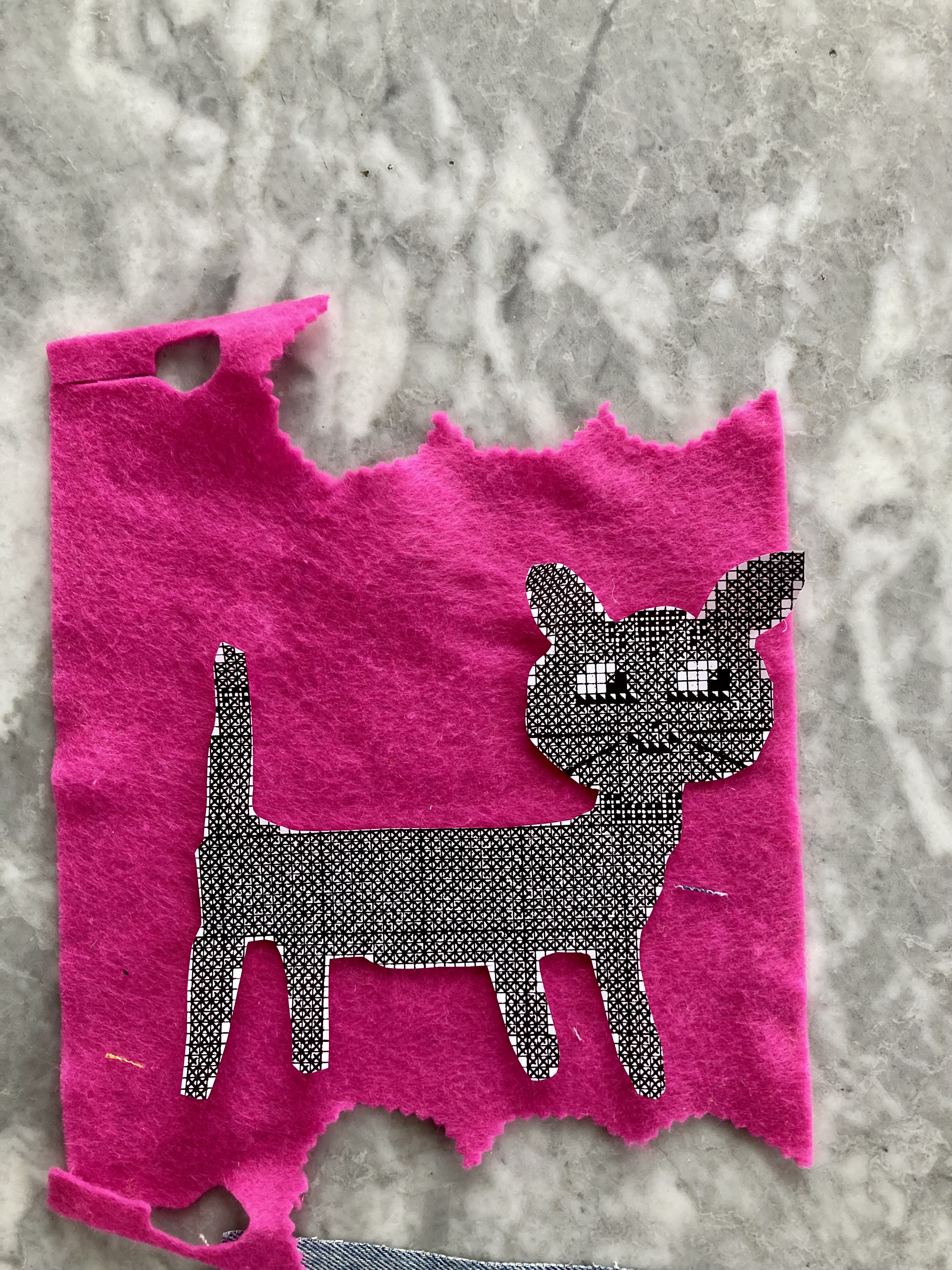
What colour cat? The cats in the pattern are white (rug, on royal blue background), white (nightcase, on light blue background), or blue (cushion, on cream background). I could have gone more realistic, with light grey or charcoal grey or brown. It didn’t seem whimsical enough, though. The design is so cute and cartoony that I found it better to use an entirely unrealistic colour, like the blue cat on the cushion. I had a big piece of pink felt that looked great on the blue jeans, so there it was. I made a cut-out template by photocopying the magazine page enlarged.

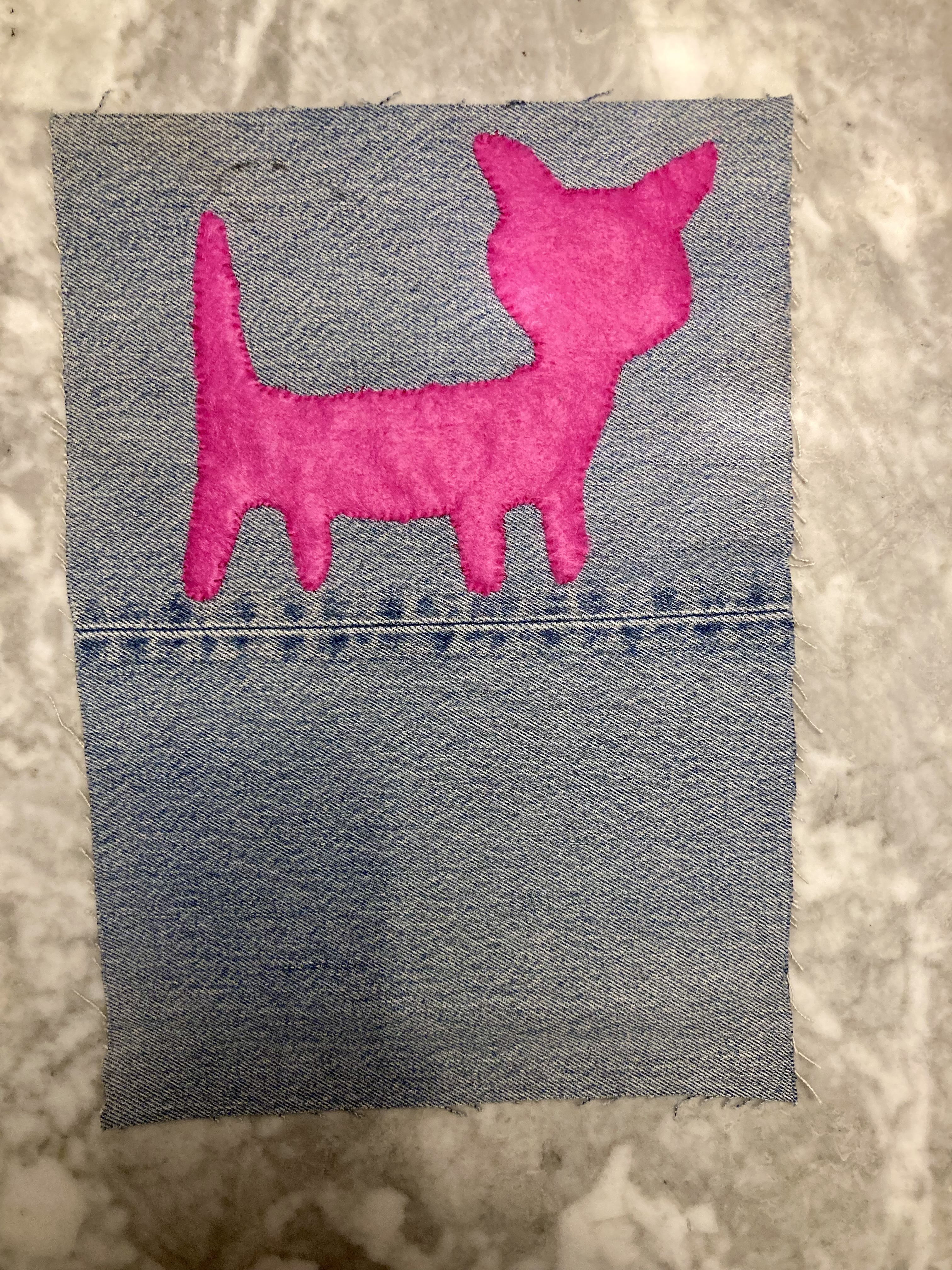
I appliquéd the eyes with pieces of white felt and embroidered the pupils, face and whiskers: satin-stitch and stem-stitch for the eyes, stem-stitch for the mouth, a French knot for the nose and individual long straight stitches for the whiskers. I was nervous, because anything with eyes is tricky, but I was so happy with the result! I think I really nailed the happy, lucky cartoon cat vibe.

I tried out a few different ideas for the flowers before committing to sewing anything down. My design didn’t leave a lot of room for seam allowances, so I left off the decorative lines on the sides. A single flower at the bottom right looked good, but unbalanced, so I added two more flowers at the upper left and upper middle. I adapted the bow around the cat’s neck into a more simple collar and left off the bow on the cat’s tail.

I sewed it up with minimal stress, except for the zipper, of course. Ugh, I hate zippers. This one was finicky and ended up a bit wavy, but nothing on earth will persuade me to re-do a zipper, as long as it works at all. It wasn’t until I starting writing this post, two days after the bag was finished, that I saw that I had forgotten to sew down one side of one flower and one side of the collar! Whoops. That’s what happens when you try to sew in northern Europe in December — there is no light anywhere. Can you see it in the photo? I fixed the flower and collar and then the project was really and truly finished.

I am so, so happy with this project. It is so cute! The facial expression is perfect. I dare anyone, even cat haters, to look at this bright pink cat and not smile and feel happy. I would love to keep it for myself but I am going to give it to a cat-loving friend who could use some smiles and happiness right now. That way, it will bring both of us good luck.

Happy December Holidays to all of you, and all the best for 2026.

December 1967: Overview

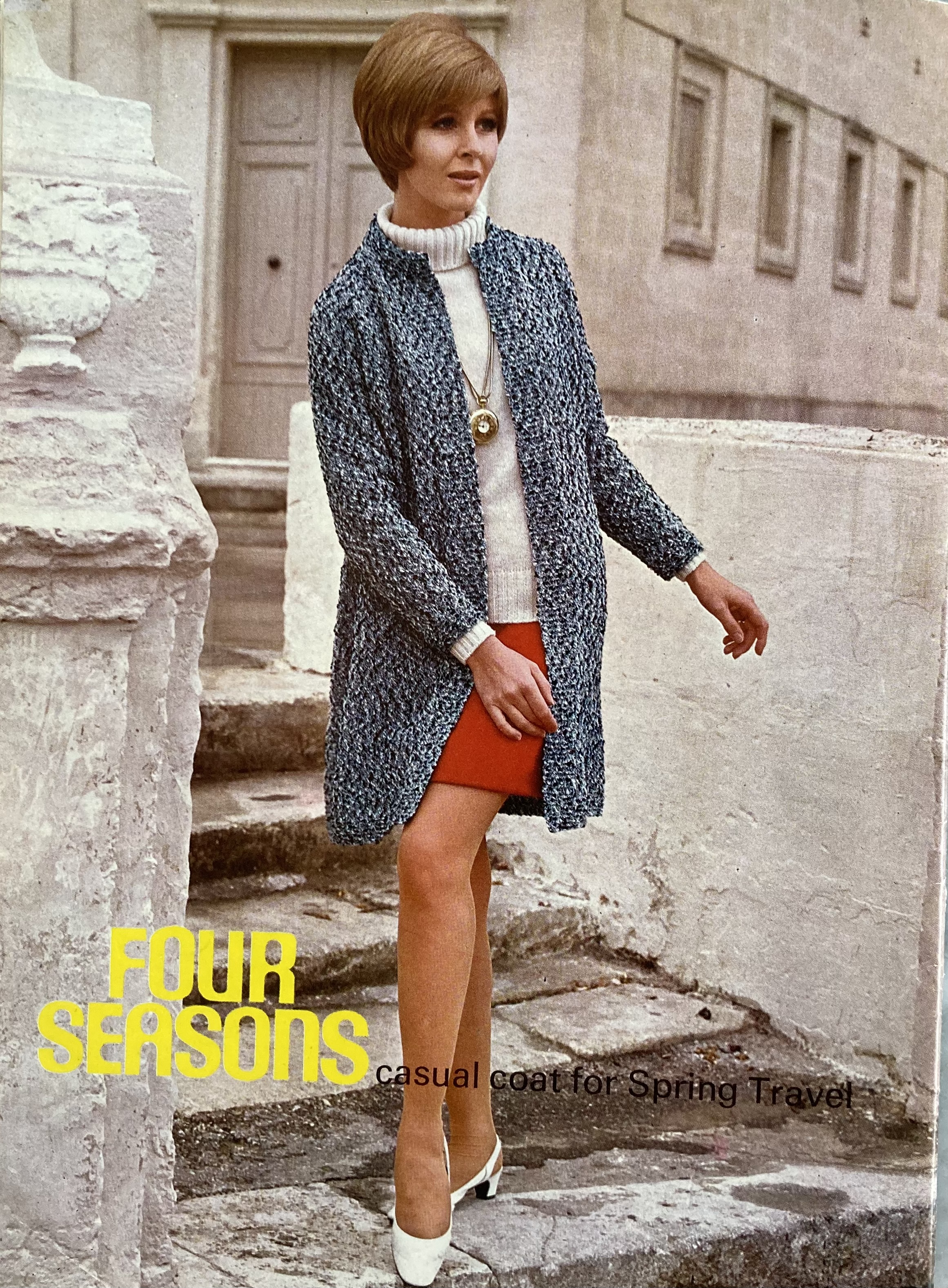
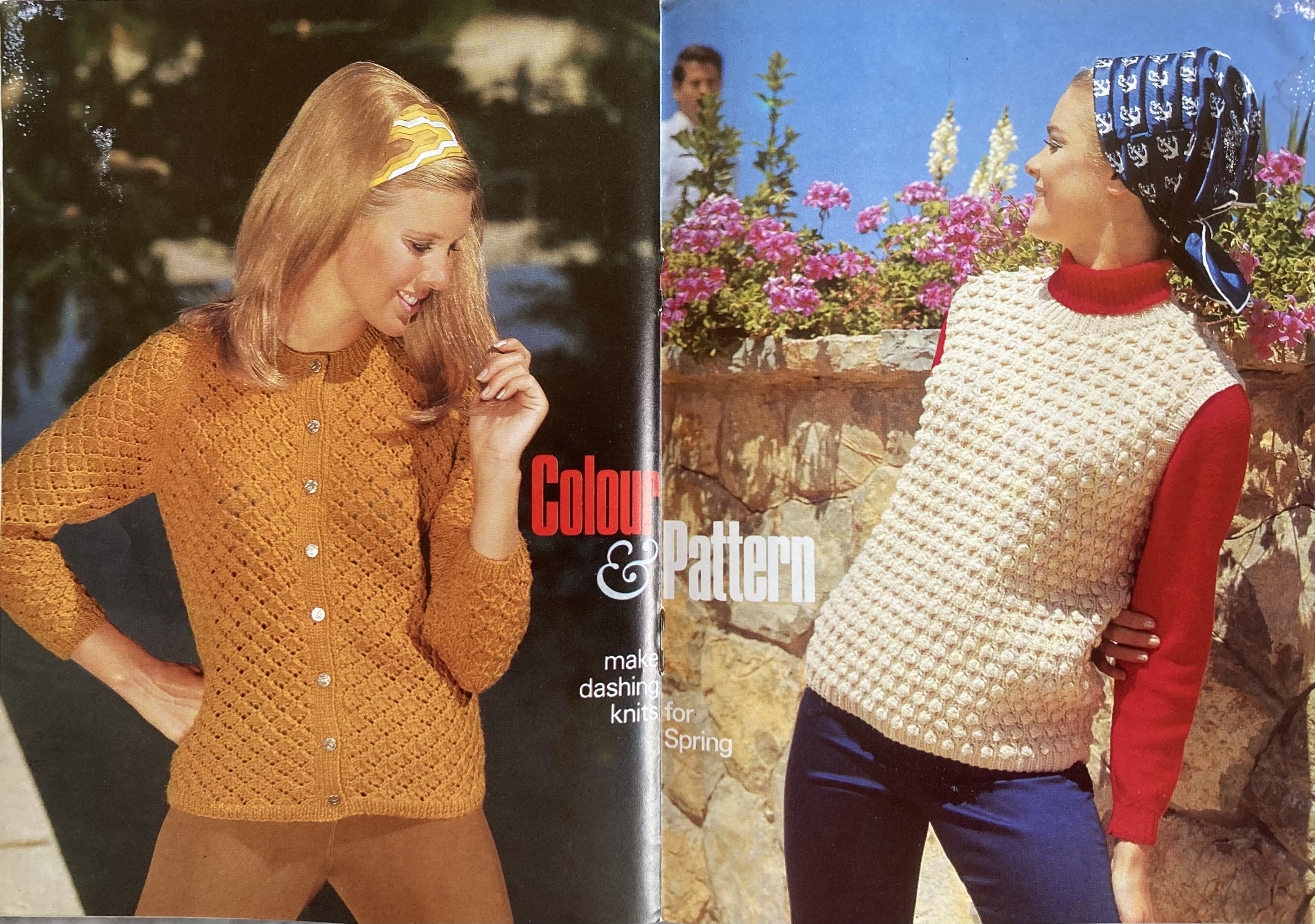
It’s here! The December 1967 Stitchcraft Christmas issue is a “bumper number to help with last-minute ideas for your Christmas giving, and suggestions for your winter handicrafts.”

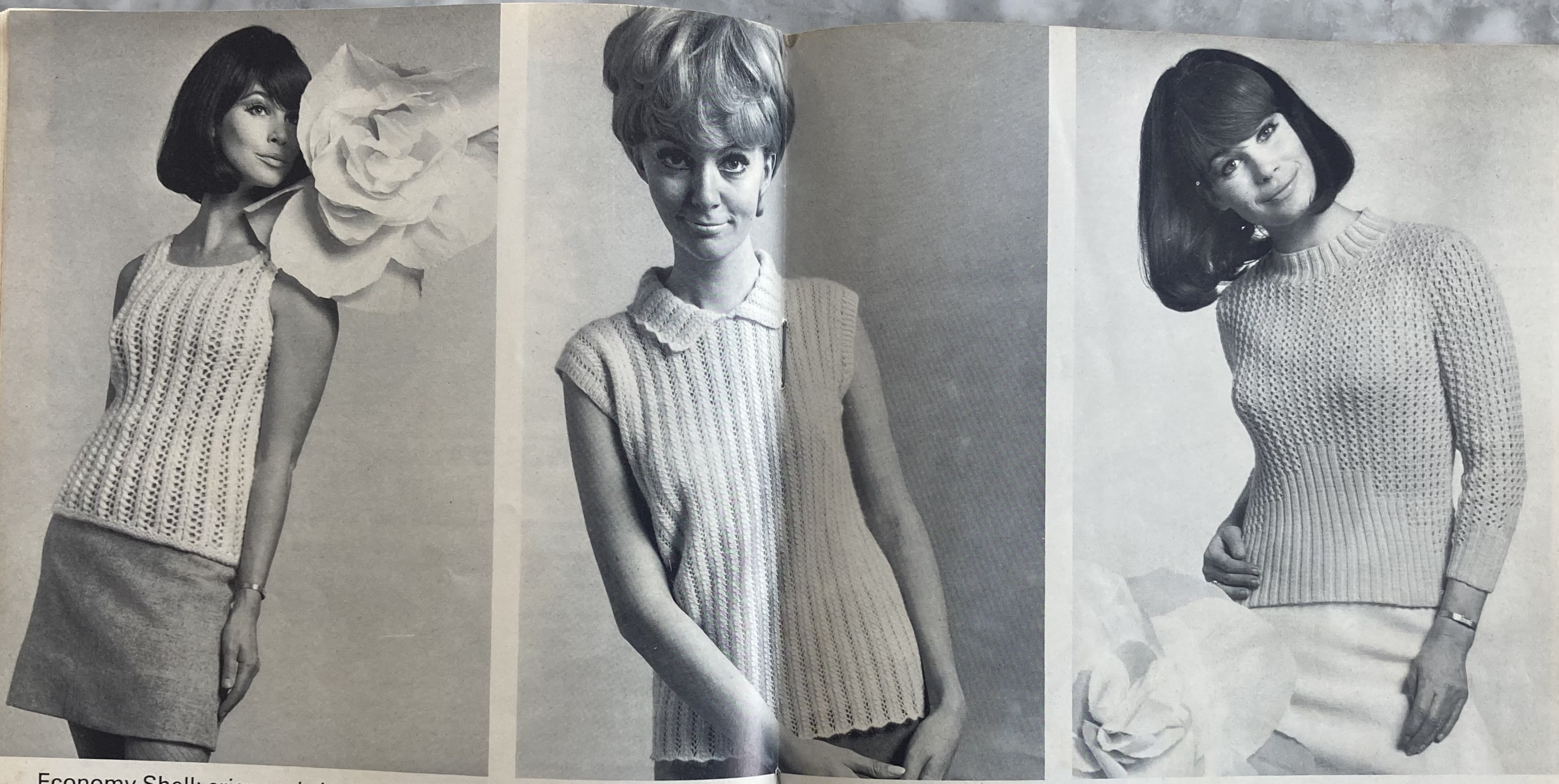
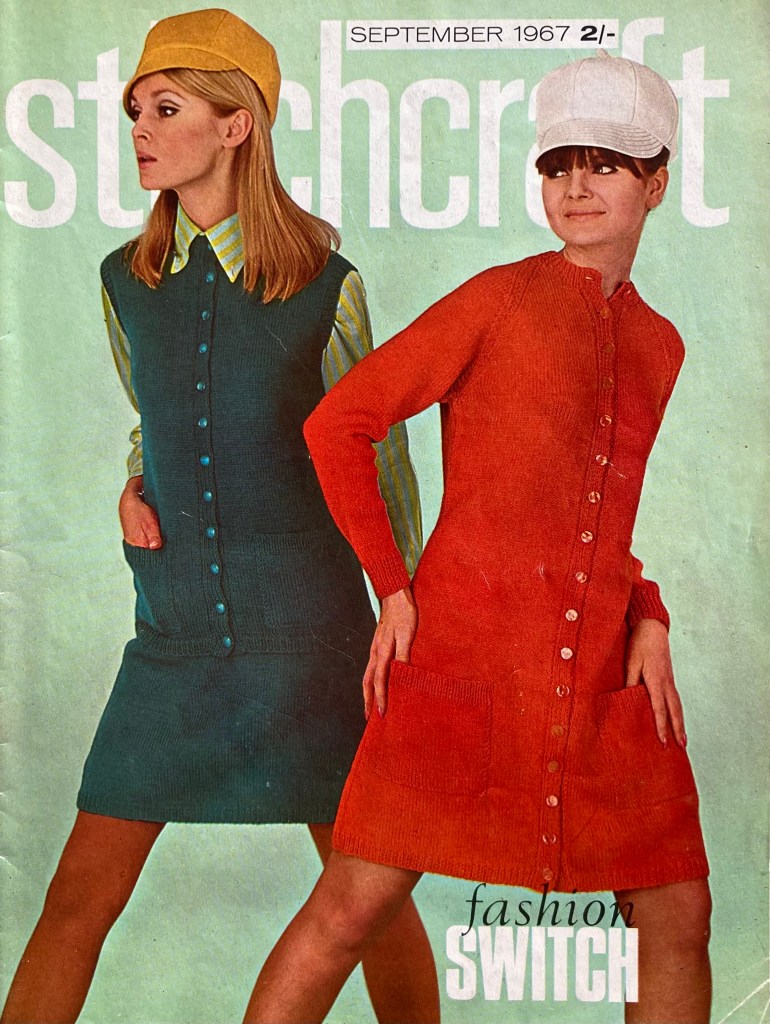
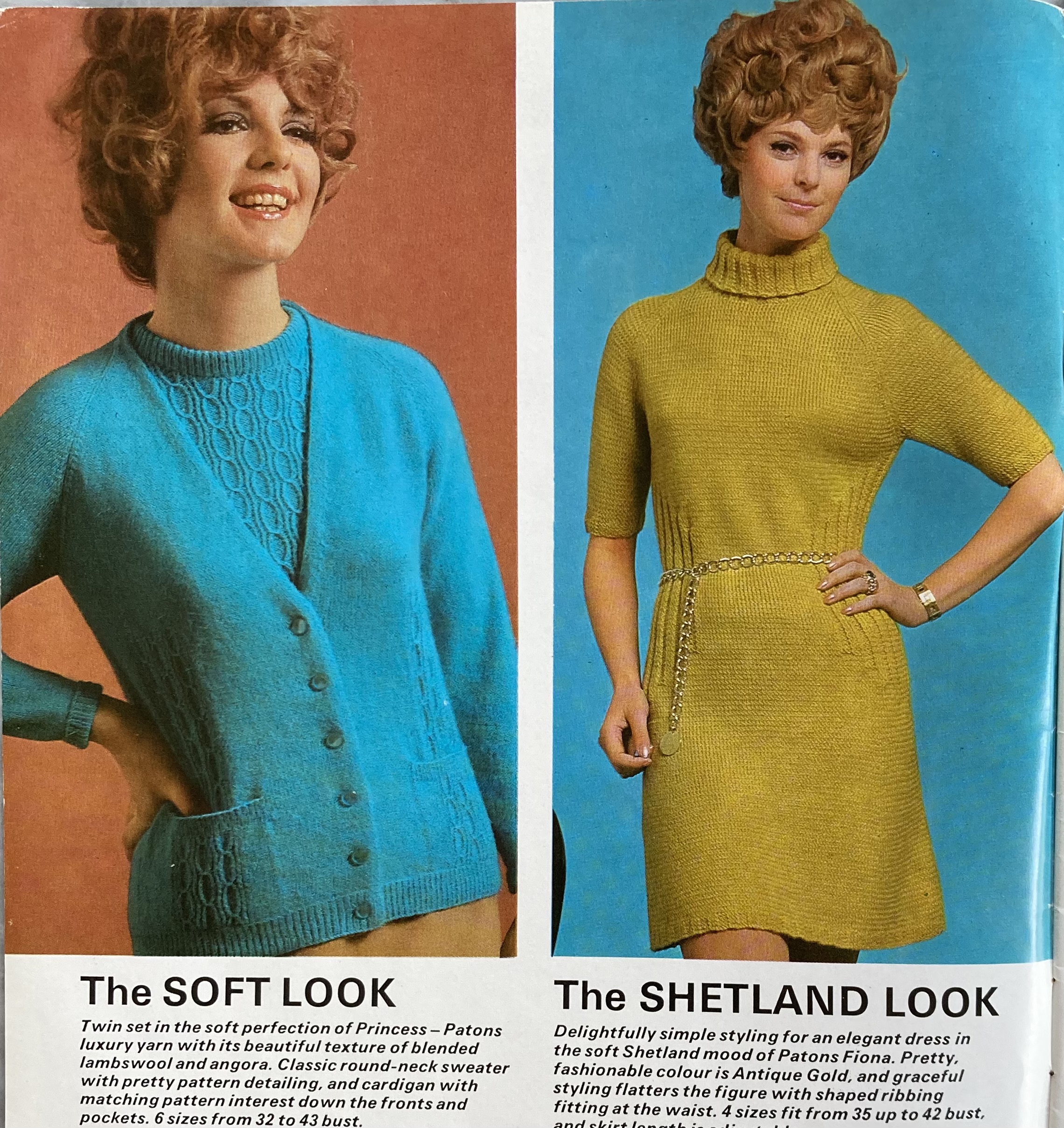
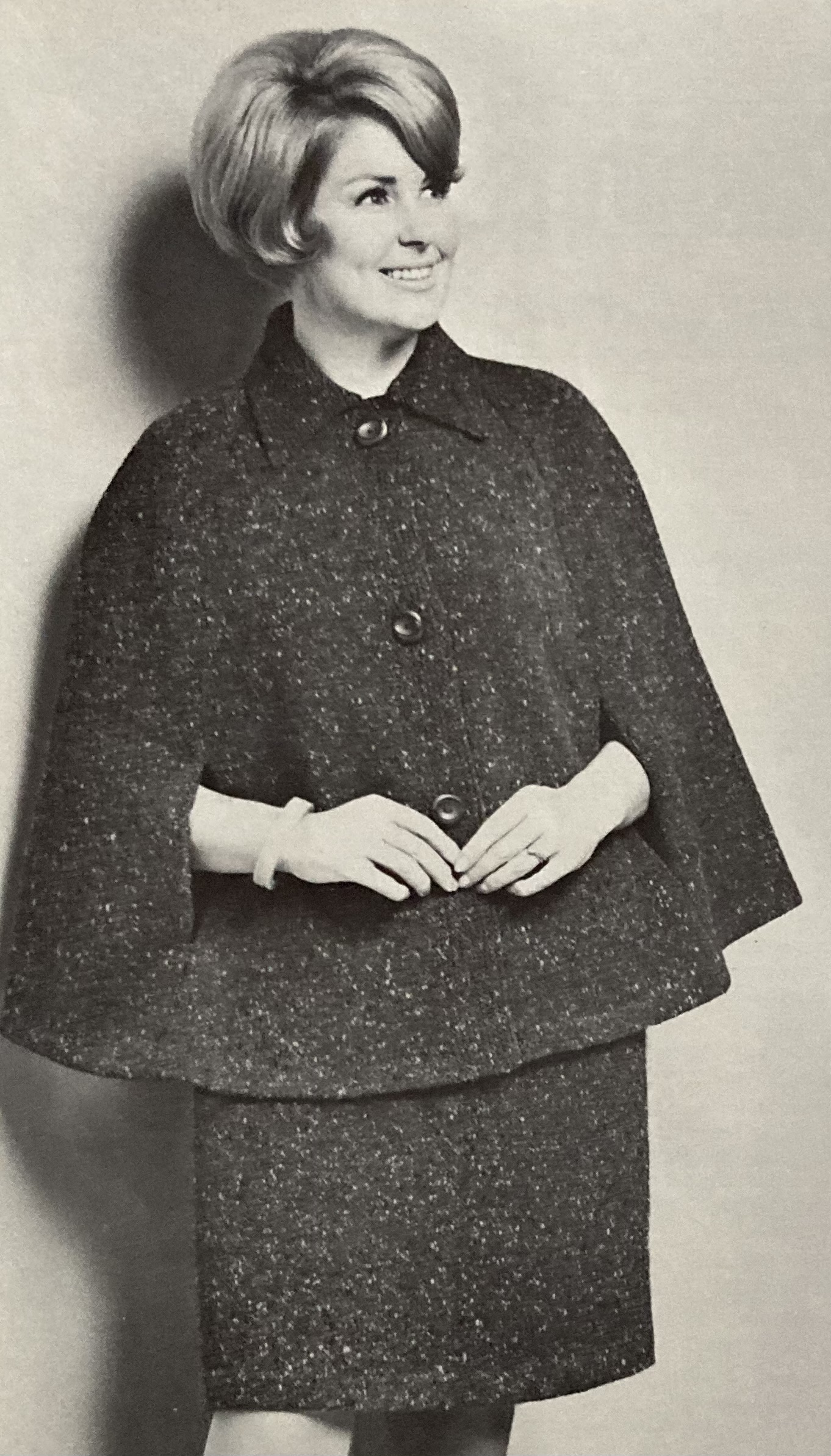
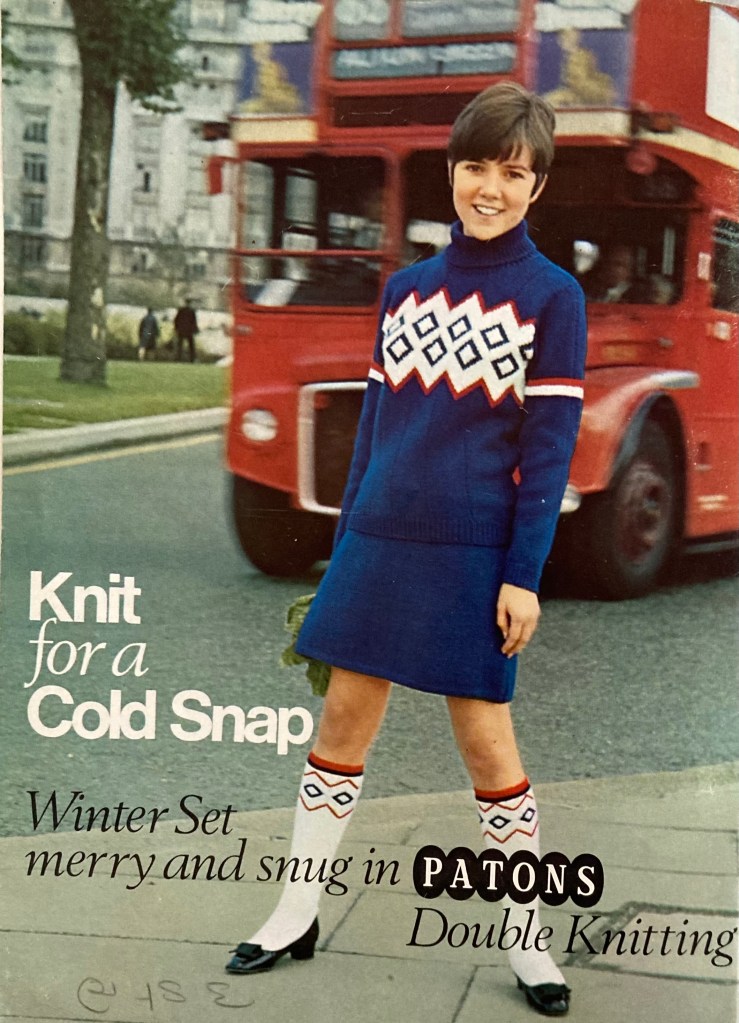
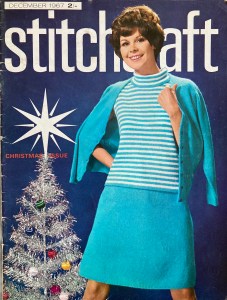
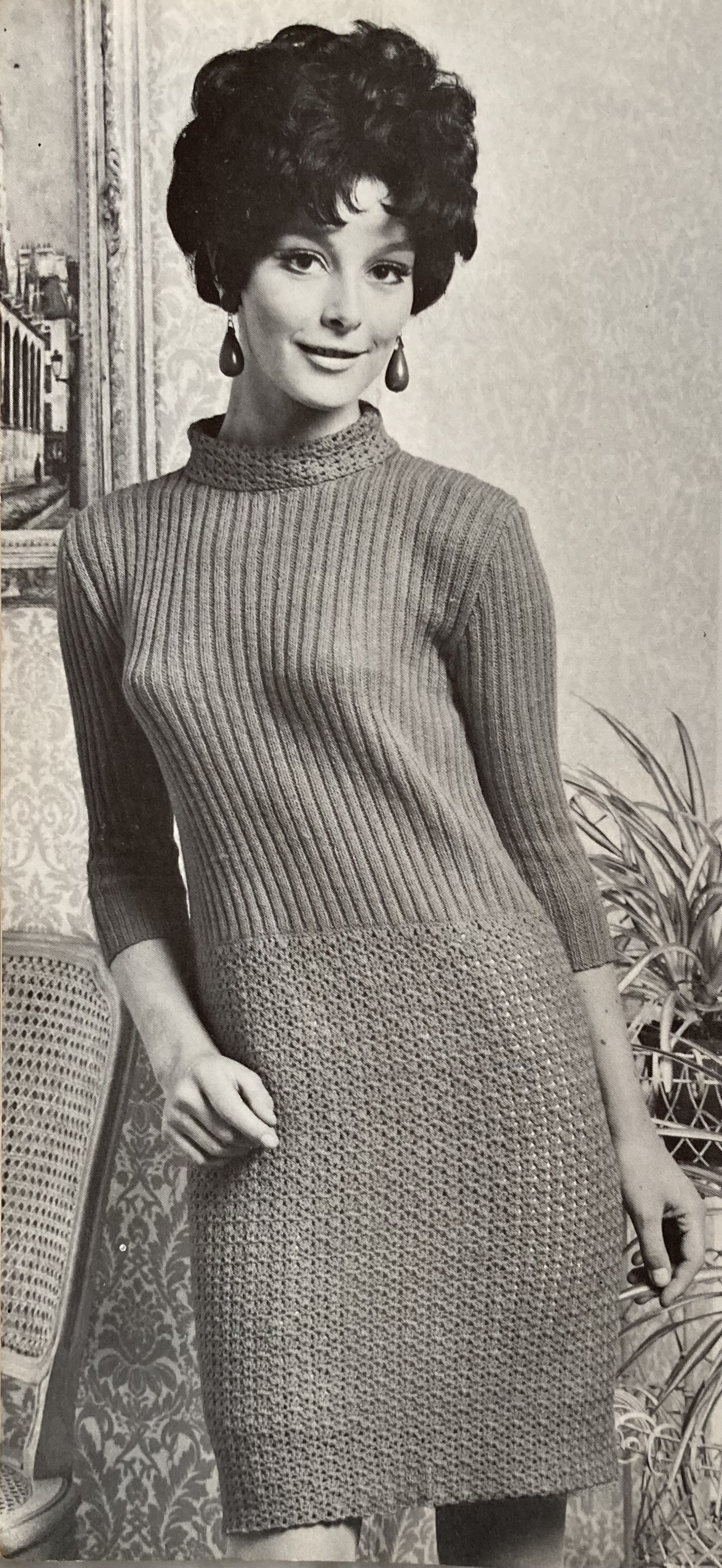
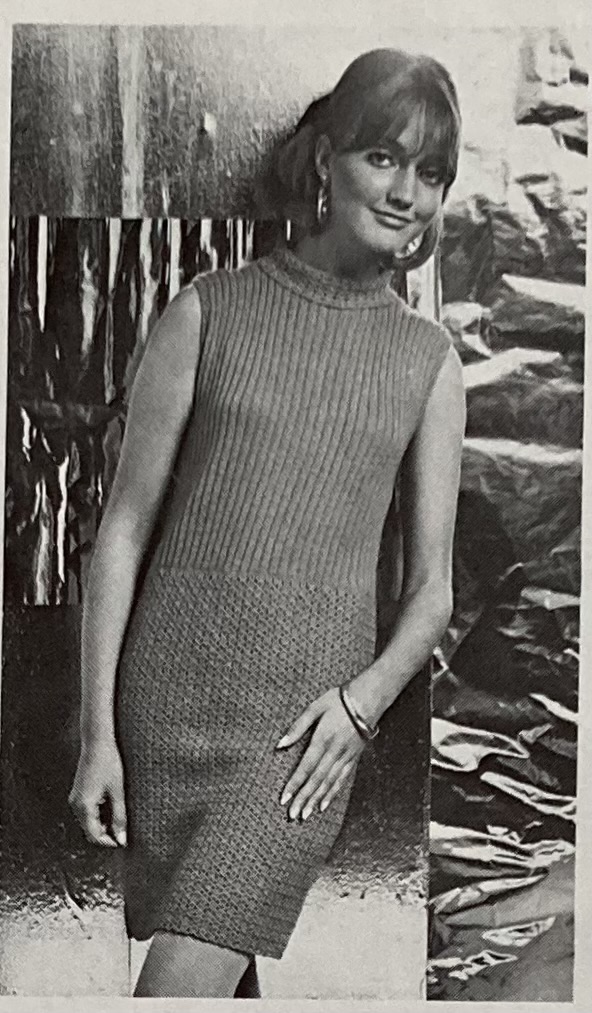
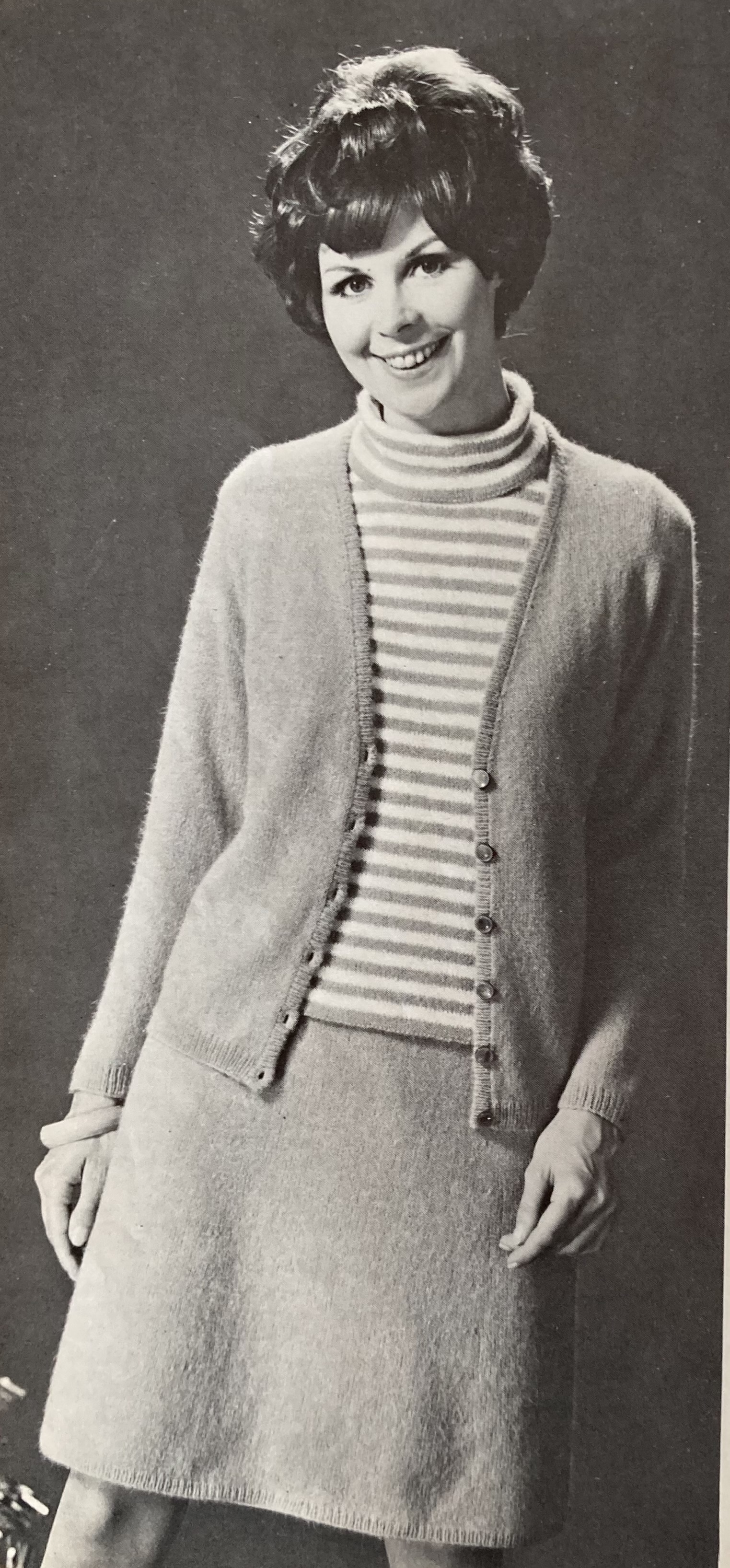
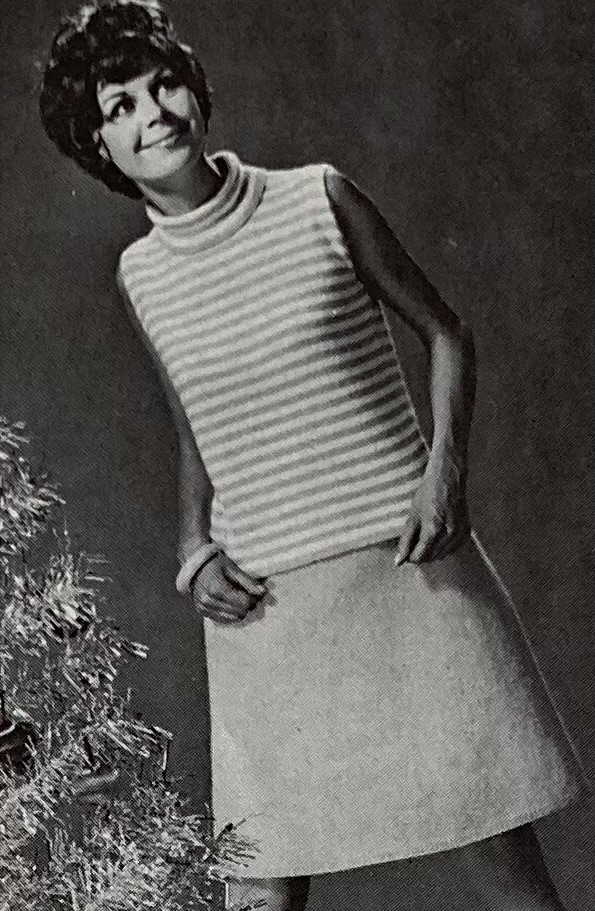
The cover photo went with a wintery blue, white and silver colour scheme to set off the featured 3-piece skirt suit. It’s knitted in Patons “Princess”, a light, fluffy yarn made of 80% wool and 20% angora. At 8 stitches to the inch on No 11 (3.0 mm) needles, I imagine it won’t get finished by Christmas. The striped top is sleeveless, and the skirt shorter than knee-length without being “mini”: this is an outfit intended for the respectable suburban mother of the family. A more fun-loving adult woman can make a party dress with or without sleeves, that combines knitting and crochet. Looking at the second picture, you can see why all the models pose with their spines in that corkscrew S-curve — it’s to hide the fact that the unshaped, unbelted dress will look like a sack on them otherwise. Must be hard to hold the pose for the whole party…

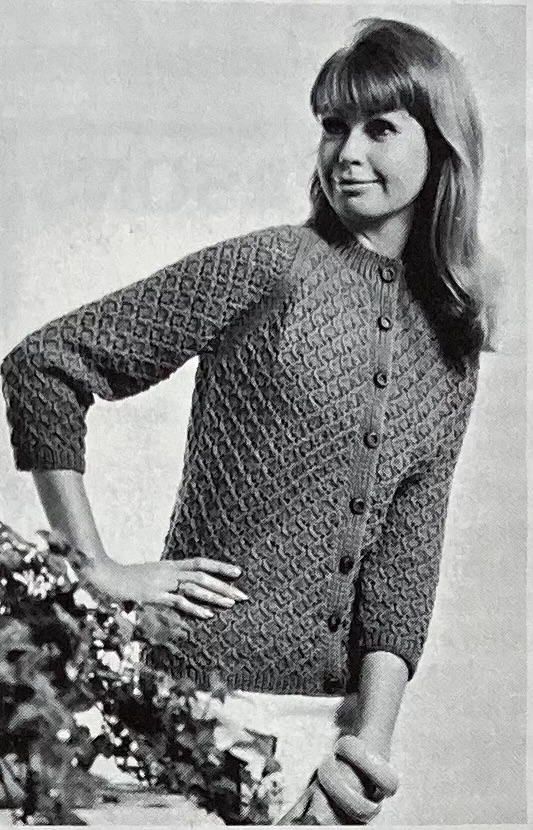
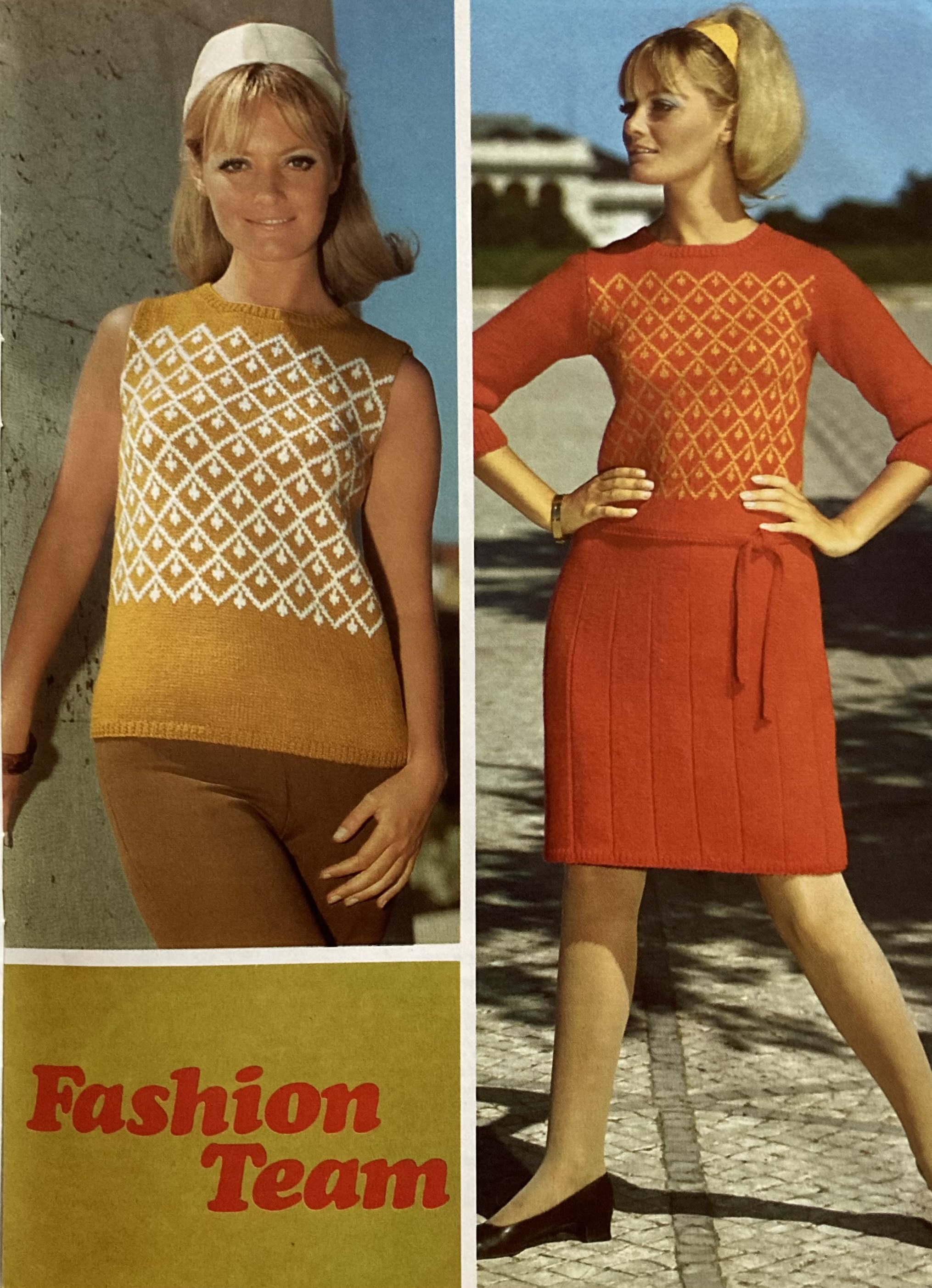
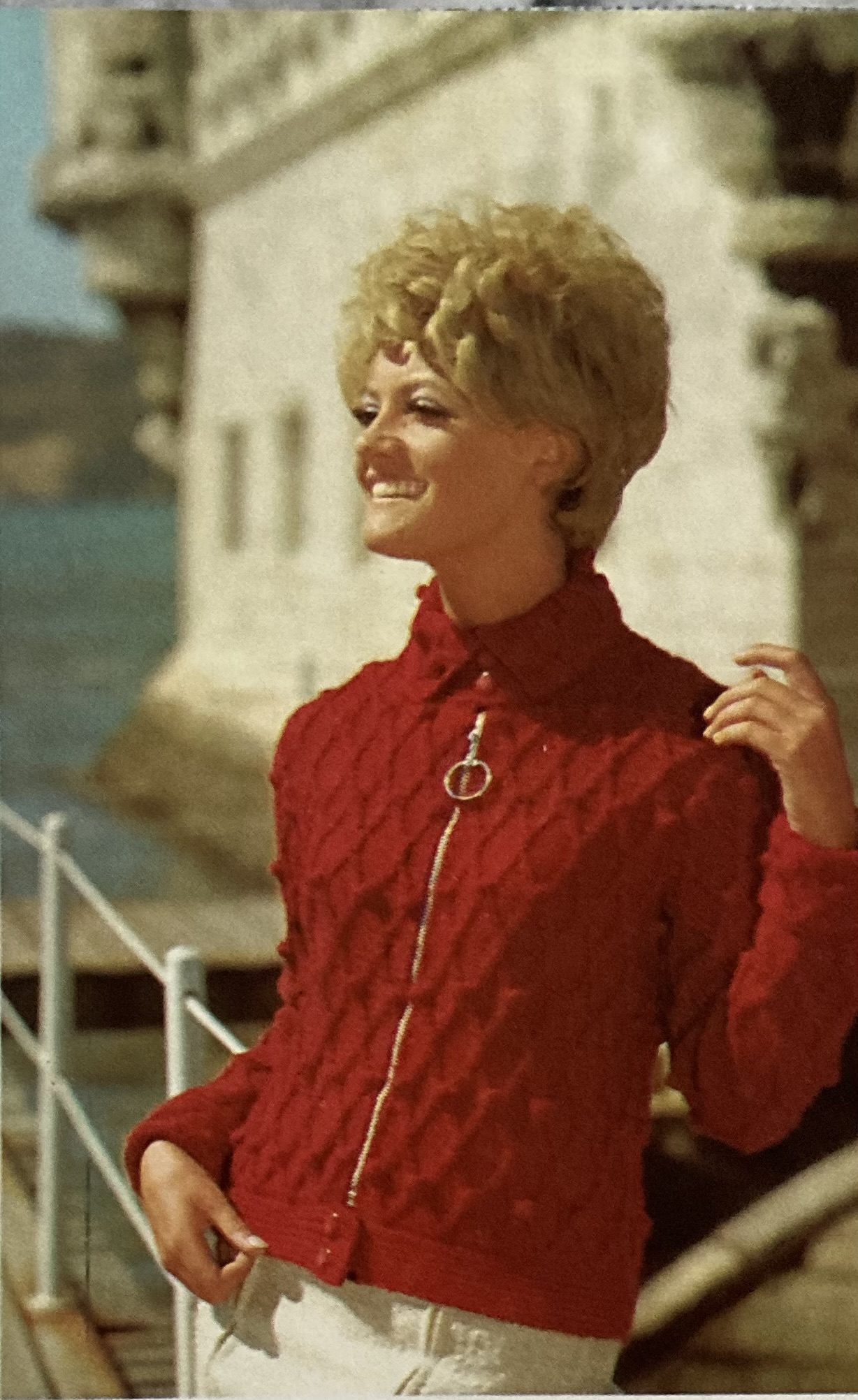
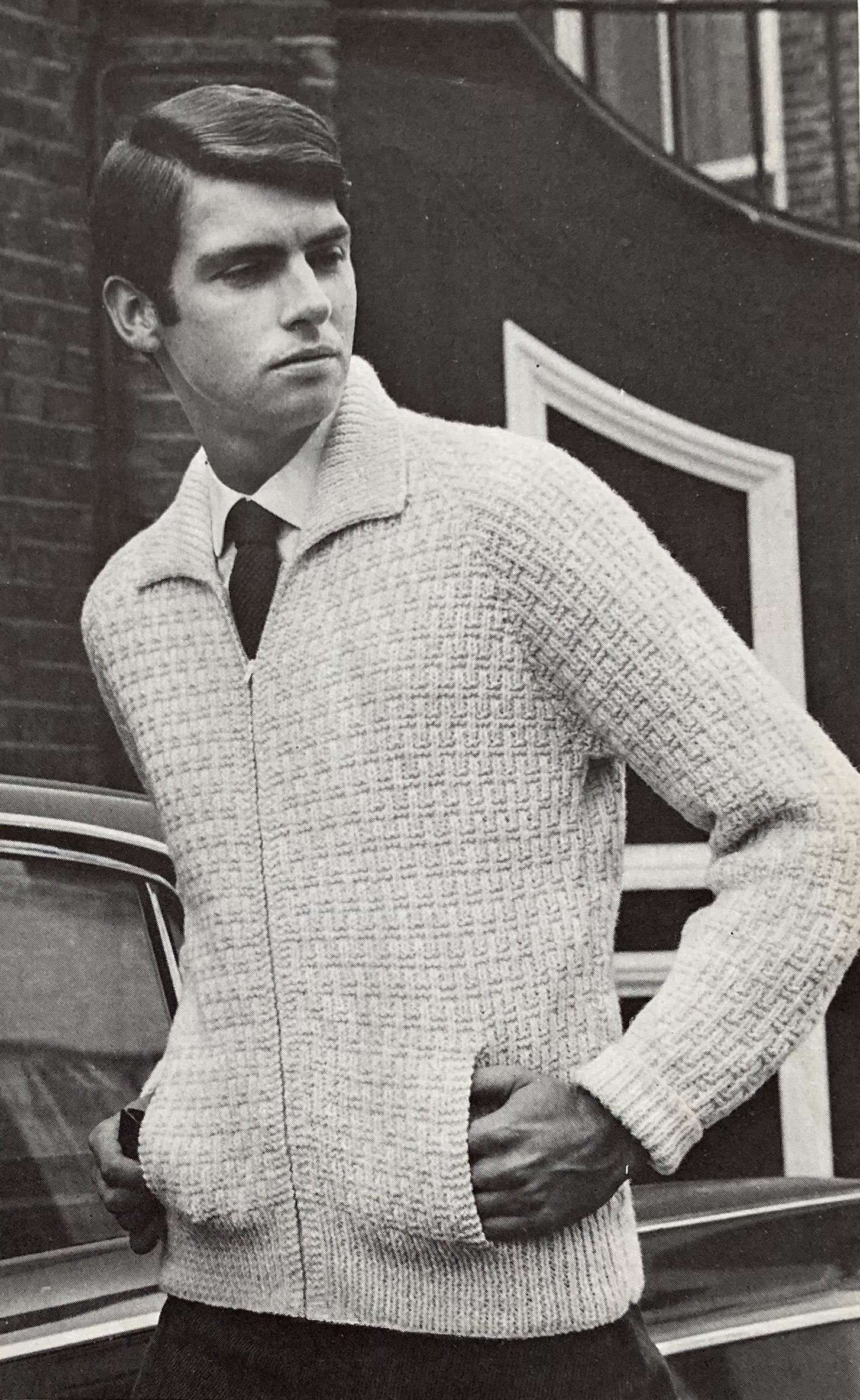
As for the “young team”, they “love to match”, according to Stitchcraft, and can knit themselves (who am I kidding, the girl will knit for both of them) some warm pullovers in a fun two-colour basketweave pattern with ribbed sleeves. The colour pattern is made with slip stitches. Other adult garments include a “lumber style” mens’ zipped cardigan, two practical jumper-blouses to “go with suits and skirts” and a classic cardigan for larger sizes.

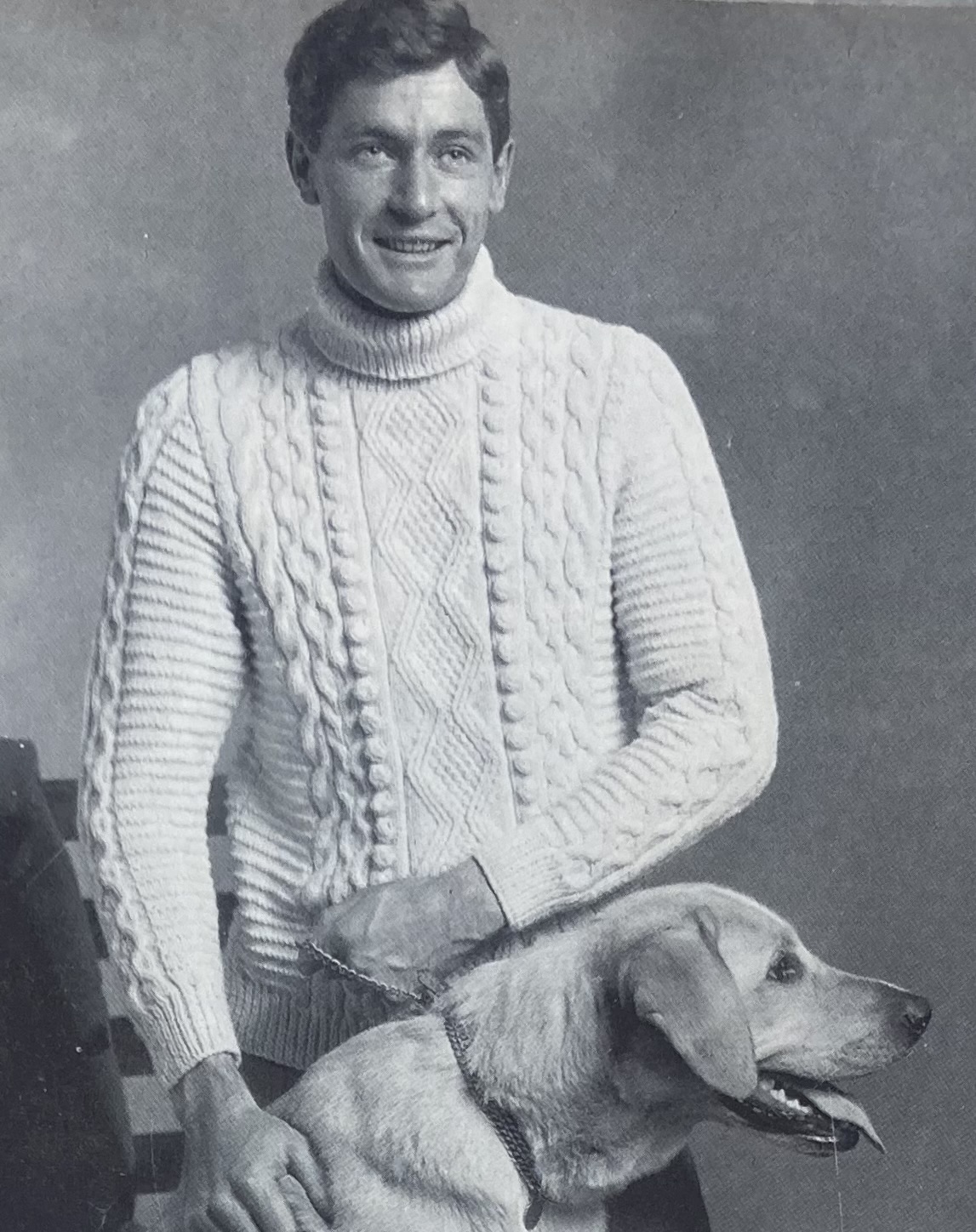
Cables and basketweave textures are on trend, and the colours are not particularly Christmas-oriented — strong, cool colours and neutrals. The mens’ basketweave cardigan is made in cream-coloured, undyed “Capstan” wool and the two suit-skirt jumpers in “Planet Jade” and “Bracken Gold” with “Brandy Snap” contrast. Only the knit-crochet party dress is in holiday “Hawthorn Red”.

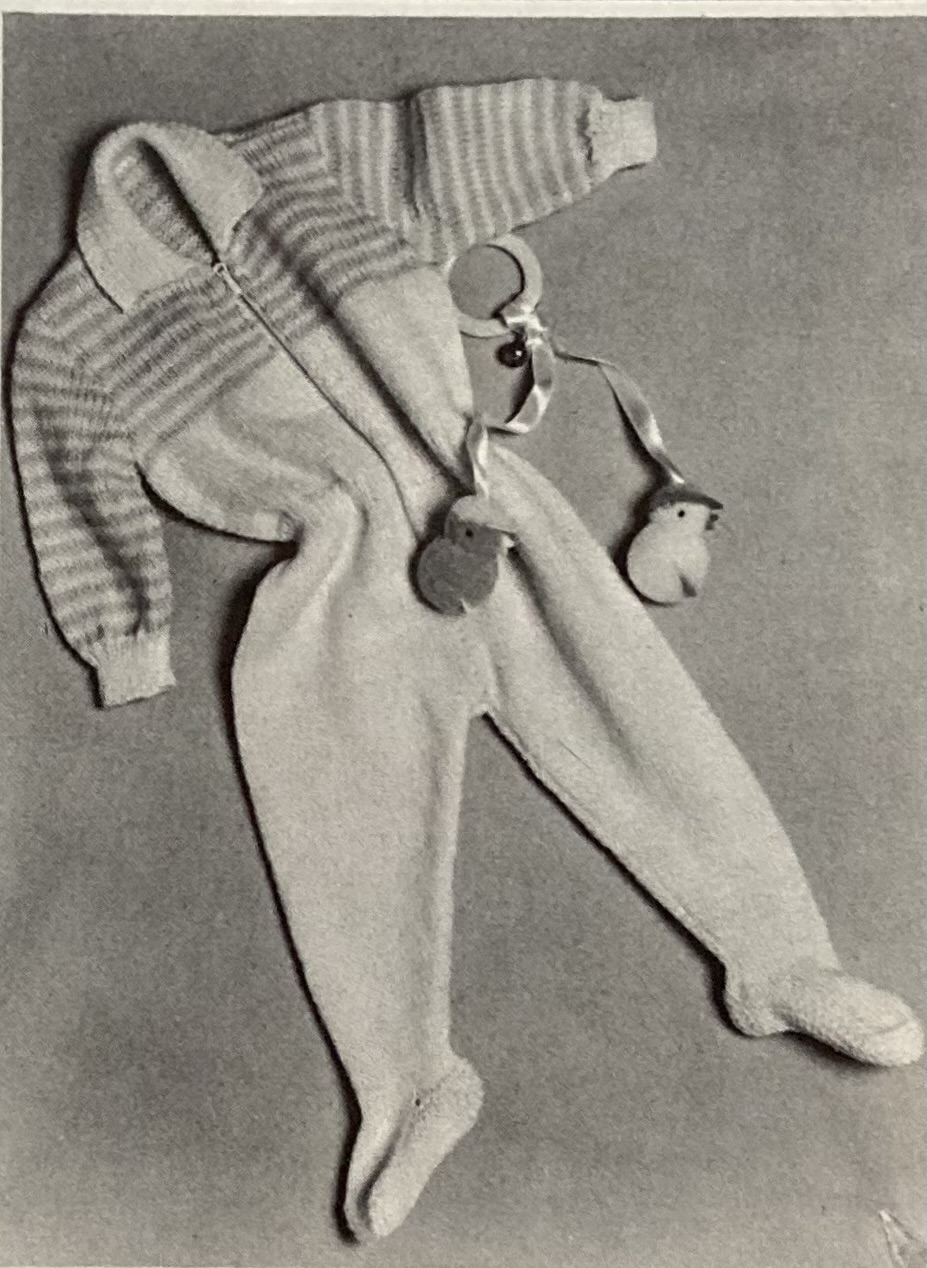
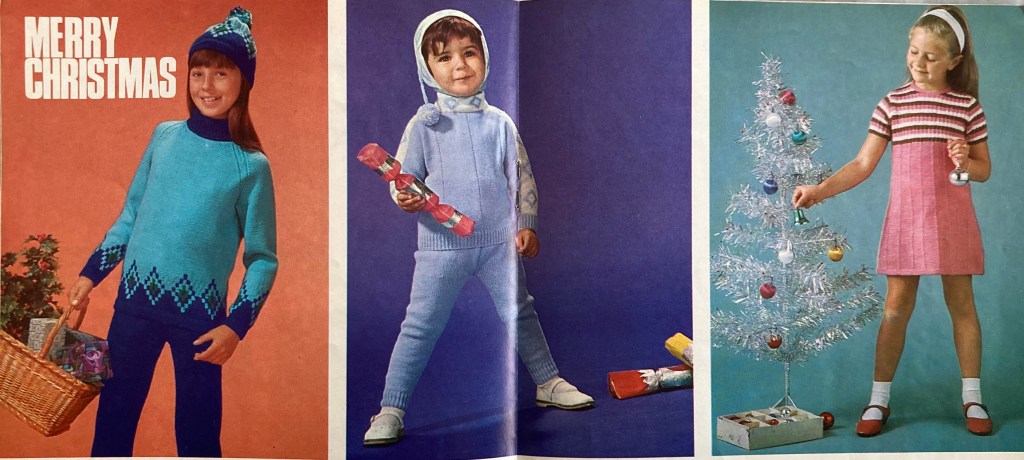
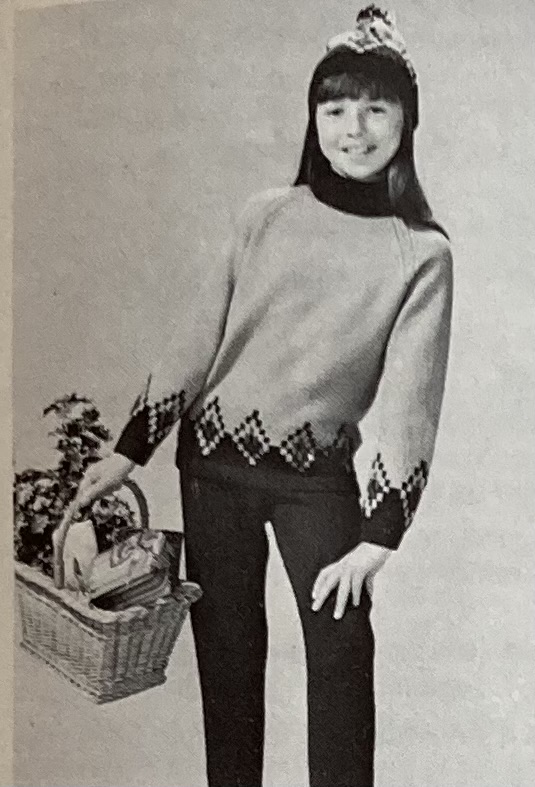
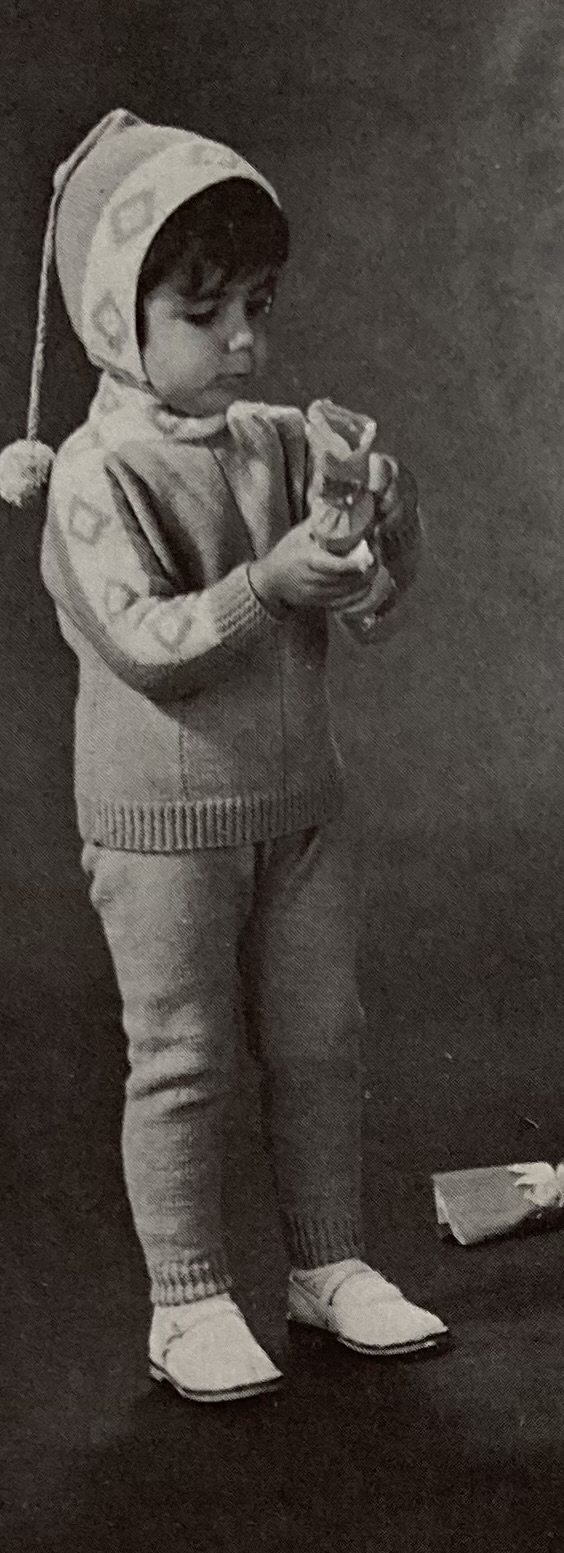
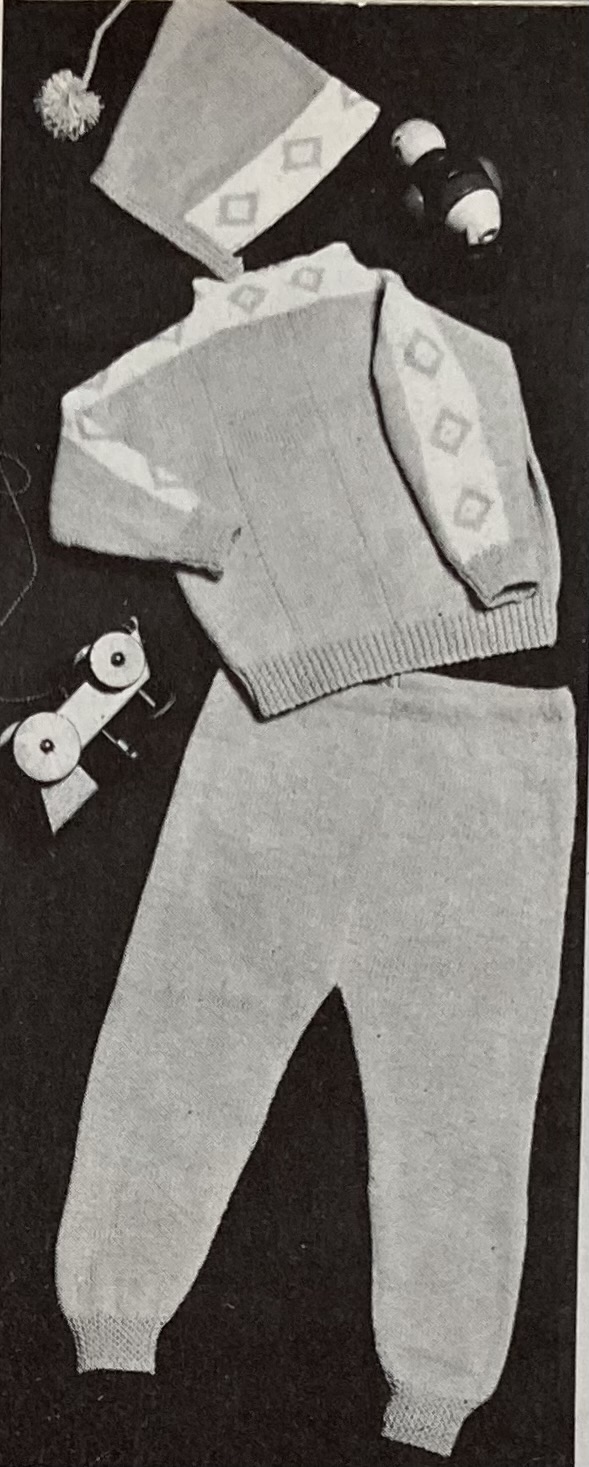
There are some great fashions for children in this issue that could theoretically be finished by Christmas morning: a warm set of jumper, leggings and hat for a little one, a dress-and-cardigan set for a school-age girl and another jumper, leggings and hat set for a pre-teen. On second thought, you would have to be an extremely fast knitter to get any of those sets finished in time… Here too, cool, bright colours prevail, and stripes, slip-stitch lines, and diamond patterns are trending.

(On another note, the slogan that Stitchcraft chose to describe all of these children’s patterns is “Gay as a Cracker”. I do understand that they mean the outfits are as bright, fun and festive as a Christmas cracker that you pull across the table and get a little prize and a paper hat out of, but that did not age well.)

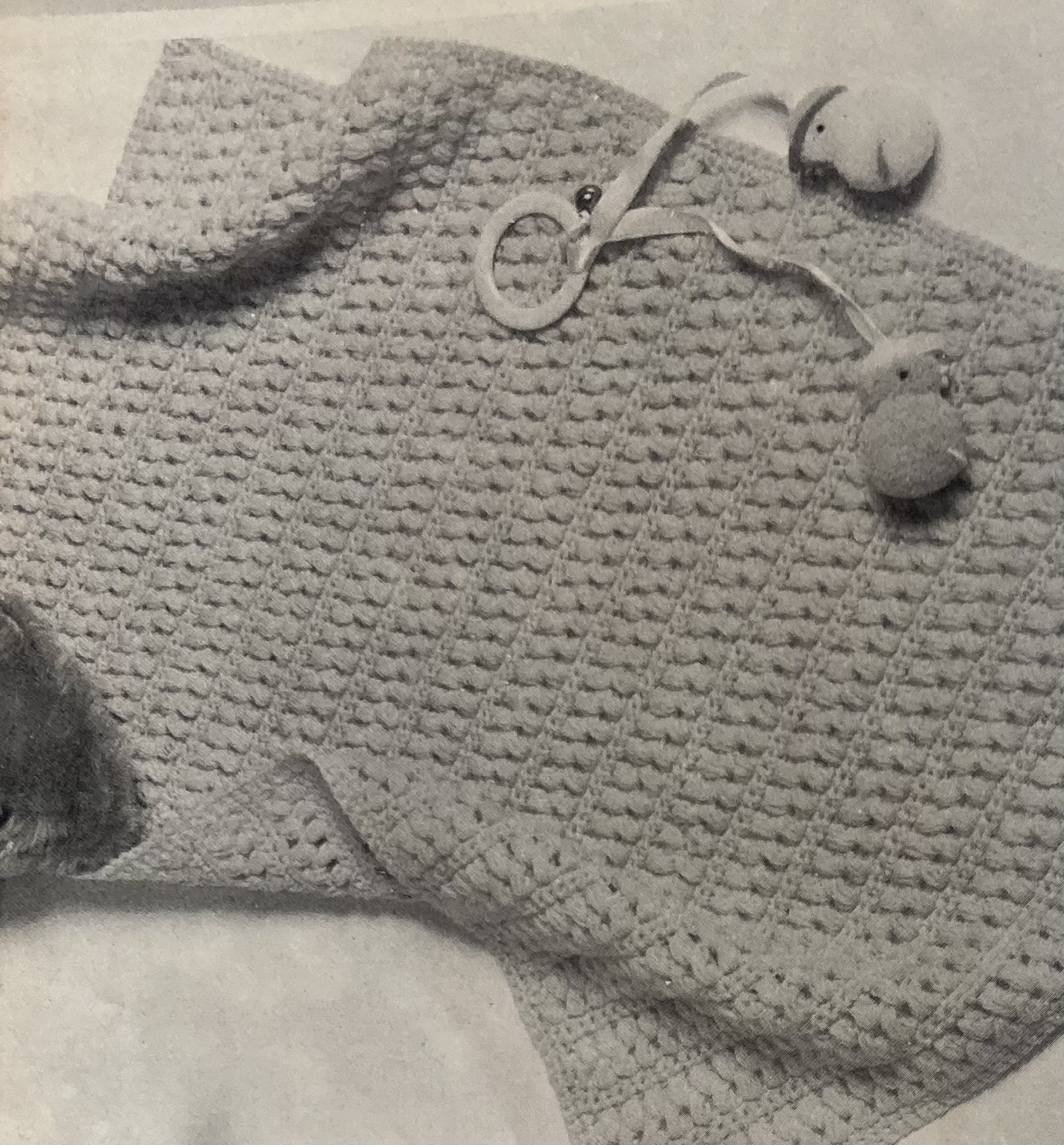
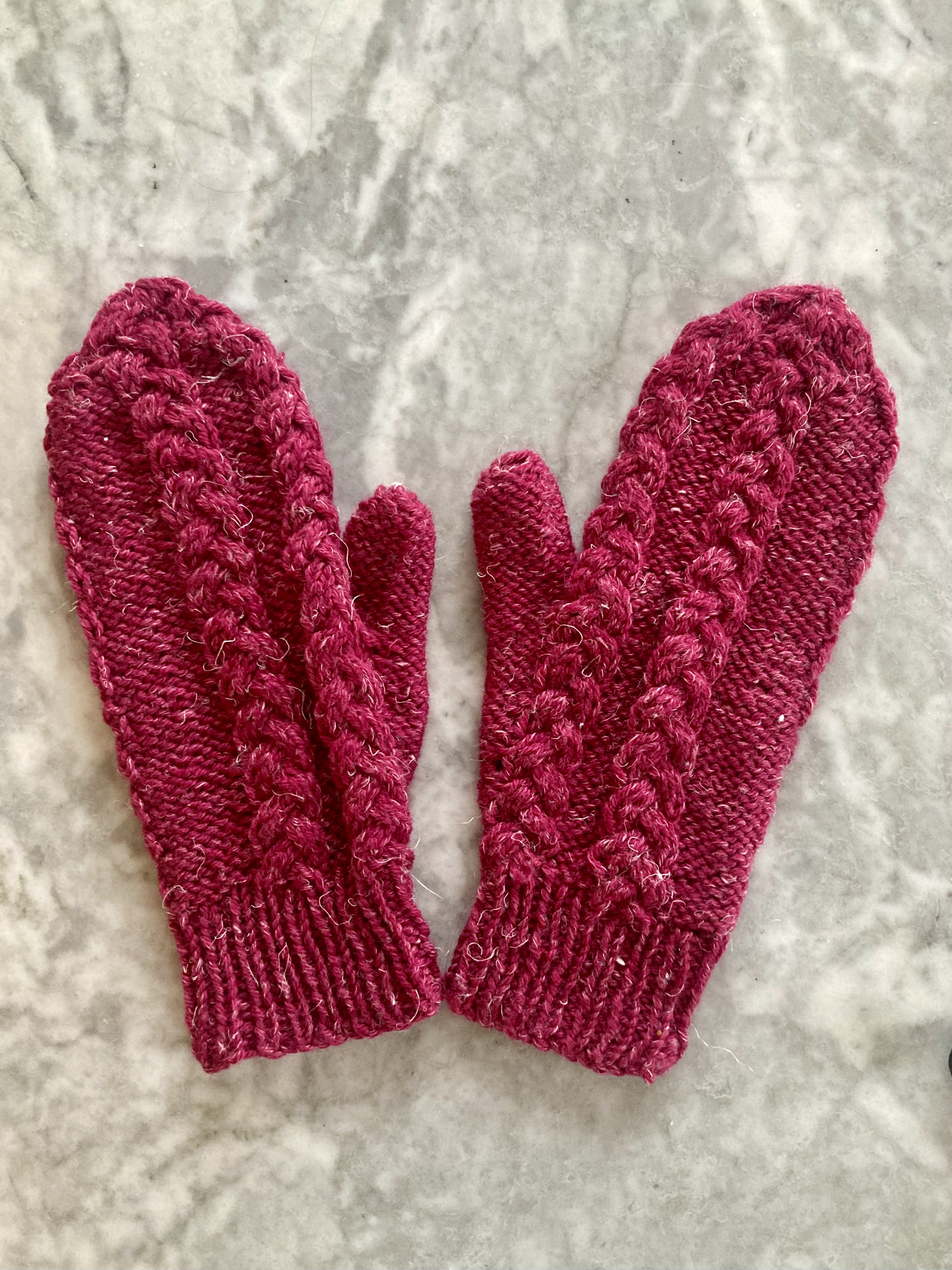
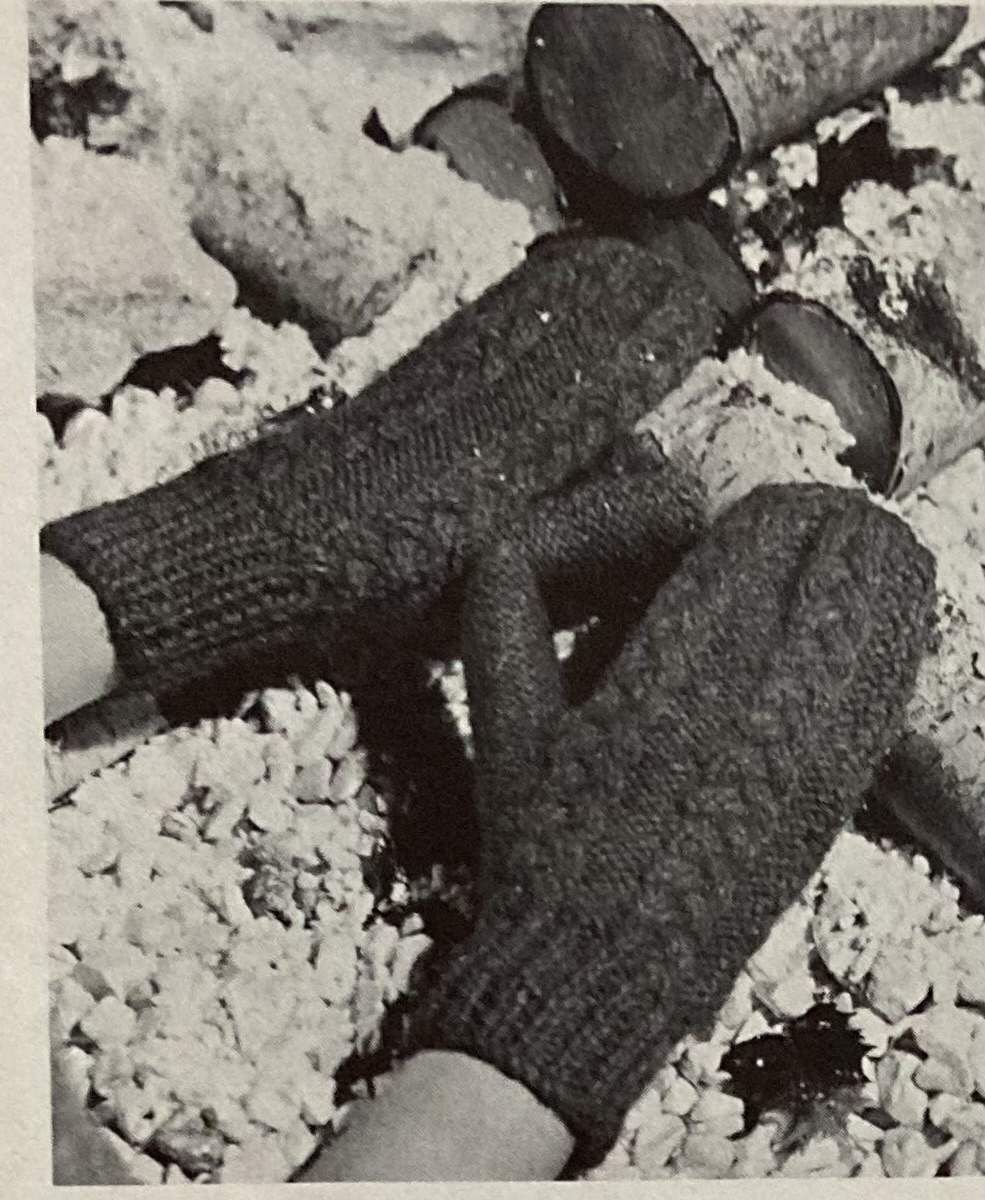
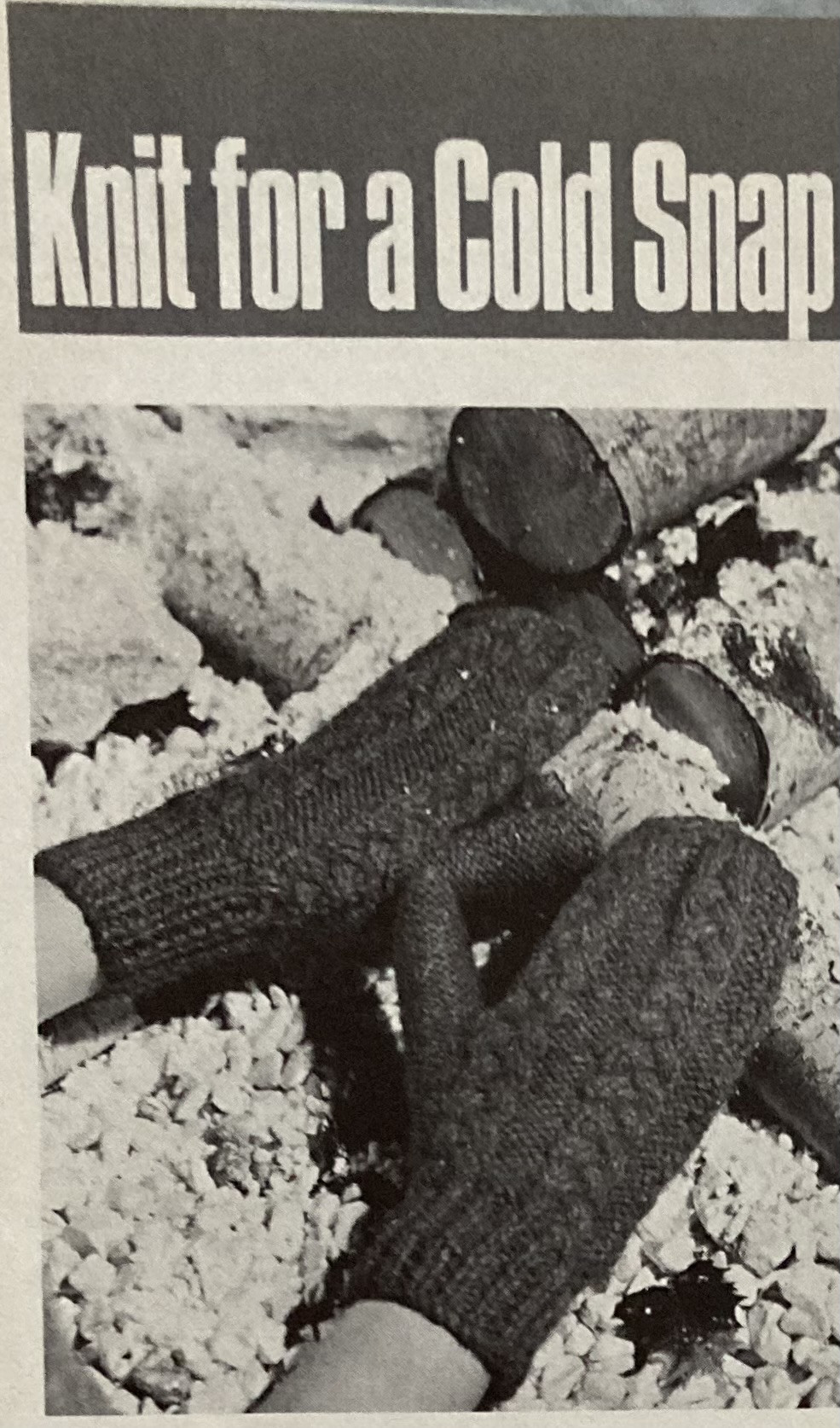
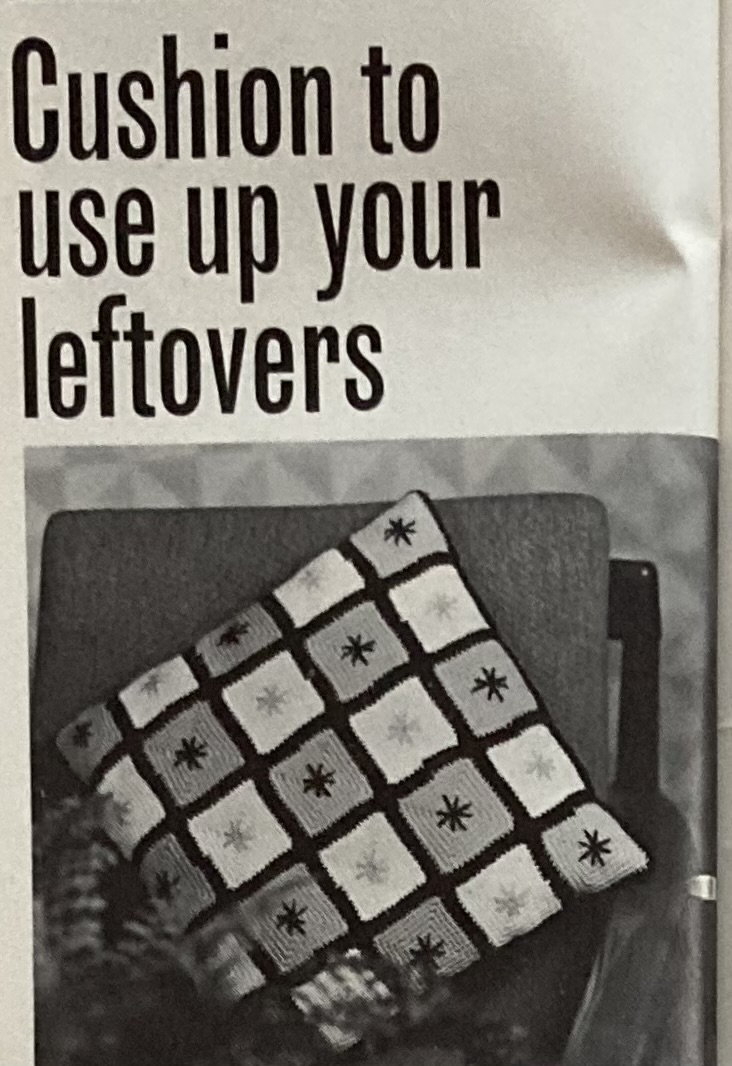
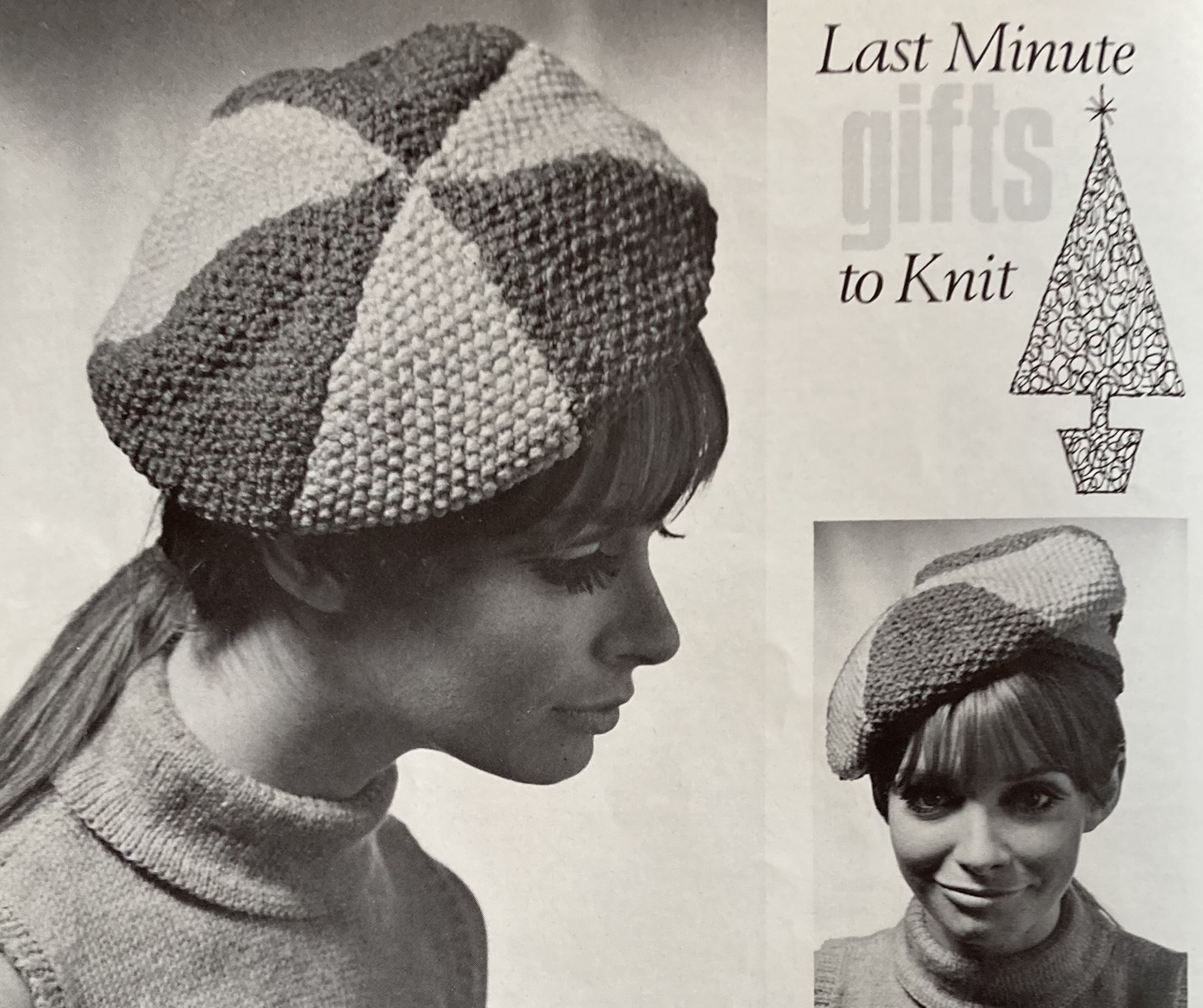
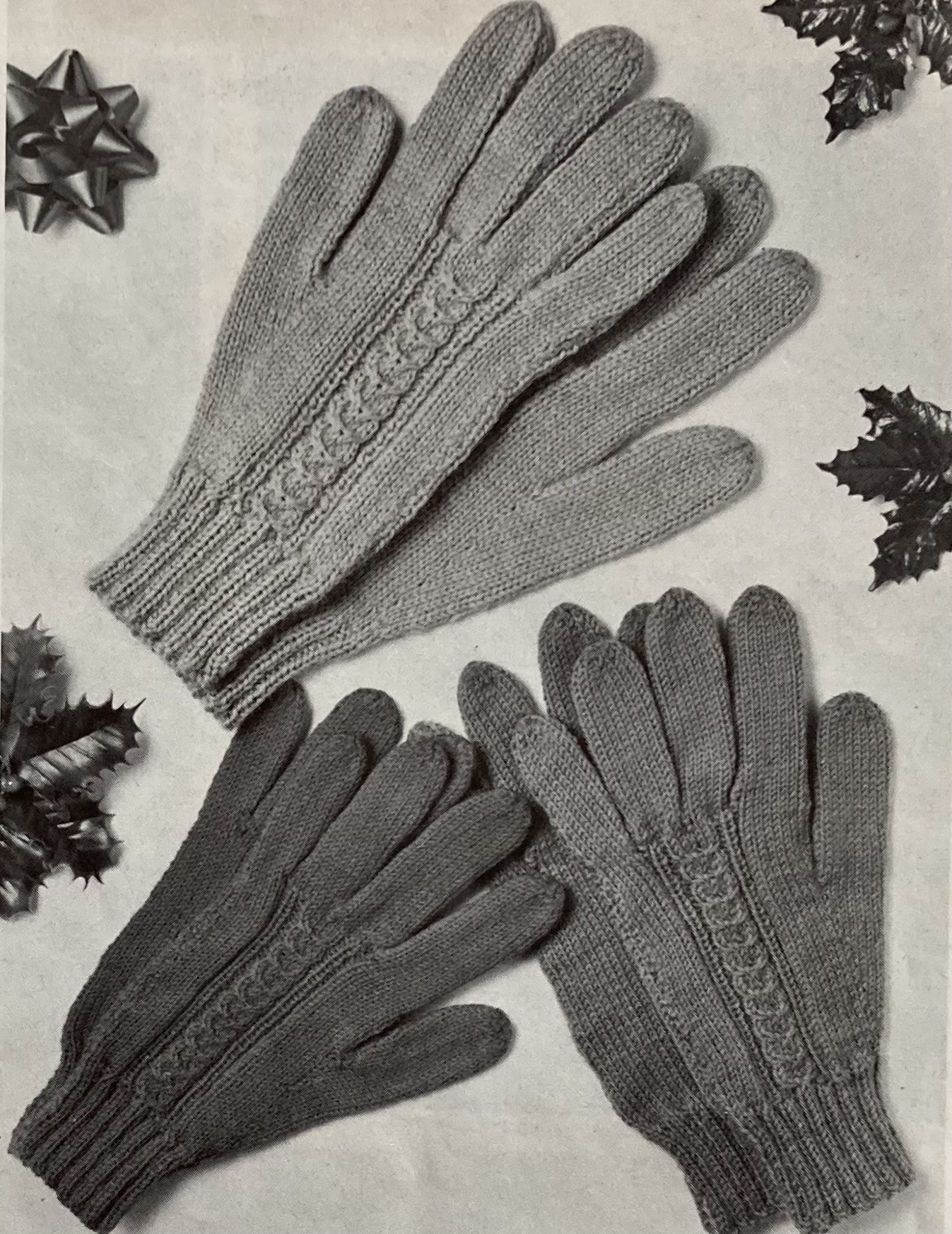
For quick gifts that have to be finished on time, you can make a “tweedy” (actually moss-stitch, but OK) beret or cleverly designed gloves for the whole family. The gloves are all made from the same pattern, using double knitting-weight wool for the large/men’s size, 4-ply for the medium/women’s size, or 3-ply for the small/child’s size. You can also make a very easy crochet cushion, and it even matches the hat!

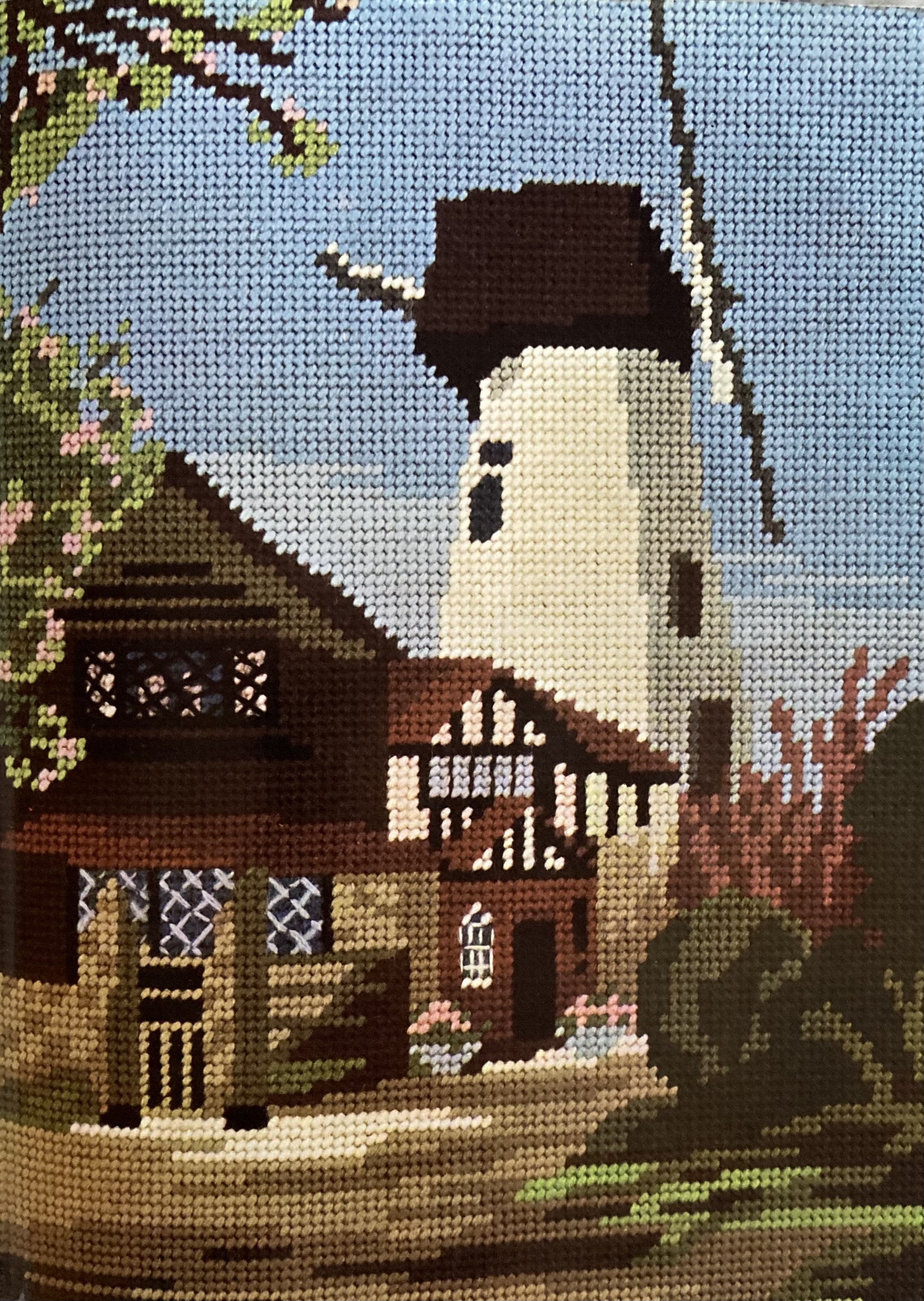
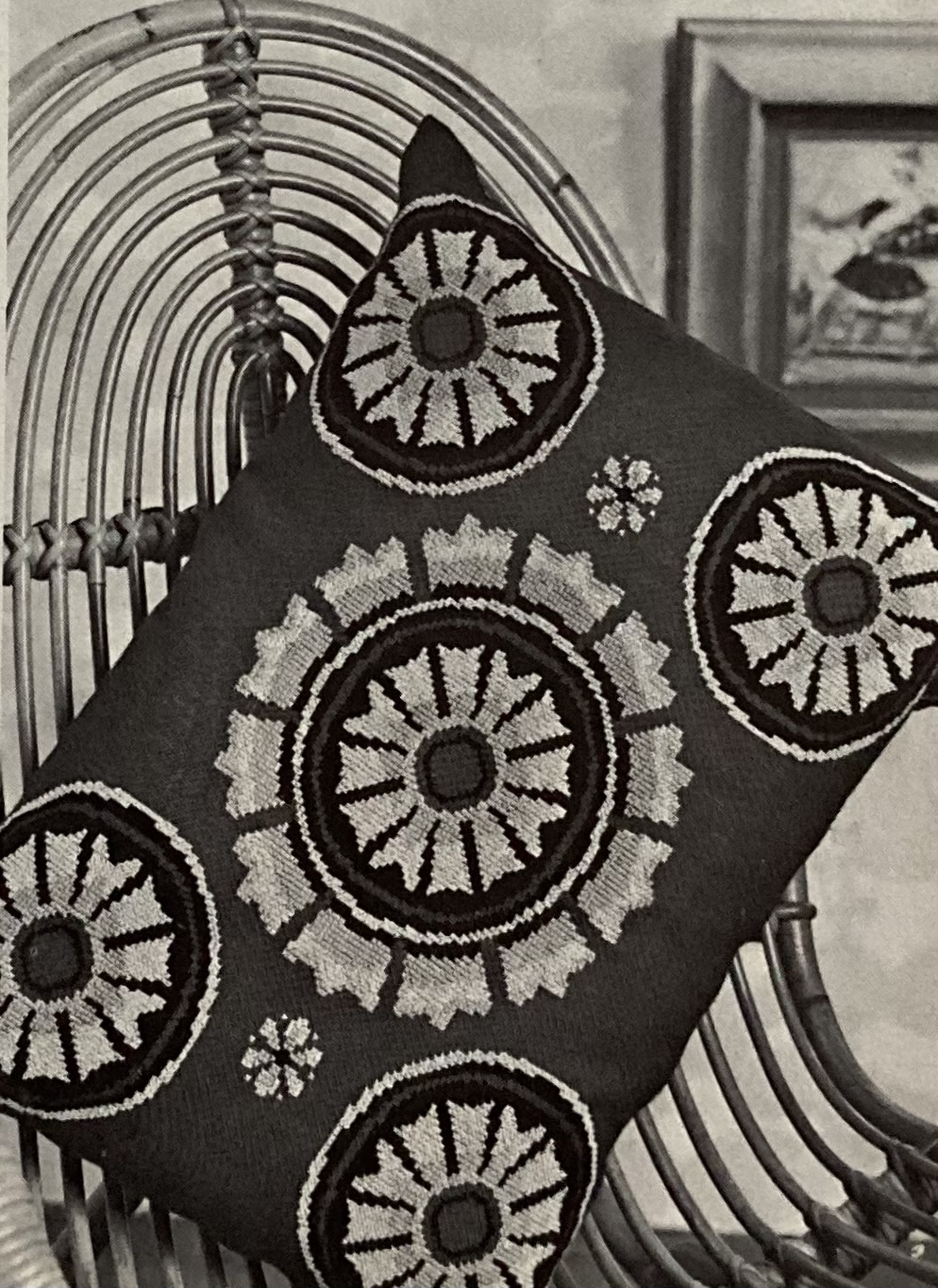
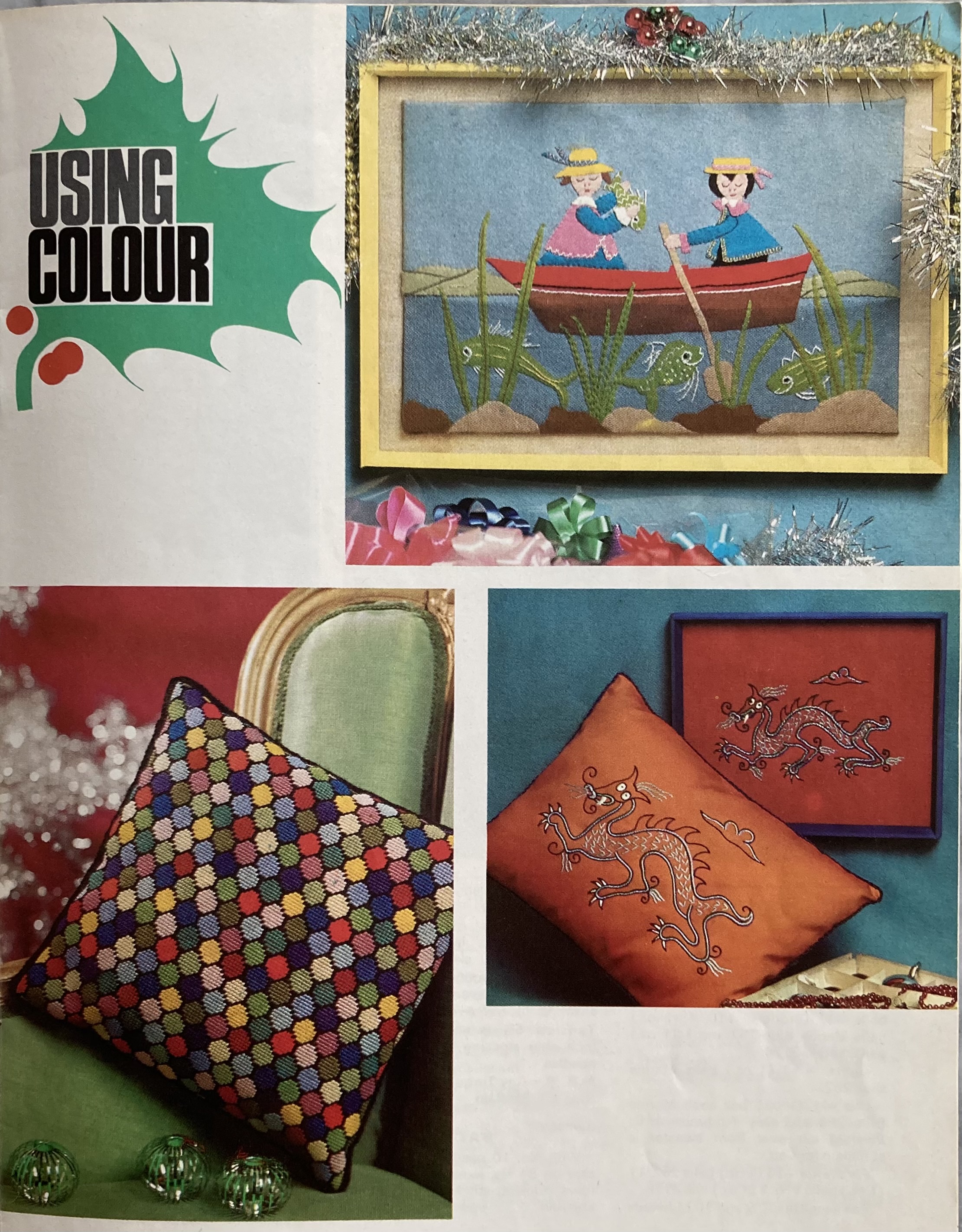
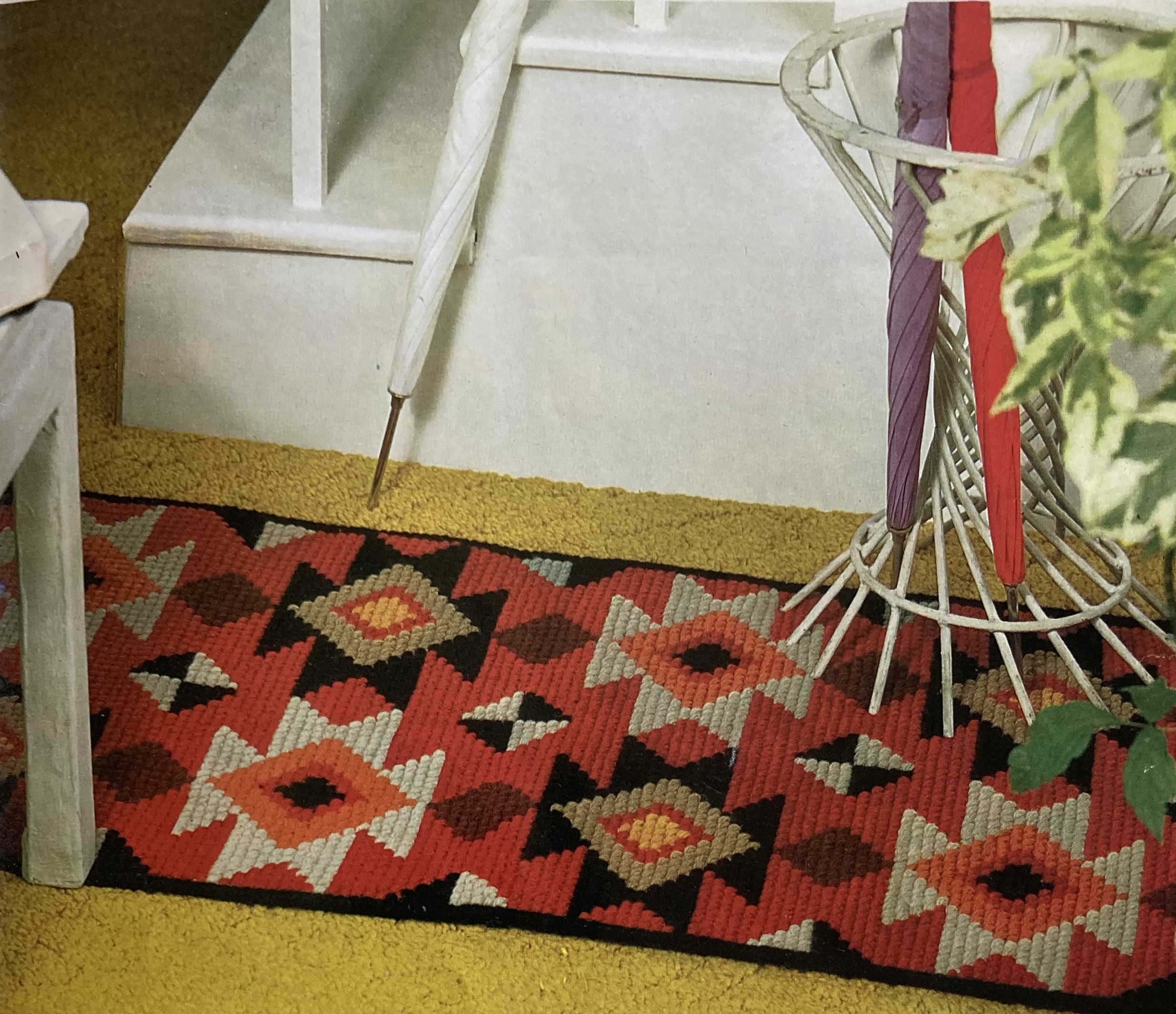
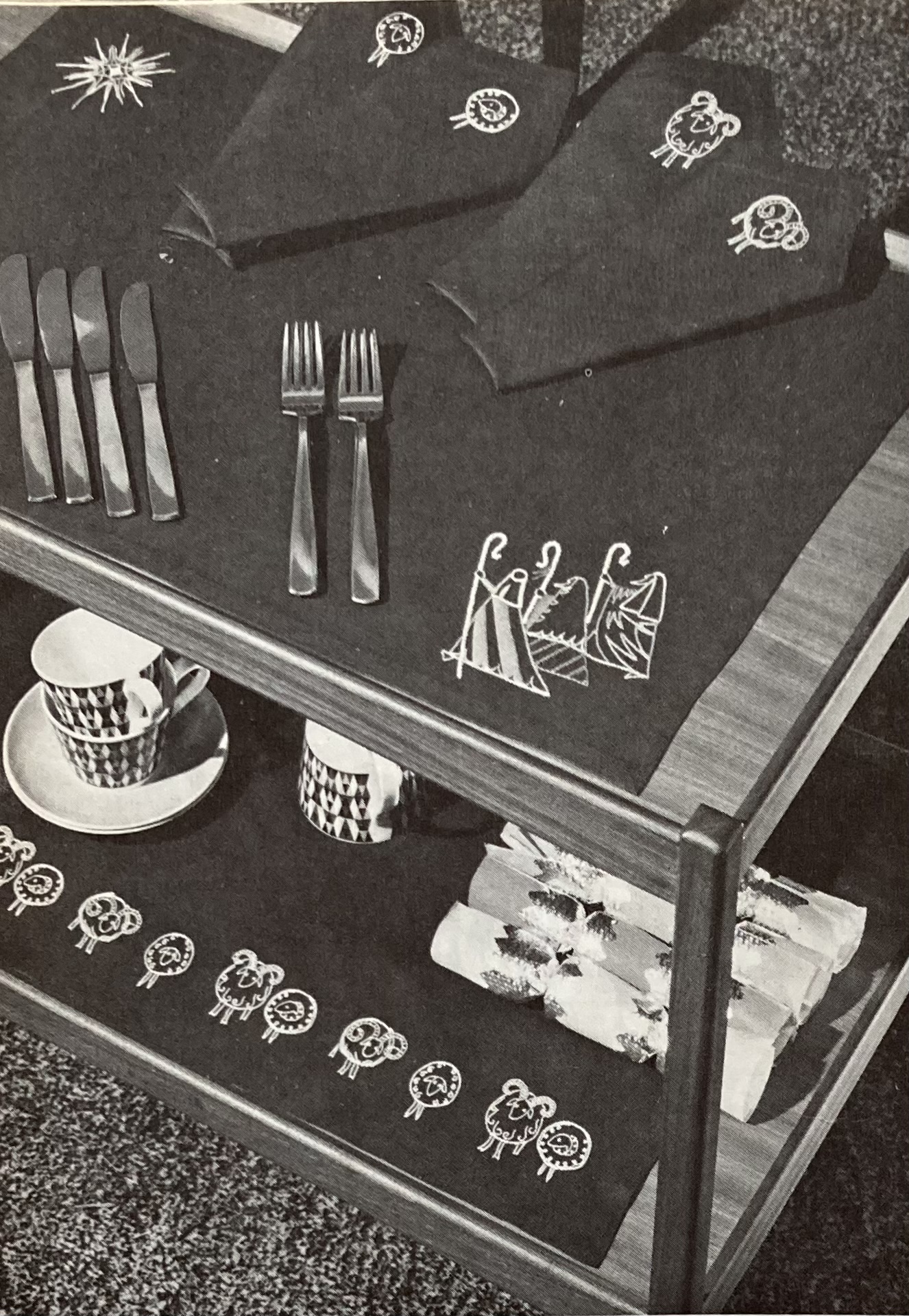
There are plenty of embroidery and tapestry projects for those long winter evenings. My favourite is the cross-stitch cat that can be made into a cushion, rug, and/or nightcase. (I have not yet understood the point of putting your pajamas or nightgown in a zippered case during the day. Were any of you readers children of the time and can tell me about it?) According to Stitchcraft, cross-stitch cats are lucky! I could use it. There’s also an appliqué picture of a boy and girl rowing, an embroidered dragon cushion or wall panel (that dragon is definitely high on something, cheers), an opportunity to turn leftover tapestry wool scraps into a tea-cosy or cushion, and a cross-stitch rug to use as a hall runner. The only specifically Christmas-themed project (in the entire issue, really) is an embroidered serving set of table cloth and/or trolley mats with somewhat abstract renditions of shepherds, sheep and a star.

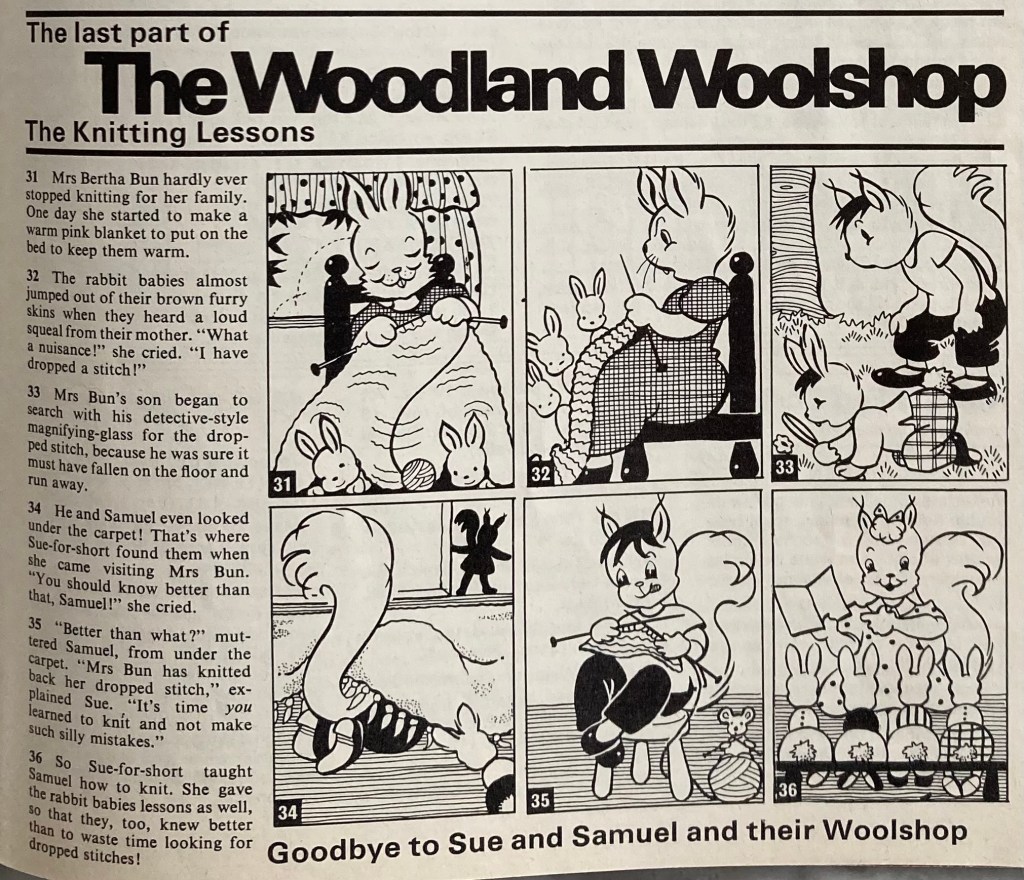
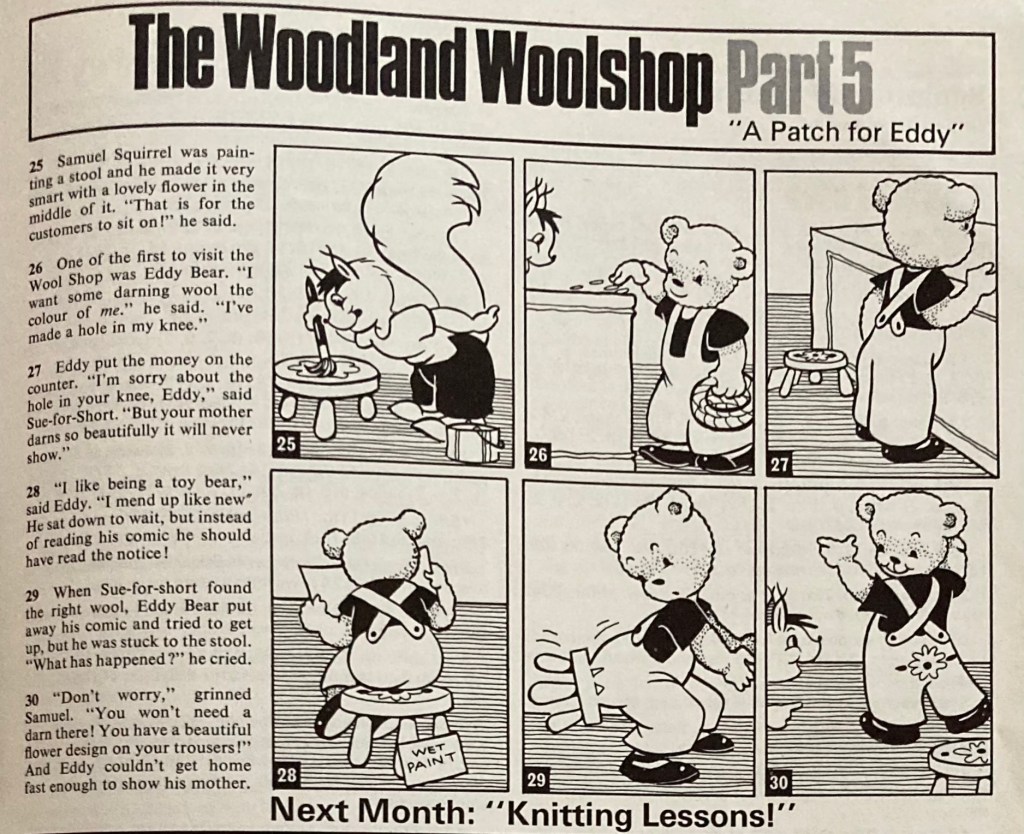
In the children’s comic, “The Woodland Wool Shop”, Mrs Olive Owl starts knitting a long strip of fabric with no plan about what to do with it (been there) and realises that it would make a great coat for Daniel Dachshund. Isn’t that nice? I hope all your projects turn out to be equally useful and make someone (including you) equally happy.

My project will be something small, probably the gloves. I do love the lucky cross-stitch cat, though. Merry Christmas to those of you who celebrate it, and happy December holidays to all.

November 1967: Jaquard Pattern Jumper

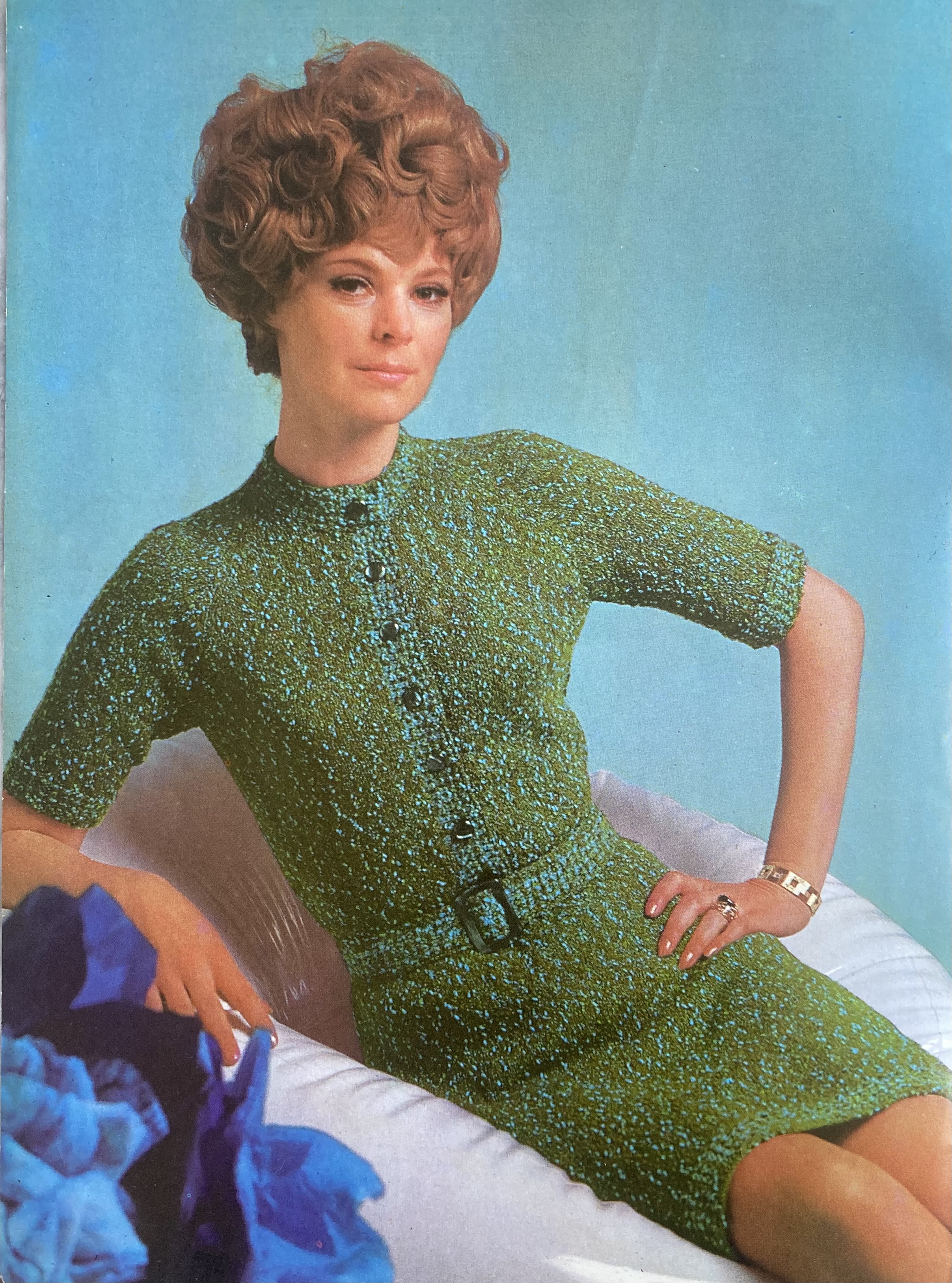
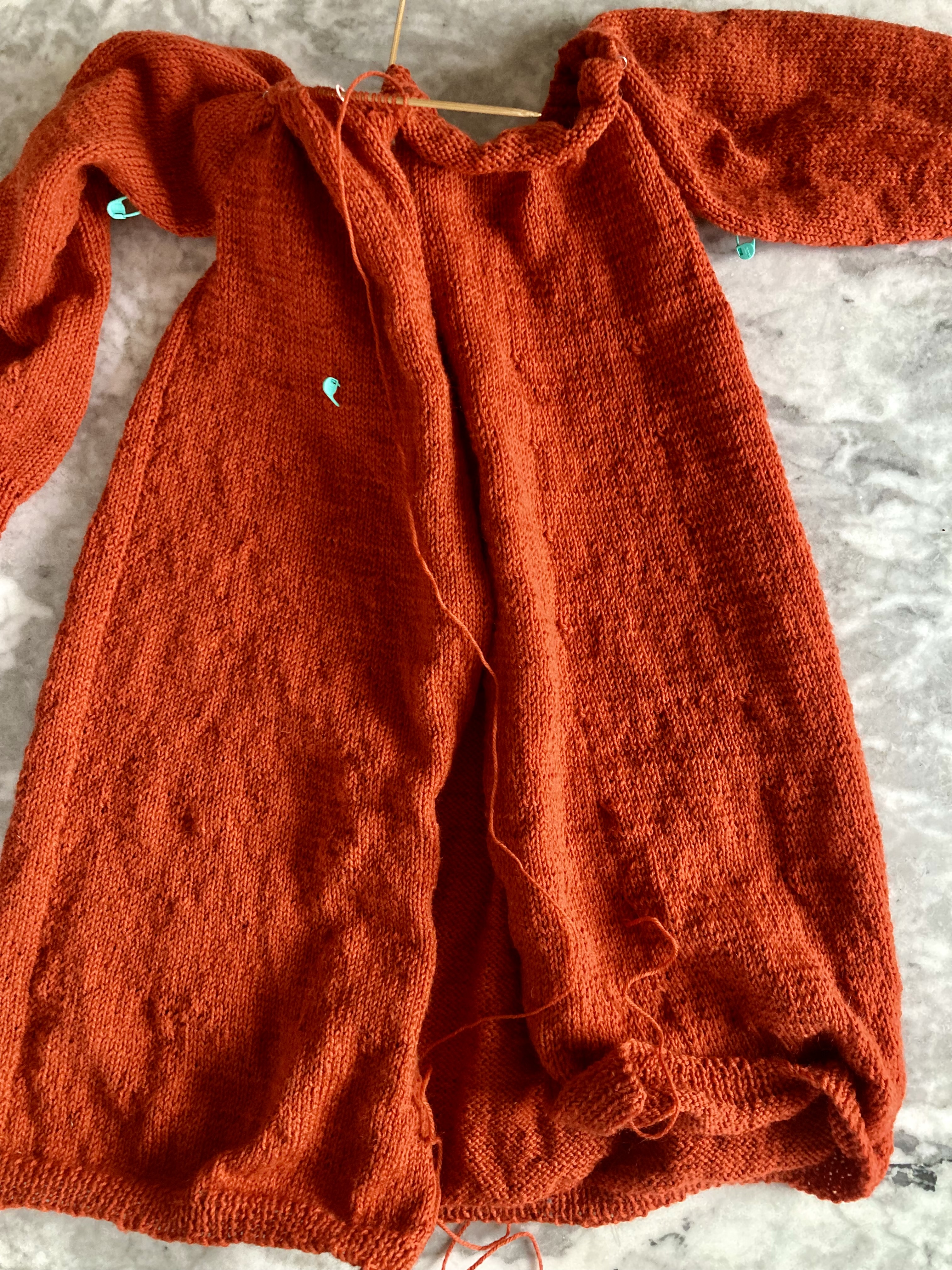
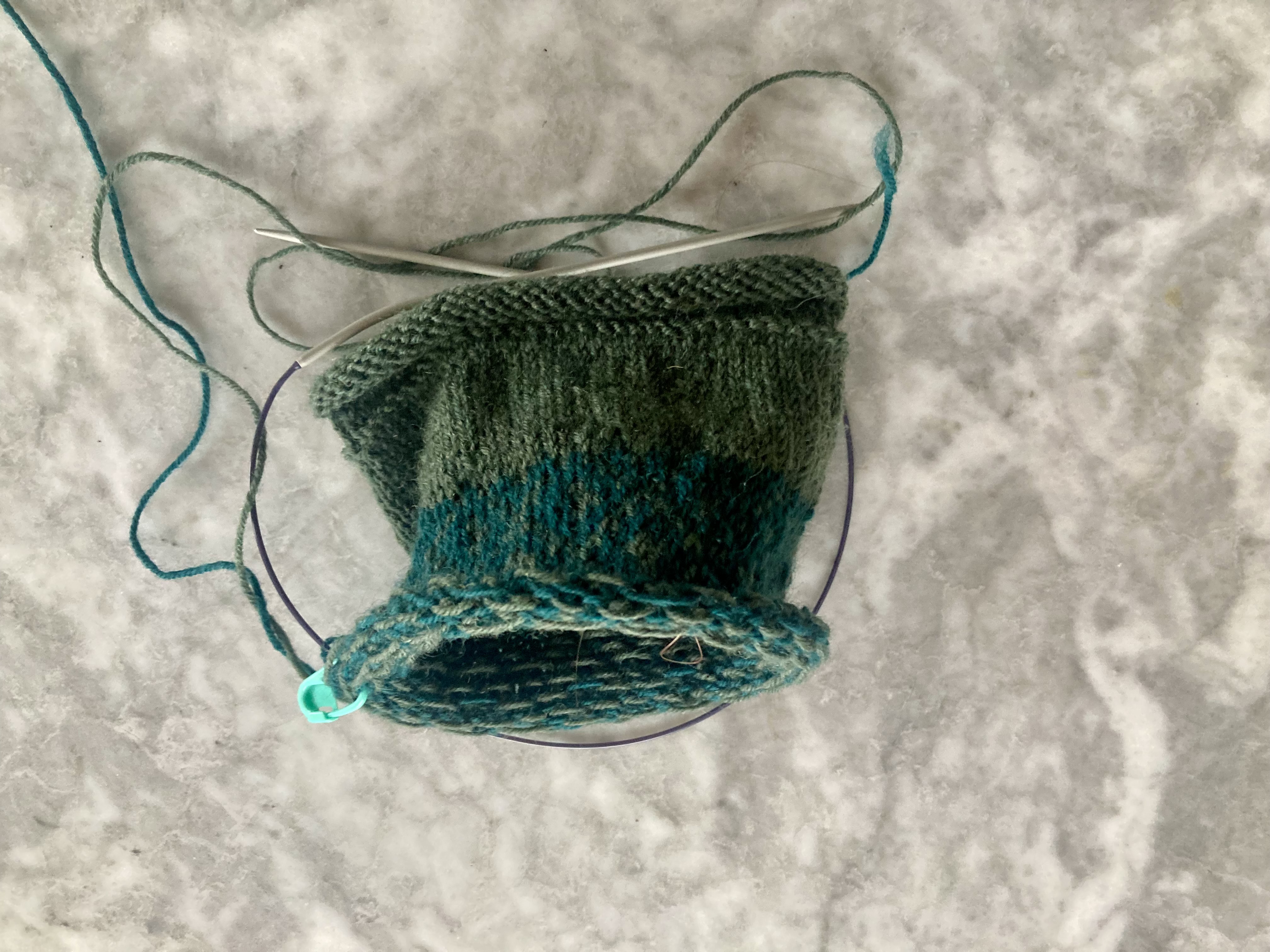
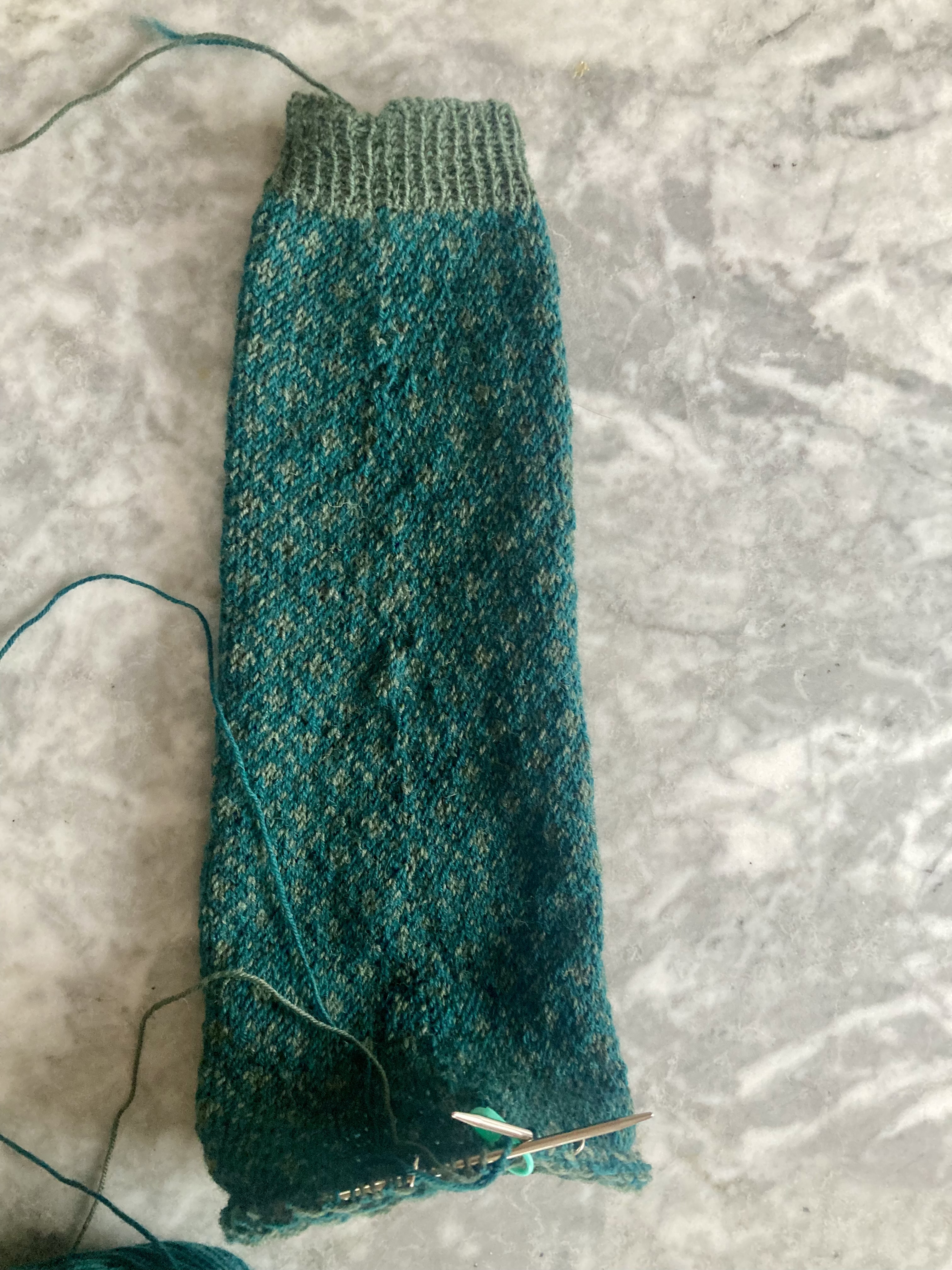
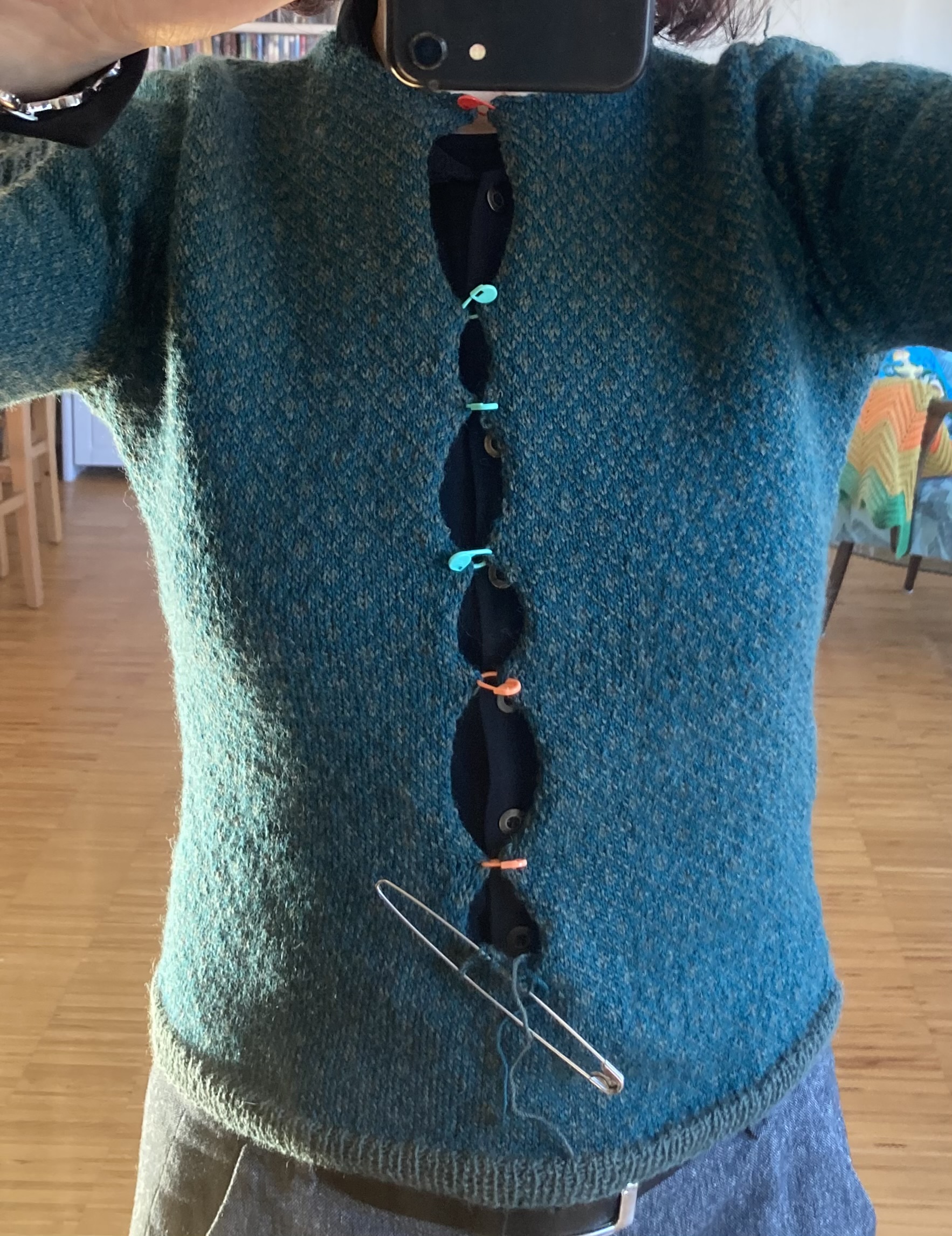
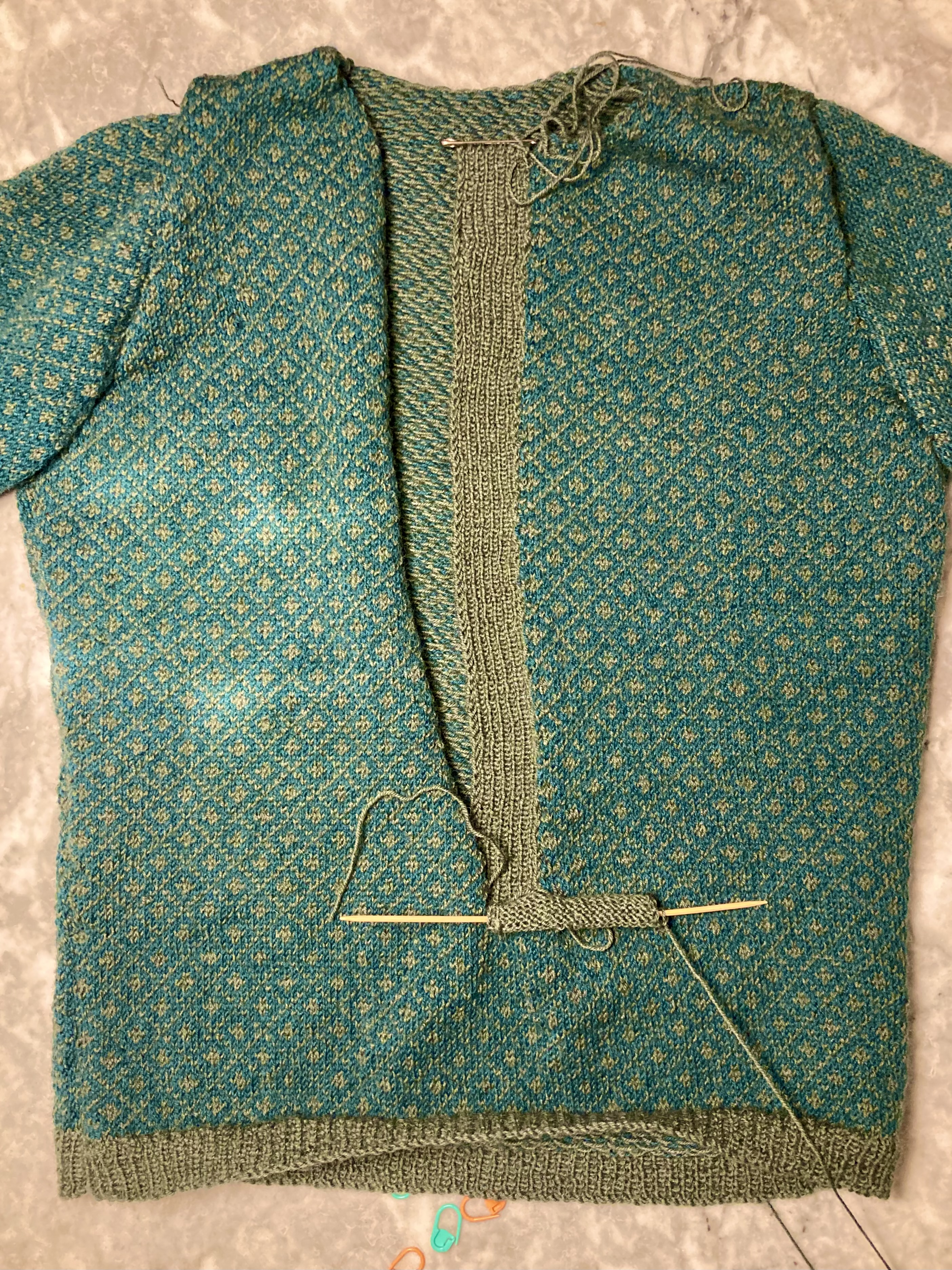
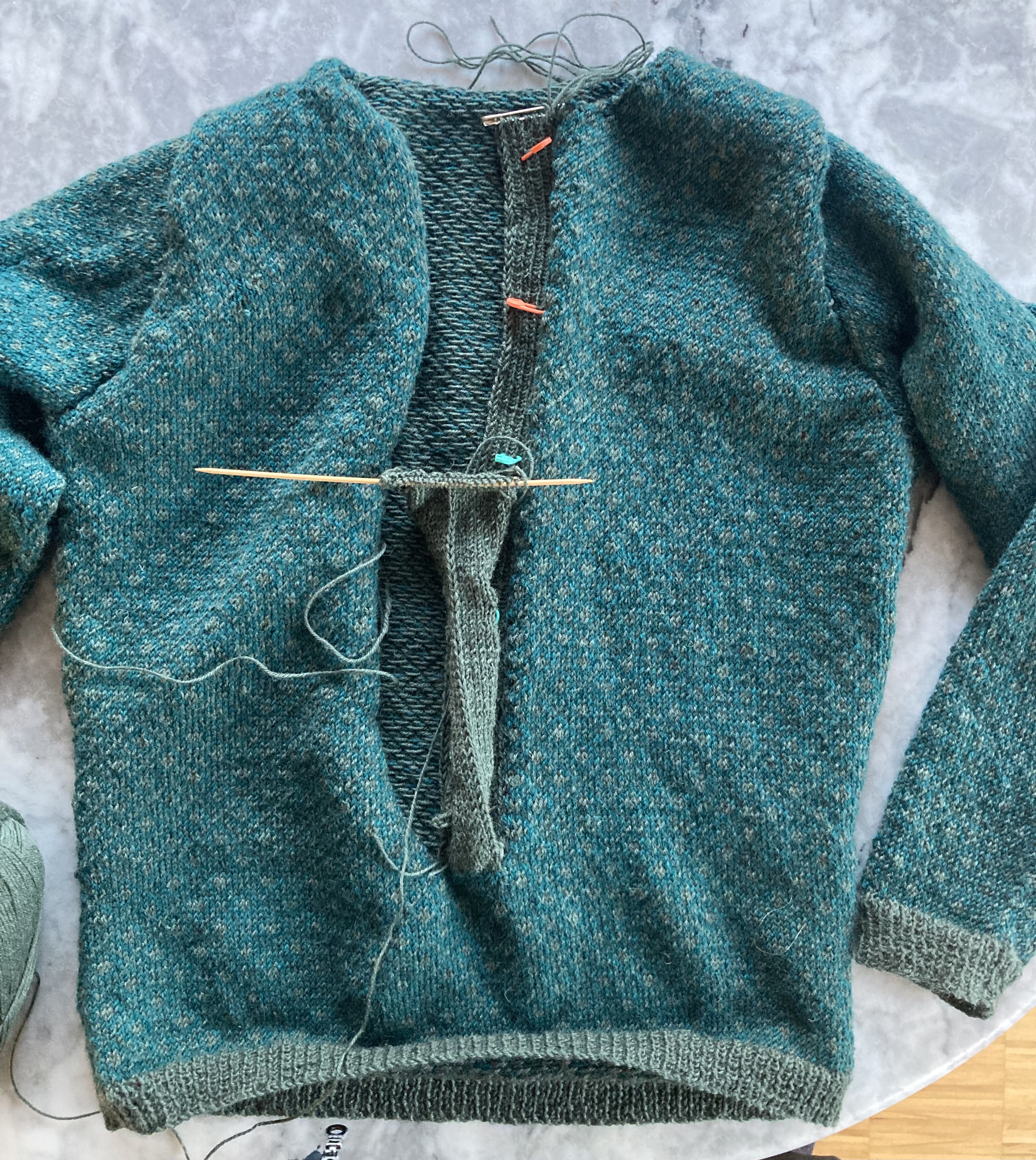
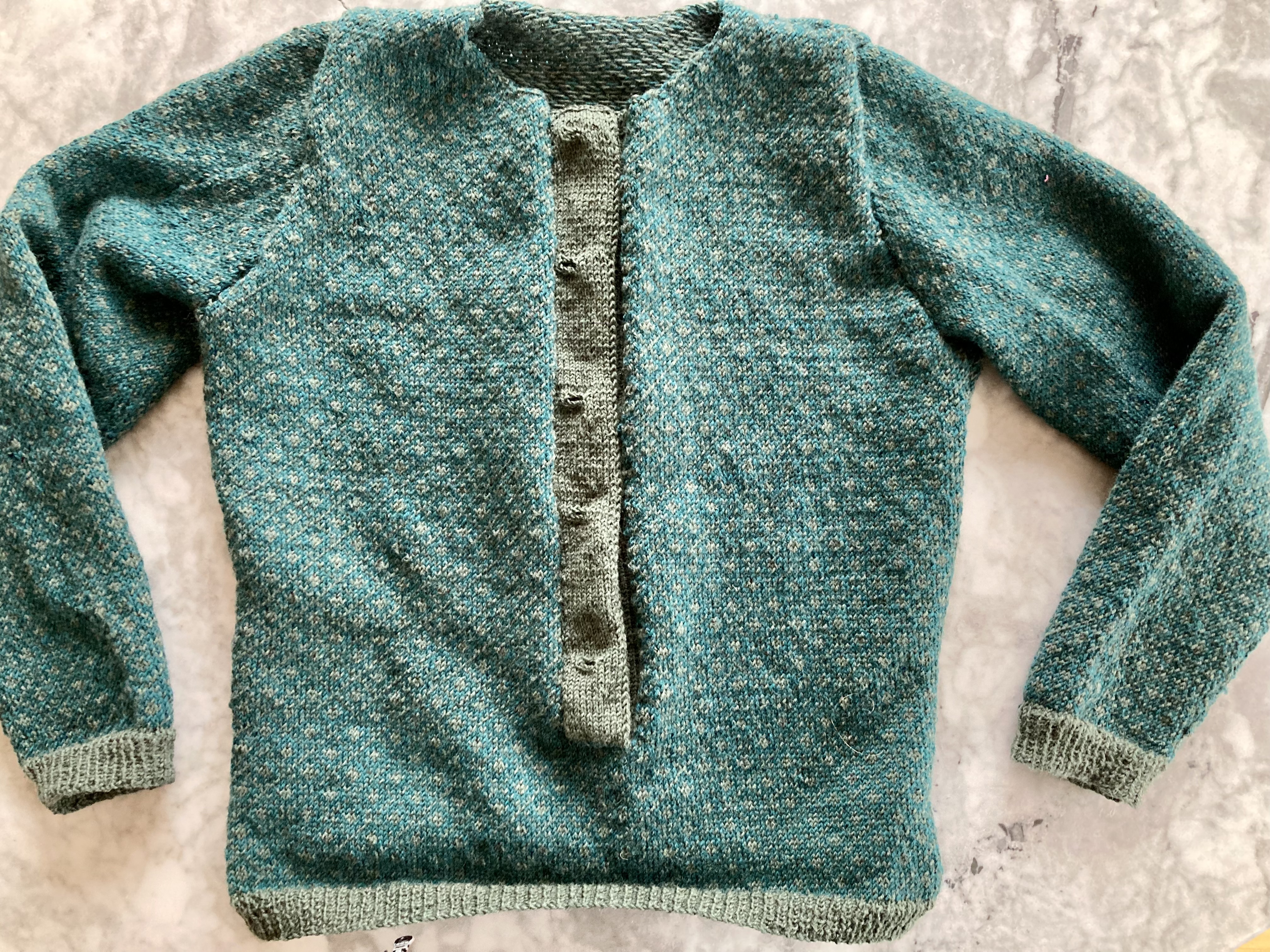
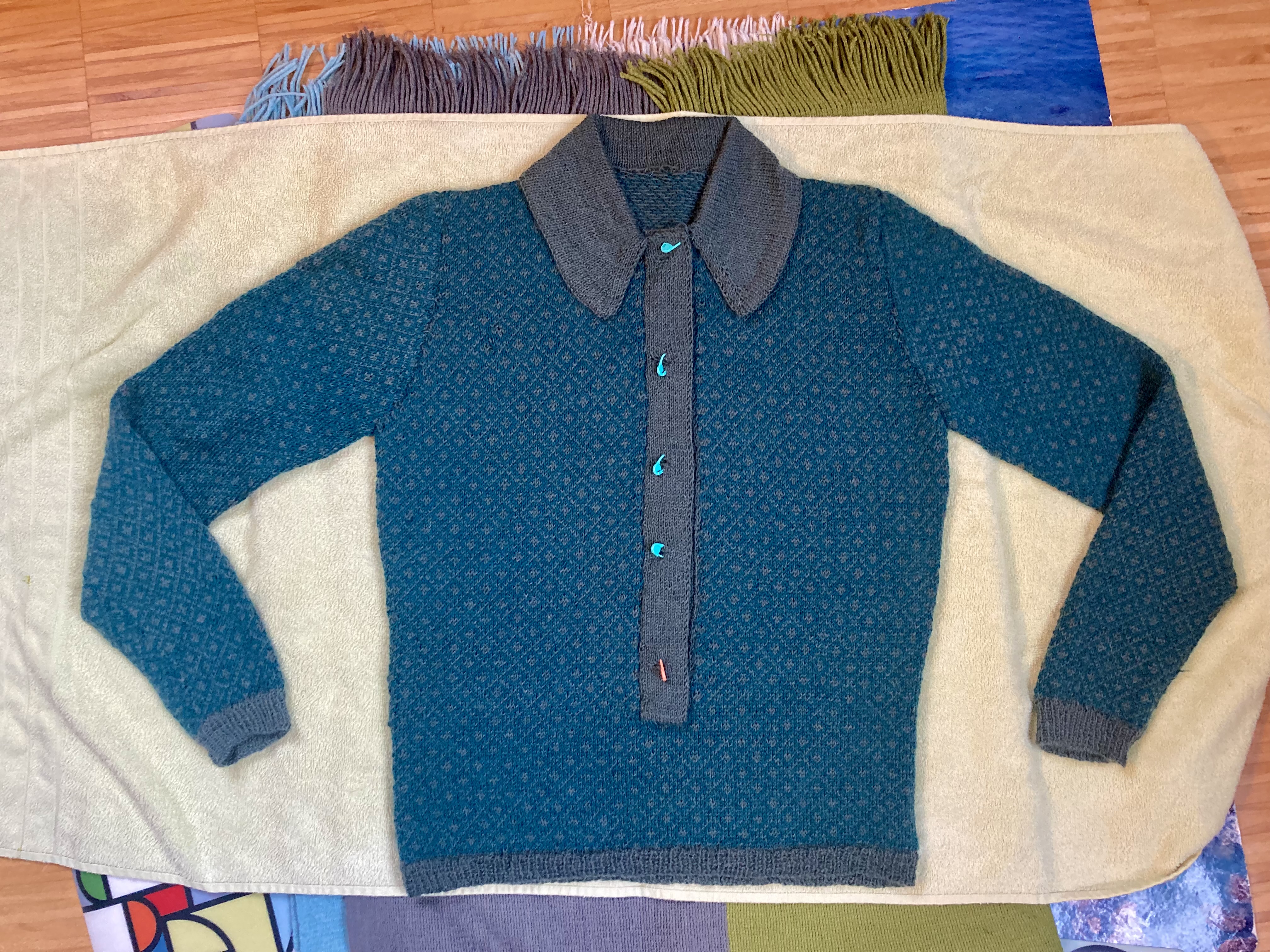
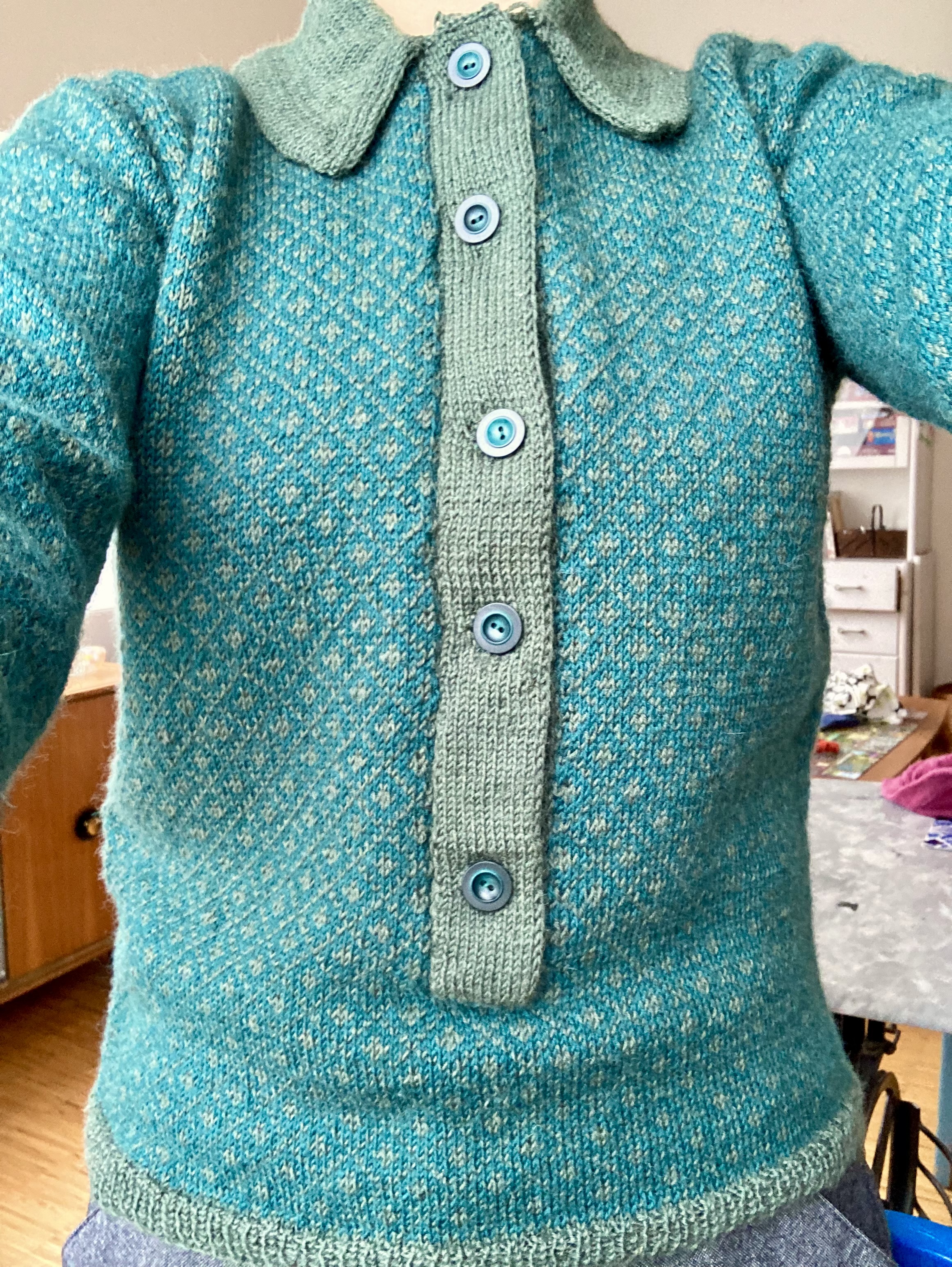
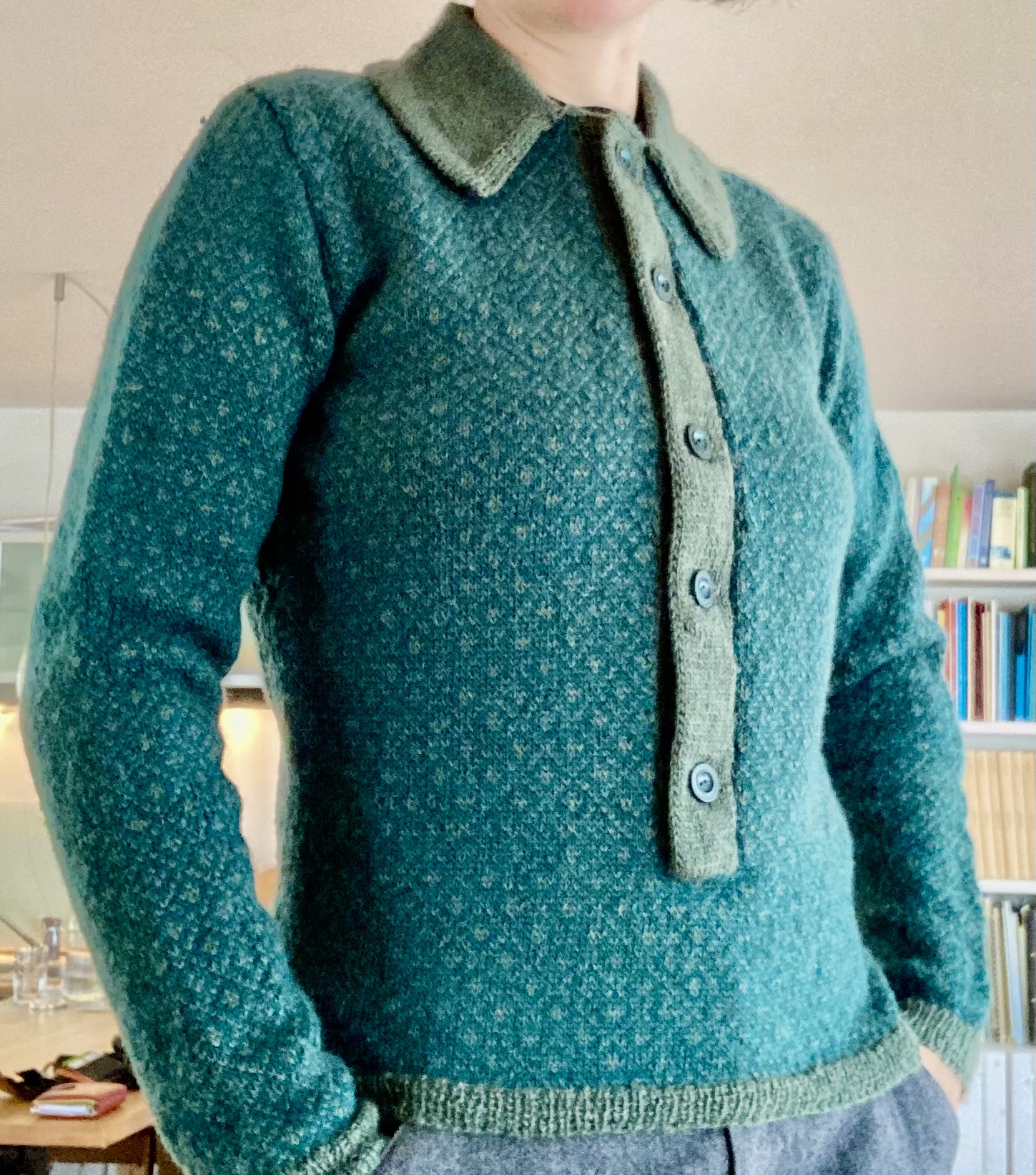
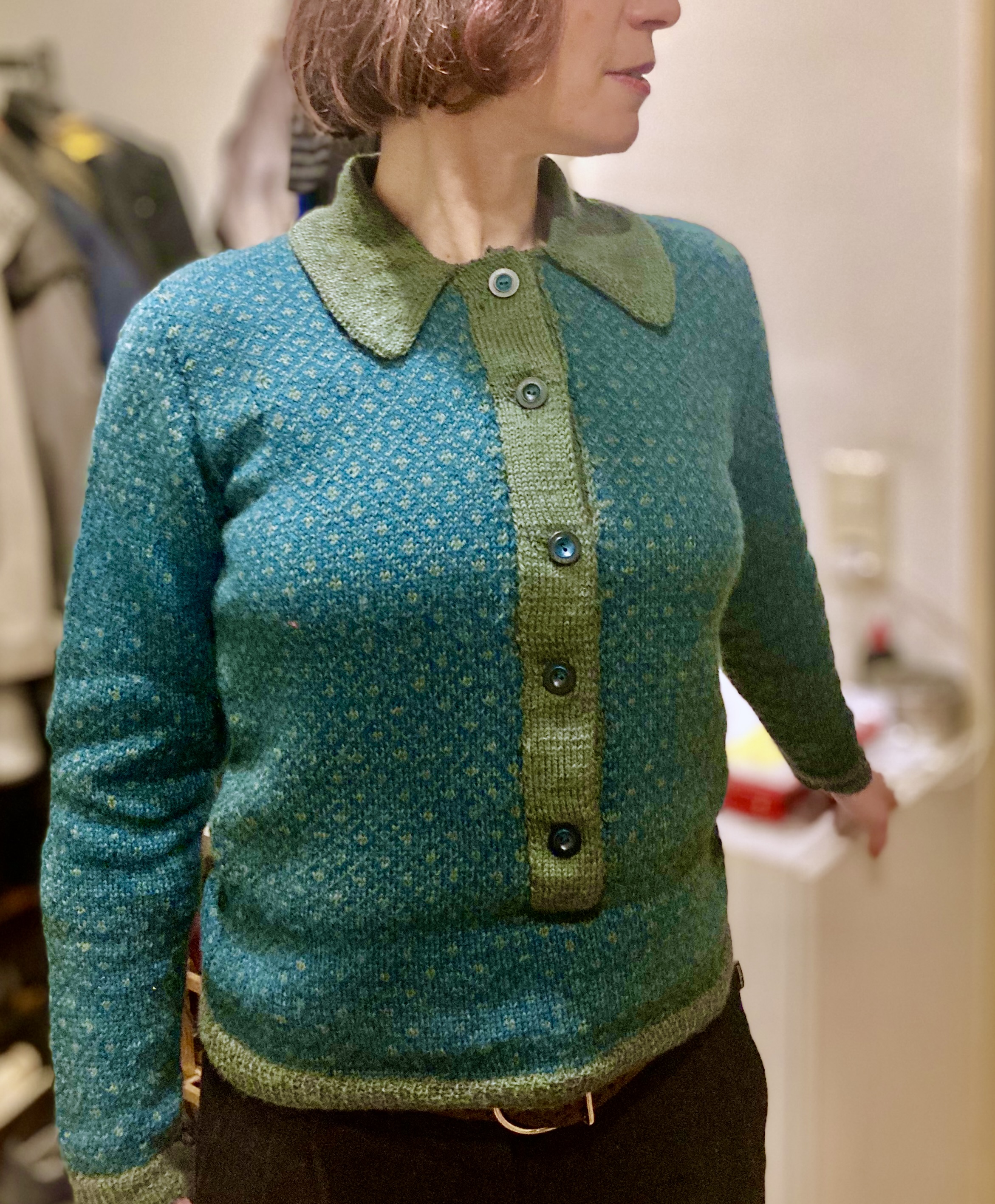
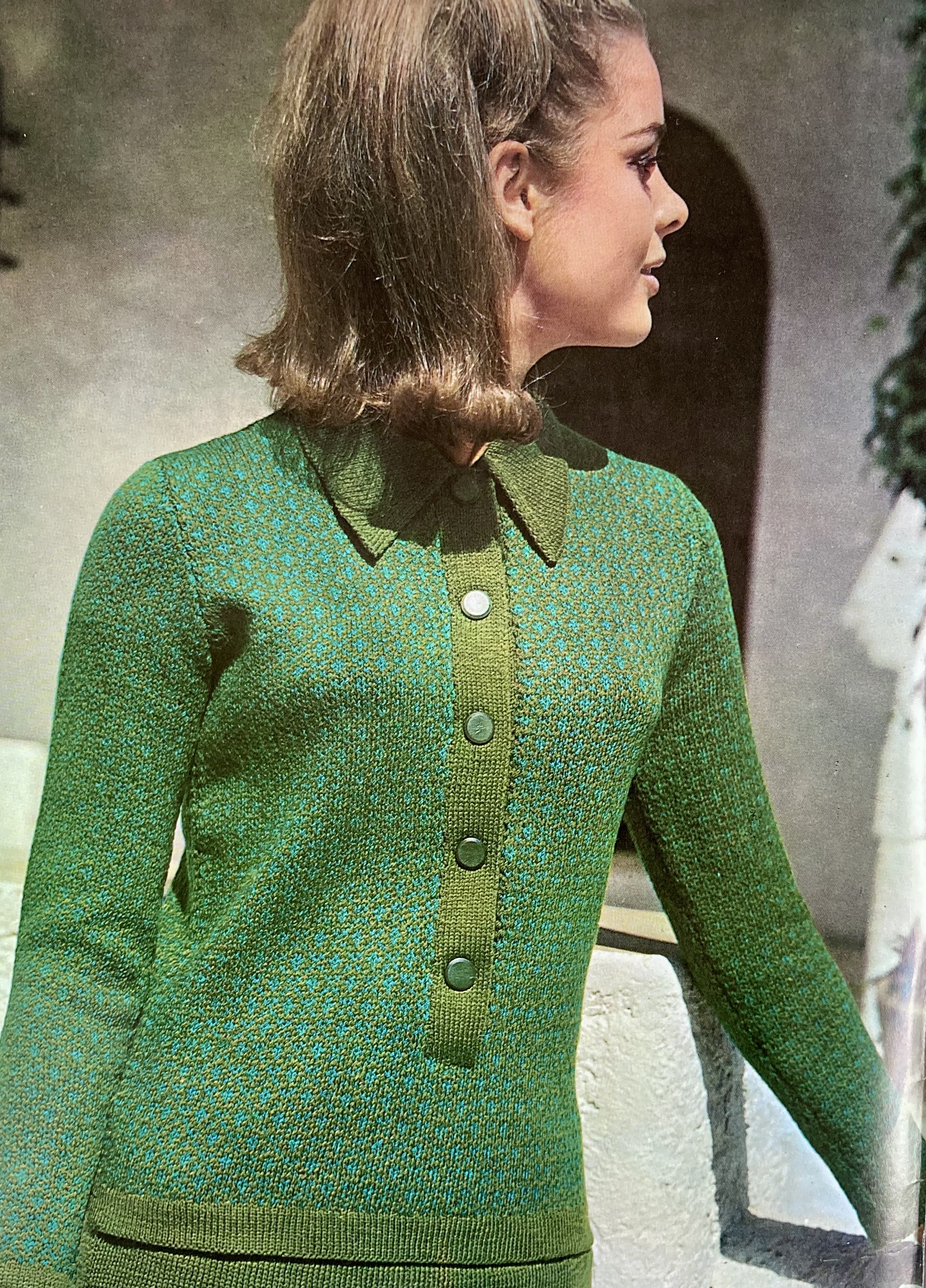
My November 2025 project was the jumper from a “Jaquard Pattern Jumper Suit” from the November 1967 issue of Stitchcraft.

It’s written for Patons Cameo Crepe, a smooth, fine, worsted-twist wool. I decided to make my version in sock yarn, which is smooth and fine but not 100% wool — mine was Lana Grossa Meilenweit, which is 80% wool and 20% polyamide. I prefer not to use synthetic yarns for environmental reasons, but it is also surprisingly difficult to find smooth, “normal” 4ply/ fingering-weight 100% wool in a variety of colours. It’s either too bulky, too hairy, or a mixture of fibres, or variegated colours. Or baby wool, which has a limited pastel colour range.

I was happy with my colour choices. My olive green is a little more grey than the Stitchcraft version, and my jade green more blue (but still a little more green than it looks in the photo). I was not prepared for how very blue it looks when knitted up in pattern, but it’s fine with me.

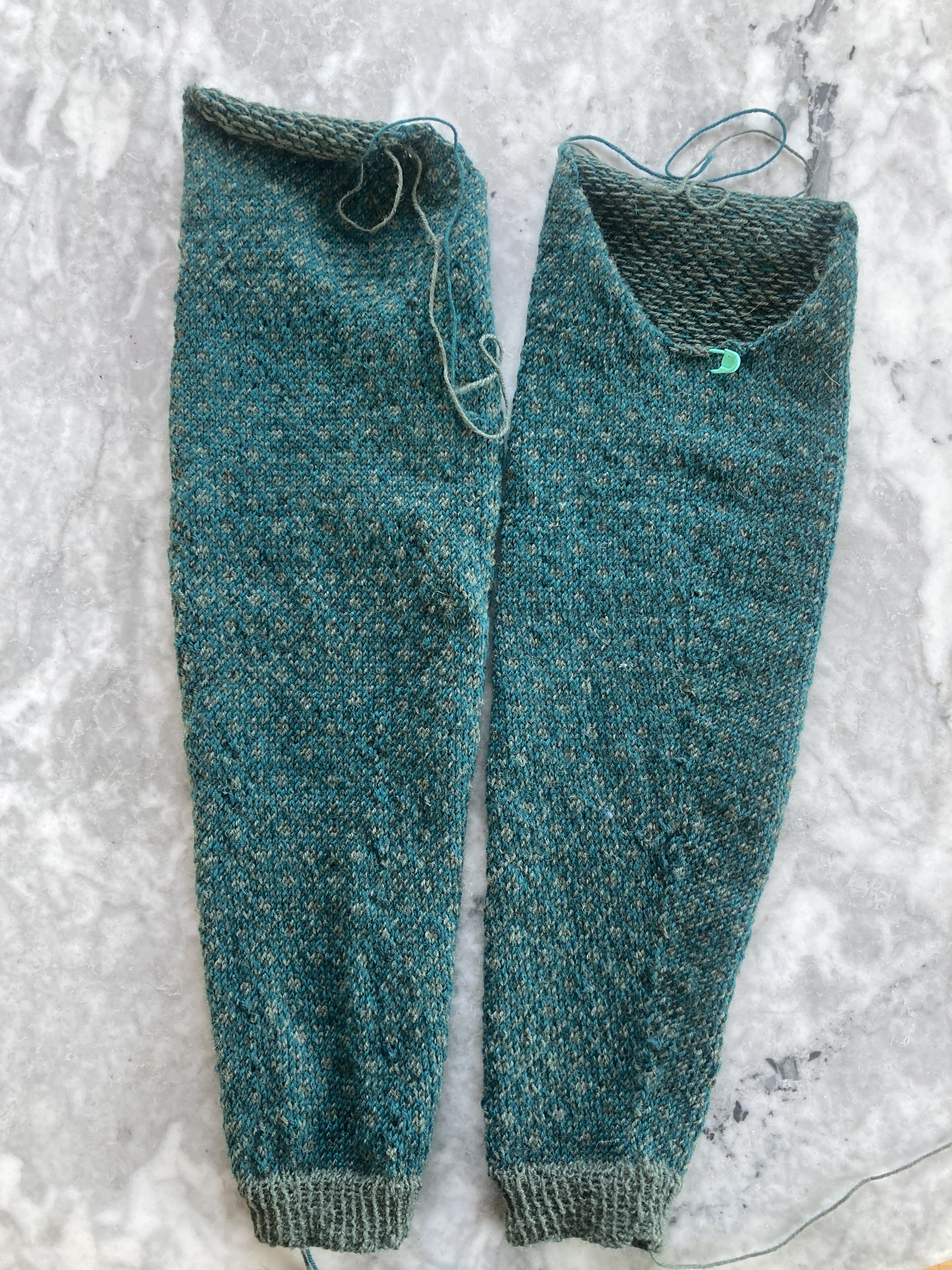
The stranded jaquard pattern is quite easy and has the advantage of having very short stretches of one colour — no more than three stitches ever — so it makes a very evenly worked wrong side and there was no need to weave in floats. It’s a subtle pattern with not much contrast, but that’s how the original looks as well. I started with the sleeves, to check for size, and made them in the round for speed and ease. I also decided to make a normal ribbed cuff instead of a hem.

I started the sleeve the first time with the hem as written, and didn’t like it — the transition from hem to pattern wasn’t smooth. I started over and got to halfway up the arm while wondering why it was so narrow. Suprise, I had been doing the increases wrong. Started over and did them right, and the fit was perfect.

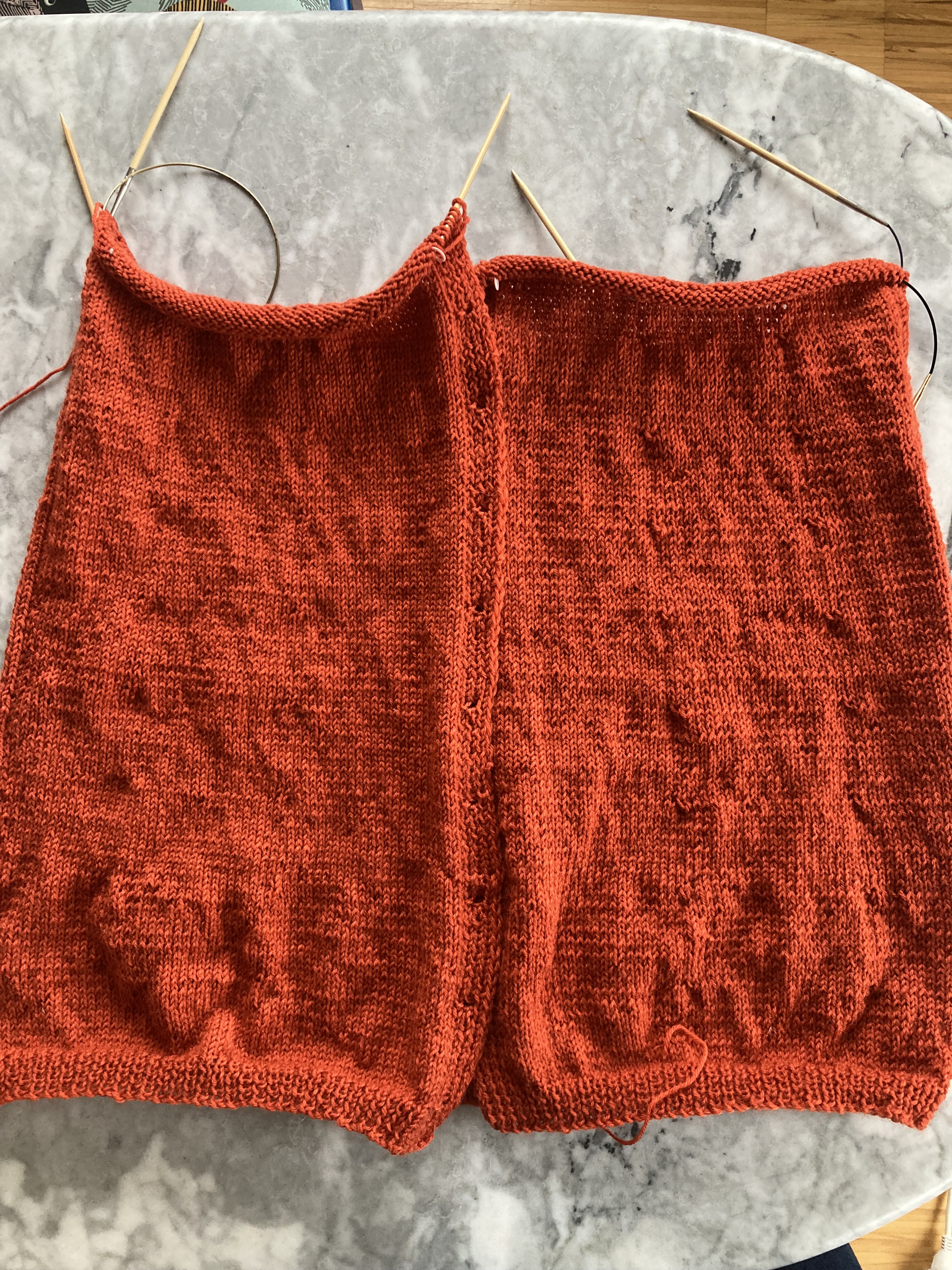
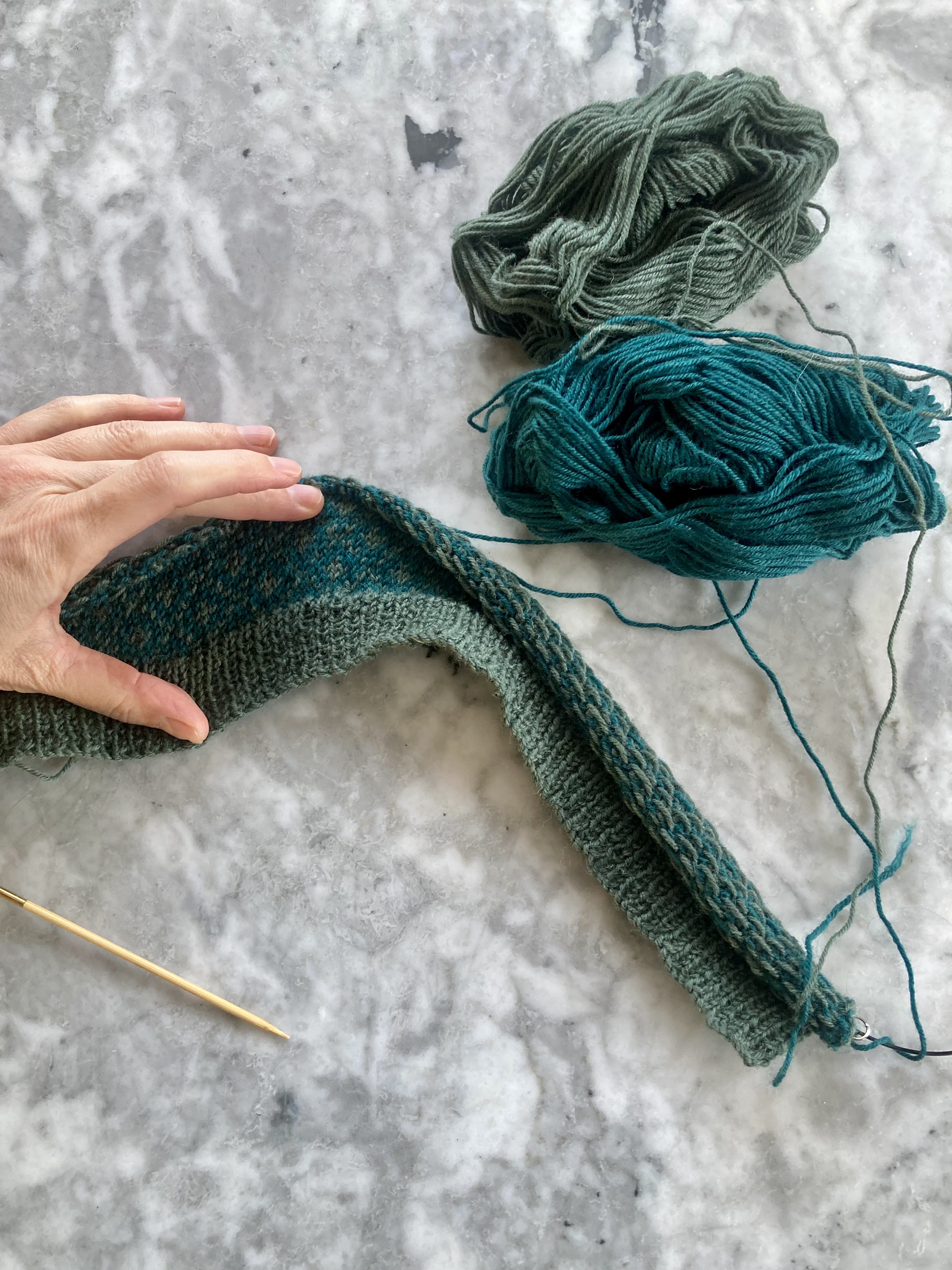
I decided to make the body with a hem as well, and in two separate pieces worked back-and-forth instead of in the round. I thought about making it in the round with a steek for the placket, but then I thought a steek might be too bulky (the fabric is nice and flexible in spite of the close stranding) and I could adjust for fit more easily by working the back and front separately.

On the subject of fit, I made the sleeves in the regular second size, for 36-37 inch bust, and 17 inches to underarm instead of 16. The body of these late 60s, unshaped garments always looks well-fitted on the model in the photo, but like a huge floppy sack on me. My calculations tell me that the back piece, even knitted in the smallest size (for 34-35 inch bust) would be 19 inches wide the whole time, from hem to underarm, and anything that wide around the hip/waist area is just going to look awful on me. The question was: should I start off as in the pattern, decrease for waist shaping and then increase up to the bust, or start smaller to keeop the waist narrower from the beginning and just start increasing after the waist?

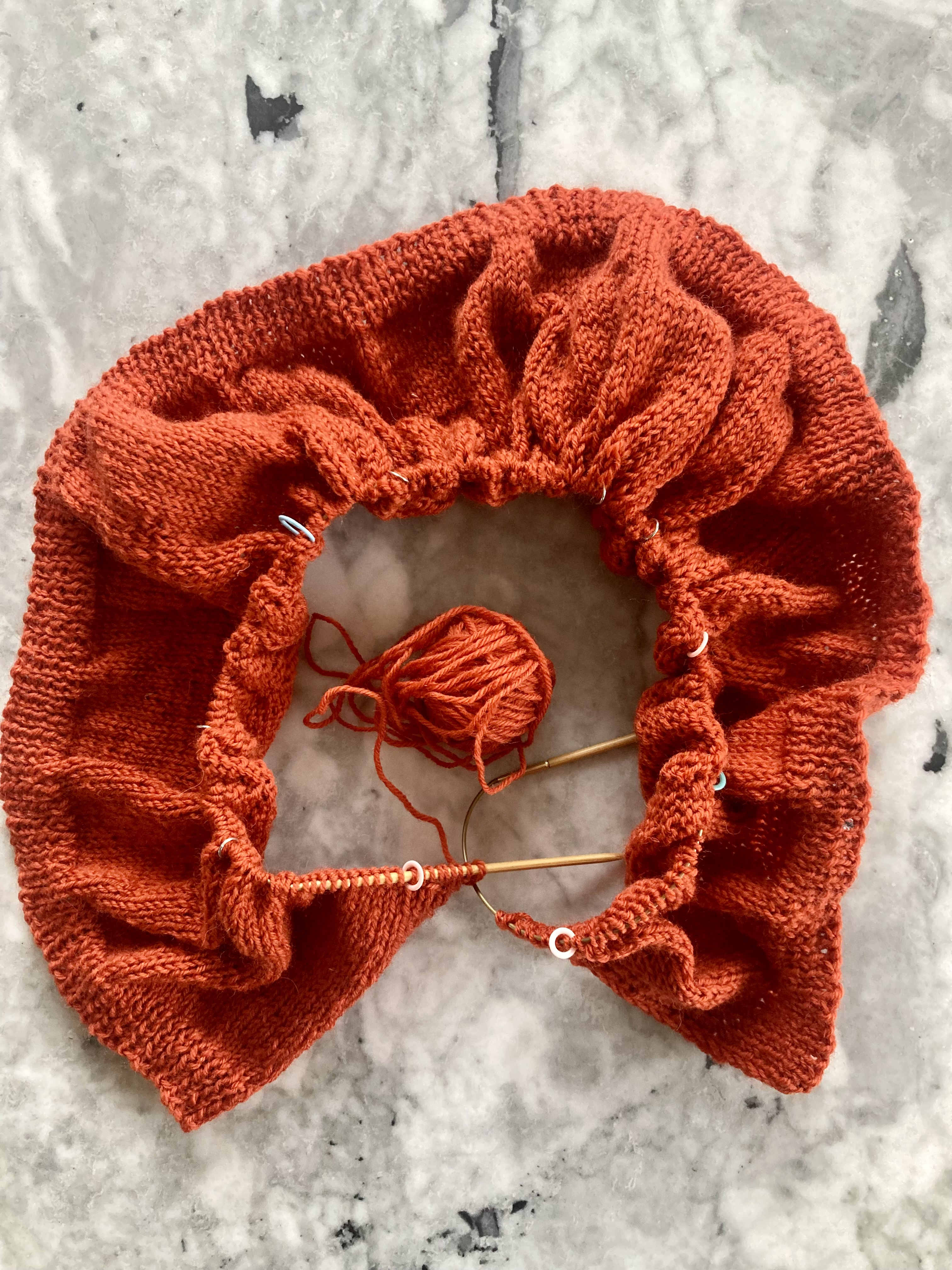
I decided to make the bottom edge ribbed instead of hemmed, like the sleeves, so went for the second option. Started the back according to the first size and will increase up to the second size for the back, and possibly even the third size for the front. That will give a different shape than intended, but it will look a lot better on me.

It still went very slowly, and unfortunately I’ve been quite badly ill for the last month or so, so that on many days I haven’t even had the energy to knit. I figured I would get the whole jumper finished in November, but that’s life. I’ll update this post when I’ve made more progress.

November 1967: Overview

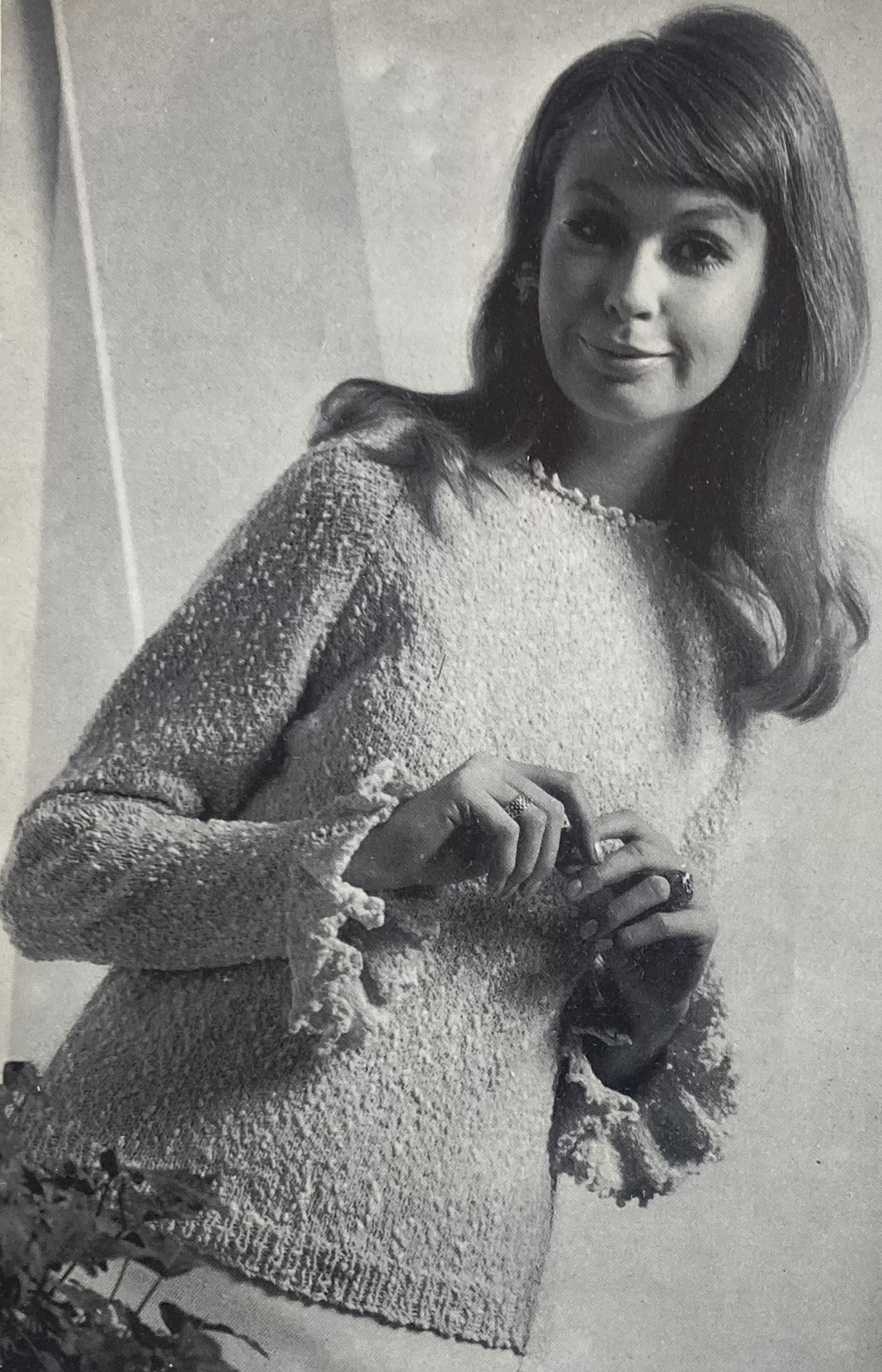
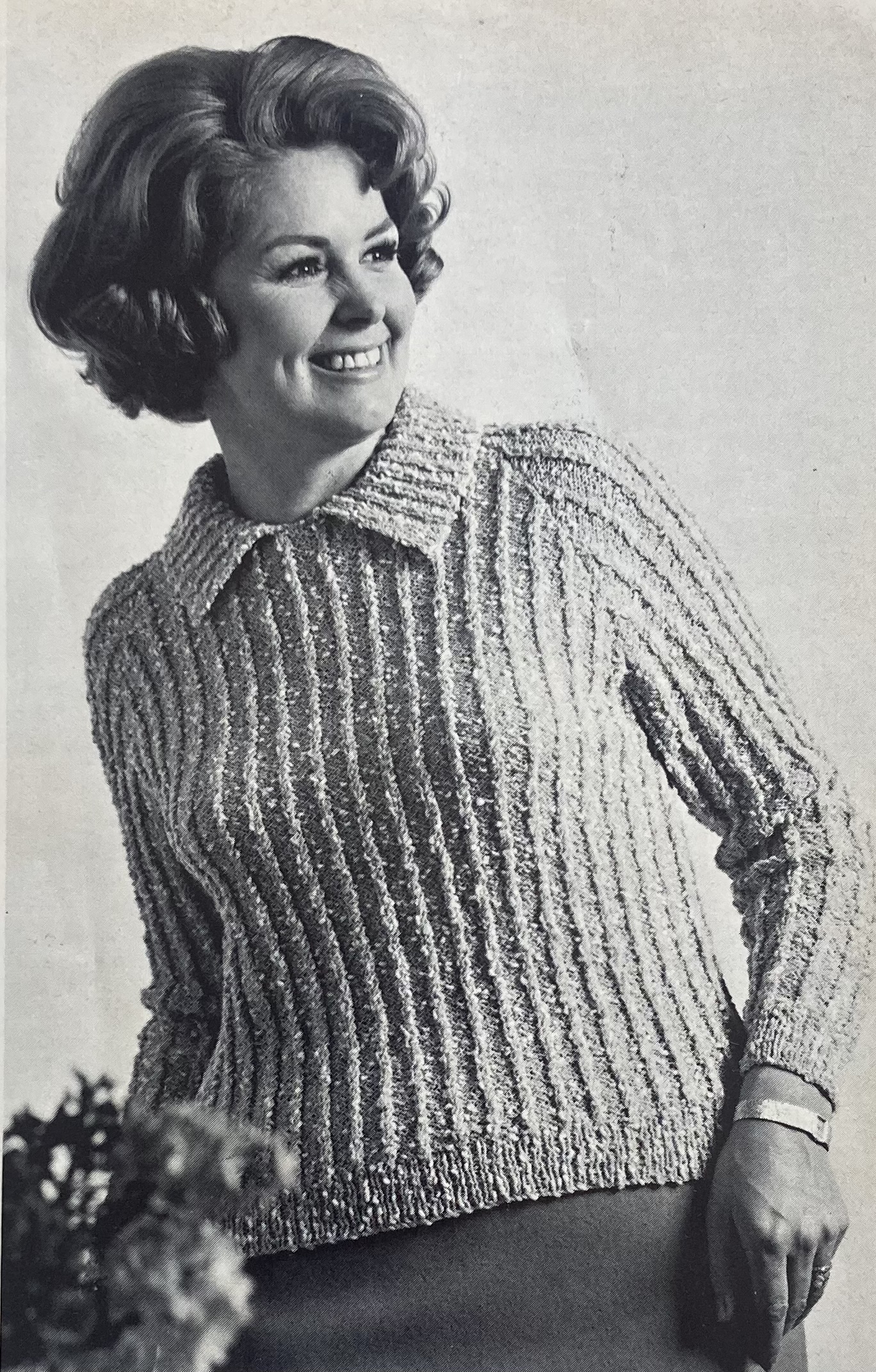
Autumn is officially here, winter is around the corner, and Stitchcraft‘s November 1967 issue presents “the GOLDEN LOOK for winter sparkle”, with warm garments, warm colours, fun textures, and matching his-and-hers outfits to chase away the cold, grey days of November.

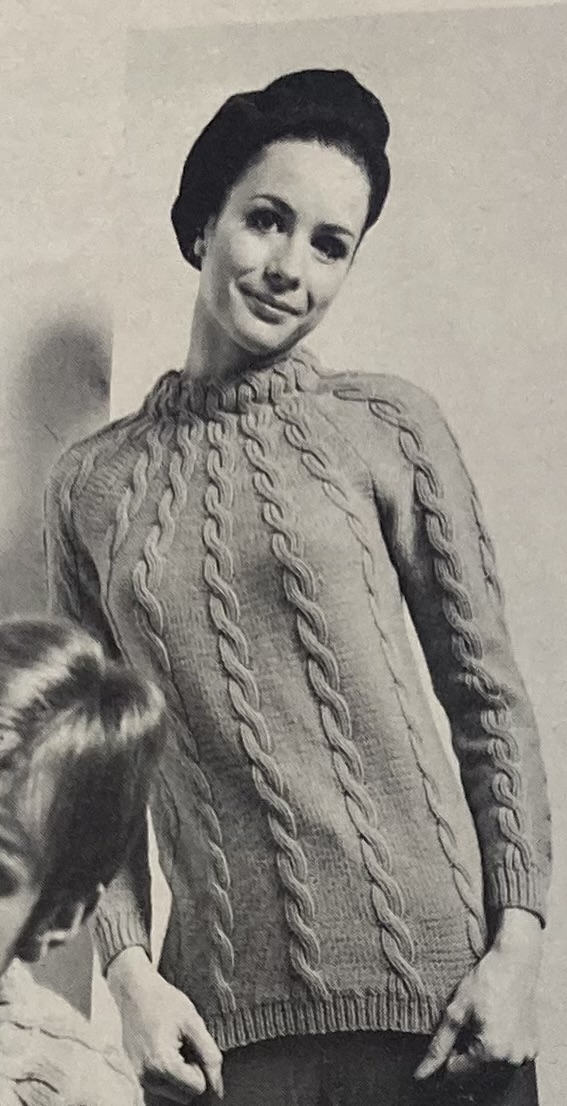
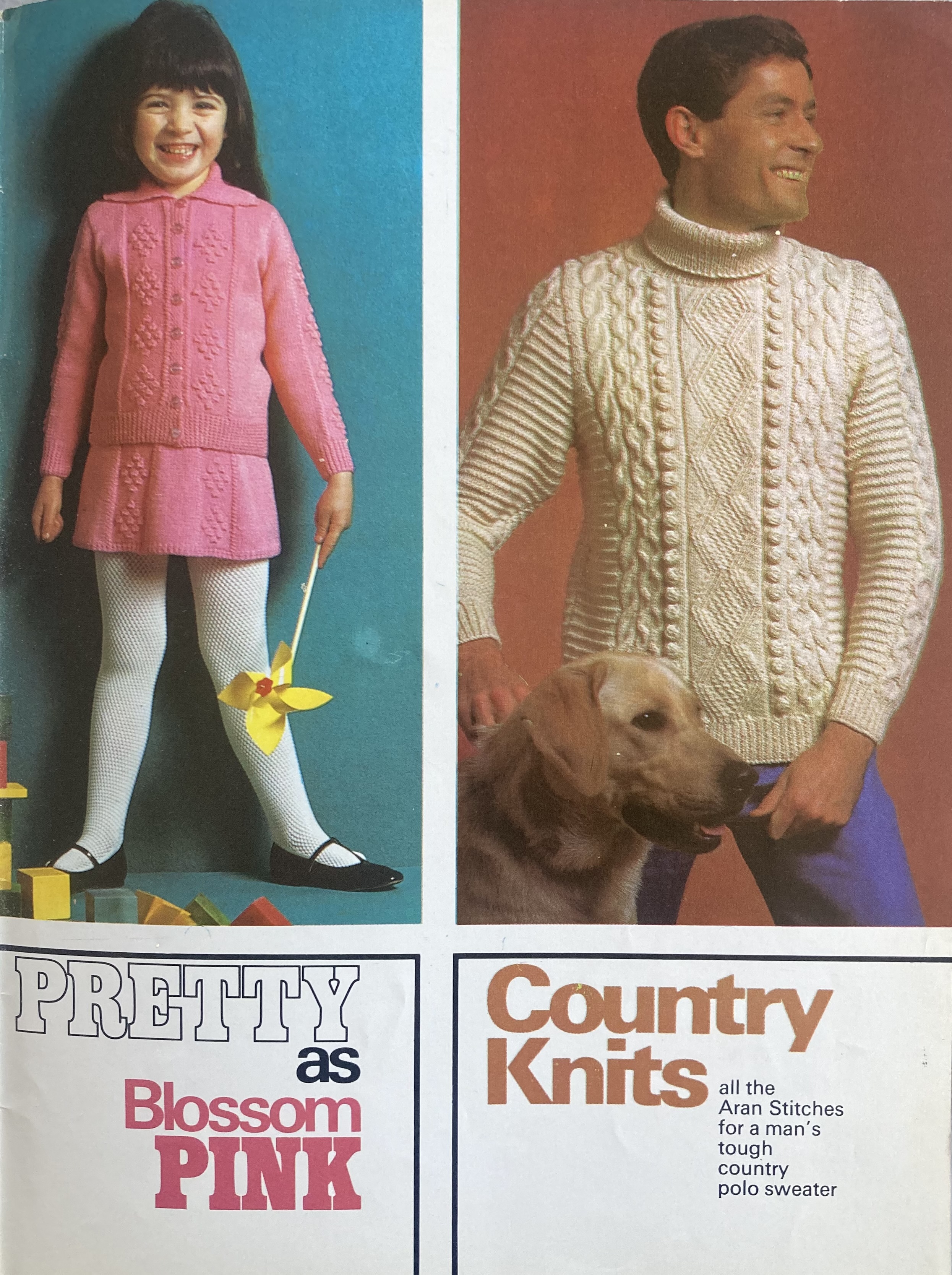
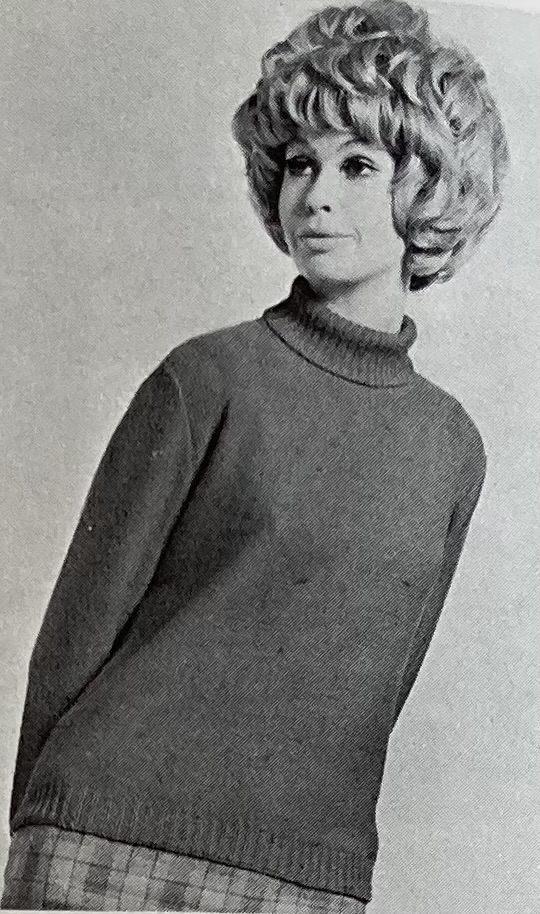
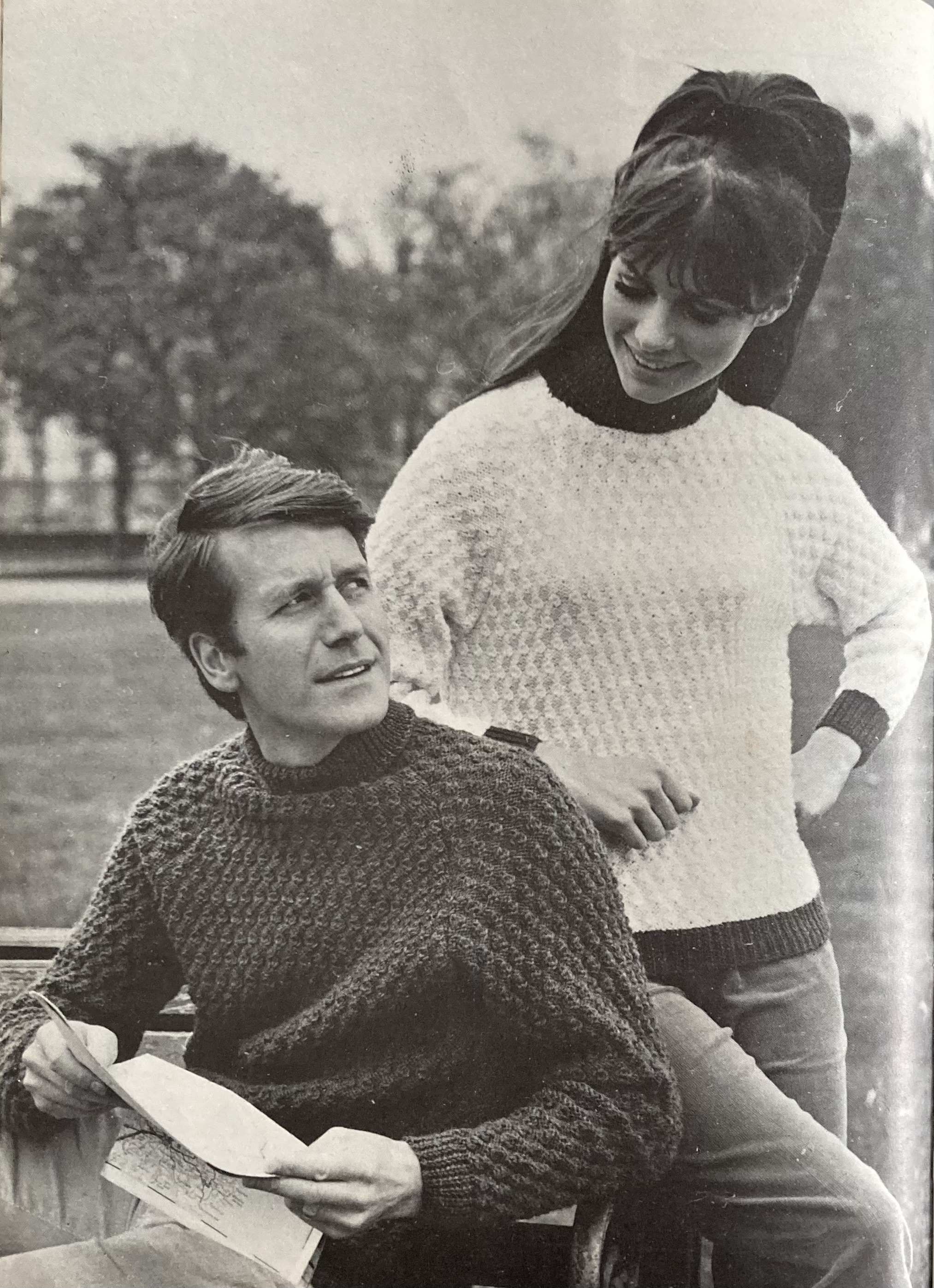
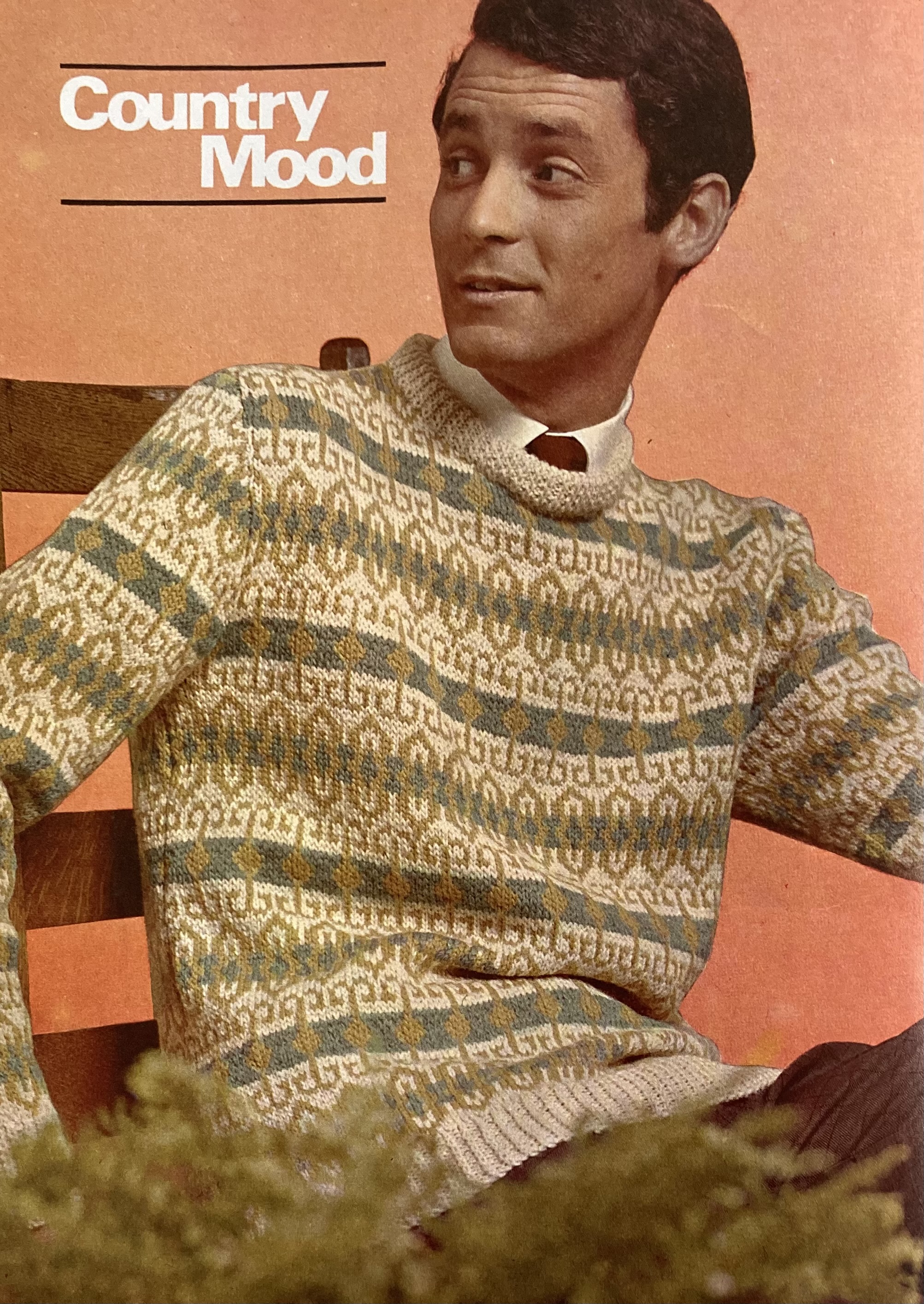
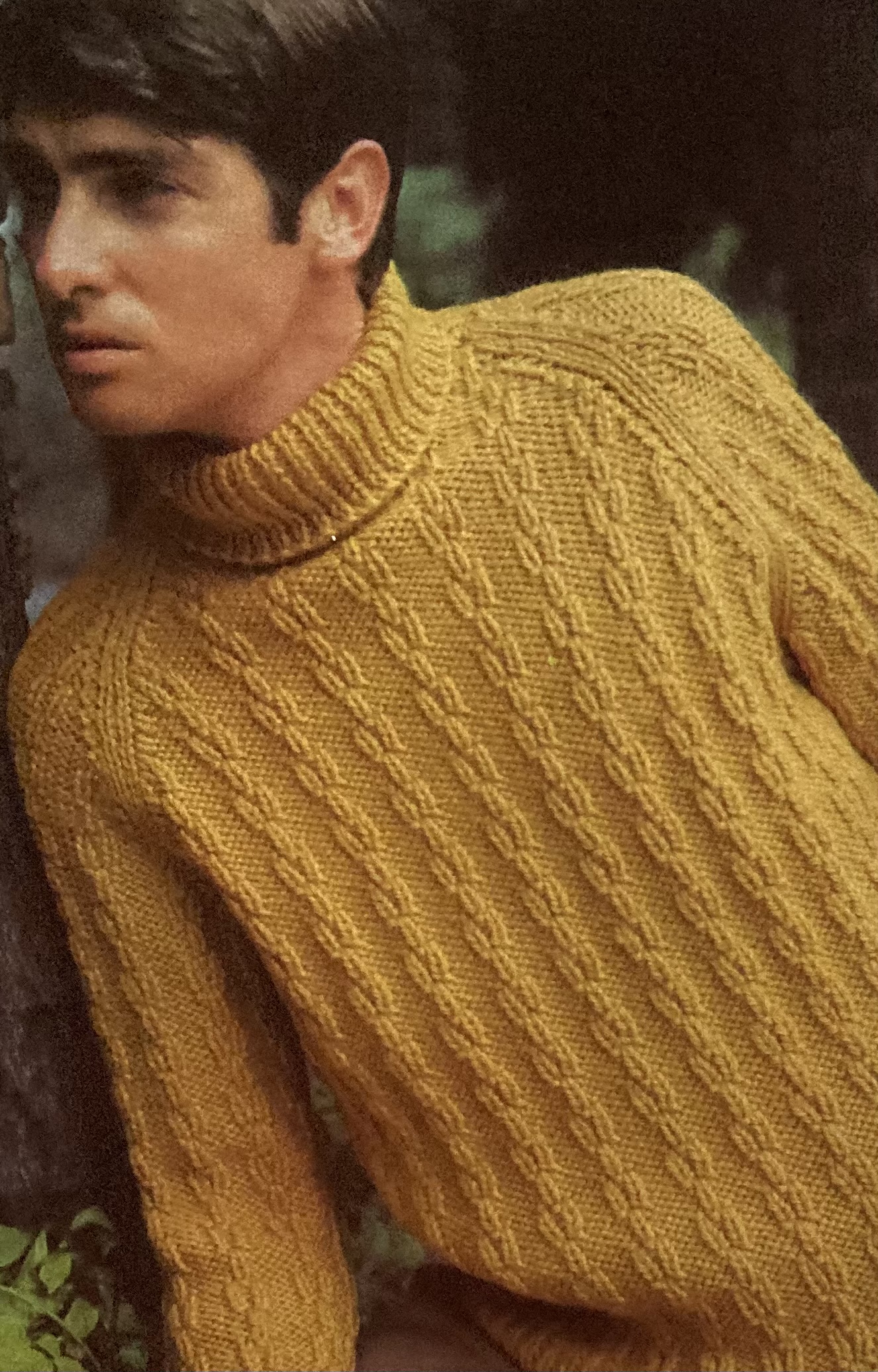
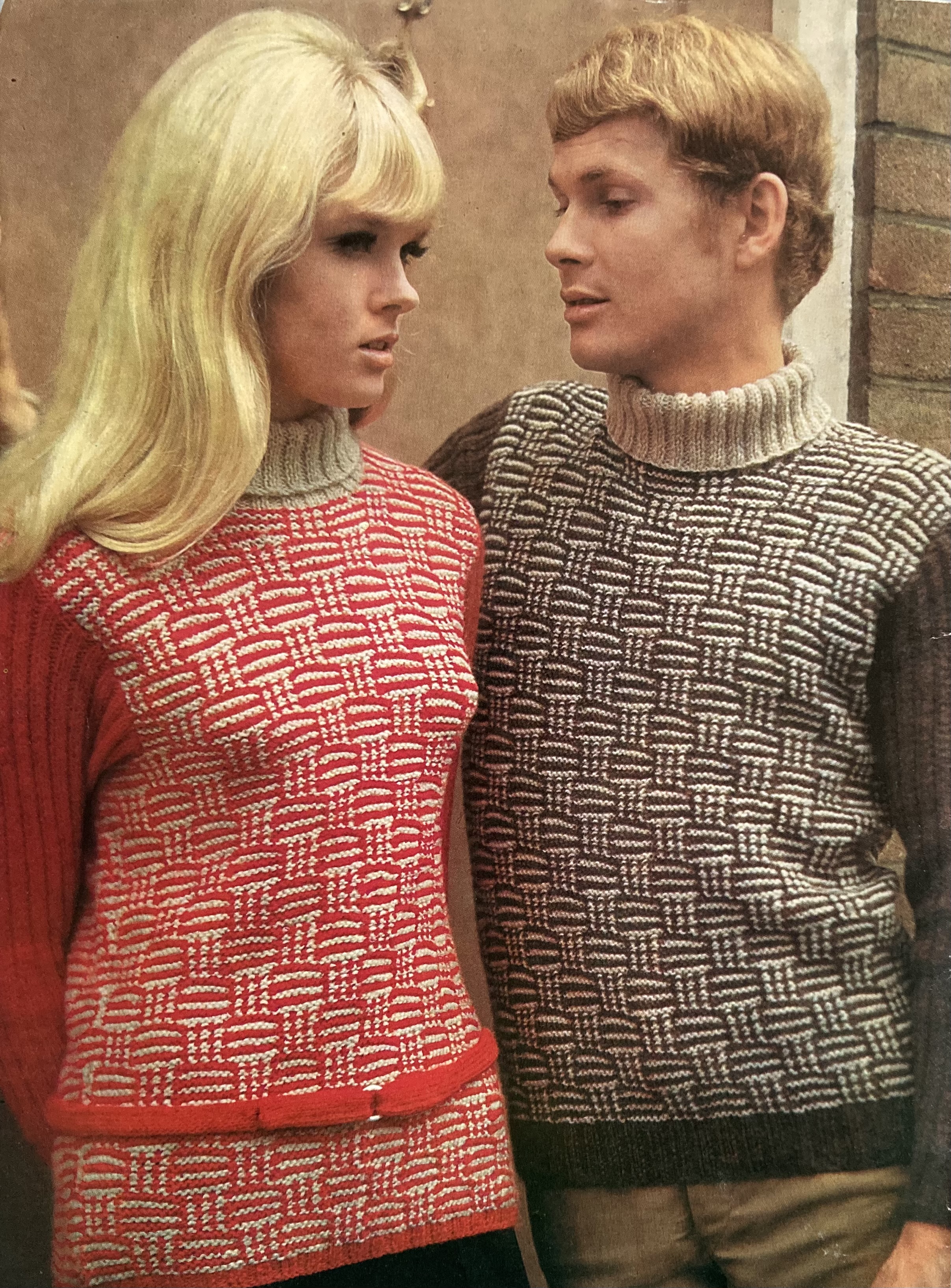
Our cover models sport matching polo- (aka turtle-) neck sweaters in “Flair” wool and a suitably golden colour called “Musk.” There are only two sizes given: 35-37 or 40-42 inch bust, so intended as a one-size-fits-most, basically unisex pattern. The textured pattern is made entirely with knit and purl stitches. Our other partner-look models wear polo-neck pullovers as well, with a simple stranded chevron border at the hem. They seem to be designed for somewhat younger and thinner folks, with three sizes from 32-33 to 38-39 inch bust. There’s one more design just for men: a “country cardigan” in blue wool and a fern-like textured pattern.

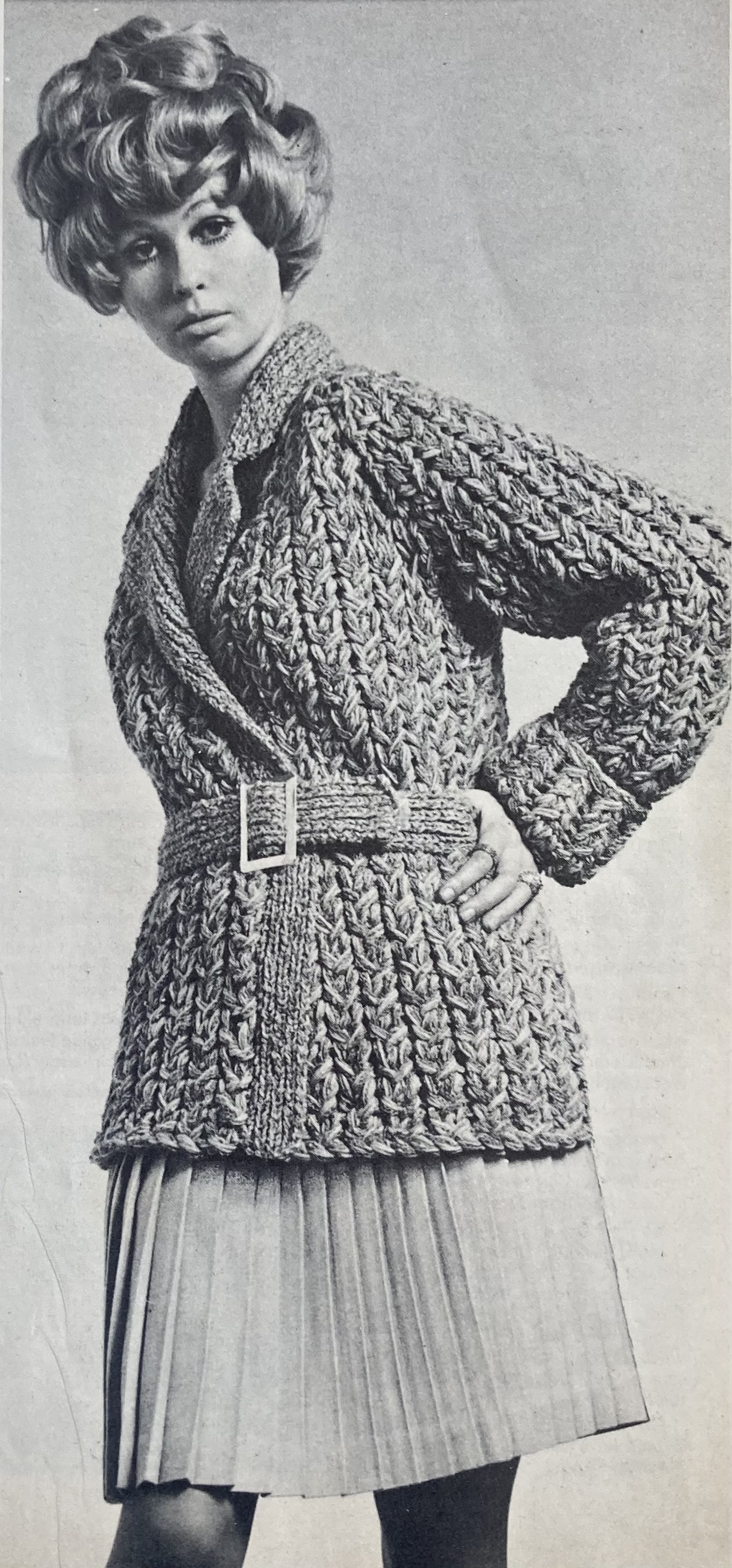
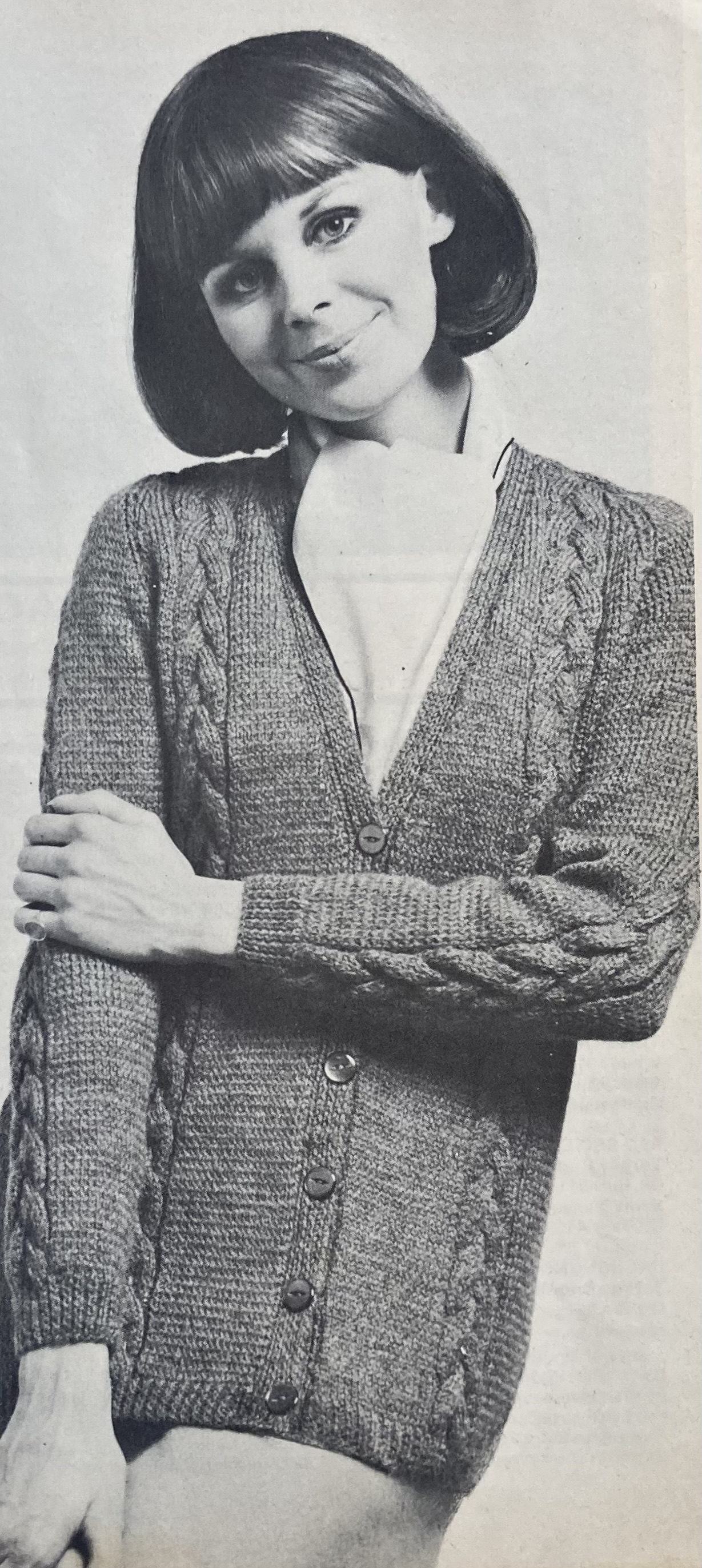
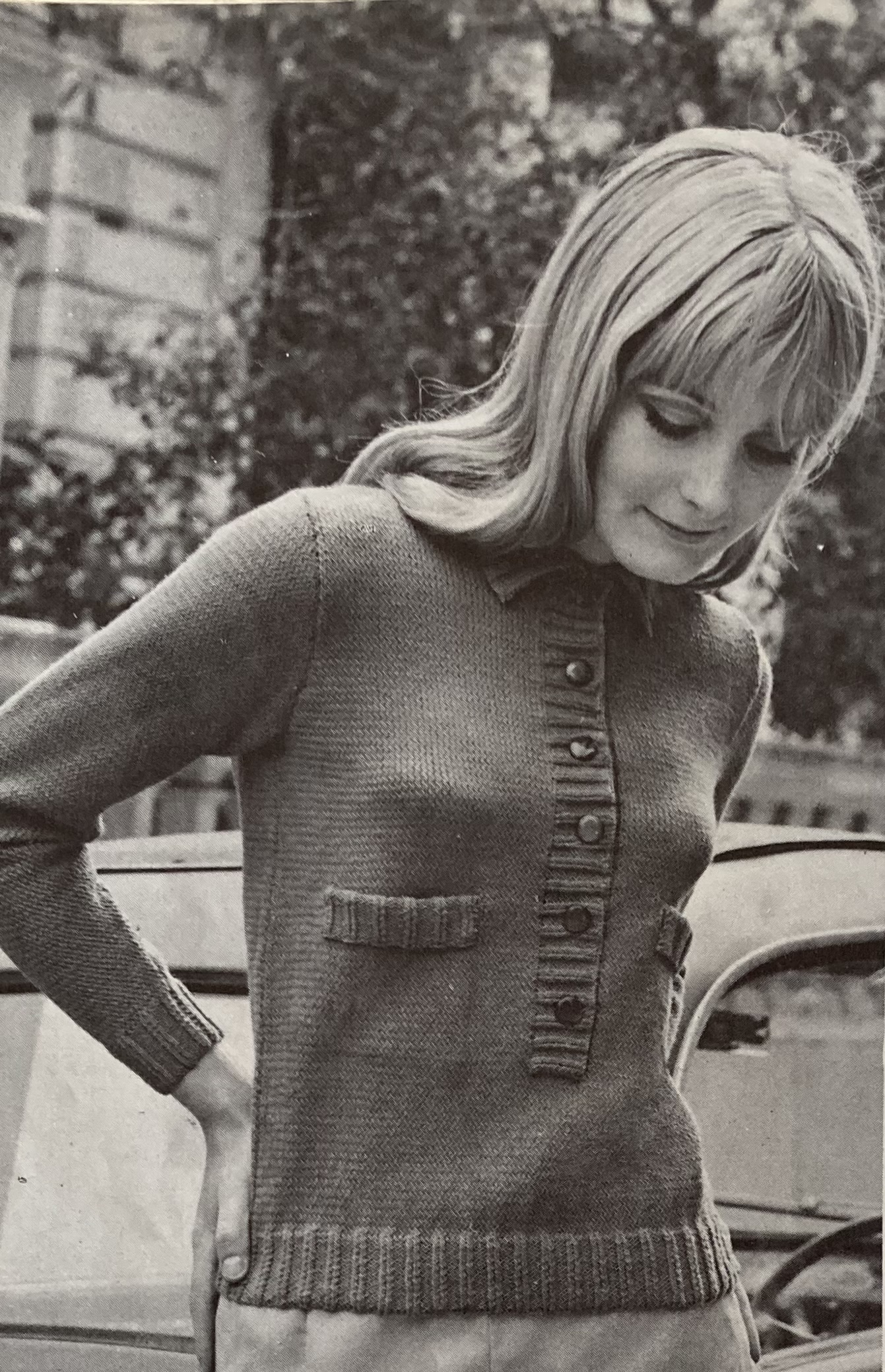
The women’s designs include a rich green jumper suit, with a buttoned pullover in low-contrast stranded diamond pattern and a plain olive-green skirt; a hooded jacket in a chunky bobble-like pattern made with twisted stitches; a delicate jumper in soft, fuzzy “Princess” wool with a contrasting colour yoke; a polo-neck pullover in colourful “rainbow” chevron pattern; and a bright blue cabled jumper for larger sizes (40-45 inch bust).

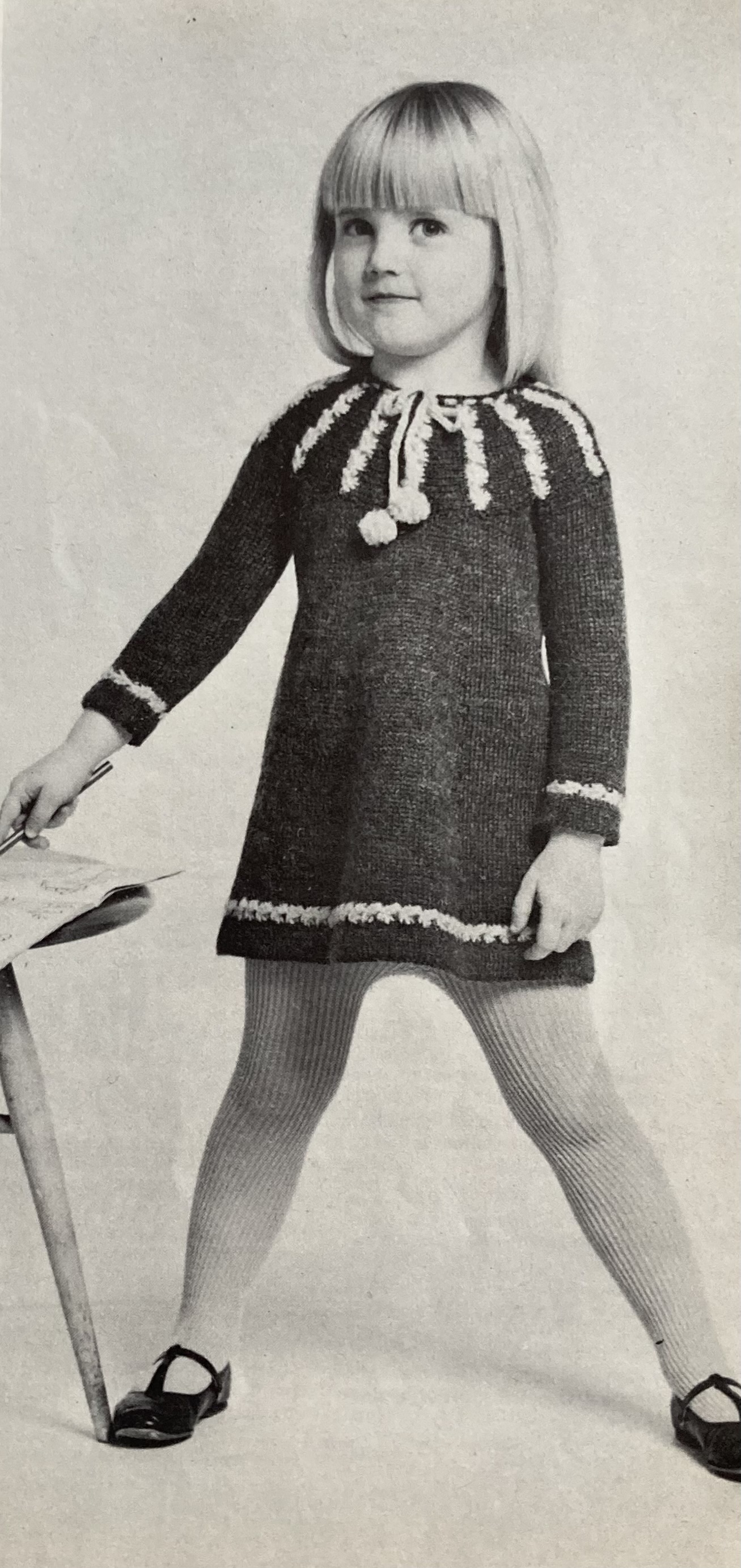
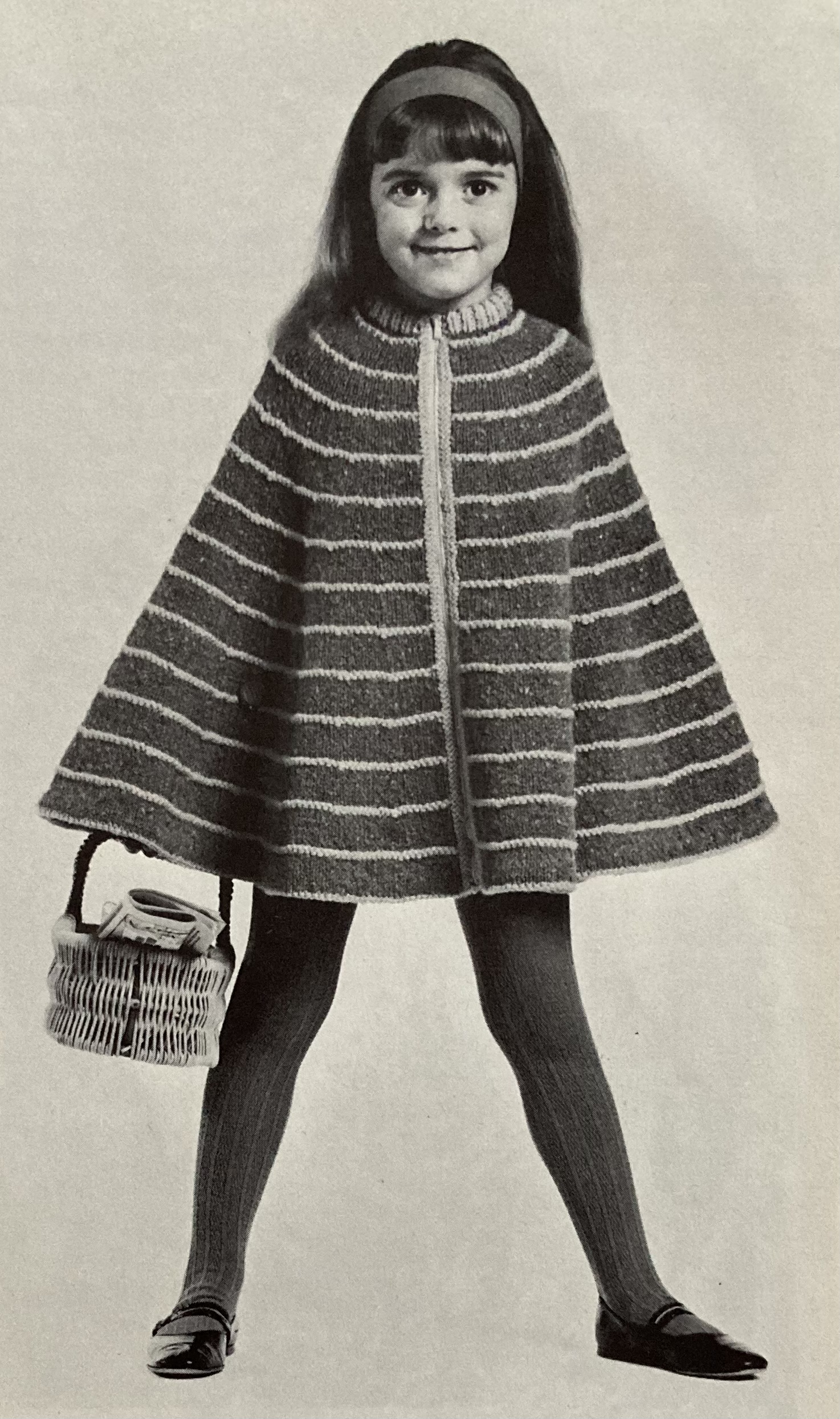
With all these great designs for adults, it’s not surprising that there’s only one children’s pattern in this issue, a tunic for girls age ca. 4 to 7. It’s knitted sideways in pieces, starting at the left side edge of the back, then the fronts separately, then the sleeves separately, which are also knit sideways. I’m glad to see the girl model wearing tights, for once! The children’s comic in the “Readers Pages”, titled “The Woodland Wool Shop”, tells the story of Daisy Lamb, who wants to learn cross-stitch, but doesn’t want to be cross about it.

The homewares and “novelties” are all designed with an eye towards December gift-giving, and most of them are featured in a single, big colour photograph. There are lots of things to make in felts: holiday-themed potholders and party mats, a night-case patterned after the nursery rhyme about the old woman who lived in a shoe, some racist “Golliwog” puppet mitts (unfortunately, still a thing), giraffes to appliqué onto an apron, coffee cosy or apron, and another truly terrifying clown intended for use as a string dispenser — yes, you put a roll of string in its head and pull the string out through its mouth. Stephen King was already 20 years old when this issue of Stitchcraft came out (and lived in another country), but if he grew up with things like this in the 50s, it’s not hard to see where he got the inspiration for It. Just saying.

You can also embroider sprays of holly on place mats or another apron, or make a cross-stitch rug or cushion in a Norwegian pattern, or a different cushion in a Florentine pattern. More advanced tapestry aficionados can make a tray-cloth or yet another cushion based on a design from a Chinese tapestry. On the simpler side, you can sew a little doll and dress her in traditional Dutch clothing, or knit a little stuffed toy set of a mother and baby fox. Many, many gift ideas in this issue. Oh, and another rug, in cross stitch!

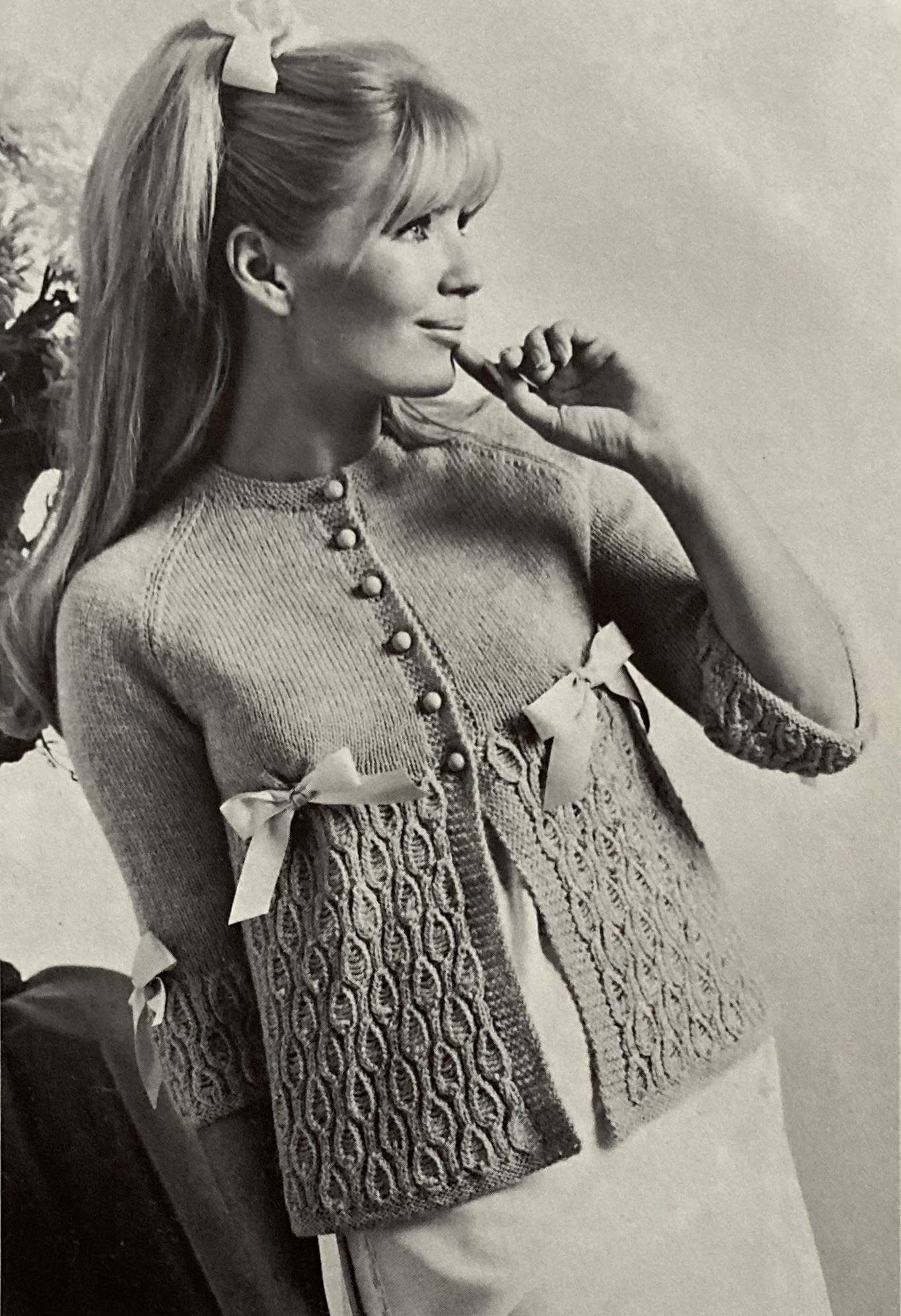
The ideas keep coming, with two little cross-stitch pictures symbolising “Autumn” and “Winter” (to match the “Spring” and “Summer” pictures in the last issue). And how could I not mention the best gift idea of all: the bed-jacket in loop-stitch, modeled by my favourite model, who seems to have been hired by Stitchcraft exclusively to model bed-jackets with a sexy come-hither smile. I have to admit, the loop-pattern spoils the sexiness for me, but we all have our own preferences… Love the pink-on-pink photograph, though.

That’s all for this issue! My project will be the buttoned pullover from the jaquard jumper suit (just the jumper for now.) May your November be bright and golden.

October 1967: Babies Button-ups

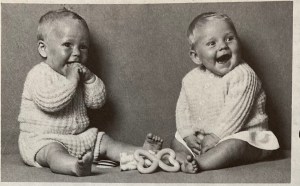
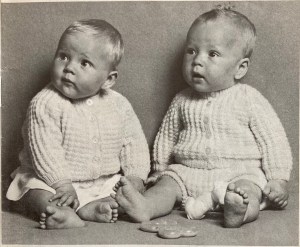
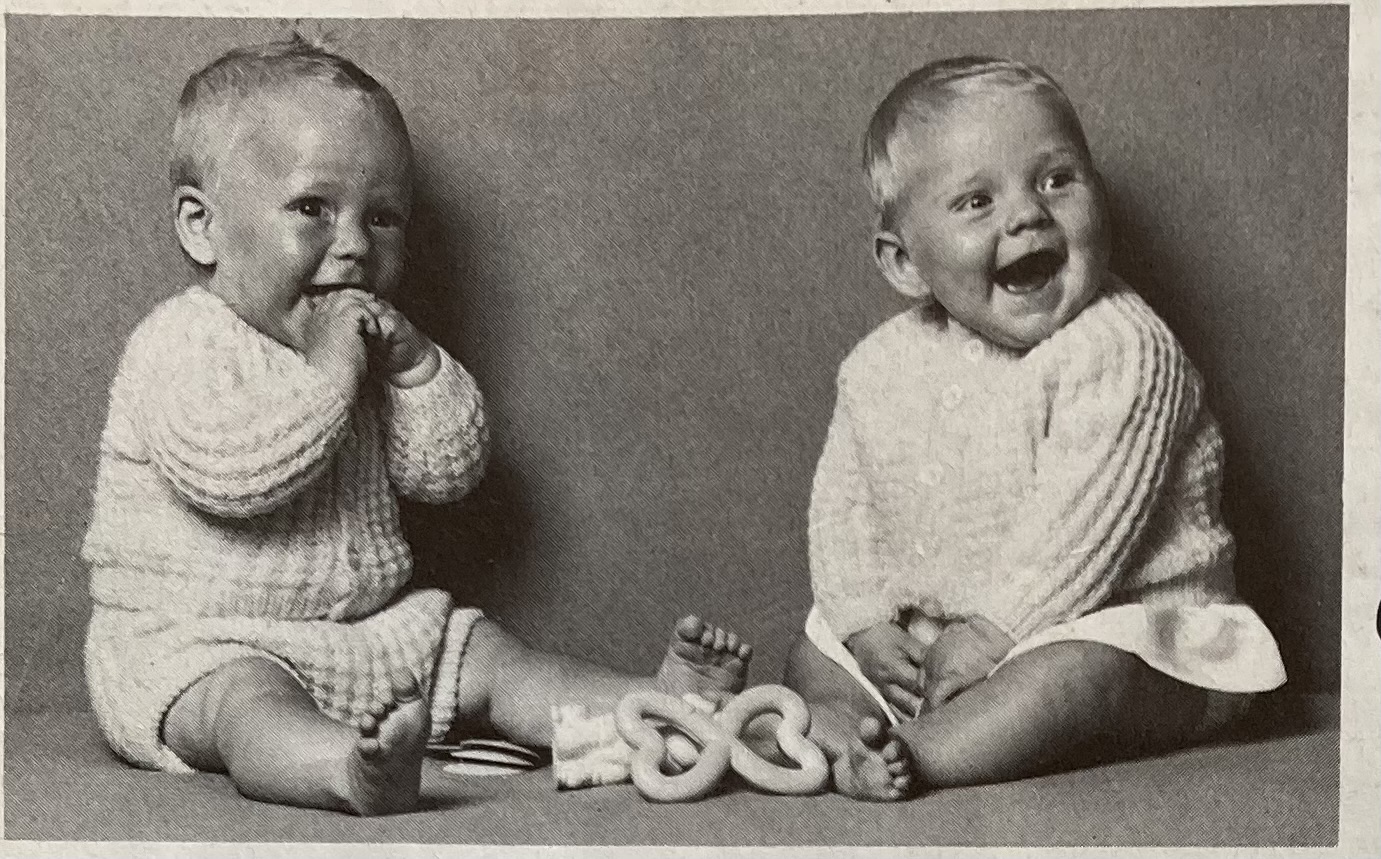
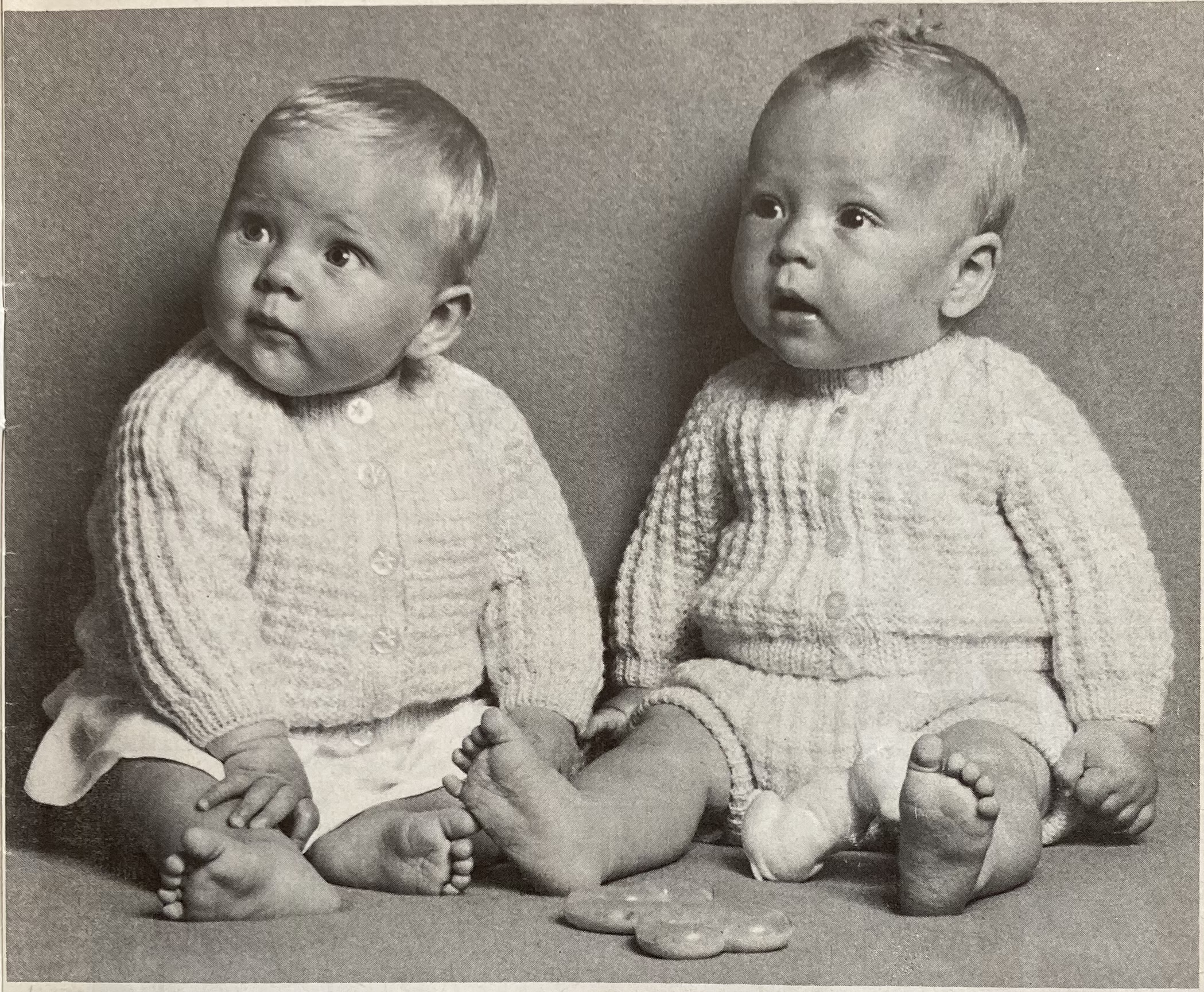
“Something to laugh about” is Stitchcraft’s caption for the photo of this month’s project: a baby’s cardigan (“button-up”) from October 1967. For once, the babies in the photo are actually happy!

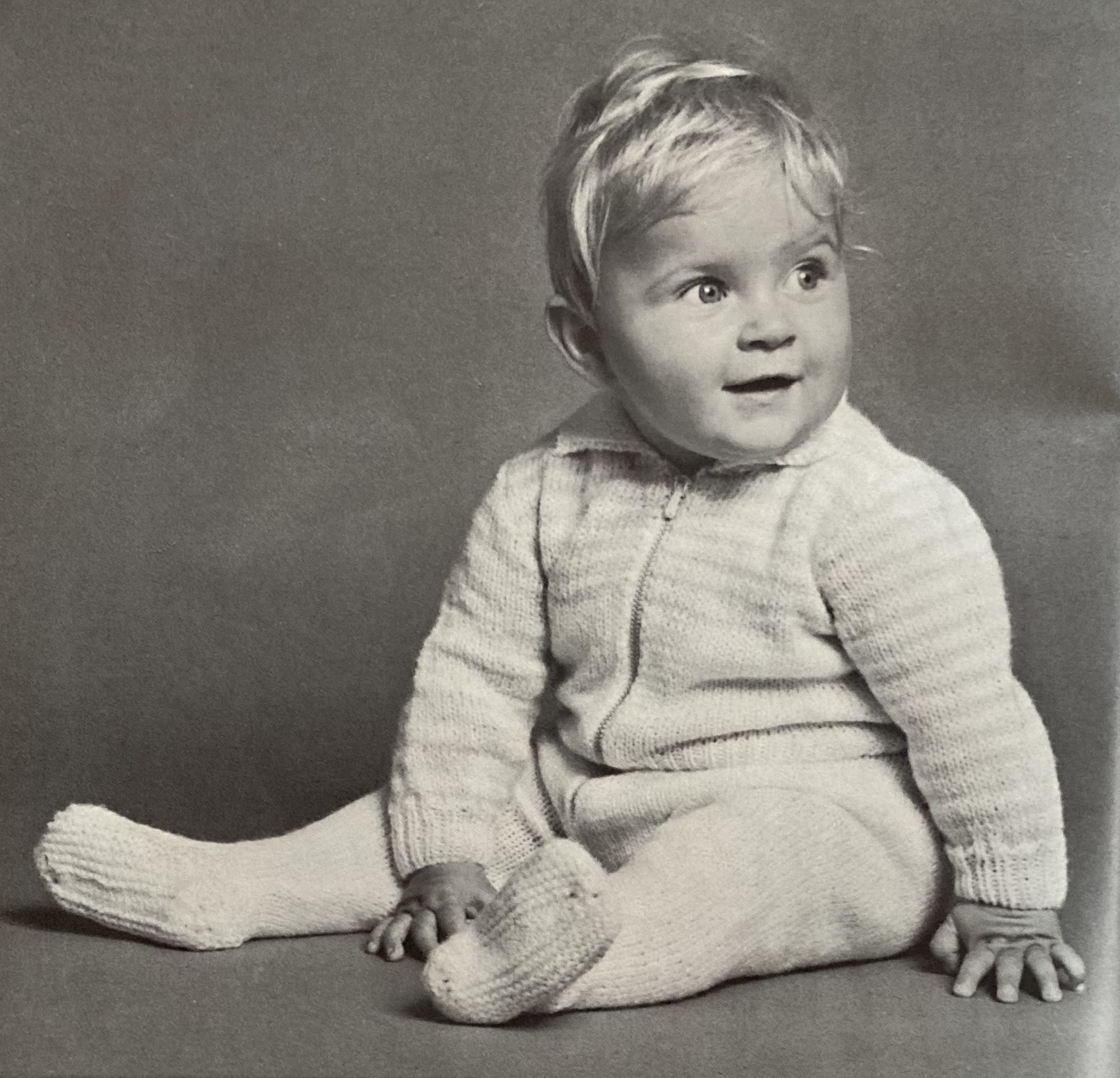
The cardigan can be made “for a boy” or “for a girl” (buttonholes on one or the other side) and you can knit matching trunks “for a boy” — I guess girls need to get used to having a cold bum early, to prepare them for a lifetime of miniskirts with knee socks. In any case, the cardigan and/or set is offered in three sizes, to fit newborns up to ca. 1 year (18-22 inch chest).

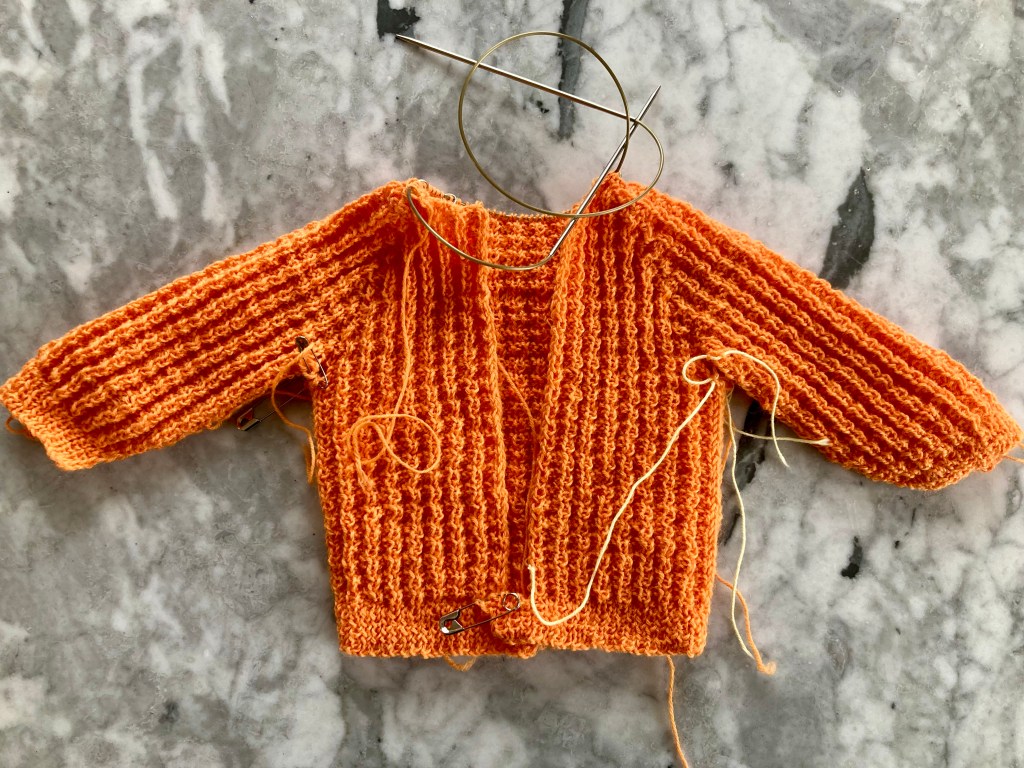
The suggested wool is Patons Quickerknit Baby Wool (fuzzy, hairy, 100% wool) or Patons Brilliante (smooth, synthetic). I used DROPS Fabel (sock wool, 25% polyamide) in a shade of bright orange which I had originally bought to make the red-striped dress from September 1967, but which didn’t match with the other colours. It is quite fine and smooth, so for once I actually achieved the tension called for in the pattern: 8 sts and 10.5 rows to the inch.

I made the first size, for whatever baby a friend or colleague has next (always good to have a baby garment in reserve…). The pattern is interesting and one that I had never encountered before:

  • Row 1: sl1, k2, *p1, k3*
  • Row 2: sl1, p2, *k1, p3*
  • Row 3: sl1, *k1, p3* to last 2 sts, k2
  • Row 4: sl1, *p1, k3* to last 2 sts, p2

In other words, a broken 1/3 rib. You would think it would be easy to notice and memorise, but it was surprisingly frustrating and difficult to “read” the knitting. I kept the instructions next to me the whole time.

I made the fronts and back in one up to the armholes, the sleeves separate and flat (the pattern messed with my head enough and I did not want to try to convert it to knitting in the round), and then joined it all together for the raglan decreases. Increasing and decreasing in this pattern was not fun. Even though it is really not a complicated pattern! It just wouldn’t go into my head. It worked out fine in the end, though.

The finished fabric is very three-dimensional and waffle-y and probably quite warm. It also pulls together quite a lot horizontally. I was barely able to stretch it out to an 18 inch chest with blocking, so this will be for a small/newborn baby. On the other hand, the stretchiness means the cardigan will probably grow along with the baby and fit it for a while. I added little white vintage-looking buttons and that was that. I didn’t make the trunks.

All in all, turned out fine and will brighten up some baby’s wardrobe. And it even got done in October! Next month’s project will be a stranded pullover for myself.

October 1967: Overview

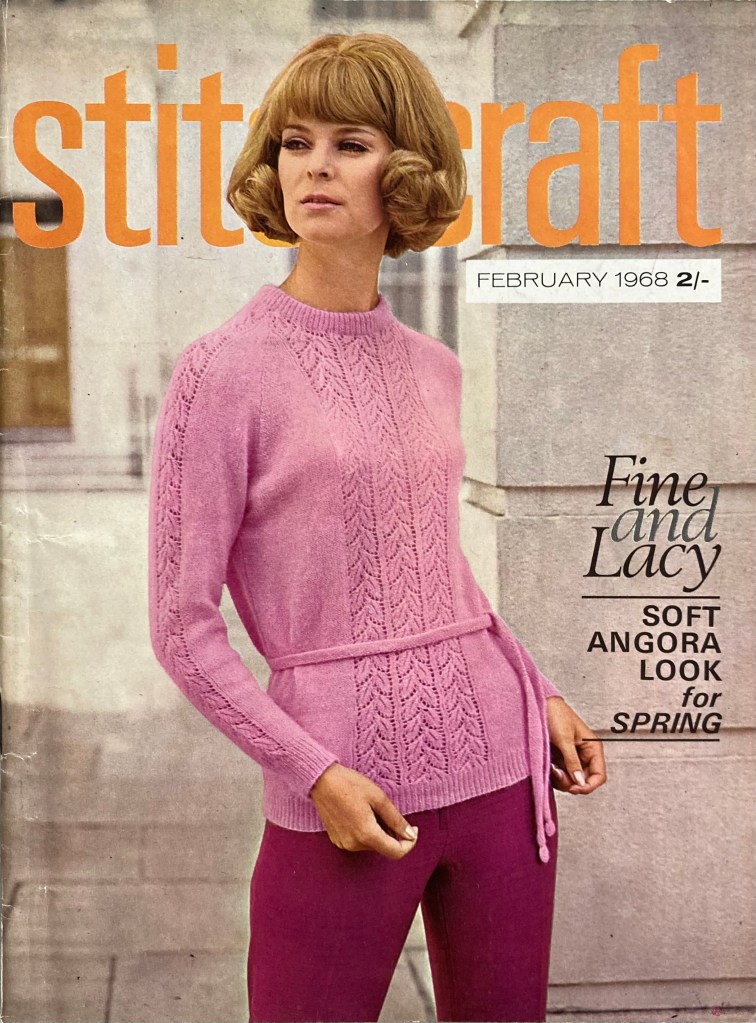
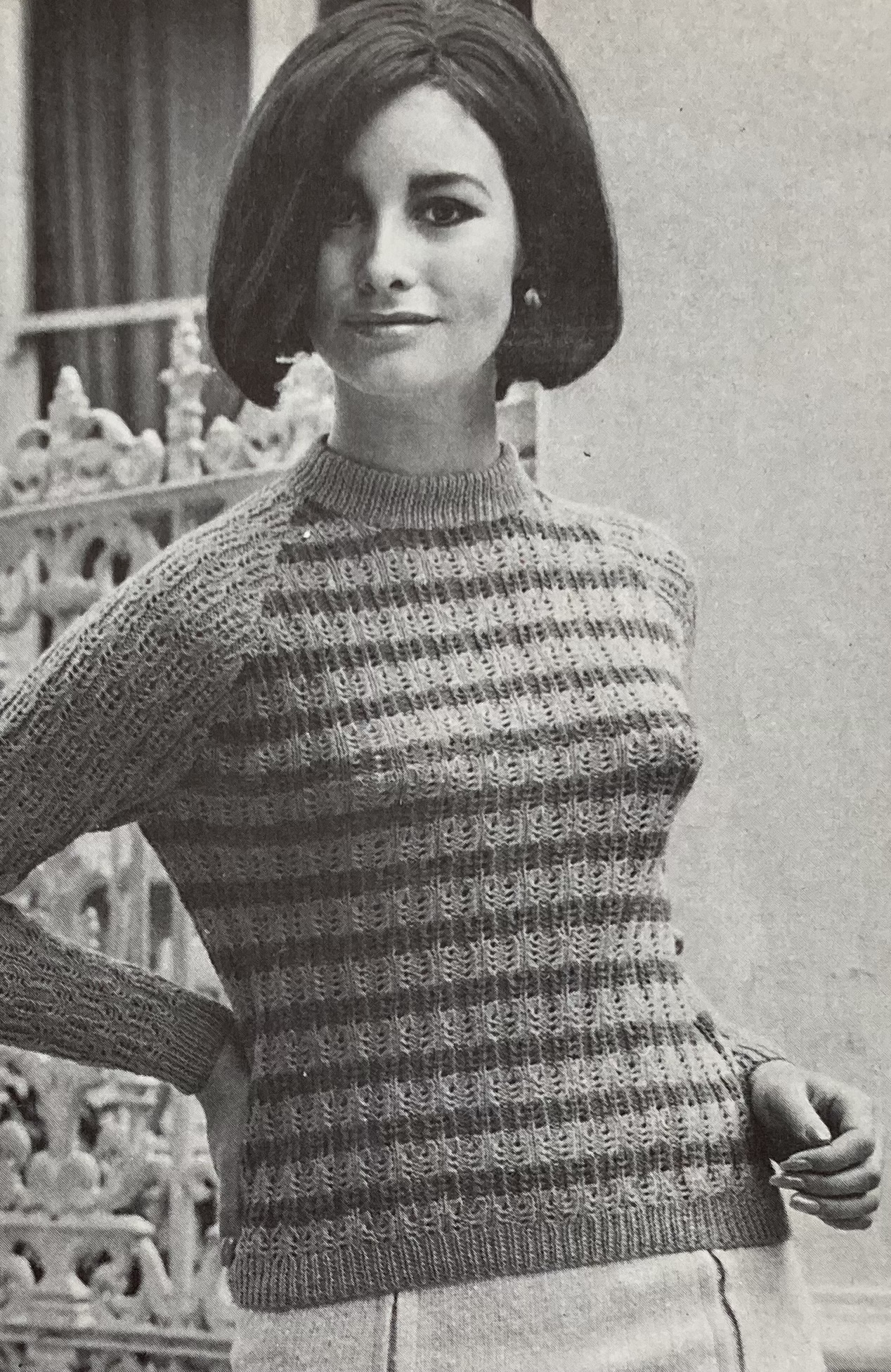
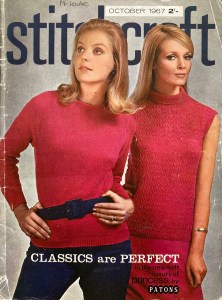
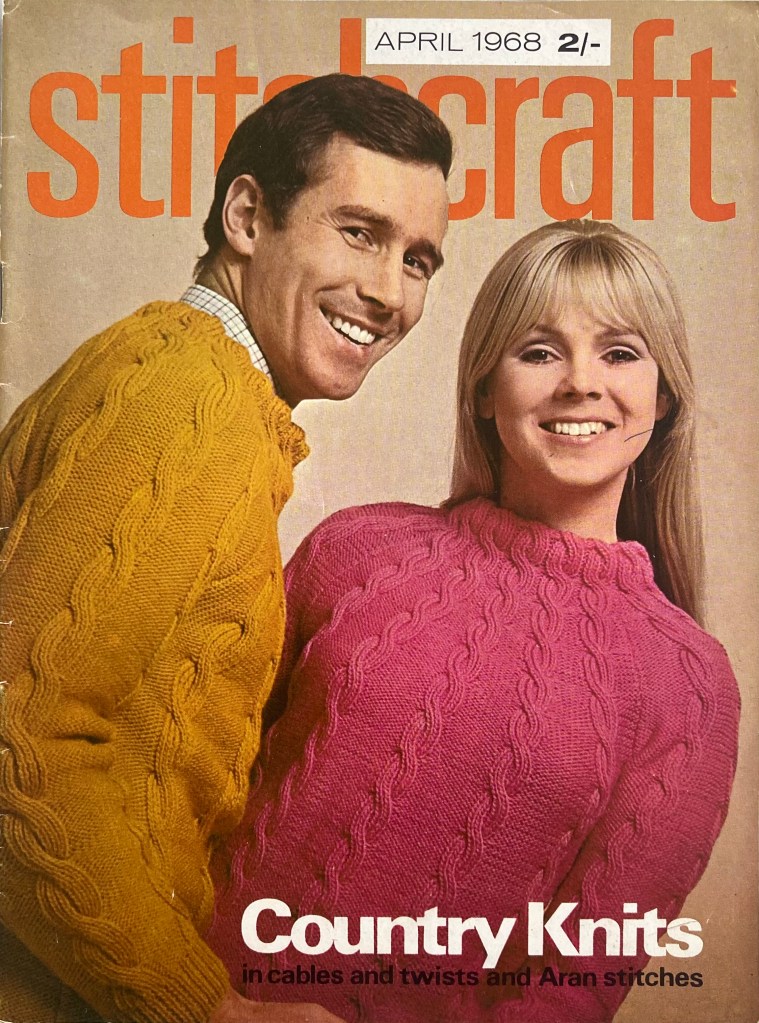
The October 1967 issue of Stitchcraft brings “special news for knitters”: a new wool, Patons Princess. A lightweight yarn made up of 85% lambswool and 15% angora, it was presumably soft and fluffy, and promised to be “smooth and easy to knit”. The classic raglan pullover and lacy “shell” on the cover both use it, in bright pink “Camellia” colour.

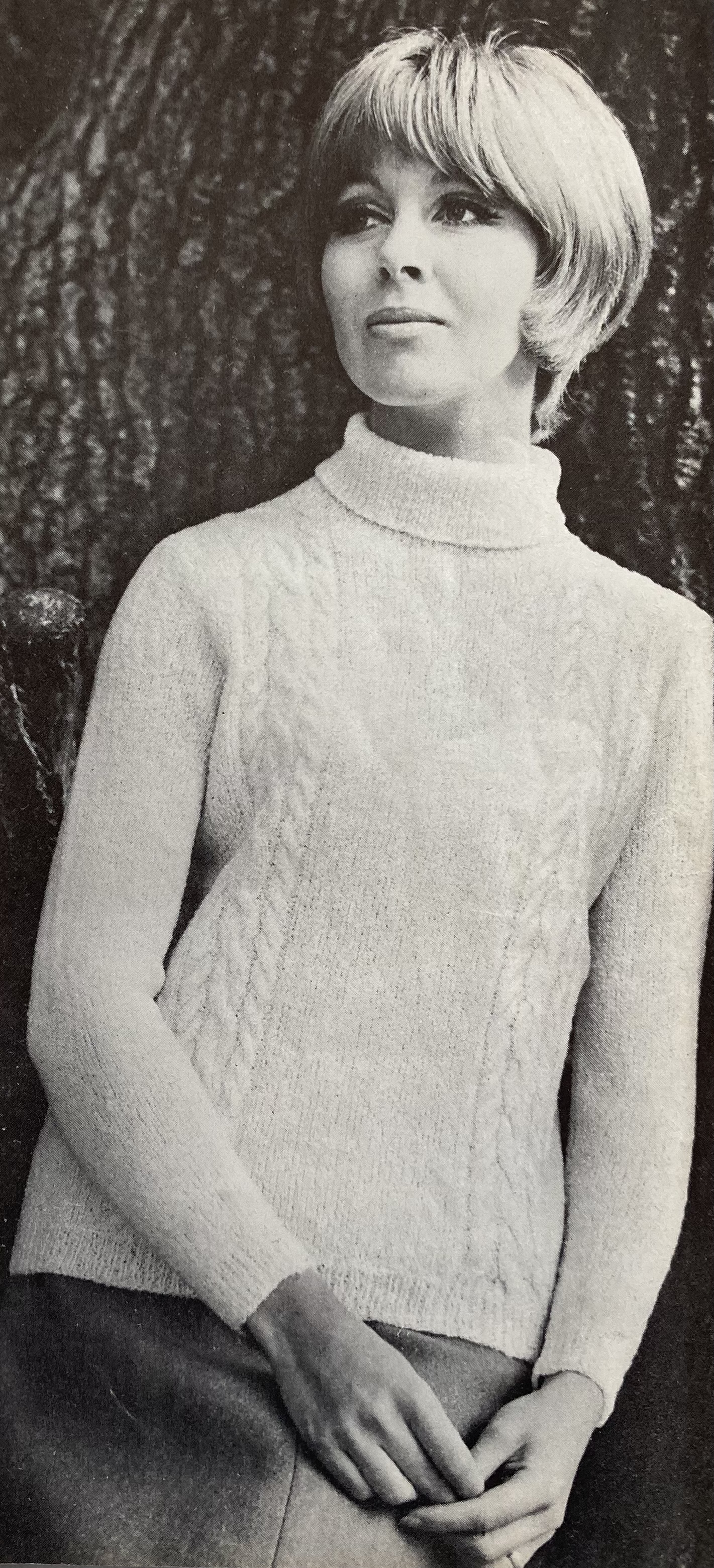
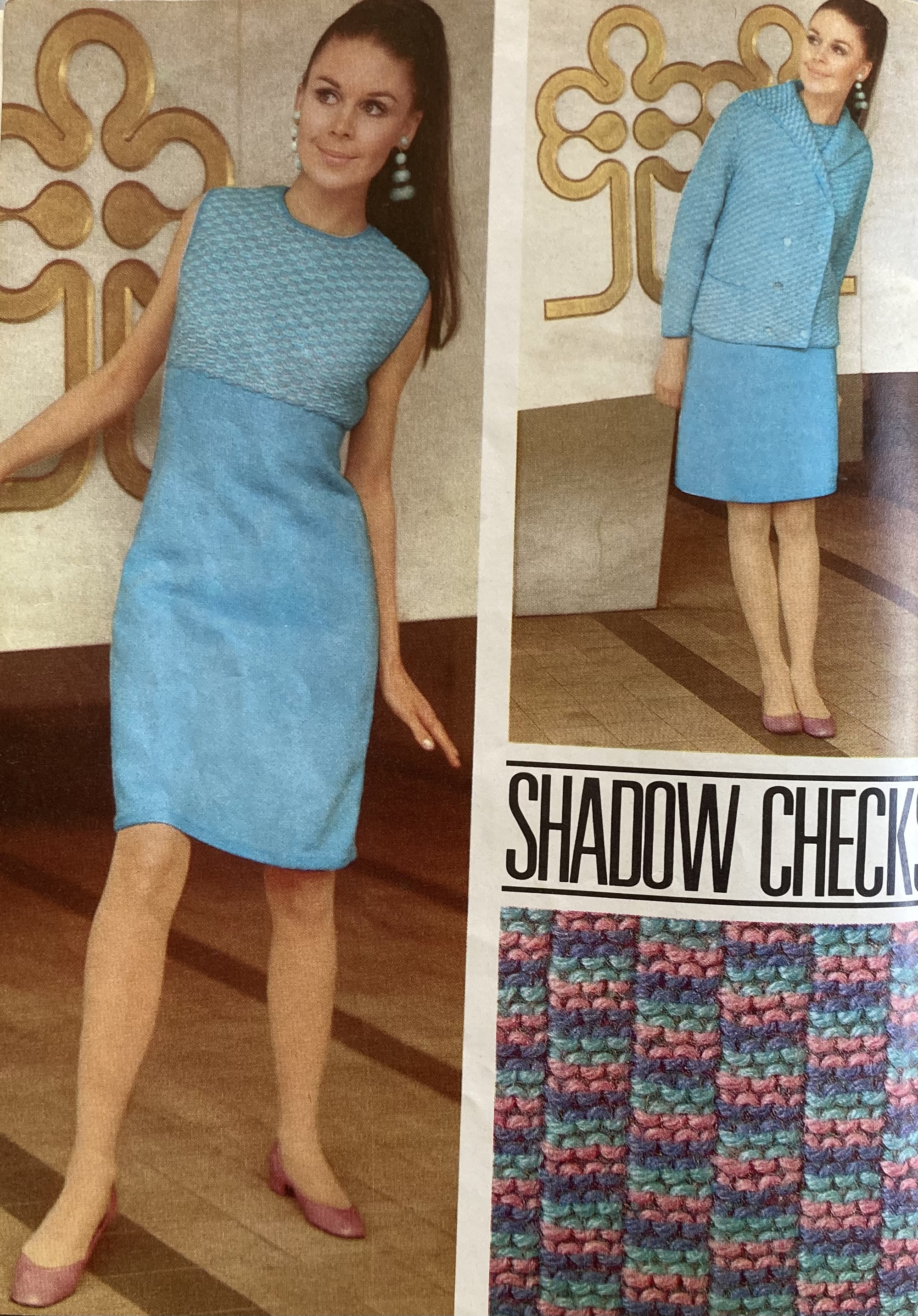
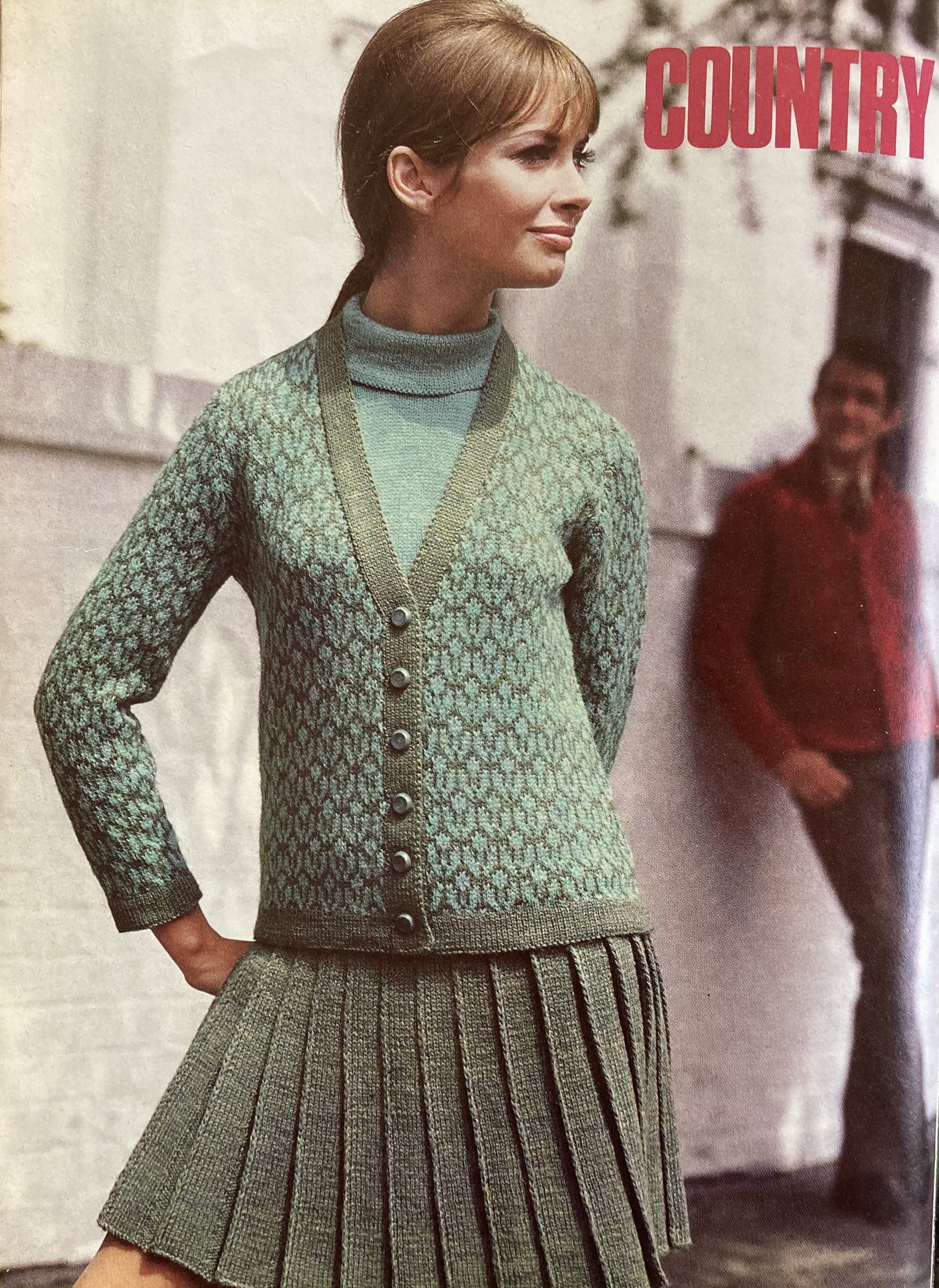
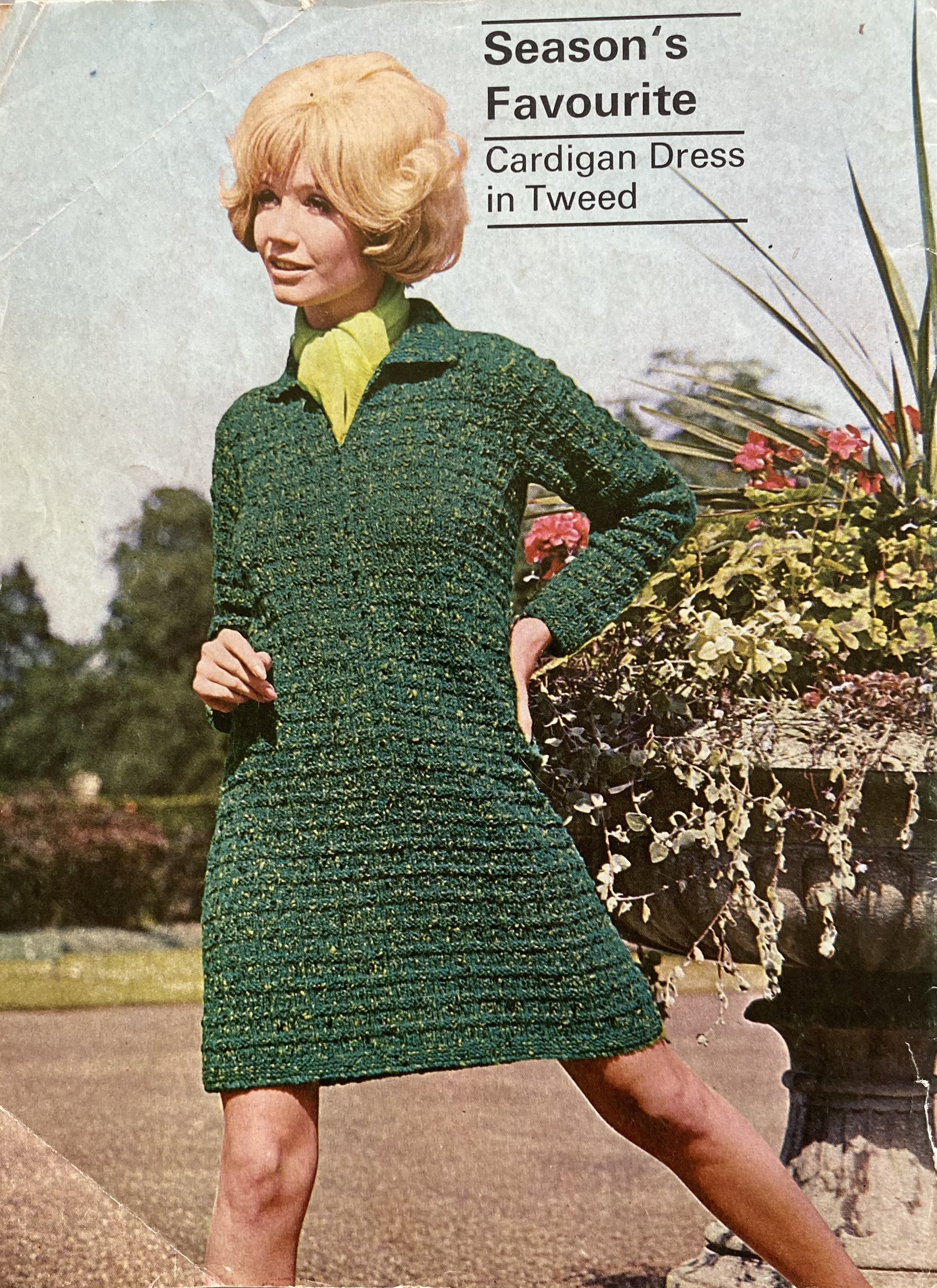
Sleeveless shell notwithstanding, the issue looks towards cooler autumn days and the pre-Christmas holiday craft rush. “Winter Plans include the Polo Classic” is the caption for a bouclet pullover with double-strips of cables on the front. Other women’s fashions bridge the changing season with layered separates: a sleeveless dress in DK weight with “shadow check” patterned yoke and matching blazer, or a three-piece set of plain, sleeveless polo shell with pleated skirt and stranded cardigan in Shetland-mix “Fiona” wool. Polo neck(aka turtleneck) collars are in fashion, in shades of green, pink and red or in classic white and winter white.. For the coldest days, there’s a thick, warm coat-dress in brilliant marled green.

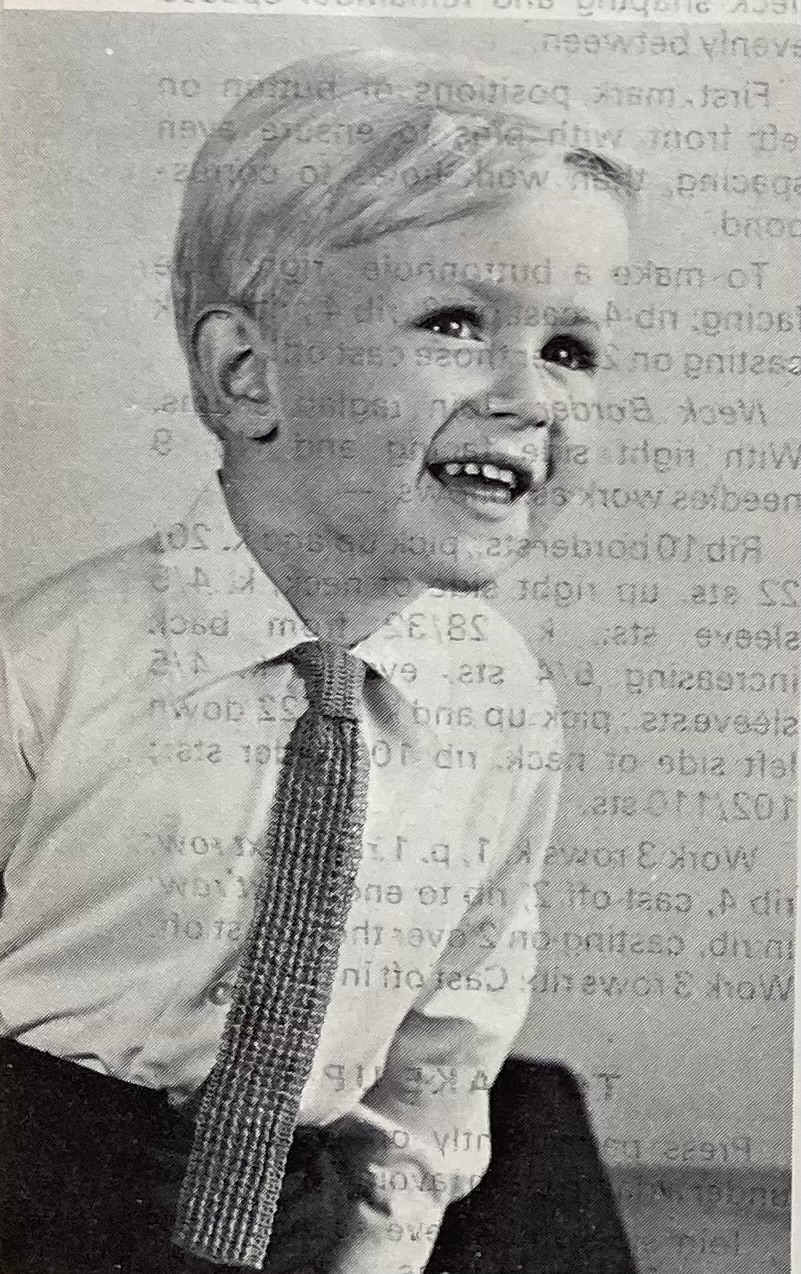
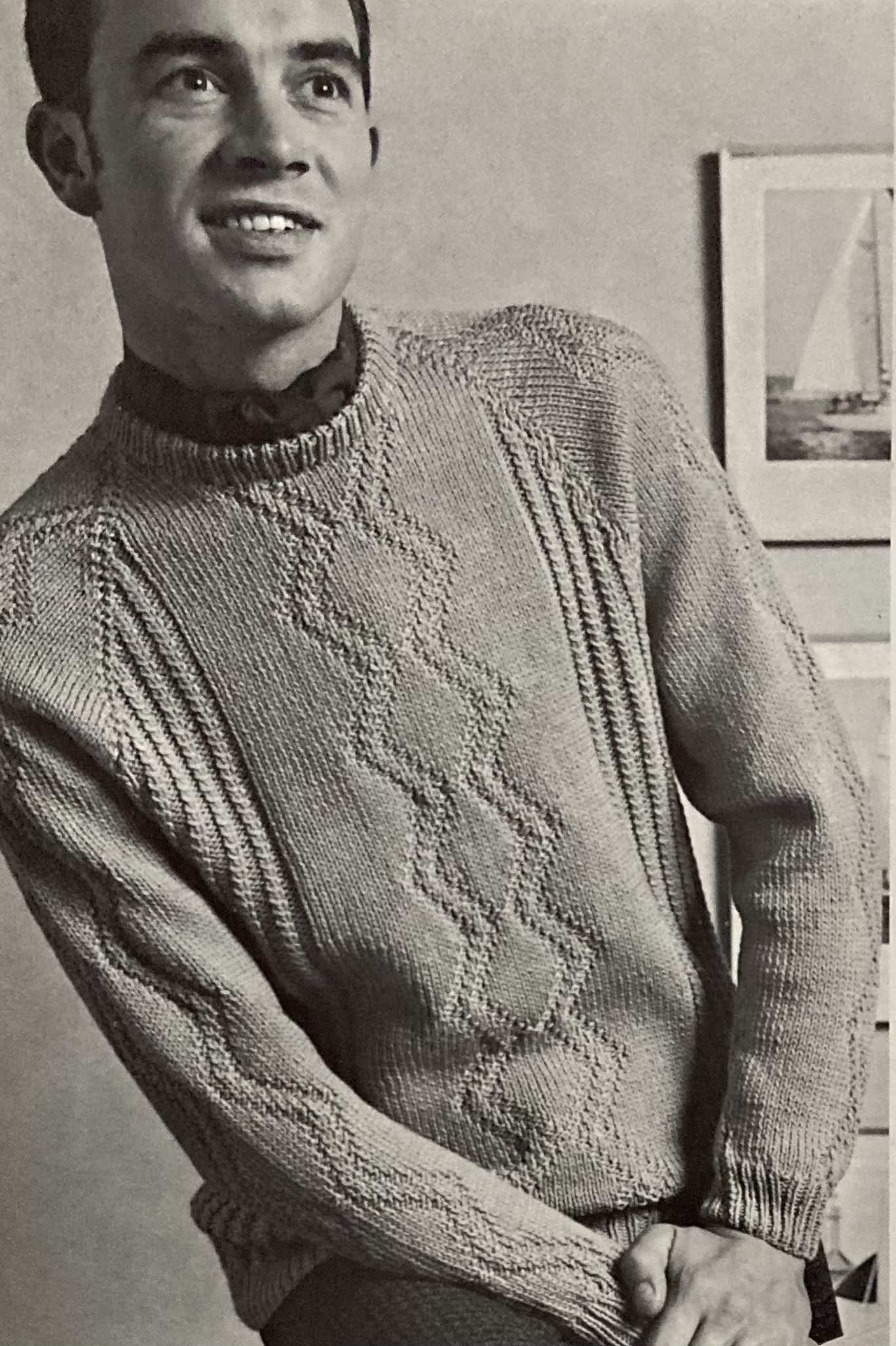
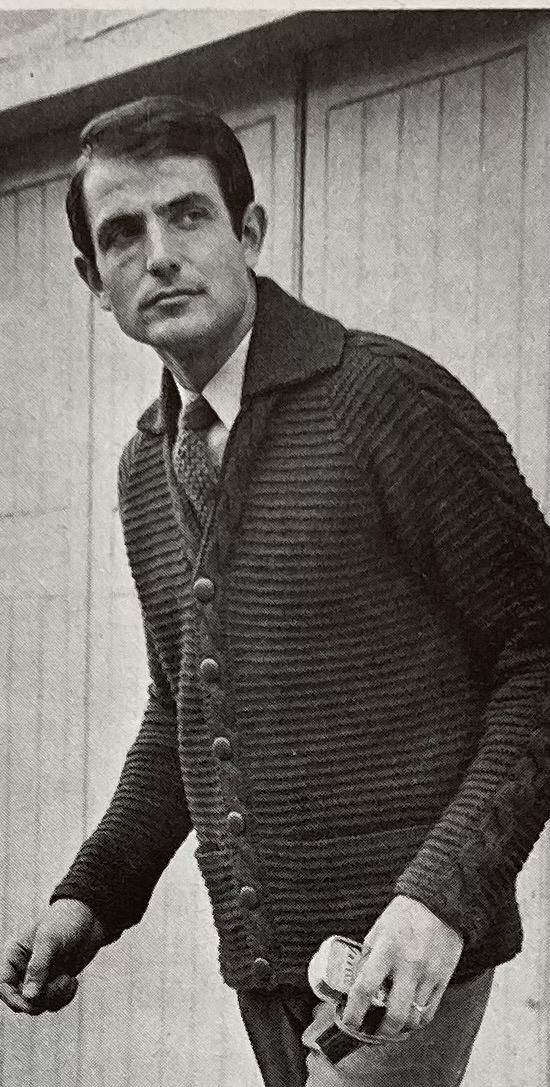
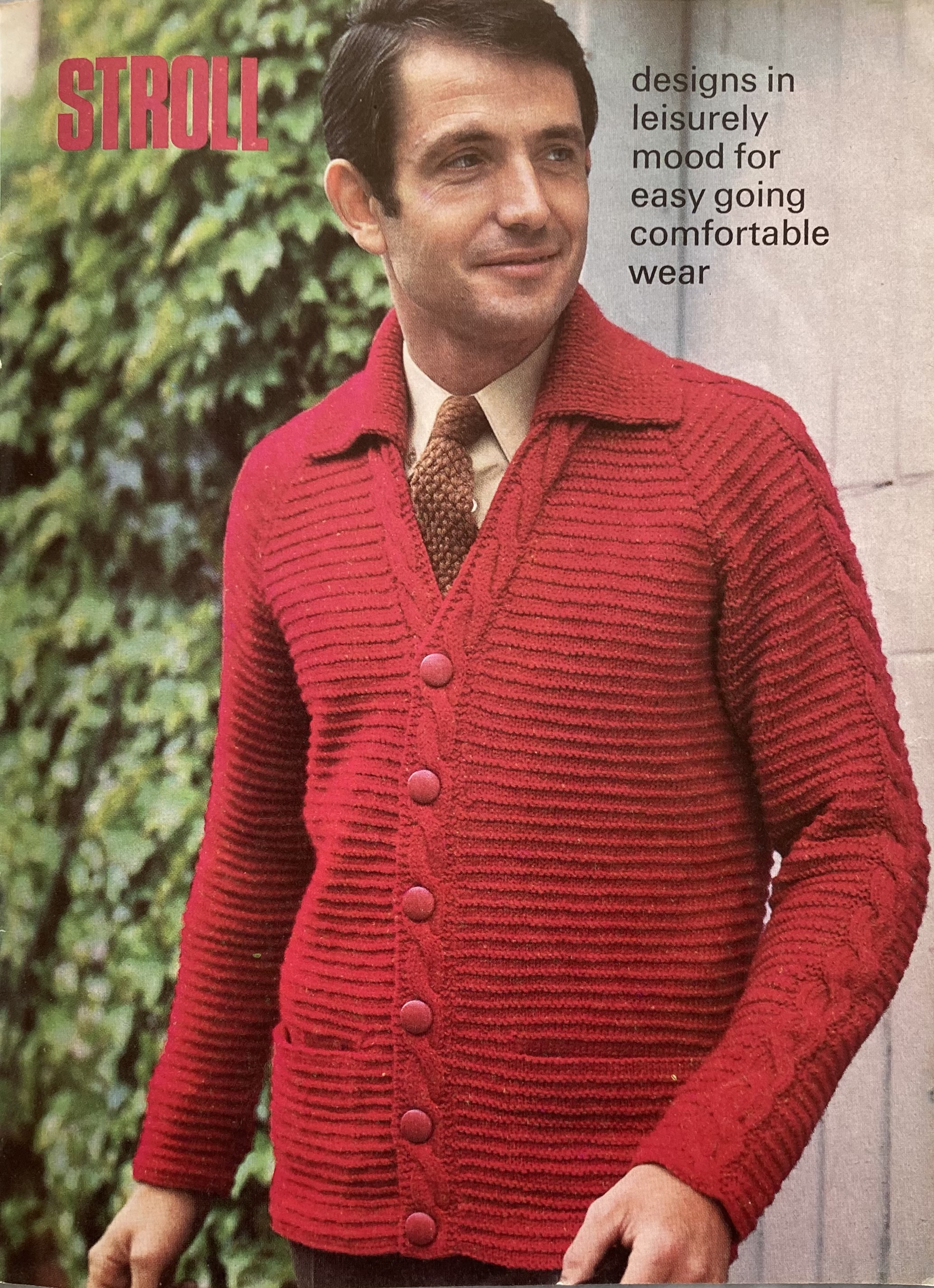
The two designs for men have a similar aesthetic to the women’s, but without the polo necks: a winter-white pullover with a simple cable pattern over reversed stocking stitch and a berry-red “stroller jacket” in a horizontal welt patttern with a nice use of cables on the saddle sleeves and button band. Note the knitted tie!

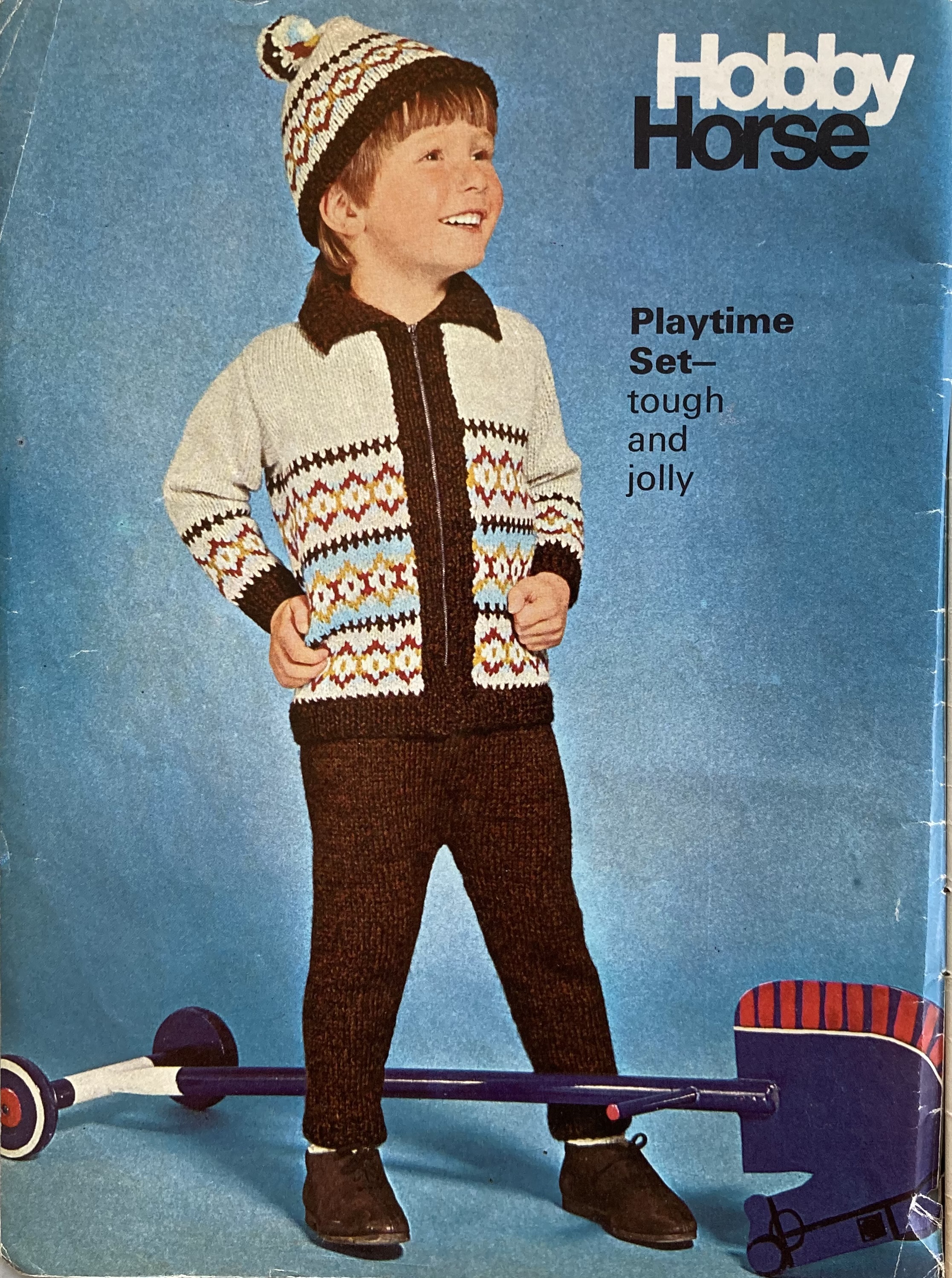
For the youngest in the family, there’s a babies’ cardigan and matching trunks (for boys — girls have to get used to a cold behind early in the age of bare-legged miniskirts and tunics). “For boys”, as well, there’s a “playtime set” of warm leggings, zipped cardigan and bobbled hat in a stranded colour pattern. Rebellious mothers could knit it for a girl, I suppose.

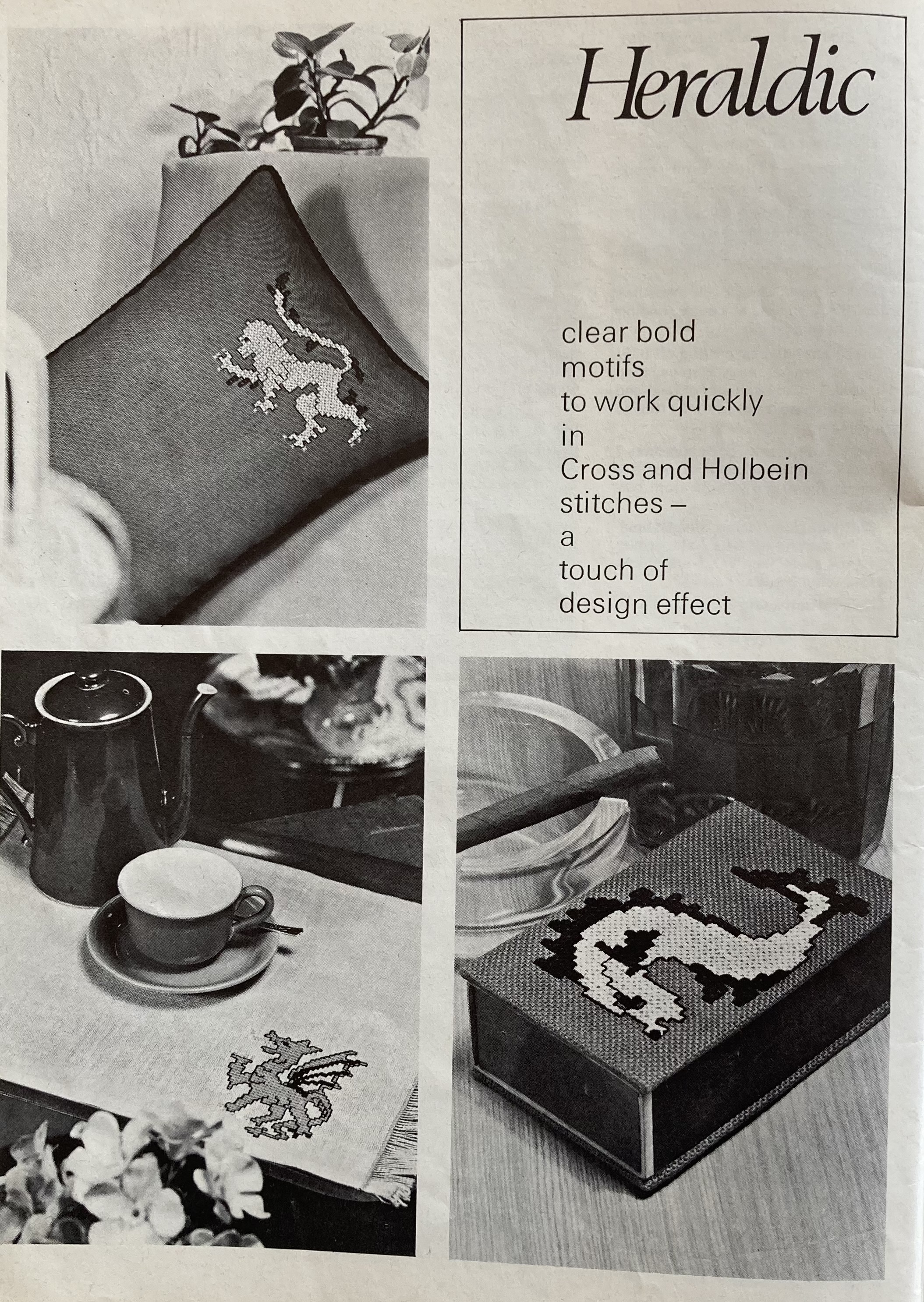
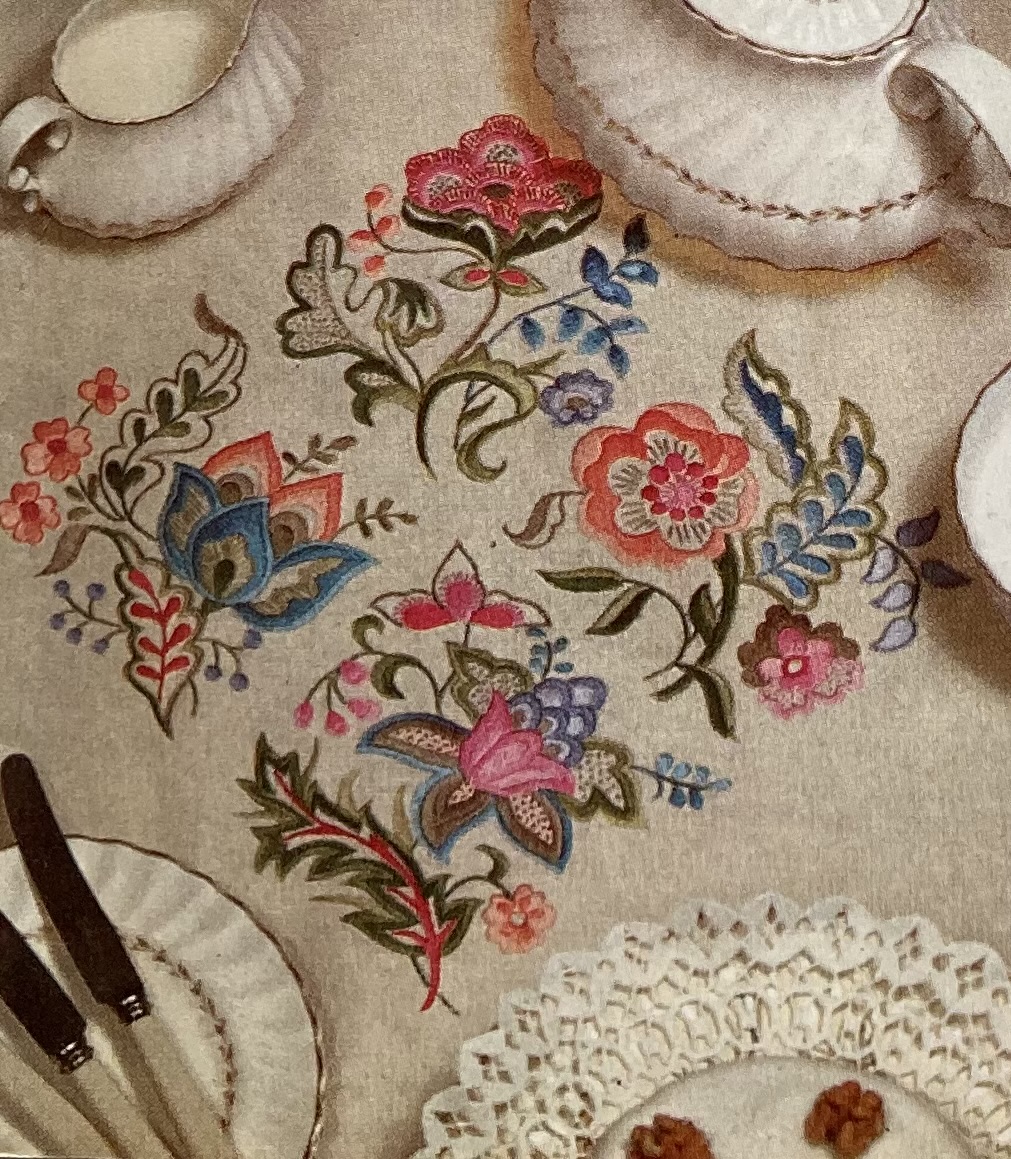
In the housewares department, there are multi-use heraldic designs of a unicorn, dragon, and fish to be worked in cross-stitch and Holbein stitch on a cushion cover, place mat, tray cloth or, interestingly, a matchbox cover. You embroider the cloth (two pieces), mount them on two pieces of cardboard and then glue them to the top and base of an existing matchbox of the larger sort that holds kitchen or fireplace matches. I actually really like the idea. There’s also a Jacobean crewel design that looks stunning on a black cushion or dainty and fancy on a white tablecloth.

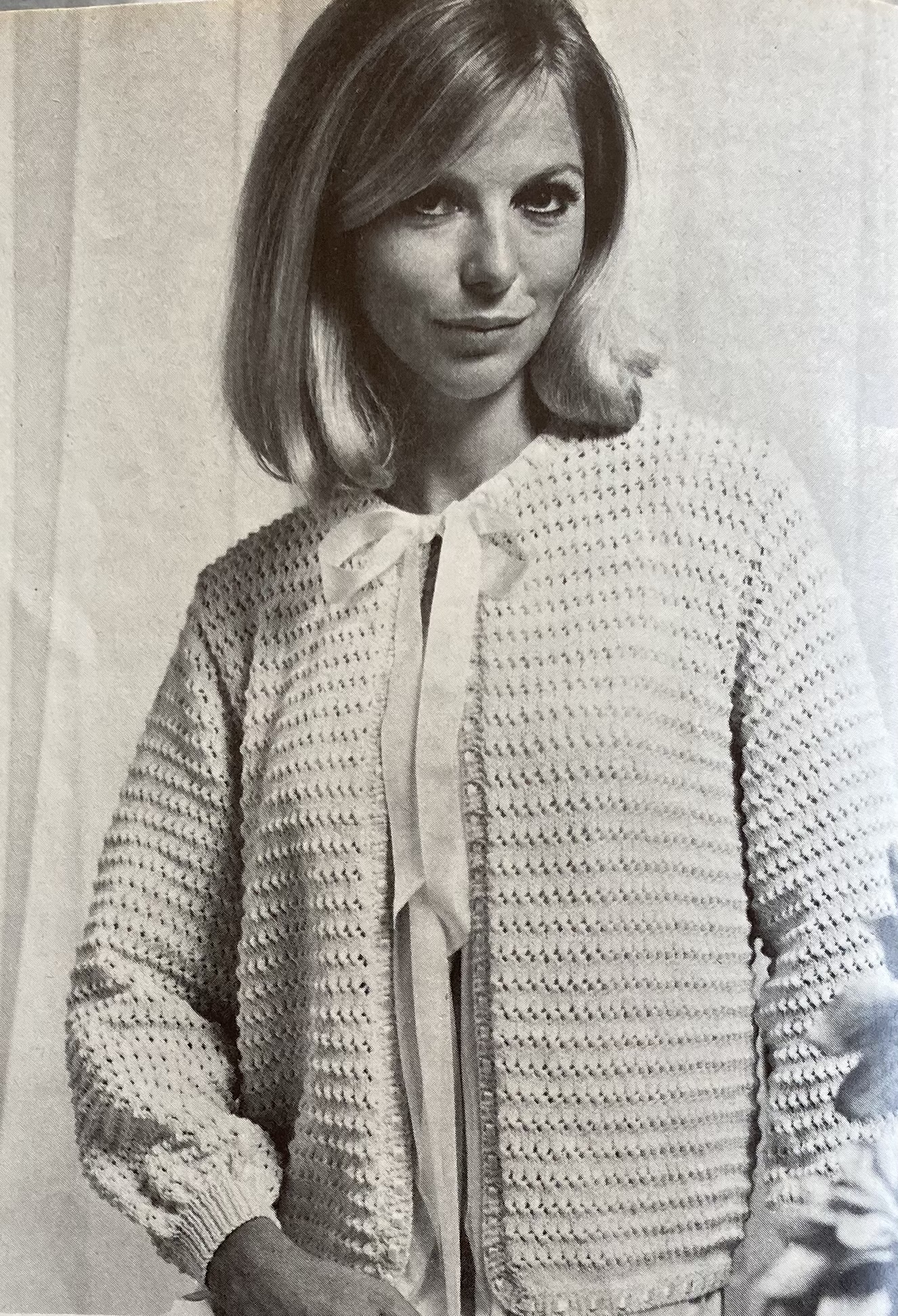
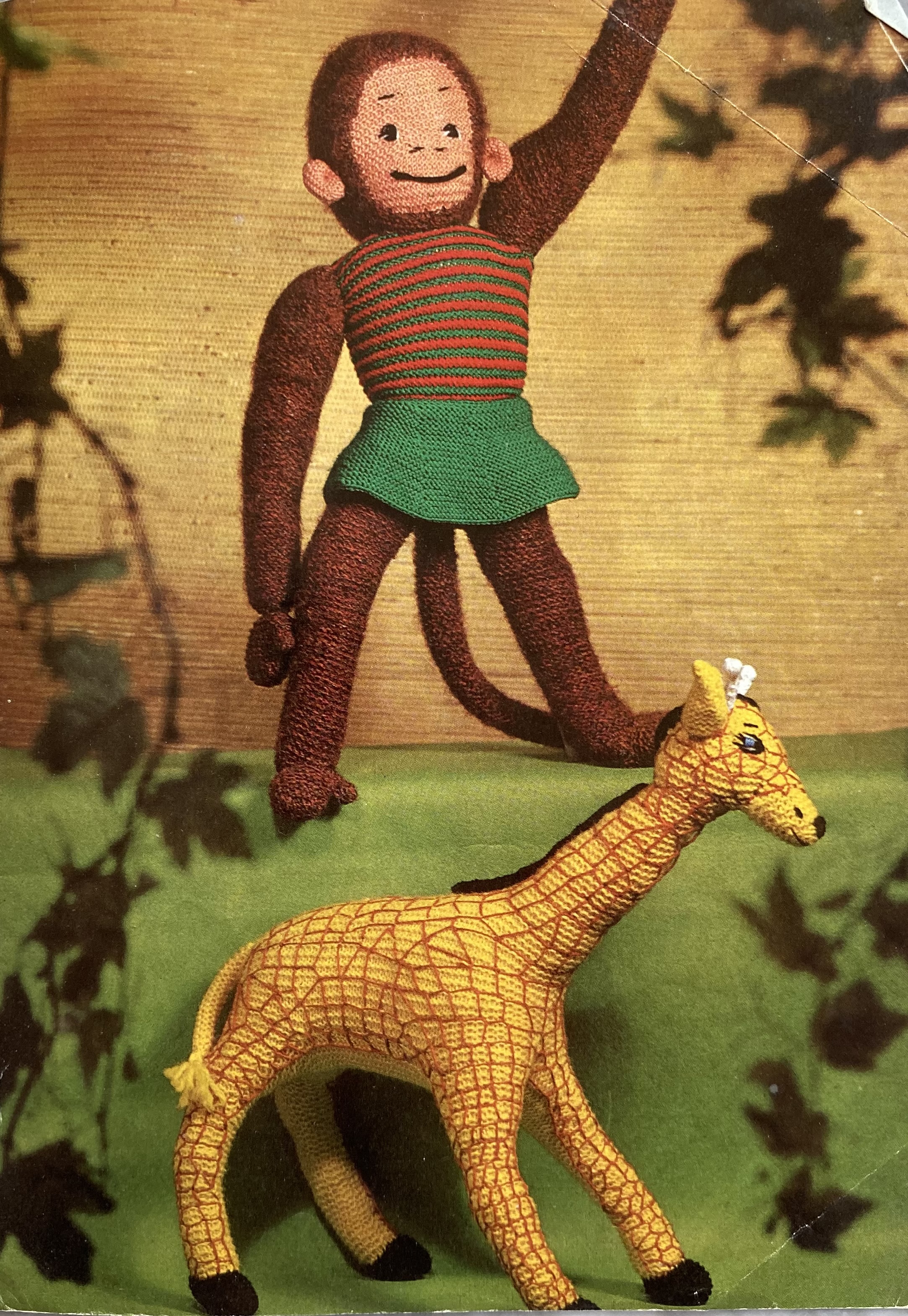
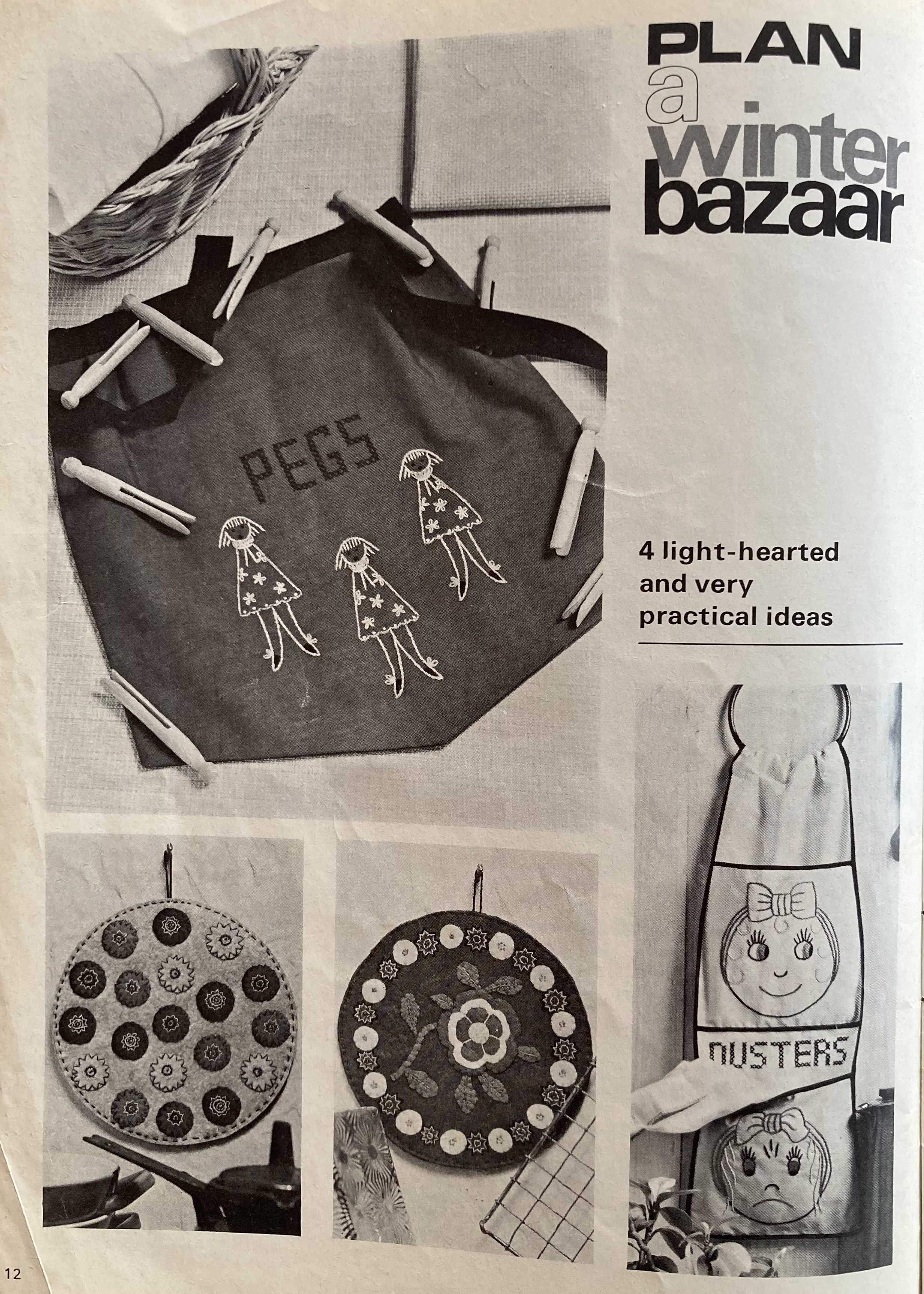
Other home and personal accessories fall under the categories of “Knitted Gifts” or the ever-present “Bazaar Items”, starting with a pretty bed-jacket worn by the Stitchcraft model who models all the bed-jackets. And if you look at any of her photos, you will know why! No other model perfects the come-hither look like she does. The resulting offspring will appreciate a cute stuffed monkey or giraffe toy. I like how the giraffe’s pattern is embroidered on, even if it doesn’t look quite accurate to a real giraffe. Finally, you can make a simple and cheerful sewn and embroidered laundry peg bag, dusting cloth bag with pockets for “clean” (happy!) and “dirty” (sad!) or a set of felt-appliqué pot holders.

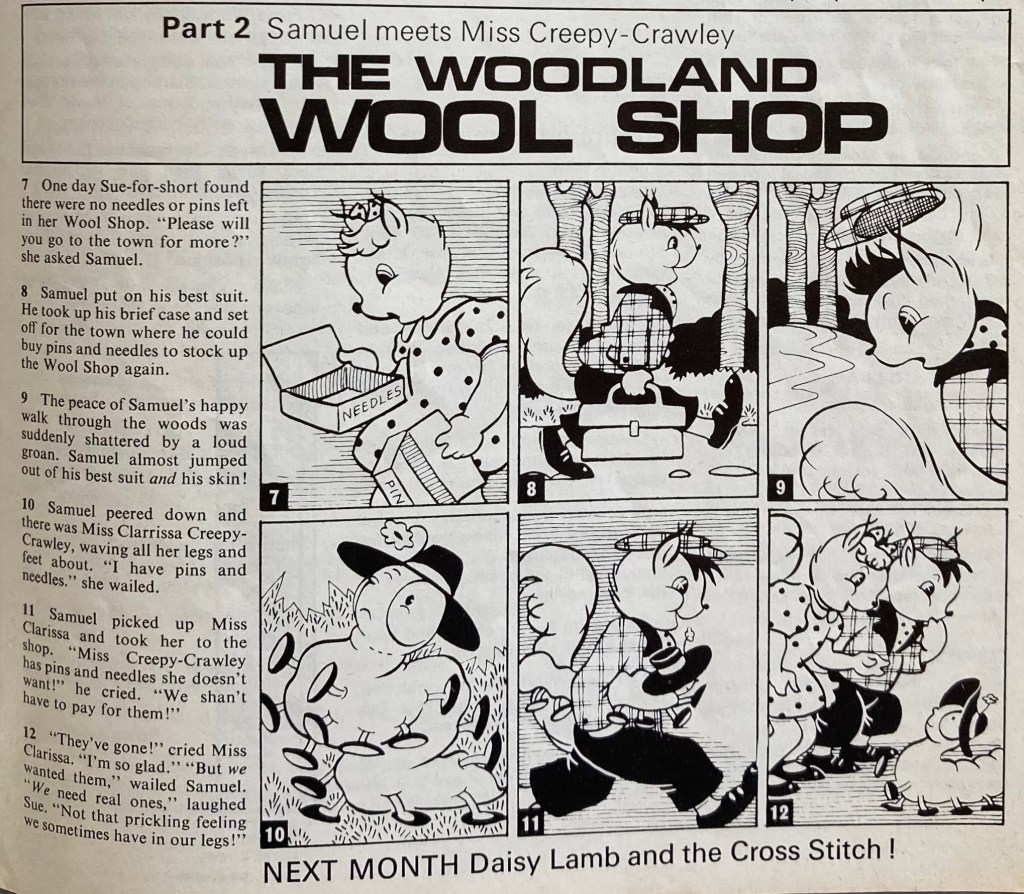
The ads are the usual ones for a sewing machine, Patons knitting books or “liver pills” to cure constipation, and the Readers Pages offer two reprints of popular items: little cross-stitch pictures of “Autumn” and “Winter” scenes for the nursery, or a cabled and bobbled ski hat that looks too small for any adult person’s head and would surely fly off if actually worn while skiing. In Part 2 of the children’s comic “The Woodland Wool Shop”, employee Samuel meets “Miss Clarissa Creepy-Crawley” (I’m sure there’s a Downton Abbey joke in there somewhere), a caterpillar with “pins and needles” — but not the kind Samuel has to buy! No fear, there’s a happy ending for all involved.

My project will be the little baby cardigan, for my colleague who is expecting a baby in November. I also ordered wool for the fabulous “Fashion Switch” knitted dress from the cover of the September 1967 issue, which will take a while to make, but maybe I can get a post about it up in October. Till then!

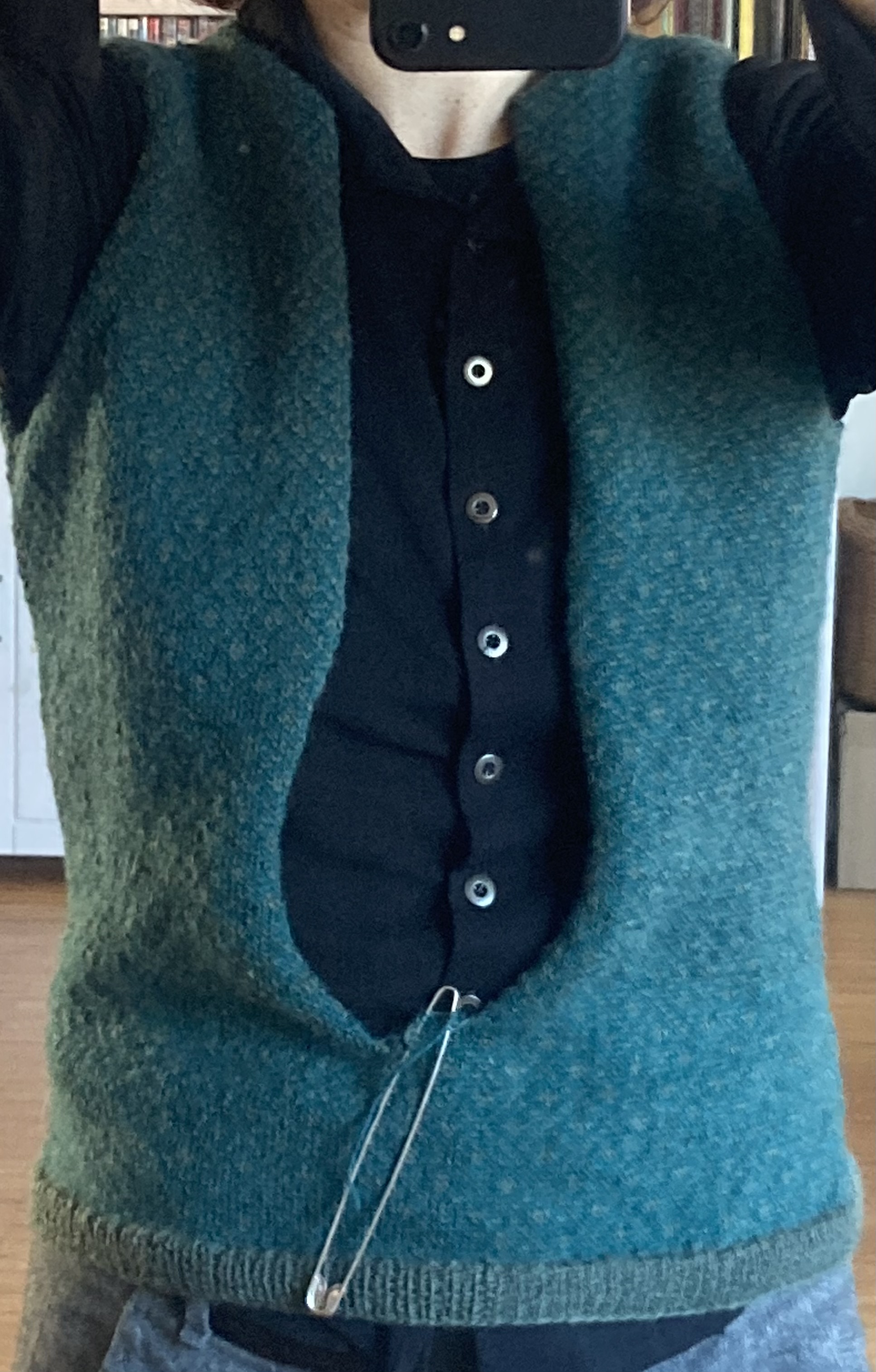
Out of Order: Fair Isle Country Cardigan, January 1967

The September 1967 issue of Stitchcraft had three fantastic projects in it that were all too time- and labor-intensive to finish (or possibly even start…) in September, so I concentrated on finishing up this cardigan from the January 1967 issue.

This was one of the projects that I had been looking forward to for years, since I have a 1960s vintage dress from my grandmother that would match it perfectly in colour and style as pictured in the magazine. But for some reason, this project was cursed.

It started with the wool — I wanted to be authentically Fair Isle and make in in Shetland wool, and Jamieson’s of Shetland has a DK wool in a perfectly matching shade of turquoise. There’s a yarn store in a nearby city to me that carries Jamieson’s, so I wrote them an email to order… only to get a phone call saying that the wool couldn’t be ordered at the moment due to international customs negotiations (Damn you, Brexit!). So I thanked them and asked them to cancel the order, ordered some Rauma 3-ply from a different supplier instead, which was fine, and started with that. I chose a more rust-orange instead of “Red Hackle” for the stranded yoke, along with natural white and anthracite.

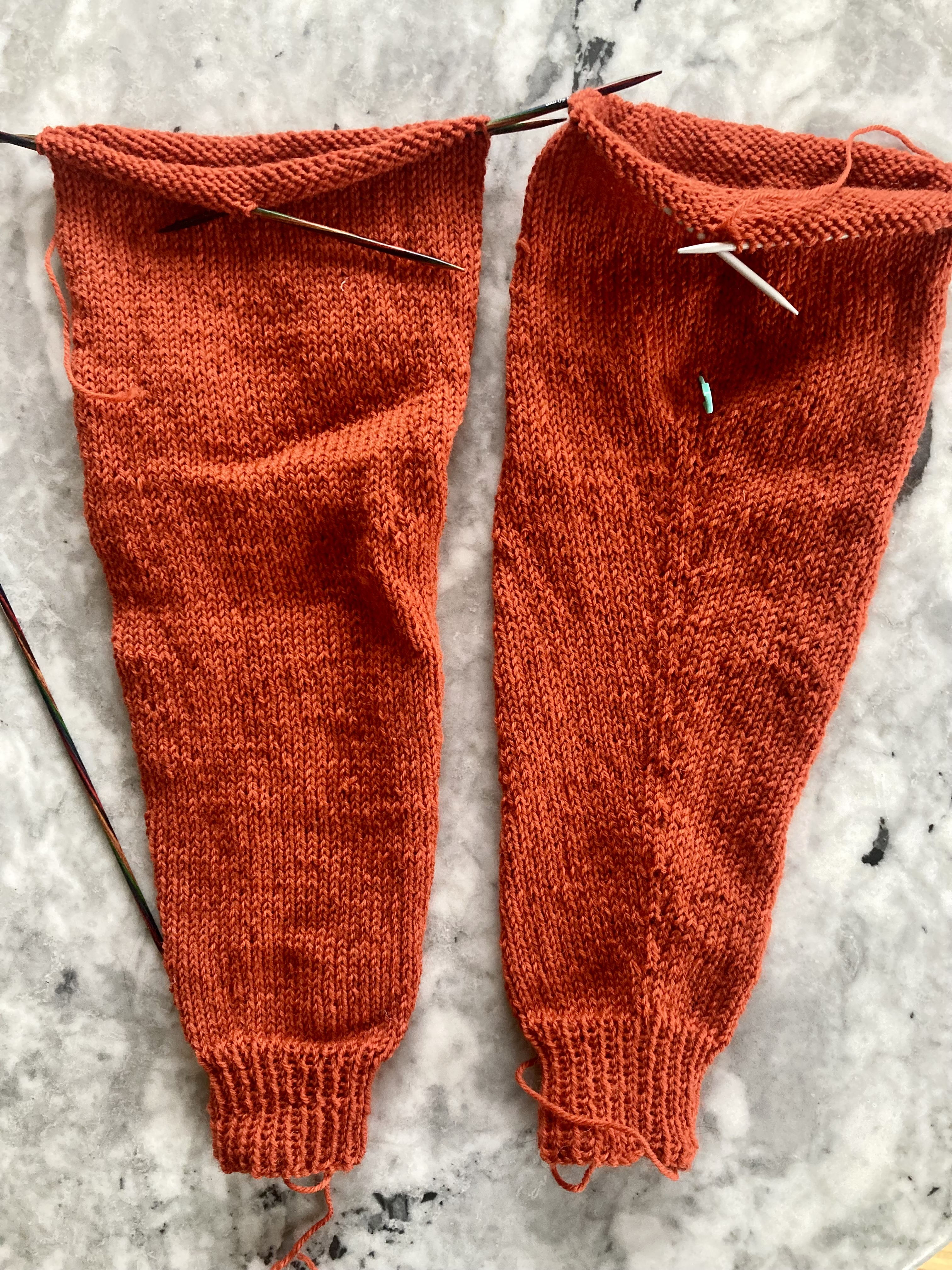
The cardigan is meant to be knitted in pieces from the bottom up and has a very interesting sleeve and shoulder construction: set-in sleeves but with a round yoke over only the yoke part of the front and back (not a true round yoke as one would find on a “real” Shetland-style garment.) Interestingly, the men’s pullover version of the same design has a traditional round yoke. In any case, I started with the sleeves, to check how the tension and pliability (Rauma 3-ply is sturdy, but can be rather stiff) would work out. It seemed fine.

Then it was time for the fronts and back, which I made in one piece back-and-forth (no steeks, since the only stranding is on the yoke.) I was concerned that the straight-up-and-down, oversized style would look dumpy on me, so made it a size smaller than indicated for my bust measurement and added in some waist shaping. Also, I made the button bands along with the fronts even though they are supposed to be made on a smaller needle, since I hate making vertical button bands and sewing them on afterwards.

It was very boring knitting and mostly sat around in the cabinet while I worked on more exciting projects. (On that note, please excuse the wall of text — I never though to take photos of the work in progress, since nothing interesting happened.) Then, somewhere around this time, I got a call from the yarn shop in the nearby city. “Your order of Jamieson’s DK has arrived!” What? I thought it wasn’t possible to order it? It turned out there was a misunderstanding and they hadn’t cancelled my order, just put it on “pending” until whatever regulations were changed. Well, you can never have too much yarn, I guess…

Back to the cardigan… It seemed fine while knitting, but it was hard to check for fit, and I couldn’t shake the feeling that the wool, although pleasantly lightweight, seemed to stretch more and more width-wise the longer the body got. The real problem came with the yoke. Because of the weird set-in-sleeve-plus-stranded-yoke construction, the stranded work starts a few inches in from the shoulder seam. The seam is unavoidably a bit bulky (DK wool…) and the way the stranded work starts resulted in a weird tension difference that made the shoulder seam stand out in an ugly way and also made the sleeves “balloon” at the top for an almost Victorian leg-o-mutton look. Not a good look for me! Not at all! Also, the stranded part is too long and the neckline very high, making the shoulders too wide. And the rest of the fit wasn’t good either — it continued to stretch width-wise and even having made a smaller size, it was all just huge and baggy. Even the sleeves were too long. To top it all off, in spite of making the button bands along with the body, I didn’t get the spacing right. (I did find nice buttons, at least.)

I tried blocking it into shape, but there was only so much that that could accomplish, and now I don’t really know what to do with it. I thought about removing the sleeves and re-positioning the shoulder seam as one would with a sewn garment, and just cutting down the sides and sewing side-seams, then getting rid of the excess fabric. That would be pretty brutal, and also a lot of work, and I don’t like machine-sewing and cutting hand-knitted garments. I thought about giving it to a friend who has wider shoulders and a larger size than me. I thought about wearing it in the winter and just living with the oversized style, even though it is not my style. I made a matching tam while I was contemplating all of this, and even the tam turned out too big. I considered putting the tam through the washing machine and/or dryer to see what happened (would it felt too much, or just get smaller) and if successful, doing the same with the cardigan.
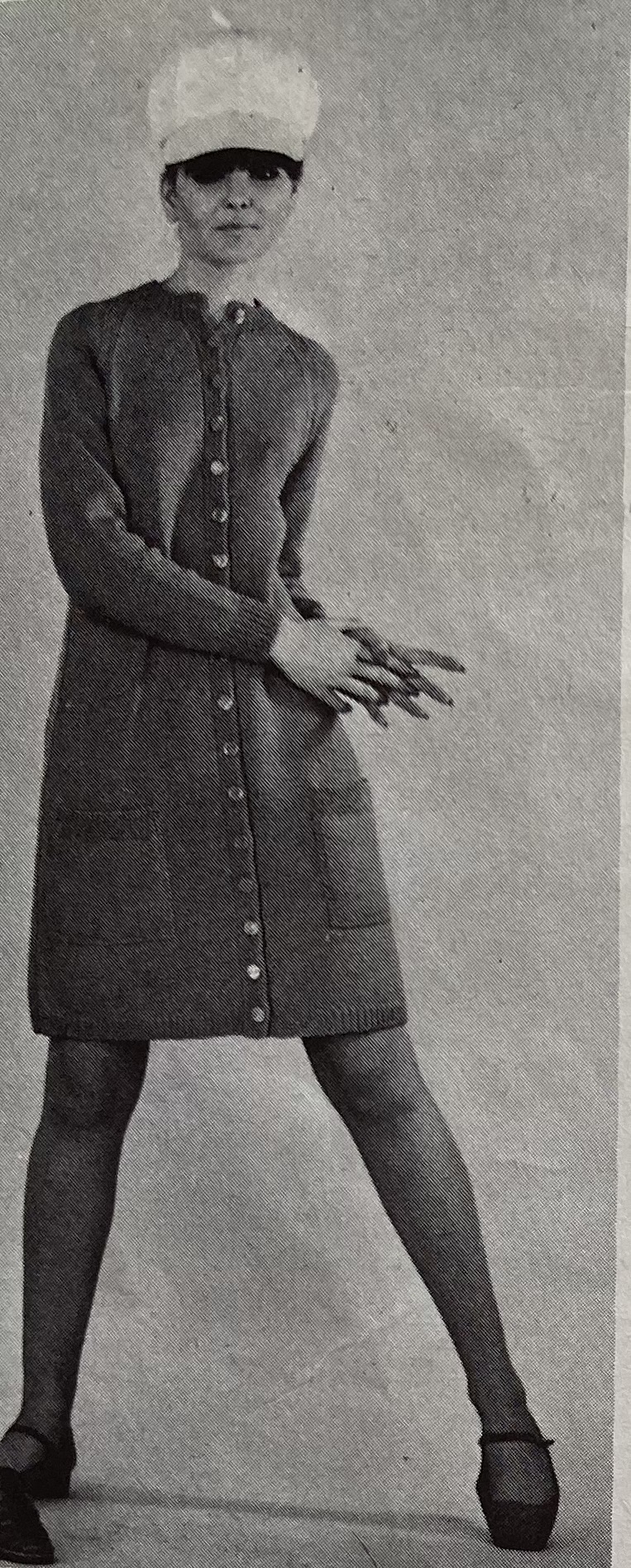
As of this post, I have still not decided what to do, but if it fits my friend, I think I will give it to her and knit myself another version from the Jamieson’s wool. Perhaps with pink instead of rust for the contrast yoke colour, and not following the pattern, but just making it in a size that fits me the way I want it to fit, and with a traditional round yoke. We’ll see! I do still love the design.
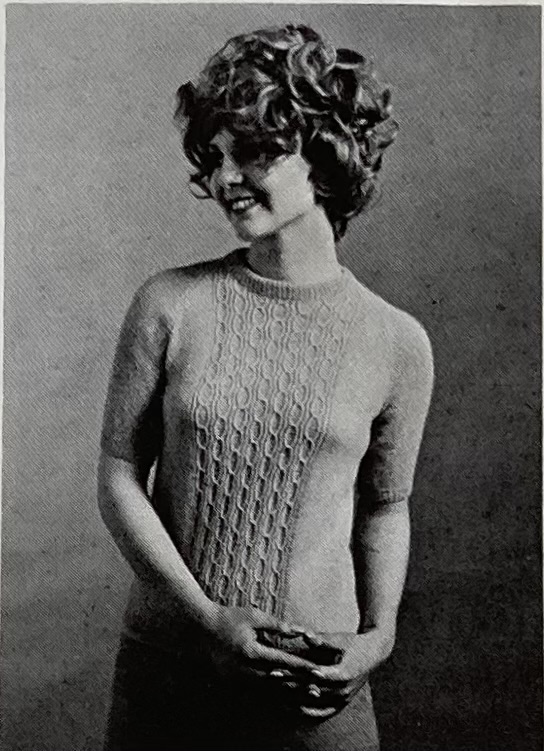
September 1967: Overview

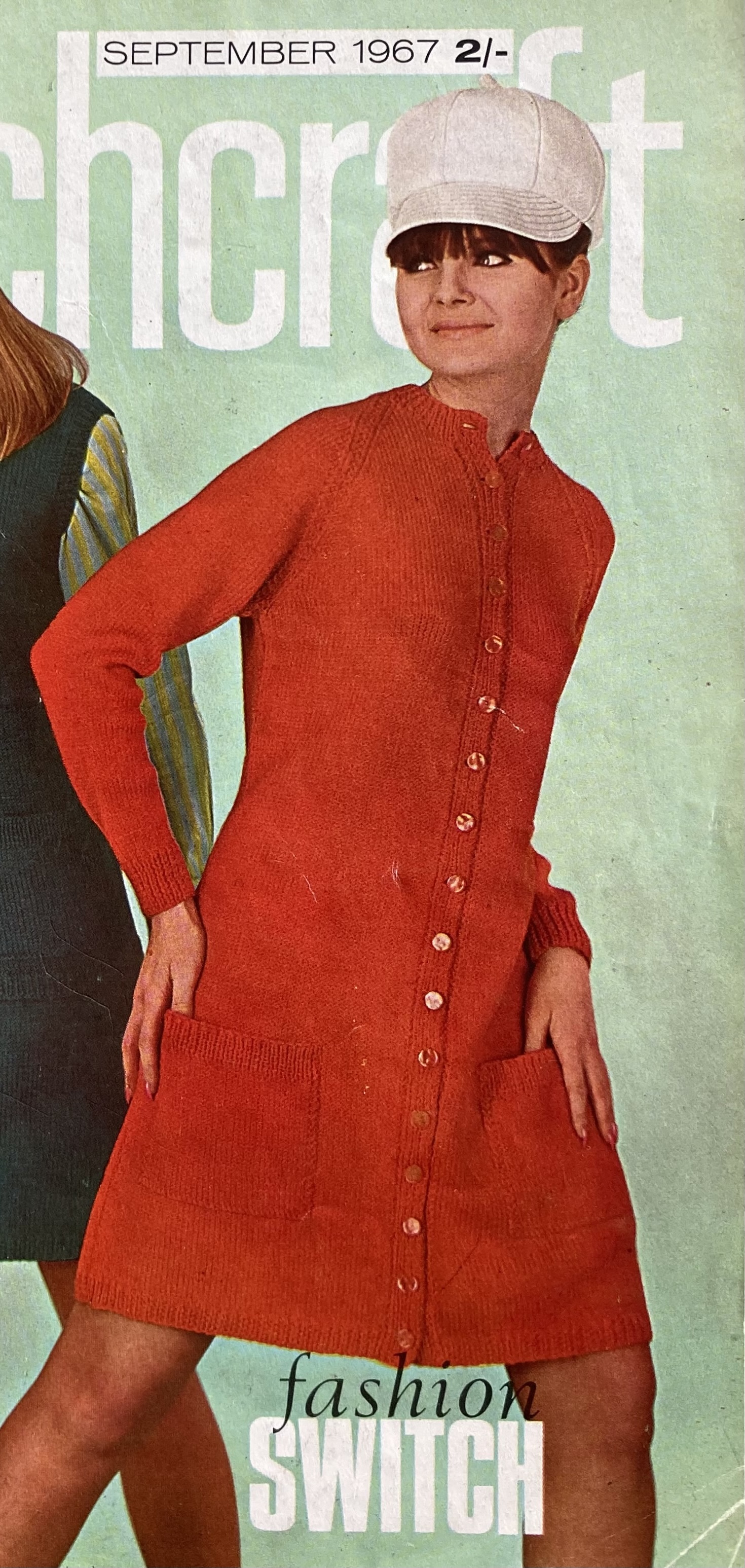
It’s time for a “Fashion Switch” over at Stitchcraft! 1967 is the year where knitted dresses really start to feature, and as far as I can tell, the “switch” part means you can either make a dress or a skirt combo and mix and match. The cover designs fit in well with the trend: high necks, short skirts, deep raglan armholes, A-line shaping and big patch pockets. Note, too, the huge hats — they will only get bigger in the months to come.
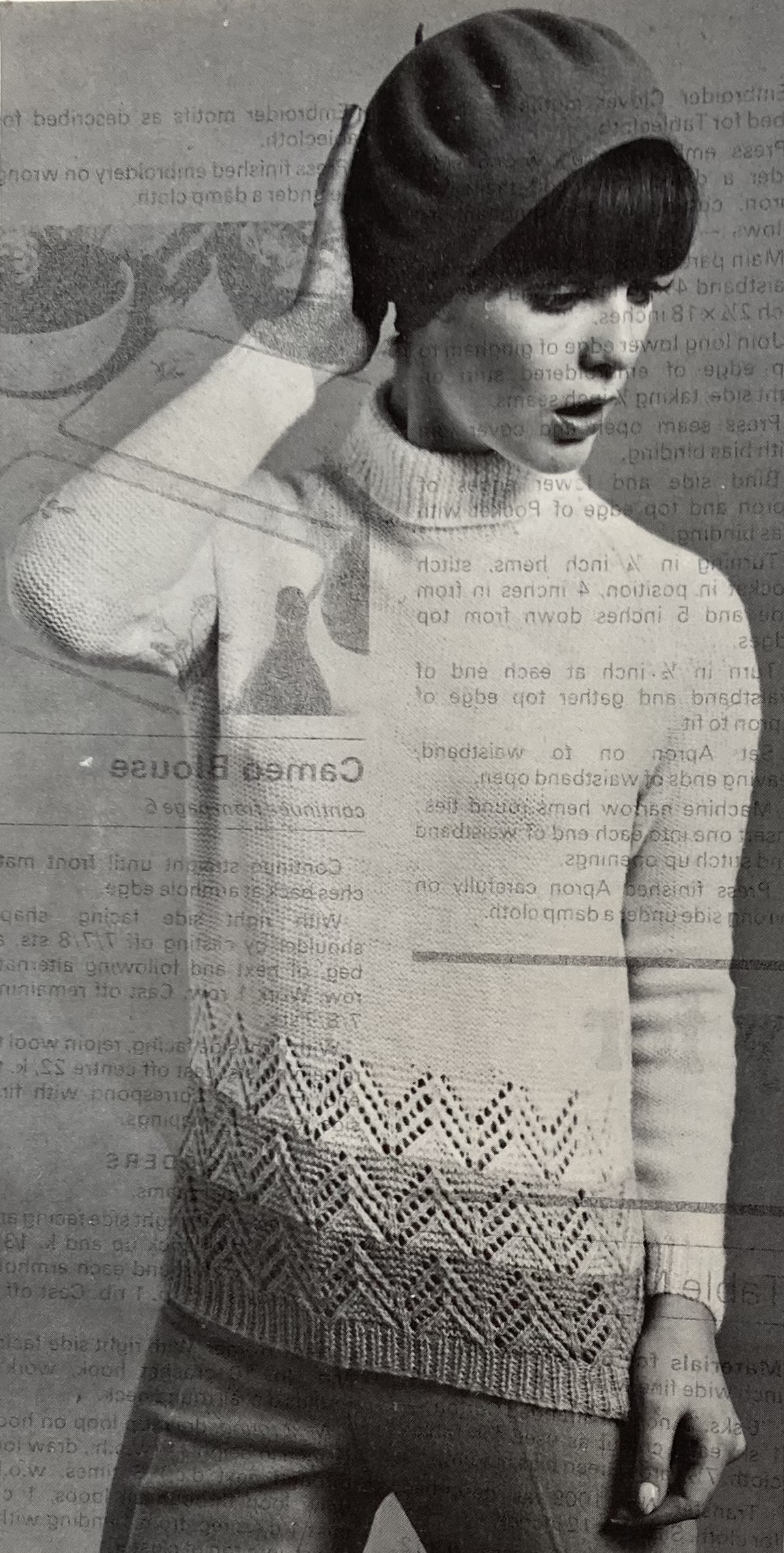
The centrefold photo shows a slinky variation on the theme with a dress and/or skirt combo featuring a pretty beaded and textured design. Like the chevron dress from April 1967, the designs pick up some elements of 1920s and 30s fashion, while keeping a distinctly late-60s shape.
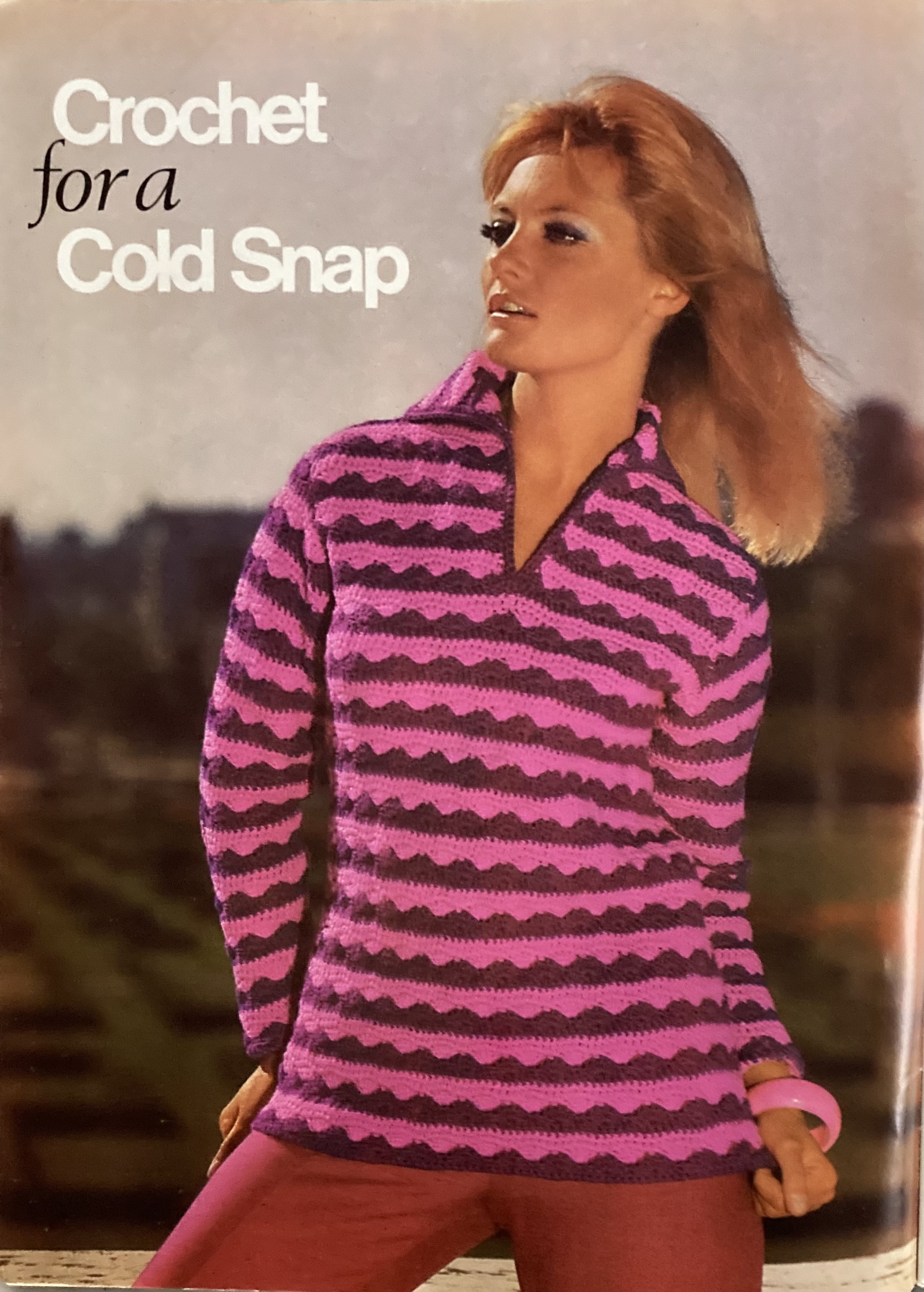
Other women’s knits include a bouclet blouse for the fuller figure with a very neat and pretty “soft-roll” neckline, a casually elegant afternoon suit with cable trims, a striped skirt combo in “colour brilliance” (tangerine and violet!), and a “Golden Glow” bright yellow pullover.

“Colour brilliance” applies to men’s fashions too, for once, and this green and yellow slip-stitch cardigan is a masterpiece. The model looks a bit like a colleague of mine — should I knit it for him? The other men’s garment, a chunky but streamlined pullover, echoes some of the design features of the women’s “fashion switch” combos. like the big patch pocket and contrasting-pattern sleeves. The photo is black-and-white, but the suggested colour is “Curry”, which I assume will be some kind of dark gold-brown-orange (so 60s). For children, there are two nice, sturdy, basic raglan pullovers in a more classic colour scheme — dark charcoal with red trim for the boy’s and “Cloud-dust Pink” with “Aztec Gold” trim for the girl’s.

There are some fun homewares for all styles and abilities, starting with some very easy sewn and embroidered aprons with whimsical kitchen designs. I’m not interested in the aprons, but I love the top that the “teatime” model is wearing! You can make a tapestry panel of an Irish homestead in Rosguill, Donegal or a cushion or chair-back in a gorgeous traditional-inspired design updated “for a modern setting”. Both are done in tapestry wool on furnishing linen.

It’s not too early to start on little gifts for Christmas, and here’s a little bag “for a friend” and a knitted tortoise toy “for a toddler.” Baby gets a thick, squishy pram cover in fluffy “Ariel” wool and a raised cable trellis design.

Or you can make a Florentine-pattern workbag or cushion for yourself. The colours — gold, green, and yellow — will match nicely with a lot of the knitted designs from this month.

In the “Readers Pages”, we finall have a new comic: Sue and Samuel Squirrel run the Woodland Wool Shop. Their adventures start when Sue finds a loose thread of yarn in the woods and winds it up — only to find that she has unraveled an elephant’s vest and needs to knit it all up again! Poor Sue. The only full-page advert is for Bri-Nylon. I imagine the dress in the photo is quite hot and impractical, especially if knitted in synthetic nylon wool, but what a lovely photo.

That’s it for this month! There are so many great projects that it’s hard to choose, especially since the ones that call to me are all big projects and I just finished the chevron dress from April 1967. I love the orange cover dress and the men’s slip-stitch cardigan, particularly, as well as the fancy embroidery design, which I think would look lovely going around the hem of a full black skirt. Or maybe even the Florentine needlepoint? I don’t have much time in September to knit, though, and even less to adapt an embroidery or tapestry pattern. We’ll see!

Out of Order: Chevron Dress from April 1967

EDIT: Now with photos!

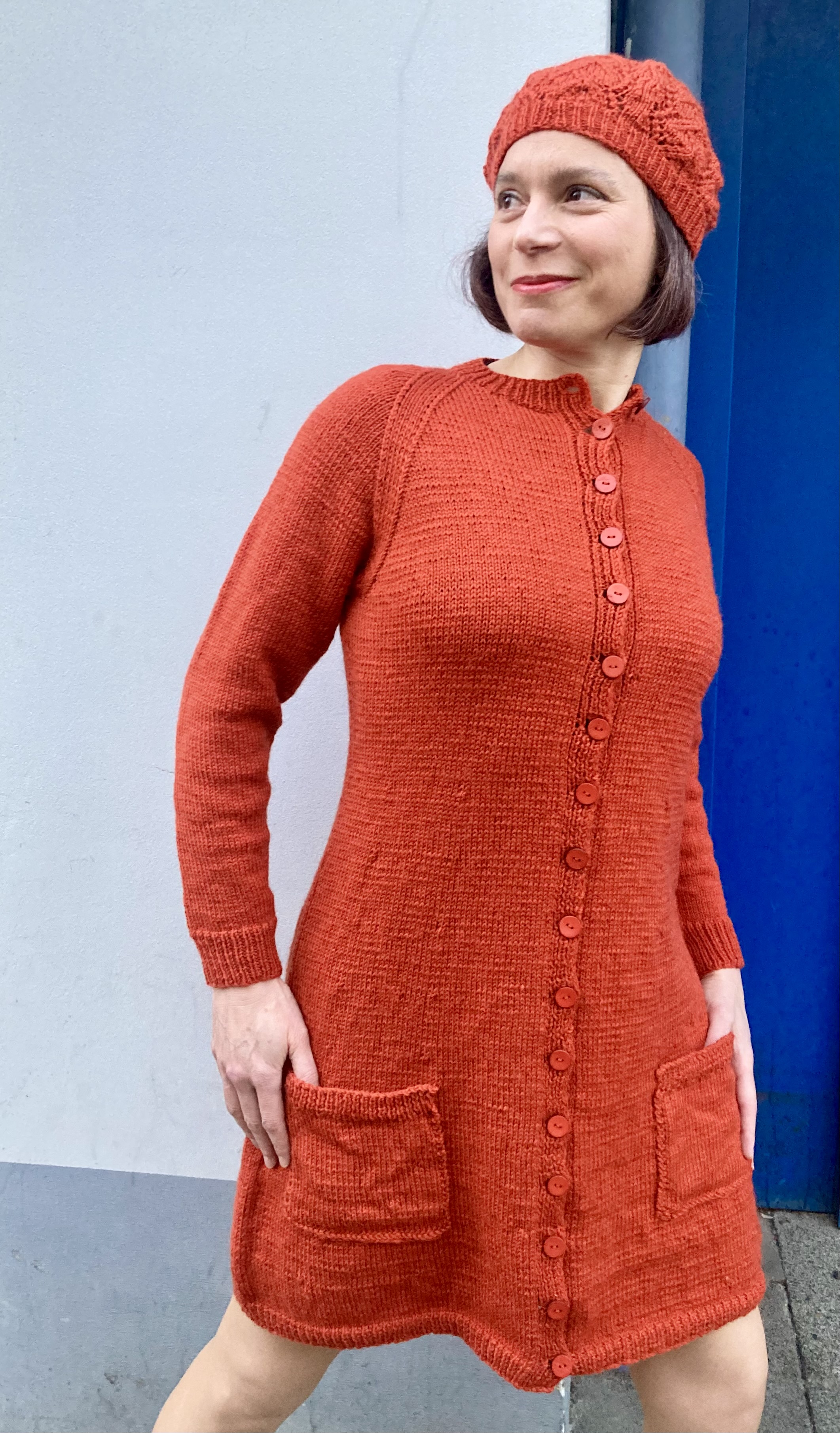
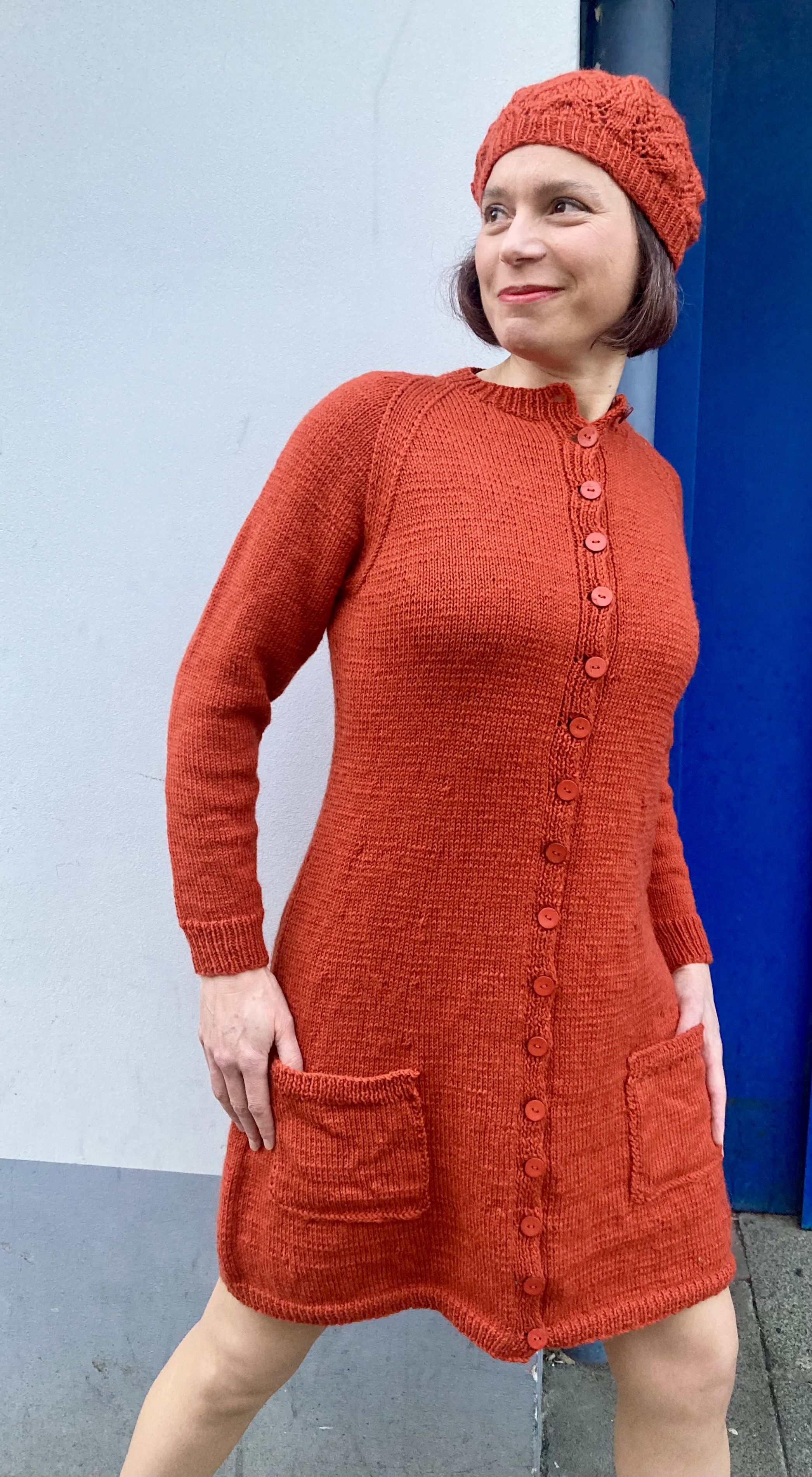
The April 1967 issue of Stitchcraft had many great designs in it and my favourite was this pink and purple chevron-striped dress on the front cover. And since the August 1967 issue didn’t have any projects that particularly inspired me, I worked on the chevron dress all summer and got it finished just in time for the August blog.

The “easy-line dress is fashion styling for all age groups” and claims to be in “the 30’s Look” — interesting, considering that dresses in the actual 1930s were still much longer, of course, and this dress, while not a mini-dress, falls at least a little bit above the knee. Also, this dress has a typical mid-60s A-line shape and not the typical long and willowy 1930’s silhouette. But the chevron pattern was very popular in the 1930s, as was the dropped waist and the flowy shape.

The pattern is written for plain Patons Beeehive 4-ply (fingering-weight) wool, but I decided to use sock yarn for easier washing and wearing. DROPS Fabel is easy to knit with, inexpensive, and available in a huge range of colours, including an almost-perfect match for the original “Wine” (purple) and “Radiant” (pink). I decided to make it a little bit shorter than in the pattern (third size should be 37 inches), as I expected it would stretch with weight and wearing. That was my only modification.

The shaping is mostly done in the chevron pattern itself — it starts off at the hem with 5 stitches in between the zig-zag increases and decreases, then reduces at intervals to only 2 stitches between at the waist. All further increases and decreases to the bust and after the armhole point are done by increasing and decreasing at the edges. (Contrary to my usual modifications, I knit the dress flat in pieces for more stability, as called for in the pattern.) The sleeves are made entirely in the 2-stitch chevron pattern. There are small knitted-in pockets with flaps on the right side. All the edgings, including the V neck, are made with folded-over and sewn-down stocking-stitch hems.

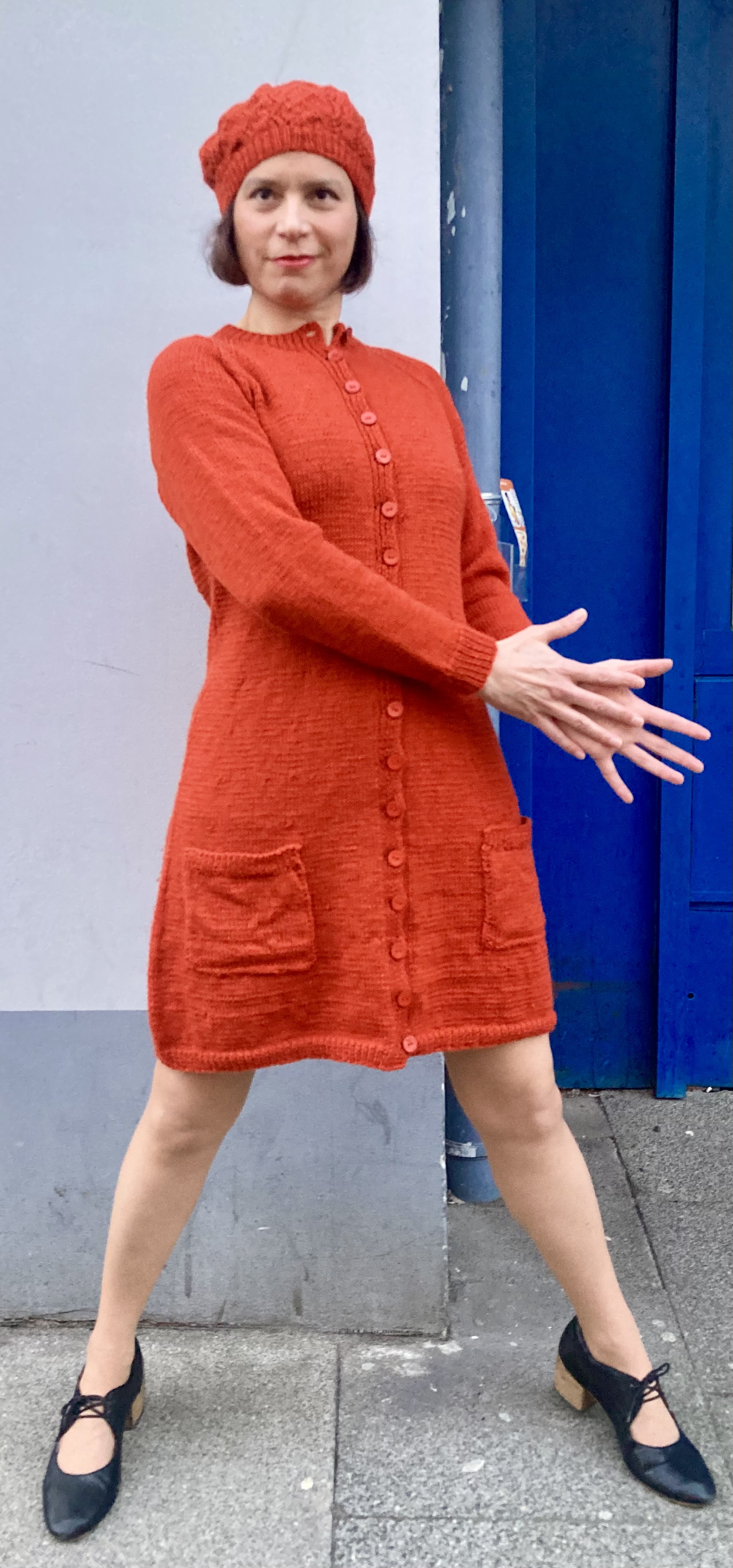
The chevron pattern makes the fabric quite nubbly, so it wasn’t clear exactly how long the dress would be before blocking. I was afraid I might have made it a little too short (I took 3 inches off the pattern length by adjusting the spacing between skirt decreases) because it fell quite a bit above the knee before blocking and the proportions seemed off. Also, the sleeves were a bit shorter than “bracelet” length and a bit tight at the hem. Blocking smoothed it out well, though — maybe even a bit too well! I didn’t pin it or anything, just hand-washed and laid it out flat as I usually do, and it is now actually 37 inches long and the sleeves are long sleeves. The fit in width is fine.

I’m guessing it stretched so much because the wool is superwash. The only solution I have ever found for the problem of superwash-stretch is to put the garment in the dryer (maybe a nice reader of this blog has a less dangerous idea?) I didn’t dare to do it with this dress at the very first blocking after putting so much work into it and being so happy with the final result, but I might cautiously try it next time I wash it. I’m happy with the fit the way it is, but it would look snappier and more authentic if it were just a bit shorter and if the sleeves were truly bracelet length.

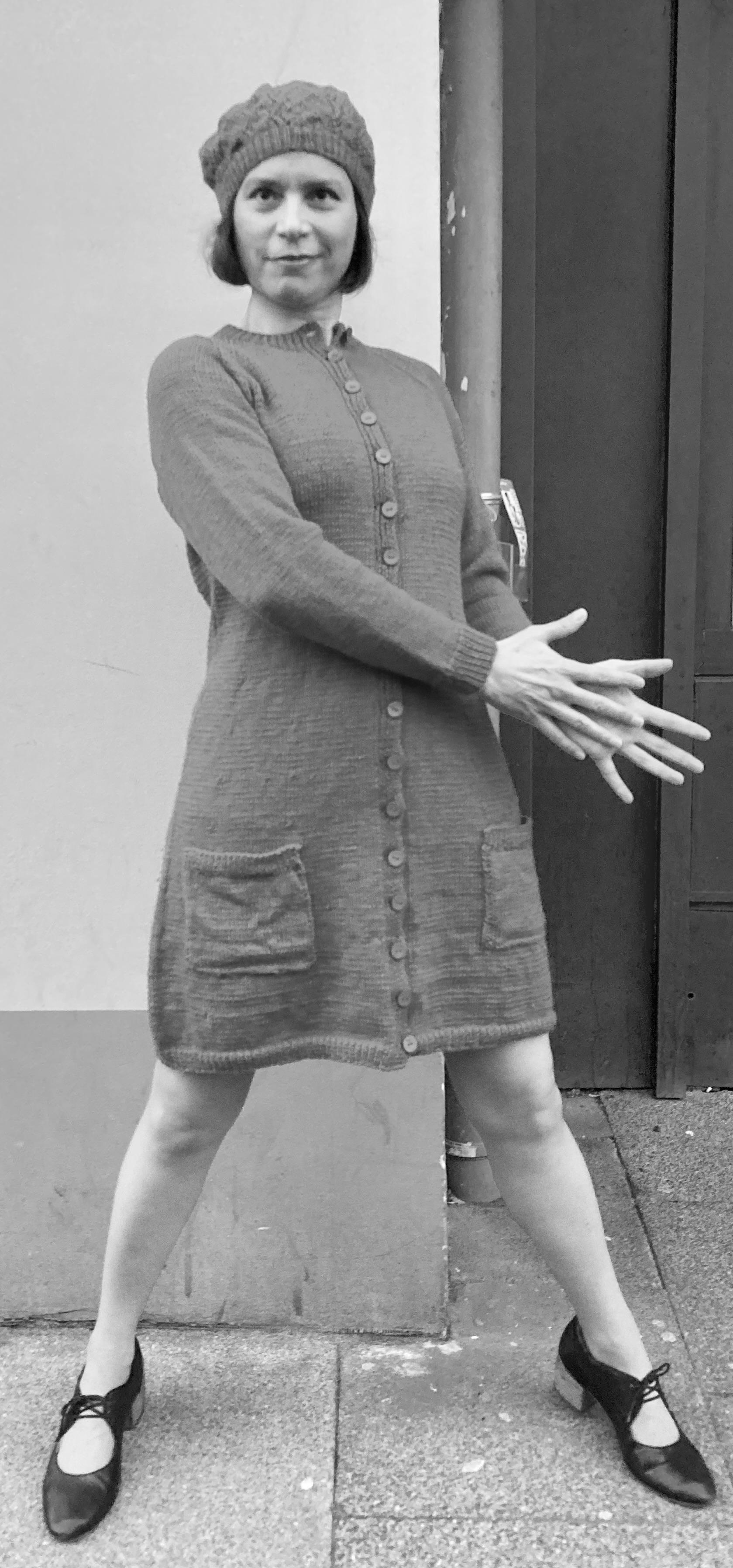
As always, we had fun with the photos! I don’t know how the models were able to twist their backs up so severely and still look relaxed and pretty.

August 1967: Overview

“The LAST of the SUN” is the headline of the introductory page of Stitchcraft’s August 1967 issue, and there is no blurb about the latest fashions or designs: just the subtitle “fashion for late holidays and the first smoky days.” (That the first cooler days of the year were called “smoky” is presumably meant quite literally, seeing that a good portion of family homes in the UK were still heated with coal fires in 1967.) The late-summer fashions in this issue are warmer, but still sunny and colourful, with layered and mid-weight garments that can be worn indoors or out.

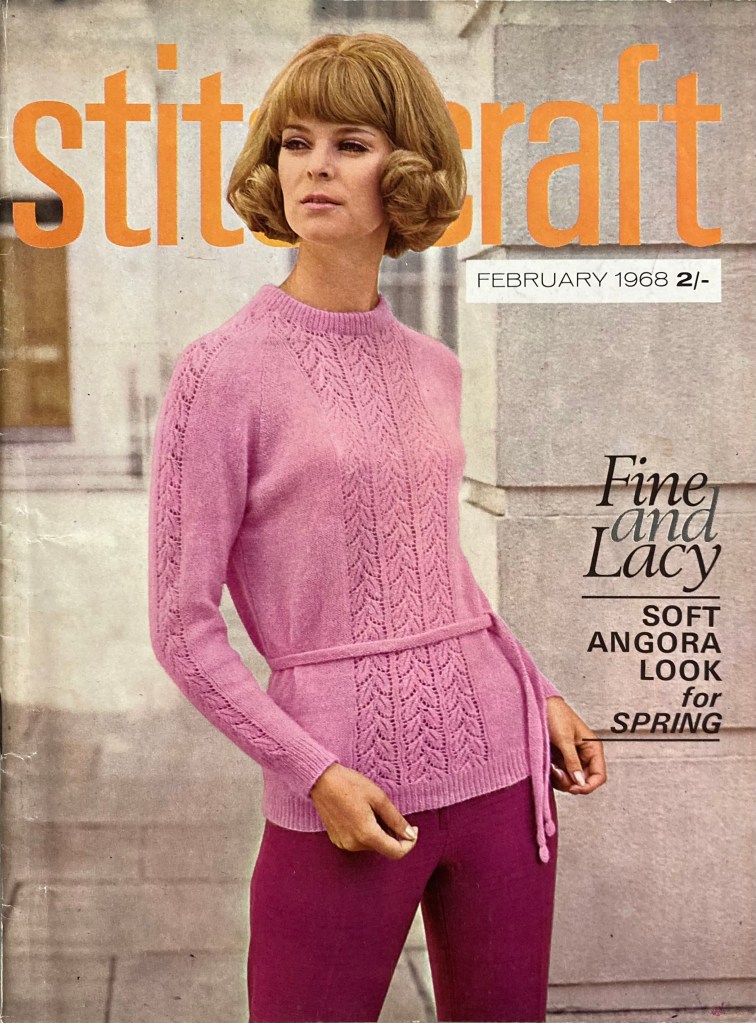
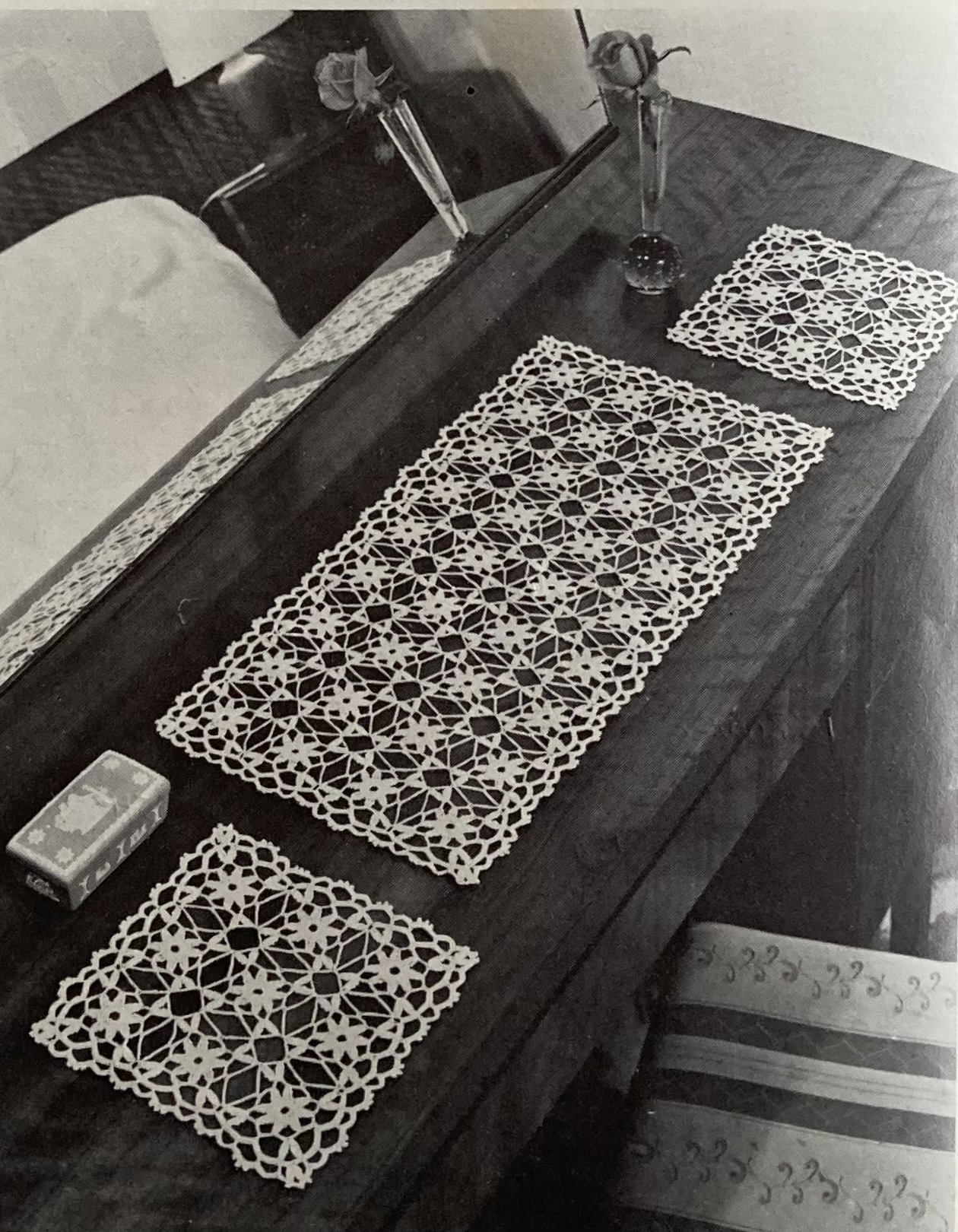
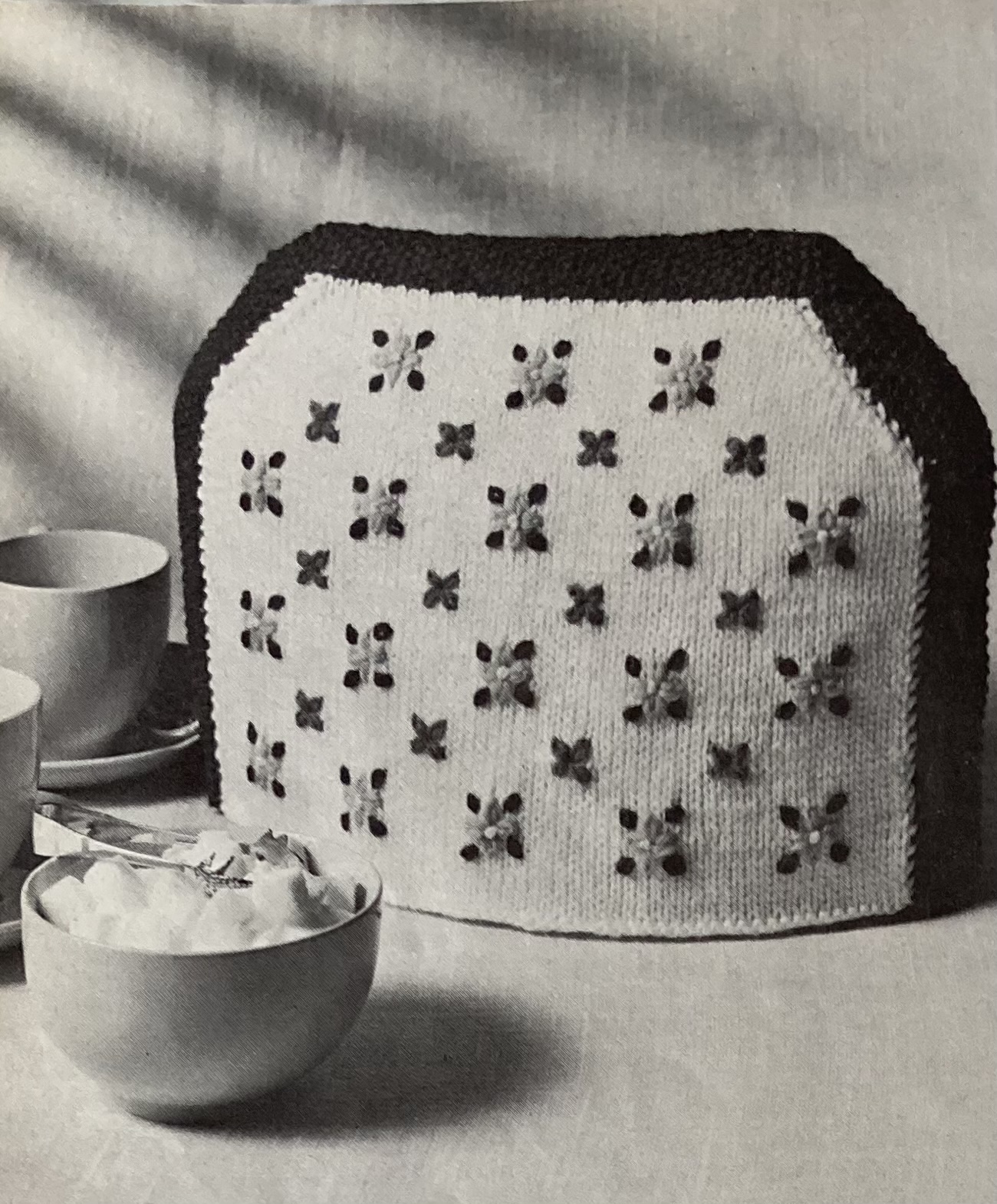
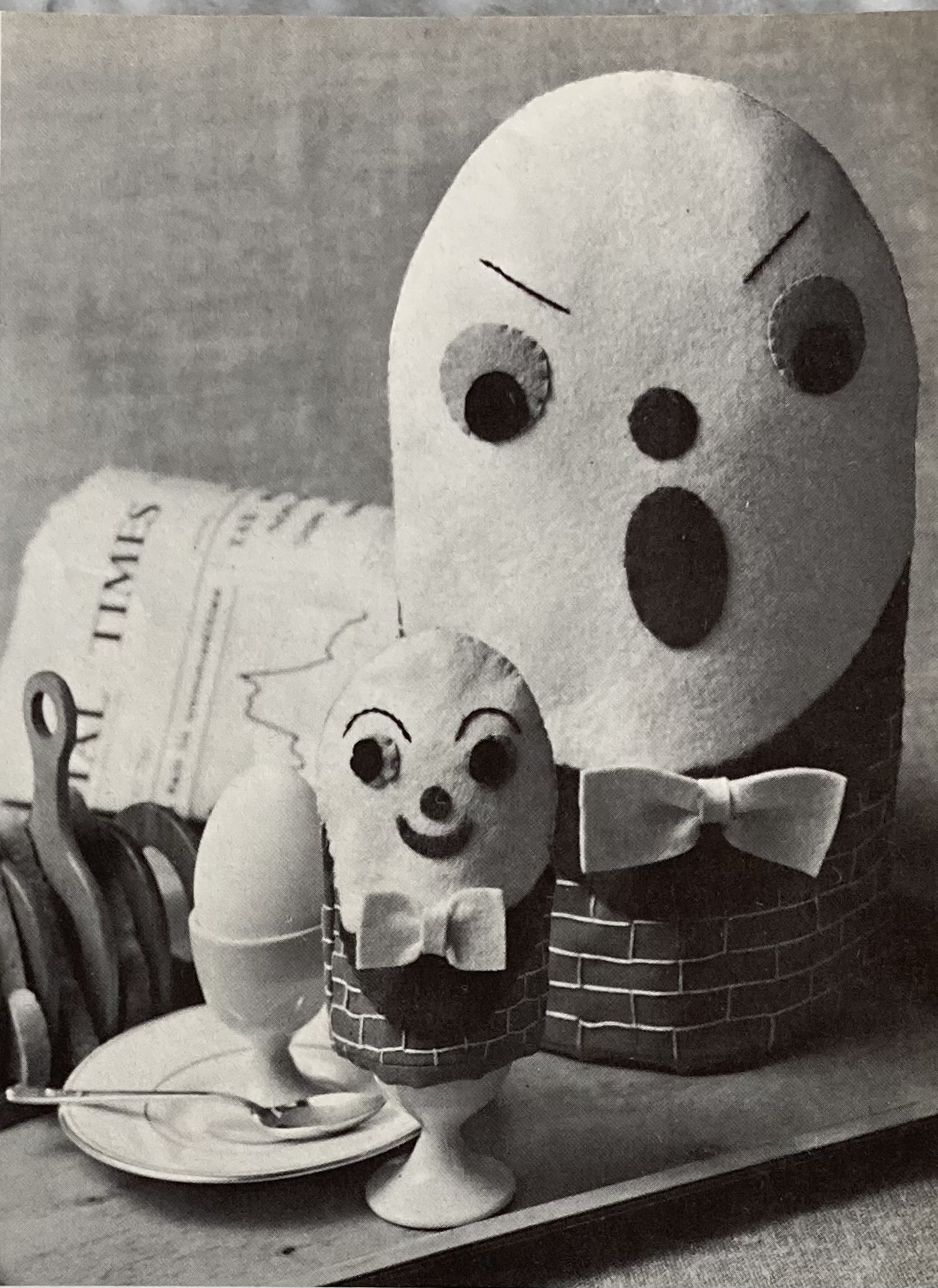
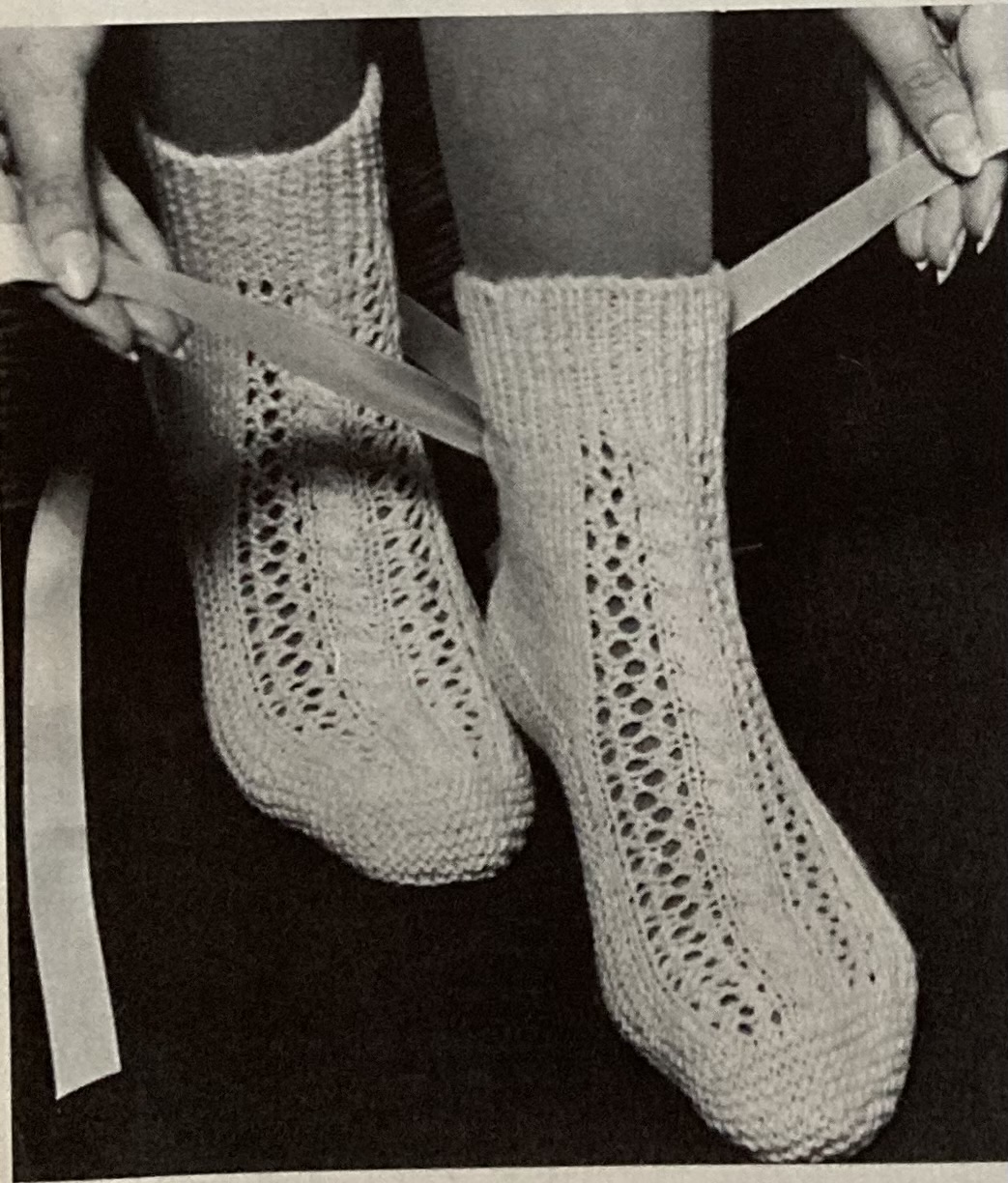
Case in point: the cover design, a twin-set of sleeveless “shell” and lightweight cardigan with elbow sleeves in cheerful, sunny yellow and blue. Note how short skirts have gotten! I think this might be the first Stitchcraft cover photo that features a true miniskirt. My copy of this issue was clearly used — according to the handwritten notes on the cover, the previous owner was interested in the crochet runner, the felt panel, the knitted tea cosy, egg cosies, and bed socks on page 16, and the handbag on page 17.

The other women’s fashions include a lacy top in larger sizes (to fit 42/44/46 inch bust), a two-colour shirtdress in a slip-stitch pattern, two short-sleeved knitted jumpers, and a heavier saddle-shoulder cardigan to work as a jacket on those cooler days. With the exception of the larger-sizes jumper in pastel “Camelia” pink, bold colours prevail: yellow, pink, red, or blue tones. (The saddle-shoulder cardigan is navy blue with white.) There are more colour photos in this issue than in previous issues.

A micro-trend for contrasting yokes that encompass the sleeves and the upper bust area can be seen in both the “Fuzzy-Wuzzy” (that is the name of the wool, an angora blend) jumper for adult women and the little girl’s way-too-short-to-actually-play-in tunic dress featuring a smocked effect made by dropping an extra-long stitch and then picking it up a few rows later and a few stitches over. It is designed to be made in the very 1960s colours of “Spark Gold” with “French Mustard” and white. Men are unusually well served in this month’s issue with both an “Autumn Stroller” V-neck pullover with cable panel and a “rugged for the outdoor life” racing-stripe pullover “designed for slim chaps”. Here as well, late-60s brown and gold tones are on trend.

Housewares are either quite complex or easy enough to dash off quickly for a church bazaar or quick gift. On the more complicated and difficult side, there’s a large wall panel made in felt appliqué, designed after the “Children of Other Lands” serial comic that winds up in this month’s issue. Like the comics, the wall panel is sweet and well-meant (and well-designed from a technical standpoint) and the fictional children are not portrayed negatively in any way, but of course their depictions and their comic stories draw very, very heavily on outdated stereotypes. The previous owner of my copy of this issue seemd to be a fan and presumably made the wall panel: she cut out the extra photo of the finished panel from another page in the magazine and pinned a small page with additional instructions into the first page of the pattern. I’m guessing the additional instructions came with the embroidery transfer, which readers had to send away for by post.

There’s an ambitious stitched rug in a very modern pattern, and a crocheted table runner (also on the list that the previous owner wanted to make) that looks quite intricate to me.

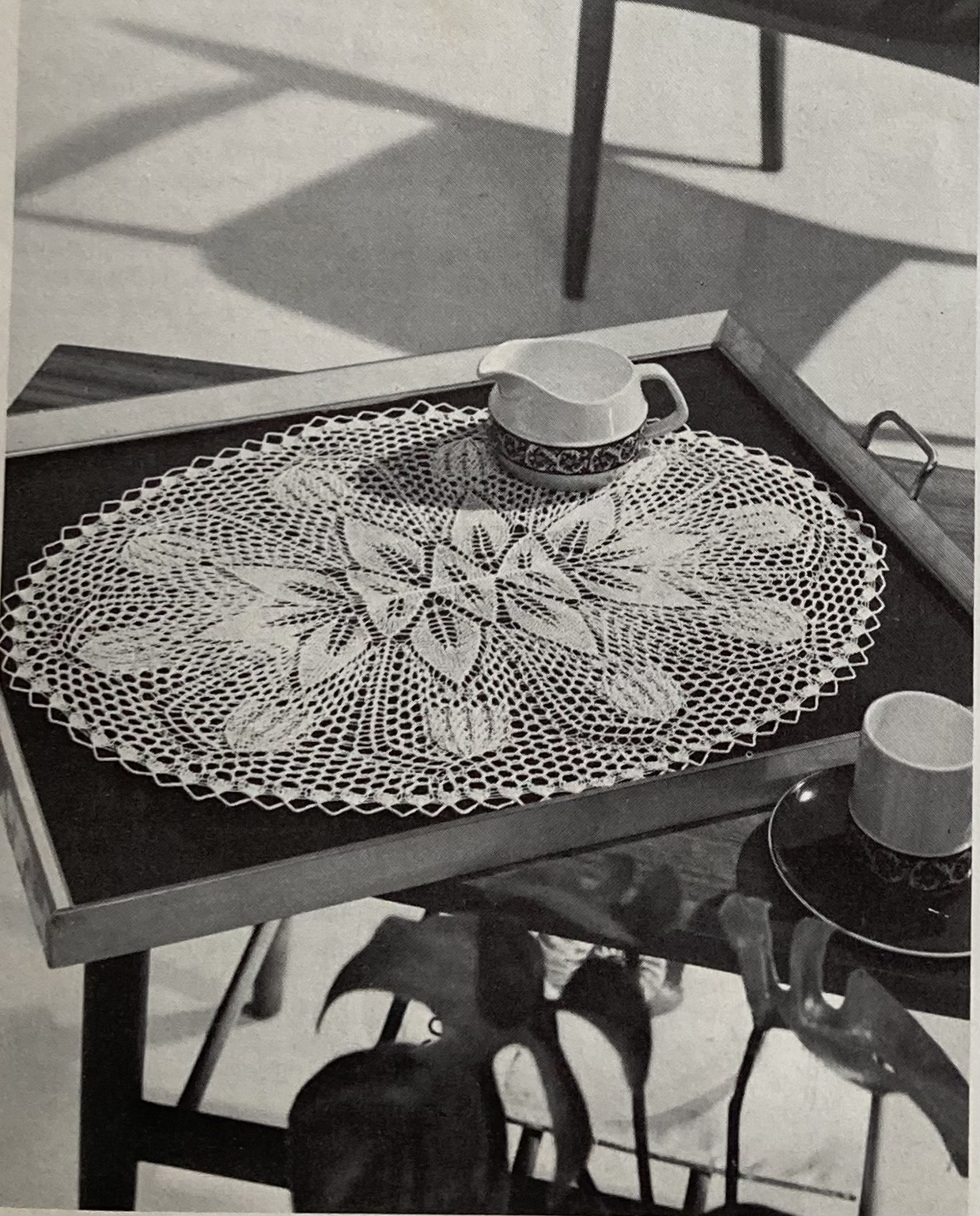
The cutwork chair set and breakfast tray set with Celtic-inspired design elements seem to be of average difficulty. Finally, there are quick and easy cosies and a crocheted handbag that promise to be “easy knitters” and “top sellers” at your next church or charity bazaar.

That’s all for this issue! I have to admit that there is nothing in it that particularly inspires me, so I will use this month to hopefully finish up the spectacular chevron-striped dress from April 1967 and the “Fair Isle Country Cardigan” from January 1967. I should be prepared for any kind of late-summer weather then.

July 1967: Baby Talk

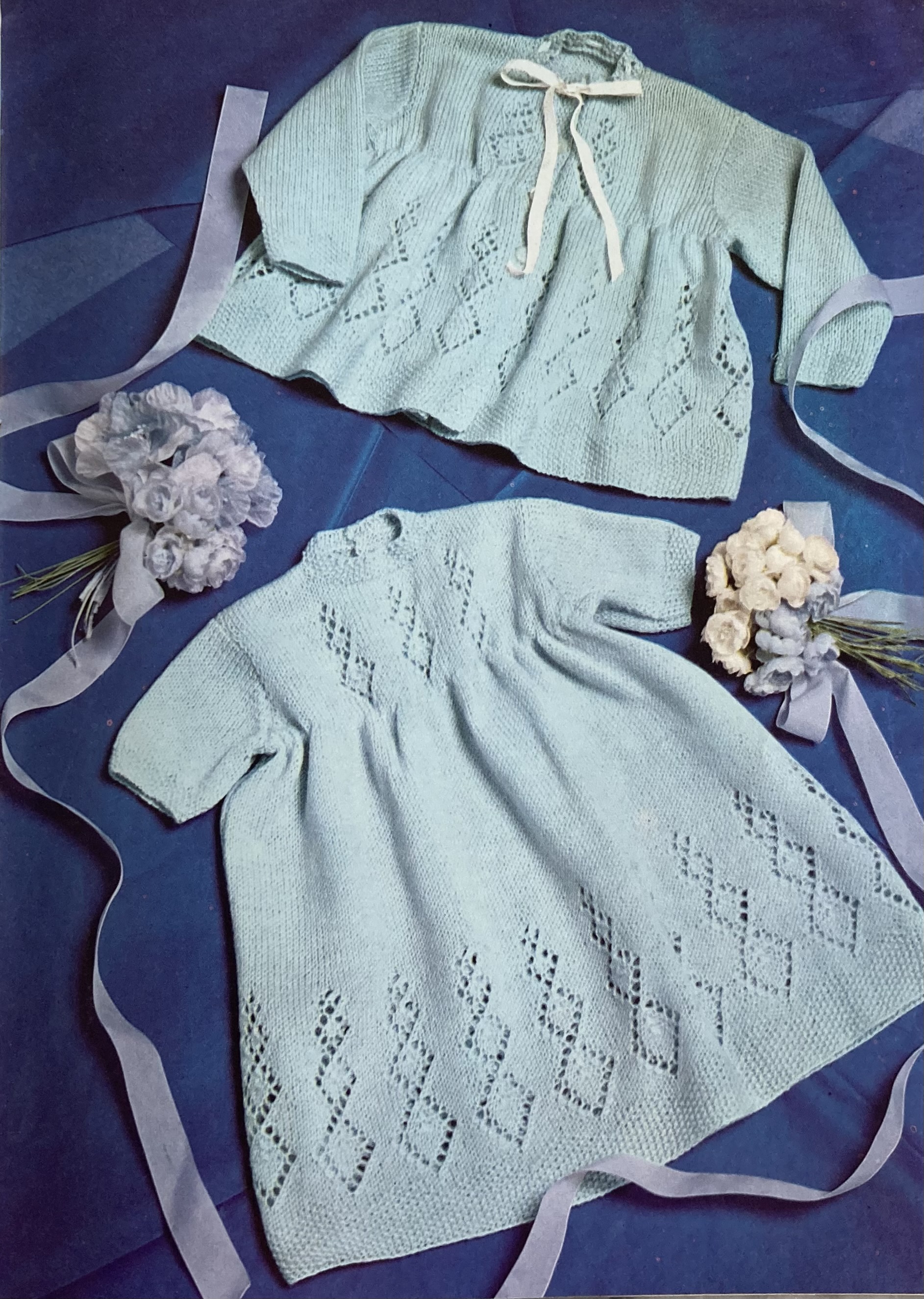
My project from the July 1967 issue of Stitchcraft was the “matinee jacket” from this jacket-and-dress set for a baby.

I had some nice Slow Wool Lino (sadly discontinued but alive and well in my stash drawer) that worked well for it — fine and soft, all-natural and machine-washable. I was a bit ambivalent about making baby clothes in such a drab shade of greyish-brown, but I hear that parents these days prefer neutral colours for babies? It will certainly match with everything.

The tension is supposedly 9 3/4 stitches to an inch over pattern (!) which is supposed to correspond to 7 sts/inch in plain stocking-stitch. I can get 7 sts/inch in stocking-stitch with Slow Wool Lino but the stitch pattern stretches. It is not difficult in itself — basically an eyelet rib on a reversed stocking-stitch background — but was unusually tricky to work increases and decreases in, even though it keeps the same number of stitches in each row, and it was clear that the tension would be completely off even before blocking, so I reduced the number of stitches.

I was so frustrated with the comparatively easy decreases on the “skirt” part and increases on the sleeves (which also ballooned out in an annoying way) that I decided to make the yoke in plain stocking-stitch, similar to the dress from the same pattern. I considered making a round neck like on the dress, or possibly embroidering the yoke afterwards with some little flowers in a contrasting colour to offset the drabness of the brown.

After consulting with the good people on the All Things Vintage forum on Ravelry, I kept the v neck, and when it was done, I didn’t think embroidery was necessary. I had already decided to add a couple of buttonholes at waist/armhole level instead of the unpractical ribbon tie from the pattern, and I found some little white fabric-covered buttons (possibly vintage? maybe just look like it?) in the button box, which perked up the colour with a bit of contrast and looked very sweet and old-fashioned. Here are some photos from before and during blocking:

I was not so impressed by this pattern and ended up making a lot of changes. But the finished product is soft, warm, practical, will match with everything, can be worn in all seasons and will “grow along with” a baby, so I think everyone, including the baby, will be quite pleased with this gift. The recipient is a colleague whose baby should arrive in November, so it was finished well on time for that, as well as on time for the blog. So all in all, a satisfactory project.

In other July 1967 news, I still want to make this dress from the same issue and even bought wool for it! If I ever make it through the “naughty pile” of WIPs, I might be able to start it sometime…

July 1967: Overview

Welcome to Summer! Is it hot where you live? It is supposed to be 35 degrees C today here and I already feel like a delicate wilting flower. Luckily, Stitchcraft‘s July 1967 issue brings us “Colour for Holidays” “in a gay easy-going mood with simple designs that are pretty and young looking, in lively colours to mix and match as you choose.” Here we go!

Our cover photo shows two “Little Sweaters for Holidays”: a mock-cable-and-lace jumper in synthetic “Nylox” yarn and a striped-and-ribbed “shell” in lightweight “Purple Heather” wool. Stripes are big in this issue, either via typical colour bands or the use of stitch pattern elements to create vertical lines. The dress on the inside cover uses coloured stripes in a dramatic way, with bold horizontal bands of red, gold and orange, while the thick “Capstan” wool jacket uses narrow bobble and cable panels to create a textured vertical-stripe effect. Horizontal colour stripes are contrasted with plain-knit sleeves or body on the shell and cardigan twin-set. Finally, rib panels and colour accents highlight the narrow silhouette of a zipped cardigan “for the extra slim.”

The men’s cardigan “in Classic Mood” is quite plain, but the “Viennese design” saddle-shoulder sweater incorporates some of the fun design elements that we see in the women’s garments: narrow rib panels to create vertical lines and plaid stripes for a splash of colour. The colours, by the way, are “French Mustard” with charcoal grey and white in the plaid stripes. (All in all, there are more colour photos in the 1967 issues than previous ones where only the covers and possibly the centrefold were in colour, but of course many designs are still only photographed in black and white.)

There’s a cute matinee set of dress and jacket for a baby and a cardigan for little girls with a slip-stitch colour pattern on the yoke. Of course, the little girl is pictured playing with her doll indoors, whilst the boy model gets to “play it rough in a shetland cardigan” out of doors (though the photo was obviously taken in the studio…) At least he’s not wearing a shirt and tie, only a turtle-neck shirt and a warm-knit cabled cardigan — which he might well have needed to stay warm on the day of the photo shoot, since according to the daily weather reports of the UK Meteorological Office, it was probably quite cold for summer, assuming the photo was taken in June!

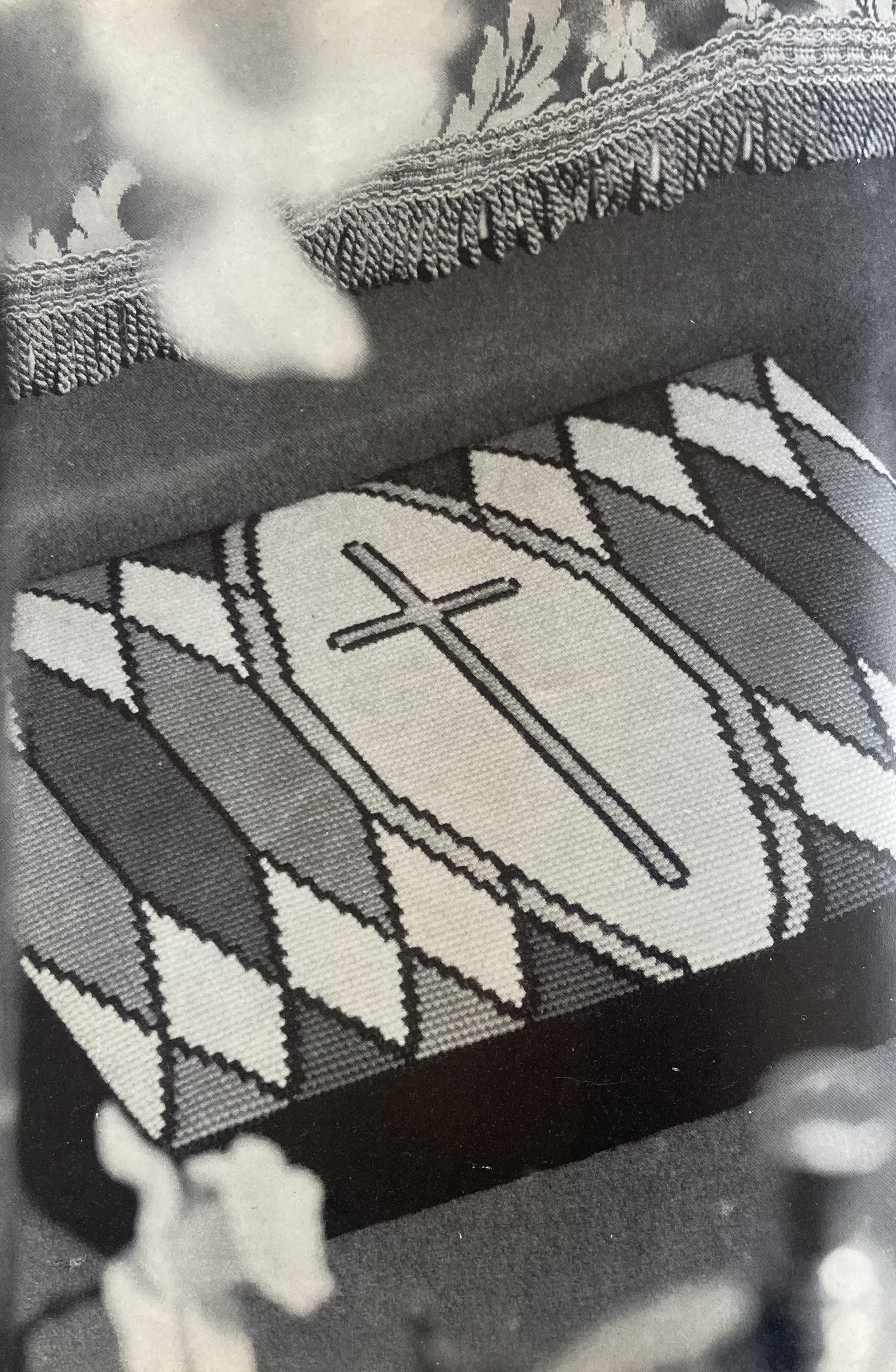
The homeware projects are fun, with an impressive embroidered wall panel inspired by Chinese designs and a tapestry design adaptable for either a little pincushion or a church kneeler.

Adaptabiity is a key feature of the children’s homeware designs as well: the playful kittens or picture of “Mary, Mary” making her garden grow can be stitched into a rug, stitched as a picture or a panel on a toddler’s pinafore, or, in Mary’s case, worked as a little decorative picture in filet crochet.

The Readers Pages don’t disappoint, with a simple pattern for a crocheted belt and ads for a book of handmade tie patterns, crochet “snowflake” designs, and crochet for brides. The 70s are on the horizon! The children’s comic continues the “Children of Other Lands” series, which is cute and well-meant but of course, heavily stereotyped and not the right tone for the twenty-first century. The full-page ads feature Patons Brilliante yarn and another ad for that fabulous sewing maching that folds down into its own chest of drawers.

That’s it! My July project will be the jacket from the baby set. Stay cool!

June 1967: Daisy Motif Peg Bag

My project from the June 1967 issue of Stitchcraft was a “peg bag” adorned with simple embroidery.

“What is a peg bag?”, some of those who dry their laundry on a rack indoors or in an electric dryer may ask. As you can probably tell from the photo, it is a bag to hold laundry pegs a.k.a. clothespins so that they are close at hand while you are hanging up your clean laundry on a line to dry. The design from this issue had a folded-over top into which you insert a wooden coat hanger to hang it up while you work, as well as a matching apron for maximum laundry-hanging style which I didn’t make this time, but will keep in mind for later.

The base fabric is supposed to be orange or gold coloured — I used leftover dark grey from last month’s “crab” cushion. It is supposed to be lined with gingham — I used leftover green fine corduroy from last month’s “fish” cushion. The only thing I had to buy was more embroidery thread — I had enough white and black, but not enough yellow or green.

Not having a transfer as usual, I just drew the daisy on a piece of paper freehand and copied it onto the fabric with carbon transfer paper. For the chevron-and-loop-stitch borders, I drew two parallel lines with V’s in between for the chevrons. The embroidery was not quite as simple as the design would lead you to believe. The white outlines of the daisies are done in couching stitch — laying down a thread and tacking it down with tiny stitches along its length. Easy in theory, but tricky in practice. In retropsect, I could have glued down the outline threads with water-soluble glue before couching them, to make them stay in place better. (Do any of you do this?)

The yellow centers are also couched, or actually woven — you put down slightly loose satin stitches in one direction and weave cross-threads through in the other direction. It gives a marvelous texture, but I was working with 6 strands and the cross-threads were prone to either split or skip over the ones they were supposed to be weaving through. The outline around the centers is black chain-stitch and the leaves and stems are satin and chain-stitch — except that I didn’t read carefully enough and did the stems in stem stitch. Also, I think two different shades of green got mixed up in my green thread stash? But it gives a nice subtle shading effect. The borders are chevron stitch with loop stitches.

The difficult part of this project was the construction, particularly the lining. I had to rip out the top-pocket seam more than once and re-position it to make all the right and wrong sides come out correctly. When I finally got it right, the lining did not stay in perfectly smoothly, but i will live with it. Also, the corduroy-ish fabric is not really a good lining choice, as it picks up every tiny bit of fuzz floating around while also producing its own. The colour is good, though!

I inserted an old-fashioned wooden coat hanger and noticed that the lining “caught” on one side, so did some more adjustments until it fit better. Voilà. It looks better in real life — the camera makes weird shadow patterns. My only complaint, besides my inability to sew straight lines, is that the finished bag is quite big — how many pegs / pins are you really going to put in it? But it can also be useful for hanging in the hallway / coat rack area to hold gloves, accessories, cat toys or whatever.

I have both an electric dryer and a drying rack, but no outside space to hang up laundry, so I will give this bag to someone who has a garden with a clothesline. The intended recipient also wears hats and fingerless gloves and has two cats, so the bag will find a use in any case.

Not the most exciting project I have ever made, but fun, cute and useful.

June 1967: Overview

“Knit for the SUN” is the theme of the June 1967 issue of Stitchcraft, and our cover model gives us the best example of that in her striped and sunny yellow outfit.

“Stripes and Colour” show up in different ways in this issue, combined with stitch patterns and stranded colourwork for novelty and texture. The pullover on the cover has normal stocking-stitch stripes on the front and back and a novel mini-cable pattern on the sleeves which mixes the four-row colour repetition with a two-stitch cable every four stitches on every fourth row, alternating left- and right- leaning cables for a zigzag effect. Another short-sleeved pullover has striped ribbing, but a plain body and sleeves. The “feathery lace” dress has vertical stripes implied by the ribbed lace pattern combined with plain horizontal colour stripes that look scalloped due to the stitch pattern. Love those sunglasses, too! And a sleeveless shell uses a slip-stitch pattern to make stripes with toothy ridges.

Fun stripes show up on the children’s garments too. There are shirts for boys with the same striped ribbing and collar, plain body and sleeves idea as the women’s top, and a dress for older girls with a stripe of colourwork flowers at the hem. “Junior” girls can “splash and paddle” (i.e. not really swim effectively) in a supposedly stretch-proof knitted bikini in vertical stripe stranded work — the strands should keep it from stretching too much horizontally in the water, but I’m not sure I’m convinced. The top is just two rectangles sewn together.

Stripes can be vertical or zig-zagged as well — either worked in colour as with the top on the cover, or in monochromatic stitch patterns. There are his-n-hers pullovers “knit to match” in a pattern similar to the sleeves on the cover design, but worked with 2-stitch twists instead of mini-cables, and a sleeveless polo in “Shetland mood” with a cable pattern on the front. (The caption says, “Janet sports her own jaunty beret, but Booklet 9775 is an easy one to knit — details on page 37.”) The two remaining garment designs, a cardigan and a blazer, have neither stripes nor zig-zags, but continue the theme of fun stitch patterns and this month’s trending colour of bright sky blue.

Homewares dive deeply into the Jacobean era, with an amazing wall panel that integrates complicated, historically-inspired stitch work and floral designs with a bold and oversized 60s aesthetic. Not Jacobean-inspired, but equally colourful and exotic, is the cross-stitch tropical bird. You can work it on a cushion or use it to cover a cake tin (appropriately, the name of the background colour is Biscuit.) For a real historical flair, you can make a cross-stitch wall panel adapted from a brass rubbing of Sir John Harsick, anno 1384, in Southacre, Norfolk. According to Stitchcraft, embroidery in the style of a brass rubbing “has become very popular over the last few years.” Interesting!

For an easier project, you can embroider sea-horses on a beach bag and matching deck-chair cushion (love the little aspirational illustration.) Or you can sew up a practical, and also cute and sunny, laundry-peg bag and matching apron and embroider them with big, cheerful daisies — “quick and gay to work on kitchen linens or for a bazaar.”

The Readers Pages reprint a striped knitted rug from the September 1964 issue, and the single full-page ad gives us another example of brilliant, yet meaningless, 1960s advertising copywriting and exceptionally 1960s colour combinations: the “Sunflower” Orlon-nylon jersey ensembles is available in olive/cyclamen, olive/burnt orange, midnight/avocado or burgundy/cherry. (A midnight avocado with olives, cherry and a nice Burgundy doesn’t sound half bad, if you took care not to burn the orange.)

I am tempted to make the brass-rubbing embroidery just for the weirdness of it, but realistically, my project will be the daisy-embroidered peg bag and apron. Have a sunny June!

May 1967: Fish and Crab Cushions

Ahoy! It’s springtime at the Stitchcraft Sixties and what could be more appropriate than some accessories for the garden? I don’t have a garden, or even a balcony, but I do love appliqué and these May 1967 designs with “modern shapes in brilliant colours of felt on crash” that “make practical and gay deckchair cushions.”

The shapes are a fish and a crab, and the “brilliant colours” unfortunately don’t show up in the black-and-white photo. The fish is turquoise, dark green and lime green felt on lime-coloured “crash” (heavy burlap-type linen) and the crab is orange, magenta and light coral on light grey crash. Both use black fabric for the backing. I used the colours from the pattern with the fish on a somewhat more lightweight almost-corduroy cotton, and the crab on a darker grey heavy upholstery/decorating cotton. For the backing, I used upcycled jeans in light blue (fish) and dark blue (crab), and I lined both cushions with upcycled shower curtain to better damp-proof them in the northern European summer.

The shapes were suprisingly difficult to trace and cut out without a transfer — hard to get the fish pieces to line up perfectly, and the seemingly random-shaped crab leg segments to come together properly. I drew the fish outline on the backing-fabric paper pattern, then cut out the entire fish as a paper pattern based on that, then cut out the segments.

I love that some of the pieces on both cushions were cut out with pinking shears, but then I forgot to do it and had to buy more fabric and cut all the pinked pieces on the fish out again. Sigh.

The actual appliqué was very fast and easy. In the pattern, it says to do it on the machine, which of course would have been even faster, but I like working by hand. I used a small running stitch instead of and over-edge whipstitch, which I would normally use.

I flat-lined the finished appliqué and back pieces with the shower curtain material (I did use the machine for that) and made them up into cushion covers with zippers — not specified in the pattern, but I wanted the cushion covers to be removable for washing.

The finished size was about 17.5 x 14.5 inches, as in the pattern, which is about 45 x 37 cm. I didn’t want to make up cushions, so I bought two 45 x 45 cm ready-made cushions, which adapted themselves to the rectangular shape well enough.

It was an easy, fun project and I absolutely love the bright, 1960s colours and friendly, cartoon-like “modern” shapes. I also like sea animals, so perfect. Sadly, I have nowhere to put them and so cannot keep them for myself, but will give them away to friends for birthdays and/or housewarming gifts. Then I can visit the friends and the cushions.

Hope your Spring is going swimmingly!

Excursion: Short Skirts Serial Story (1929)

Remember this project from a couple of years ago, which I made in conjunction with a 1920s serial story posted on the All Things Vintage forum on Ravelry? Short recap: one of the group’s wonderful moderators transcribes serial stories from early twentieth-century newspapers into a dedicated forum thread, one chapter a day, and she and the readers comment and discuss it and add everything from fashion photos to other newspaper headlines to silent film links for historical and cultural perspective (and fun, obviously.)

Well, the current story is… drum roll, please… the 1929 novelette “Short Skirts” by Rob Eden (the pen name of the husband-and-wife duo of Eve and Robert Ferdinand Burkhardt.) It recounts the thrilling adventures of Sue Allan, who crashes Daddy’s car in the first chapter, gets both arrested and disinherited, and spends the night in jail. There, she makes the acquaintance of Nell Bannister, a girl who has been around the block many more times than sweet, innocent Sue and takes her under her wing.

It’s thrilling, it’s exciting — and it enjoyed an incredible promotional campaign by the newspaper, including an essay-writing contest:

a “find-the heroine-on-the-real-life-street” contest (I really hope no women were actually “captured”):

and my favourite, a theme song written especially for the story and performed live in a moving DeSoto motor-car by singing twins Laverne and Lorene Cady, accompnying themselves on ukeleles:

The sheet music to the song was printed in the newspaper too, so you could cut it out and “Try it on Your Piano”:

Of course, I had to sing it! Here’s a little living-room recording, featuring the wonderful Willy Schwarz on the accordion:

What does any of this have to do with Stitchcraft, the 1960s, or knitting, you ask? The answers: 1) nothing, 2) the 1960s were also a decade of short skirts, and 3) I’m knitting a shorter version of a retro-1930s chevron-pattern dress from the 1967 issue of Stitchcraft for both this blog and the accompanying All Things Vintage “Short Skirts” knit-along. That will have its own blog post, so this post is just a fun excursion. If you’re on Ravelry, definitely check out the All Things Vintage forum and the “Short Skirts” serial, and say hi to me (onkelscotty) if you’re there! Many thanks to lavs on Ravelry for posting this story, and giving me the sheet music, and for all the promotional photos and extra information.